Black Legged Kittiwake
Black Legged Kittiwake: The Cliff-Nesting Gull in Trouble
The black legged kittiwake is the cliff-nesting gull that has declined 40% since 1970 — a Vulnerable seabird that nests on ledges no wider than your hand, and now raises its chicks on the Tyne Bridge.
By Emily Carter · Reviewed by our vet team · Updated 10 November 2026 · 9 min read
Cliff-nesting gullDeclined 40% since 1970Nests on the Tyne Bridge
At a Glance
The black legged kittiwake is the only gull that nests on cliffs, and the most numerous gull species in the world — around 15 million birds. It has declined about 40% since 1970 and was uplisted to Vulnerable in 2017.
The Cliff-Nesting Gull: Why Kittiwakes Need Ledges
It is the only cliff-nesting gull: it belongs to the genus Rissa, the only gulls that nest on cliffs, and it raises its chicks on ledges so narrow that the birds sit facing the cliff, tails sticking out over the drop. No other gull does this.
The ledge is the whole point. A cliff ledge is safe from foxes, rats and most other predators, and the kittiwake’s nest — a cup of seaweed and mud glued to the rock — holds fast where a ground nest would be eaten. The cost is a life lived on the edge, literally: a chick that steps the wrong way falls hundreds of feet to the sea.
Black Legged Kittiwake Decline: 40% Since 1970
It has declined by about 40% since 1970, and the decline is the reason this guide exists. The cause is food: the sandeels the kittiwakes depend on have become scarcer and less reliable, and when the sandeels fail, the chicks starve.
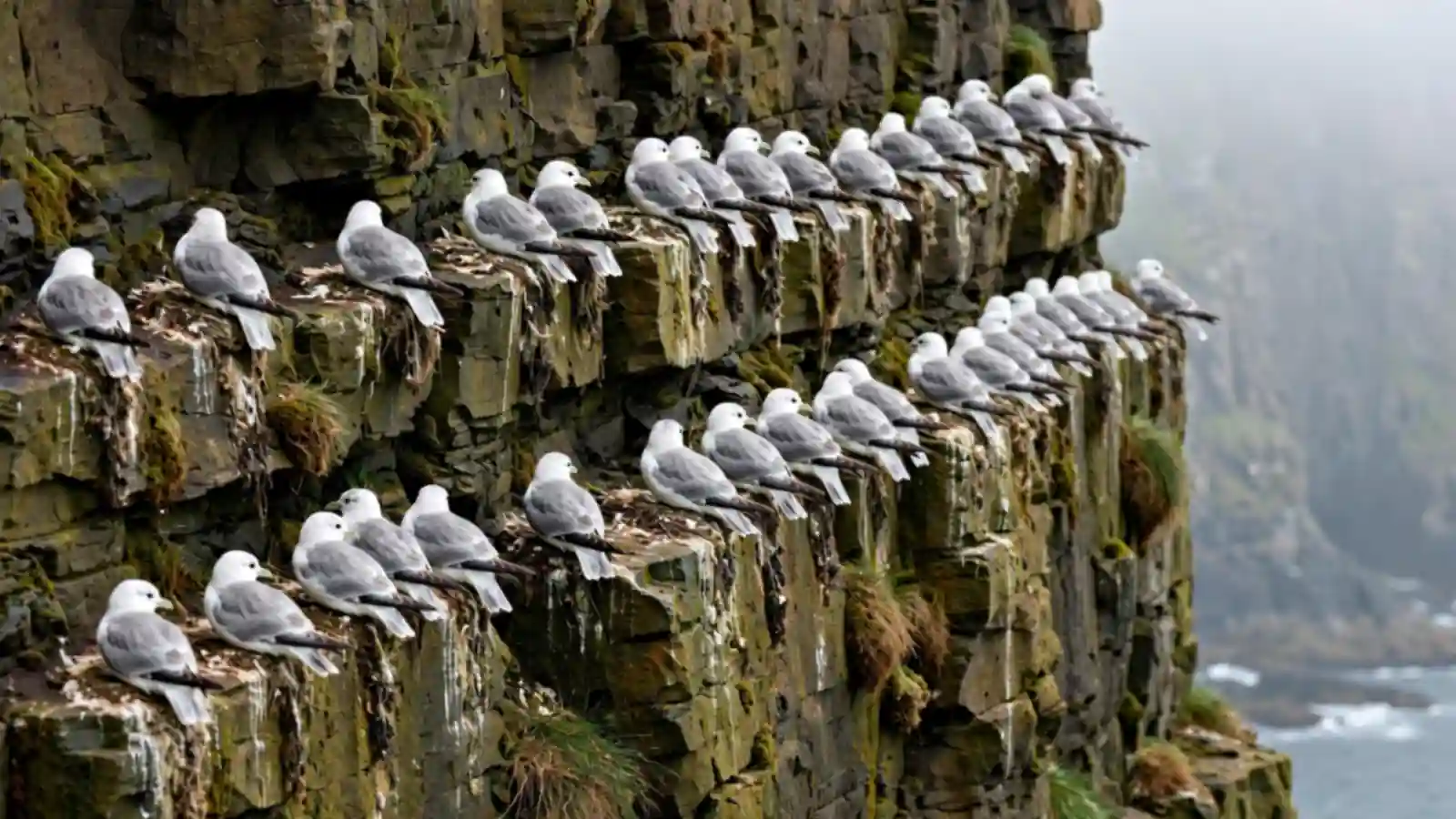
The decline is not a mystery — it is measured, year by year, in the colonies. Some colonies have halved; some have vanished entirely. The bird is still the most numerous gull in the world, at around 15 million individuals, but the trend is down, and the direction matters more than the number. The decline is steepest in the colonies that depend most on sandeels, and the birds that nest on the cliffs of Shetland and Orkney have fallen further than the birds that nest on the bridges and buildings of the cities.
Three Toes: The Foot That Named the Kittiwake
It has three toes, with the hind toe reduced to a tiny stub — and the foot is part of what makes the bird a cliff-nester. Three toes grip a narrow ledge better than four, and the bird’s feet are built for perching on rock, not for walking on flat ground.

The name kittiwake has nothing to do with the feet, though — it comes from the call. But the three-toed foot is the adaptation that lets the bird live where it lives, and it is one of the easiest ways to tell a kittiwake from any other gull at close range.
Where Black Legged Kittiwakes Live: Cliffs and Bridges
Black legged kittiwakes live on the cliffs of the North Atlantic and North Pacific, from Shetland and Norway to Alaska and the Russian Far East, and they have recently taken to nesting on bridges and buildings — most famously the Tyne Bridge in Newcastle, where the colony reached 1,639 pairs by 2020.

The Tyne Bridge colony is a city colony, and it is the most watched kittiwake colony in the world. The birds nest on the bridge girders above the river, in the middle of a city, and they have become a local emblem — proof that a cliff-nesting bird can make a home out of concrete and steel when the cliffs run out. The bridge colony is fed by the river and the sea around it, and the birds have learned to live with traffic, noise and people — a cliff-nesting gull that has made a home out of a bridge.
What Do Black Legged Kittiwakes Eat? Sandeels and Small Fish
Black legged kittiwakes eat sandeels and small fish, caught at the surface of the sea. They do not dive like gannets — they dip and snatch, picking fish from the top few centimetres of water, and they follow fishing boats for the scraps thrown overboard.
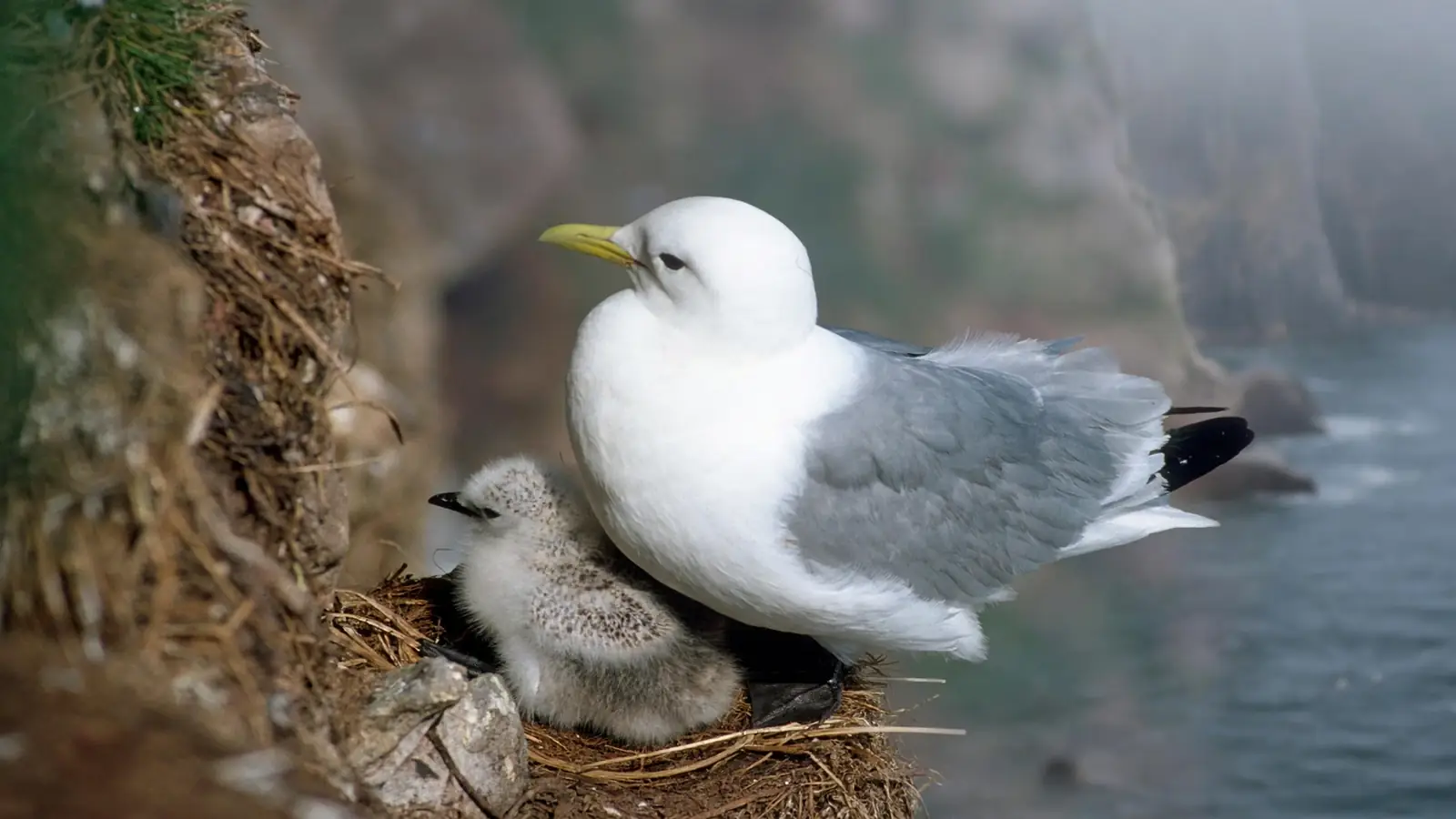
The sandeel is the key: it is small, oily and abundant, and it is the food the chicks are raised on. When sandeels are scarce, the chicks grow slowly or starve, and the colony fails. The kittiwake’s decline is, at root, a sandeel story — and the sandeel’s decline is a warming-sea story.
The Kitti-Wake Call
The kittiwake’s call is a repeated “kitti-wake, kitti-wake” — and the call is what named the bird. The name is onomatopoeic: the bird says its own name, over and over, from the cliff ledges, and the sound is the sound of a northern seabird colony in summer.
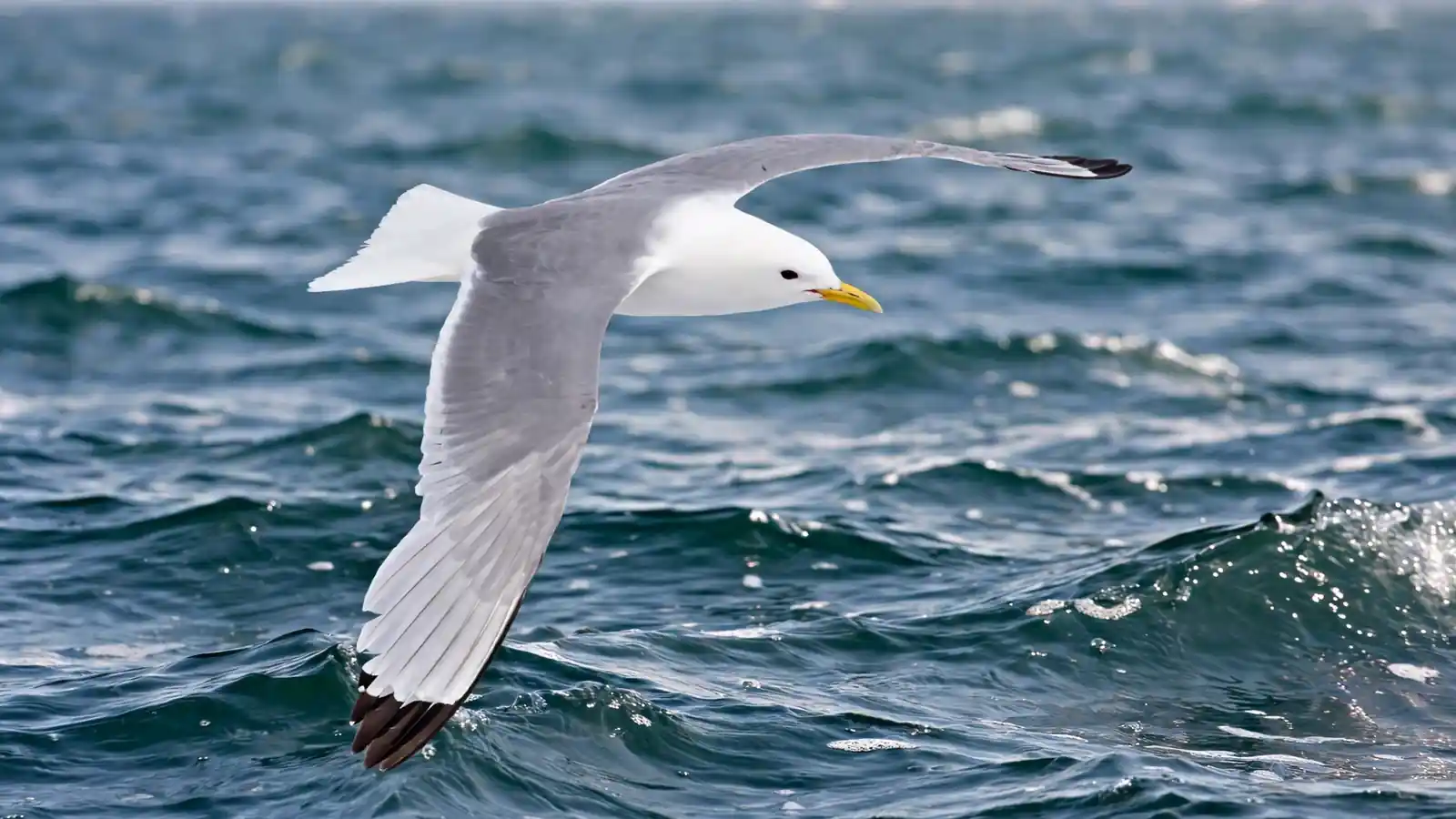
The call is also the colony’s social glue. Kittiwakes are colonial birds, nesting shoulder to shoulder on the ledges, and the calls keep the pairs in contact, warn off intruders, and mark the territories — each ledge a few centimetres wide, each defended with a voice. For the full species account, see the kittiwake guide from a UK bird charity.
Conservation: Vulnerable (2017), a Seabird in Trouble
It was uplisted from Least Concern to Vulnerable in 2017, and the uplisting was a warning: the most numerous gull in the world is in trouble. The cause is food — sandeels — and the sandeel shortage is driven by warming seas and by the industrial fishery that takes sandeels for fishmeal.

The Tyne Bridge colony shows what protection can do: a city colony, watched and guarded, holding its numbers while the cliff colonies fall. But a bridge is not a substitute for a sea full of sandeels, and the kittiwake’s future depends on the fish coming back.
Fun Facts
- It is the only gull that nests on cliffs.
- It has declined about 40% since 1970.
- It has three toes — the hind toe is reduced to a stub.
- Its name comes from its call: “kitti-wake, kitti-wake”.
- The Tyne Bridge colony reached 1,639 pairs by 2020.
- At around 15 million birds, it is still the most numerous gull species.
Frequently Asked Questions
What Is a Black Legged Kittiwake?
A small white and grey gull, Rissa tridactyla — the only gull that nests on cliffs. It has black legs, a three-toed foot, and a call that sounds like its own name: kitti-wake. It is the most numerous gull species in the world, at around 15 million birds.
Why Are Black Legged Kittiwakes Declining?
Because their food — sandeels — has become scarcer and less reliable. When sandeels fail, the chicks starve and the colonies shrink. The bird has declined about 40% since 1970, driven by warming seas and the industrial sandeel fishery.
Where Do Black Legged Kittiwakes Nest?
On narrow cliff ledges around the North Atlantic and North Pacific — and increasingly on bridges and buildings. The most famous urban colony is on the Tyne Bridge in Newcastle, which reached 1,639 pairs by 2020.
What Does a Black Legged Kittiwake Sound Like?
It calls “kitti-wake, kitti-wake” — a repeated, nasal cry that named the bird. The call is the sound of a northern seabird colony in summer, and it keeps the pairs in contact on the crowded ledges.
How Many Black Legged Kittiwakes Are There?
Around 15 million individuals, making it the most numerous gull species in the world. The number is large, but the trend is down — about 40% since 1970 — and the direction matters more than the total.
What Do Black Legged Kittiwakes Eat?
Sandeels and small fish, caught at the surface of the sea. They dip and snatch rather than diving, picking fish from the top few centimetres of water, and they follow fishing boats for scraps.
Are Black Legged Kittiwakes Endangered?
They are listed as Vulnerable, uplisted from Least Concern in 2017. The listing reflects the 40% decline since 1970 and the sandeel shortage behind it — a food problem, not a hunting problem.
Similar Species Worth Exploring
Keep Exploring
Meet the laughing gull, a fellow gull of the coasts, then the great skua, the pirate that hunts kittiwakes, and browse the whole family in our types of seabirds hub — then come back to the cliff-nesting gull in trouble, the black legged kittiwake.