Sailfish
Sailfish: the banner-finned sprinter and the 68 mph myth
The sailfish carries the most famous speed record in the animal kingdom — and the record is wrong. What is true is better: a lightweight billfish that hunts in teams, herds sardines with a sail taller than its body, and folds that sail away to vanish into the blue. This is the honest story of the fastest fish in the ocean, from the real numbers to the great Atlantic–Pacific identity puzzle.
By Emily Carter · Reviewed by our vet team · Updated 10 November 2026 · 9 min read
Sail taller than its bodyReal bursts near 50 km/hHunts in coordinated teams
At a Glance
The sailfish is the most theatrical of the billfish: a slim, three-metre hunter whose first dorsal fin unfolds into a cobalt sail taller than its own body. It is also the most argued-about, because its fame rests on a speed figure that science has spent a decade politely dismantling. Meet the fish behind the legend — it needs no exaggeration.
Sailfish Size and Shape
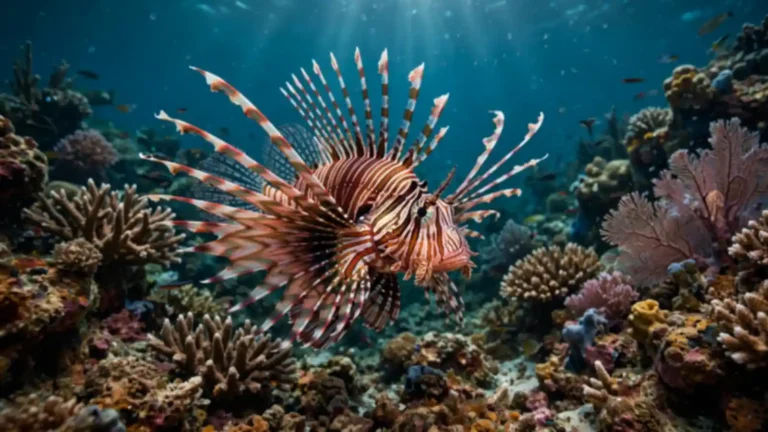
It is built light. Where its cousin the blue marlin is a heavyweight, the it is all whip and banner: a maximum of about 3.4 metres (11 feet) including the bill and rarely more than 100 kilograms (220 pounds), with most adults between 1.8 and 2.7 metres. The body is laterally compressed, almost blade-like, and the bill is slender and round in cross-section.
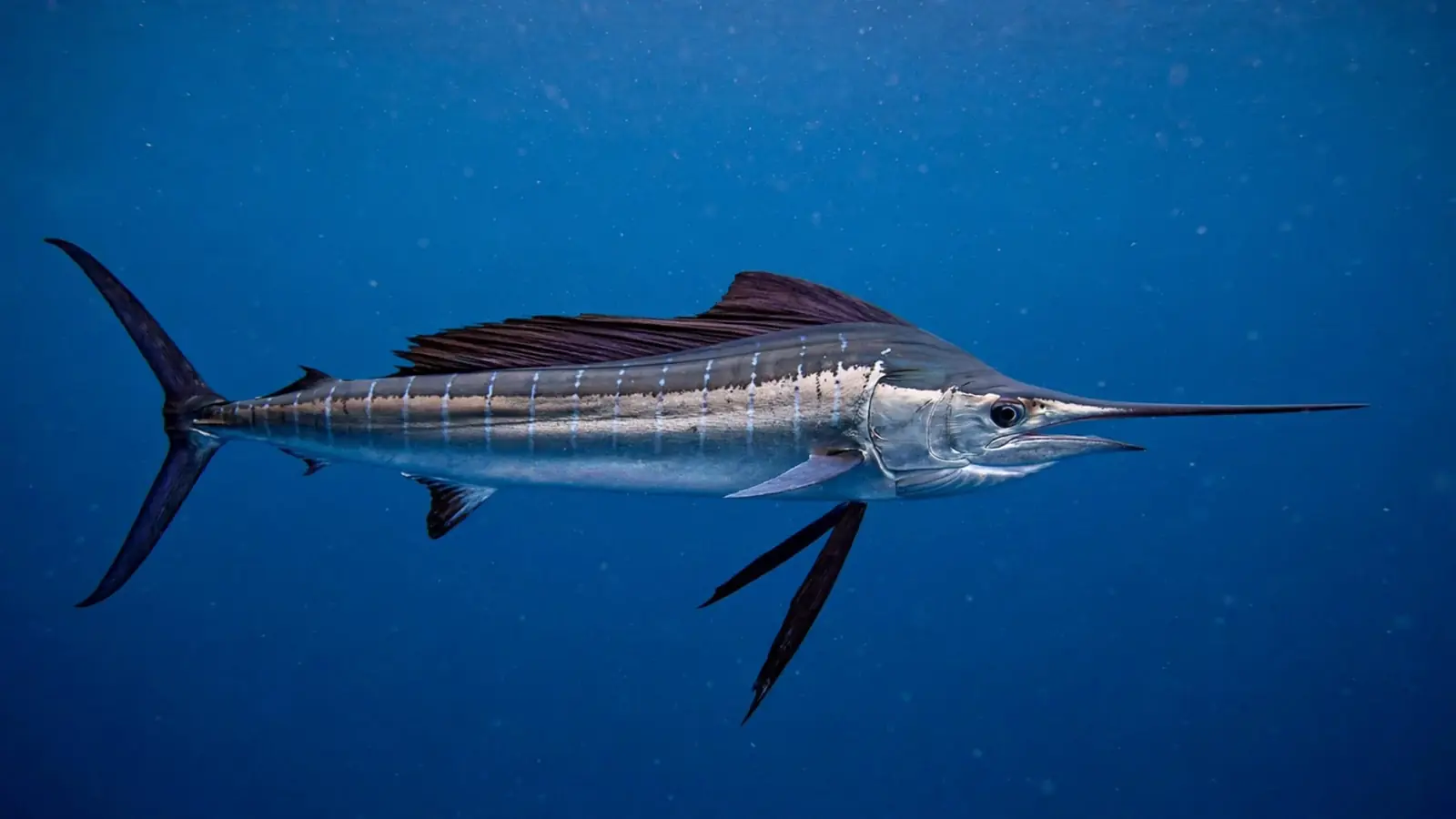
The engineering is drag management. The great sail folds lengthways into a groove in the back. The pectoral and pelvic fins tuck into depressions in the body. Even the skin helps: tiny, file-like scales are embedded rather than raised. With everything stowed, the fish presents the water with one smooth, stiff surface — the shape that racing-yacht designers have studied for a century.
Colour is part of the equipment. The back is dark blue, the belly silver, and rows of pale gold spots run along the flank. When hunting or excited, the fish lights up: the sail flushes deep cobalt and vertical bars ripple along the body. Like its marlin cousins, a fish can raise and erase these patterns in seconds, and it uses them most when hunting in company. You can browse the full species record for Istiophorus platypterus for its measured sizes across oceans.
The Fastest Fish in the Ocean? The True Speed Story
The claim is everywhere: the species is the fastest fish in the ocean at 68 miles per hour (110 km/h). Its origin is a mid-twentieth-century account of a hooked fish stripping line from a reel, timed informally. No instrument ever measured the fish itself, and no scientist has reproduced anything close since. Yet the number hardened into fact and still leads most popular accounts.
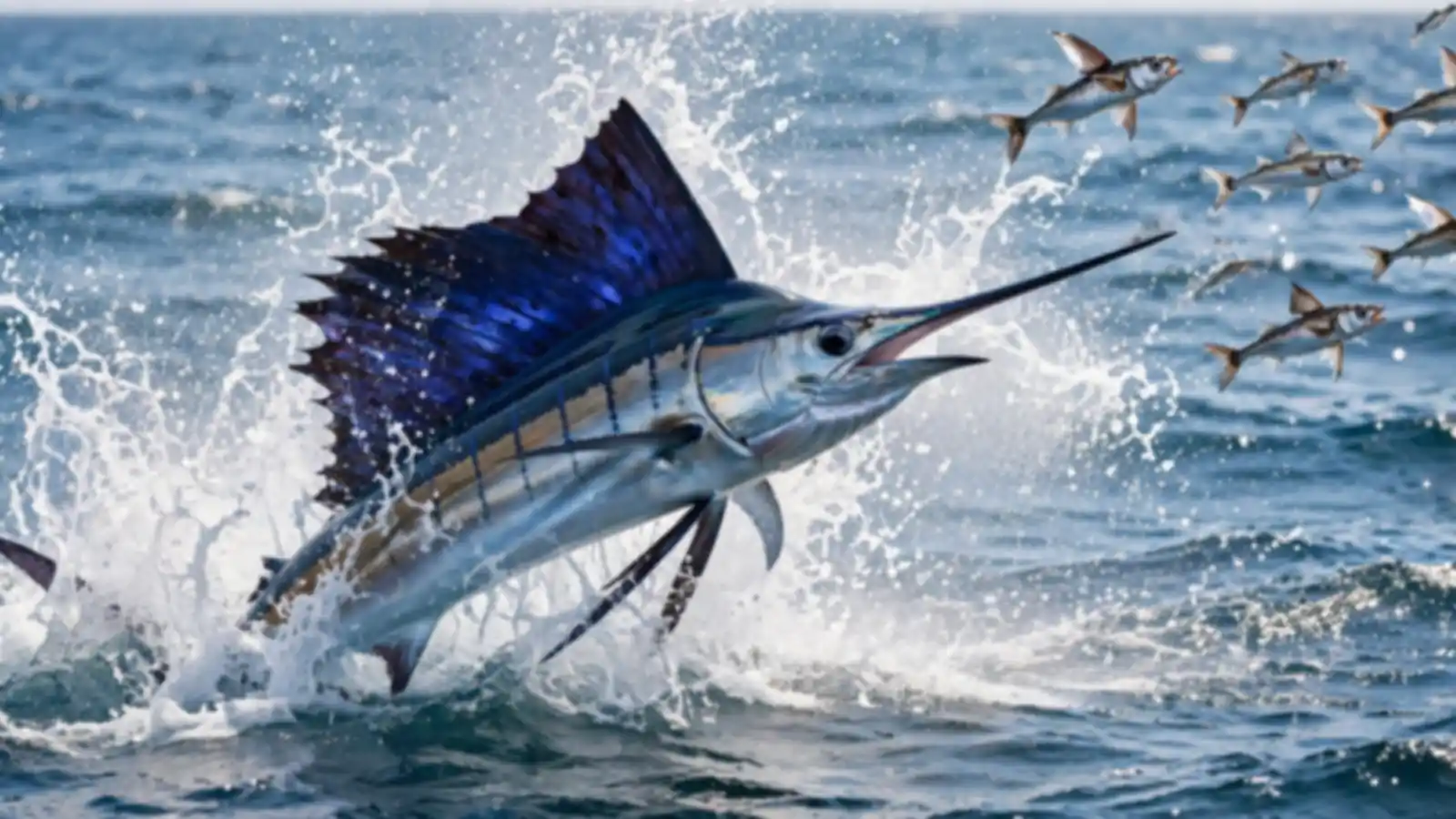
The research story is more careful. Studies in 2015 and 2016 that modelled billfish swimming — muscle power available, drag at speed, the physics of moving a bill through water — concluded that large billfish top out around 10 to 15 metres per second, roughly 35 to 55 kilometres per hour. Camera studies of hunting animals, measuring real fish frame by frame, fit that range. There is even a hard physical ceiling: go much faster and the water itself cavitates around the fins, damaging tissue.
So the honest crown reads differently. The species may still be among the fastest big fish alive, and its acceleration — the first explosive metres from a standstill — is genuinely extreme, powered by a stiff body and a huge crescent tail. What it is not is a 110 km/h fish. The real numbers are remarkable enough, and this guide uses them.
What Is a Sailfish Sail For?
The sail is not decoration, and it is not mainly for speed — at speed it is folded away. Watch a group of them hunt and its first job appears: teamwork. Several hunters circle a sardine school with sails raised, presenting a wall of fin far bigger than any single fish. The wall corrals the bait ball, holding it at the surface while the hunters take turns slashing through it with their bills.
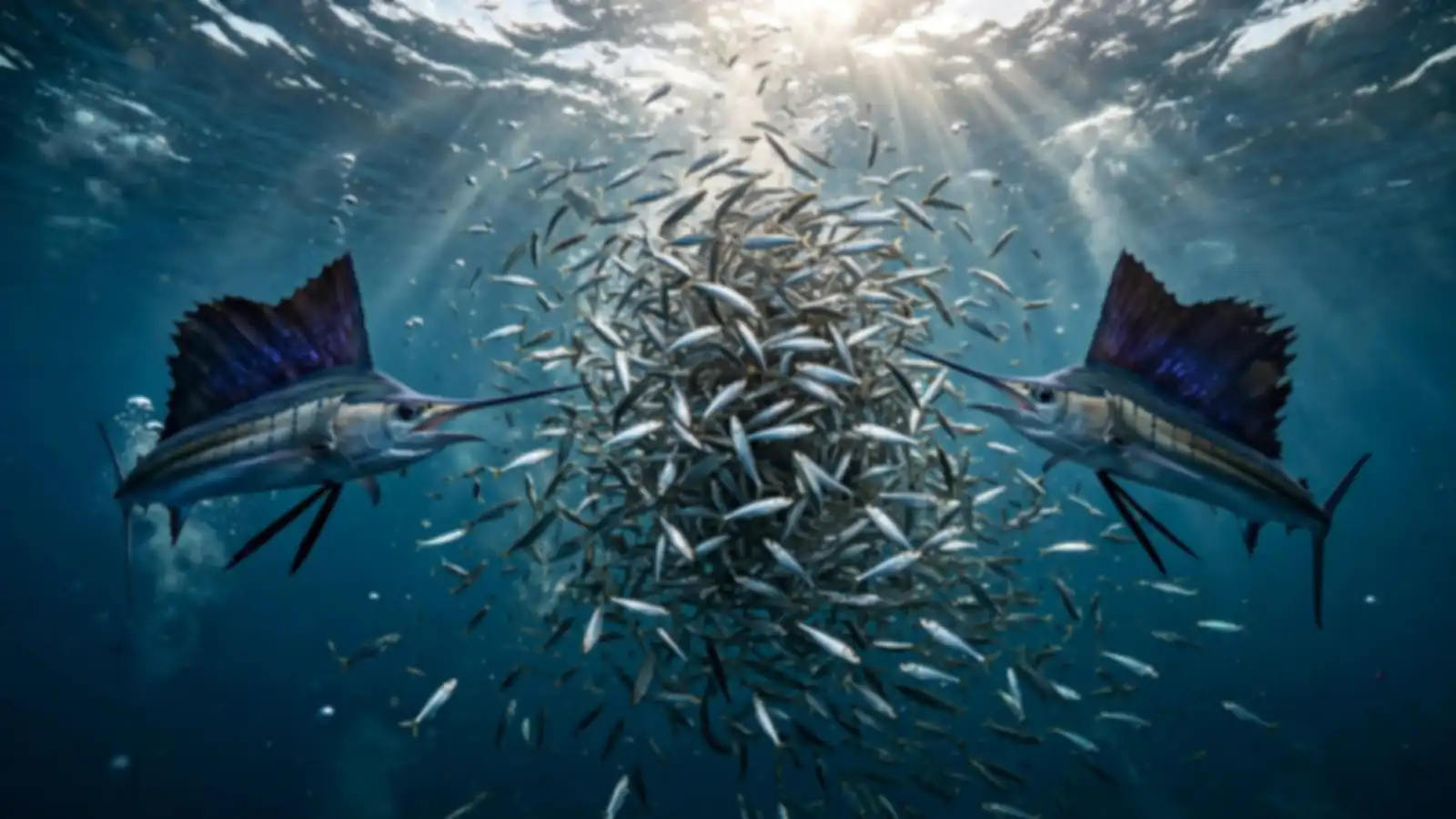
Colour is the second job. During group hunts the sails flash and the body bars brighten and darken, apparently signalling each hunter’s position and turn — a traffic system that may prevent collisions and bill injuries among partners moving at speed through the same small school. The raised sail also makes the fish look much larger, which may help intimidate prey into the ball and rivals away from it.
Individual hunters slash differently from marlin. High-speed film shows a one tapping and slashing individual sardines with precise, controlled bill movements — injuring one fish, then circling back to eat it — a surgeon where the marlin is a broadsword. It is one of the most skilful feeding techniques filmed in the open ocean.
One Species or Two? Atlantic vs Indo-Pacific
For most of the last century, books listed two forms: an Atlantic species and an Indo-Pacific species, separated by their ocean basins and small differences in size and fin shape. The Atlantic fish was said to run smaller, the Pacific fish larger. It was a tidy arrangement — until genetics tidied it away.

Modern genetic studies found that Atlantic and Indo-Pacific fish differ no more from each other than populations within other global billfish, and body measurements overlap broadly. Most authorities now recognise a single, worldwide species, Istiophorus platypterus — making this one of the most widely distributed large fish on Earth. A minority of references still keep the two-species split, so both arrangements appear in print.
For the fish, of course, nothing changed. They in Florida, Costa Rica, the Maldives and Western Australia all hunt the same way, wear the same sail and puzzle the same scientists. The argument is a human one about where species lines are drawn — and it is a useful reminder that even famous animals can be reclassified overnight.
Habitat and Hunting: Life at the Surface
It lives in the sunlit skin of the warm oceans, generally in water above about 21–28°C, and usually in the top 30 metres. It follows the same features as its prey: current edges, weed-lines, reef drop-offs and the fronts where frigatebirds gather over bait. Unlike marlin, it often hunts within sight of coasts, over the continental shelf.

The diet is small, fast and schooling: sardines, anchovies, small mackerel and scad, plus squid. Hunting peaks by day, when the fish can see its prey, and the famous bait-ball hunts — documented most fully off Mexico’s Yucatán and in the Pacific — draw teams of up to a dozen or more hunters working one school in rotation for hours.
Spawning happens in warm offshore water through the summer of each region. Females release millions of eggs; a large female may carry around four to five million in a season. The larvae grow absurdly fast, developing the sail early, and young fish in rich water can approach a metre within their first year — among the fastest growth of any bony fish.
The Species and People: Fame, Fishing and Numbers
Few fish are more celebrated in art and sport. Its leap, banner raised, is the emblem of light-tackle fishing from Florida to Guatemala, and its fisheries are now built heavily on catch and release — in the eastern Pacific, fleets release the overwhelming majority of the fish they hook, and the fish’s high post-release survival makes that ethic work.
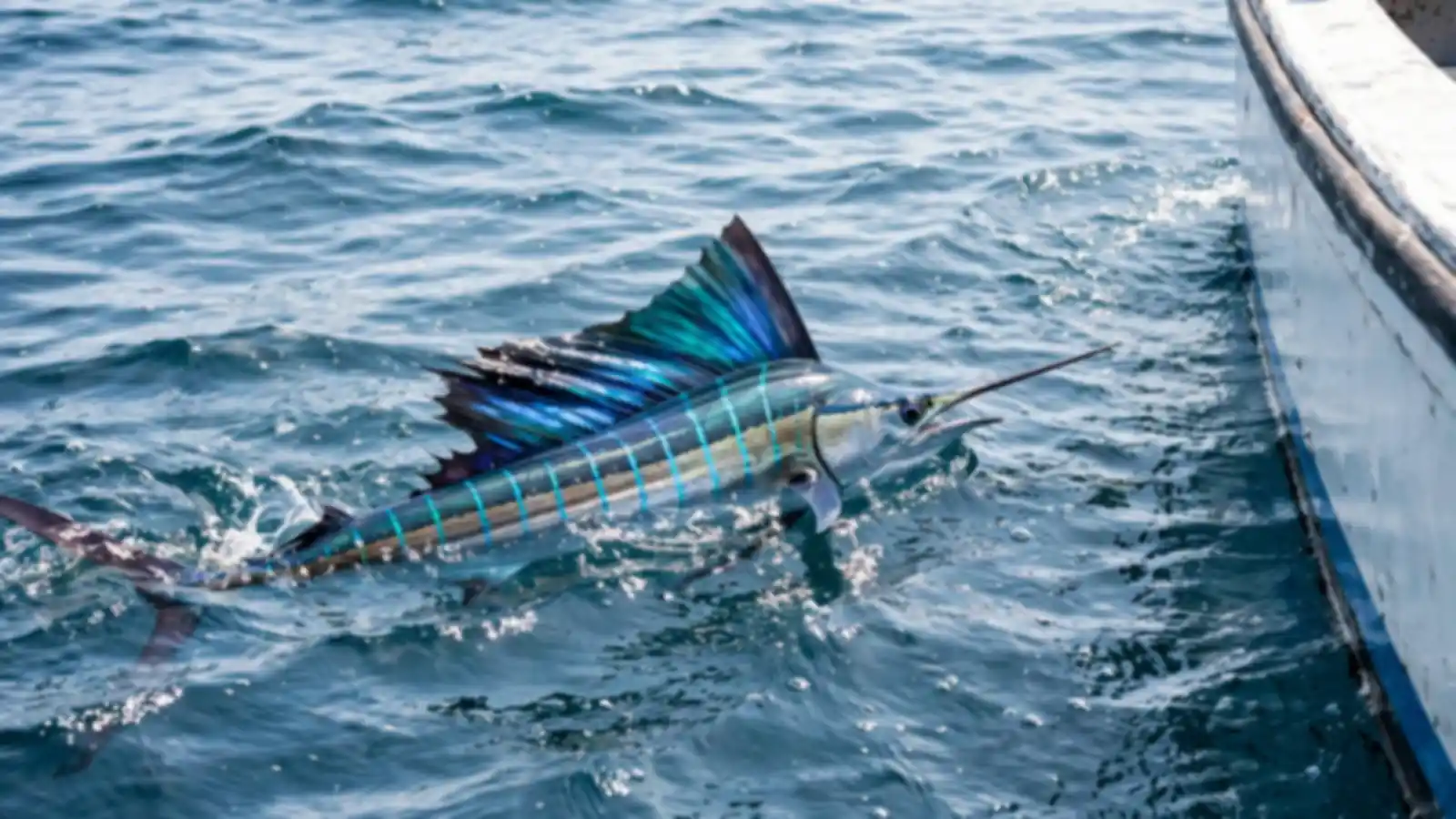
The threats come from elsewhere: commercial longlines set for tuna and swordfish take them as bycatch, and some regions land them for local markets. The species is currently listed as Vulnerable, following documented declines in parts of its range — a sobering status for so abundant-seeming a fish, and the reason several countries now protect it from commercial sale.
What protects it best is its own fame, converted into rules: release ethics, protected status in sport-fishing nations, and the simple fact that a live one, hunting bait balls under the frigatebirds, is worth more to a coastal town than a dead one. The banner still flies over the warm currents — long may it hunt there as the sailfish.
Fun Facts
- The 68 mph figure came from a hooked fish timed by line leaving a reel — a measurement of fishing tackle, not of a swimming fish.
- They work in teams, taking turns to slash at a bait ball while partners hold the school together with their raised sails.
- The sail folds into a groove along the back, and the side fins tuck into hollows, leaving the body smooth at speed.
- A young fish can grow close to a metre in its first year — but its famous sail develops proportionally even earlier.
- Genetics says the Atlantic and Indo-Pacific fish are one species, among the widest-ranging big fish on Earth.
- A fish can slash with precision at a single sardine, injuring it and returning to eat it — filmed behaviour unlike any other billfish.
Frequently Asked Questions
Is the Sailfish the Fastest Fish in the Ocean?
It is the fastest by reputation, and the reputation rests on a famous figure — 68 miles per hour — that traces back to an old, uncontrolled test with a hooked fish and a stopwatch. Modern research on swimming fish, using high-speed cameras and muscle physics, puts the real top speed of a one far lower, around 10 to 15 metres per second in short bursts. It is certainly among the fastest fish alive, but the 68 mph crown is a myth.
How Fast Can a Sailfish Really Swim?
A fish probably reaches about 35 to 55 kilometres per hour (roughly 22 to 34 mph) in its fastest bursts, based on 2015–2016 research into billfish swimming and on careful frame-by-frame studies of hunting fish. Its everyday cruising speed is a relaxed few kilometres per hour. The gap between the legend and the measurement is the largest of any famous animal speed claim.
What Is a Sailfish Sail For?
The fish raises its sail to hunt and to communicate. Groups of them use their raised sails like nets to corral sardine schools, keeping the bait ball compact while each hunter takes turns slashing through it. The sail also flashes colour — the fish lights up with bars and stripes — which may coordinate the group and confuse prey. At speed, the sail folds flat into a groove to cut drag.
Are Atlantic and Indo-Pacific Sailfish the Same Species?
Most authorities now say yes. The two populations were long listed as separate species, but genetic and body-shape studies found differences no greater than those within other wide-ranging billfish, so most now recognise a single species, Istiophorus platypterus, found in warm seas worldwide. The debate is not fully closed, and some references still list an Atlantic species separately.
Sailfish vs Marlin: What Is the Difference?
A sailfish is the lightweight of the family — rarely over 3 metres or 100 kilograms — with a huge sail-like first dorsal fin taller than its body is deep. A blue marlin is a heavyweight of 600 kilograms or more with a modest fold-away dorsal fin and a much thicker body. If the fin looks like a banner, it is a sailfish; if the fish looks like a torpedo, it is a marlin.
Similar Species Worth Exploring
Keep Exploring
Weigh up the family heavyweight in our guide to the blue marlin, or browse every hunter of the warm surface in our guide to the types of fish. Myths deflate and records get revised, but a cobalt banner rising over a bait ball at dawn remains one of the ocean’s great sights — and it belongs to the sailfish.