Can Dogs Eat Raw Chicken? Risks and Safety Guide
Can Dogs Eat Raw Chicken?
Raw chicken carries Salmonella and other risks that affect dogs and their humans. Learn the dangers, safer handling, and what to do if eaten.
By Emily Carter · Reviewed by our vet team · Updated October 2026
Safety Not recommendedType Raw meatRisk Salmonella, bones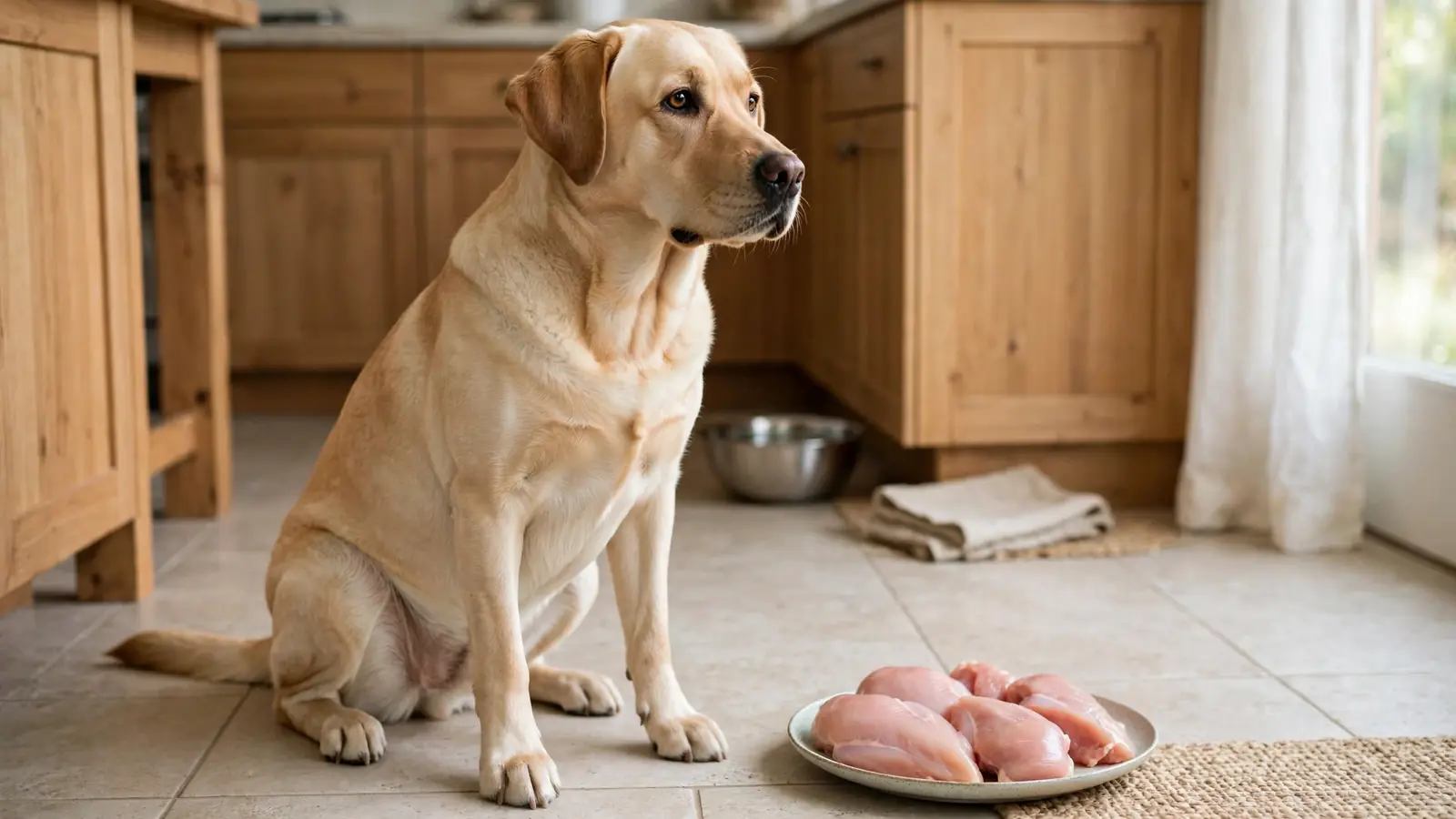
Raw chicken hits the kitchen floor during dinner prep, and your dog inhales it before you can even react. If you are searching can dogs eat raw chicken, you will find loud opinions on both sides, but the facts point in one clear direction.
Quick answer: Can dogs eat raw chicken? Experts do not recommend it. Raw chicken can carry Salmonella, Campylobacter, and Listeria, plus parasites and splintery bones that can choke or block the gut. Plain cooked chicken inside a complete diet is far safer. If your dog grabs raw chicken, watch for a week and call your vet about bones or servings.
Can Dogs Eat Raw Chicken?
This topic splits dog owners, so let us look at what the facts actually say.
The raw feeding debate is controversial. Some argue that raw diets suit canine biology, pointing to wolves as the model, and answer can dogs eat raw chicken with a confident yes. But domestic dogs differ from wild dogs and are not used to raw meat, so the wolf comparison falls short when applied to the dog on your couch. Wolves also eat the whole animal, organs included, in a way house dogs never replicate.
Dogs can technically eat raw or undercooked chicken, but the downsides deserve attention: food poisoning, bacterial infections, parasites, nutritional gaps, toxic spices or coatings, and bone splinters. If you keep asking can i feed my dog raw chicken, the safest answer from experts is a clear no, and the reasons below explain why.
At a Glance
The Risks of Raw Chicken for Dogs
Before you decide that can dogs eat raw chicken has a yes attached, weigh these risks carefully.
Bacteria and Parasites
Raw chicken can carry Salmonella, Campylobacter, and Listeria, along with parasites that survive without cooking. Dogs can get sick just like humans, with vomiting and diarrhea among the first signs.
Heat is the reliable way to kill these threats, and skipping it leaves the risk wide open for your dog and your household. Children, older adults, and anyone with a weak immune system in the home face added risk from the same bacteria.
Missing Nutrition
Raw chicken meals do not provide the nutrients dogs need for long term health. Nutritionist developed complete foods are built to meet safety and nutrition standards in every bowl. A homemade raw meal cannot match that balance without expert formulation, and gaps in nutrition show up over time in coat, energy, and overall health.
Bones That Splinter
Raw chicken bones or feet can choke a dog or block the intestines, and either situation can turn serious fast. If your dog swallows raw bones, call your vet right away rather than hoping they pass on their own. Safer chewing options include rawhides or purpose made chew toys, and take any chew away before it gets small enough to swallow whole.
How to Handle Raw Chicken More Safely
Once you understand why can dogs eat raw chicken gets a no from experts, handling it safely still matters for the whole household.
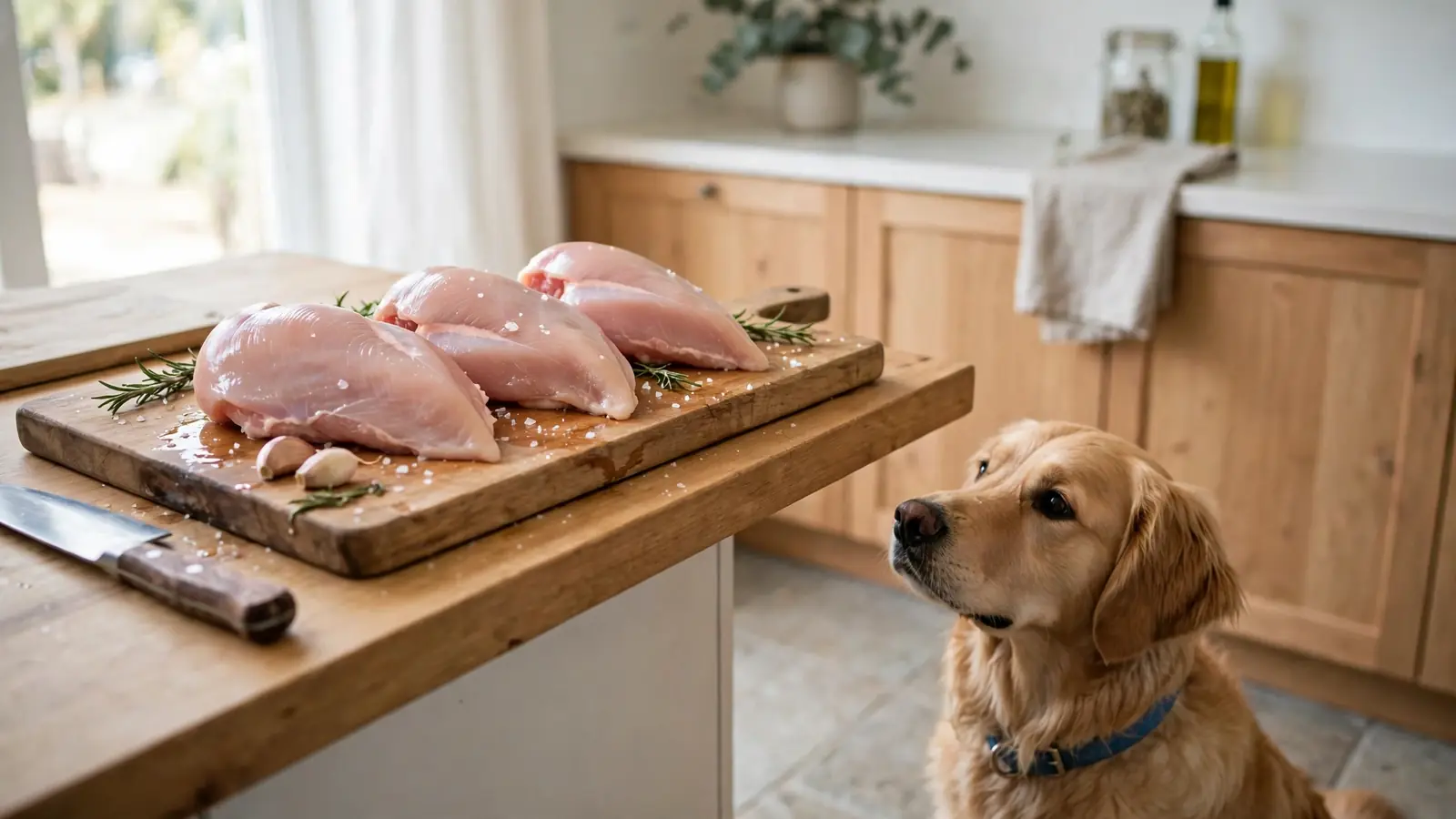
Start by consulting your vet before making raw chicken a habit. Buy from a reliable source, check freshness carefully, and keep the chicken sealed in the freezer to avoid cross contamination with other foods. Wear gloves while handling it or wash your hands immediately after, then dispose of the gloves instead of reusing them. If your vet advises against raw feeding, trust that guidance over online forums and social media claims.
Sanitize every surface the meat touches, because bacteria spread further than most people realize. Wash your hands with soap and water for at least 20 seconds after handling raw meat or bones, and after touching countertops, microwave and fridge interiors, utensils, bowls, or cutting boards.
Wash surfaces with hot soapy water first, then sanitize with disinfectant: one tablespoon of bleach per quart of water, or one quarter cup per gallon. A full dishwasher cycle works too for items that fit.
What to Do If Your Dog Ate Raw Chicken
If can dogs eat raw chicken was a question you asked too late, stay calm and match your response to what your dog actually ate.
- Raw chicken bones involved: contact your vet. Bones can splinter or cause blockages even when they went down easily, so professional guidance beats guessing.
- A large amount of raw meat: call your vet immediately. Bigger servings mean bigger bacterial loads and more risk, so this is not a wait and see situation.
- A small amount of plain raw meat: watch for vomiting, diarrhea, appetite loss, dehydration, fever, or lethargy. Consult your vet if any sign appears, even a mild one.
- Symptoms can show up any time within a week, so keep monitoring for a full seven days even if your dog seems fine at first. Note what your dog ate and when, since your vet will ask.
Can Dogs Get Salmonella from Raw Chicken?
When owners ask can dogs eat raw chicken, salmonella is usually the fear behind the question.
The short answer is yes. Raw food greatly increases the risk of illness for both pets and people. Puppies, geriatric dogs, and immunocompromised dogs face the highest risk, and even healthy looking dogs can shed bacteria without showing a single symptom.
Infected dogs can pass bacteria to humans through stool or saliva, including through licks on faces or hands. This is a major reason the FDA and AVMA oppose feeding raw chicken to dogs. The risk extends beyond your dog to everyone in the home, which makes raw feeding a household decision, not just a pet one.
FAQs About Raw Chicken and Dogs
A few more answers for owners still sorting out the raw chicken question in their own kitchen.
Can dogs eat raw chicken bones?
No. Raw chicken bones can splinter, choke, or block the intestines, and the danger exists even when the bones look soft. If your dog swallows any, contact your vet rather than waiting for symptoms to appear.
Can dogs eat raw chicken feet?
Feet carry the same bone risks as the rest of the bird. They can splinter or cause blockages in the throat or gut, so skip them and offer a purpose made chew toy instead. Your dog gets the chewing satisfaction without the hazard.
Is cooked chicken safe for dogs?
Plain cooked chicken without skin, bones, spices, or sauces is a much safer choice. It works well as a training treat or mixed into a complete diet. Cooking removes the bacterial risks while keeping the flavor dogs love, which makes it the easy winner. Shredded plain chicken also hides pills well and works as a gentle meal topper for dogs with a low appetite.
Can my dog get sick from licking raw chicken juice?
Yes, bacteria transfer easily through saliva and contact with contaminated surfaces. Wash bowls, hands, and counters after any contact with raw chicken, and keep your dog away from prep areas while you cook. A baby gate in the kitchen doorway solves this neatly.
What if my dog eats raw chicken regularly and seems fine?
A lack of symptoms does not mean a lack of risk. Dogs can shed harmful bacteria without looking sick, putting everyone in your household at risk through normal contact. Talk to your vet about switching to cooked options or a complete diet that covers nutrition safely.
The Bottom Line: Can Dogs Eat Raw Chicken?
So can dogs eat raw chicken? Technically yes, but the bacterial, nutritional, and bone risks make it a poor choice for any dog. Plain cooked chicken delivers the flavor dogs love without the danger, and it fits neatly into training and mealtimes.
The safer route is a complete balanced dog food, and grain free and natural options exist for owners who want simpler ingredient lists. Your vet can recommend a feeding plan that fits your dog’s age, size, and health history. Explore more of our feeding guides to build a diet that keeps your dog healthy and your kitchen stress free.
Related Feeding Guides
Keep exploring what dogs can and cannot eat:
Keep Exploring
Browse the full A to Z dog breed collection to find your perfect match, or explore more cat breed guides.