Can Dogs Eat Lamb Bones? Safety Guide
Can Dogs Eat Lamb Bones?
No bones are safe for dogs, and lamb bones are no exception. Learn why bones splinter, the obstruction warning signs, and what to do.
By Emily Carter · Reviewed by our vet team · Updated October 2026
Safety NeverType BoneRisk Splinters, blockage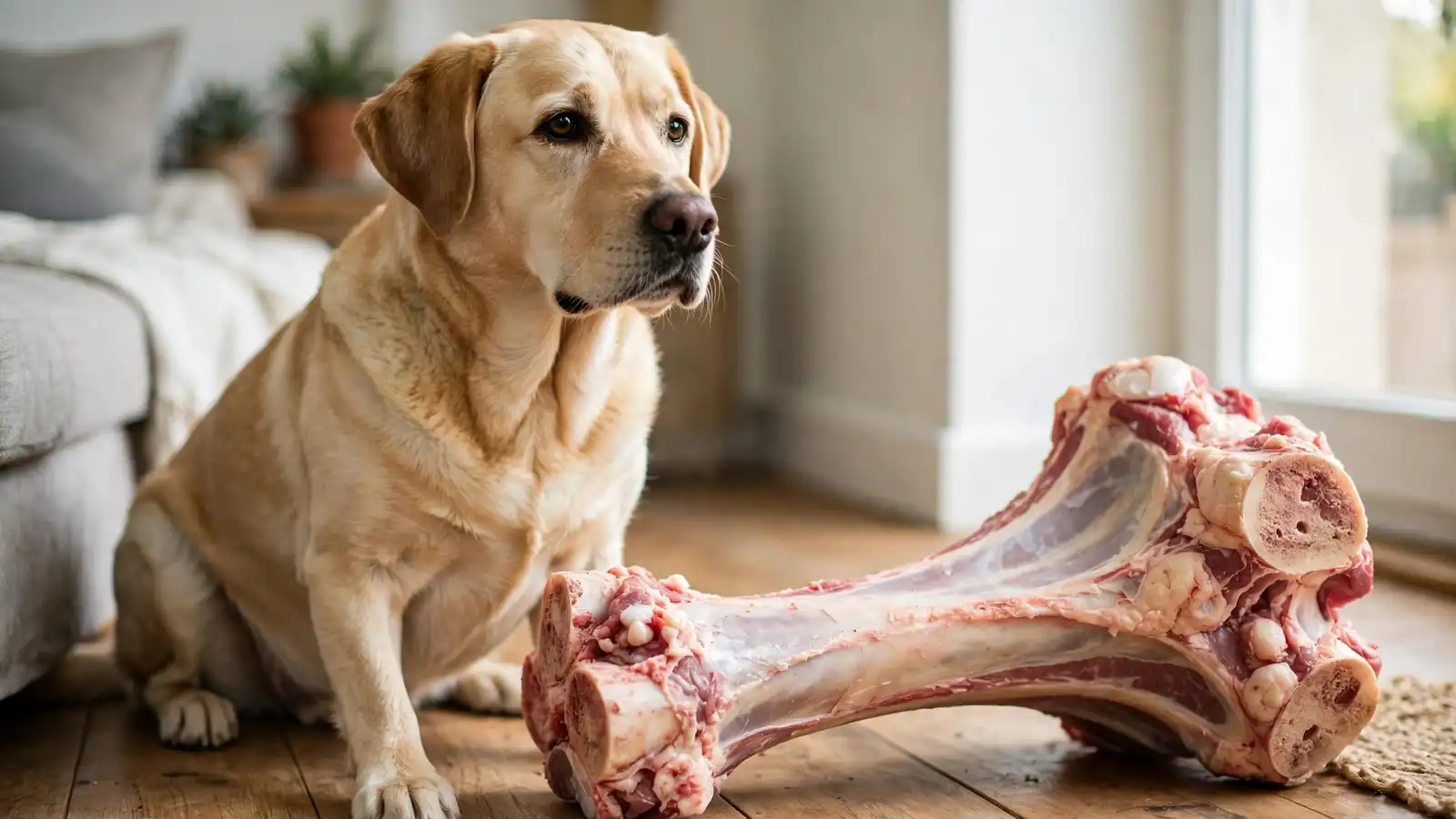
Your Sunday roast lamb is on the table and your dog is sitting right beside you, eyes locked on your plate. Sliding that leftover bone onto the floor feels like a generous little treat in the moment. It is one of the riskiest things you can hand to a dog.
Quick answer: No, dogs should never be given lamb bones or any other kind of bones. Lamb bones break into sharp pieces during chewing that can obstruct or tear the gastrointestinal tract. Cooking makes bones brittle, so they splinter and can puncture the intestines. Dogs get complete nutrition from a balanced diet and never need bones for health or teeth.
Can Dogs Eat Lamb Bones?
The short answer is no, and it does not change with the size of the bone. Vets advise against giving dogs any kind of bones, and lamb bones are no exception. So can dogs eat lamb bones? Not safely, and not ever as a treat.
The danger starts the moment your dog starts chewing. Pieces break off the bone during chewing, and those pieces can obstruct the gastrointestinal tract or damage it as they pass through. A lamb bone that looks solid on your plate turns into a collection of sharp hazards in your dog’s mouth.
This is why the question of can dogs eat lamb bones comes up so often, and why the answer never softens. A bone does not have to be swallowed whole to cause harm. Even small broken pieces can scratch the digestive lining or clump into a blockage further down.
Many owners worry that skipping bones will deprive their dog of something important. It will not. Bones are not needed for nutrition or for teeth. Dogs get all the nutrients they need from a high quality diet, so there is no health reason to ever offer a lamb bone.
At a Glance
Why Bones Are Dangerous for Dogs
What looks like a harmless chew session can cause real harm in several ways. Here is how bones injure dogs, step by step.
When a dog chews a bone, the broken chunks have sharp edges. Those edges scratch and damage the mouth, the throat, and the lining of the digestive tract. A piece can also lodge in the throat and cause choking. Smaller bones, like chicken bones, can even be eaten whole or chewed up quickly, which puts them into the gut before you can intervene.
The greatest danger comes from larger swallowed pieces. These can cause a gastrointestinal obstruction, which means food can no longer move through the digestive tract. A dog with an obstruction will often start vomiting, develop diarrhea, and become extremely sick very quickly.
Obstructions are emergencies. Many are fatal without very fast surgery, and even when surgery succeeds, the dog can be left with severe and sometimes irreparable damage to the digestive system. That is why the question of can dogs eat lamb bones gets such a firm no: the worst case outcome is as serious as it gets.
The obstruction risk is the detail that surprises owners most when they look into can dogs eat lamb bones. A dog can chew happily for twenty minutes and then swallow one piece the wrong way. Once a blockage forms, the clock starts ticking toward emergency surgery.
Cooked Bones vs Raw Bones: Can Dogs Eat Lamb Bones Cooked?
Neither version is safe. Cooking only takes a dangerous item and makes it worse.
Cooked bones are especially dangerous because heat turns them brittle. A cooked lamb bone splinters under chewing pressure, and those splinters can puncture the intestines. Intestinal perforations cause very serious injury and demand emergency care.
Raw bones are not a safe alternative either. A raw lamb bone still breaks into pieces while a dog chews it, and those pieces can still obstruct or damage the gastrointestinal tract. The risk of choking on a lodged piece is just as real with raw bones.
So whether the bone came off your dinner plate or out of the butcher’s case, the guidance is identical. Vets advise against giving dogs any kind of bones, cooked or raw, and lamb bones fall squarely under that warning.
Some owners wonder if a meaty bone with lots of tissue on it is different. It is not. As long as the bone itself is within reach, a determined chewer will work down to it. When it comes to can dogs eat lamb bones of any style, the safest answer stays no.
Signs of Gastrointestinal Obstruction
A dog that swallowed bone pieces may look fine at first. Trouble can build quietly, so knowing the warning signs of obstruction or digestive damage matters.
The signs of a bone related emergency overlap with ordinary stomach upset, which is why owners sometimes delay. If you know your dog got hold of a bone, treat every symptom on this list as urgent. That is the practical side of knowing why can dogs eat lamb bones is answered with a no: you already know the likely cause, so you can skip the guessing.
Call your vet right away if you notice any of the following:
- Choking or coughing
- Coughing up blood
- Excessive salivation
- Blood in the saliva
- Difficulty eating
- Not wanting to eat
- Lethargy or withdrawal
- Retching or vomiting
- Diarrhea
- Straining to pass feces
- A sore or contracting abdomen
- Excessive whining or whimpering from pain
Do not try to diagnose the problem at home or wait to see if it passes on its own. These signs mean your dog needs professional help, and the sooner the better.

What to Do If Your Dog Ate a Bone
Act fast and call your vet. Do not wait for symptoms to appear before you pick up the phone.
If your dog may have swallowed a bone, contact the vet immediately. Tell them what happened and be ready to answer questions about the size of the bone and the material it was made of. Based on your answers, the vet will advise whether your dog needs to be seen right away.
Prevention is the other half of the plan. Keep a scavenging dog on a leash and under close watch, both at home and outside, so it never gets the chance to grab a bone from the trash, the table, or the ground on a walk. If you actually see your dog eat something it should not, call the vet right away rather than hoping for the best.
At home, the simplest habit is to clear plates and trash bins before your dog gets curious. Outdoors, scan the path ahead on walks, especially near parks and picnic spots where leftover bones end up on the ground. Many dogs behind the question can dogs eat lamb bones were never given bones on purpose. They found them.
Prompt intervention is key. The earlier your vet knows what your dog swallowed, the more options they have to help. The moment can dogs eat lamb bones turns into my dog just ate a lamb bone, every minute counts.
FAQs About Dogs and Bones
Can Dogs Have Lamb Bones?
No. That question is really the same one with different wording, and the answer stays the same. Lamb bones of any kind, cooked or raw, can break into pieces that obstruct or damage the digestive tract. Keep them away from your dog completely.
Can Dogs Eat Lamb?
This guide covers bones only, and the facts about lamb meat itself are a separate topic. If you are wondering whether plain cooked lamb meat is fine for your dog, ask your vet. What is clear is that the bones should never be part of the meal.
What if my dog swallowed a small bone and seems fine?
Still contact your vet immediately. Smaller bones can be eaten whole or chewed up, and damage can develop after the fact. Your vet may want to examine your dog or monitor them even when nothing looks wrong yet.
Are large lamb bones safer because the dog cannot swallow them whole?
No. A large bone still breaks into pieces during chewing, and those larger swallowed pieces are exactly what causes gastrointestinal obstruction. Size does not make a bone safe.
Do dogs need bones to keep their teeth clean?
No. Bones are not needed for teeth or for nutrition. A high quality diet gives your dog all the nutrients it needs. If you want safe chew options for dental health, your vet can recommend products that do not carry the risks of real bones.
Can my dog chew a bone if I watch them the whole time?
Supervision does not remove the risk. Pieces break off during chewing faster than you can react, and a single swallowed splinter can cause choking or a serious intestinal injury. The safest choice is to never offer the bone at all.
When it comes to can dogs eat lamb bones, the answer is a clear and consistent no. Lamb bones break into sharp pieces during chewing, cooked bones splinter and can puncture the intestines, and no bone is worth the risk of an obstruction or an emergency surgery. Your dog gets everything it needs from a balanced, high quality diet.
Any time you catch yourself wondering can dogs eat lamb bones, remember the simple rule behind the answer. No bone is worth a choking scare, a blocked gut, or a trip to the emergency vet. Keep bones off the menu and your dog out of the operating room.
Want to keep your pup safe at mealtime? Explore more of our feeding guides to learn which foods are safe for dogs and which ones to keep off the menu.
Related Feeding Guides
Keep exploring what dogs can and cannot eat:
Keep Exploring
Browse the full A to Z dog breed collection to find your perfect match, or explore more cat breed guides.