Can Cats Have Peanuts? Safety, Risks and Serving Guide
Can Cats Have Peanuts?
Peanuts are a popular snack, but should cats eat them? Here is what to know about safety, salt and seasoning risks, and better treat choices.
By Emily Carter · Reviewed by our vet team · Updated October 2026
Safety Not recommendedType LegumeServing Best avoided

Movie night comes with a bowl of peanuts, and suddenly a whiskered face appears at your elbow. Cats are famously curious about whatever their people are eating, even snacks that were never meant for them.
Quick answer: So can cats have peanuts? Plain, unsalted peanuts are not acutely toxic to cats, but they offer no nutritional benefit and carry real risks from salt, flavorings, choking, and high fat. Peanut butter is riskier still, since many brands contain xylitol, which is dangerous for pets.
Cats are obligate carnivores, which simply means their bodies are built to run on meat rather than plant foods. Still, plenty of owners wonder, can cats have peanuts as an occasional nibble, and this guide gives you the full picture.
Below you will find what peanuts do and do not offer a cat, the risks worth knowing, the truth about peanut butter, and the safest way to handle it if your cat already stole one off the table.
Can Cats Have Peanuts?
Let us get the headline answer out of the way first.
Plain, unsalted, shelled peanuts are not acutely toxic to cats. If your cat crunches one peanut that fell on the floor, there is no need to panic and no midnight vet run required.
That said, not toxic is a long way from good idea. Peanuts offer a cat virtually no nutritional benefit, since feline bodies are tuned for animal protein and fat, not legumes.
Think of it this way: a peanut is harmless in tiny quantity and pointless as a snack. It is not something to offer on purpose, any more than you would hand your cat a bottle cap to chew.
So can cats have peanuts? Technically yes in the smallest amounts, but there is no good reason to make it a habit, and better treats exist for every situation.
At a Glance
Are Peanuts Bad for Cats?
Not poisonous, but far from harmless. Here is where the trouble hides.
The honest answer to are peanuts bad for cats depends entirely on the type, which is exactly why the question can cats have peanuts keeps coming up. A single plain peanut is a non event. A bowl of honey roasted peanuts is a different story with a different ending.
Salt is the first problem. Flavored and salted peanuts carry far more sodium than a cat’s system is built to handle, and excess salt can cause serious trouble for sensitive cats, especially those with kidney or heart conditions.
Then there are coatings and flavorings. Spices, garlic powder, and sweet glazes add ingredients a cat’s stomach was never designed to process, turning a borderline snack into a genuinely bad idea.
High fat is the quieter risk. Peanuts are energy dense, and fatty snacks can upset digestion in the short term and contribute to weight gain over time, which matters for indoor cats.
Portion size tricks a lot of people. A tablespoon of peanuts is a light snack for a person and a heavy load for an eight pound cat. Everything about safe quantities scales down with body weight, which is another reason the can cats have peanuts answer stays cautious.
Risks of Feeding Peanuts to Cats
Beyond salt and fat, a few specific hazards deserve their own spotlight.
Choking comes first on the list. Whole peanuts are just the right size and shape to lodge in a small throat, especially for kittens or enthusiastic gulpers who barely chew.
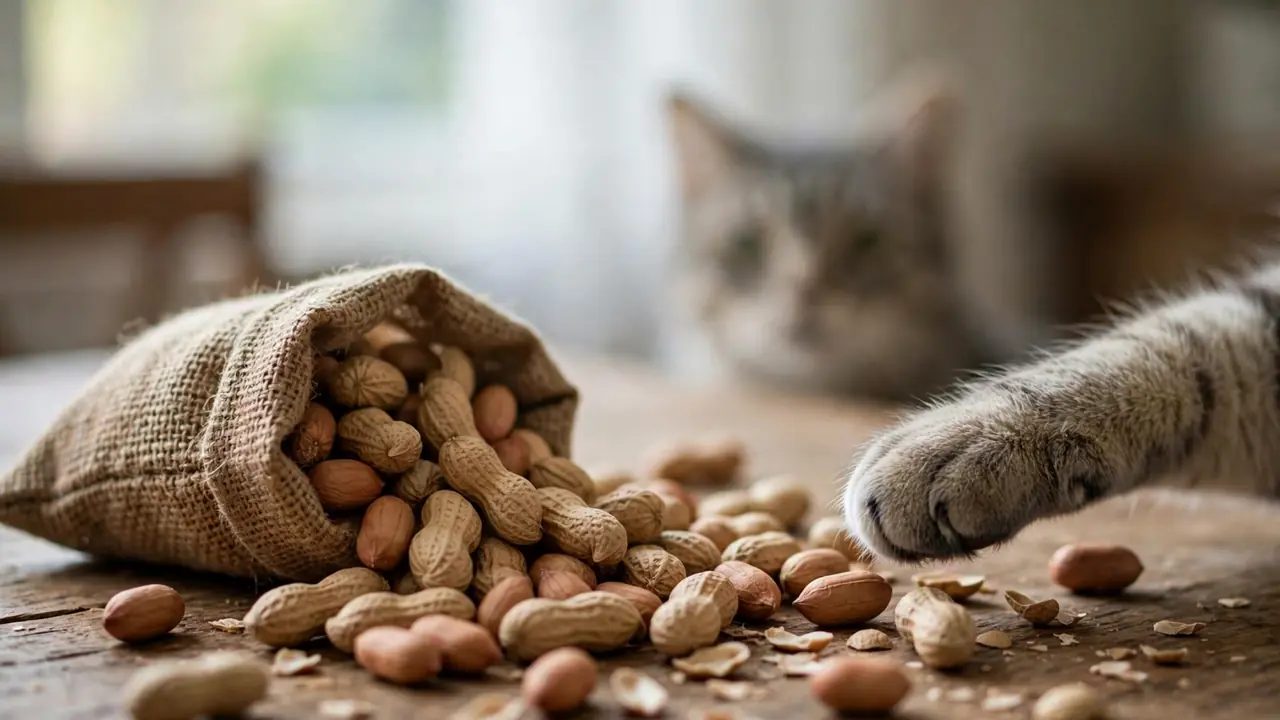
Shells are worse than the nut itself. They are sharp, fibrous, and hard to digest, so peanuts still in the shell should never be within paw reach. Sweep up shells after snacking.
Mold is a hidden danger with badly stored peanuts. Old or damp peanuts can harbor molds that produce toxins, so the freshness of the jar on your shelf matters as much as the nut inside it.
If your cat already has a sensitive stomach, even plain peanuts can trigger vomiting or diarrhea. And remember the core question behind can cats have peanuts: even when the answer is technically yes, the payoff is zero.
Can Cats Eat Peanut Butter?
This is where a maybe turns into a firm no.
Peanut butter concentrates everything risky about peanuts: more fat, more salt, and often added sugar. For a cat, it is a worse deal than the plain nut in every way. That is why the can cats have peanuts question gets a harder no the moment peanut butter enters the picture.
The real danger is xylitol, a sweetener used in many sugar free peanut butters. Xylitol is dangerous for pets and can trigger a rapid, life threatening drop in blood sugar, so any product containing it must stay far from paws.
Even xylitol free peanut butter is too rich and salty for a cat’s system, with zero nutritional payoff for an obligate carnivore. There is simply nothing in the jar your cat needs.
Sticky texture adds one more practical concern. Thick peanut butter can glue itself to the roof of a cat’s mouth, causing distress and frantic pawing at the face. Combined with the fat, salt, and xylitol worries, the case against sharing keeps getting stronger.
If your cat licks a knife with peanut butter on it, check the label for xylitol immediately. If xylitol is listed among the ingredients, call your vet right away rather than waiting for symptoms to appear.
How to Offer Peanuts Safely (If At All)
The honest advice is do not, but here is the harm reduction version.
If you insist on sharing, offer one single plain, unsalted, shelled peanut, and stay nearby to make sure it is chewed and swallowed without trouble. One is plenty, and one is the limit.
Never offer peanuts for cats as a routine treat. There are far better snacks formulated for feline nutrition, and a peanut habit has no upside worth defending.
If a friend asks, can cats have peanuts, give them the short version: technically yes in tiny amounts, but wisely never as a habit. It is one of those questions where the simplest answer is also the safest one.
Keep the peanut jar closed and off the counters. Most peanut incidents are thefts, not gifts, so prevention beats cure every single time.
Good alternatives scratch the same itch far more safely. Tiny bits of plain cooked chicken or a quality commercial cat treat deliver the protein cats actually need. For anyone still tempted by peanuts for cats, those swaps win on every measure that matters.
FAQs
My cat ate a peanut. Should I worry?
One plain peanut is no cause for alarm. Watch for choking or vomiting in the next hour, and call your vet if your cat ate flavored peanuts, shells, or a large handful.
Is one peanut okay as a rare treat?
A single plain peanut on a rare occasion is unlikely to cause harm, which is the most generous possible reading of can cats have peanuts. Just do not let rare become routine, since the risks climb with repetition.
Can kittens have peanuts?
The same rules apply, with extra caution. Kittens have tinier throats, which makes the choking risk higher, so keeping peanuts away entirely is the smartest move.
Why does my cat like peanuts anyway?
Mostly curiosity. Cats explore the world with their mouths and are drawn to interesting smells and textures, which explains the fascination better than any nutritional craving.
Can cats have peanut shells?
No. Shells are sharp, fibrous, and difficult to digest, and they add a choking hazard on top. Always sweep up shells where cats roam.
Final Thoughts
So can cats have peanuts? The fair summary is this: not toxic, not useful, and mildly risky around the edges. A stolen peanut is not an emergency, but there is never a nutritional reason to hand one over deliberately.
If this guide helped settle the great peanut debate in your house, share it with a fellow cat owner. And for more straight answers on everyday foods, explore our other feeding guides.
Related Feeding Guides
Keep exploring what cats can and cannot eat:
Keep Exploring
Browse the full A to Z dog breed collection to find your perfect match, or explore more cat breed guides.