Blue Sea Star Facts: Colour, Size and Regeneration
Blue Sea Star Facts: Colour, Size and Regeneration
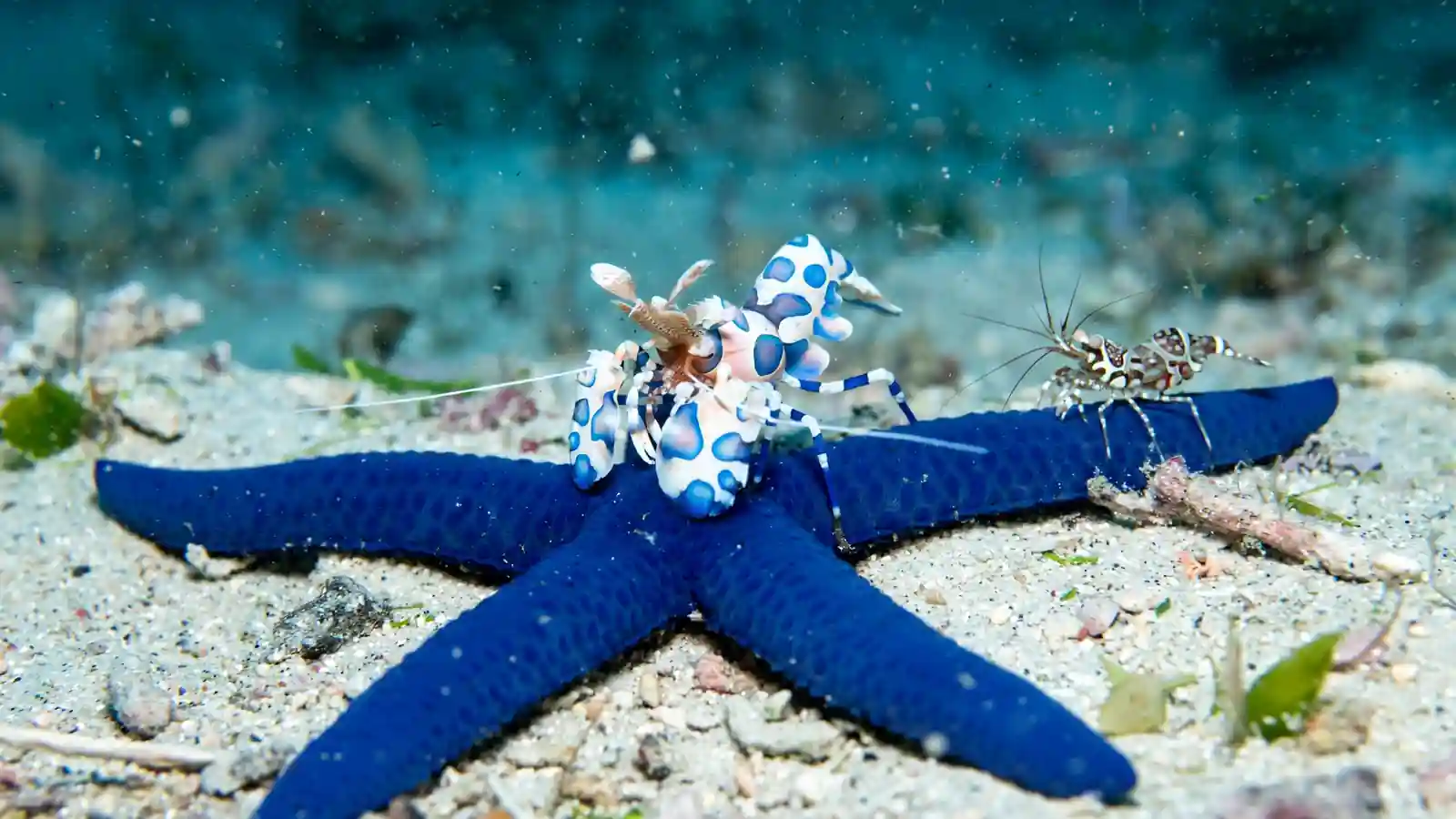
The blue sea star is a vivid cobalt star sprawled across Indo-Pacific reefs, grazing the thin film of life that coats the coral and crawling, unhurried, at eight centimetres a minute. It is one of the most photographed animals on the reef — and one of the most remarkable, because it can regrow a whole body from a single arm.
By Emily Carter · Reviewed by our vet team · Updated 10 November 2026 · 9 min read
Cobalt blue on Indo-Pacific reefs30–40 cm acrossRegrows a body from one arm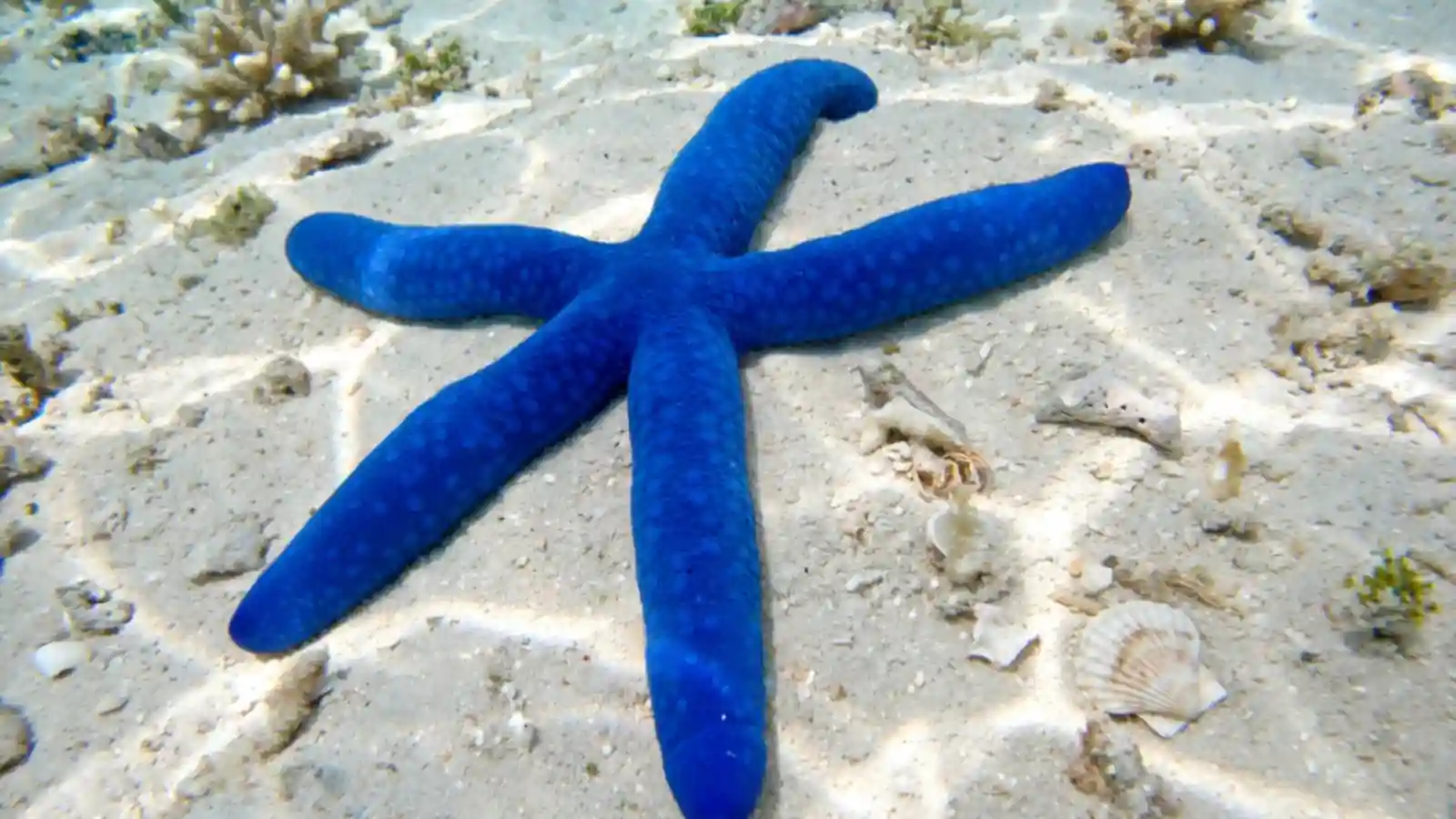
At a Glance
The blue sea star is the reef’s blue beacon. Linckia laevigata is a five-armed starfish in a cobalt blue so vivid it seems painted on, and it lives on shallow Indo-Pacific reefs where divers see it every day. It does not hunt, it does not chase, and it does not hide. It crawls across the coral, grazing the thin film of algae and micro-organisms that coats the surface, and it moves so slowly that a diver can watch it for minutes and barely see it change position.
Blue Sea Star Size: A 40 cm Cobalt Star
It grows to 30 to 40 centimetres across, arm tip to arm tip, which makes it one of the larger starfish on the Indo-Pacific reef. The arms are long, smooth and cylindrical, tapering gently to a rounded tip, and the central disc is small compared with the length of the arms — the classic star shape, drawn in cobalt.
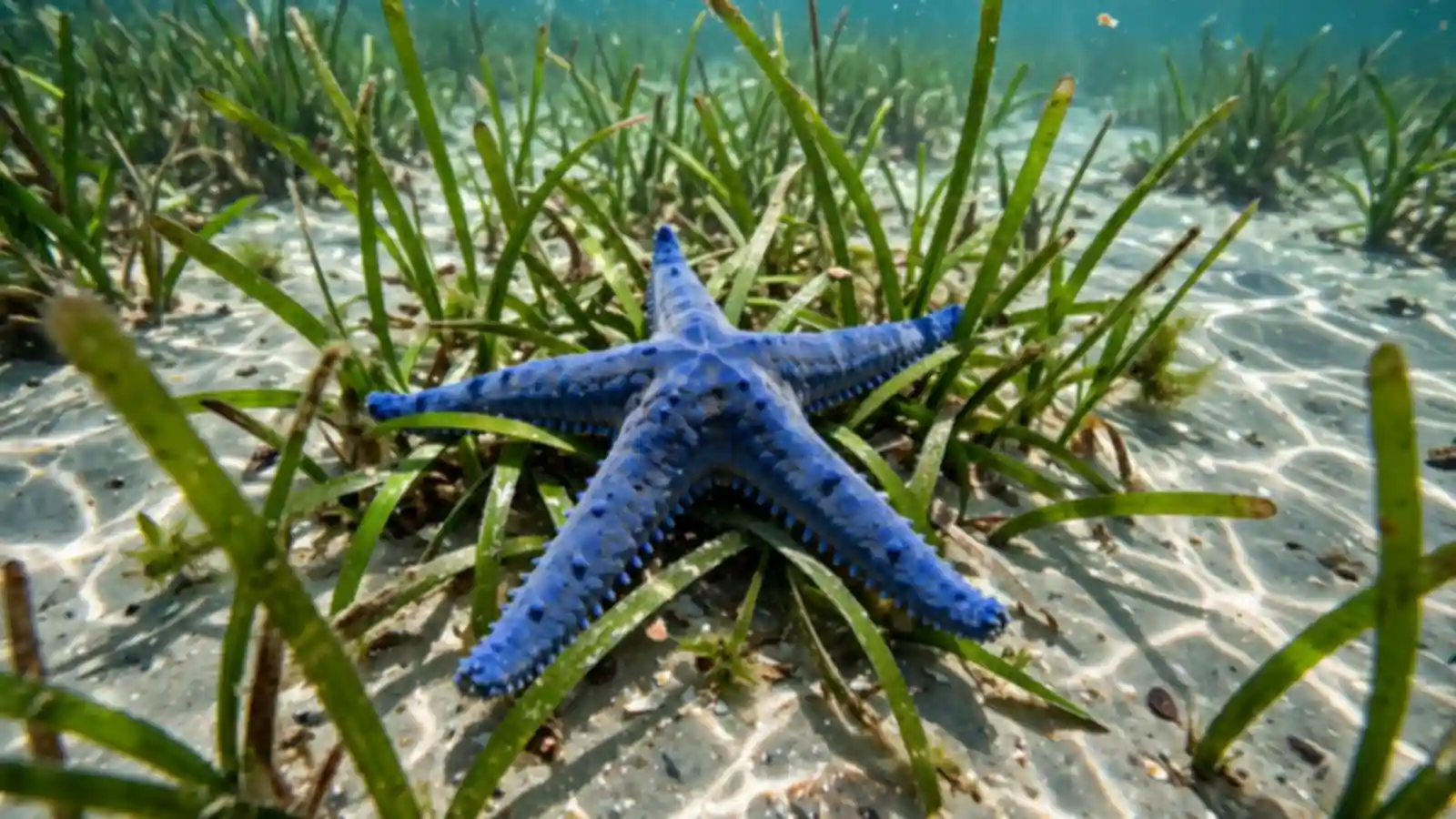
The size is about reach. A starfish that spans 40 centimetres can graze a wide patch of reef without moving its disc, and its arms can reach into crevices and over coral heads that a smaller animal could not touch. The long arms are also the key to its most famous trick, because a single arm, if it keeps a piece of the central disc, can grow into a whole new starfish.
Growth is slow. It reaches its full size over several years, and a large animal is an old one — which is why the biggest stars on a reef are often the ones that have survived the longest, dodging the predators and the storms that take their smaller neighbours.
Why Is the Blue Sea Star Blue?
Its colour comes from pigments in its skin, not from anything it eats, and the blue is unusually vivid for a reef animal — a deep, saturated cobalt that stands out against the brown and green of the coral. The colour varies a little by individual, from sky blue to deep indigo, and it can fade in a stressed or dying animal, which is one reason aquarium keepers watch the colour as a sign of health.
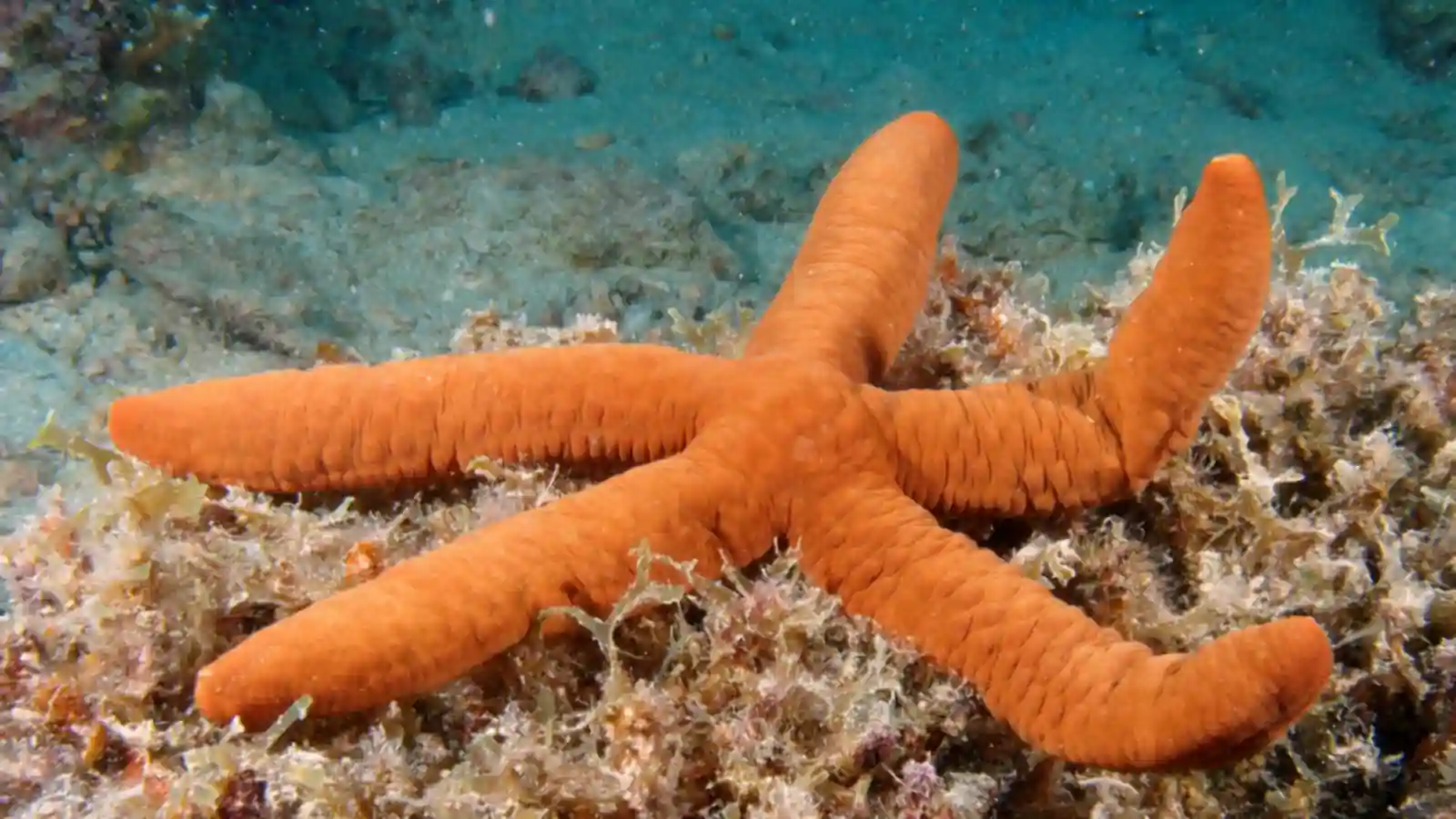
The colour is probably a warning as much as a display. Blue is rare on the reef, and a vivid blue animal is advertising that it is not worth eating — its skin contains compounds that taste bad, and predators that try one rarely try a second. The colour says, in the reef’s language, that this starfish is defended.
The blue is also a test of the water. In an aquarium, a sea star that fades to grey or pale blue is usually a starfish in trouble — stressed by poor water, wrong salinity or a lack of food. In the wild the colour stays strong for the animal’s whole life, which is about ten years, and a bright blue star on the reef is a healthy star.
Habitat: Indo-Pacific Reefs
It lives on shallow Indo-Pacific reefs, from the Red Sea and East Africa across to the western Pacific, in water from the shallows down to about 60 metres. It favours reef flats and slopes with plenty of hard coral, where the biofilm it grazes is thickest, and it is most often seen in the daytime, out in the open, moving slowly across the coral.
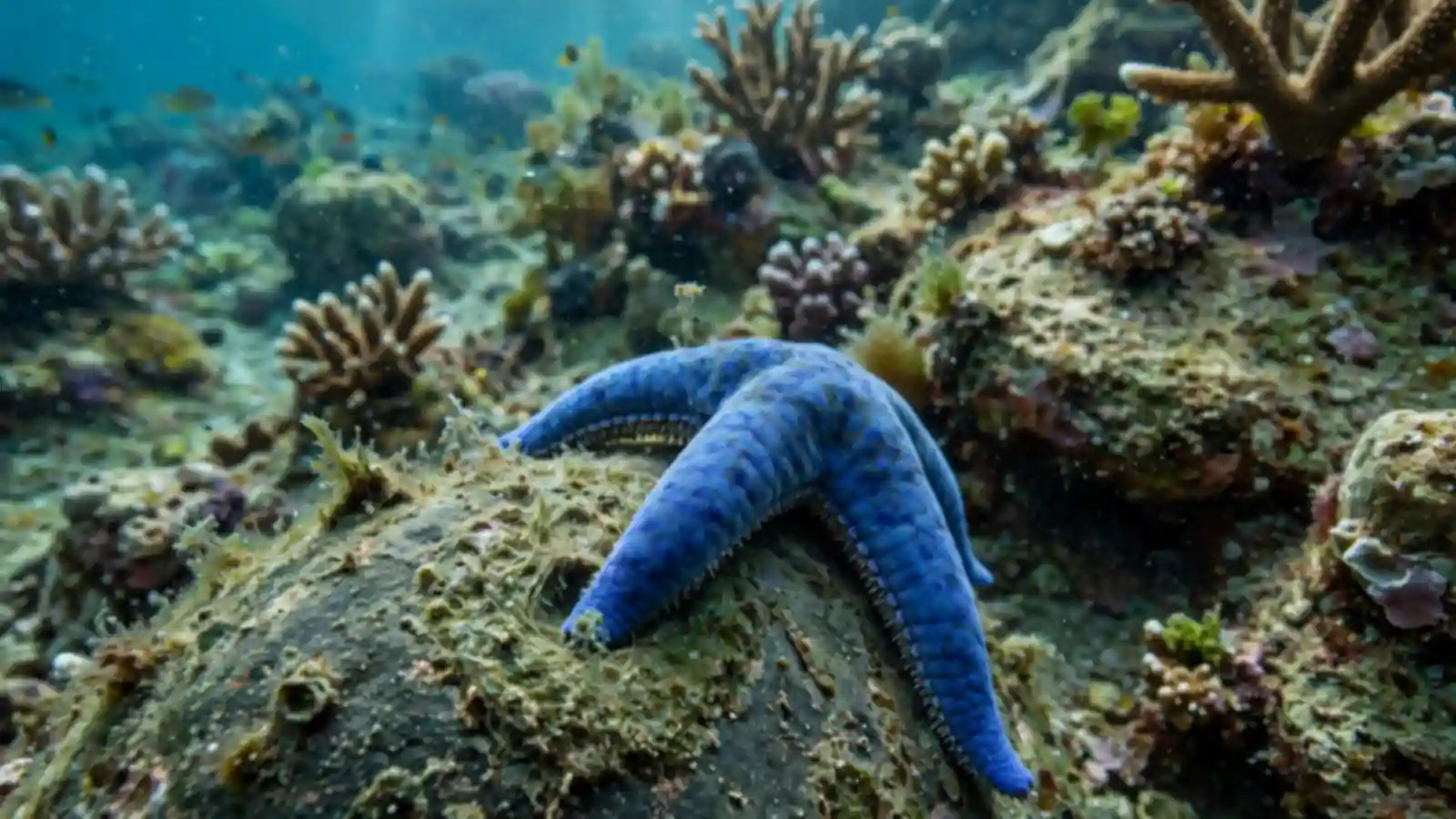
The range is wide but not universal. It is an Indo-Pacific animal, and the eastern Pacific has its own sea star — Phataria unifascialis, a different species that shares the colour and the common name but not the identity. The two are not the same animal, and this guide is about the Indo-Pacific Linckia laevigata, the one divers meet from the Maldives to the Great Barrier Reef.
The habitat is the reef itself, and the starfish is part of its surface. It crawls over coral heads, along sand channels and across rubble, grazing as it goes, and it returns to the same patches day after day. A reef with blue sea stars is a reef with a healthy grazing community — and a reef without them is often a reef that has lost something.
What Do Blue Sea Stars Eat?
It eats the film of life that coats the reef. It grazes on biofilm — the thin layer of algae, bacteria and micro-organisms that grows on every coral surface — and on detritus, the organic debris that settles on the reef. It does not hunt, it does not pry open shells, and it does not evert its stomach like some starfish do. It crawls, it grazes, and it moves on.
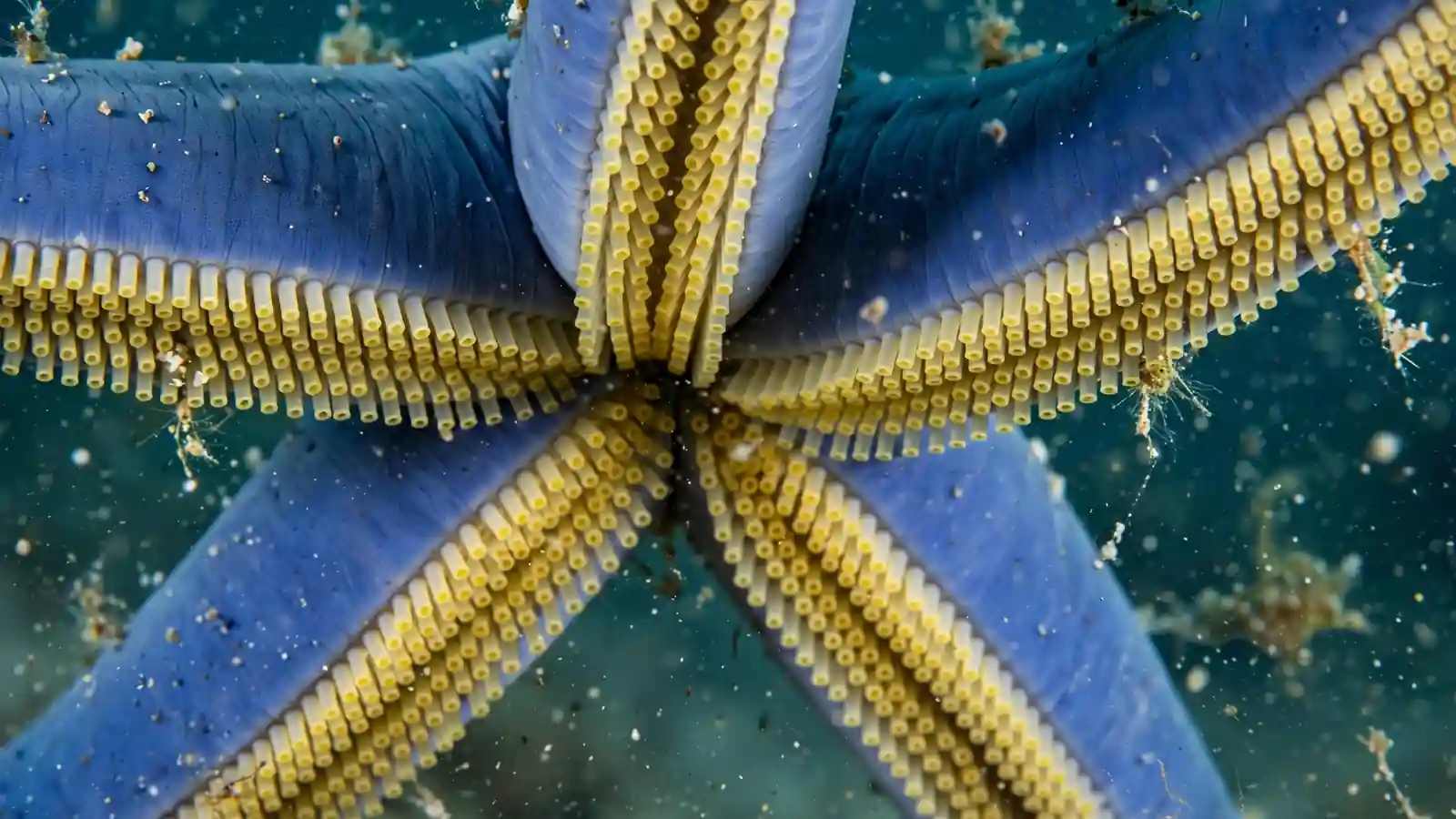
The grazing is slow and thorough. The starfish crawls at about eight centimetres a minute, and its tube feet grip the coral while its mouth, on the underside of the central disc, scrapes the biofilm from the surface. The animal’s long arms let it reach across a wide area without moving the disc, and a single starfish can clean a patch of reef in a day.
The diet is also why it is hard to keep in an aquarium. A tank that looks clean to a human has almost no biofilm for a starfish to eat, and a sea star in a new tank can starve slowly, fading from blue to grey as it weakens. In the wild the reef provides a constant supply, and the starfish’s slow crawl is a life spent grazing an endless table.
Regeneration: The Comet That Becomes a Star
Its most famous trick is regeneration. If a starfish loses an arm, it grows a new one — and if a single arm keeps a piece of the central disc, that arm can grow into a whole new starfish. The new animal starts as a “comet”, a single long arm with a tiny disc at one end, and over months the disc grows and four new arms bud from it, until the comet is a five-armed star again.
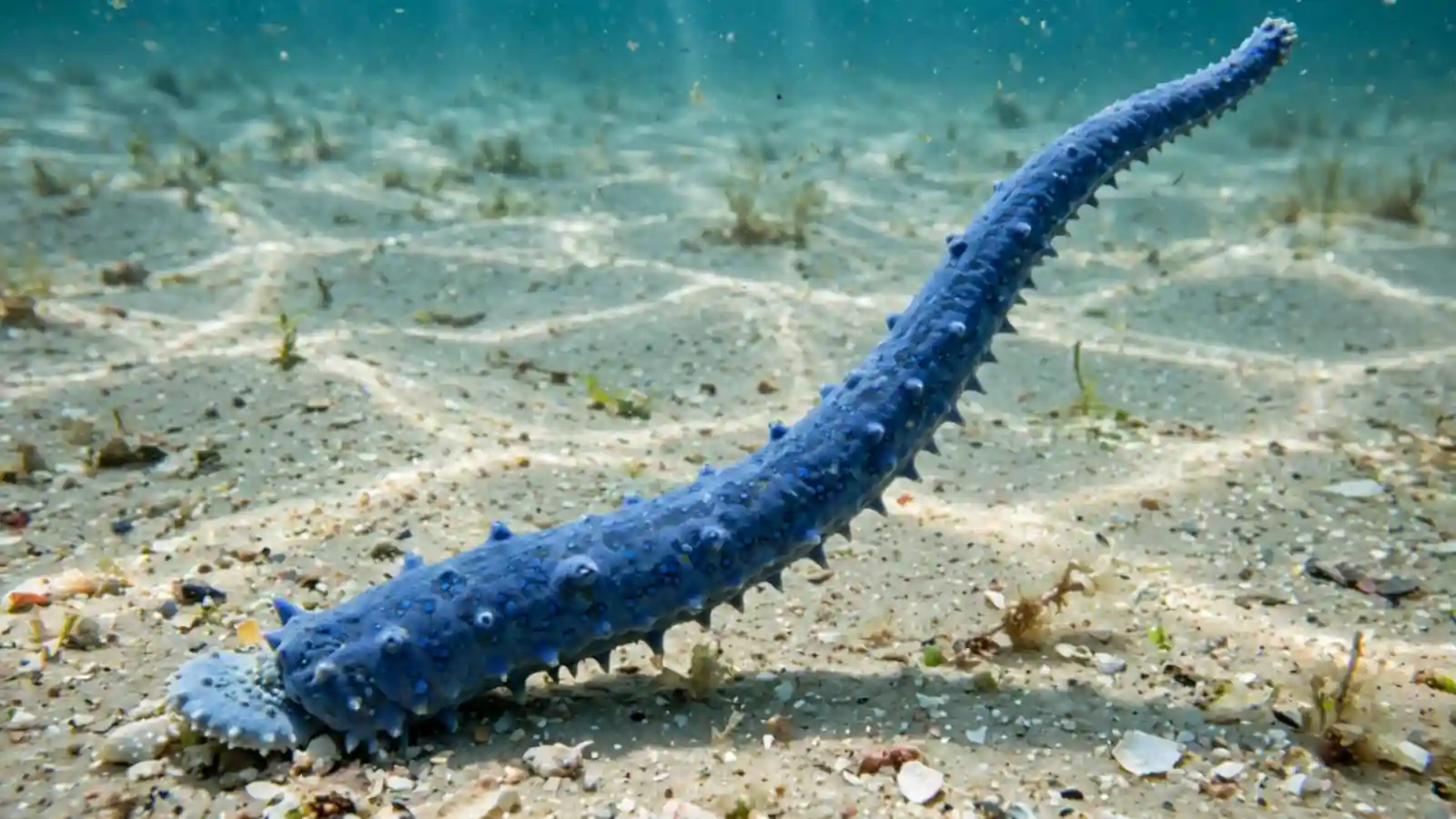
The trick is not magic, but biology. A starfish’s vital organs are spread through the disc and the arms, not concentrated in one place, so a fragment that keeps a piece of the disc keeps enough of the animal to rebuild the rest. The new arms grow slowly, a few millimetres a week, and the comet is vulnerable while it regrows — but the ability to rebuild a whole body from a fragment is one of the most remarkable regenerative feats in the animal kingdom.
Regeneration is also a defence. A predator that grabs an arm gets the arm, not the starfish, because the starfish can drop the arm and crawl away, and then regrow what it lost. The arm it drops may even become a new starfish, if it keeps a piece of the disc — so one attack can produce two starfish, and the predator that thought it had a meal has instead doubled the population.
Blue Sea Star Predators — and the Aquarium Trade
Its predators are few, because its skin is defended by bitter compounds and its colour advertises the fact. Large fish, crabs and the occasional sea turtle will take one, and the crown-of-thorns starfish, a fellow echinoderm, is known to prey on other starfish — but most predators leave the blue star alone, and the animal’s main defence is simply being unappetising.
The bigger threat is the aquarium trade. Its colour makes it one of the most collected starfish for home aquariums, and the trade takes large numbers from Indo-Pacific reefs every year. The problem is not just the collection — it is that most of the collected animals die. It needs a mature reef tank with a thick biofilm to graze on, and most home tanks cannot provide it, so the animal fades and starves within months.
There is no formal IUCN assessment for it, so this guide does not print an IUCN status — it is not formally assessed by IUCN. A Western Australian museum listing of Least Concern is a regional listing, not an IUCN status, and is not printed as one here. What is certain is that the trade’s demand is high and the survival rate in captivity is low, which is why the sea star guide from TheSea and other sources warn buyers to think carefully before taking a reef animal home.
Fun Facts
- A single arm with a piece of the disc can regrow into a whole new starfish.
- The new starfish starts as a “comet” — one long arm with a tiny disc.
- It crawls at about 8 cm a minute.
- Its vivid blue colour is a warning: the skin tastes bad to predators.
- The eastern Pacific has its own sea star — Phataria unifascialis, a different species.
- It lives about 10 years on the reef, grazing biofilm all day.
Frequently Asked Questions
What is the blue sea star?
The blue sea star is Linckia laevigata, a five-armed starfish in a vivid cobalt blue that lives on shallow Indo-Pacific reefs. It grows 30 to 40 cm across, grazes on biofilm and detritus, and can regrow a whole body from a single arm that keeps a piece of the central disc.
Why is the blue sea star blue?
The colour comes from pigments in its skin, not from anything it eats, and it is probably a warning as much as a display — blue is rare on the reef, and the colour advertises that the starfish’s skin contains compounds that taste bad. A starfish that fades to grey is usually stressed or starving.
How big do blue sea stars get?
Thirty to 40 centimetres across, arm tip to arm tip. The arms are long, smooth and cylindrical, tapering to a rounded tip, and the central disc is small compared with the length of the arms. Growth is slow, and a large animal is an old one.
What do blue sea stars eat?
Biofilm — the thin layer of algae, bacteria and micro-organisms that coats the reef — plus detritus. It crawls at about eight centimetres a minute, scraping the biofilm from the coral with its mouth on the underside of the disc. It does not hunt or pry open shells.
Can a blue sea star regrow a whole body from one arm?
Yes, if the arm keeps a piece of the central disc. The fragment starts as a “comet”, a single long arm with a tiny disc, and over months the disc grows and four new arms bud from it until it is a five-armed star again. A lost arm without a piece of the disc only regrows the arm.
Where do blue sea stars live?
On shallow Indo-Pacific reefs, from the Red Sea and East Africa across to the western Pacific, in water from the shallows down to about 60 metres. The eastern Pacific has its own blue sea star, Phataria unifascialis, a different species that shares the colour and the common name.
Are blue sea stars endangered?
The blue sea star is not formally assessed by IUCN, so this guide does not print an IUCN status. A Western Australian museum listing of Least Concern is a regional listing, not an IUCN status. The main pressure is the aquarium trade, where most collected animals die because home tanks cannot provide the biofilm they need.
Similar Species Worth Exploring
Keep Exploring
Cobalt blue, eight centimetres a minute, and a whole body rebuilt from a single arm — keep exploring the blue sea star.