Porcupinefish
Porcupinefish: the reef fish that turns into a spiky ball
The porcupinefish is the reef’s inflatable defence — a slow, round fish covered in sharp spines that swallows water and blows itself up into a spiky ball when a predator comes close. It is not a pufferfish, though it is often mistaken for one, and its spines stay up even when it deflates.
By Emily Carter · Reviewed by our vet team · Updated 10 November 2026 · 7 min read
Inflates into a spiky ballSpines stay up when deflatedNot a pufferfish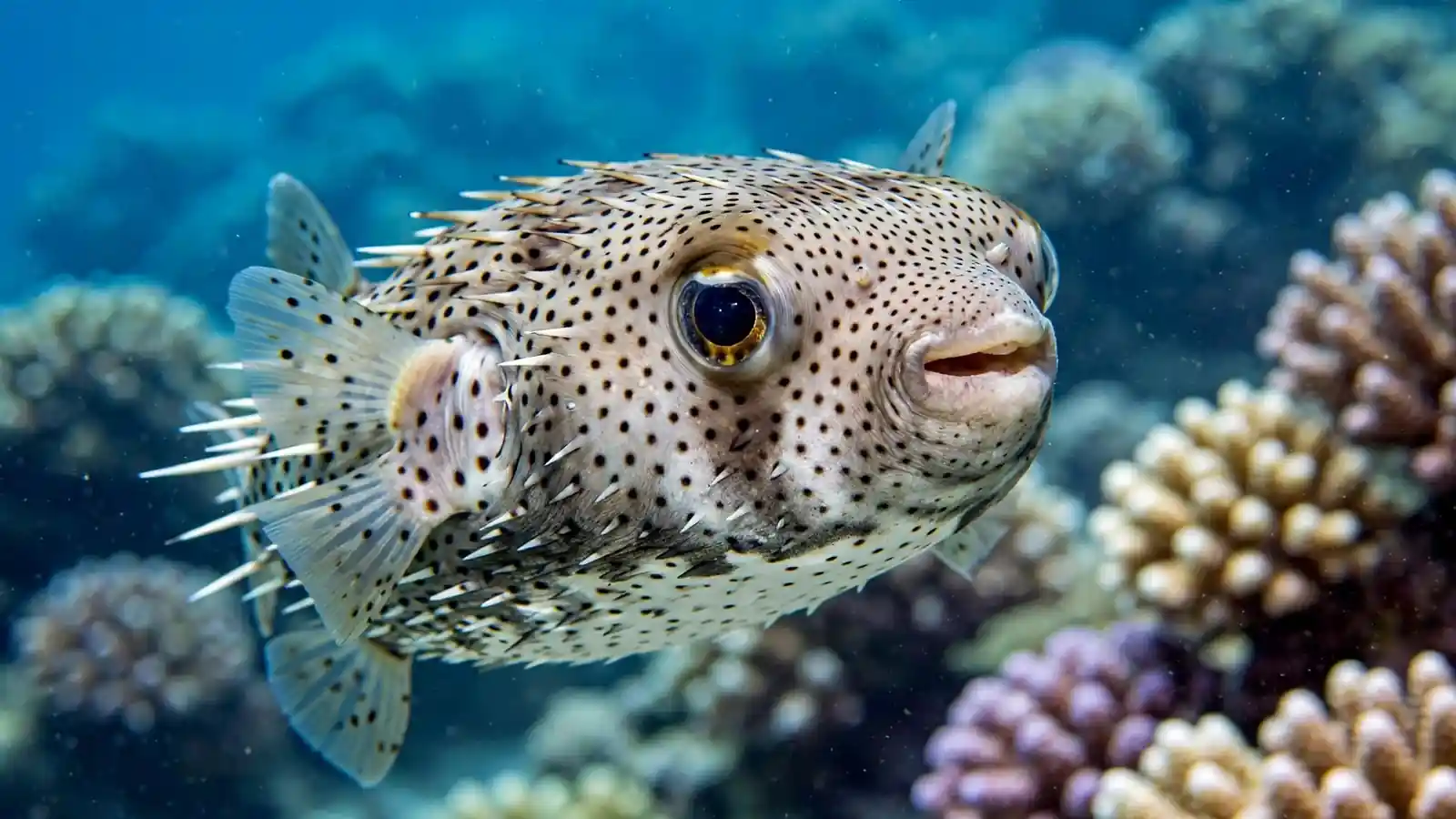
At a Glance
The porcupinefish is a slow, round reef fish of the family Diodontidae, anchored here on the spot-fin species, Diodon hystrix, the largest and best-known member of the family. It is famous for one trick: when threatened, it swallows water and inflates its elastic stomach until it is a spiky ball several times its normal size, with long, sharp spines pointing in every direction. Most predators take one look and leave it alone — and the spines stay erect even when the fish deflates, so it is never defenceless.
What Is It?
It is a reef fish with a round, blunt body, large eyes, a small beak-like mouth and a body covered in long, sharp spines. It belongs to the family Diodontidae, which holds about 18 species in tropical seas around the world. The spot-fin species is the biggest, reaching about 91 centimetres, and it is the one most divers meet — a big, slow, spotted fish hovering over the reef, watching everything with large, curious eyes.
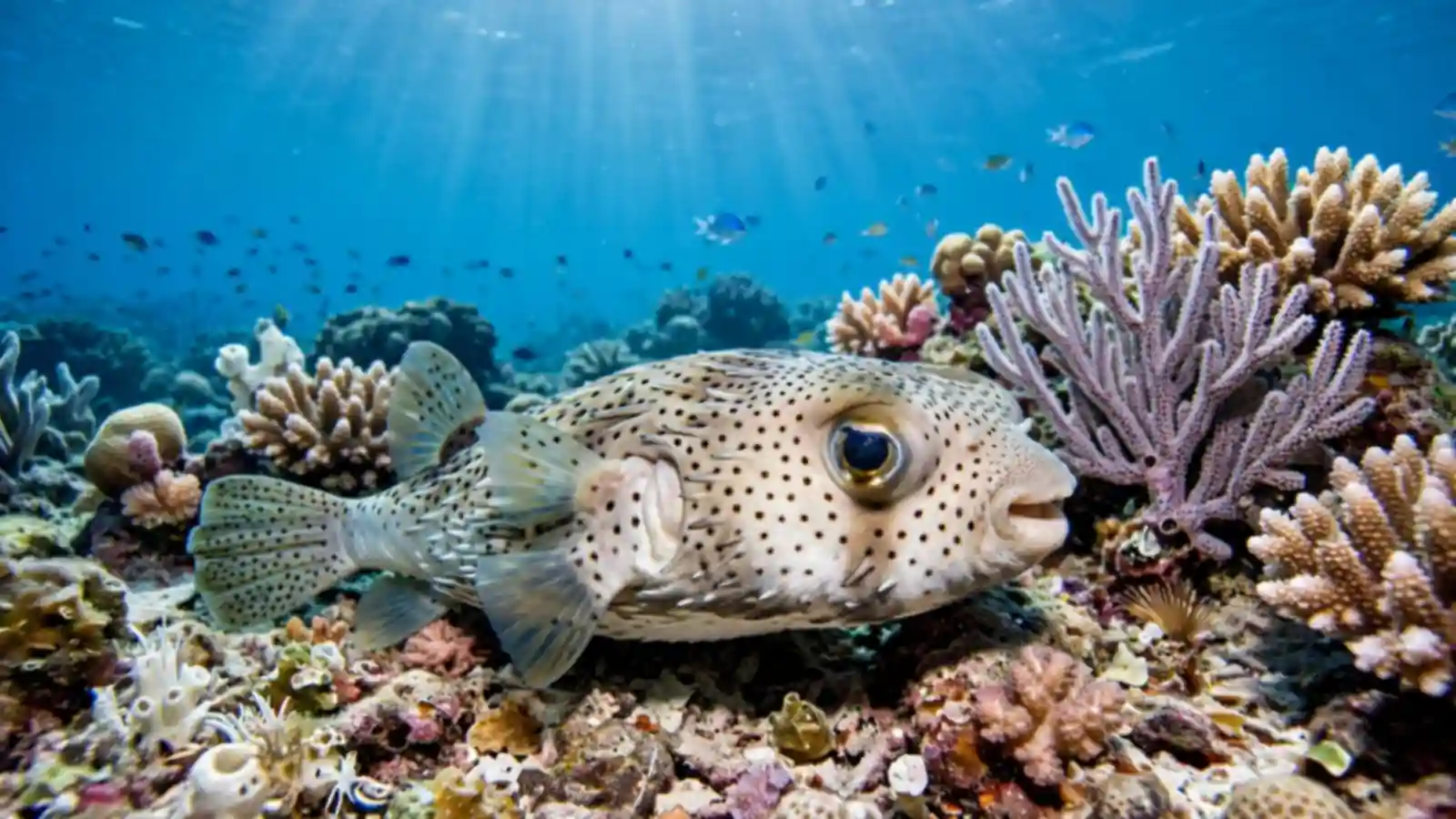
These fish are poor swimmers by design. Nothing about the body is built for speed, and nothing needs to be. They move slowly, using their fins to paddle and steer, and they rely on their defence rather than speed. They are nocturnal hunters, hiding in caves and under ledges during the day and coming out at night to feed. The species guide records the size, spines and feeding figures behind this guide.
Porcupinefish Size and Appearance
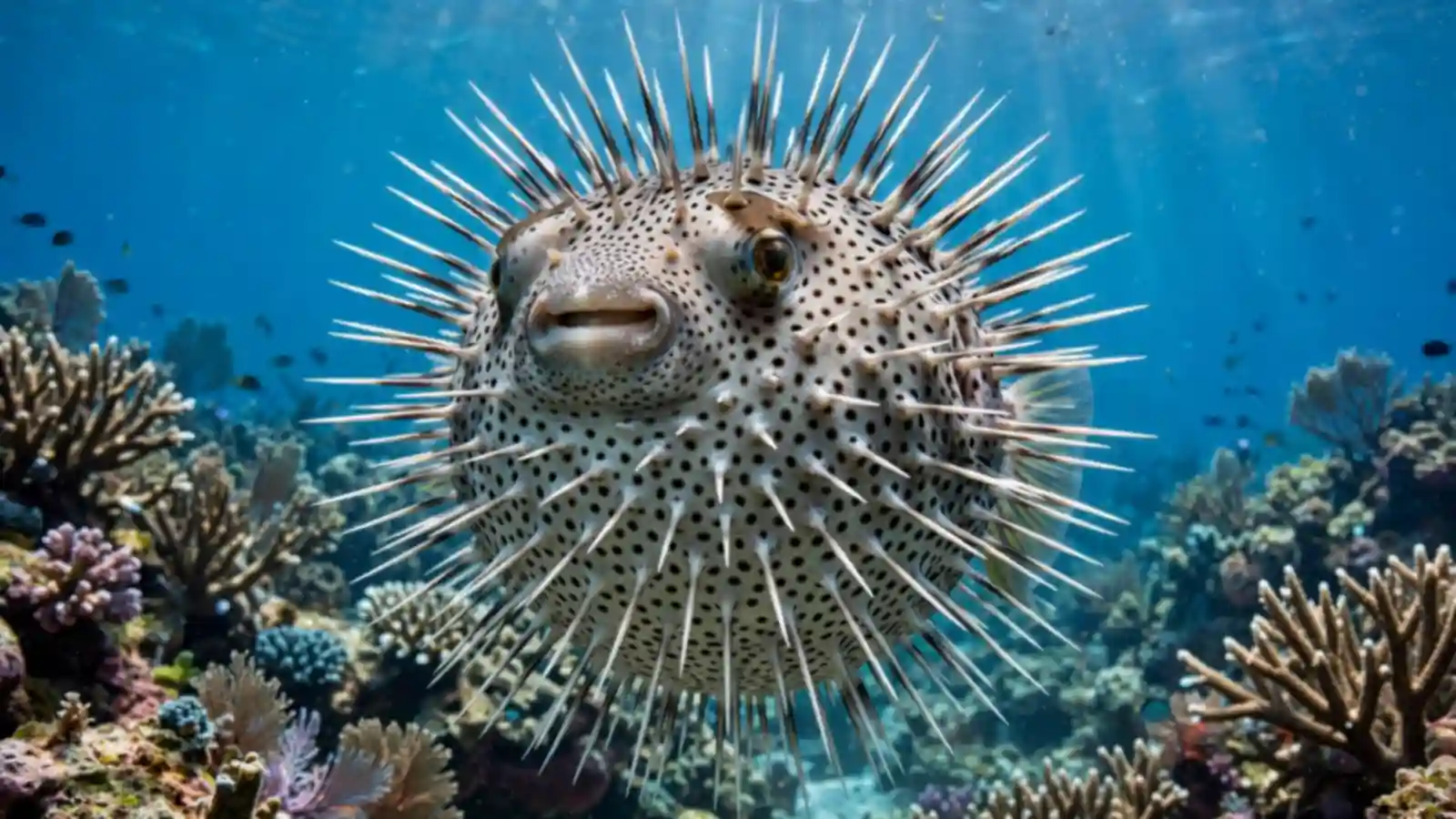
The spot-fin species grows to about 91 centimetres long, making it the largest of the family, and it can weigh up to about 2.8 kilograms. Its body is round and heavy, covered in spots — dark spots on a pale, yellowish-grey body — and the fins are spotted too. The spines are the defining feature: long, sharp and two-rooted, so they stand erect when the fish inflates and stay up even when it deflates.
The beak is another field mark. This fish has a small, parrot-like beak formed from fused teeth, which it uses to crush snails, crabs and sea urchins. It is heavy equipment for a fish that otherwise drifts, hovers and watches the reef go by. The eyes are large and set high on the head, giving the fish a watchful, almost comical expression. The young are smaller and often pelagic, drifting in the open ocean before settling onto the reef as adults.
Porcupinefish vs Pufferfish
These fish and pufferfish are close cousins, and they are often confused — but they are different fish, and the difference is easy to see. A pufferfish has a smooth or slightly prickly skin, with small spines that lie flat; this fish has long, sharp spines that stand erect. A pufferfish inflates into a smooth ball; this fish inflates into a spiky one. The two families are separate — these fish are Diodontidae, pufferfish are Tetraodontidae — and they have been separate for millions of years. The shared trick — swallowing water to swell — is older than either family, inherited from a common ancestor.

The confusion is understandable, because both inflate, both are slow, and both carry the same toxin in their organs. But the spines are the giveaway: if it looks like a pincushion, it is one of these fish. The pufferfish, this fish’s smooth-skinned cousin, inflates the same way but without the spines, and it is a different fish with a different defence.
How It Inflates
Inflation is its great trick, and it works like this: the fish swallows water — or air, if it is at the surface — into a special, highly elastic stomach, which expands until the fish is a ball several times its normal size. The spines, which lie flat when the fish is relaxed, are pulled erect by the stretching skin, and the fish becomes a spiky ball that few predators can swallow. The whole process takes seconds.
Deflating takes longer. The fish pumps the water back out through its mouth and gills, and the spines settle back down — but they never lie completely flat, so the fish is never fully defenceless. Inflation is stressful, and it costs the fish energy and oxygen, so it is a last resort, not a party trick. It should never be triggered for a photograph: a fish forced to inflate repeatedly can die from the stress. This fish inflates only when it must, and it would rather hide. Inflation is a last resort, used only when hiding and drifting away have already failed.
Spines and Burrfish
The spines are its signature, and they are built differently from any other fish’s. Each spine is two-rooted, anchored at two points in the skin, which is why it stands erect when the fish inflates and stays up when it deflates. The spines are sharp enough to puncture a predator’s mouth, and they are long enough to make the fish too big to swallow — a double defence that works even against sharks.
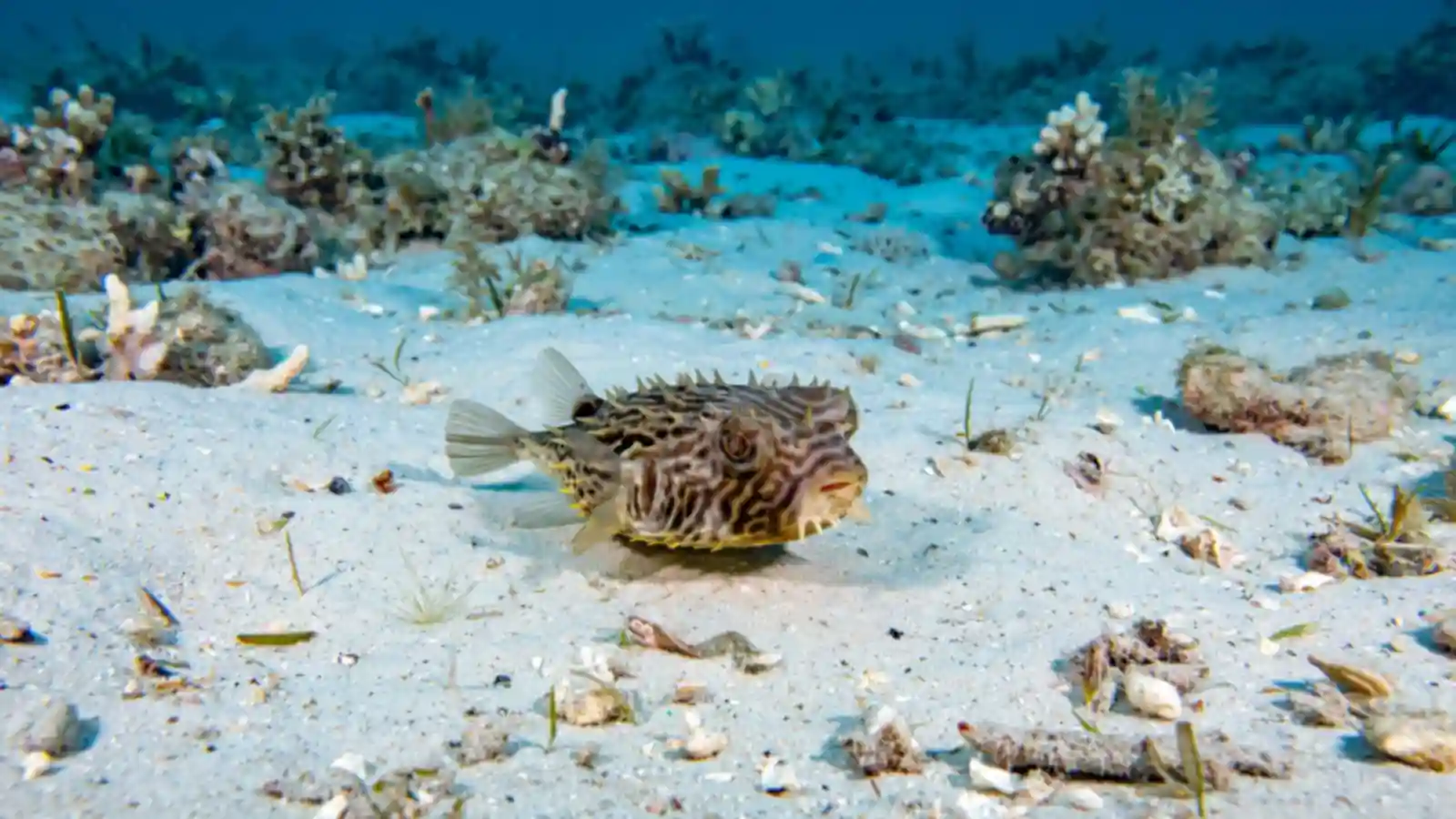
The burrfish are its close relatives, and they show the other end of the spine story: their spines are short, fixed and always erect, so they look spiky even when relaxed. Burrfish are smaller and rounder than these fish, and they do not inflate as dramatically — their defence is the fixed spines themselves. Together, these fish and burrfish make up the spiny half of the pufferfish family, and they are a reminder that on the reef, the best defence is often to be inedible. Spines, inflation and poison stack three defences on one slow fish, and predators learn to leave it alone.
Diet: Crushing Shells
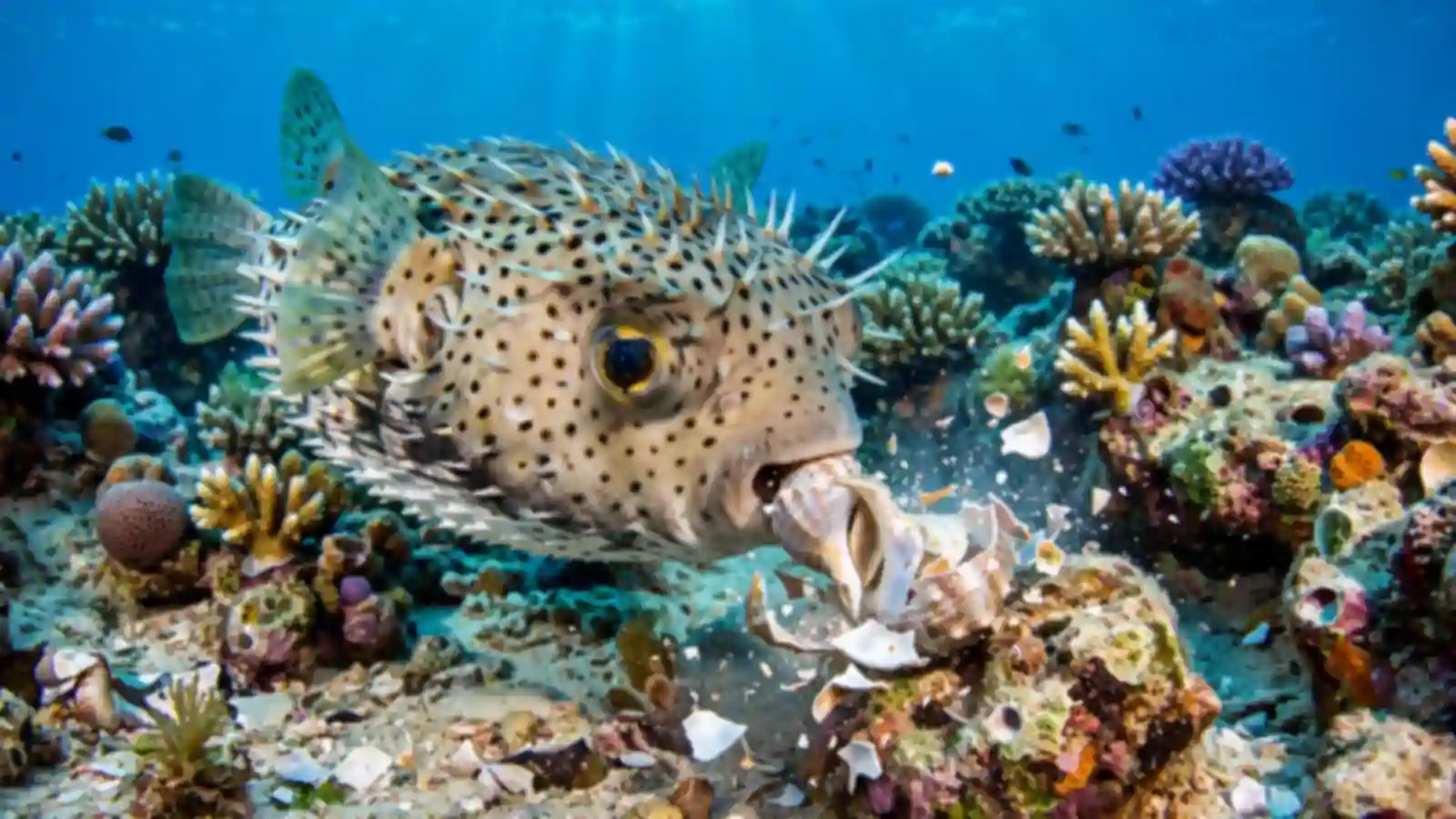
These fish eat hard food: snails, crabs, sea urchins, hermit crabs and other shelled animals, which they crush with their beak-like mouths. They hunt at night, rooting through the reef and the sand for prey, and they crush the shells with a crunch that divers can hear. The beak grows continuously, like a rodent’s teeth, and it is worn down by the constant crushing — a beak that never stops growing and never stops working.
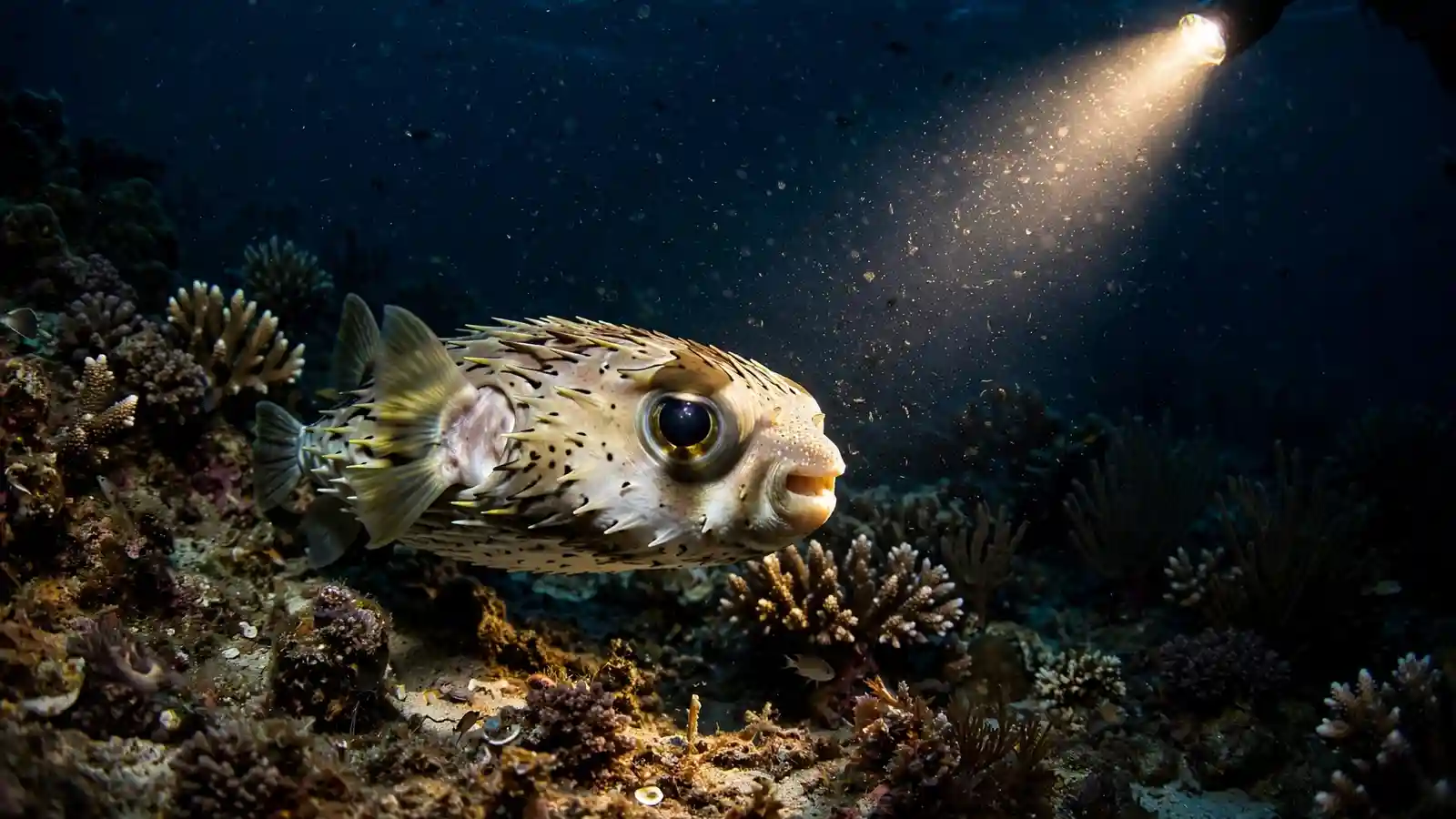
The diet is why this fish is nocturnal. Snails and crabs are easier to find at night, when they come out to feed, and its large eyes are built for low light. The same beak that cracks shells in the dark rests all day, hidden in the reef it patrols at night. During the day it rests in a cave or under a ledge, its spines a warning to anything that comes close. The lionfish, another nocturnal reef hunter, shares its night shift but hunts fish, not shells.
Fun Facts
- This fish can inflate into a spiky ball several times its normal size in seconds.
- Its spines are two-rooted, so they stay erect even when the fish deflates.
- These fish are not pufferfish — the spines are the giveaway. They stand up even when the fish is fully deflated and resting.
- The spot-fin species grows to about 91 centimetres, the largest of the family.
- Its beak grows continuously and is worn down by crushing snails and crabs.
- Inflation is stressful and should never be triggered for a photograph.
Frequently Asked Questions
Is a Porcupinefish the Same as a Pufferfish?
No — these fish and pufferfish are close cousins but different families. A pufferfish has smooth or slightly prickly skin, while this fish has long, sharp spines that stand erect. A pufferfish inflates into a smooth ball; this fish inflates into a spiky one.
How Do Porcupinefish Inflate?
It swallows water into a highly elastic stomach, which expands until the fish is a ball several times its normal size. The stretching skin pulls the spines erect, and the fish becomes too big and too spiky to swallow. It pumps the water back out to deflate.
How Big Do Porcupinefish Get?
The spot-fin species, the largest of the family, grows to about 91 centimetres long and up to about 2.8 kilograms. Most species in the family are smaller, from about 20 to 50 centimetres.
Are Porcupinefish Poisonous?
Its organs contain tetrodotoxin, the same toxin found in pufferfish, so they should never be eaten. The spines are sharp and can injure a predator or a person. Do not handle one, and never eat one.
What Do Porcupinefish Eat?
They eat snails, crabs, sea urchins, hermit crabs and other shelled animals, which they crush with their beak-like mouths. They hunt at night, rooting through the reef and sand for prey.
Why Do Porcupinefish Have Spines?
The spines are a defence: long, sharp and two-rooted, they stand erect when the fish inflates and stay up when it deflates, making the fish too big and too painful to swallow. Even sharks leave an inflated one alone.
Can Porcupinefish Hurt You?
Yes — the spines are sharp and can puncture skin, and the organs contain tetrodotoxin. It is not aggressive, but it should not be handled, and it should never be provoked into inflating, which is stressful and can kill the fish.
Similar Species Worth Exploring
Keep Exploring
Keep exploring the reef fish through the pufferfish, the smooth-skinned cousin that inflates without spines, the lionfish, the venomous night hunter, and the wider world of the types of fish. No reef fish turns defence into a spectacle quite like the porcupinefish.