
Doberman Dog Breed Guide
Doberman: the sleek, noble guardian
The sleek, noble guardian: athletic, intelligent, and deeply loyal. Training, care, and health in one complete guide.
By Emily Carter · Reviewed by our vet team · Updated 22 October 2026 · 9 min read
Lifespan 10–13 yrsWeight 60–100 lbLoyal & alert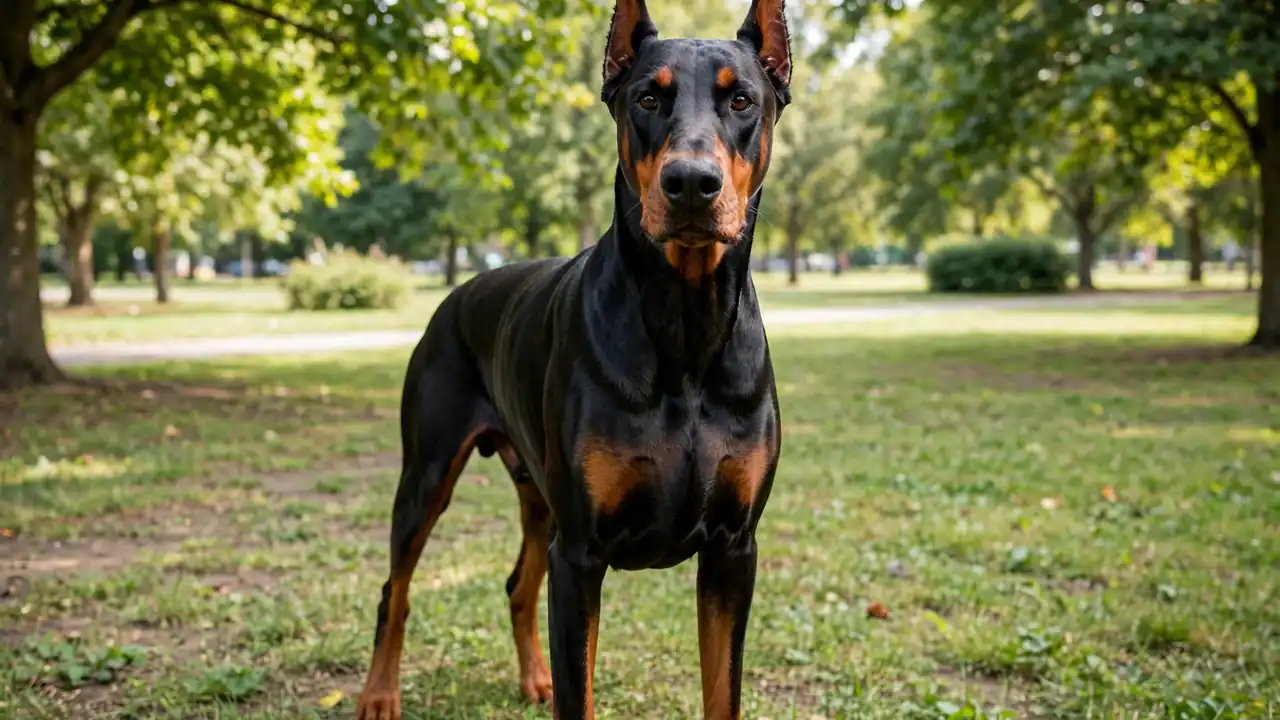
Doberman dog is the sleek, noble guardian: athletic, intelligent, and deeply loyal to its family. Here is what matters before you commit.
At a Glance
Size and Weight
Large, sleek, and powerful. Here are the numbers. The Doberman dog is large, sleek, and powerful.
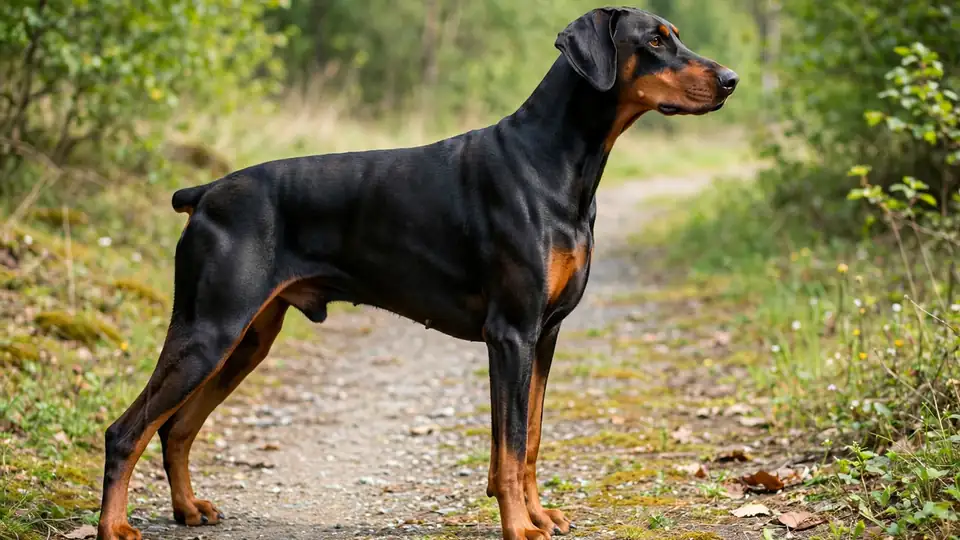
Males stand 26 to 28 inches and weigh 75 to 100 pounds; females are 24 to 26 inches and 60 to 90 pounds. The build is the definition of elegance and power combined.
They are imposing, which is part of the deterrent effect. Strangers notice this breed. The Doberman dog is imposing, which is part of its deterrent effect.
Coat and Colors
Short, sleek, and easy. Here is what to expect.
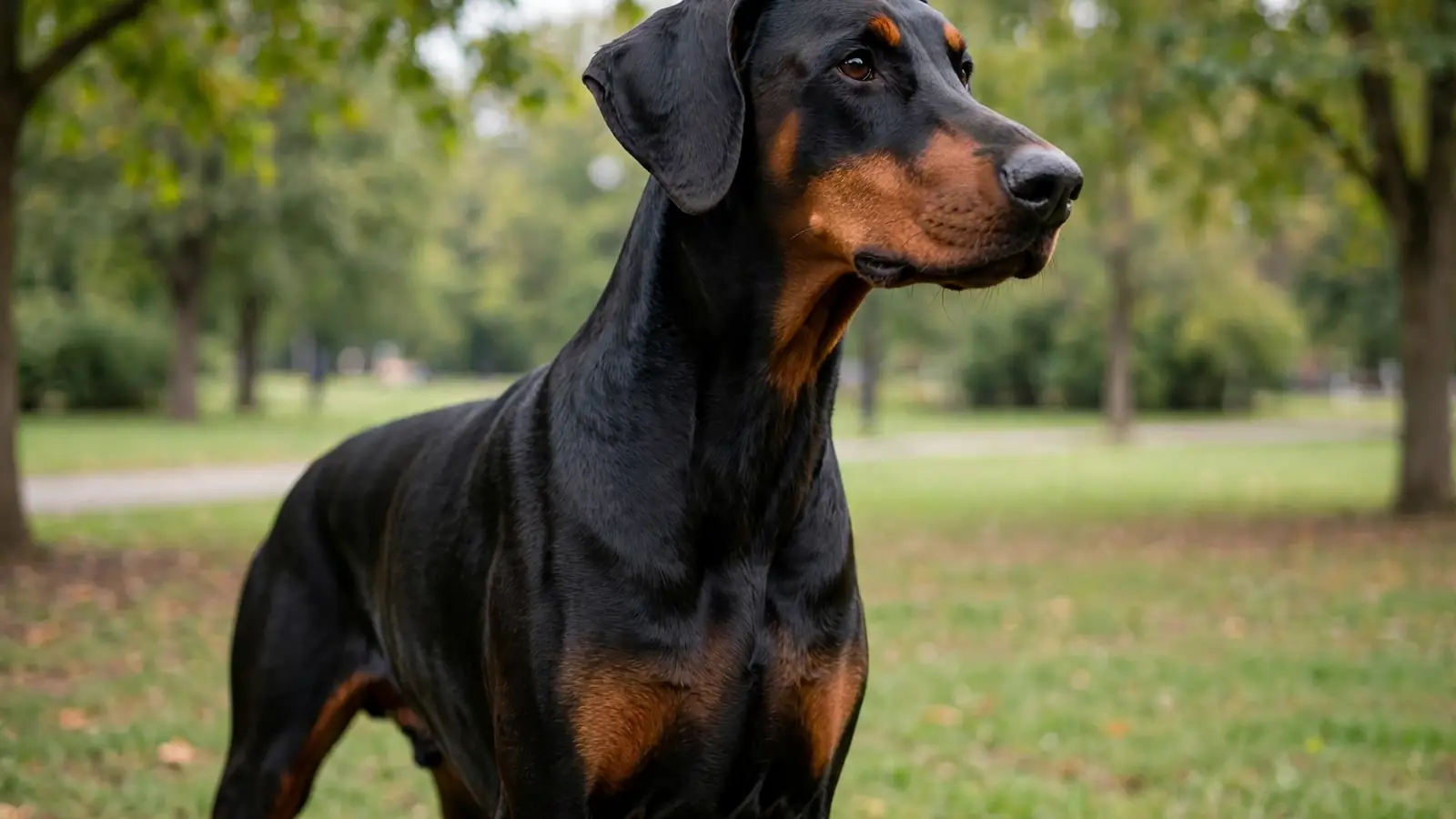
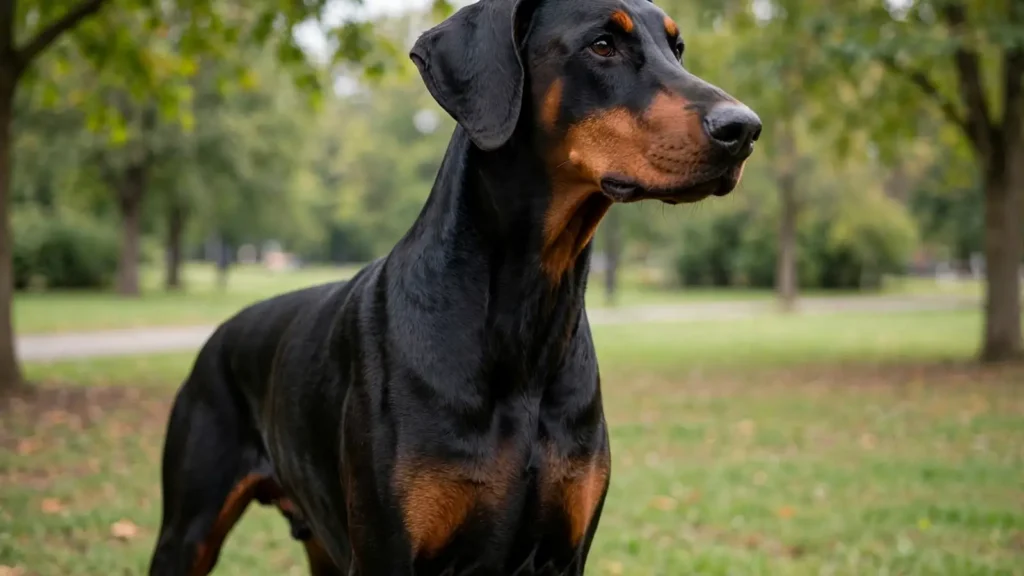
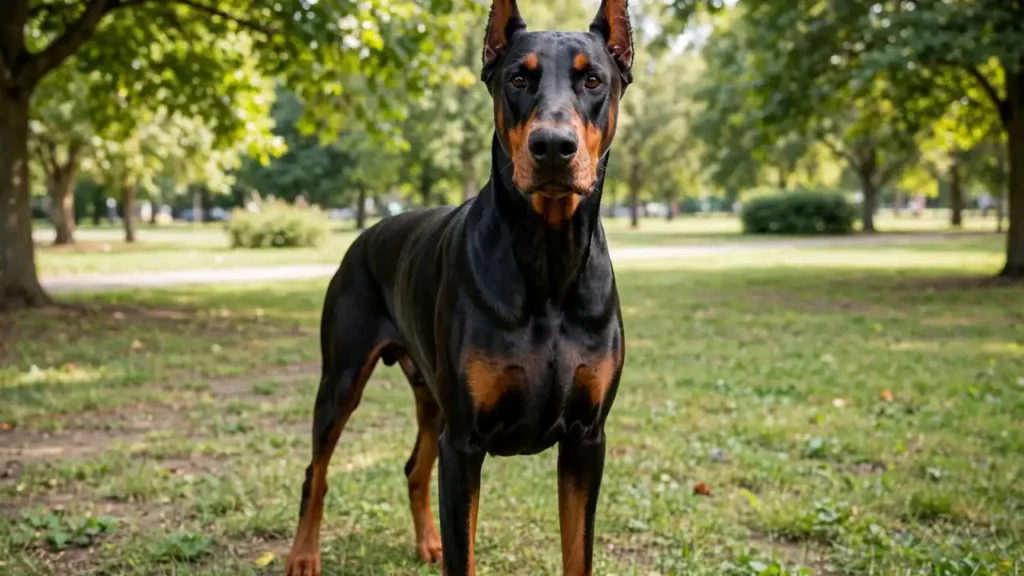
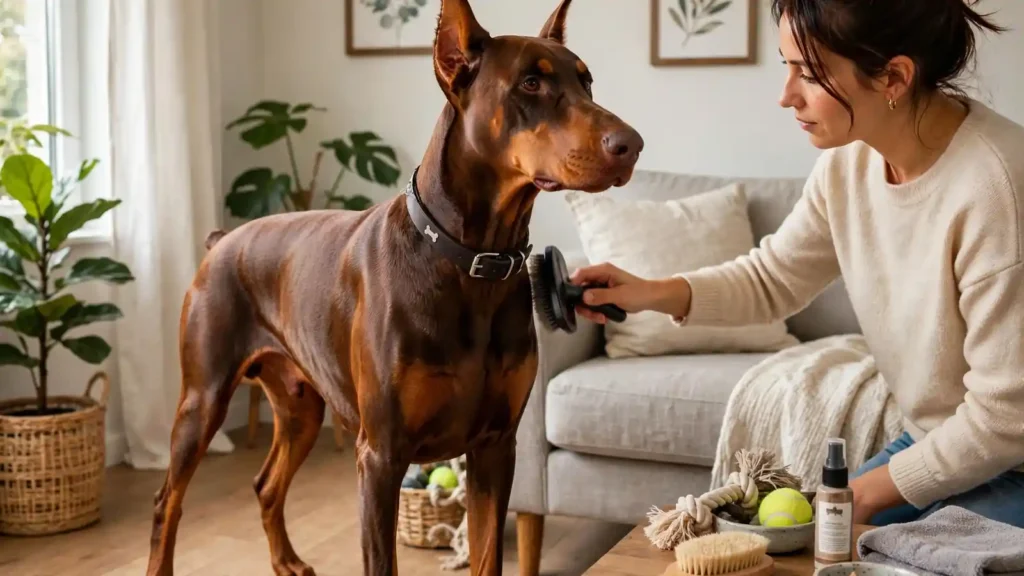
A short, smooth coat in black, red, blue, or fawn, with rust markings. Shedding is moderate. Grooming is minimal: weekly brushing and occasional baths. The Doberman dog wears a short, smooth coat in black, red, blue, or fawn, with rust markings.
The short coat means cold sensitivity; They need jackets in winter.
History and Origins
In 19th-century Germany, a tax collector bred a fearless, loyal guard dog for his dangerous rounds.
They became elite military and police dogs, famous for courage and trainability.
The modern breed is a capable guardian and a devoted family dog, combining the best guardian traits in one sleek package.
Created by a tax collector who needed protection. Here is the story. The Doberman dog was created by a tax collector who needed protection.
In 19th-century Germany, Louis Dobermann bred a fearless, loyal guard dog for his dangerous rounds. The result combined the best guardian traits into one sleek package.
They became elite military and police dogs, famous for courage and trainability. The modern breed is a capable guardian and a devoted family dog.
Physical Characteristics
The athlete as aristocrat. Here is the structure.
Deep chest, sleek muscular body, long neck, and noble head. Traditionally cropped ears and docked tails are increasingly left natural. The movement is graceful and powerful.
Everything about this breed says speed, strength, and alertness.
Doberman Personality and Behavior
A velcro guardian with a sharp mind. Here is the honest picture.
They are famously loyal, bonding intensely with their families and often shadowing one person. They are highly intelligent and trainable, excelling at obedience and protection sports. With strangers they are naturally reserved and watchful. The Doberman dog is famously loyal, bonding intensely with its family.
They are not aggressive by default; a well-bred, well-trained dog is discerning, not reactive. But the guardian instincts are real and need channeling through training and socialization. They are sensitive to their owners’ emotions and do poorly with harsh handling.
Owners consistently describe the breed as loyal, alert, and intelligent. In practice, owners report that the breed’s devoted protectiveness is the main reason they recommend it to experienced owners.
A velcro guardian with a sharp mind is exactly right. The breed is famously loyal, bonding intensely with its family and often shadowing one person, highly intelligent and trainable, excelling at obedience and protection sports. With strangers, the natural reserve is the guardian heritage at work: discerning, not reactive, in a well-bred, well-trained dog.
The guardian instincts need channeling. Training and socialization shape the protective nature, and sensitivity to owners’ emotions means harsh methods backfire badly. The breed is not aggressive by default, but the instincts are real, and this is not a breed for passive owners: the intelligence demands engagement every single day.
Famously loyal, bonding intensely with their families and often shadowing one person.
Among the most trainable of breeds, excelling at obedience and protection sports.
Naturally reserved and watchful with strangers, and sensitive to their owners’ emotions. A well-bred, well-trained dog is discerning, not reactive.
- Profoundly loyal and protective
- Exceptionally trainable
- Minimal grooming
- Dilated cardiomyopathy is the breed’s great tragedy
- Needs 60 to 90 minutes of exercise plus training daily
- Isolation causes anxiety and behavior problems
Care Essentials
Two meals a day of a high-quality large-breed diet. Avoid exercise right after meals to reduce bloat risk, and keep them lean and muscular.
Weekly brushing with a hound mitt, occasional baths, regular nail trims, ear checks and teeth brushing. That is the whole program.
60 to 90 minutes of vigorous activity daily: running, fetch, agility, obedience, protection sports. Mental work is equally critical; a bored dog invents guarding scenarios.
Indoors with its family, period, with a fenced yard for play and training. Not an outdoor kennel dog under any circumstances. Plan your day around the dog: this is not a breed for passive owners, and the intelligence demands engagement.
Training, exercise, and closeness. Here is the daily reality.
They need 60 to 90 minutes of daily exercise plus ongoing training. They are indoor family dogs who must live with their people; isolation causes anxiety and behavior problems. They thrive on having a job, whether sport, work, or advanced training. The Doberman dog needs 60 to 90 minutes of daily exercise plus ongoing training.
This is not a breed for passive owners. The intelligence demands engagement.
A typical day runs on training, exercise, and closeness. Sixty to ninety minutes of daily exercise plus ongoing training cover the need, and the indoor family dog that results must live with its people, since isolation causes anxiety and behavior problems. Thriving on having a job, whether sport, work, or advanced training, is the daily reality.
Nutrition and Diet
Big athlete, quality fuel. Here is the plan.
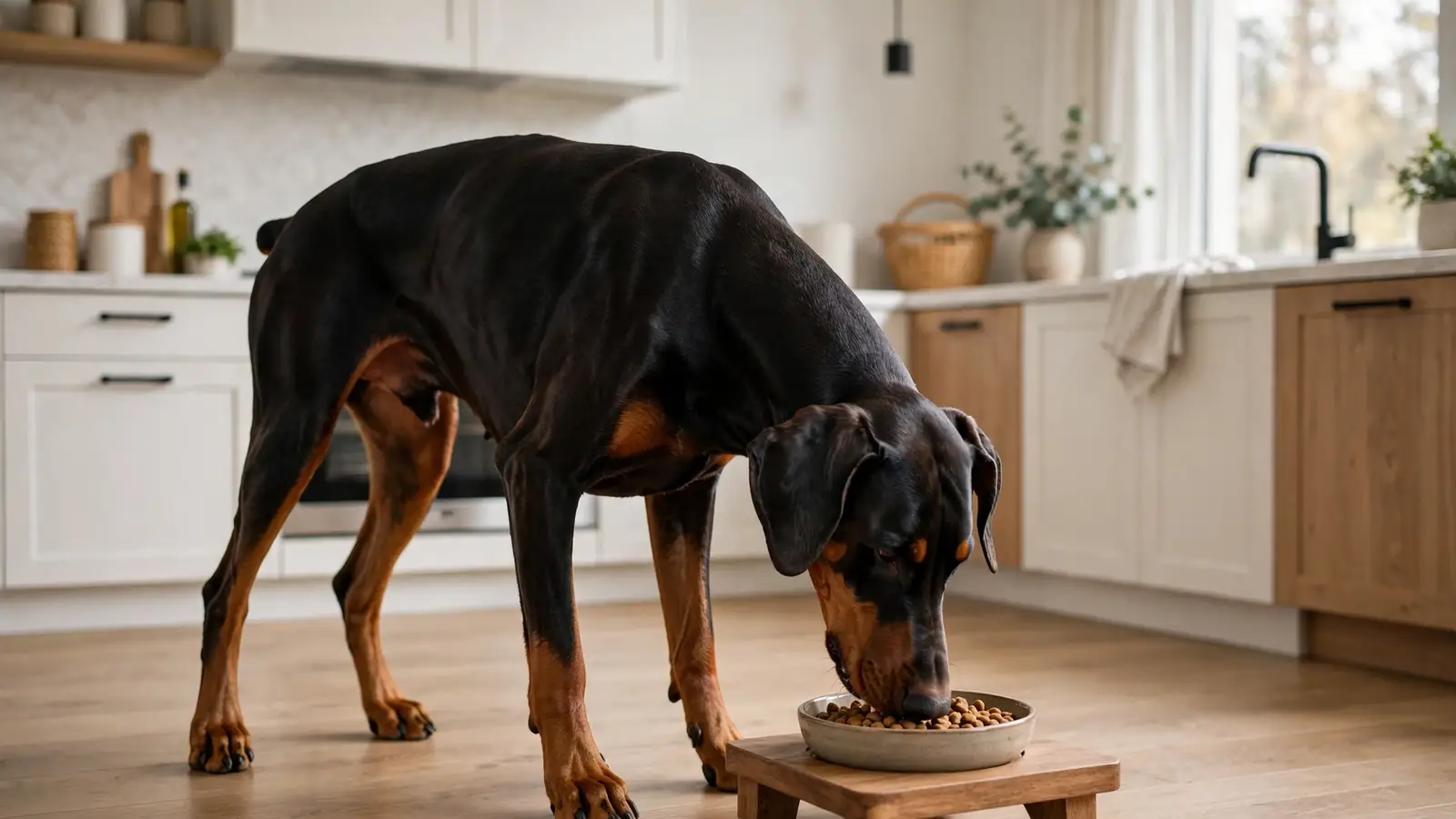
Feed a high-quality large-breed diet in two meals a day. As a deep-chested breed, avoid exercise right after meals to reduce bloat risk. Keep them lean and muscular. The Doberman dog needs a high-quality large-breed diet in two meals a day.
Ask your vet about portions for your dog’s activity level. Performance dogs in training need more.
Feeding suits a big athlete. A high-quality large-breed diet in two meals keeps the build lean and muscular, with no exercise right after meals to reduce bloat risk in a deep-chested breed. Portions follow activity level, and performance dogs in training need more, so asking the vet keeps the fuel matched to the work.
Grooming
Minimal effort. Here is the routine.
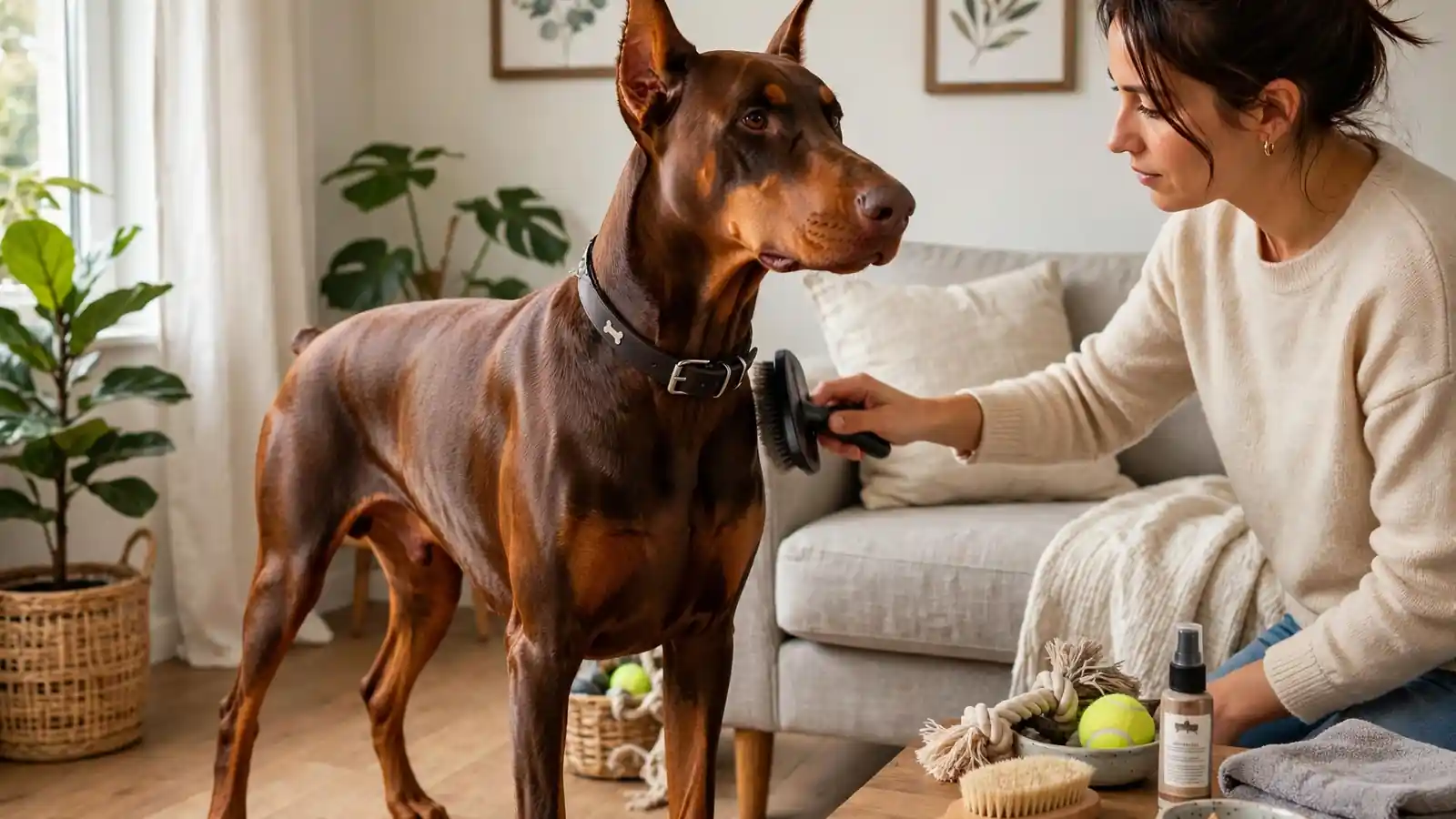
Weekly brushing with a hound mitt, occasional baths, regular nail trims, ear checks, teeth brushing. That is the whole program. The Doberman dog needs weekly brushing with a hound mitt, occasional baths, and regular nail, ear, and teeth care.
Grooming is minimal effort, as the guide says. Weekly brushing with a hound mitt covers the short, smooth coat and its moderate shedding, occasional baths come as needed, and the same session covers nails, ears, and teeth. The short coat means cold sensitivity, so jackets in winter complete the routine.
Exercise and Enrichment
High energy with working drive. Here is the plan.
Aim for 60 to 90 minutes of vigorous activity daily: running, fetch, agility, obedience, protection sports. Mental work is equally critical; a bored dog invents guarding scenarios. The Doberman dog needs 60 to 90 minutes of vigorous activity daily: running, fetch, agility, and obedience.
Puppies should build up exercise gradually to protect growing joints.
Exercise is vigorous and brain-tiring. Sixty to ninety minutes of running, fetch, agility, obedience, and protection sports cover the need, and mental work is equally critical, since a bored dog invents guarding scenarios. Puppies should build up exercise gradually to protect growing joints, and a dog with a job for its mind is usually calmer than one that only runs.
Health
They live 10 to 13 years. Here are the health issues to know.
Dilated cardiomyopathy (DCM) is the breed’s great tragedy, affecting a large percentage; annual cardiac screening (echocardiogram and Holter) of breeding dogs and regular vet heart checks are essential. Von Willebrand’s disease (a bleeding disorder) occurs; DNA testing exists. Hip dysplasia, bloat, and wobbler syndrome also occur. The Doberman dog faces dilated cardiomyopathy as its great tragedy.
Schedule annual wellness exams with cardiac screening, or twice-yearly exams for adults, and ask your vet about screening for conditions the breed can be prone to, such as dilated cardiomyopathy and von Willebrand’s disease. Consult your veterinarian promptly if you notice coughing, fainting, exercise intolerance, or changes in appetite, weight, or energy. For general background, see the Doberman article on Wikipedia.
Health care follows the familiar rhythm with cardiac screening in focus. Annual exams with cardiac screening, twice-yearly exams for adults, and screening for dilated cardiomyopathy and Von Willebrand’s disease cover the ground the guide names, and breeders who do annual cardiac screening with echo and Holter, test for Von Willebrand’s, and screen hips are worth seeking out. Day to day, exercise intolerance, fainting, and changes in appetite, weight, or energy deserve a prompt vet call.
The breed’s great tragedy, affecting a large percentage of dogs, often in the prime of life. Annual cardiac screening (echocardiogram and Holter) of breeding dogs and regular vet heart checks for every pet are essential.
A bleeding disorder that occurs in the breed; DNA testing exists.
Hip dysplasia, bloat, and wobbler syndrome also occur.
Indoor and Outdoor Living
Indoor family guardian. Here is the balance. The Doberman dog is an indoor family guardian.
They live indoors with their families, period. They are cold-sensitive and people-oriented. A fenced yard is great for play and training.
They are not outdoor kennel dogs. Isolation ruins this breed.
Indoor living as a family guardian defines the arrangement. The breed lives indoors with its family, period: cold-sensitive and people-oriented, with a fenced yard great for play and training. The not-a-kennel-dog rule is absolute: isolation ruins this breed, and a dog kept apart from its people develops problems no yard can fix.

Family Suitability
Devoted family guardians. Here is the picture. The Doberman dog is a devoted family guardian.
They are typically gentle and affectionate with their family’s children and protective of them. The size and strength mean supervision with small kids. They can be wary of unfamiliar children and rough play.
With other dogs, same-sex aggression can occur. Early socialization is essential. They usually accept cats they are raised with.
With families, devotion leads and strength sets the limit. The breed is typically gentle and affectionate with its family’s children and protective of them, though size and strength mean supervision with small kids, and wariness of unfamiliar children and rough play needs socialization. Same-sex aggression can occur, and early socialization is essential, while cats raised with the dog are usually accepted.
Finding a Breeder or Rescue
Cardiac testing is the priority. Here is how. The Doberman dog needs cardiac testing above all in a breeder.
The best breeders do annual cardiac screening (echo and Holter), test for von Willebrand’s, screen hips, and track longevity. Rescues have wonderful dogs; the breed’s needs cause surrenders.
- Ask what health testing the breeder does on their dogs
- Ask to see the parents and the living conditions
- Puppies should be raised in a home environment
- A good breeder answers questions openly and asks you some too
Quick Quiz: Is a Doberman Right for You?
Answer four questions. Tap yes or no.
Frequently Asked Questions
Are Dobermans good family dogs?
Yes, for experienced families. They are loyal, gentle with their kids, and protective.
Are Dobermans aggressive?
Well-bred these dogs are discerning guardians, not randomly aggressive. Training and socialization shape the outcome.
How much exercise does a Doberman need?
Sixty to 90 minutes of vigorous activity daily, plus training.
Do Dobermans bark a lot?
Moderately. They alert to strangers but are not nuisance barkers.
How long do Dobermans live?
Typically 10 to 13 years.
Are Dobermans easy to train?
They are among the most trainable breeds. They learn fast and love working.
What do Doberman owners say about living with the breed?
Owners consistently describe the breed as loyal, alert, and intelligent. In practice, owners report that the breed’s devoted protectiveness is the main reason they recommend it to experienced owners.
When should I ask my vet about my Doberman’s health?
Schedule annual wellness exams with cardiac screening, or twice-yearly exams for adults, and ask your vet about screening for conditions the breed can be prone to, such as dilated cardiomyopathy and von Willebrand’s disease. Consult your veterinarian promptly if you notice coughing, fainting, exercise intolerance, or changes in appetite, weight, or energy.
A velcro guardian: sleek, brilliant and devoted to its family, shadowing its people from room to room. Give it work, training and closeness, shape the guardian instinct with early socialization, and this noble athlete becomes the most loyal partner an experienced owner could ask for.
Similar Breeds Worth Exploring
Related Breed Guides
Keep Exploring
Browse all our Dog Breed Guides, try the Dog Age Calculator, or explore our Cat Breed Guides.