
Irish Setter Dog Breed Guide
Irish Setter: the rollicking redhead of the dog world
The rollicking redhead: beautiful, exuberant, and full of joy. Exercise, care, and health in one complete guide.
Lifespan 11 to 15 yrs Weight 55 to 75 lbs Exuberant and joyful
Irish Setter dog is the rollicking redhead: beautiful, exuberant, and full of joy.
At a Glance
Size and Weight
Males stand 26 to 28 inches and weigh 65 to 75 pounds; females are 24 to 26 inches and 55 to 65 pounds. The build is racy and elegant. The Irish Setter dog is a large, racy breed built for speed and endurance.
Coat and Colors
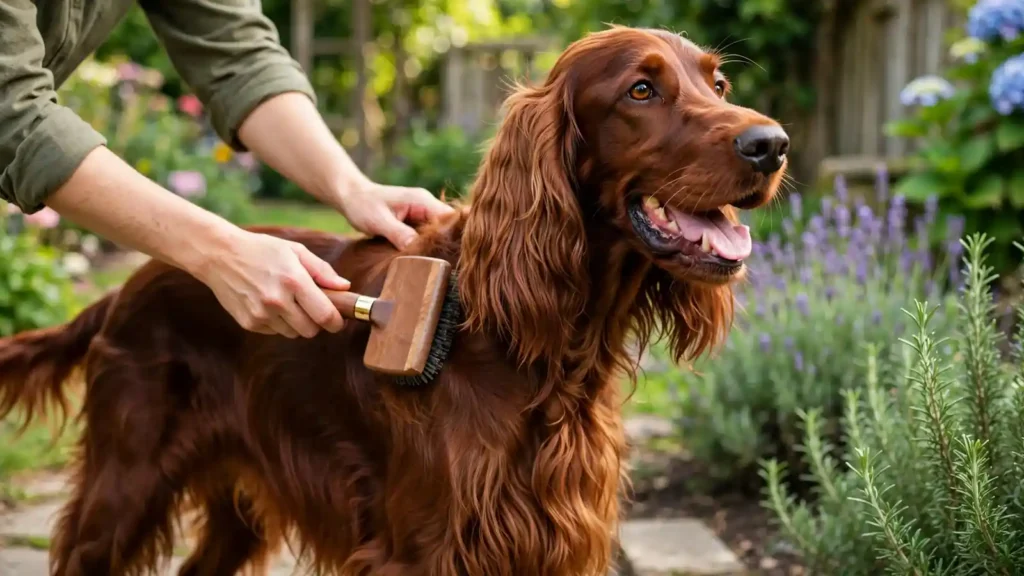
A medium-length, silky coat in rich mahogany or chestnut red, with feathering on ears, chest, legs, and tail. Shedding is moderate to heavy. The coat needs regular brushing. The Irish Setter dog is famous for its flowing mahogany-red coat.



History and Origins
Irish Setters were developed in 18th-century Ireland as bird dogs, setting and pointing game.
The stunning red coat made them show favorites as well as workers.
The hunting heritage drives the energy, nose, and exuberance.
Physical Characteristics
Racy, elegant body with a long neck and the flowing red coat. The expression is famously sweet and mischievous. The Irish Setter dog has a racy, elegant build with a long neck and a sweet expression.
Irish Setter Personality and Behavior
They are famously exuberant, friendly, and playful. They adore their families, love everyone, and are enthusiastic about life. They are smart but famously slow to mature, staying puppyish for years. The Irish Setter dog is a joyful companion for active families.
The energy is very high and the exuberance can be overwhelming. Without enough exercise and training, they become hyperactive and destructive. They are not for sedentary homes.
Owners consistently describe the breed as exuberant, friendly, and playful. In practice, owners report that the breed’s joyful spirit is the main reason they recommend it to active, patient families.
The joyful spirit is the breed’s signature. An Irish Setter dog greets life with exuberance, adores its family, and loves almost everyone it meets, and the famous sweetness shows in an expression that stays mischievous well past puppyhood. The slow maturity is real: this is a breed that stays puppyish for years, and owners who enjoy that extended youth love it, while owners who want early calm may find it trying.
The exuberance needs channeling, not scolding. Very high energy without enough exercise and training turns into hyperactivity and destructiveness, so the daily plan matters more than any single correction. Training that is consistent, patient, and fun works with the smart, playful mind, and owners who treat training as part of the day’s activity usually get a far calmer dog than owners who treat it as a separate chore.
They are famously exuberant, friendly, and playful. They adore their families, love everyone, and are enthusiastic about life. They are smart but famously slow to mature, staying puppyish for years.
The energy is very high and the exuberance can be overwhelming. Without enough exercise and training, they become hyperactive and destructive. They are not for sedentary homes.
Owners consistently describe the breed as exuberant, friendly, and playful. In practice, owners report that the breed’s joyful spirit is the main reason they recommend it to active, patient families.
- Joyful, friendly with everyone
- Beautiful flowing red coat
- Wonderful with active families
- Needs 60 to 90 minutes of vigorous exercise daily
- Slow to mature and easily overwhelming
- Prone to bloat and hip dysplasia
Care Essentials
They need 60 to 90 minutes of vigorous daily exercise plus training. They excel at field work, running, and agility. They are indoor family dogs who want to be with their people. The Irish Setter dog needs vigorous daily exercise and patient training.
Patience is required; they mature slowly.
A typical day is built around vigorous activity. Sixty to ninety minutes of running, hiking, field work, or agility, plus training, cover the need, and the indoor family dog that results is affectionate and settled rather than restless. Patience runs through all of it: the slow maturity means the calm adult dog arrives later than with many breeds, and the wait is part of the bargain.
Feed a measured, high-quality diet in two meals a day. Keep them lean and conditioned. As a deep-chested breed, avoid exercise right after meals to reduce bloat risk.
Brush two to three times a week to prevent mats; trim feathering as needed. Bathe as needed. Clean ears regularly. Trim nails, brush teeth.
Aim for 60 to 90 minutes of vigorous activity daily: running, hiking, field work, swimming. Mental work through training helps channel the exuberance.
They live indoors with their families and exercise outdoors hard. They love running. A fenced yard is essential.
Nutrition and Diet
Feed a measured, high-quality diet in two meals a day. Keep them lean and conditioned. As a deep-chested breed, avoid exercise right after meals to reduce bloat risk.
Feeding suits an active, deep-chested breed. A measured, high-quality diet in two meals keeps the racy build lean and conditioned, and the bloat precaution matters: avoiding exercise right after meals is a simple habit that reduces risk for a deep-chested dog. Portions should follow activity level, since a dog working hard in the field needs more than one resting through a quiet week.

Grooming
Brush two to three times a week to prevent mats; trim feathering as needed. Bathe as needed. Clean ears regularly. Trim nails, brush teeth.
The flowing coat needs steady brushing. Two to three sessions a week prevent mats in the medium-length, silky coat, with feathering on ears, chest, legs, and tail deserving first attention, and trimming the feathering as needed keeps it tidy. Baths come as needed, ears need regular cleaning, and nails and teeth follow the same weekly routine.
Exercise and Enrichment
Aim for 60 to 90 minutes of vigorous activity daily: running, hiking, field work, swimming. Mental work through training helps channel the exuberance.
Exercise is the breed’s great love and great need. Running, hiking, field work, and swimming all suit the speed and endurance the build was made for, and mental work through training helps channel the exuberance that physical exercise alone never quite tires. A fenced yard is essential for safe off-leash running, and owners with real outlets for this energy usually describe a different dog from owners without them.

Health
Hip problems occur; choose breeders who screen hips.
Bloat is a risk in this deep-chested breed; know the warning signs.
PRA occurs in some lines; ask about eye screening.
Schedule annual wellness exams, or twice-yearly exams for seniors, and ask your vet about screening for conditions the breed can be prone to, such as hip dysplasia. Consult your veterinarian promptly if you notice restlessness with a swollen belly, vision changes, or changes in appetite, weight, or energy. For general background, see the Irish Setter dog reference on Wikipedia.
Health care follows the familiar rhythm with hip screening in focus. Annual exams, twice-yearly exams for seniors, and screening for hip dysplasia cover the ground the guide names, and breeders who health-test hips, eyes, and thyroid are worth seeking out. Day to day, the signs worth mentioning promptly are restlessness and changes in appetite, weight, or energy.
Indoor and Outdoor Living
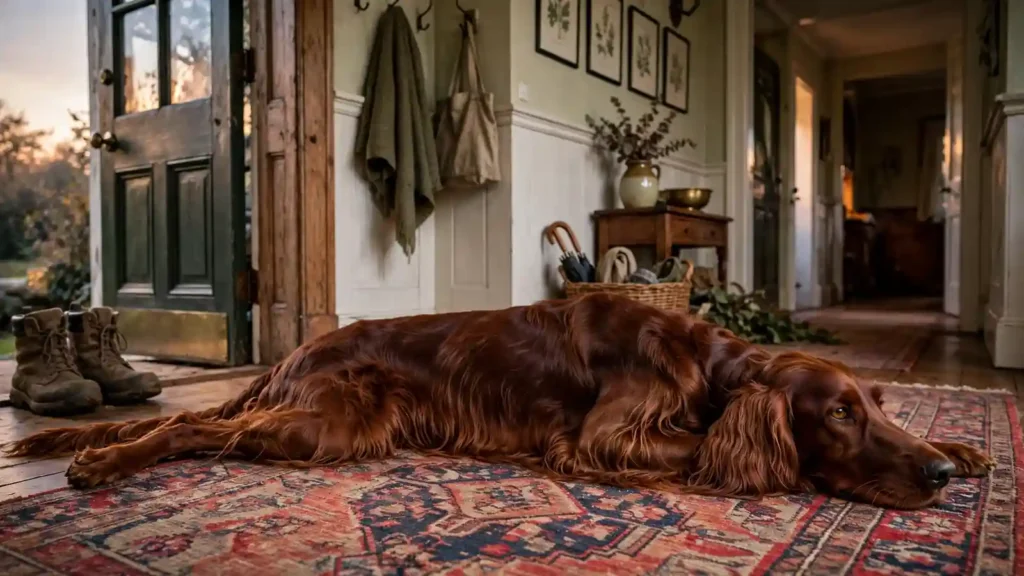
They live indoors with their families and exercise outdoors hard. They love running. A fenced yard is essential.
Indoor living with outdoor exercise defines the arrangement. The breed lives indoors with its family and exercises hard outdoors, loving running above all, and a fenced yard is essential rather than optional for a dog with this speed and enthusiasm. A home without a safe place to run needs a real plan for daily vigorous outings instead.
Family Suitability
Affectionate and playful with children, friendly with everyone. The exuberance can overwhelm small kids. They are usually good with other dogs. The Irish Setter dog is affectionate and playful with children.
With families, affection leads and exuberance sets the limit. The breed is affectionate and playful with children and friendly with everyone, and usually good with other dogs, but the sheer enthusiasm can overwhelm small kids, so supervision and calm greetings matter. The Irish Setter dog’s joyful, patient family character shows best in active homes that welcome a big, bouncy friend.
Finding a Breeder or Rescue
Field lines are more energetic; show lines are calmer. Good breeders health-test (hips, eyes, thyroid). The breed rescues have wonderful dogs. The Irish Setter dog does best with breeders who health-test and raise puppies at home.
- Ask about health screening for hip dysplasia and bloat
- Meet the puppy’s mother and see where the puppies are raised
- Ask how the puppies are socialized in their first weeks
- Consider rescue too: breed rescues place wonderful dogs
Quick Quiz: Is a Irish Setter Right for You?
Answer four questions. Tap yes or no.
Frequently Asked Questions
Are Irish Setters good family dogs?
Wonderful for active families. They are affectionate and great with children.
How much exercise does an Irish Setter need?
Sixty to 90 minutes of vigorous activity daily.
Do Irish Setters shed a lot?
Moderately to heavily. The silky coat needs regular brushing.
Are Irish Setters easy to train?
They are smart but exuberant and slow to mature. Patient, fun training works.
How long do Irish Setters live?
Typically 11 to 15 years.
Why are Irish Setters so hyper?
The hunting heritage and slow maturity mean high energy for years. Exercise and training manage it.
What do Irish Setter owners say about living with the breed?
Owners consistently describe this exuberant breed as exuberant, friendly, and playful. In practice, owners report that the breed’s joyful spirit is the main reason they recommend it to active, patient families.
When should I ask my vet about my Irish Setter’s health?
Schedule annual wellness exams, or twice-yearly exams for seniors, and ask your vet about screening for conditions the breed can be prone to, such as hip dysplasia. Consult your veterinarian promptly if you notice restlessness with a swollen belly, vision changes, or changes in appetite, weight, or energy.
The Irish Setter is a joyful, exuberant redhead for active, patient families. Its energy is huge, and so is its heart.
Similar Breeds Worth Exploring
If the breed appeals to you, consider the English Setter (similar, more speckled), the Gordon Setter (darker, calmer), the Irish Red and White Setter (the original), or the Golden Retriever (similar friendliness).

Related Breed Guides
Keep Exploring
Browse all our Dog Breed Guides, try the Dog Age Calculator, or explore our Cat Breed Guides.