
Lhasa Apso Dog Breed Guide
Lhasa Apso: the ancient Tibetan monastery watchdog
The ancient Tibetan watchdog: dignified, loyal, and independent. Care and health in one complete guide.
Lifespan 12 to 15 yrs Weight 12 to 18 lbs Dignified and independent
Lhasa Apso dog is the ancient Tibetan watchdog: dignified, loyal, and independent.
At a Glance
Size and Weight
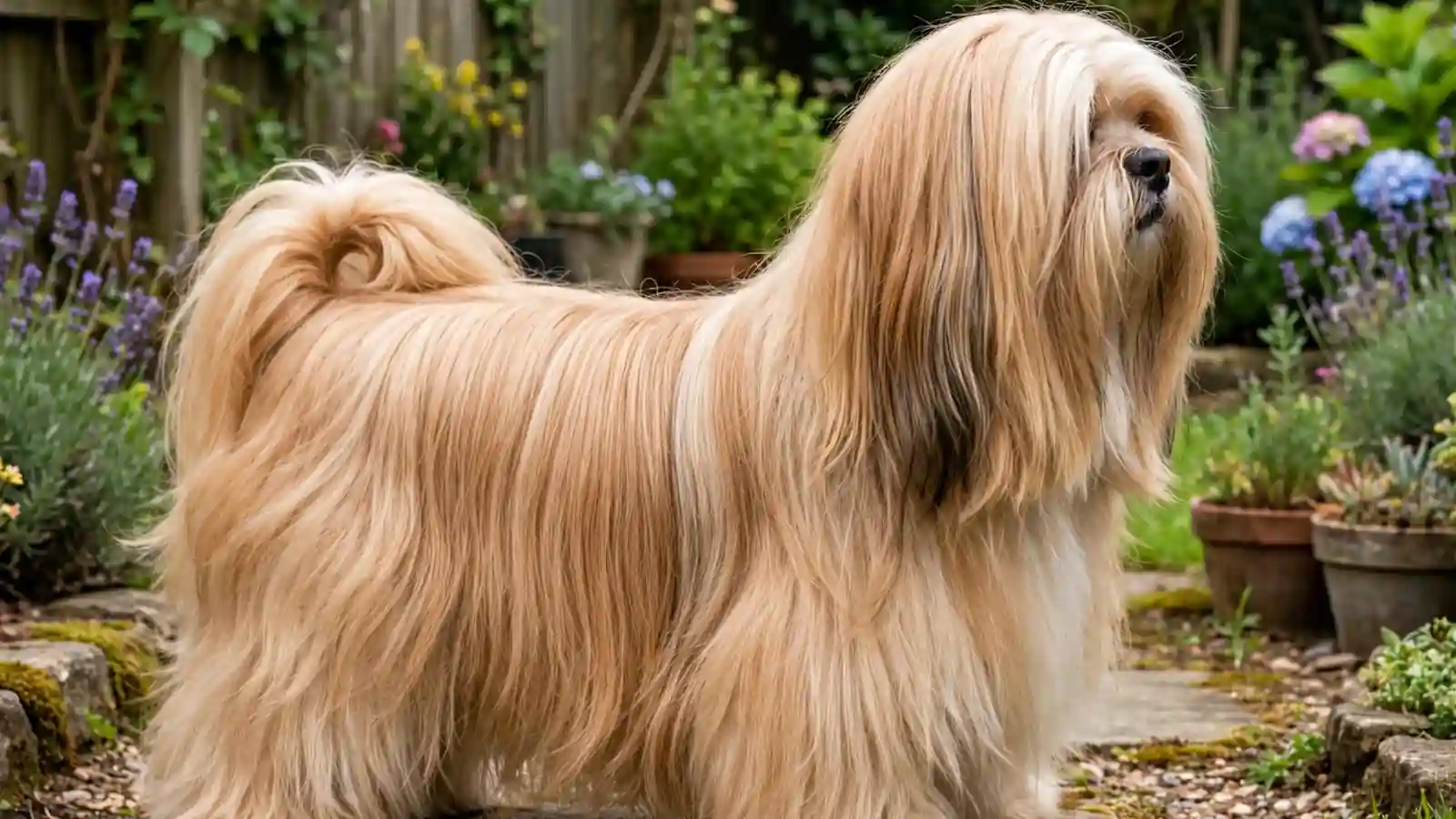
They weigh 12 to 18 pounds and stand 10 to 11 inches tall. The build is sturdy for a small companion. The Lhasa Apso dog is a sturdy little companion with a long, flowing coat.
Coat and Colors
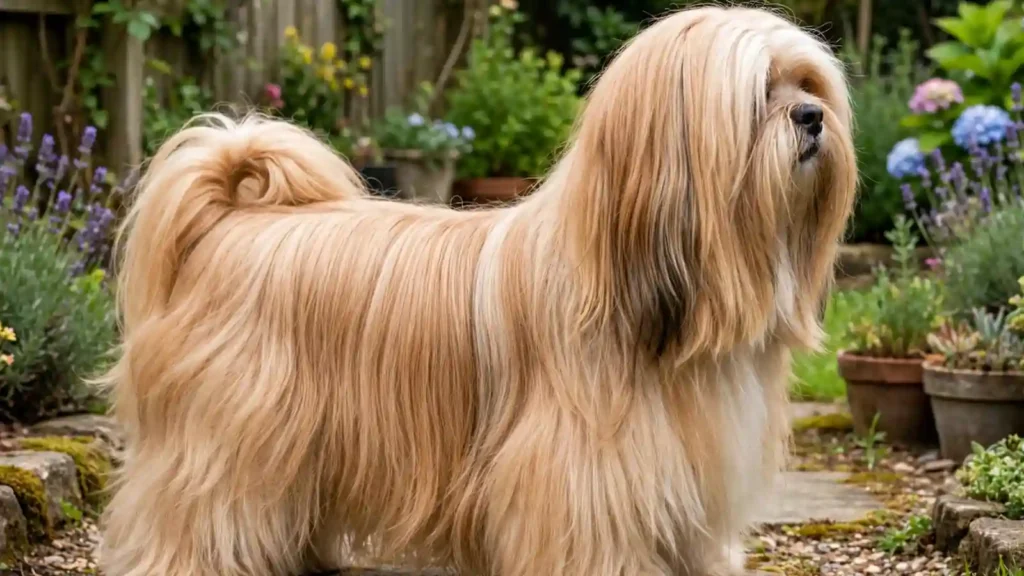
A long, dense double coat in gold, honey, cream, or various colors. Kept long, it needs daily brushing; most pet owners choose a short puppy cut. Shedding is minimal. The Lhasa Apso dog is famous for its long, dense double coat.

History and Origins
Lhasa Apsos guarded Tibetan monasteries for centuries, alerting the larger mastiffs to intruders.
They were sacred dogs, never sold, only given as gifts.
The watchdog heritage shows in the alert, independent temperament. This is not a fawning lap dog.
Physical Characteristics
Compact, sturdy body with a long coat, dark eyes, and a feathery tail carried over the back. The expression is dignified and watchful. The Lhasa Apso dog has a compact, sturdy body and a feathery tail carried over its back.
Lhasa Apso Personality and Behavior
They are famously dignified, loyal, and independent. They bond deeply with their families but are aloof with strangers. They are excellent watchdogs who announce everything. The Lhasa Apso dog is a devoted and watchful little guardian.
They are not effusive; they are calm and self-possessed. They can be stubborn and need patient training. They suit owners who respect the independence.
Owners consistently describe the breed as dignified, loyal, and independent. In practice, owners report that the breed’s devoted watchfulness is the main reason they recommend it to experienced small-dog owners.
That watchdog instinct shapes everyday life with the breed. A Lhasa Apso dog notices everything first: a knock at the door, a voice in the hallway, a change in the usual routine. The barking is announcement, not aggression, and most dogs settle quickly once their people show that a visitor is welcome. Owners who expect a quiet shadow dog are often surprised; owners who expect a small sentinel usually find the alertness reassuring rather than difficult.
Training works best when it respects that independence. Short, calm sessions with rewards the dog actually values go further than repetition or raised voices, and harsh handling backfires quickly with this breed. Consistency matters more than intensity: when every family member uses the same words and the same boundaries, the dog learns faster and tests less. Patience is not optional here; it is the whole method.
They are famously dignified, loyal, and independent. They bond deeply with their families but are aloof with strangers. They are excellent watchdogs who announce everything.
They are not effusive; they are calm and self-possessed. They can be stubborn and need patient training. They suit owners who respect the independence.
Owners consistently describe the breed as dignified, loyal, and independent. In practice, owners report that the breed’s devoted watchfulness is the main reason they recommend it to experienced small-dog owners.
- Devoted and watchful little guardian
- Minimal shedding
- Calm indoors and undemanding on exercise
- Aloof with strangers by nature
- Full coat needs daily brushing
- Can be stubborn in training
Care Essentials
They need 20 to 30 minutes of daily activity. They are indoor family dogs and excellent apartment dogs. They do poorly with harsh handling. The Lhasa Apso dog needs only 20 to 30 minutes of daily activity.
The grooming is the real commitment if the coat is kept long.
A typical day does not need to be elaborate. A short morning walk, some indoor play, and a calm evening routine cover the activity this breed needs, and mental stimulation counts as much as movement: sniffing games, a puzzle feeder, or a few minutes of gentle training all tire a Lhasa out in a good way. The goal is steady, predictable days rather than big adventures, which suits apartment life well.
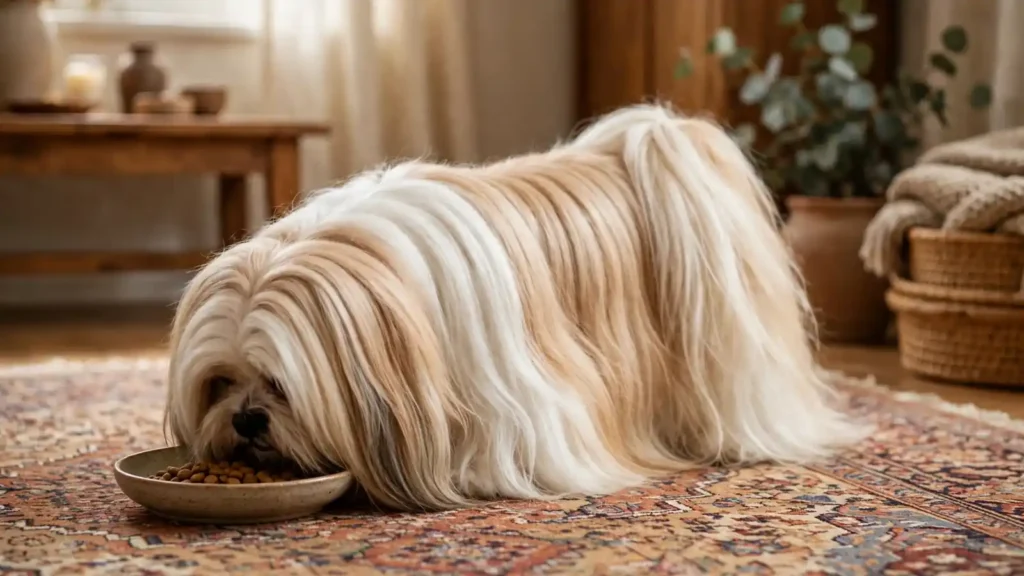
Feed a measured, high-quality small-breed diet in two meals a day. Keep them lean. Dental health matters; appropriate kibble helps.
The coat decision defines the routine.
Aim for 20 to 30 minutes of activity daily. They enjoy short walks and indoor play. They are calm indoors.
They live indoors and are ideal apartment dogs. They are excellent watchdogs for small spaces.
Nutrition and Diet
Feed a measured, high-quality small-breed diet in two meals a day. Keep them lean. Dental health matters; appropriate kibble helps.
Grooming
The coat decision defines the routine.
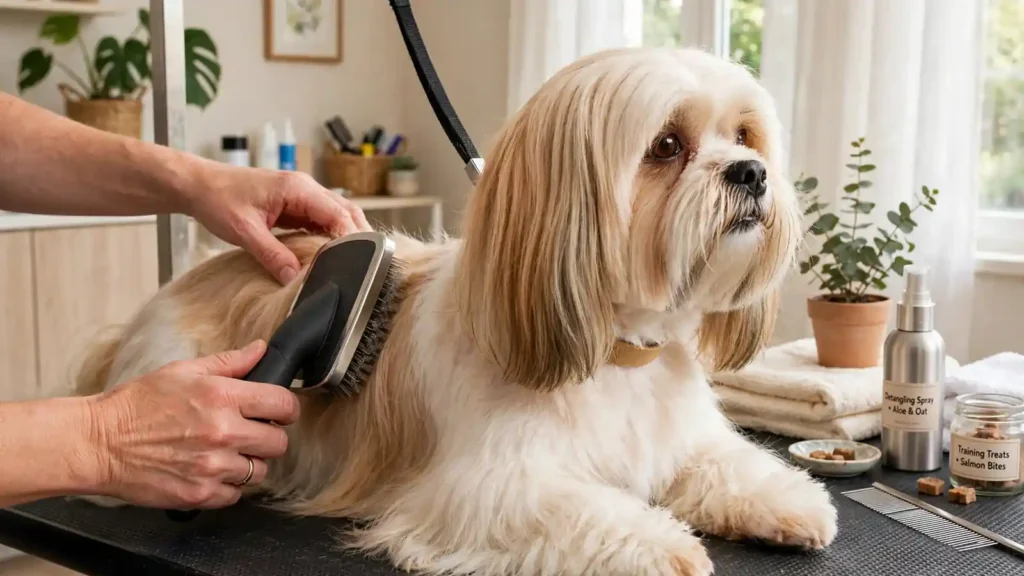
Full coat: daily brushing to prevent mats. Puppy cut: much easier, with trims every 6 to 8 weeks. All: regular nail trims, teeth brushing, ear checks.
Keeping the full coat beautiful is mostly a matter of routine. Working through the coat in small sections, a little at a time, keeps brushing manageable, and the places mats form first are the spots owners forget: behind the ears, under the legs, and around the collar line. A regular rhythm beats occasional marathon sessions, and a dog that is brushed a little every day usually accepts the routine far better than one brushed only when tangles appear.
The puppy cut trades daily brushing for regular appointments, but it does not remove upkeep entirely. Between trims, the face, ears, and paws still need attention, and nails, teeth, and ears follow the same routine either way. Many owners find the shorter cut easier to live with while keeping the same weekly check: nails trimmed, teeth brushed, ears looked at, and the coat kept tidy between visits.
Exercise and Enrichment
Aim for 20 to 30 minutes of activity daily. They enjoy short walks and indoor play. They are calm indoors.

Health
Dry eye and progressive retinal atrophy occur; ask about eye screening.
Loose kneecaps appear in some lines.
Kidney problems appear in some lines, so screening matters.
Schedule annual wellness exams, or twice-yearly exams for seniors, and ask your vet about screening for conditions the breed can be prone to, such as eye issues. Consult your veterinarian promptly if you notice eye problems, increased thirst, limping, or changes in appetite, weight, or energy. For general background, see the Lhasa Apso dog reference on Wikipedia.
Day-to-day health care for this breed is mostly watchfulness. Keeping the dog lean, keeping teeth clean, and keeping up with the exam schedule the vet recommends are the habits that matter most, and eye changes are worth mentioning early rather than watching for a while. Seniors benefit from the twice-yearly rhythm the guide already recommends, since small changes in appetite, movement, or energy are easier to catch when check-ups are frequent.
Indoor and Outdoor Living
They live indoors and are ideal apartment dogs. They are excellent watchdogs for small spaces.
Small-space living suits this breed, with one habit to manage: the watchdog bark. A dog that announces every hallway sound can test neighbours in an apartment building, so teaching a reliable quiet cue and giving the dog a comfortable resting spot away from the front door make shared walls much easier. Given a calm home base, the breed is content to spend most of the day indoors near its people.

Family Suitability
Loyal and affectionate with their families, aloof with strangers. They can be good with respectful older kids. They are often fine with other pets. The Lhasa Apso dog is loyal and affectionate with its family.
Introductions go better when they are unhurried. A Lhasa Apso dog that is allowed to approach a visitor in its own time usually warms up faster than one that is handed over for greetings, and the same patience helps with respectful older children and with other pets. The loyalty this breed shows its family is deep, but it is earned on the dog’s terms, and owners who respect that pace usually get the most affectionate version of the dog.
Finding a Breeder or Rescue
Good breeders screen eyes, patellas, and kidneys. Lhasa rescues have wonderful dogs. The Lhasa Apso dog does best with breeders who screen eyes, patellas, and kidneys.
- Ask about health screening for eye problems and patellar luxation
- Meet the puppy’s mother and see where the puppies are raised
- Ask how the puppies are socialized in their first weeks
- Consider rescue too: breed rescues place wonderful dogs
Quick Quiz: Is a Lhasa Apso Right for You?
Answer four questions. Tap yes or no.
Frequently Asked Questions
Are Lhasa Apsos good family dogs?
They are devoted to their families but aloof with strangers. They suit experienced owners.
How much exercise does a Lhasa Apso need?
About 20 to 30 minutes of activity daily.
Do Lhasa Apsos shed?
Very little. The long coat is minimal-shedding but needs brushing.
Are Lhasa Apsos good watchdogs?
Excellent. They are alert and announce everything.
How long do Lhasa Apsos live?
Typically 12 to 15 years.
Are Lhasa Apsos easy to train?
They are intelligent but independent and stubborn. Patient training is essential.
What do Lhasa owners say about living with the breed?
Owners consistently describe this watchful breed as dignified, loyal, and independent. In practice, owners report that the breed’s devoted watchfulness is the main reason they recommend it to experienced small-dog owners.
When should I ask my vet about my Lhasa’s health?
Schedule annual wellness exams, or twice-yearly exams for seniors, and ask your vet about screening for conditions the breed can be prone to, such as eye issues. Consult your veterinarian promptly if you notice eye problems, increased thirst, limping, or changes in appetite, weight, or energy.
The Lhasa Apso is a dignified, loyal watchdog in a small body. It suits calm, experienced owners who respect its independence.
Similar Breeds Worth Exploring
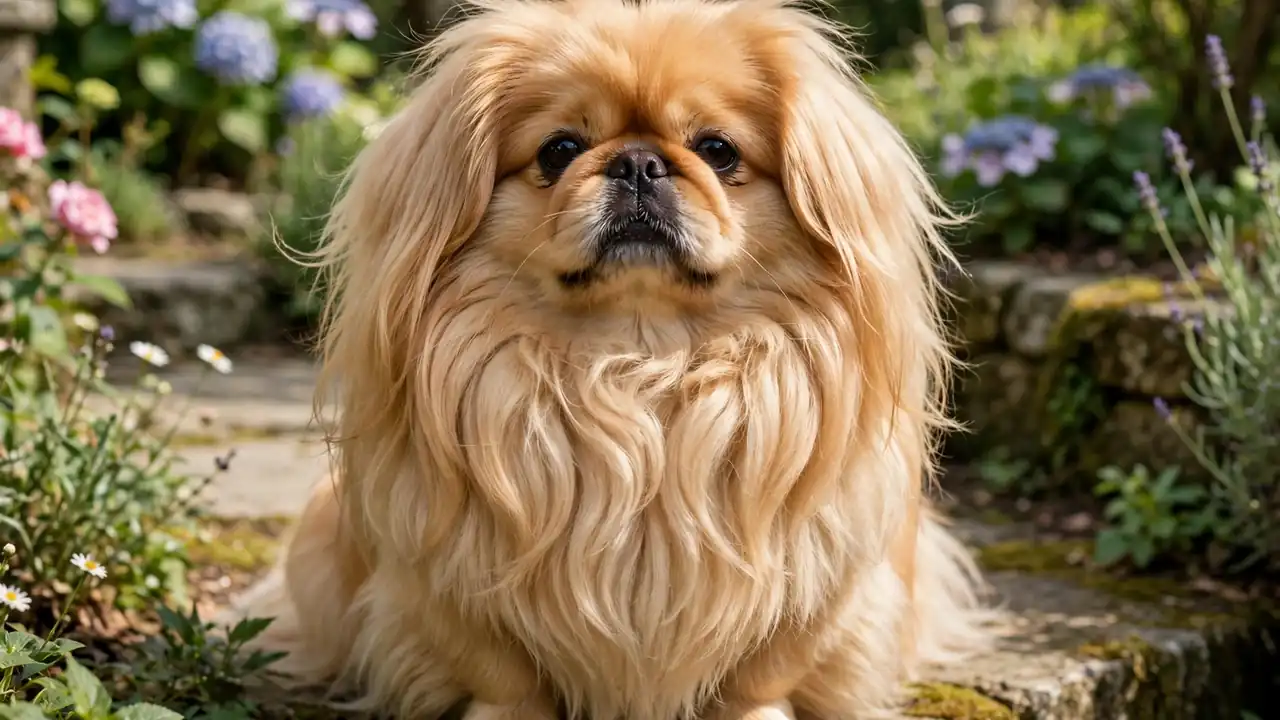
If the Lhasa appeals to you, consider the Shih Tzu (sweeter, similar look), the Tibetan Terrier (larger Tibetan cousin), the Maltese (gentler white toy), or the Pekingese (another dignified companion).


Related Breed Guides
Keep Exploring
Browse all our Dog Breed Guides, try the Dog Age Calculator, or explore our Cat Breed Guides.