
Poodle Dog Breed Guide
Poodle: one of the smartest dogs in the world, in three sizes
One of the smartest and most trainable dogs in the world, in three sizes, wrapped in a famous low-shedding curly coat.
Lifespan 10 to 18 yrs Weight 5 to 70 lbs (by variety) Intelligent and eager to please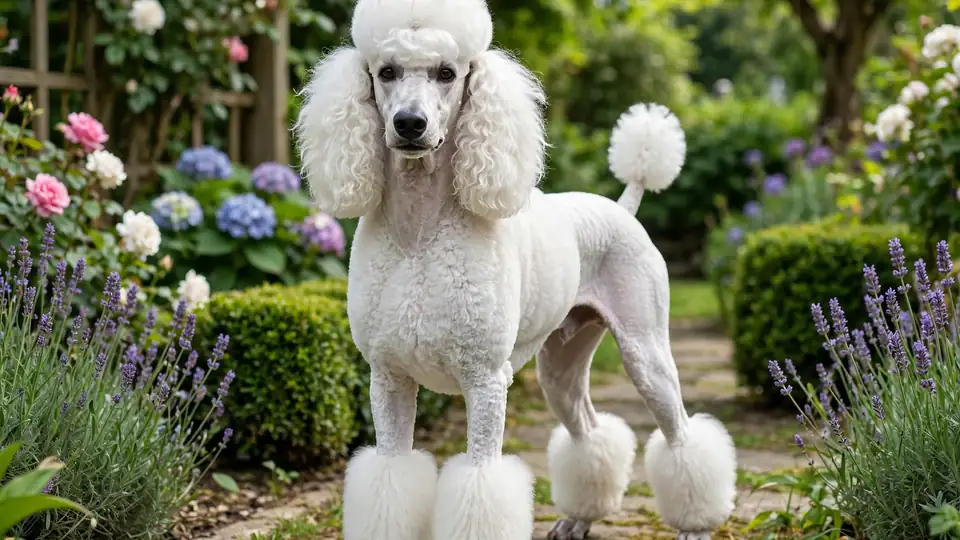
Poodle dog is one of the smartest, most versatile dogs in the world, wrapped in a famous curly coat. It comes in three sizes (Toy, Miniature, and Standard), so there is a size for almost every lifestyle.
At a Glance
Size and Weight
These dogs are three breeds in one, differing almost entirely by size. The Poodle dog comes in three sizes, from Toy to Standard.
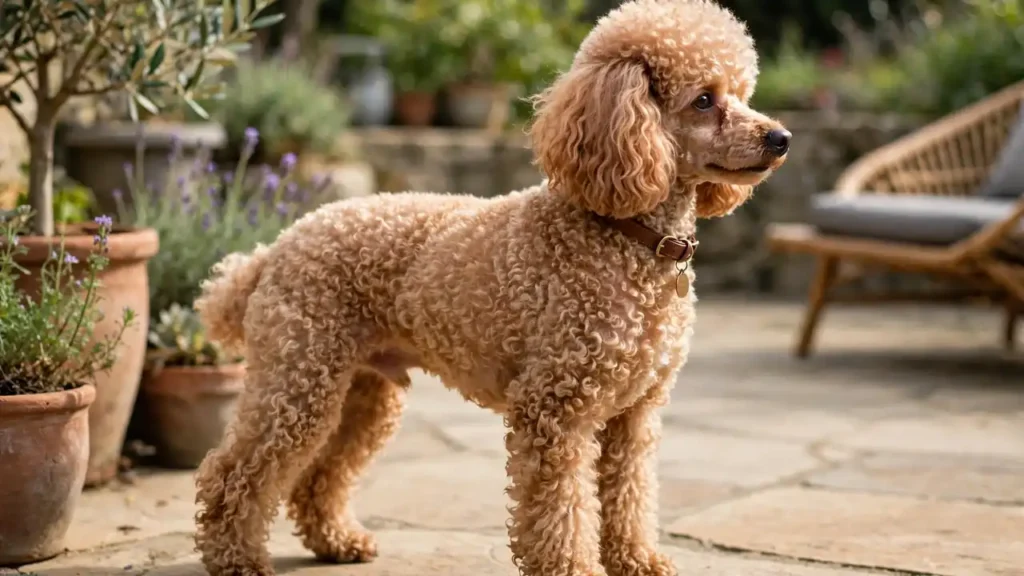
The Toy variety stands under 10 inches and weighs 5 to 10 pounds, a true lap dog. The Miniature stands 10 to 15 inches and weighs 10 to 17 pounds, a sturdy small dog. The Standard stands 15 inches and up (often 21 to 24 inches) and weighs 45 to 70 pounds, a genuine medium-to-large athlete. The Poodle dog is a true lap dog in its Toy variety.
Size changes the dog’s needs, not its personality. A Standard needs real space and real exercise; a Toy the breed needs the same sharp mind engaged in a much smaller package. Choose the variety for your home, not your ego. The Poodle dog keeps the same personality whatever its size.
Coat and Colors
The breed’s coat is its signature and its biggest commitment. The Poodle dog is famous for its dense, curly coat.
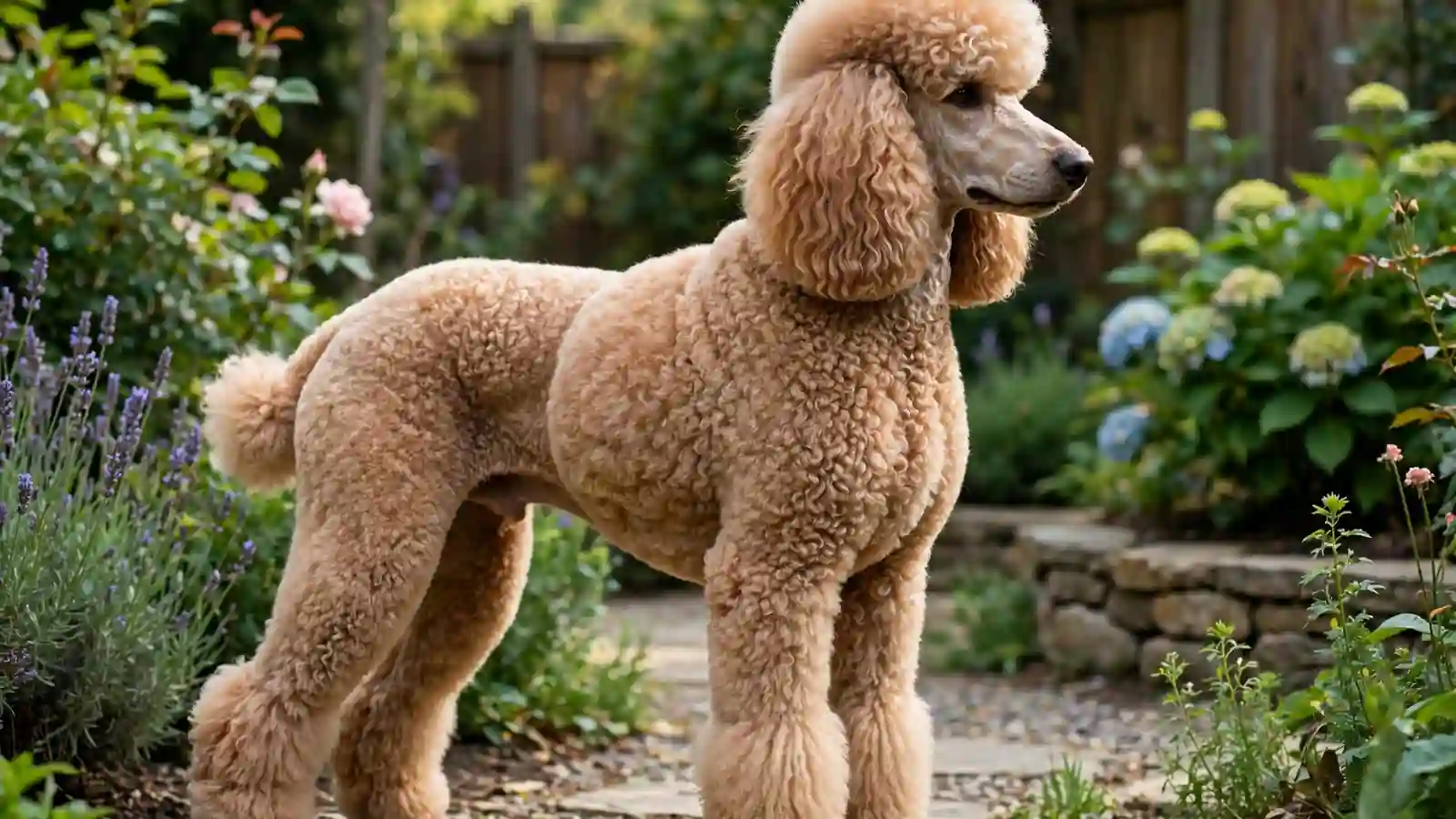
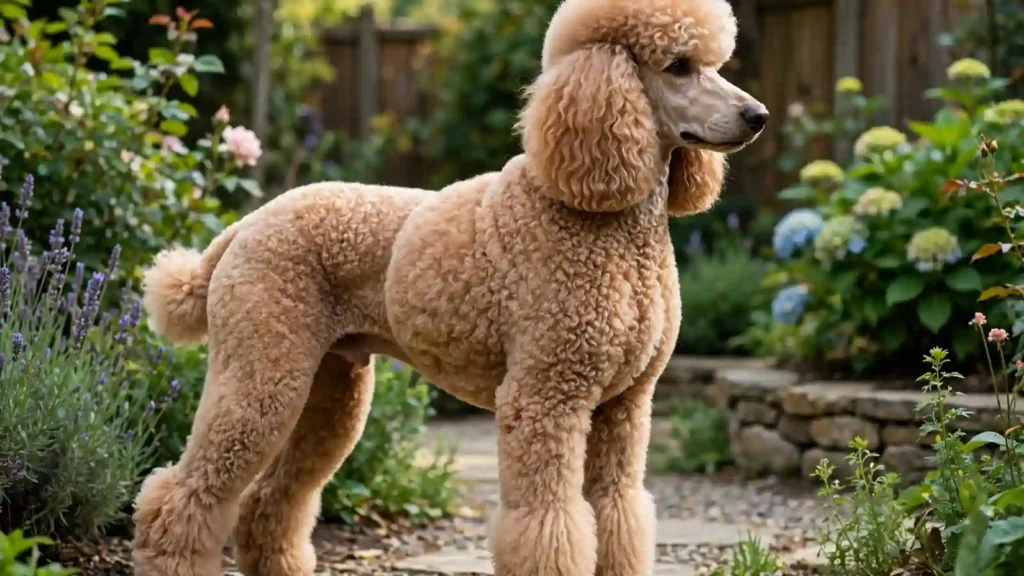
The dense, curly coat comes in a wide range of solid colors: black, white, cream, apricot, red, brown, silver, grey, and blue. The hair grows continuously like human hair and barely sheds, which is why the breed is often recommended for allergy sufferers. That said, no dog is truly hypoallergenic. The Poodle dog comes in many solid colours.
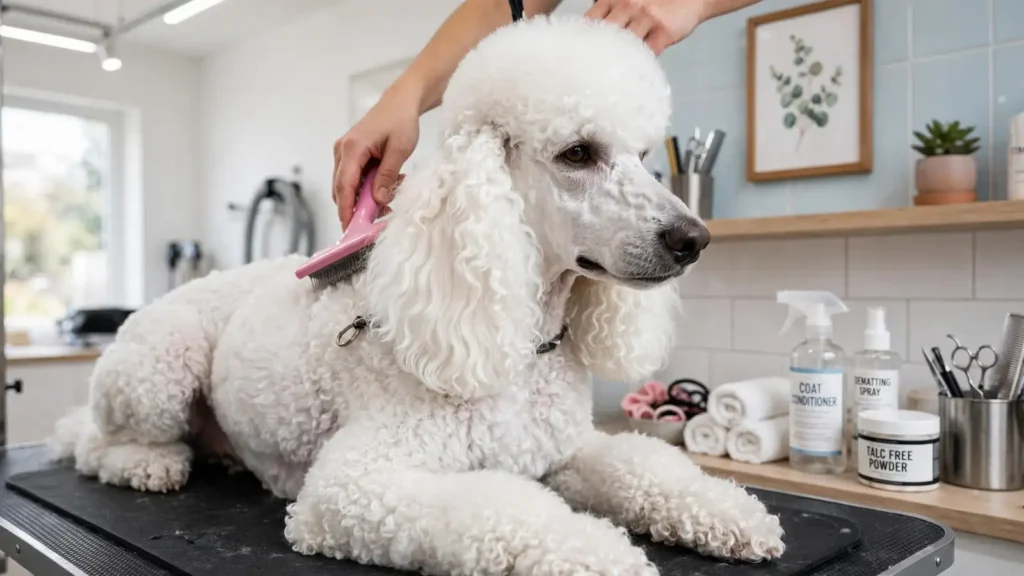
The coat mats quickly without daily brushing and needs professional clipping every six to eight weeks. Many pet owners choose a short, practical “puppy clip” instead of the show ring’s elaborate cuts. The Poodle dog needs daily brushing to keep its coat mat-free.
History and Origins
The breed began as a serious working dog, not a fashion statement. Its story explains the brain.
The breed originated in Germany as a water retriever. The name comes from “pudel,” meaning to splash in water. Those famous show haircuts were originally practical: hunters clipped the coat to reduce drag in water while leaving hair over the joints and organs for warmth.
Standardized in France, the breed became a circus performer, trick dog, and eventually one of the world’s most popular companions. The Miniature and Toy varieties were bred down from the Standard for city life. The intelligence that retrieved ducks now learns a new trick in ten minutes.
Physical Characteristics
That is the breed in five words.
All three varieties share the same square, well-proportioned build, long muzzle, dark almond-shaped eyes, and ears that hang close to the head. The Standard is a powerful, graceful dog that moves with a springy, floating gait; the smaller varieties are simply the same dog in miniature. The Poodle dog has a square, well-proportioned build.
Do not mistake refinement for fragility. The Standard the breed is a genuine sporting dog, and even the Toy has surprising toughness and athleticism.
Poodle Personality and Behavior
Intelligence is the whole personality in one word, but there is more beneath it.
They are among the most trainable dogs alive. They read human body language, learn new commands in a handful of repetitions, and genuinely enjoy training sessions. They are loyal, playful, and deeply attached to their families, often shadowing their favorite person from room to room. The Poodle dog is among the most trainable dogs alive.
The flip side of that brain is sensitivity and boredom. They can develop separation anxiety if left alone too long, and an under-stimulated the breed invents its own entertainment. They are alert watchdogs but not typically noisy.
In practice, owners report that the breed’s people-pleasing cleverness is the main reason they recommend it. A the breed will learn the rules of your house faster than you can explain them.
Intelligence is the whole personality in one word. The Poodle dog is one of the smartest, most versatile dogs in the world, among the most trainable dogs alive, reading human body language and learning new commands in a handful of repetitions. Loyal, playful, and deeply attached to its family, the dog genuinely enjoys training sessions.
The flip side of that brain is sensitivity and boredom. The breed can develop separation anxiety if left alone too long, and an under-stimulated dog invents its own entertainment, barking, chewing, and redecorating. Alert watchdogs but not typically noisy, the breed’s people-pleasing cleverness is why owners recommend it most.
Intelligence is the whole personality in one word, but there is more beneath it.
They are among the most trainable dogs alive. They read human body language, learn new commands in a handful of repetitions, and genuinely enjoy training sessions.
The flip side of that brain is sensitivity and boredom. They can develop separation anxiety if left alone too long, and an under-stimulated the breed invents its own entertainment. They are alert watchdogs but not typically noisy.
- Among the most trainable dogs alive
- Low-shedding curly coat in three sizes
- Long-lived, playful, and loyal
- Daily brushing plus professional clipping every 6 to 8 weeks
- Prone to separation anxiety if left alone
- Bored dogs invent their own entertainment
Care Essentials
A the breed is easy to live with and demanding to maintain. The Poodle dog is easy to live with and demanding to maintain.
Start training early and make it fun. They thrive on learning and need mental work as much as physical exercise. Teach them that alone time is safe and normal from puppyhood to prevent separation anxiety. The Poodle dog thrives on learning and mental work.
Match the variety to your life: Standards need a yard and an active owner, while Toys and Miniatures adapt beautifully to apartments. All three need daily engagement, not just a walk around the block.
A typical day runs on learning and engagement. Starting training early and making it fun covers the need, since the dog thrives on learning and needs mental work as much as physical exercise. Teaching alone time as safe and normal from puppyhood prevents separation anxiety, and all three varieties need daily engagement, not just a walk around the block.
Feed the dog, not the hairstyle.
The coat is beautiful and the upkeep is non-negotiable.
A smart dog needs a busy life.
They are indoor dogs in the best sense.
Nutrition and Diet
Feed the dog, not the hairstyle.
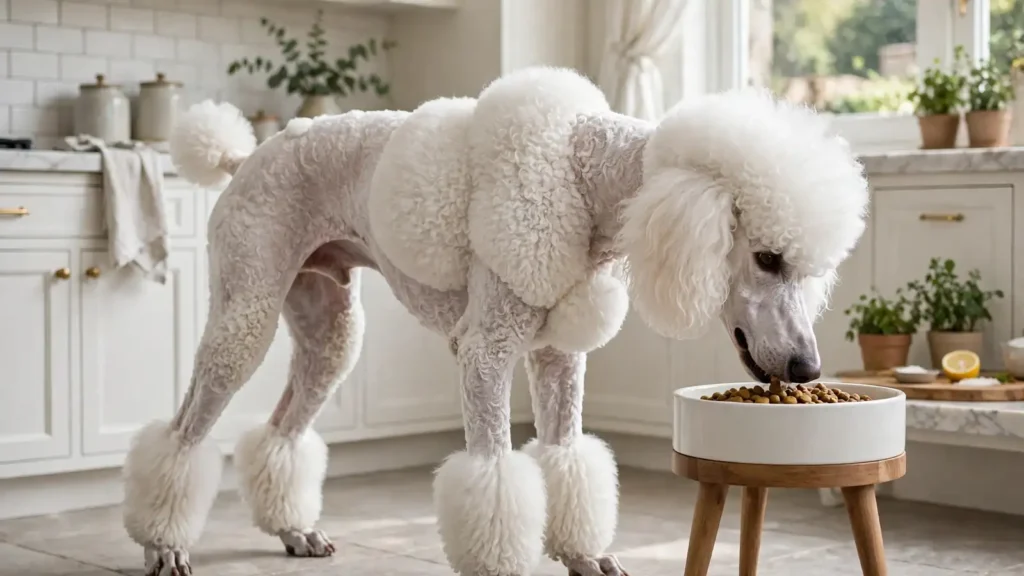
Choose a high-quality diet sized to the variety. A Standard needs a large-breed formula, while Toys and Miniatures do best on small-breed food with smaller kibble. Most do well on two meals a day.
Standards are deep-chested and can be prone to bloat, so avoid vigorous exercise right after meals. Keep portions measured, because extra weight is harder on the smaller varieties’ joints. Ask your vet about the right amount for your dog’s size and activity level.
Feeding suits the variety, not the hairstyle. A high-quality diet sized to the variety keeps the dog steady, with a large-breed formula for Standards and small-breed food with smaller kibble for Toys and Miniatures, most doing well on two meals a day. Portions should stay measured, since extra weight is harder on the smaller varieties’ joints, and Standards should avoid vigorous exercise right after meals.
Grooming
The coat is beautiful and the upkeep is non-negotiable.
Brush thoroughly every day down to the skin, especially behind the ears, under the collar, and in the armpits where mats hide. Schedule professional grooming every six to eight weeks for a full clip. Between appointments, trim nails monthly, clean ears weekly (they are prone to ear issues), and brush teeth several times a week.
Start grooming young so the dog accepts the table, the dryer, and the clippers calmly. A the breed that will not stand for grooming is a problem you do not want.
Grooming is the breed’s biggest commitment. Brushing thoroughly every day down to the skin covers the dense, curly coat, especially behind the ears, under the collar, and in the armpits where mats hide, with professional clipping every six to eight weeks. Starting grooming young matters, since a dog that will not stand for the table, dryer, and clippers calmly is a problem you do not want.
Exercise and Enrichment
A smart dog needs a busy life.
Standards need a solid hour or more of exercise daily: walks, swimming (their heritage!), fetch, and dog sports like agility or rally. Miniatures and Toys need less distance but just as much engagement: training games, puzzle toys, and short adventure walks.
Mental work is the real exercise. Fifteen minutes of trick training tires a the breed more than a lazy hour in the yard. When bored, they bark, chew, and redecorate.
Exercise is a busy life for a smart dog. Standards need a solid hour or more daily, with walks, swimming, fetch, and dog sports like agility or rally, while Miniatures and Toys need less distance but just as much engagement through training games and puzzle toys. Mental work is the real exercise: fifteen minutes of trick training tires the dog more than a lazy hour in the yard.
Health
Hip dysplasia and progressive retinal atrophy occur across the varieties.
Loose kneecaps appear especially in the smaller Poodles.
Standards can be prone to bloat and to Addison’s disease.
Regular vet checkups, eye screening, and buying from a breeder who health-tests their dogs go a long way. The breed’s longevity rewards owners who invest in preventive care. For general background, see the Poodle dog reference on Wikipedia.
Health care follows the familiar rhythm with eye screening in focus. Regular vet checkups, eye screening, and buying from a breeder who health-tests go a long way, and the breed’s longevity rewards owners who invest in preventive care. Day to day, eye cloudiness, limping, and changes in appetite, weight, or energy deserve a prompt vet call, and asking the vet about the right amount of food for the variety keeps weight in check.
Indoor and Outdoor Living
They are indoor dogs in the best sense.
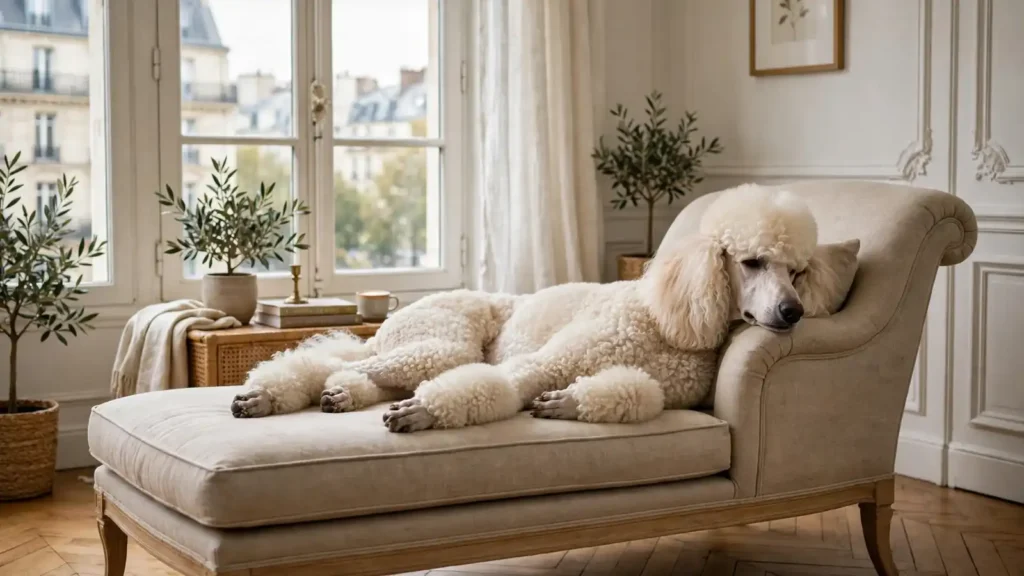
Toy and Miniature varieties are excellent apartment dogs: quiet, clean, and small. Standards need more room and a yard, and they should not live outdoors; the breed was made for companionship and suffers when isolated.
All varieties are sensitive to extreme heat because of the dense coat, so keep them clipped short in summer and provide cool water and shade. They are house dogs, not yard dogs, in every variety.
Indoor living as a house dog defines the arrangement. Toy and Miniature varieties are excellent apartment dogs: quiet, clean, and small, while Standards need more room and a yard and should not live outdoors, since the breed was made for companionship and suffers when isolated. All varieties are sensitive to extreme heat because of the dense coat, so short summer clips, cool water, and shade matter.
Family Suitability
They are among the best family dogs for the right household. The Poodle dog is among the best family dogs for the right household.
They are gentle, patient, and playful with children, and with early socialization they get along well with other dogs and even cats. They are not overly vocal and rarely bark without reason.
The caveat is fragility in the smallest variety: Toy varieties can be injured by rough play with small children, so interactions need supervision. And all of them need their people home. This is not the breed for a household empty twelve hours a day.
With families, cleverness leads and grooming sets the limit. The Poodle dog is among the best family dogs for the right household: gentle, patient, and playful with children, and with early socialization getting along well with other dogs and even cats. The caveat is fragility in the Toy variety, which can be injured by rough play with small children, so interactions need supervision, and all of them need their people home.
Finding a Breeder or Rescue
Take your time finding the right source.
Look for a breeder who health-tests for the breed’s known issues (hips, eyes, and more depending on variety), raises puppies in the home, and matches the variety to your lifestyle honestly. Ask about grooming expectations. A good breeder makes sure you understand the commitment. The Poodle dog does best with breeders who health-test hips and eyes.
The breed rescues are full of wonderful dogs, including many whose previous owners underestimated the grooming. An adult rescue the breed can be a superb choice, with house training and temperament already established.
- Ask about health screening for hip dysplasia and eye conditions and patellar luxation
- Meet the puppy’s mother and see where the puppies are raised
- Ask how the puppies are socialized in their first weeks
- Consider rescue too: breed rescues place wonderful dogs
Quick Quiz: Is a Poodle Right for You?
Answer four questions. Tap yes or no.
Frequently Asked Questions
Are Poodles good for first-time dog owners?
Yes, especially the Miniature and Toy. They are easy to train, eager to please, and adaptable. The grooming commitment is the main thing a new owner must be ready for.
Are Poodles hypoallergenic?
No dog is truly hypoallergenic, but they shed very little and trap dander in their curly coat, so they are among the best breeds for allergy sufferers. Spend time with the breed before committing if allergies are a concern.
Do Poodles bark a lot?
Generally no. They are alert and will announce visitors, but they are not typically noisy dogs. Boredom or anxiety can cause barking, so keep them engaged.
How long do Poodles live?
Typically 10 to 18 years, with Toy and Miniature varieties often reaching the upper end.
Do Poodles shed?
Very minimally. The coat grows continuously and needs clipping, but it does not shed the way most breeds do. Daily brushing is still essential to prevent mats.
Which Poodle size is best for apartments?
The Toy or Miniature. Both are quiet, clean, and compact. The Standard needs more space and exercise than apartment life usually provides.
What do Poodle owners say about living with the breed?
Owners consistently describe this breed as brilliant, funny, and deeply devoted. In practice, owners report that the breed’s trainability is the main reason they recommend it. This breed seems to learn house rules by watching you.
When should I ask my vet about my Poodle’s health?
Schedule annual wellness exams, or twice-yearly exams for seniors, and ask your vet about screening for conditions the breed can be prone to, such as hip dysplasia, eye conditions, and thyroid issues. Consult your veterinarian promptly if you notice changes in appetite, thirst, weight, or energy.
The Poodle is a brilliant, people-pleasing athlete in three sizes, wrapped in a low-shedding coat. Its grooming commitment is real, and so is its devotion.
Similar Breeds Worth Exploring
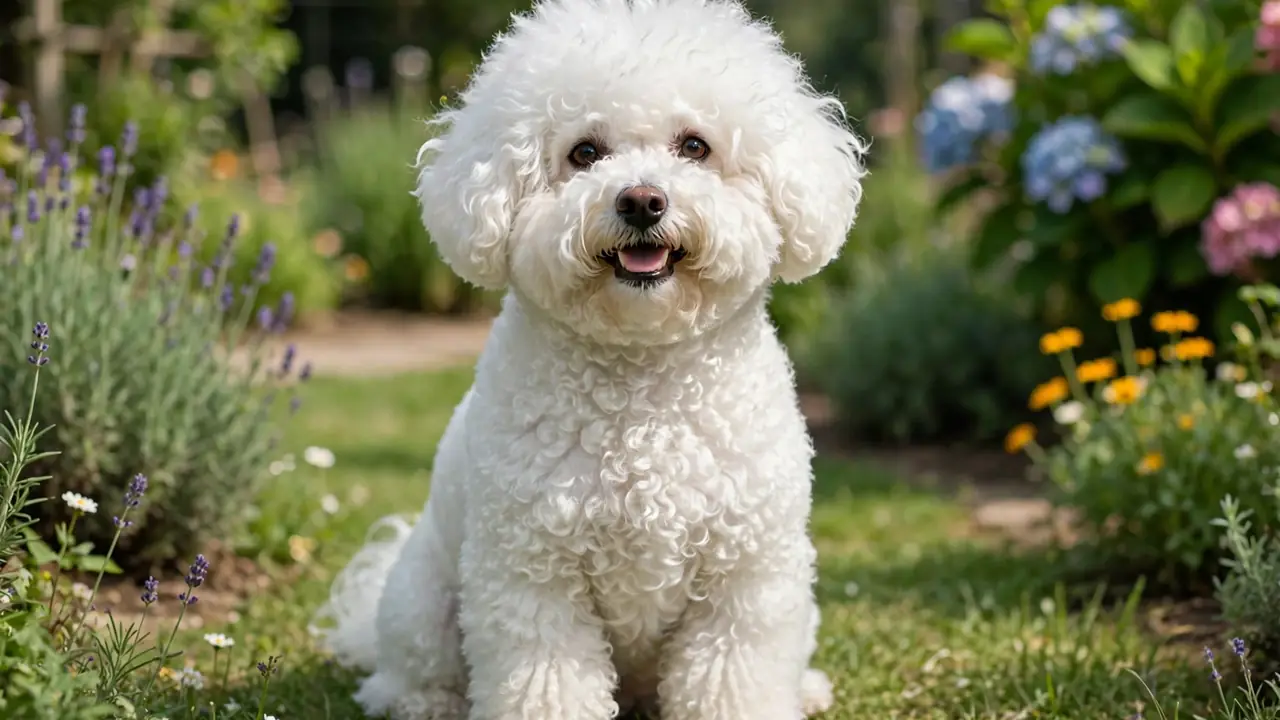
If the breed appeals to you, these breeds share some traits: the Bichon Frise (curly coat, cheerful companion, also low-shedding), the Portuguese Water Dog (athletic water dog, similar coat care), the Schnauzer (smart, low-shedding, bearded charm), and the Labradoodle (the breed intelligence in a retriever package, for those who want a mix).
Related Breed Guides
Keep Exploring
Browse all our Dog Breed Guides, try the Dog Age Calculator, or explore our Cat Breed Guides.