
Akita Dog Breed Guide
Akita: Japan’s legendary guardian dog
Loyal, dignified, and powerfully built: the Akita is Japan’s legendary guardian dog. Personality, care, training, and health in one complete guide.
By Emily Carter · Reviewed by our vet team · Updated 22 October 2026 · 12 min read
Lifespan 10–13 yrsWeight 70–130 lbLoyal guardian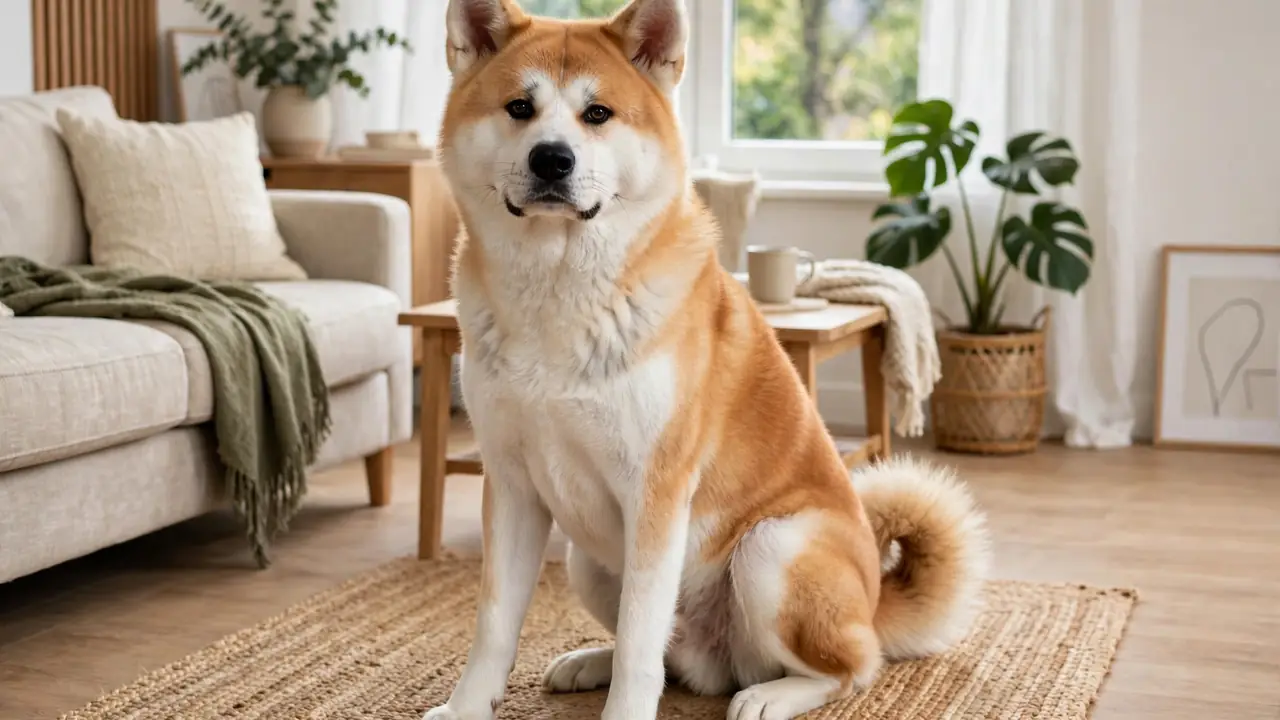
Akita dog is a large, powerful dog from Japan, famous for loyalty so deep it became legend. Before you fall for the plush coat and curled tail, here is what matters most.
At a Glance
Size and Weight
Size is the first thing to get right, because the breed is far larger than photos suggest. Here is the breakdown. The Akita dog is notably larger than many first-time owners expect.
Males typically stand 26 to 28 inches tall and weigh 100 to 130 pounds. Females are smaller at 24 to 26 inches and 70 to 100 pounds. Puppies grow fast and reach most of their adult size by 12 months, though they keep filling out until about two years old.
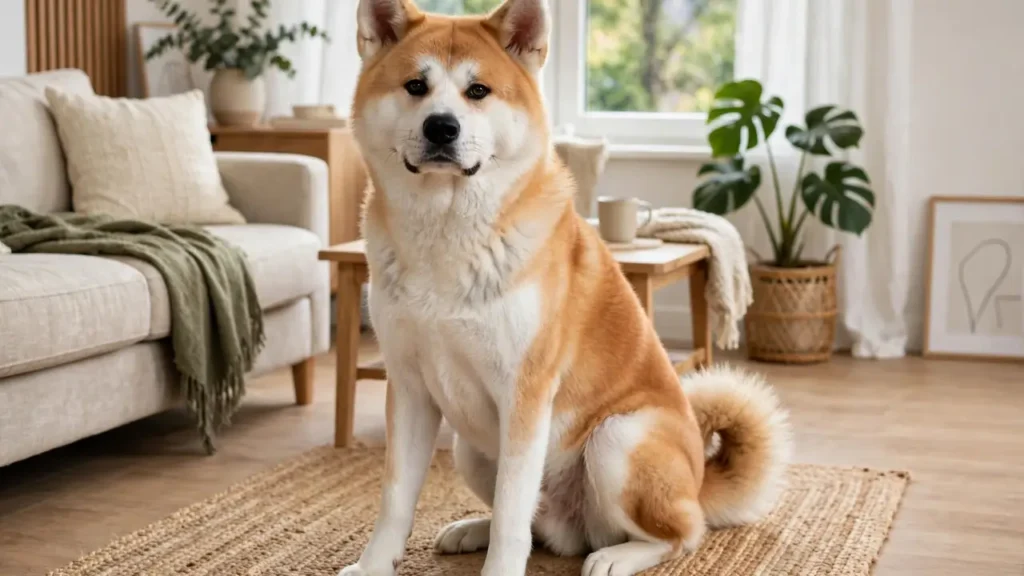
This is a substantial dog in every sense. This breed takes up real space on the couch, eats a lot, and can pull hard on the leash without training. Apartment living is possible only with serious commitment to daily exercise. That size is part of the appeal of the Akita dog.
Coat and Colors
That thick double coat is built for cold mountain winters. Here is what to expect.
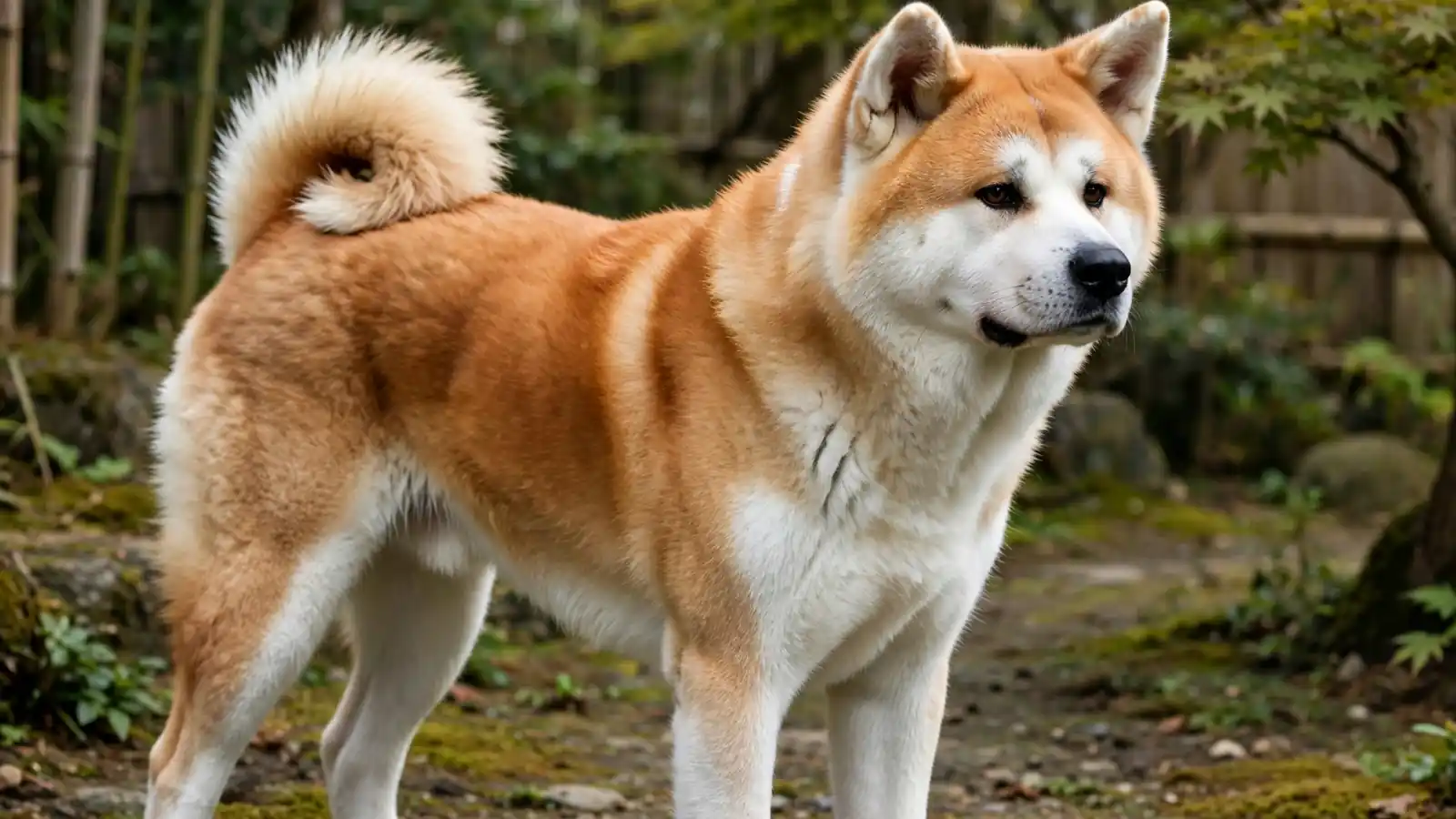
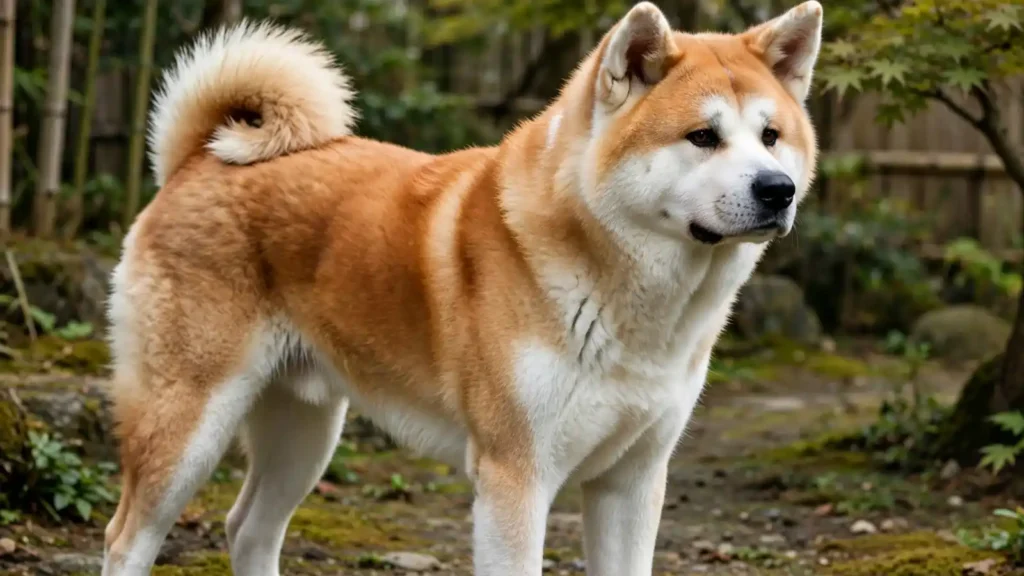
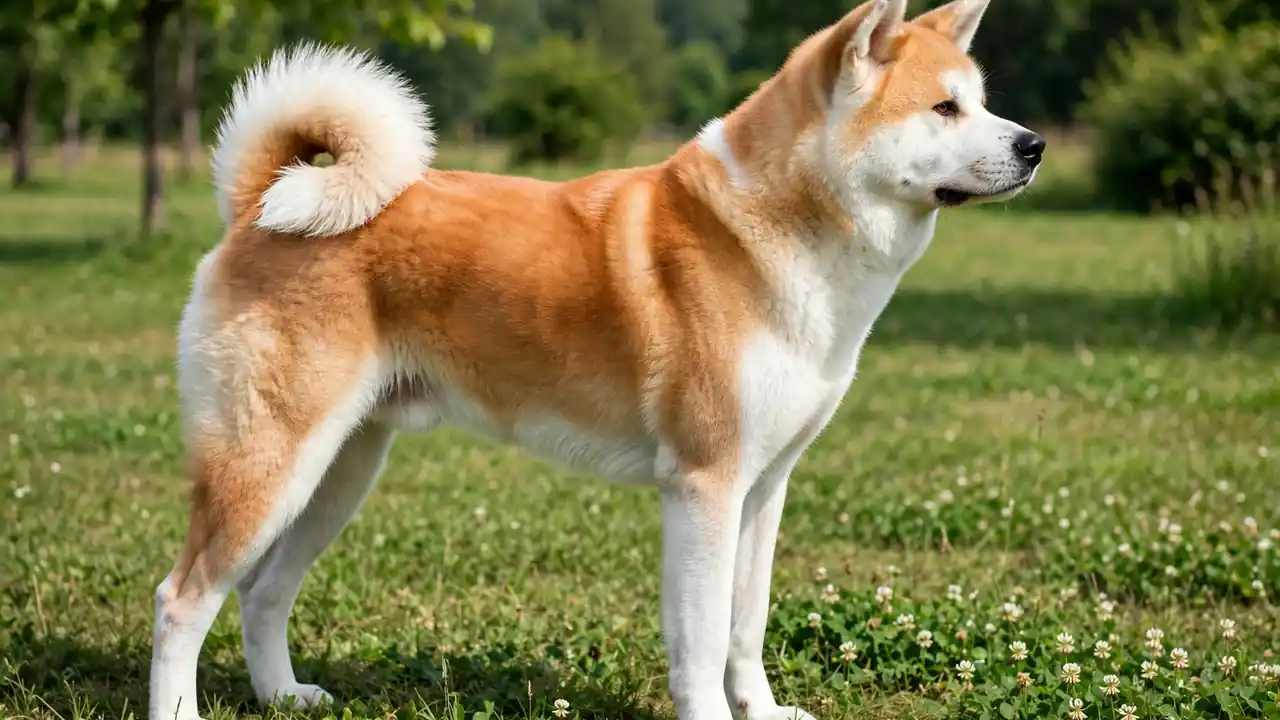
The outer coat is straight and harsh; the soft undercoat is dense and plush. Accepted colors include red, fawn, sesame, brindle, and white, often with white markings on the face, chest, and legs (called urajiro in Japan). The American type is heavier in build than the Japanese Akita Inu. That dense coat is one of the most recognisable features of the Akita dog.
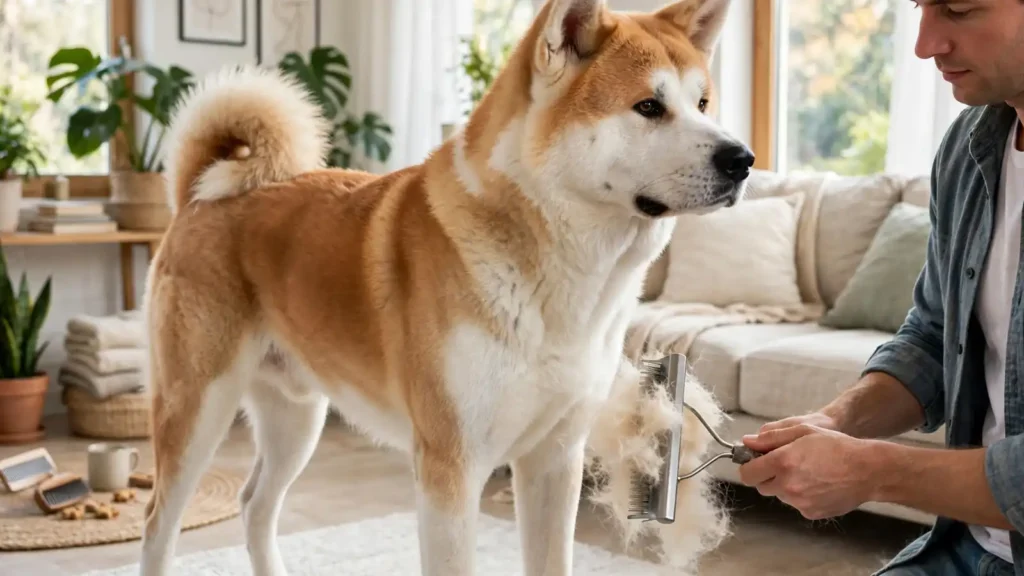
Shedding is the headline. The undercoat “blows” twice a year, and during those weeks fur comes out in clouds. Outside shedding season, weekly brushing keeps things manageable.
History and Origins
Bred originally as hunting and guarding dogs for Japanese nobility. They tracked bear and boar and guarded property.
The breed nearly vanished during World War II, when dogs were seized for military use and food shortages devastated the population. Dedicated breeders rebuilt it from a handful of survivors.
Hachiko, the most famous of them all, waited at a Tokyo train station every day for nearly ten years after his owner died. His statue still stands there, and his story made the breed a national symbol of loyalty in Japan.
The breed comes from the mountainous Akita prefecture of northern Japan. Its story explains the temperament. The history of the Akita dog helps explain its loyal, guarded temperament.
Bred originally as hunting and guarding dogs for Japanese nobility, These dogs tracked bear and boar and guarded property. The breed nearly vanished during World War II, when dogs were seized for military use and food shortages devastated the population. Dedicated breeders rebuilt it from a handful of survivors.
The most famous of them all, Hachiko, waited at a Tokyo train station every day for nearly ten years after his owner died. His statue still stands there, and his story made the breed a national symbol of loyalty in Japan.
Physical Characteristics
Power wrapped in a plush coat. That is the breed in five words.
The head is broad with a full face, small deep-set eyes, and erect triangular ears. The tail curls tightly over the back. The body is muscular and slightly longer than tall, with a deep chest and straight, strong legs. Males look distinctly masculine and females feminine, a trait breeders call sexual dimorphism.
Everything about this dog says strength. This is not a fragile or fussy dog; it is an athlete built for endurance.
Akita Personality and Behavior
Loyalty is the whole personality in one word, but there is more beneath it. Here is the honest picture.
They bond intensely with their family and are famously devoted, often shadowing one person in particular. With strangers they are naturally reserved and aloof, not aggressive by default but not seeking new friends either. This is a dignified, quiet dog, not a bouncy extrovert. This close bond is typical of the Akita dog.
They are intelligent and independent thinkers, which means training takes patience and consistency. These dogs can be strong-willed and dominant with other dogs, especially of the same sex. Early socialization is not optional; it shapes whether that reserve stays polite or hardens into reactivity.
Owners consistently describe the breed as calm indoors, clean (many groom themselves like cats), and deeply affectionate with their own people. In practice, owners report that the breed’s quiet devotion is the main reason they recommend it to experienced dog people.
Loyalty is the whole personality in one word. The Akita dog is a large, powerful dog from Japan, bonding intensely with its family and famously devoted, often shadowing one person in particular. With strangers the dog is naturally reserved and aloof, not aggressive by default but not seeking new friends either.
The independence and dominance set the training conditions. Intelligent and independent thinkers need training with patience and consistency, and strong-willed dominance with other dogs, especially of the same sex, makes early socialization not optional. Calm indoors and clean, many grooming themselves like cats, the breed is deeply affectionate with its own people.
They bond intensely with their family and are famously devoted, often shadowing one person in particular.
With strangers they are naturally reserved and aloof, not aggressive by default but not seeking new friends either.
Intelligent and independent, they weigh up commands before obeying, so training takes patience and consistency.
- Famously loyal and devoted to family
- Calm, clean and quiet indoors
- A dignified guardian presence
- Strong-willed; needs an experienced owner
- Heavy shedding and twice-yearly coat blows
- Can be dog-aggressive, especially with same-sex dogs
Care Essentials
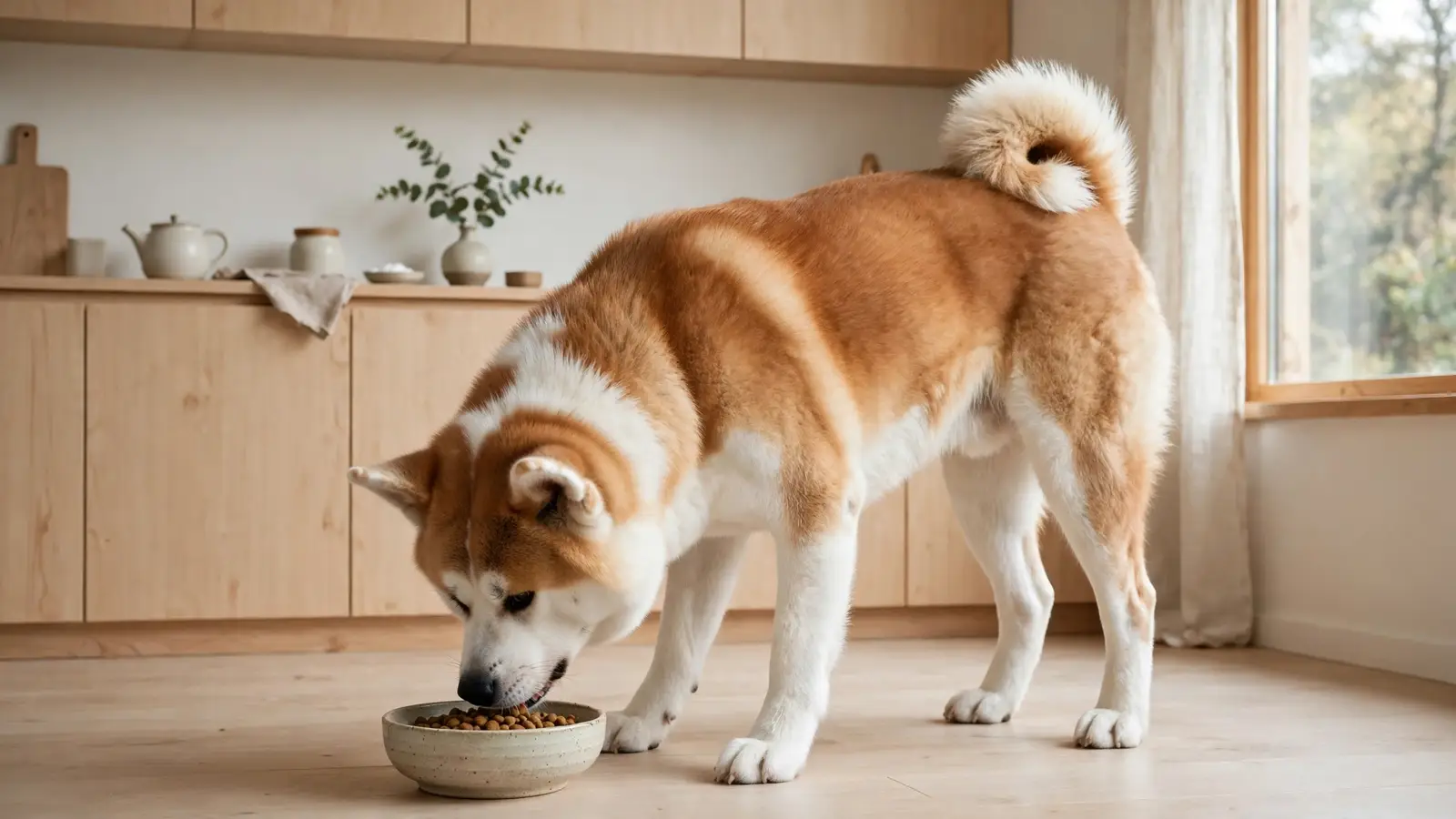
Two measured meals a day of a high-quality large-breed diet with real meat first. Puppies need large-breed puppy food to protect developing joints.
Weekly brushing with an undercoat rake, daily during the twice-yearly coat blow, plus monthly nail trims and weekly ear checks.
45 to 60 minutes daily of brisk walks, hiking and purposeful games like tracking and obedience work.
A securely fenced yard and a calm indoor base; calm indoors, but safe outdoor access is needed every day.
This is not a starter dog, and care reflects that. Here is the daily reality.
They need a securely fenced yard, because the prey drive is real and the wander instinct is strong. Training should start the day the puppy comes home, using firm, positive methods. Harsh corrections backfire with this breed; respect works better than force. A secure garden matters a great deal for the Akita dog.
These dogs do best with an experienced owner who understands guardian breeds. They are not dog-park dogs by nature, and many do best as the only dog or with a calm opposite-sex companion.
A typical day runs on secure fencing and experienced handling. A securely fenced yard matters, since the prey drive is real and the wander instinct is strong, with training starting the day the puppy comes home using firm, positive methods. Harsh corrections backfire with this breed, and the dog does best with an experienced owner who understands guardian breeds.
Nutrition and Diet
A big dog eats like a big dog. Here is how to feed one well.
Feed a high-quality large-breed diet with real meat as the first ingredient. Puppies need large-breed puppy food to control growth rate, which protects developing joints. Most adults do well on two meals a day rather than one large meal. Portion control is important for the Akita dog.
Bloat (gastric dilatation-volvulus) is a risk in deep-chested breeds, so avoid vigorous exercise right after meals and consider a slow-feeder bowl. Keep fresh water available always, and ask your vet about the right portions for your dog’s weight and activity level.
Feeding suits a big dog eating like a big dog. A high-quality large-breed diet with real meat as the first ingredient keeps the dog steady, with puppies needing large-breed puppy food to control growth rate and protect developing joints. Most adults do well on two meals a day, and bloat risk means no vigorous exercise right after meals, with a slow-feeder bowl worth considering.
Grooming
The coat is beautiful and the upkeep is real. Here is the routine.
Brush weekly with an undercoat rake outside shedding season; daily during the twice-yearly coat blow. Bathe every couple of months or when dirty. Trim nails monthly, clean ears weekly, and brush teeth several times a week. Regular brushing helps manage the coat of the Akita dog.
Start grooming young so the dog accepts handling. A dog that will not stand for brushing is a problem you do not want at 110 pounds.
Grooming is a beautiful coat with real upkeep. Weekly brushing with an undercoat rake outside shedding season, daily during the twice-yearly coat blow, manages the thick double coat, with baths every couple of months or when dirty. The same session covers nails monthly, ears weekly, and teeth several times a week, and starting grooming young prevents a 110-pound brushing problem.

Exercise and Enrichment
Moderate energy, serious strength. That combination defines the exercise plan.
Aim for 45 to 60 minutes of activity daily: brisk walks, hiking, or play sessions. These dogs enjoy purposeful work like pulling, tracking games, and obedience training. Mental exercise matters as much as physical; a bored dog invents its own entertainment, usually destructive. Daily activity keeps the Akita dog settled at home.
Leash training is essential from puppyhood. A 100-pound dog that pulls is dangerous, and the prey drive means off-leash time belongs only in secure areas.
Exercise is moderate energy with serious strength. Forty-five to sixty minutes of activity daily cover the need, with brisk walks, hiking, and play sessions all suited, plus purposeful work like pulling, tracking games, and obedience training. Mental exercise matters as much as physical, and leash training is essential from puppyhood, since a 100-pound dog that pulls is dangerous.
Health
These dogs live 10 to 13 years. Here are the health issues to know about.
Hip dysplasia and elbow dysplasia occur in the breed, so buy from breeders who screen hips and elbows. Autoimmune conditions, including autoimmune thyroiditis and sebaceous adenitis (a skin condition), are seen more often in this breed than in many others. Progressive retinal atrophy and bloat are also concerns. Screening is especially valuable for the Akita dog.
Schedule annual wellness exams, or twice-yearly exams for seniors, and ask your vet about screening for conditions the breed can be prone to, such as hip dysplasia and autoimmune thyroiditis. Consult your veterinarian promptly if you notice changes in appetite, thirst, weight, or energy. For general background, see the Akita article on .Wikipedia.
Health care follows the familiar rhythm with joint and autoimmune screening in focus. Annual exams, twice-yearly exams for seniors, and screening for hip dysplasia and autoimmune thyroiditis cover the ground the guide names, and breeders who health-test hips, elbows, eyes, and thyroid are worth seeking out. Day to day, limping, skin changes, and changes in appetite, weight, or energy deserve a prompt vet call.
Both occur in the breed, so buy from breeders who screen hips and elbows.
Autoimmune thyroiditis and sebaceous adenitis, a skin condition, are seen more often in this breed than in many others. Progressive retinal atrophy is also a concern.
A risk in deep-chested breeds. Avoid vigorous exercise right after meals and consider a slow-feeder bowl.
Indoor and Outdoor Living
The breed adapts to indoor life but needs outdoor access. Here is the balance.
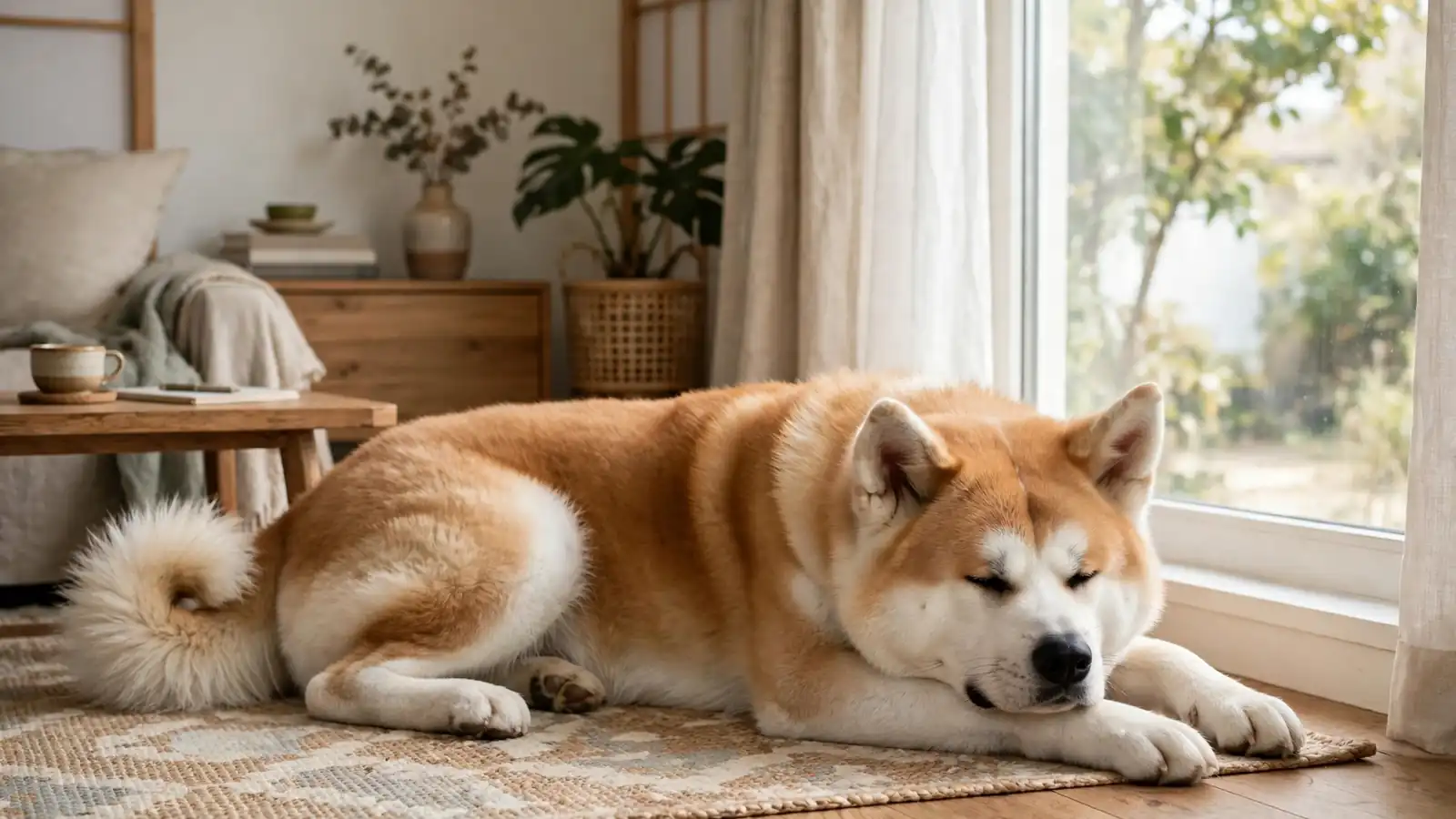
They are calm indoors and make excellent house dogs, but they need a fenced yard for safe outdoor time. They tolerate cold very well thanks to the double coat; heat is harder on them, so provide shade and water in summer and avoid midday exercise. A calm home suits the Akita dog well.
They are escape artists with a strong wander instinct. Fences should be tall and secure, and the dog should never be left unsupervised in an unfenced area.
Indoor living as a house dog defines the arrangement. The breed is calm indoors and makes an excellent house dog, needing a fenced yard for safe outdoor time, tolerating cold very well thanks to the double coat while heat is harder, so shade and water in summer matter. Escape artists with a strong wander instinct need tall, secure fences and never unsupervised time in unfenced areas.
Family Suitability
Devoted to family, cautious with everyone else. That is the family picture.
These dogs are typically gentle and protective with children in their own family, but their size and strength mean all interactions with small kids need supervision. They are not tolerant of rough handling by unfamiliar children. Supervision remains wise with any Akita dog.
With other pets, caution is warranted. Same-sex aggression toward other dogs is common, and small animals can trigger the prey drive. Early, careful socialization improves the odds, but many are happiest as the only pet.
With families, devotion leads and dominance sets the limit. The Akita dog is typically gentle and protective with children in its own family, though size and strength mean all interactions with small kids need supervision, and rough handling by unfamiliar children is not tolerated. With other pets caution is warranted: same-sex aggression toward other dogs is common, small animals trigger the prey drive, and many are happiest as the only pet.
Finding a Breeder or Rescue
Take your time finding the right source. Here is how.
Look for breeders who health-test breeding stock (hips, elbows, eyes, thyroid), raise puppies in the home, and ask you as many questions as you ask them. Expect to wait; good breeders have waiting lists. A careful search is worth the wait for an Akita dog.
Breed rescues exist in most regions and often have wonderful adult dogs whose temperament is already known. Adoption is a great option, especially for first-time owners of the breed who want to skip the demanding puppy stage.
- Ask what health testing the breeder does on their dogs
- Ask to see the parents and the living conditions
- Puppies should be raised in a home environment
- A good breeder answers questions openly and asks you some too
Quick Quiz: Is an Akita Right for You?
Answer four questions. Tap yes or no.
Frequently Asked Questions
Are Akitas good for first-time dog owners?
Generally no. Their size, strength, independence, and guardian instincts suit experienced owners. A first-timer with a great trainer and serious commitment can succeed, but easier breeds exist.
Are Akitas aggressive?
They are not inherently aggressive, but they are powerful guardian dogs with strong protective instincts and potential for dog aggression. Training and socialization determine the outcome.
Do Akitas shed a lot?
Yes. They shed moderately year-round and heavily twice a year during coat blows. If you hate dog hair, this is not your breed.
How long do Akitas live?
Typically 10 to 13 years with good care.
Are Akitas good with kids?
With their own family’s children, usually yes, with supervision. They are less tolerant of unfamiliar children and rough play.
Can Akitas live in apartments?
It is difficult. They need space and a yard is strongly preferred. Only consider it with a serious daily exercise commitment.
What do Akita owners say about living with the breed?
Owners consistently describe the breed as loyal, dignified, and reserved with strangers. In practice, owners report that the breed’s quiet devotion is the main reason they recommend it to experienced dog people.
When should I ask my vet about my Akita’s health?
Schedule annual wellness exams, or twice-yearly exams for seniors, and ask your vet about screening for conditions the breed can be prone to, such as hip dysplasia and autoimmune thyroiditis. Consult your veterinarian promptly if you notice changes in appetite, thirst, weight, or energy.
The Akita rewards experienced owners with a loyalty that borders on legend. It is powerful, dignified and deeply devoted to its family, but its strength, independence and heavy shedding make it a breed to choose with clear eyes and real commitment.
Similar Breeds Worth Exploring
Related Breed Guides
- Shiba Inu Dog Breed Guide
- Alaskan Malamute Dog Breed Guide
- Chow Chow Dog Breed Guide
- German Shepherd Dog Breed Guide
Keep Exploring
Browse all our Dog Breed Guides, try the Dog Age Calculator, or explore our Cat Breed Guides.