
Great Dane Dog Breed Guide
Great Dane: the gentle Apollo of dogs
The gentle Apollo of dogs: one of the tallest breeds, with a heart as big as its frame. Care and health in one complete guide.
By Emily Carter · Reviewed by our vet team · Updated 22 October 2026 · 9 min read
Lifespan 7–10 yrsWeight 100–200 lbGentle & patient
Great Dane dog is the gentle Apollo of dogs: one of the tallest breeds, with a heart as big as its frame. Here is what matters before you commit.
At a Glance
Size and Weight
Enormous. Here are the numbers. The Great Dane dog is enormous and elegant.
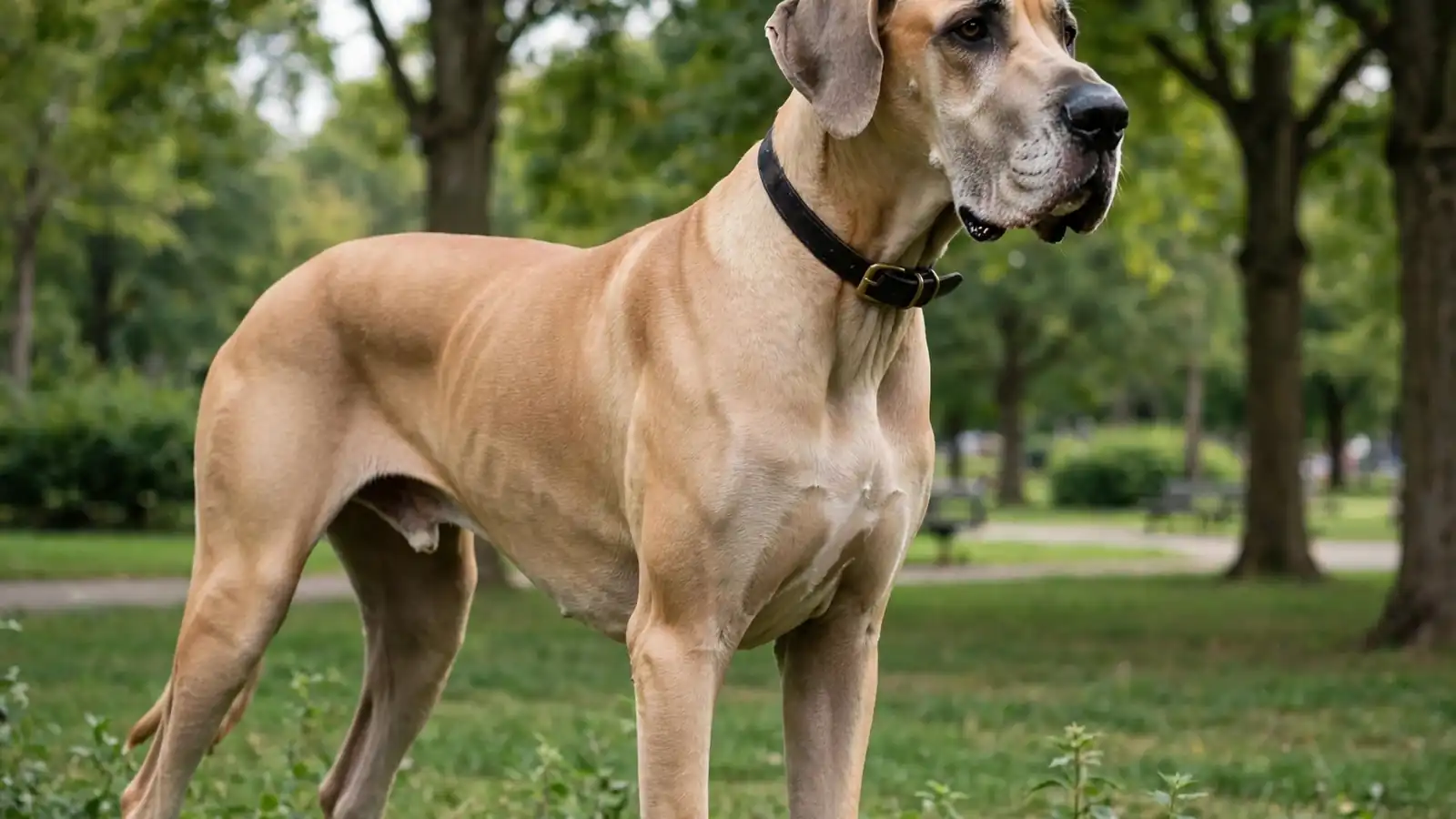
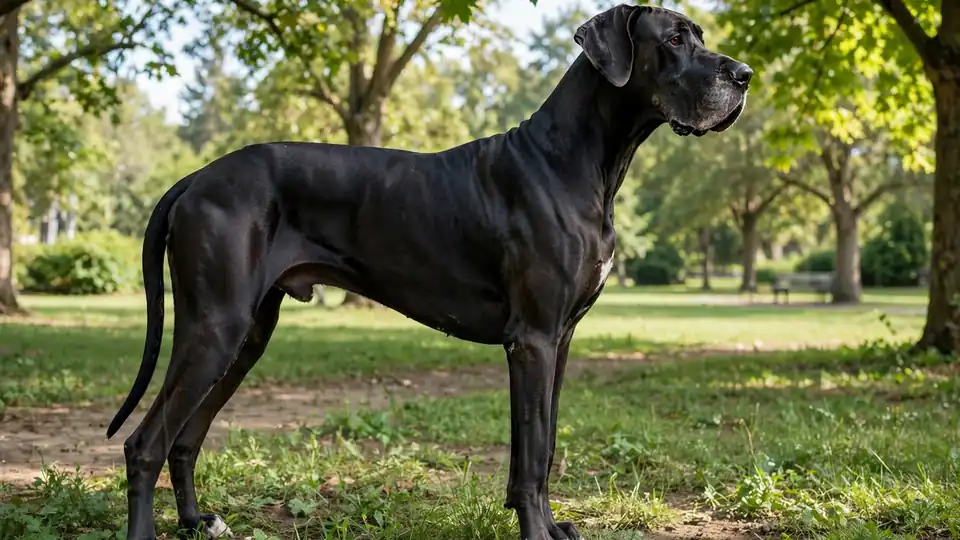
Males stand 30 to 34 inches and weigh 140 to 200 pounds; females are 28 to 32 inches and 110 to 140 pounds. They are among the tallest dog breeds in the world.
Everything must be giant-sized: the car, the bed, the food budget, the vet bills. Puppies grow at an astonishing rate. The Great Dane dog needs everything giant-sized.
Coat and Colors
Short, sleek, and easy. Here is what to expect.
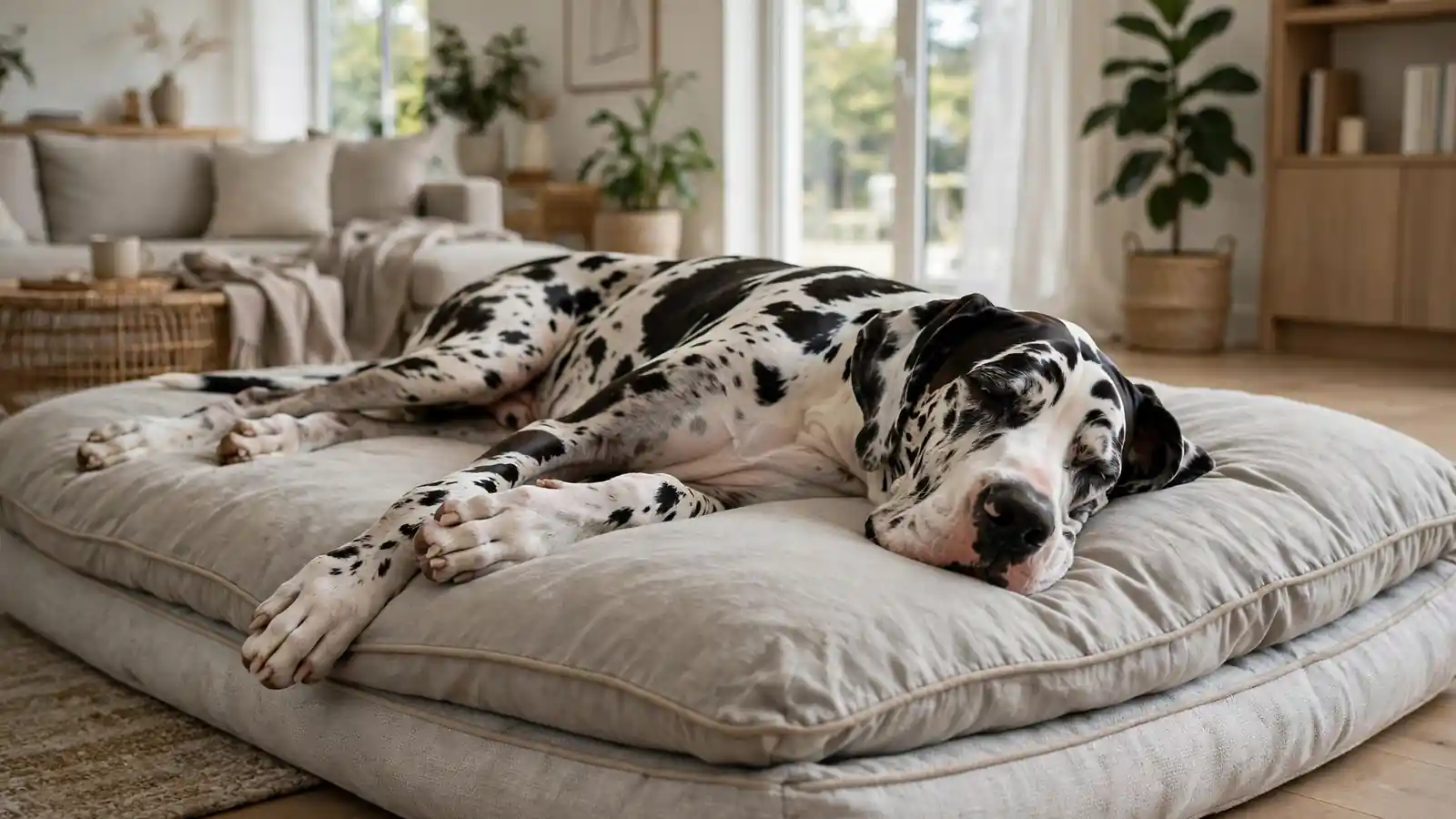
A short, smooth coat in fawn, brindle, blue, black, harlequin, or mantle patterns. Shedding is moderate year-round. Grooming is minimal: weekly brushing. The Great Dane dog wears a short, smooth coat in fawn, brindle, blue, black, harlequin, or mantle.


History and Origins
Danes descend from ancient mastiff-type war and hunting dogs, refined in Germany as boar hunters.
As the need for boar dogs faded, breeders emphasized the gentle temperament, creating the friendly giant of today.
They have been companions and estate guardians for centuries.
A German boar hunter turned gentle giant. Here is the story. The Great Dane dog began as a German boar hunter.
Danes descend from ancient mastiff-type war and hunting dogs, refined in Germany as boar hunters. As the need for boar dogs faded, breeders emphasized the gentle temperament, creating the friendly giant of today.
They have been companions and estate guardians for centuries.
Physical Characteristics
The tallest dog in the room. Here is the structure.
Massive but elegant: deep chest, long legs, noble head, and graceful movement. Despite the size, the build is balanced rather than bulky.
They do not know their size. Expect a 150-pound lap dog.
Great Dane Personality and Behavior
A gentle giant in the truest sense. Here is the honest picture.
Danes are famously gentle, friendly, and patient with their families. They are calm indoors, dignified with strangers, and deeply affectionate. They bond strongly and want to be near their people. The Great Dane dog is famously gentle, friendly, and patient.
They are not particularly bouncy; the energy is moderate and the demeanor is regal. But the size means an untrained adolescent Dane is a lot of dog, so training early is essential.
Owners consistently describe the Dane as gentle, friendly, and patient. In practice, owners report that the breed’s sweet nature is the main reason they recommend it to giant-breed lovers.
A gentle giant in the truest sense is exactly right. The Great Dane dog is gentle, friendly, and patient with its family, calm indoors and dignified with strangers, deeply affectionate and bonded strongly to its people. The boar-hunter past refined into gentleness shows in the regal demeanor: moderate energy, not bounciness, and a dog that does not know its size.
The size sets the training rule. An untrained adolescent Dane is a lot of dog, so training should start early, before the puppy outweighs you, and leash training is critical, since a pulling Dane is dangerous. Owners who train early usually get the famously good house dog the breed is known for, calm indoors despite the size.
Gentle, friendly, and patient, calm indoors and dignified with strangers.
They bond strongly and want to be near their people. They do not know their size; expect a 150-pound lap dog.
The energy is moderate and the demeanor is regal, but training early is essential before the adolescent outweighs you.
- Wonderful, patient family dogs
- Famously good house dogs despite the size
- Moderate exercise needs
- A short lifespan of 7 to 10 years
- Bloat is the great emergency risk
- Everything is giant-sized, including vet bills
Care Essentials
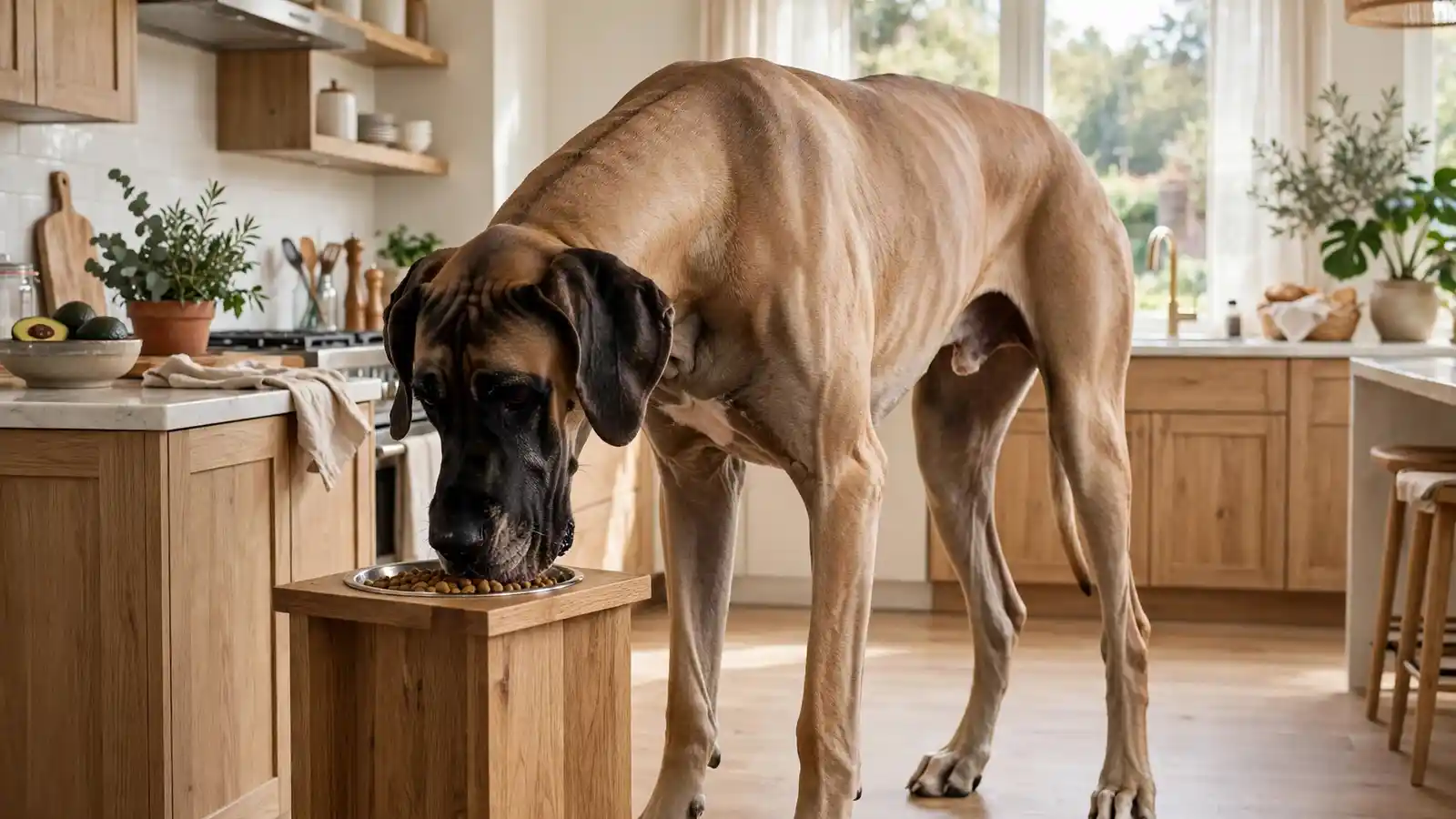
Large-breed puppy food to control the explosive growth rate, then two to three meals a day for adults, who eat a great deal. Avoid exercise right after eating to reduce bloat risk, and keep them lean.
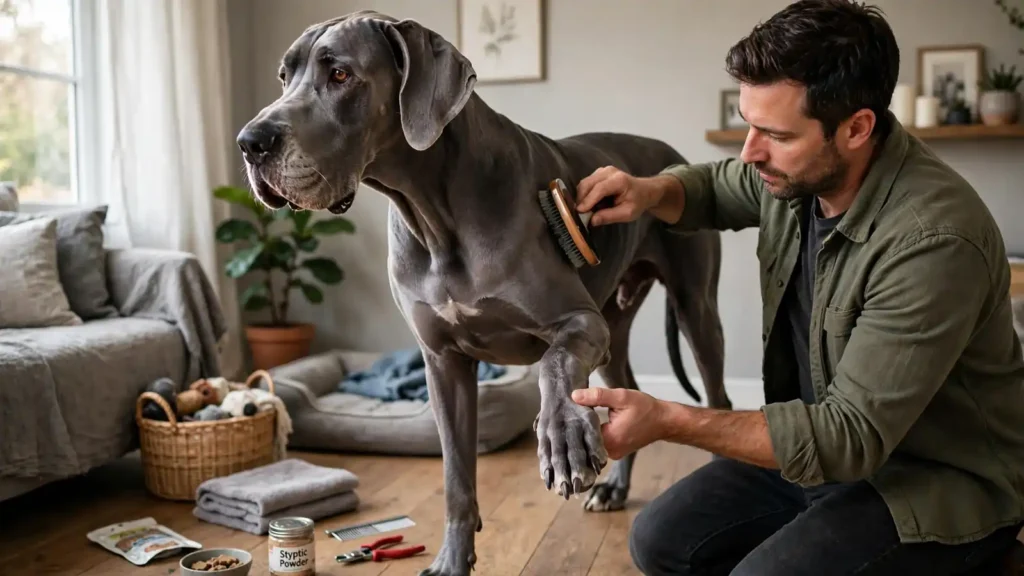
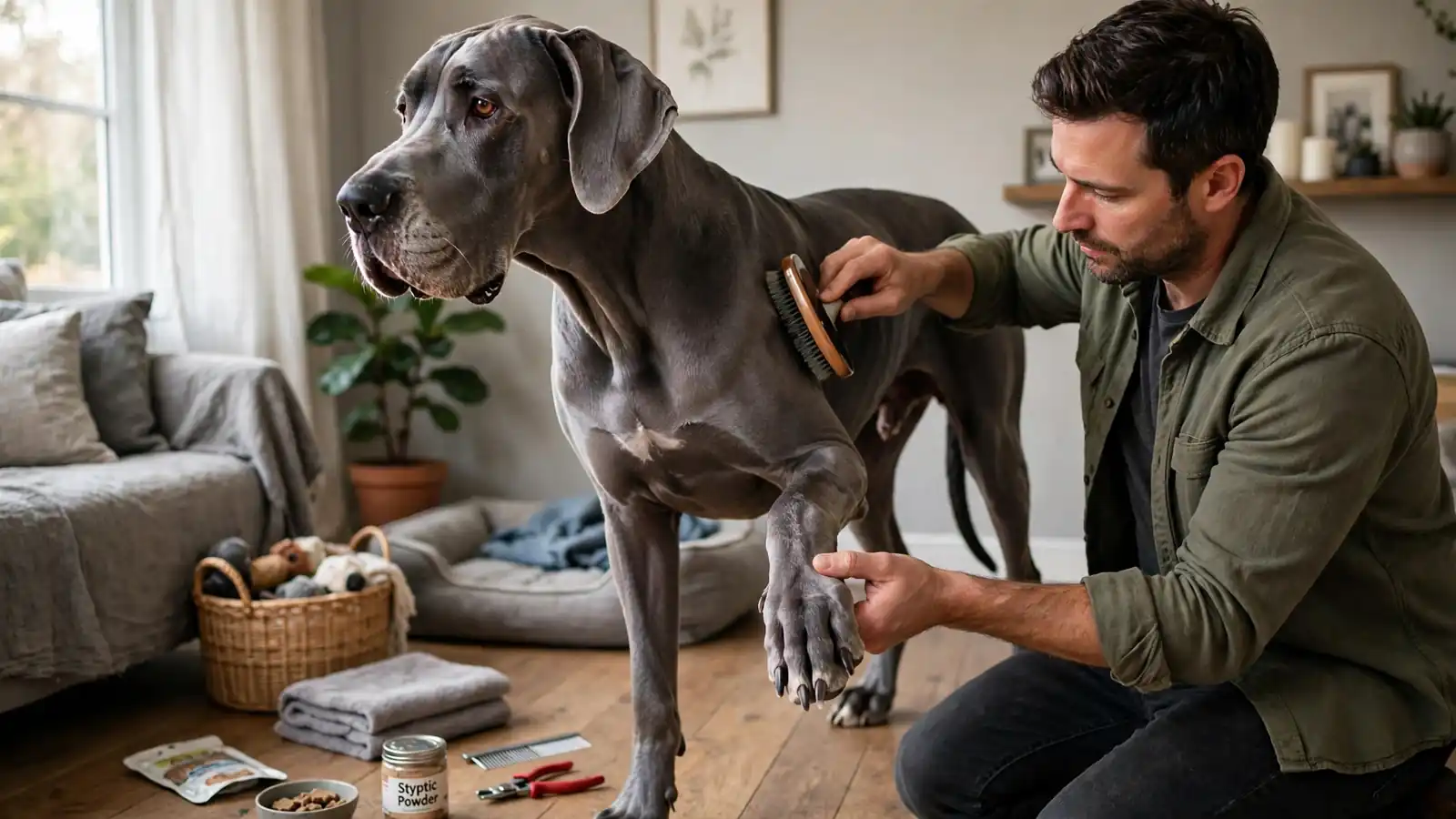
Weekly brushing, occasional baths, regular nail trims (big nails need attention), ear checks and teeth brushing. That is the whole program.
45 to 60 minutes of moderate activity daily. Avoid overexercising puppies; growing giant joints need protection until 18 months. Leash training is critical; a pulling giant is dangerous.
Indoors with family: famously good house dogs despite the size, calm but needing space. Cold-sensitive with the short coat, so jackets in winter.
Giant dog, giant needs, gentle soul. Here is the daily reality.
Danes need 45 to 60 minutes of moderate daily exercise. They are indoor family dogs who must live with their people; they suffer in kennels. Training should start early before the puppy outweighs you. The Great Dane dog needs 45 to 60 minutes of moderate daily exercise.
The short lifespan is the heartbreak. Go in with open eyes.
A typical day is giant-scaled and gentle. Forty-five to sixty minutes of moderate daily exercise cover the need, and the indoor family dog that results must live with its people, suffering in kennels. The short lifespan is the heartbreak to go in with open eyes, since most live only seven to ten years.
Nutrition and Diet
Giant growth needs careful management. Here is the plan.
Puppies need large-breed puppy food to control the explosive growth rate and protect joints. Adults eat a great deal; budget accordingly. Feed two to three meals a day, and avoid exercise right after eating to reduce bloat risk. The Great Dane dog needs large-breed puppy food to control its explosive growth rate.
Keep them lean. Extra weight is devastating on giant joints.
Feeding needs careful management at giant scale. Puppies need large-breed puppy food to control the explosive growth rate and protect joints, adults eat a great deal and deserve a budget accordingly, and two to three meals a day with no exercise right after eating reduce bloat risk. Keeping the dog lean matters most of all, since extra weight is devastating on giant joints.
Grooming
Minimal effort for a giant. Here is the routine.
Weekly brushing, occasional baths, regular nail trims (big nails need attention), ear checks, teeth brushing. That is the whole program. The Great Dane dog needs weekly brushing and regular nail, ear, and teeth care.
Grooming is minimal effort for a giant. Weekly brushing covers the short, smooth coat and its moderate shedding, occasional baths come as needed, and regular nail trims matter, since big nails need attention, plus ear checks and teeth brushing. That is the whole program, as the guide says.
Exercise and Enrichment
Moderate energy, careful with growth. Here is the plan.
Aim for 45 to 60 minutes of moderate activity daily. Avoid overexercising puppies; growing giant joints need protection until 18 months. Leash training is critical; a pulling Dane is dangerous. The Great Dane dog needs 45 to 60 minutes of moderate activity daily.
Mental enrichment through gentle training suits the temperament.
Exercise is moderate and growth-aware. Forty-five to sixty minutes of moderate activity daily cover the need, with overexercising puppies avoided, since growing giant joints need protection until eighteen months. Mental enrichment through gentle training suits the temperament, and leash manners matter more than mileage at this size.
Health
Danes live 7 to 10 years. Here are the health issues to know.
Bloat (gastric dilatation-volvulus) is the great emergency risk; know the symptoms. Hip dysplasia occurs; choose screened breeders. Heart disease (dilated cardiomyopathy) appears in the breed. Wobbler syndrome and bone cancer occur in some lines. The Great Dane dog faces bloat as its great emergency risk.
Schedule annual wellness exams, or twice-yearly exams for adults, and ask your vet about screening for conditions the breed can be prone to, such as hip dysplasia and heart disease. Consult your veterinarian promptly if you notice restlessness with a swollen belly, coughing, or changes in appetite, weight, or energy. Consider gastropexy discussion with your vet for bloat prevention. For general background, see the Great Dane article on Wikipedia.
Health care follows the familiar rhythm with joint and heart screening in focus. Annual exams, twice-yearly exams for adults, and screening for hip dysplasia and heart disease cover the ground the guide names, and breeders who screen hips, heart, eyes, and thyroid and track longevity are worth seeking out. Day to day, bloat symptoms, limping, and changes in appetite, weight, or energy deserve a prompt vet call.
The great emergency risk in this deep-chested giant; know the symptoms and act fast. Discuss gastropexy with your vet for prevention.
Occurs in the breed; choose screened breeders who track longevity.
Dilated cardiomyopathy appears in the breed, and wobbler syndrome and bone cancer occur in some lines.
Indoor and Outdoor Living
Indoor giant, outdoor enjoyer. Here is the balance. The Great Dane dog is an indoor giant and outdoor enjoyer.
Danes live indoors with their families; they are famously good house dogs despite the size. They need space but are calm. A fenced yard is ideal for safe outdoor time.
They are cold-sensitive with the short coat and need jackets in winter.
Indoor living as a giant house dog defines the arrangement. The breed lives indoors with its family, famously good house dogs despite the size, needing space but calm, with a fenced yard ideal for safe outdoor time. Cold sensitivity with the short coat means jackets in winter, and the 150-pound lap dog will claim the sofa regardless.
Family Suitability
Wonderful with families who have space. Here is the picture.
Gentle and patient with children, though the sheer size means supervision with small kids (the tail alone is a hazard). They are usually good with other dogs and with cats they are raised with.
With families, gentleness leads and size sets the limit. The breed is gentle and patient with children, though the sheer size means supervision with small kids, since the tail alone is a hazard, and usually good with other dogs and with cats raised with it. The Great Dane dog’s gentle, patient character shows best in homes that have the space, the budget, and the heart for a true giant.
Finding a Breeder or Rescue
Longevity matters enormously. Here is how.
The best breeders screen hips, heart, eyes, and thyroid, and track longevity in their lines. Dane rescues have wonderful dogs; the breed’s size and lifespan cause surrenders.
- Ask what health testing the breeder does on their dogs
- Ask to see the parents and the living conditions
- Puppies should be raised in a home environment
- A good breeder answers questions openly and asks you some too
Quick Quiz: Is a Great Dane Right for You?
Answer four questions. Tap yes or no.
Frequently Asked Questions
Are Great Danes good family dogs?
Wonderful for families with space. They are gentle, patient, and affectionate.
How much exercise does a Great Dane need?
About 45 to 60 minutes of moderate activity daily. They are not hyper.
How big do Great Danes get?
Males reach 30 to 34 inches and up to 200 pounds. They are among the tallest breeds.
Do Great Danes drool a lot?
Some do, especially after drinking. It varies by individual.
How long do Great Danes live?
Typically 7 to 10 years.
Are Great Danes easy to train?
They are intelligent and eager to please, but training must start early before the size becomes unmanageable.
What do Dane owners say about living with the breed?
Owners consistently describe the Dane as gentle, friendly, and patient. In practice, owners report that the breed’s sweet nature is the main reason they recommend it to giant-breed lovers.
When should I ask my vet about my Dane’s health?
Schedule annual wellness exams, or twice-yearly exams for adults, and ask your vet about screening for conditions the breed can be prone to, such as hip dysplasia and heart disease. Consult your veterinarian promptly if you notice restlessness with a swollen belly, coughing, or changes in appetite, weight, or energy.
The Great Dane is the gentle Apollo of dogs: enormous in frame and heart alike. Bring space, early training and open eyes about bloat and lifespan, and this dignified giant becomes a calm, devoted family member.
Similar Breeds Worth Exploring
Related Breed Guides
Keep Exploring
Browse all our Dog Breed Guides, try the Dog Age Calculator, or explore our Cat Breed Guides.