
Newfoundland Dog Breed Guide
Newfoundland: the gentle water-rescue giant
Massive, sweet, and famously good with children — a legendary swimmer with a nanny dog’s heart. Care, grooming, and health in one complete guide.
By Emily Carter · Reviewed by our vet team · Updated 22 October 2026 · 10 min read
Lifespan 8–10 yrs
Weight 100–150 lb
Gentle & patient
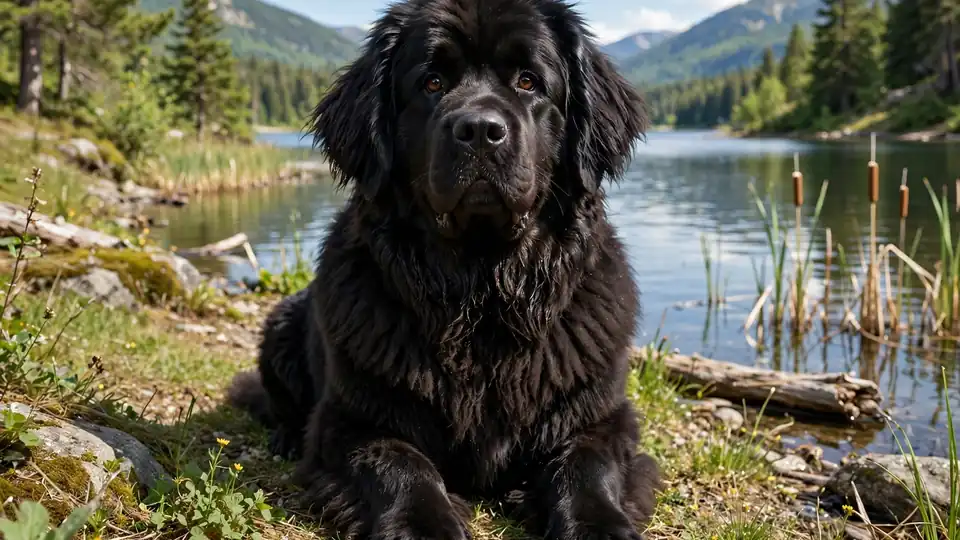
Newfoundland dog: The gentle water-rescue giant: massive, sweet, and famously good with children.
They worked with fishermen, hauling nets and lines and rescuing people from the water; their swimming ability, strength, and gentle mouth made them legendary water rescuers.
The gentle temperament with children earned them the “nanny dog” reputation. The working heritage is the whole breed. The Newfoundland dog is a true nanny dog.
Few breeds ask so much of your home and give so much back: the floors will be wet, the couch will be full, and the welcome at the door will be the gentlest you have ever known. The Newfoundland dog gives so much back.
At a Glance
Size and Weight
A true giant: males stand 28 inches and weigh 130 to 150 pounds; females are 26 inches and 100 to 120 pounds.
The build is massive and powerful, made for water work. Everything is giant-sized: food, space, grooming time, vet bills. A puppy grows from a cuddly bundle into a full-sized giant in little more than a year, which is why steady, controlled growth matters so much.
Coat and Colors
The magnificent water-resistant coat: a thick, water-resistant double coat in black, brown, gray, or Landseer (white with black).
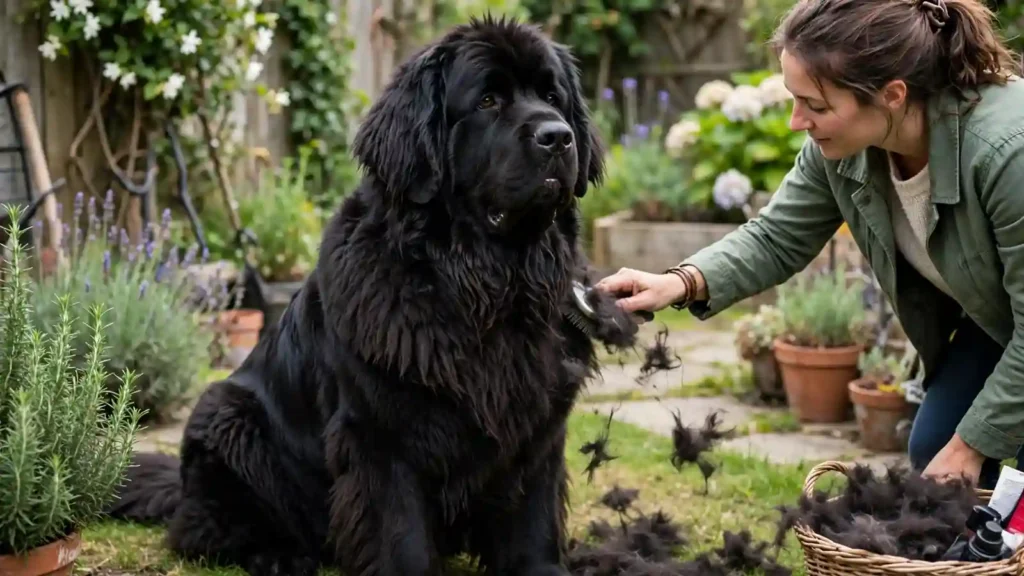
Shedding is heavy year-round. The coat needs serious grooming commitment.
This is a high-maintenance coat on a giant dog. Be honest about the commitment. After every swim and every rainy walk, that coat holds water like a sponge; most owners keep towels by every door and a dedicated drying spot.
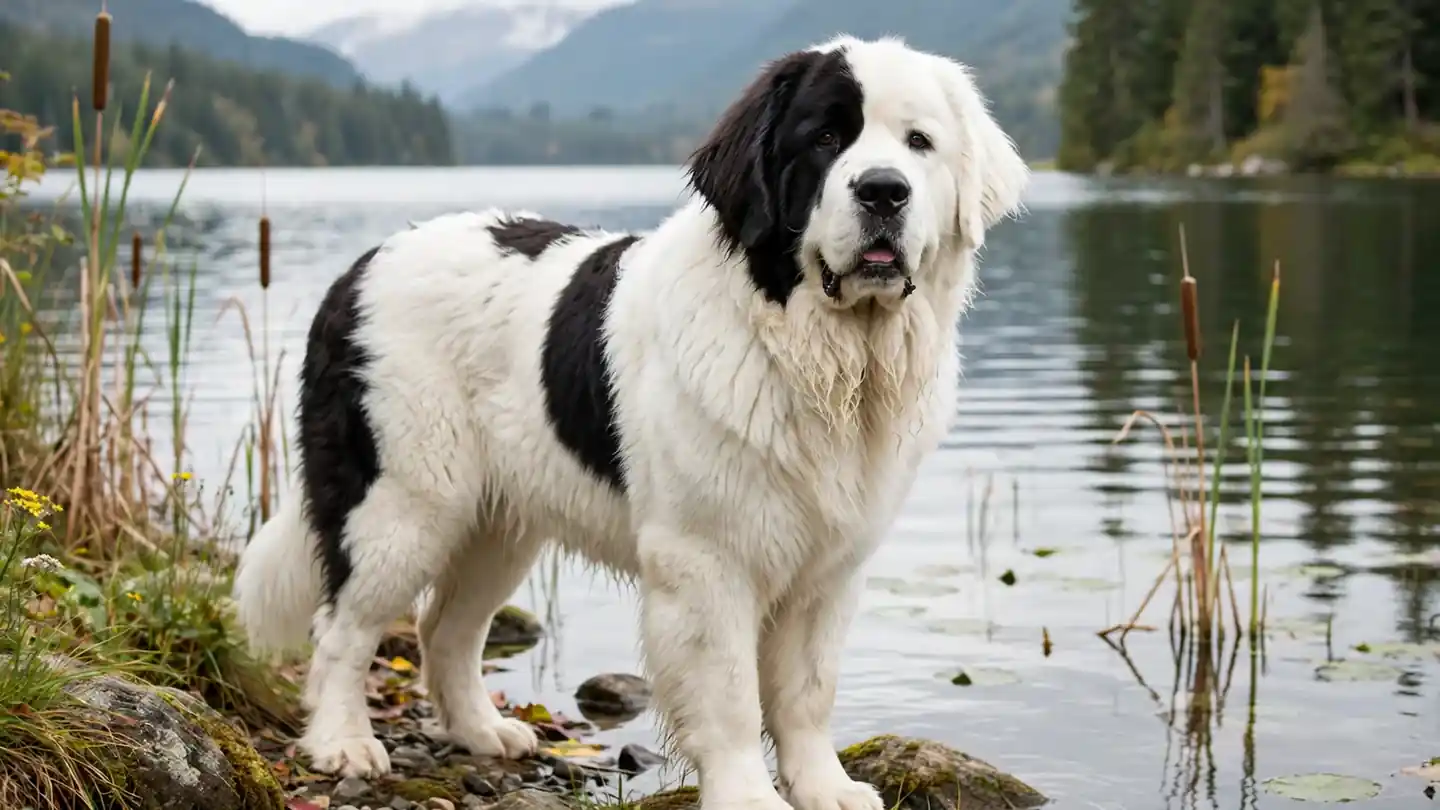
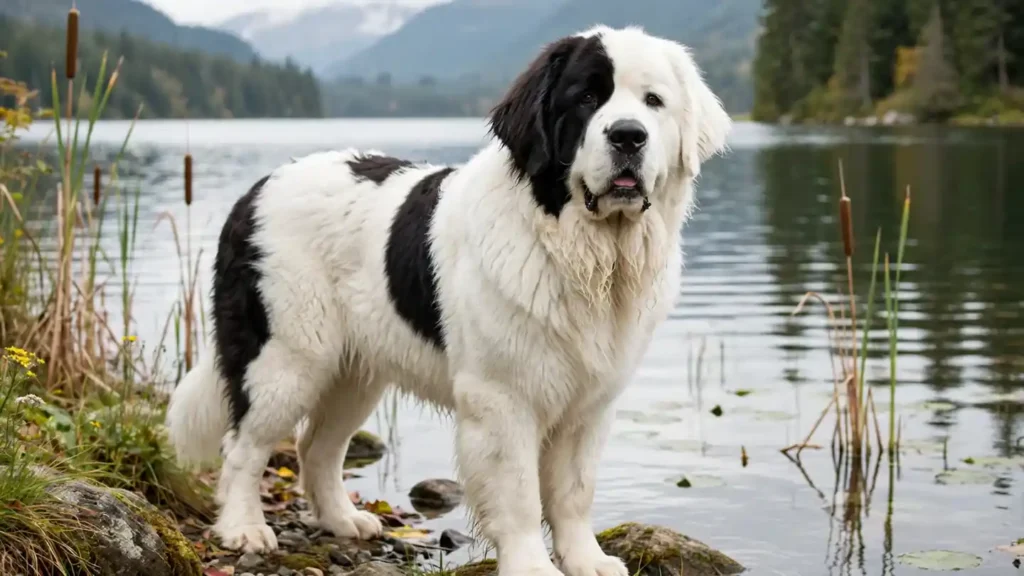
History and Origins
They worked alongside fishermen in the icy North Atlantic, hauling nets and lines. The Newfoundland dog worked beside fishermen.
Their swimming ability, strength, and gentle mouth made them legendary water rescuers.
The gentle temperament with children earned them the “nanny dog” reputation.
A working water dog through and through — the heritage is the whole breed.
Physical Characteristics
Massive, powerful, and sweet-faced: a huge, strong body with a deep chest, webbed feet, and a thick oily coat.
The expression is famously sweet and gentle.
They drool, shed, and take up the whole couch. And owners would not trade it.
Newfoundland Personality and Behavior
The gentlest giant: famously gentle, patient, and sweet-natured. They are devoted to their families, famously good with children, and calm indoors. They are intelligent and eager to please. The Newfoundland dog is eager to please.
They are not guard dogs by temperament, though the size deters.
The main cautions are the size, the drool, the shedding, and the short lifespan. Owners consistently describe the breed as gentle, patient, and sweet — and its loving nature is why they recommend it to giant-breed lovers.
They bond deeply and quietly: expect a shadow that follows you from room to room and settles wherever you settle, preferably touching a foot. Left alone for long hours, this is a lonely dog.
The gentlest giant is exactly right. The Newfoundland dog is gentle, patient, and sweet-natured, devoted to its family and famously good with children, calm indoors and intelligent and eager to please. The water-rescue heritage shows in the swimming ability, the strength, and the gentle mouth that made the breed legendary with fishermen.
The deep, quiet bond sets the conditions. The dog bonds deeply and quietly, following from room to room and settling wherever you settle, preferably touching a foot, and left alone for long hours, this is a lonely dog. The main cautions are honest: size, drool, shedding, and the short lifespan, and none of them surprise owners who go in with open eyes.
Famously patient and gentle with children; supervision is about the size, not the temperament.
Webbed feet and a water-resistant coat, built for rescue work in cold water.
A quiet, devoted house dog that wants to be wherever its people are. The Newfoundland dog stays close to its people.
- Among the gentlest family dogs
- Famously patient with children
- Devoted, calm, and eager to please
- Heavy shedding and a high-maintenance coat
- Drool, at giant scale
- A short lifespan and giant-sized costs
Care Essentials
Giant dog, gentle needs, big grooming — here is the daily reality. Training should start early, and the grooming commitment is real: budget time or money for it honestly.
Feeding
Large-breed puppy food to control growth; adults eat a great deal, two to three meals a day. The Newfoundland dog eats large-breed food.
Grooming
Brush two to three times a week minimum, daily is better during shedding; wipe the jowls. The Newfoundland dog needs regular brushing.
Exercise
30 to 45 minutes of moderate activity daily, with swimming whenever possible. The Newfoundland dog loves to swim.
Home
An indoor family home with cool spots; the heavy coat overheats easily. The Newfoundland dog needs a cool home.
A typical day is giant-scaled and gentle. Thirty to forty-five minutes of moderate activity daily, with swimming whenever possible, cover the need, and the indoor family home that results needs cool spots, since the heavy coat overheats easily. Training should start early, and the grooming commitment is real, budgeted in time or money honestly.
Nutrition and Diet
Giant appetites, careful growth: puppies need large-breed puppy food to control growth and protect joints.
Adults eat a great deal; budget accordingly. Feed two to three meals a day, and avoid exercise right after eating to reduce bloat risk.
Keep them lean. Extra weight is devastating on giant joints. Budget honestly before the puppy arrives: food alone for a giant runs to several times the cost of feeding an average dog, every month, for life.
Feeding needs careful management at giant scale. Puppies need large-breed puppy food to control growth and protect joints, adults eat a great deal and deserve a budget accordingly, and two to three meals a day with no exercise right after eating reduce bloat risk. Budget honestly before the puppy arrives: food alone for a giant runs several times the cost of an average dog.

Grooming
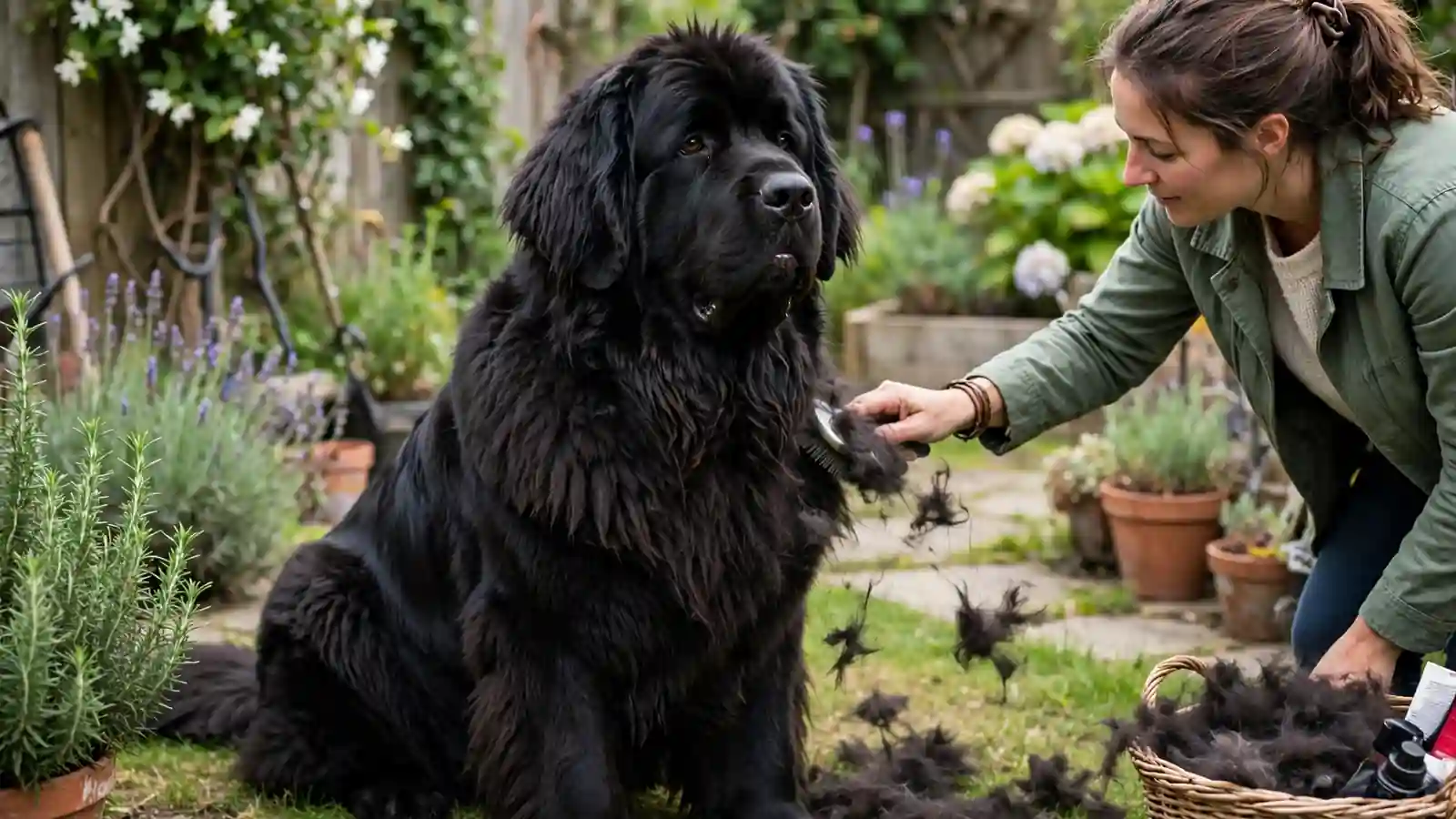
The beautiful burden: brush two to three times a week minimum; daily is better during shedding.
Professional grooming helps manage the massive coat. Bathe as needed. Trim nails, check ears, brush teeth regularly. Wipe the jowls. Work in sections, down to the skin; a surface brush-over leaves the undercoat to mat, and on a dog this size mats quickly become a professional job.
The coat is the beautiful burden, as the guide says. Brushing two to three times a week covers the thick, water-resistant double coat, daily brushing during shedding season manages the heavy hair, and professional grooming helps with the massive coat. Work in sections, down to the skin, since a surface brush-over leaves the undercoat to mat.
Exercise and Enrichment
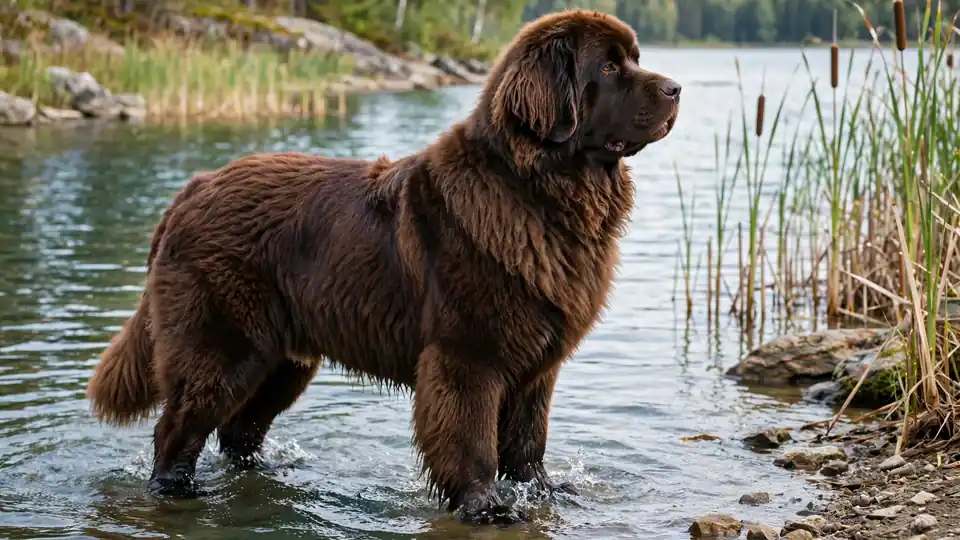
Moderate energy, loves water: aim for 30 to 45 minutes of moderate activity daily, with swimming whenever possible.
Avoid overexercising puppies; growing giant joints need protection. Water rescue training is the breed’s joy. Walks should be unhurried; this is a dog built for power in the water, not for speed or heat, and summer outings are best kept early or late in the day.
Exercise is moderate and water-loving. Thirty to forty-five minutes of moderate activity daily, with swimming whenever possible, cover the need, and water rescue training is the breed’s joy. Walks should be unhurried: this is a dog built for power in the water, not for speed or heat, and growing giant joints need protection from overexercise.
Health
Most live 8 to 10 years. Here are the health issues to know:
The great emergency risk; know the symptoms.
Hip and elbow dysplasia occur; choose screened breeders.
Heart disease, including subvalvular aortic stenosis and dilated cardiomyopathy, appears in the breed.
A urinary condition that occurs in some lines.
Schedule annual wellness exams, or twice-yearly exams for adults, and ask your vet about screening for conditions the breed can be prone to, such as hip dysplasia and heart disease. Consult your veterinarian promptly if you notice restlessness with a swollen belly, or changes in appetite, weight, or energy. Consider gastropexy discussion with your vet for bloat prevention. For general background, see the Wikipedia guide.
Health care follows the familiar rhythm with joint and heart screening in focus. Annual exams, twice-yearly exams for adults, and screening for hip dysplasia and heart disease cover the ground the guide names, and the Newfoundland dog’s breeders should screen hips, elbows, heart, eyes, and cystinuria and track longevity. Day to day, limping, breathing changes, and changes in appetite, weight, or energy deserve a prompt vet call.
Indoor and Outdoor Living
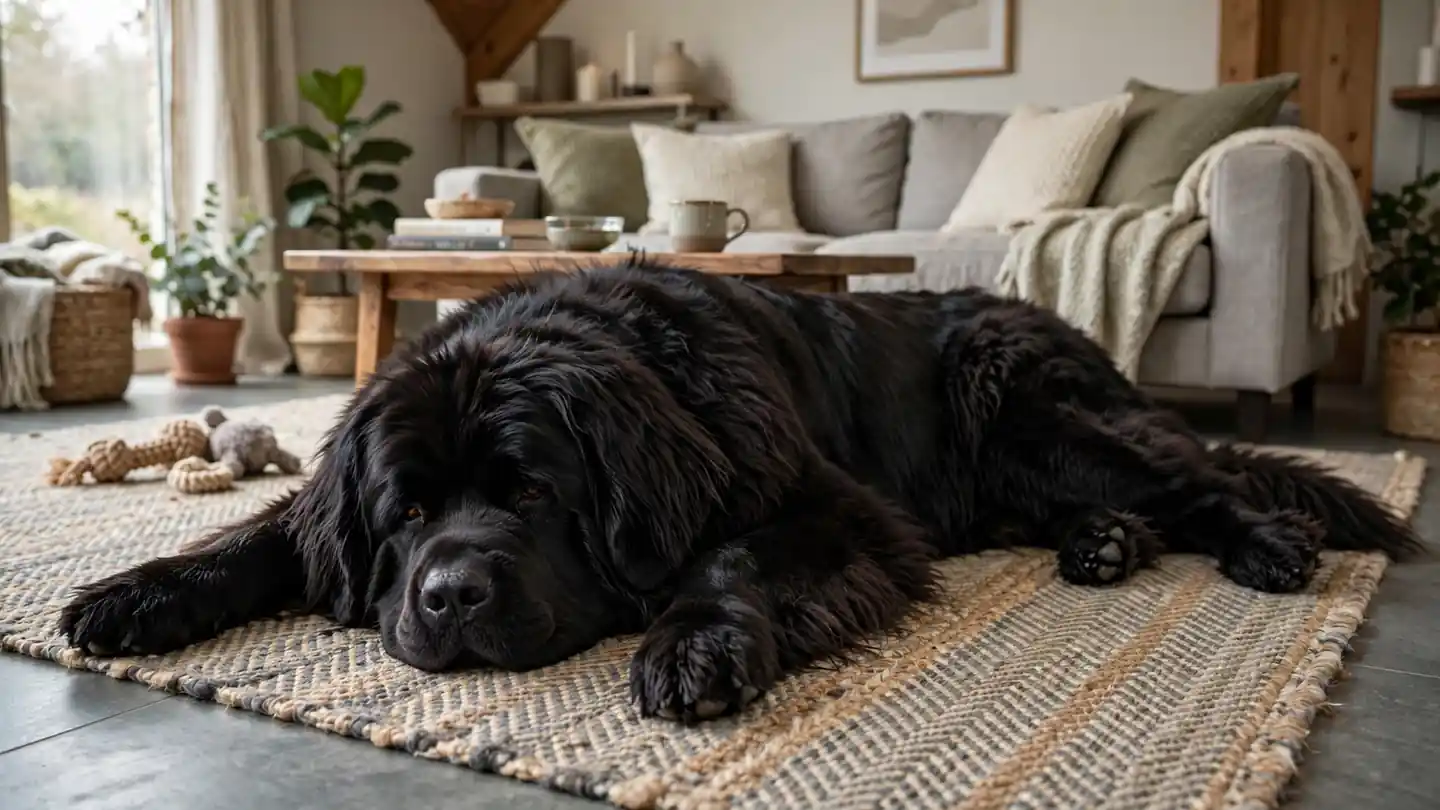
Indoor giant, outdoor swimmer: they live indoors with their families and are calm house dogs.
They love water and need access to safe swimming. A fenced yard is ideal. They overheat easily with the heavy coat; air conditioning helps in summer. Stairs deserve thought: carrying a 130-pound dog that cannot manage them is not an option, so plan the home around ground-floor living as the years advance.
Indoor living as a giant house dog defines the arrangement. The breed lives indoors with its family as a calm house dog, loving water and needing access to safe swimming, with a fenced yard ideal. Overheating easily with the heavy coat means air conditioning helps in summer, and stairs deserve thought at this size.
Family Suitability
Among the gentlest family dogs: famously patient and gentle with children.
The size means supervision with small kids, but the temperament is ideal. They are usually good with other pets. With guests, expect the same calm sweetness; the only real risk is a happy tail clearing the coffee table.
With families, gentleness leads and size sets the limit. The breed is among the gentlest family dogs: famously patient and gentle with children, though size means supervision with small kids, and usually good with other pets. With guests, expect the same calm sweetness, and the Newfoundland dog’s gentle, patient character shows best in homes that accept wet floors and a full couch.
Families with childrenHomes near safe swimmingGiant-breed loversCool climates
You live somewhere hotYou cannot commit to the grooming
Finding a Breeder or Rescue
Health testing is critical: the best breeders screen hips, elbows, heart, eyes, and cystinuria, and track longevity.
Rescues have wonderful dogs; the breed’s size and needs cause surrenders.
- Ask about screening — hips, elbows, heart, eyes, and cystinuria
- Ask about longevity in the breeder’s lines
- Ask how puppies are raised and socialized
- Consider a breed rescue
Quick Quiz: Is This Gentle Giant Right for You?
Answer four questions. Tap yes or no.
Frequently Asked Questions
Are Newfoundlands good family dogs?
Among the gentlest. They are famously patient with children.
How much exercise does a Newfoundland need?
About 30 to 45 minutes of moderate activity daily, with swimming when possible.
Do Newfoundlands shed a lot?
Heavily, year-round. The thick coat needs serious grooming.
Do Newfoundlands drool a lot?
Yes. It is part of the breed.
How long do Newfoundlands live?
Typically 8 to 10 years.
Are Newfoundlands good swimmers?
They are legendary swimmers, bred for water rescue.
What do Newfoundland owners say about living with the breed?
Owners consistently describe this breed as gentle, patient, and sweet. In practice, owners report that the breed’s loving nature is the main reason they recommend it to giant-breed lovers.
When should I ask my vet about my Newfoundland’s health?
Schedule annual wellness exams, or twice-yearly exams for adults, and ask your vet about screening for conditions the breed can be prone to, such as hip dysplasia and heart disease. Consult your veterinarian promptly if you notice restlessness with a swollen belly, or changes in appetite, weight, or energy.
The gentlest of giants: patient, sweet, and devoted, a legendary swimmer who doubles as a nanny. The coat, the drool, and the short years ask a lot — owners say they would not trade any of it.
Similar Breeds Worth Exploring
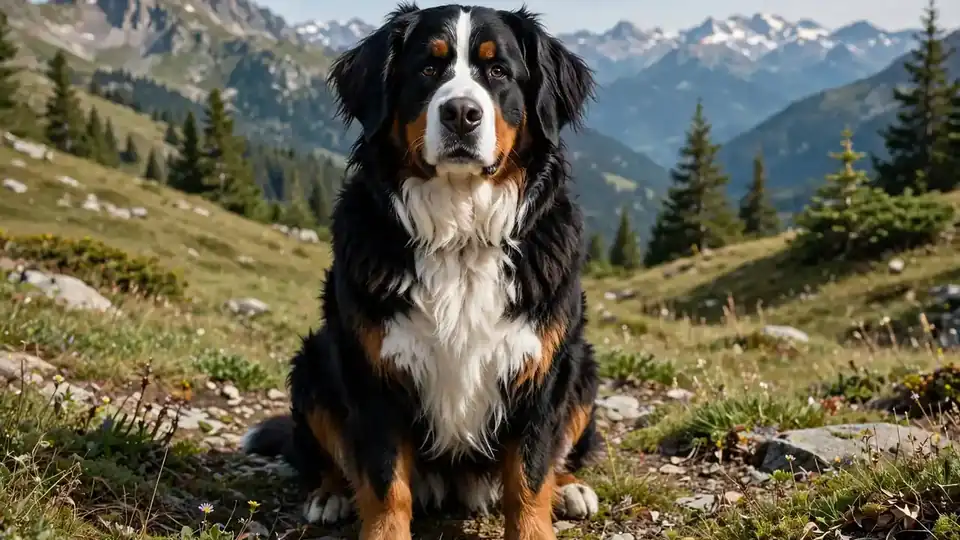
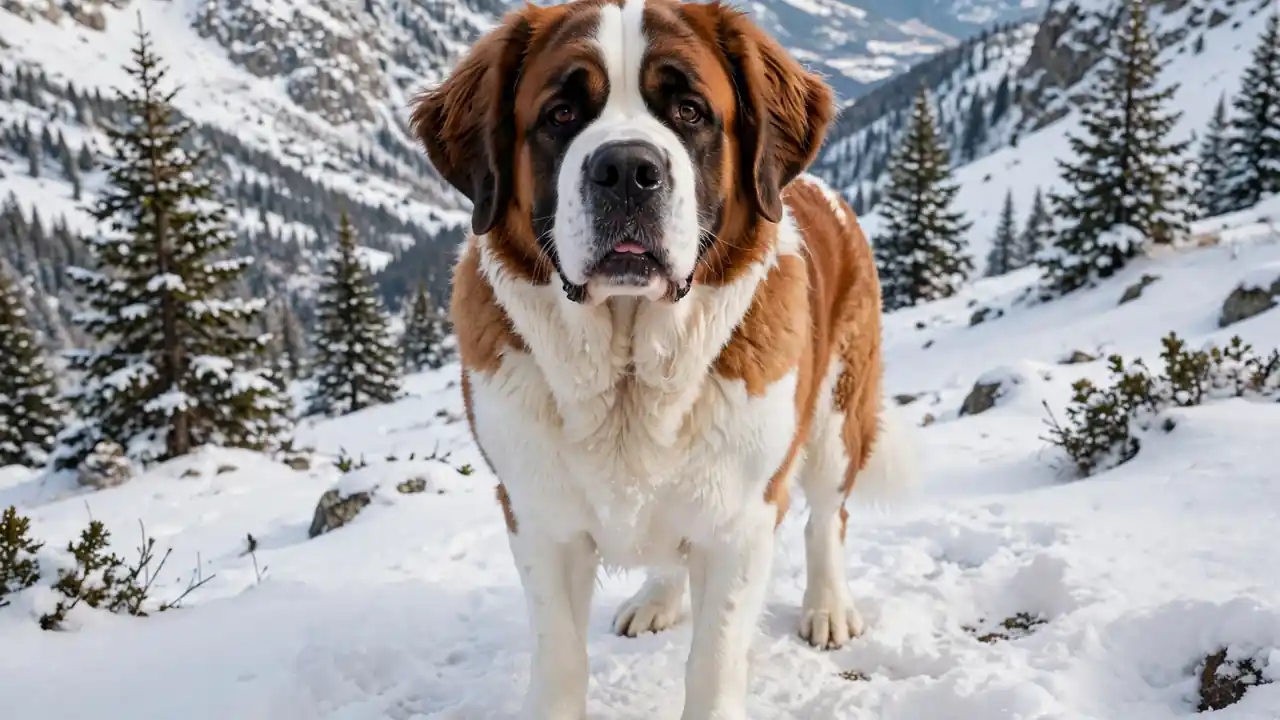
If this breed appeals to you, consider the Great Pyrenees (similar size, guardian), the Bernese Mountain Dog (gentle giant, shorter-lived), the Leonberger (another gentle giant), or the Saint Bernard (massive and gentle).
Related Breed Guides
Keep Exploring
Browse all our Dog Breed Guides, try the Dog Age Calculator, or explore our Cat Breed Guides. Every guide on this site follows the same layout, so the facts you need are always in the same place.