American Shorthair Cat Breed Guide
American Shorthair: calm, sturdy, and easy to love
The American Shorthair cat is a calm, muscular companion with a classic silver tabby coat. Easygoing and adaptable, it is a steady friend for busy households.
By Emily Carter · Reviewed by our vet team · Updated 21 October 2026 · 11 min read
Lifespan 15–20 yrs Weight 11–15 lb Calm & sturdy
If you want the quick version, this is it. The American shorthair cat is the classic all American family cat, sturdy, calm, and built for real life with kids and other pets.
At a Glance
Size and Weight
One look tells you this is a solid cat. It carries real muscle under that dense coat, with a broad chest, strong legs, and a body built for power rather than speed.
Males typically weigh 11 to 15 pounds, while females run smaller at 7 to 12 pounds. Growth is slow and steady. Most American shorthairs do not reach their full size and weight until they are three or four years old, so a lanky teenager will fill out into a much stockier adult. A round face with full cheeks gives the breed its famously sweet, open expression.
Coat and Colors
This is where the American shorthair cat truly shines. Run your hand over one and you will feel what breeders mean by a dense, protective coat. Each hair is thick and the undercoat is plush, so the whole coat feels firm and springy rather than silky. It was built by nature and selective breeding to shrug off cold weather, and it still looks crisp with very little help from you.
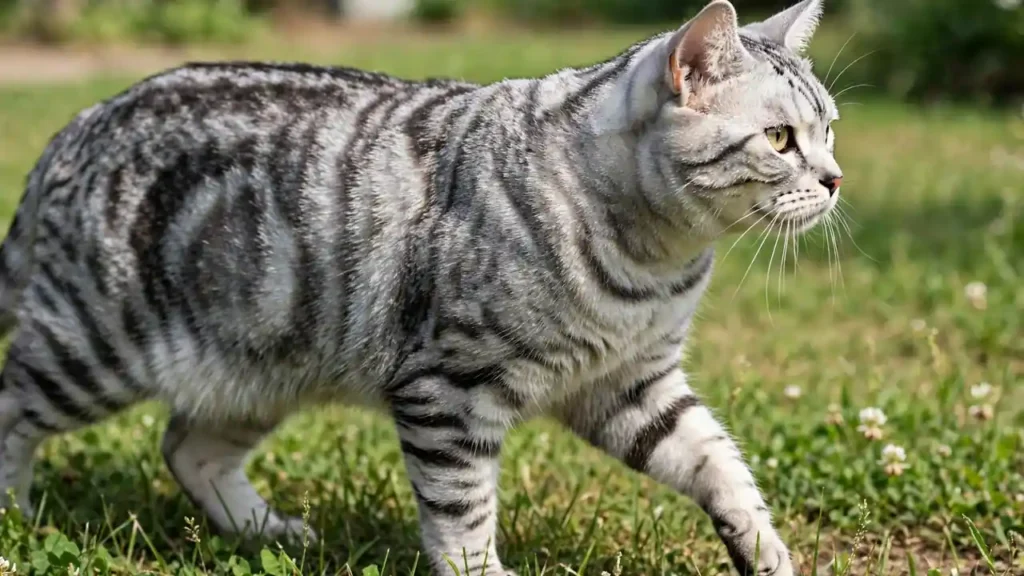
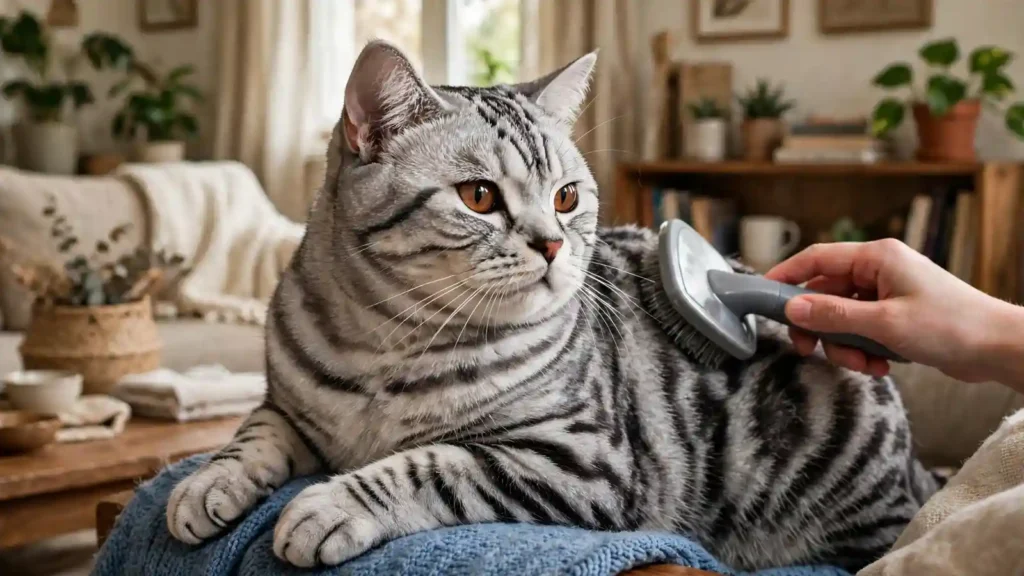
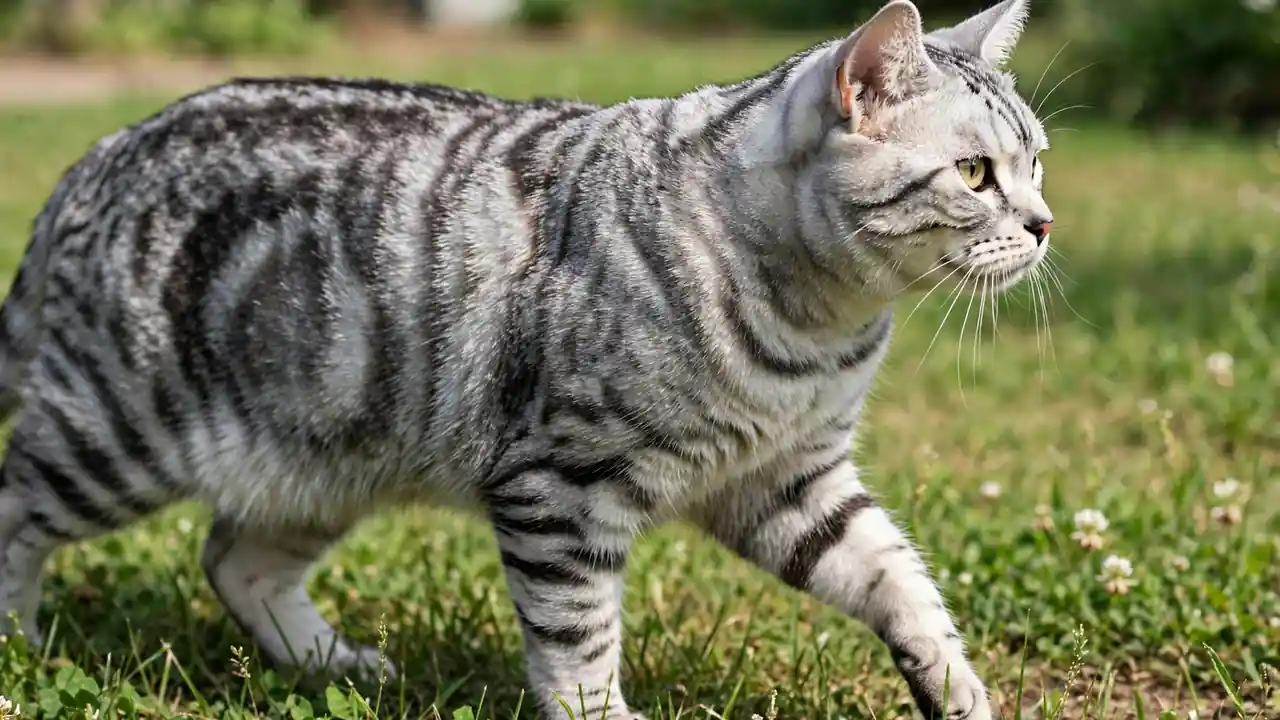
The silver tabby is the look everyone knows. Picture a cool silver background with bold black markings: the classic M on the forehead, swirling patterns along the sides, rings around the legs and tail, and a necklace of stripes across the chest. The contrast is sharp and dramatic, almost like ink drawn on silver paper. Many people picture this exact cat when they hear the words American shorthair cat, and it remains the most recognized pattern in the breed.
Beyond the silver tabby, the range is enormous, with more than 80 colors and patterns accepted. Brown tabbies wear the same bold markings over a warm coppery brown base. Red and cream tabbies glow in shades from deep orange to pale peach. Solid colors include jet black, bright white, and a rich even blue that looks like slate in soft light.
Bicolors pair white with another color in countless combinations, from a mostly white cat with colored patches to a colored cat with white paws, chest, and blaze. Smoke coats look solid from a distance but reveal a pale undercoat when the cat moves, giving a shimmering effect with every step. Cameo and shaded patterns add delicate tipping, where only the ends of each hair carry color. Whatever your taste, there is one wearing it.

History and Origins
Early settlers brought sturdy shorthaired cats to North America on their ships, where the cats earned their keep protecting grain stores and cargo from rats and mice.
Once on land, these cats spread across farms and towns, thriving on their toughness and hunting skill.
Over generations, American breeders selected the best of these cats and developed them into a distinct breed with a consistent look and temperament.
The result kept the hardy working cat spirit — the breed is thoroughly American in development, its roots tracing back to those seafaring mousers.
The breed descends from working cats with a real job to do. Early settlers brought sturdy shorthaired cats to North America on their ships, where the cats earned their keep by protecting grain stores and cargo from rats and mice.
Once on land, these cats spread across farms and towns, thriving on their toughness and hunting skill. Over generations, American breeders began selecting the best of these cats and developing them into a distinct breed with a consistent look and temperament. The result kept the hardy working cat spirit but added the predictable type and gentle nature families wanted. Today the breed is thoroughly American in development, even though its roots trace back to those seafaring mousers.
Physical Characteristics
Balance is the word that best describes this breed. Nothing about this breed is exaggerated. The head is large and round with full cheeks, the ears are medium and set wide apart, and the eyes are large, round, and alert.
The body tells the same story. A broad chest flows into a level back and a thick, muscular neck. Legs are medium in length and heavily boned, ending in round, compact paws. The tail is medium length, thick at the base, and tapers to a rounded tip. Put together, it looks exactly like what it is: a strong, healthy, well put together animal.
American Shorthair Personality and Behavior
Looking for a drama free companion? You just found one. The American shorthair cat is calm and adaptable, the kind of cat that settles into a new home without fuss and takes household chaos in stride.
These cats are affectionate but independent. They enjoy sitting near you, and many will claim a lap on their own terms, but they rarely demand constant attention. Playfulness lasts well into adulthood, and a quick game with a feather wand is usually enough to satisfy them. They tend to be quiet cats, communicating with soft chirps and trills rather than loud meows. Patience is another hallmark. This breed handles children, guests, and other pets with unusual grace.
They enjoy sitting near you, and many will claim a lap on their own terms, but they rarely demand constant attention.
Patience is a hallmark — this breed handles children, guests, and other pets with unusual grace.
Playfulness lasts well into adulthood, and a quick game with a feather wand is usually enough to satisfy them.
- Calm and adaptable — settles in without fuss
- Patient with children and other pets
- One of the easiest purebred cats to care for
- Stocky build gains weight quietly
- Moderate shedding, heavier in spring and fall
- Affection comes on the cat’s own terms
Care Essentials
Measured meals instead of free feeding — these cats love their food. Plenty of fresh water at all times.
Weekly brushing is plenty; twice a week during spring and fall shedding seasons.
Short daily play sessions, a tall scratching post or cat tree, and puzzle feeders.
Indoors is safest; a screened porch, secure catio, or supervised yard time for fresh air.
Nutrition and Diet
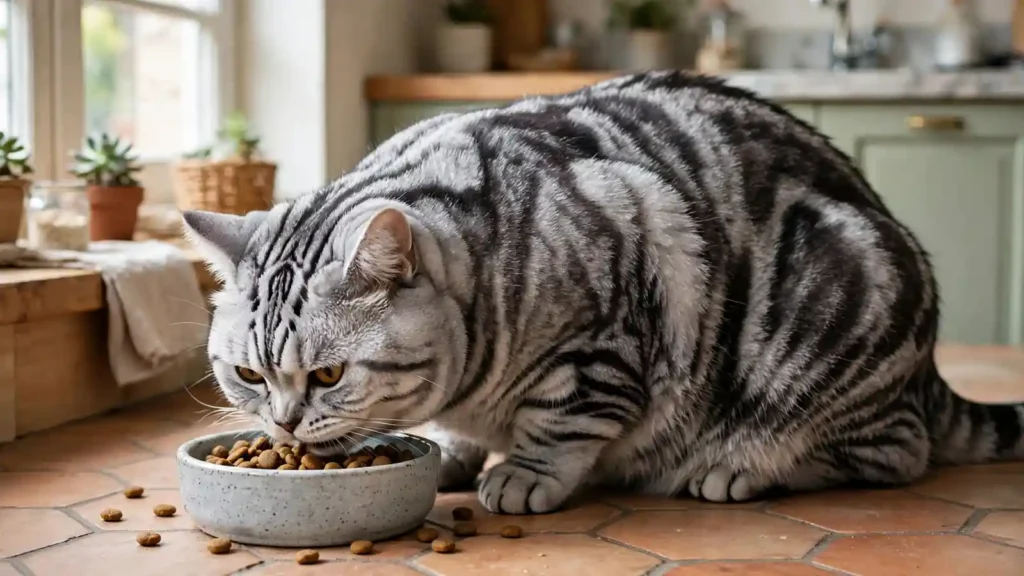
A sturdy body needs steady fuel. Feed your American shorthair cat a complete, balanced diet formulated for its life stage, kitten, adult, or senior, and measure portions instead of free feeding.
Weight management deserves real attention here. These cats are stocky by nature and love their food, so extra pounds can creep on quietly. Treats are fine in small amounts but should stay a small part of the daily diet. If your cat starts looking rounder than it should, talk to your vet about adjusting portions before the weight becomes a problem. Plenty of fresh water supports kidney and urinary health, and some cats drink more from a fountain than a still bowl.
Grooming
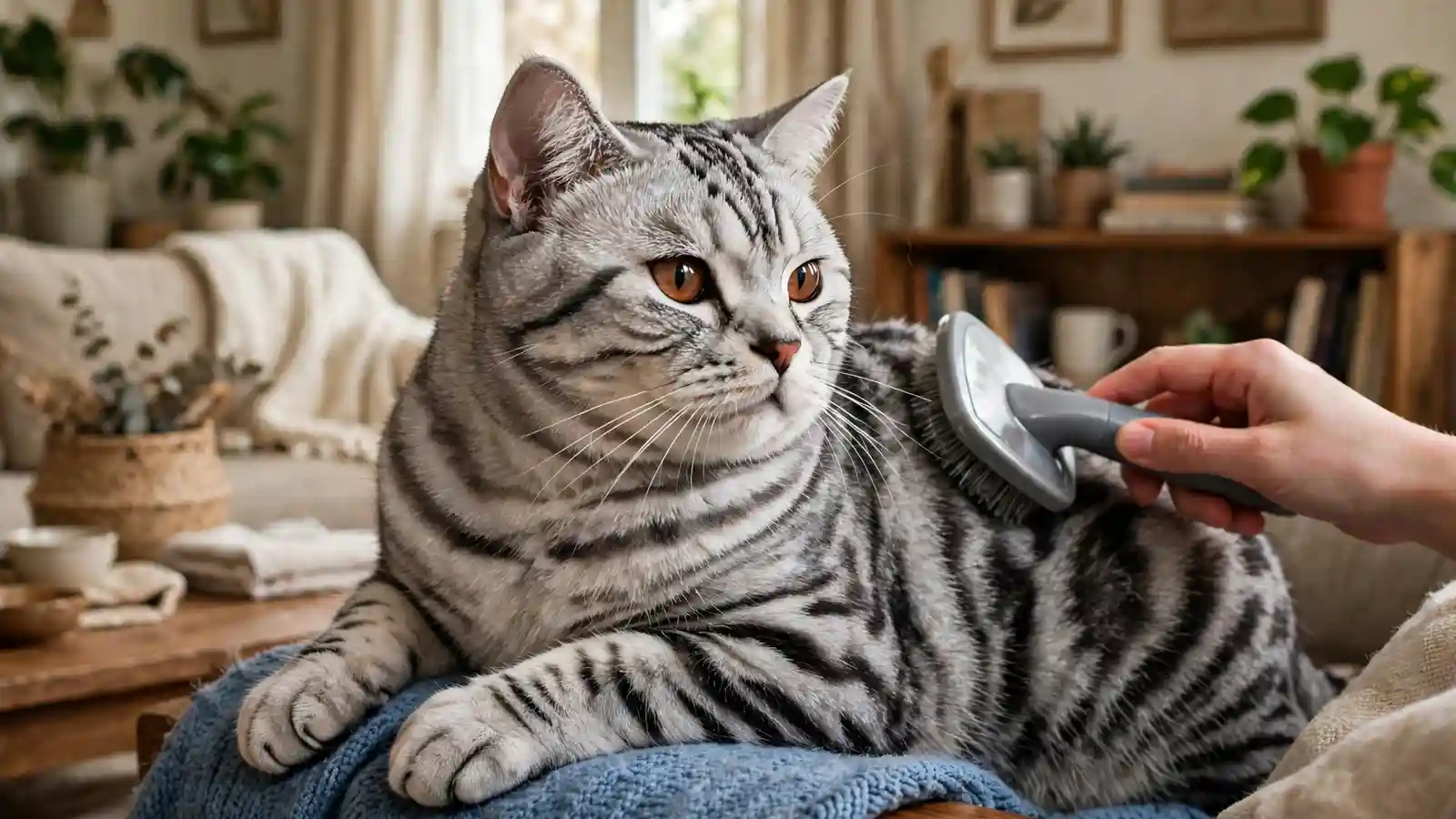
You will spend less time grooming this cat than almost any other breed. The short, dense coat of this breed rarely mats or tangles, and a weekly brushing is enough to remove loose hair and keep the coat gleaming.
During spring and fall shedding seasons, you may want to brush twice a week to stay ahead of the loose undercoat. Check ears for wax buildup every couple of weeks and wipe them gently if needed. Trim nails every few weeks, and brush teeth as often as your cat will tolerate, since dental care matters for every breed. That is the whole routine. Simple, quick, and done.
Exercise and Enrichment
Calm does not mean lazy. It enjoys play and stays healthier with regular activity, especially since the breed can gain weight if life gets too sedentary.
Short daily play sessions work best. A feather wand, a crinkly ball, or a laser pointer gets most American shorthairs moving, and many will happily chase a toy on their own. A tall scratching post or cat tree gives them a place to climb and stretch. Puzzle feeders are a smart addition because they make mealtime mentally engaging and slow down fast eaters. Rotate toys every week or two to keep things fresh.

Health
This is a naturally hardy breed with a long lifespan, often reaching the mid to late teens. Still, every breed has its known concerns, and this breed is no exception.
The two conditions most associated with the breed are hypertrophic cardiomyopathy, a thickening of the heart muscle often shortened to HCM, and polycystic kidney disease, known as PKD, in which fluid filled cysts develop in the kidneys. Responsible breeders screen their cats for both conditions, so ask about health testing when you talk to a breeder. Regular vet visits, a healthy weight, and prompt attention to changes in appetite, thirst, or energy give your cat the best shot at a long, healthy life.
A thickening of the heart muscle. Responsible breeders screen their cats for it — ask about health testing.
Fluid filled cysts develop in the kidneys. Responsible breeders screen for this condition too.
Indoor and Outdoor Living
The safest life for this breed is an indoor one. An indoor American shorthair cat avoids traffic, predators, parasites, and contagious diseases, and with enough enrichment it will be perfectly content inside.
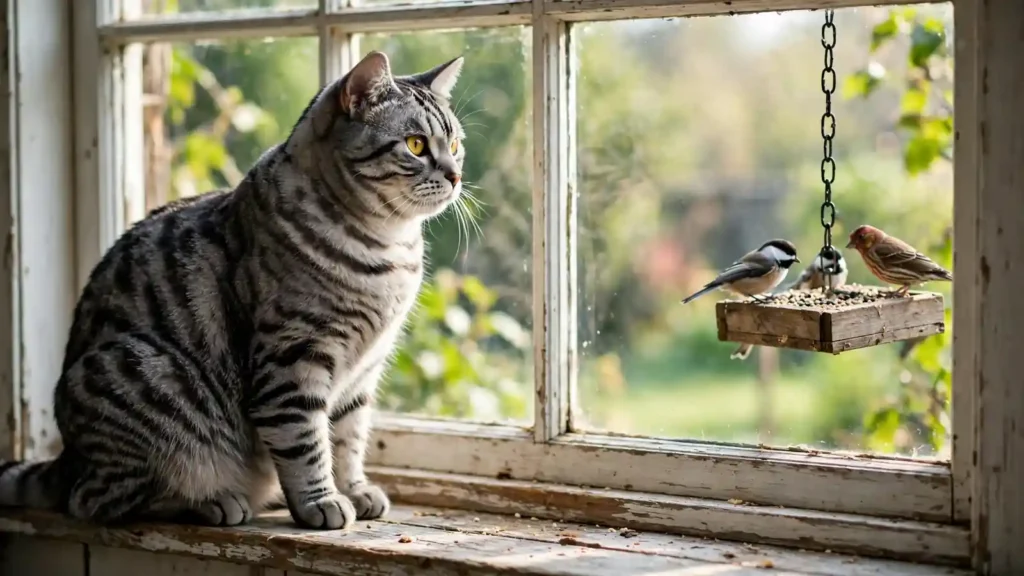
That said, these cats do enjoy fresh air and sunshine. A screened porch, a secure catio, or supervised time in a fenced yard gives them the best of both worlds. If your cat does go outside, even briefly, keep vaccinations current and use year round parasite prevention. Window perches are a simple indoor alternative that many American shorthairs love, giving them a sunny spot to watch birds for hours.
Family Suitability
Few breeds fit family life as naturally as this one. It is patient with children, tolerant of noise and activity, and generally welcoming toward other pets.
Kids learn quickly that this cat enjoys gentle play and petting but appreciates having a quiet retreat when things get rowdy. Introductions to dogs go smoothly in most cases, especially with a calm dog and a gradual meeting process. Other cats are usually accepted too, given proper introductions. For first time cat owners, the easygoing nature and low maintenance needs of this breed make it one of the safest choices available.
Finding a Breeder or Rescue
Take your time with this decision. A good breeder will welcome your questions, show you where the cats live, and provide health screening records for HCM and PKD without hesitation.
Ask how the kittens are socialized and what age they go home. Kittens should stay with their mother and littermates until they are at least 12 weeks old. If you prefer to adopt, breed specific rescues and local shelters regularly have American shorthairs and American shorthair mixes looking for homes. An adult rescue cat can be a wonderful choice, since its size, coat, and personality are already fully apparent.
- Health screening records for HCM and PKD, provided without hesitation
- Ask how the kittens are socialized
- Kittens stay with mother and littermates until at least 12 weeks
- Consider breed specific rescues and local shelters
Quick Quiz: Is a American Shorthair Right for You?
Answer four questions. Tap yes or no.
Frequently Asked Questions
Are American shorthair cats good with kids?
Yes, they are one of the best breeds for families. This breed is patient, tolerant of noise, and sturdy enough to handle the enthusiastic affection of children, as long as kids learn to be gentle.
How long do American shorthair cats live?
They are long lived cats, often reaching 15 to 20 years. Good nutrition, regular vet care, and a healthy weight are the biggest factors in reaching those upper years.
Do American shorthair cats shed a lot?
They shed a moderate amount year round, with heavier shedding in spring and fall. Weekly brushing keeps loose hair under control, and the short coat never mats the way longhair coats do.
Are American shorthair cats lap cats?
Many are, on their own terms. It is affectionate but independent, so expect a cat that enjoys sitting with you rather than one that demands to be held all day.
What health problems do American shorthair cats have?
The breed is generally healthy, but hypertrophic cardiomyopathy (HCM) and polycystic kidney disease (PKD) are the known concerns. Ask breeders about screening for both conditions.
Are American shorthair cats easy to care for?
Very. They need weekly brushing, measured meals, daily play, and routine vet visits. Their independent nature means they handle alone time during the workday better than clingier breeds.
The American Shorthair cat is a calm, muscular companion with a classic silver tabby coat — patient with children, tolerant of noise, and generally welcoming toward other pets. For first time owners, its easygoing nature and low maintenance needs make it one of the safest choices available.
Similar Breeds Worth Exploring
Related Breed Guides
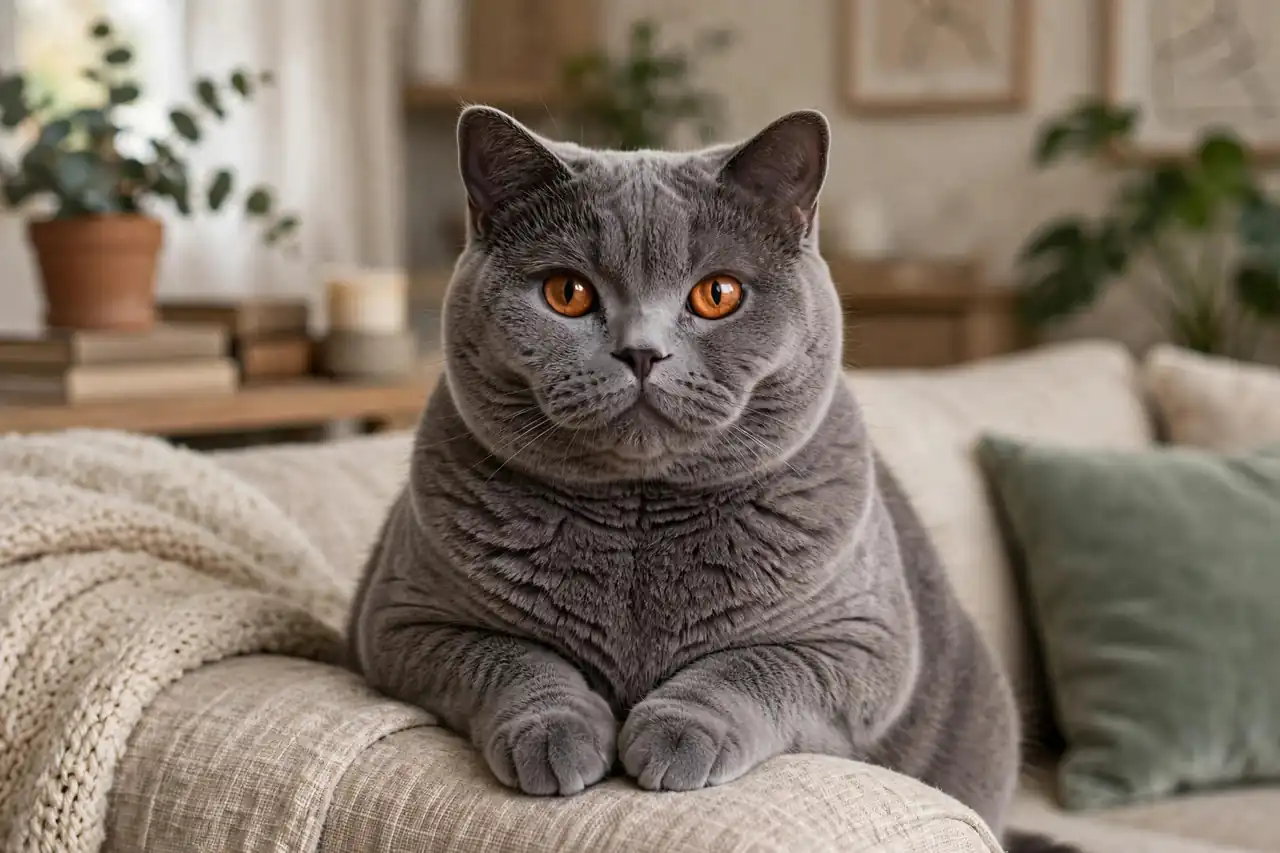
- British Shorthair Cat Breed Guide
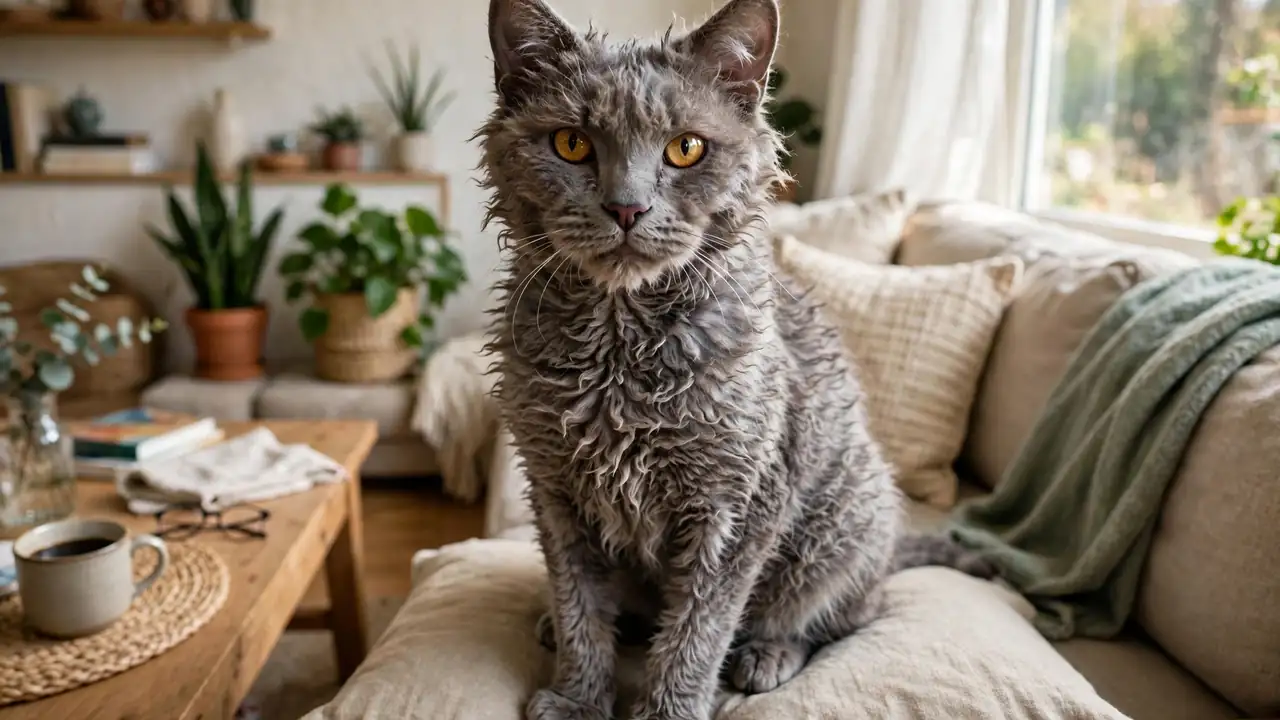
- American Wirehair Cat Breed Guide
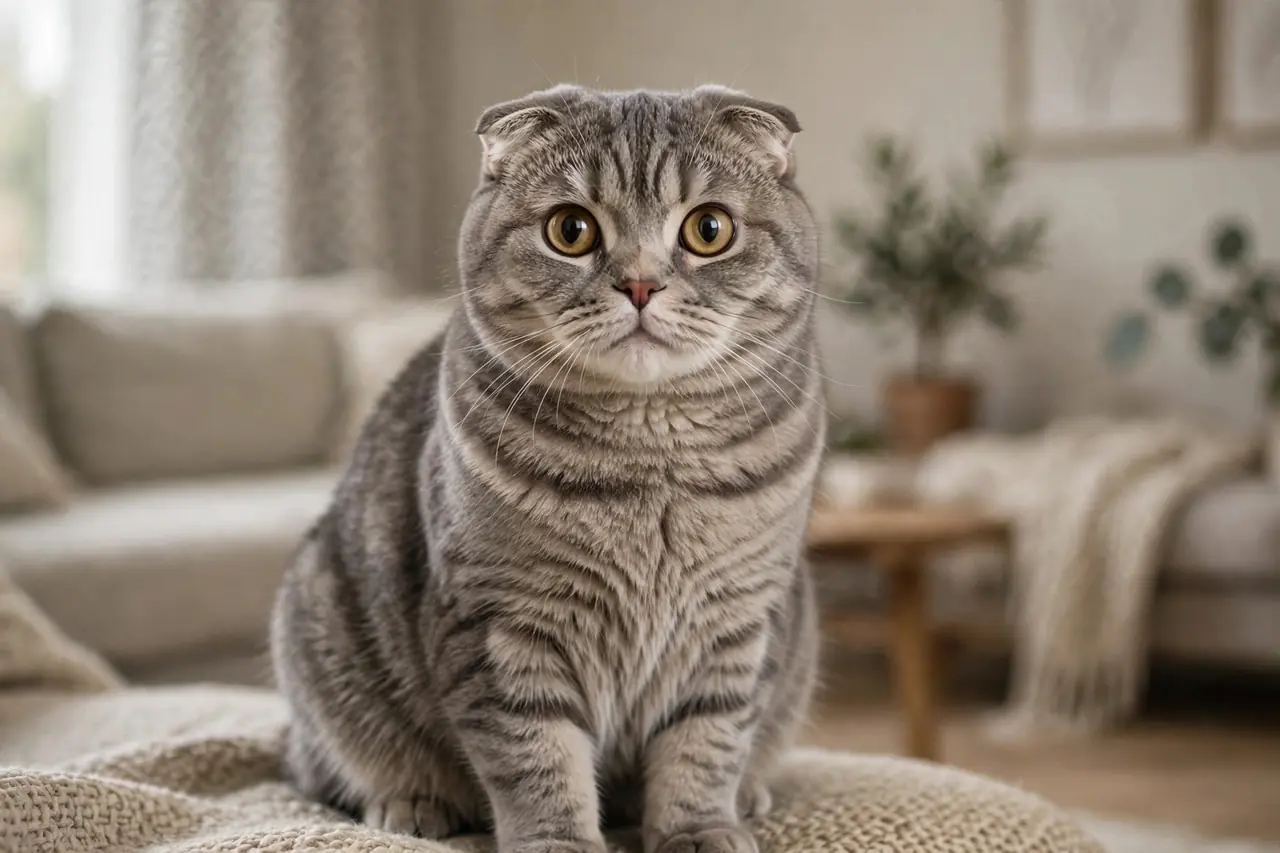
- Scottish Fold Cat Breed Guide
- Snowshoe Cat Breed Guide
- American Curl Cat Breed Guide
- Bombay Cat Breed Guide
Keep Exploring
Browse the full A to Z cat breed collection to compare personalities, or find out your cat’s age in human years with the cat age calculator.