Weddell Seal
Weddell Seal: The Seal That Lives at the Bottom of the World
The weddell seal spends its whole life around the fast ice of Antarctica, hauling out beside breathing holes it keeps open with its own teeth. Plump, calm and surprisingly musical under the ice, it is the most southerly breeding mammal on the planet, and one of the best studied seals in the world.
By Emily Carter · Reviewed by our vet team · Updated 10 November 2026 · 9 min read
About 3 metres longDives to about 600 mAntarctic fast-ice specialist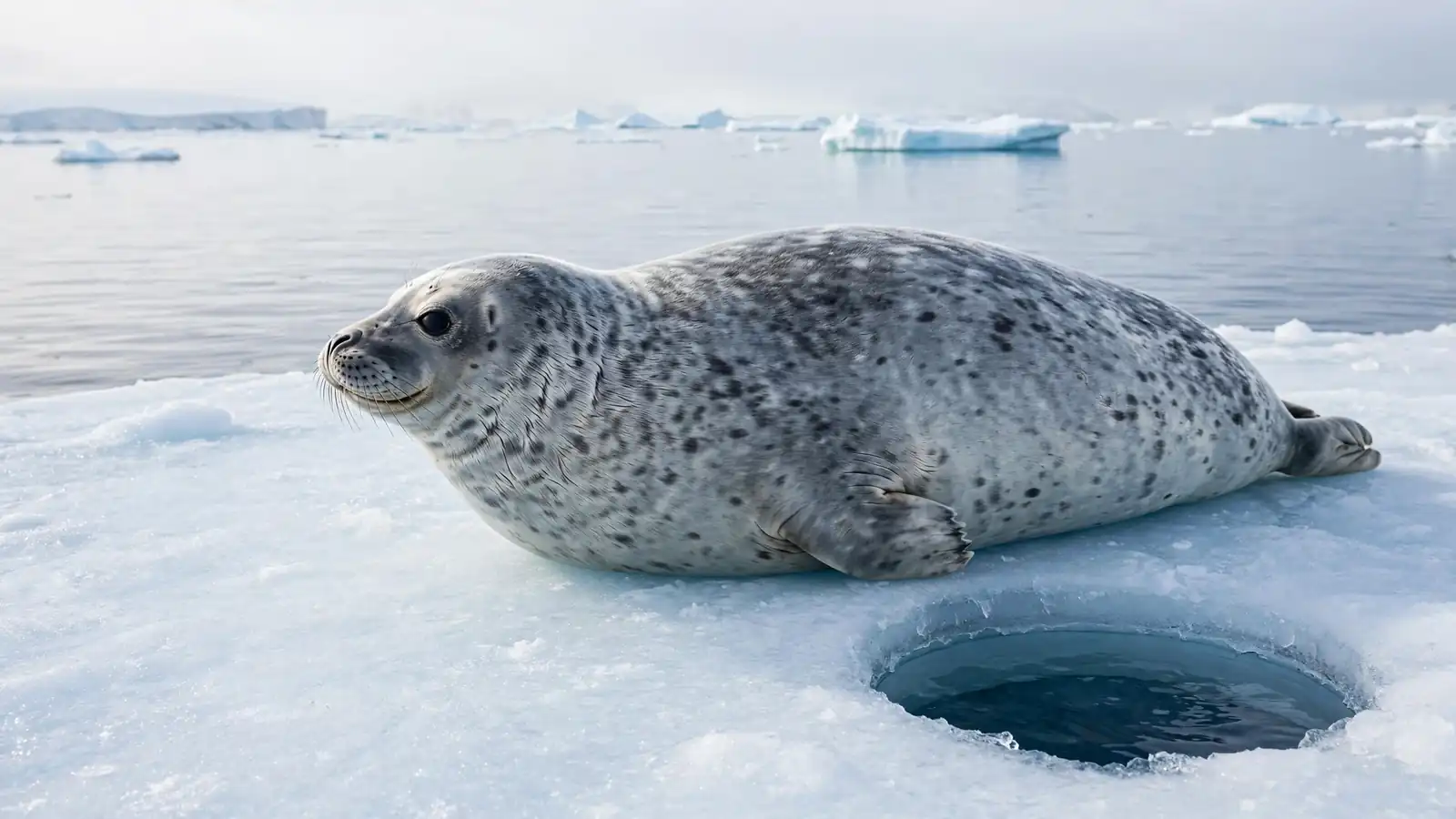
At a Glance
Fast facts first: the weddell seal is the seal of the Antarctic shoreline, a big, speckled, deep-diving animal that spends the black polar winter under the ice and the bright summer hauled out beside its breathing hole. Here is the species at a glance.
Weddell Seal Size and Weight
A fully grown weddell seal is a heavyweight of the seal world. Adults average about 3 metres (9.8 feet) from nose to tail, and a typical animal weighs between 400 and 500 kilograms, with big, well-fed females sometimes passing 600 kilograms ahead of the pupping season. Females grow slightly larger than males, which is unusual among seals, where the males normally take the size prize.
That bulk is mostly blubber, and it is essential equipment. A thick fat layer insulates the body against water that sits below freezing for much of the year, and it doubles as a fuel tank through the lean weeks of winter, when a nursing mother may eat almost nothing while her pup grows on the ice above.
Appearance and Anatomy
This is a plump, torpedo-shaped animal with a surprisingly small, cat-like head for its body: a short muzzle, large dark eyes and a mouth line that curves gently upward, giving it a permanently friendly expression. The coat is silvery grey, scattered with pale and dark speckles and blotches, and noticeably lighter on the belly than on the back.
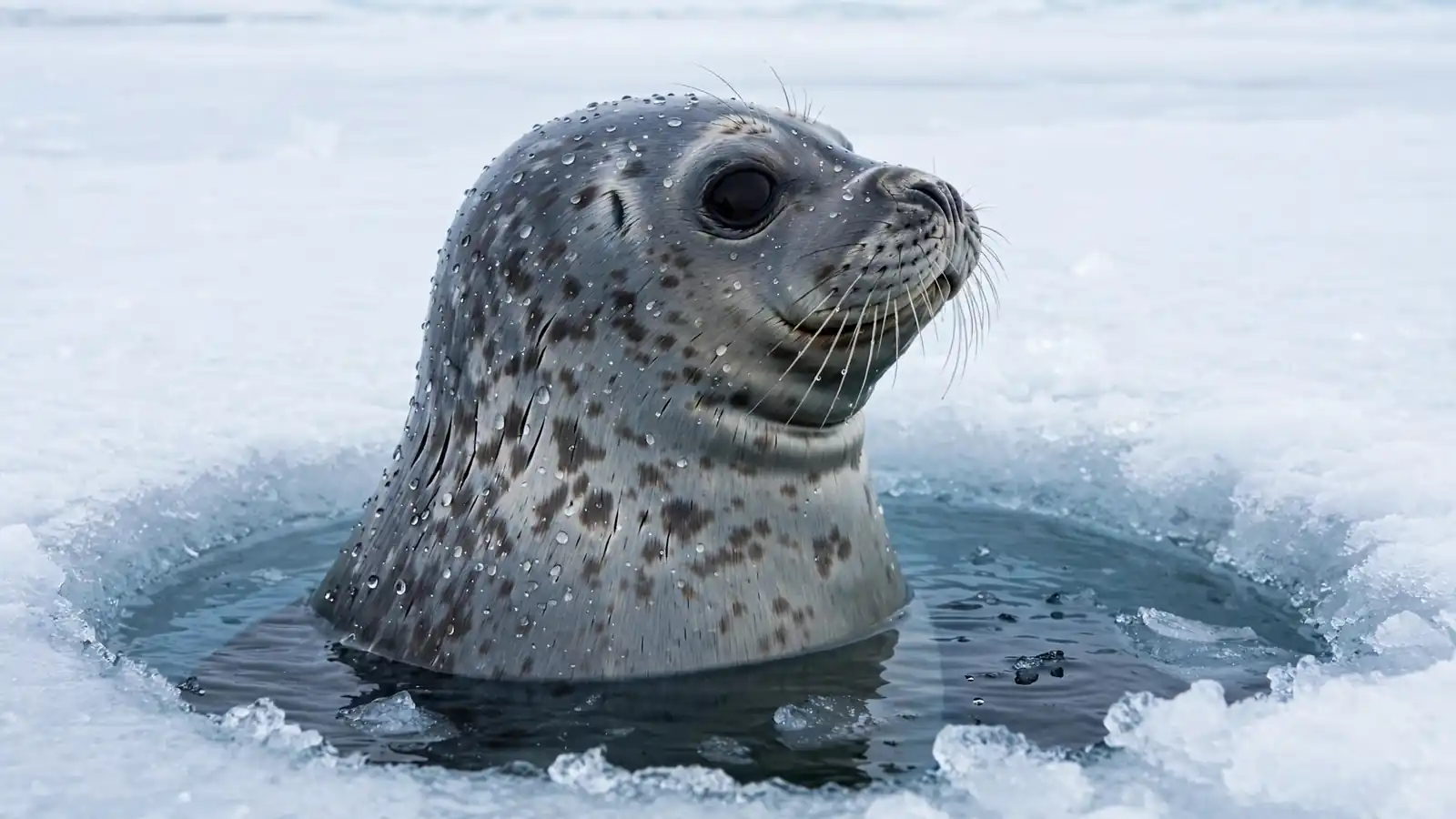
Its teeth are serious tools. The front teeth and canines angle forwards, and the seal uses them to rasp and chew at the edges of its breathing holes, stopping the sea ice from sealing shut above it — which is why worn-out teeth are one of the main limits on how long an old animal can keep feeding itself. The foreflippers are short with small claws, and the hind flippers trail behind like a tail when it rests on the ice.
Habitat and Range
No mammal breeds further south. The species lives all the way around the coast of Antarctica, tied to the fast ice — the sheet of sea ice that freezes fast to the shore — where it hauls out beside cracks and breathing holes, often within sight of the research stations whose scientists have made it one of the most closely watched seals on Earth. At the opposite end of the Earth, the hooded seal lives the same ice-bound life on the drifting pack of the North Atlantic.
It barely travels. Most individuals stay on the same stretch of coastline all year, enduring the dark Antarctic winter beneath the ice instead of migrating away from it, and the same animals return to the same breeding colonies season after season. In that loyalty to shore-fast ice, it is the mirror image of the ringed seal, which rules the fast ice at the opposite end of the planet.
Life on top of the ice follows the breathing holes. Each animal keeps access to the water through one or more holes and cracks, spacing itself out along the tide cracks where the ice is thin enough to maintain. On calm spring days the colony looks like a scattered resting camp: animals lying motionless for hours, warming in the sun, digesting, and growing the fat that the coming winter will demand. It is a strange sight by seal standards — a prey animal with nothing on land to fear, sleeping in the open in the middle of the day, as relaxed as livestock in a field.
Diet and Feeding
Fish dominate the menu, especially the Antarctic silverfish and other cold-water fish that swarm beneath the ice, and the seal will tackle prey as formidable as the Antarctic toothfish, a deep-water fish that can weigh more than 50 kilograms. Squid, krill and other crustaceans fill in the gaps, and the catch shifts with the season and the time of day.
All hunting happens in the dark water under the ice, guided by eyes built for low light and by whiskers sensitive enough to read the wake of a fleeing fish. Divers have even watched this hunter blow bubbles up into cracks in the ice to flush hiding fish into the open, a trick that hints at real problem solving. For dive records and daily life on the ice, the Antarctic research-station profile of the weddell seal is hard to beat.
The feeding rhythm bends around the light. In the bright summer the hunting dives reach their deepest around the middle of the day, when prey fish hold deep, while in the black weeks of midwinter the whole colony feeds in permanent darkness, navigating a familiar map of holes, cracks and undersea landmarks around its home shore. That intimate knowledge of one small patch of coast is why the same individuals can be found in the same inlets decade after decade — and why researchers who return each spring can greet many of the animals by name and number.
Behavior and Social Life
On the ice, this is one of the calmest and most approachable of all seals, tolerating nearby people with an indifference earned in a land with almost no land predators. Groups are loose and temporary: animals haul out in scattered clusters around shared cracks in the ice, and most disputes are settled with posture and sound rather than fighting.
Underwater, the picture changes completely. Males patrol territories beneath the fast ice around the breathing holes that females depend on, warning rivals off with some of the strangest sounds made by any mammal: descending trills, whistles and pulses that ring through the water like electronic music. A weddell seal on a long dive can reach depths of about 600 metres and stay down for close to an hour, far beyond what its size would suggest.
The bond between mother and pup is built on sound. Pups learn to recognise their mother’s calls within days of birth, and mothers know their own pup’s voice in a crowded colony, which matters when hundreds of near-identical grey pups are scattered across the same ice. A pup takes its first swims at about two weeks old, always close beside its mother, slipping down the breathing hole into a black, silent world and popping back up minutes later to rest and warm up on the ice. By weaning it must read that world alone.
Reproduction and Babies
Pups arrive in spring, mostly through September and October, born on the ice as females gather in colonies along the fast ice edge. A newborn weighs around 25 to 30 kilograms — already the size of a large dog — and wears a soft grey coat of woolly lanugo, which it sheds within a few weeks as its own blubber builds up underneath.
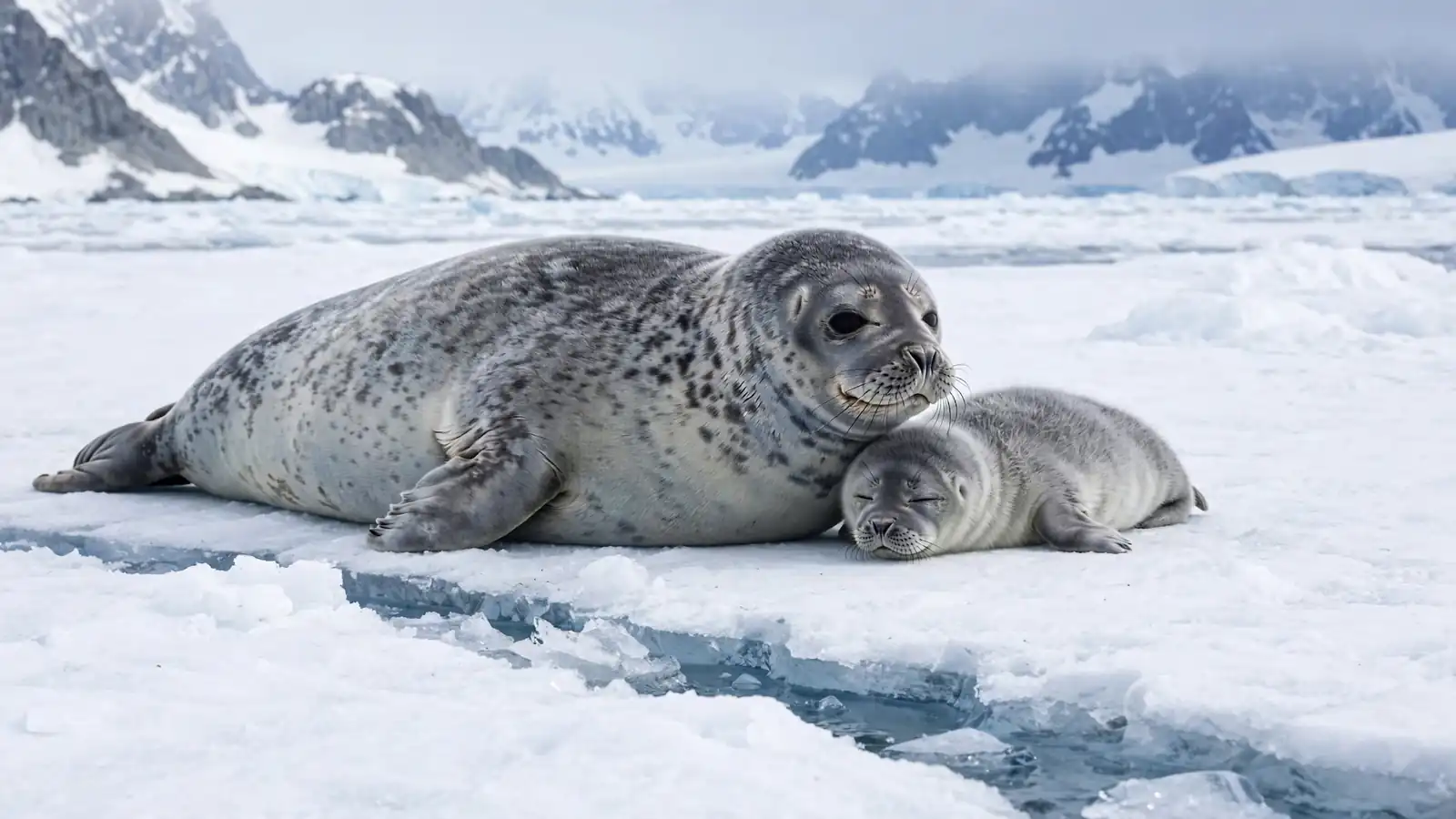
Mothers nurse for roughly six weeks, and the fat-rich milk works fast: by weaning, a pup may have tripled its birth weight while its mother has eaten little or nothing at all. Once development begins, pregnancy runs about nine to ten months, with a built-in pause called delayed implantation making sure the birth lands in the following spring.
Threats and Conservation
In the water, danger comes from killer whales and from the leopard seal, the one Antarctic seal that hunts its own kind. Young seals learning to swim are most at risk, which is one reason pups stay close to the ice, and to their mothers, through their first weeks in the water.
Against people, the species is in an unusually good position. It has never been hunted commercially on a large scale, its whole world is protected by the Antarctic treaty system, and the total population is thought to number in the high hundreds of thousands, making it one of the most abundant seals on the planet. Its formal status is Least Concern, though warming seas and any future loss of stable coastal fast ice are the long-term changes worth watching.
Fun Facts
- It is the most southerly breeding mammal in the world, raising its pups further south than any other warm-blooded animal.
- A single dive can reach about 600 metres deep and last close to an hour.
- Its under-ice songs — trills, chirps and eerie descending whistles — can be heard through the ice by people standing on top of it.
- Its front teeth point forwards, the better to saw and rasp at the ice of its breathing holes, and they gradually wear down with age.
- It can take on an Antarctic toothfish heavier than a small child, one of the largest fish prey of any seal.
- Because it lives beside research stations, scientists have followed the same family lines of this seal for decades.
Frequently Asked Questions
How Big Does a Weddell Seal Get?
Adults average about 3 metres (9.8 feet) long and 400 to 500 kilograms in weight, and large females can pass 600 kilograms. Females grow slightly bigger than males, and a thick layer of blubber accounts for much of the mass.
What Does a Weddell Seal Eat?
Mostly fish, especially Antarctic silverfish and other cold-water species, plus squid, krill and other crustaceans. It will also tackle Antarctic toothfish, a large predatory fish that can weigh more than 50 kilograms.
Where Do Weddell Seals Live?
All around the coast of Antarctica, wherever fast ice is anchored to the shore. They haul out beside breathing holes and cracks in that ice and rarely travel far, which makes them the most southerly breeding mammal in the world.
How Deep Can a Weddell Seal Dive?
Recorded dives reach about 600 metres, and one dive can last close to an hour, although most hunting dives are much shorter and shallower. The seal hunts in darkness beneath the ice, using its eyes and whiskers to find fish.
How Long Do Weddell Seals Live?
Many live into their twenties, and lifespans of around 30 years are known. Worn teeth are often the limit: once an old animal can no longer keep its breathing hole open, winter feeding becomes very difficult.
What Is a Baby Weddell Seal Called?
A pup. Newborns weigh about 25 to 30 kilograms, are born on the ice in September and October wearing a grey woolly coat, and are weaned at roughly six weeks old.
Are Weddell Seals Endangered?
No. The species is classed as Least Concern, with a population in the high hundreds of thousands, and it is protected throughout Antarctica. Climate-driven change to the coastal fast ice is the main long-term concern.
Similar Species Worth Exploring
Keep Exploring
Still curious about the seals of the ice? Read the story of the Arctic’s ringed seal, compare sizes across the whole family in our guide to the types of seals and sea lions, or meet its Antarctic neighbour the leopard seal. Wherever the fast ice holds, the weddell seal holds on with it.