Japanese Flying Squid
Japanese Flying Squid: The Squid That Flies 30 Metres
The Japanese flying squid launches out of the water and glides 30 metres at 11 metres per second. It is the squid that flies — the first squid ever photographed in flight, and one of the great migrators of the Pacific.
By Emily Carter · Reviewed by our vet team · Updated 10 November 2026 · 9 min read
Glides 30 mFlies at 11 m/sMigrates 2,000 km
At a Glance
The Japanese flying squid is the squid that flies, Todarodes pacificus, also called the Japanese common squid. Its mantle reaches 50 cm, its weight about 0.5 kg, and it glides up to 30 m out of the water at 11 metres per second.
Size: A Half-Kilogram Flier
It grows a mantle to 50 cm in females and weighs about 0.5 kg — a mid-sized squid, big enough to be a major fishery species and small enough to launch itself out of the water. The mantle is the body that does the flying: it is a muscular tube that fills with water and jets it out, and the fins steer the glide.
The flight is engineered, not accidental. The mantle fills and fires like a jet, the fins spread into wings, and the arms web out to steady the glide — three seconds of airborne travel bought with one explosive launch. For an animal hunted from above and below, those 30 metres are an escape tunnel through the air itself.
The size is the reason for the flight. A half-kilogram squid cannot outswim a predator in the water, but it can leave the water altogether — and the 50 cm mantle is the engine that makes the launch possible. Smaller squid cannot fly as far; bigger squid cannot fly at all.
The Flight: 30 Metres at 11 Metres per Second
It glides up to 30 m at 11 m/s — the verified figure, from Muramatsu and colleagues, who photographed the flight in the early 2010s. It was the first squid ever photographed in flight, and the photographs showed the animal leaving the water, spreading its fins and gliding like a flying fish.
The photographs settled an old argument. Sailors had reported flying squid for decades and been politely doubted; the early-2010s images showed the whole sequence — jet out, fins spread, glide, fold, re-enter — and turned a travellers’ tale into a measured fact: 30 metres, at 11 metres per second, by an animal with no wings at all.
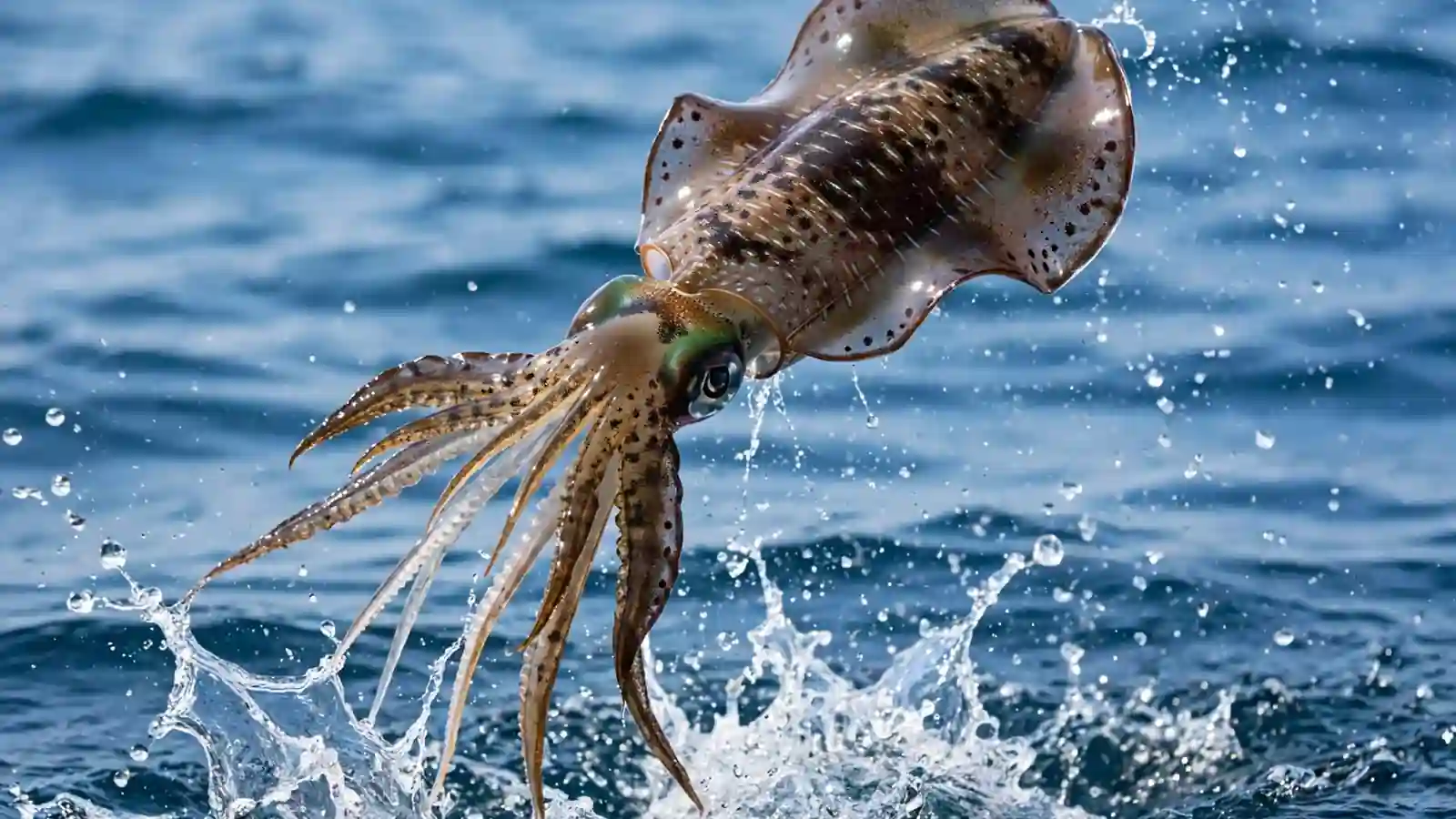
The flight works like a jet launch: the squid fills its mantle with water, contracts it to jet out, and leaves the water at speed, then spreads its fins and arms to glide. Longer claims exist, but they are unverified — 30 m is the figure the photographs support, and this guide uses it. For the full account, see this full species profile, which covers the jet launch, the glide and the 50 cm mantle in detail. The photographs that proved the flight were taken in the early 2010s, and they settled a question that had been argued for a century — whether a squid could really fly, or only jump.
Where Japanese Flying Squid Live: The North-West Pacific
They live in the North-West Pacific, around Japan, Korea and Russia, in the cold, rich water of the western Pacific. They are surface animals at night and deep animals by day, living at 300–500 m in daylight and rising to the surface after dark.
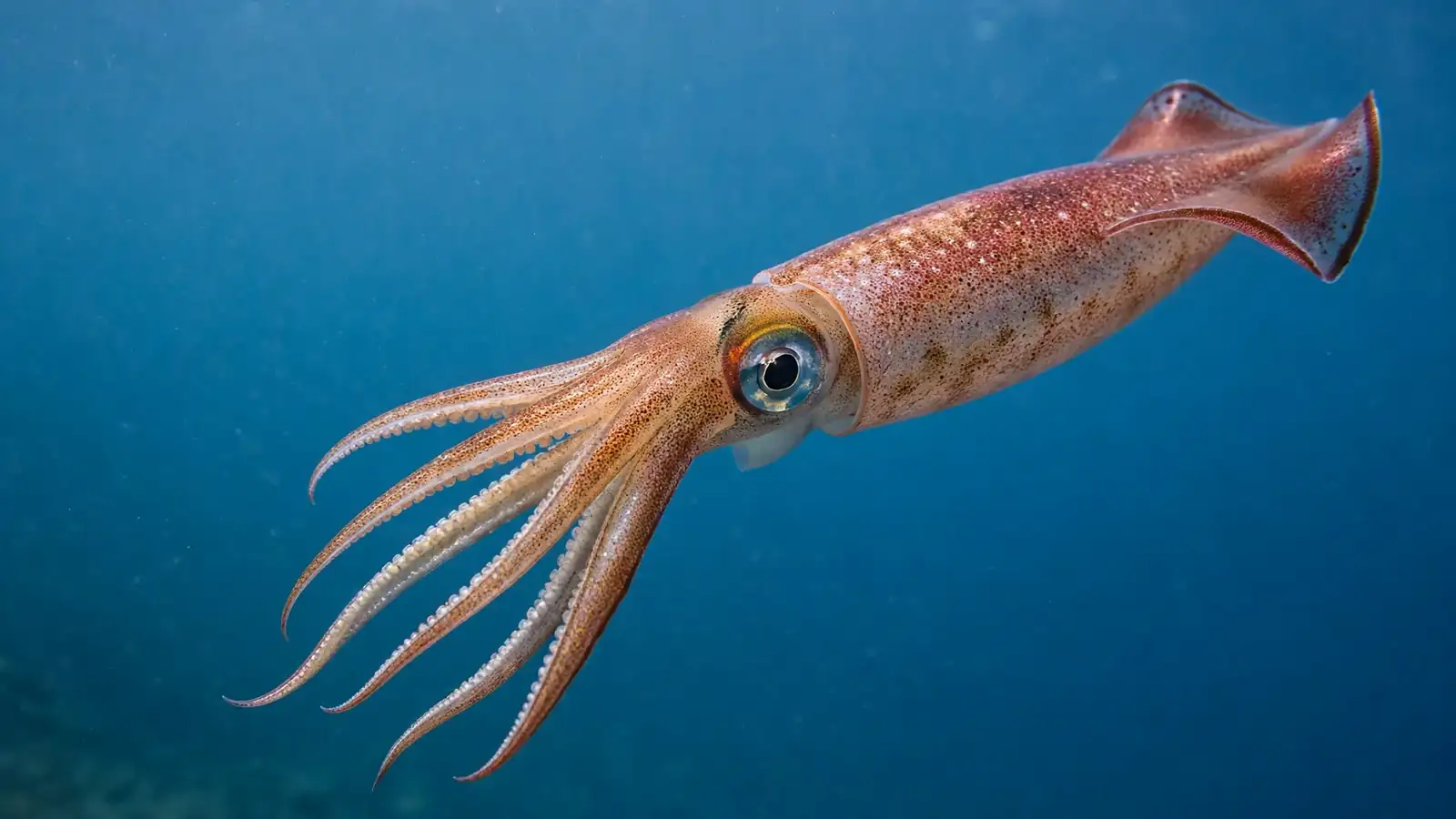
The mantle and fins are the field marks: a torpedo-shaped mantle to 50 cm, with fins that run along the back and steer the glide. In the North-West Pacific the squid is one of the most abundant cephalopods, and its schools fill the surface water at night in numbers that feed the region’s fisheries.
Japanese Flying Squid Migration: 2,000 Kilometres on the Current
They migrate over 2,000 km, following the ocean currents of the North-West Pacific. They move with the seasons, riding the warm currents north in summer and returning south in winter, and the migration is one of the longest of any squid.
Two thousand kilometres in a one-year life is a relentless itinerary. There is no second season, no pause to grow old: hatch, ride the currents north, feed, mature, and ride them south again to spawn and die. The whole Pacific crossing is a single lap, run once, at the speed of the currents and its own jets.
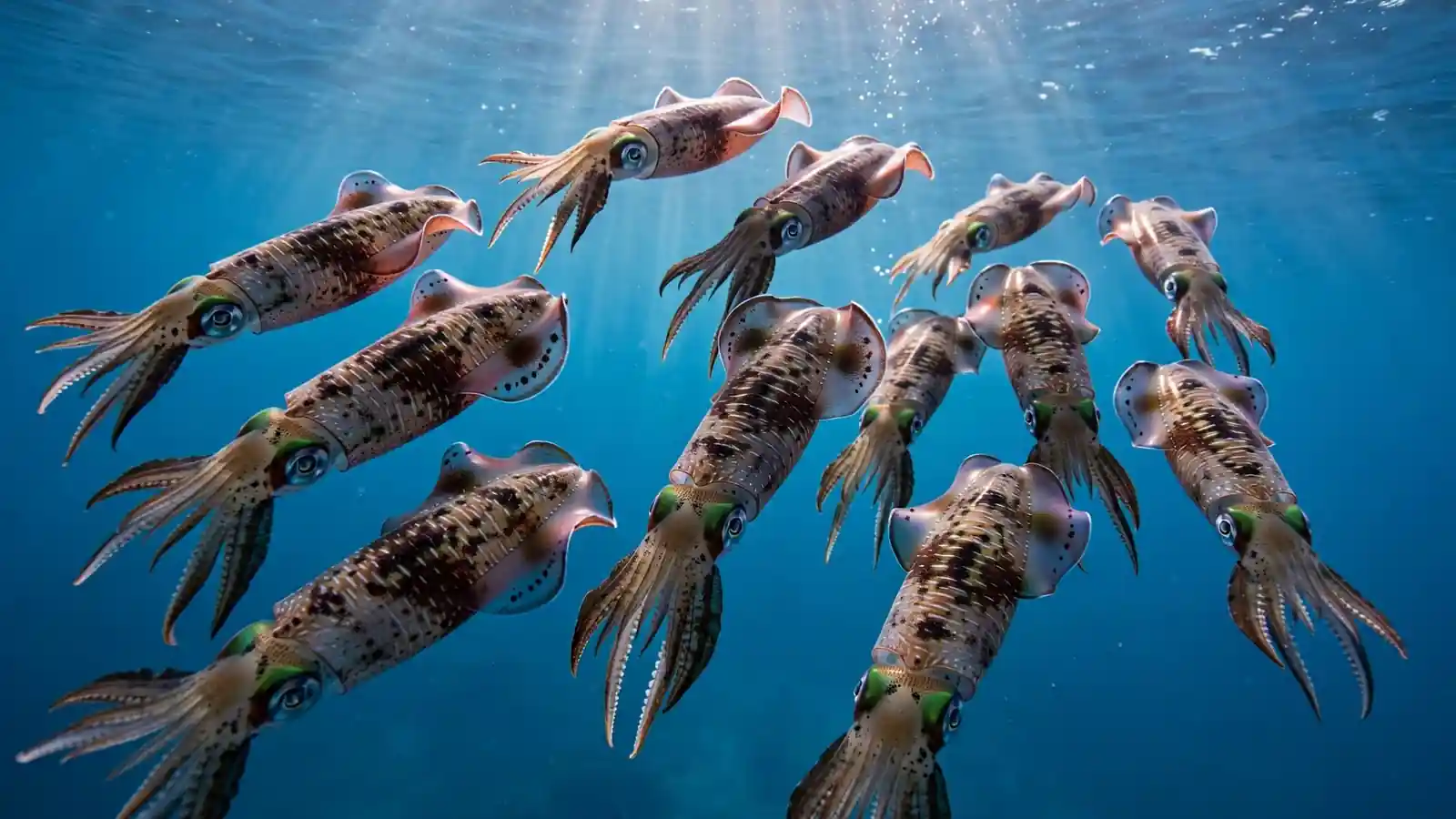
Three stocks are recognised: the Tsushima Warm Current stock, the Pacific stock, and the autumn/winter stock. Each follows its own route and its own season, and each is fished separately — which is why the migration matters to the fishery as much as to the squid.
Vertical Migration: Deep by Day, Surface by Night
It migrates vertically every day: deep by day, at 300–500 m, and at the surface by night. It follows the plankton and the small fish that rise at dusk, feeding in the surface water under cover of darkness and sinking again before dawn.
The vertical commute is as strict as the seasonal one. Three to five hundred metres down is the daytime refuge, dark and cold; the surface at night is the feeding floor, where the plankton and small fish gather after dark. Living in both means never fully belonging to either — a commuter between two oceans stacked on top of each other.
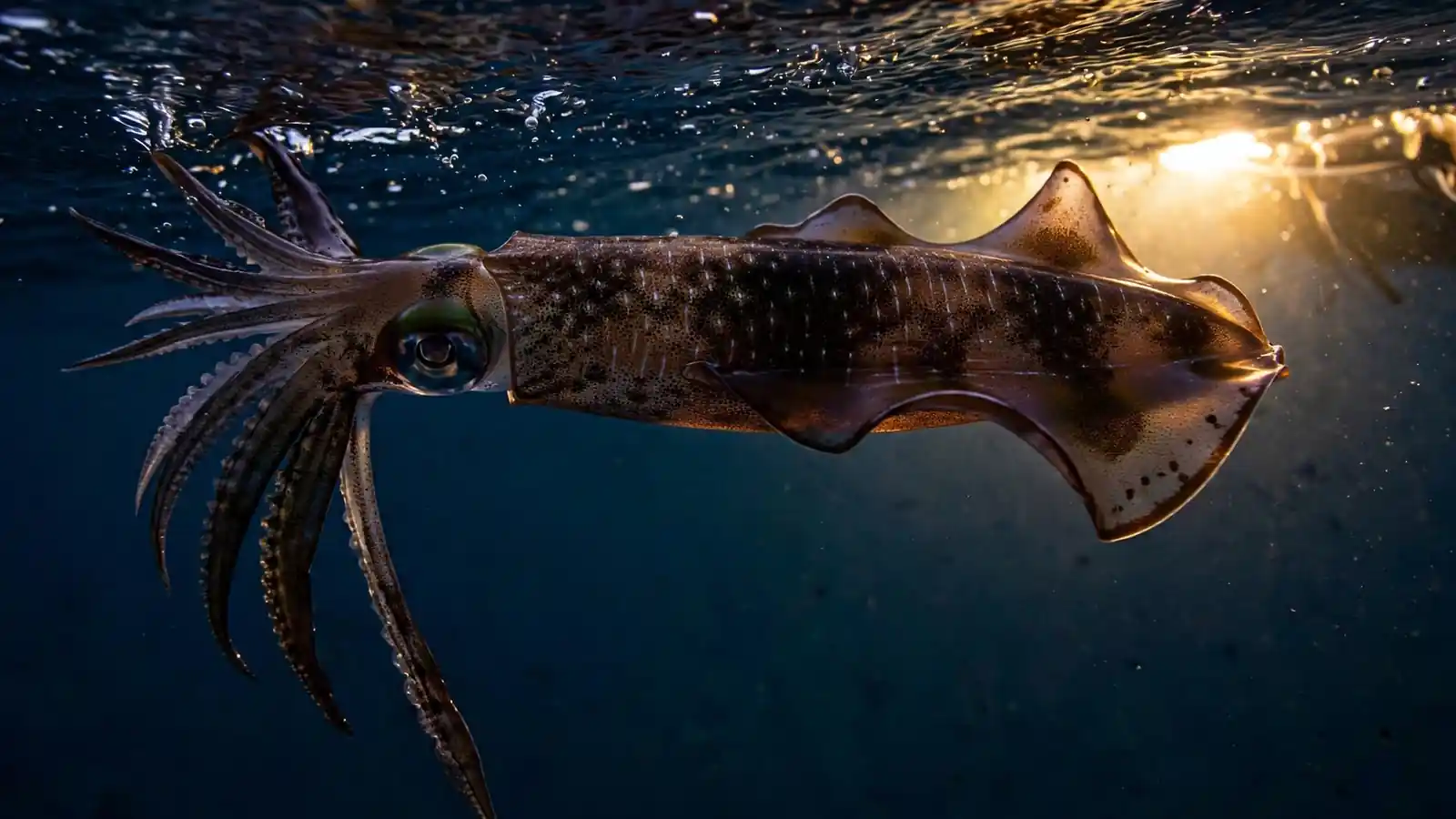
The vertical migration is why the squid is a night animal at the surface. At night it is in the top metres of the water, hunting and flying; by day it is hundreds of metres down, out of sight and out of reach. The daily journey is as regular as the tide, and it is the rhythm of the squid’s life.
What Does It Eat? Fish and Crustaceans
It eats small fish, crustaceans and other squid, caught with its arms and tentacles in the surface water at night. It is a fast, aggressive hunter, and it will take prey nearly its own size, including other squid.
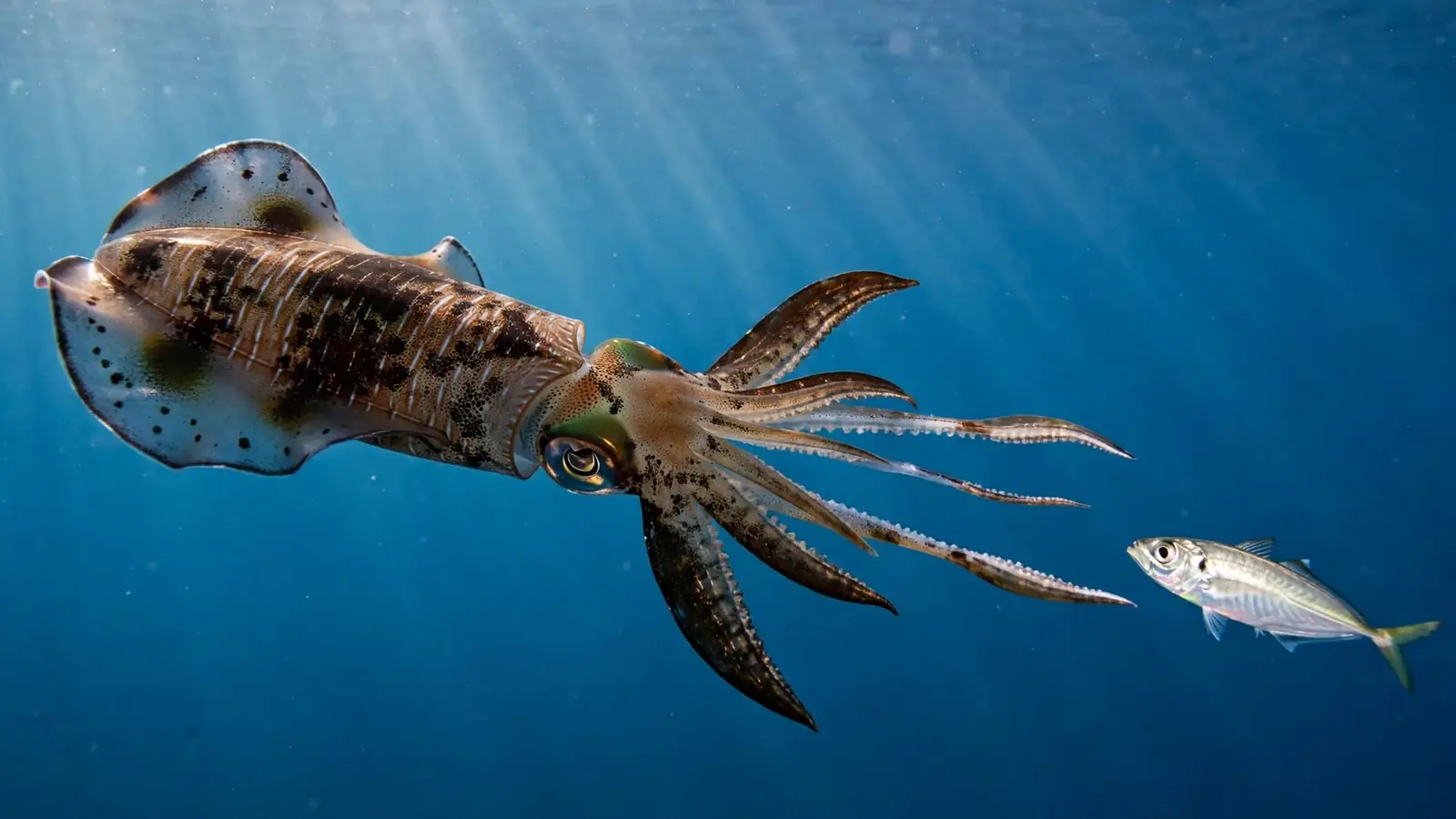
The diet changes with the migration: in the north the squid eats the fish and crustaceans of the cold current, and in the south it eats the warm-water species. It is a generalist, and that is part of why it is so abundant — it eats whatever the current brings.
Conservation: A Least Concern Squid
It is listed as Least Concern by the IUCN. It is abundant across the North-West Pacific, it is one of the most fished squid in the world, and its stocks are managed — but the catch varies from year to year, and the species is watched closely by the fisheries of Japan and Korea.
The variable catch is written into the life cycle. A species that lives one year has no reserves of old adults: each season’s stock is a single generation, and a bad year for the currents is a bad year for the catch. Renewal is total — and so is the turnover.

The boat catch is the conservation story: the squid is a major commercial species, and its numbers rise and fall with the currents and the climate. The stocks are fished hard, but the species’ one-year life and huge numbers make it resilient — and the Least Concern listing reflects that resilience.
Fun Facts
- It glides up to 30 m at 11 m/s — the first squid photographed in flight.
- It migrates over 2,000 km, following the currents of the North-West Pacific.
- It is deep by day (300–500 m) and at the surface by night, every day of its life.
- Its mantle reaches 50 cm in females and it weighs about 0.5 kg.
- Three stocks are recognised: Tsushima Warm Current, Pacific, and autumn/winter.
- It lives one year and dies after spawning.
Frequently Asked Questions
Can Japanese Flying Squid Really Fly?
Yes — they glide, rather than flap. The squid launches out of the water on a jet of water, spreads its fins and arms, and glides up to 30 m at 11 m/s. It was the first squid ever photographed in flight, by Muramatsu and colleagues in the early 2010s.
How Far Can Japanese Flying Squid Fly?
Up to 30 m, at 11 metres per second — the verified figure from the photographs. Longer claims exist, but they are unverified, and this guide uses the 30 m figure that the evidence supports.
How Big Do Japanese Flying Squid Get?
The mantle reaches 50 cm in females and the weight is about 0.5 kg. It is a mid-sized squid, big enough to be a major fishery species and small enough to launch itself out of the water.
Where Do Japanese Flying Squid Live?
In the North-West Pacific, around Japan, Korea and Russia. They are surface animals at night and deep animals by day, living at 300–500 m in daylight and rising to the surface after dark.
What Do Japanese Flying Squid Eat?
Small fish, crustaceans and other squid, caught with the arms and tentacles in the surface water at night. The diet changes with the migration, and the squid eats whatever the current brings.
How Long Do Japanese Flying Squid Live?
One year. It lives a single year, migrates over 2,000 km, spawns and dies — a short life packed with movement.
Are Japanese Flying Squid Endangered?
No. It is listed as Least Concern by the IUCN. It is abundant and heavily fished, but its one-year life and huge numbers make it resilient, and its stocks are managed by the fisheries of Japan and Korea.
Similar Species Worth Exploring
Keep Exploring
Meet the Humboldt squid, the red devil of the eastern Pacific, then the European squid, the common squid of the eastern Atlantic, and browse the whole family in our types of cephalopods hub — then come back to the squid that flies 30 metres, the Japanese flying squid.