Cookiecutter Shark
Cookiecutter Shark: the tiny shark that bites whales
The cookiecutter shark is barely longer than a baguette, yet it takes bites out of animals a hundred times its size. This palm-sized deep-sea shark glows green in the darkness, fastens onto whales, tuna and even submarines with suction-cup lips, and twists out a neat plug of flesh — leaving the round crater that gave it its name. Here is how the bite works, why it glows, and the two luminous cousins that share its story.
By Emily Carter · Reviewed by our vet team · Updated 10 November 2026 · 9 min read
Only about 50 cm longGlows green in the darkBites plugs from whales
At a Glance
A cookiecutter shark hunts animals that could swallow it whole, and it does so with three tools no other shark combines: a body that glows, lips that work like a suction cup, and a lower jaw built like a bandsaw. It never kills its prey and never needs to. It simply takes a single round mouthful out of the giants of the ocean and vanishes back into the black water, leaving a wound shaped exactly like the cutter in its name.
Cookiecutter Shark Size
Everything about this shark is out of proportion, starting with the numbers. A cookiecutter shark grows to just 42 to 56 centimetres (17 to 22 inches) long, with females slightly larger than males, and weighs about as much as a bag of sugar. Against that, set its targets: great white sharks, orcas, sperm whales, bluefin tuna and elephant seals have all been found carrying its round scars.
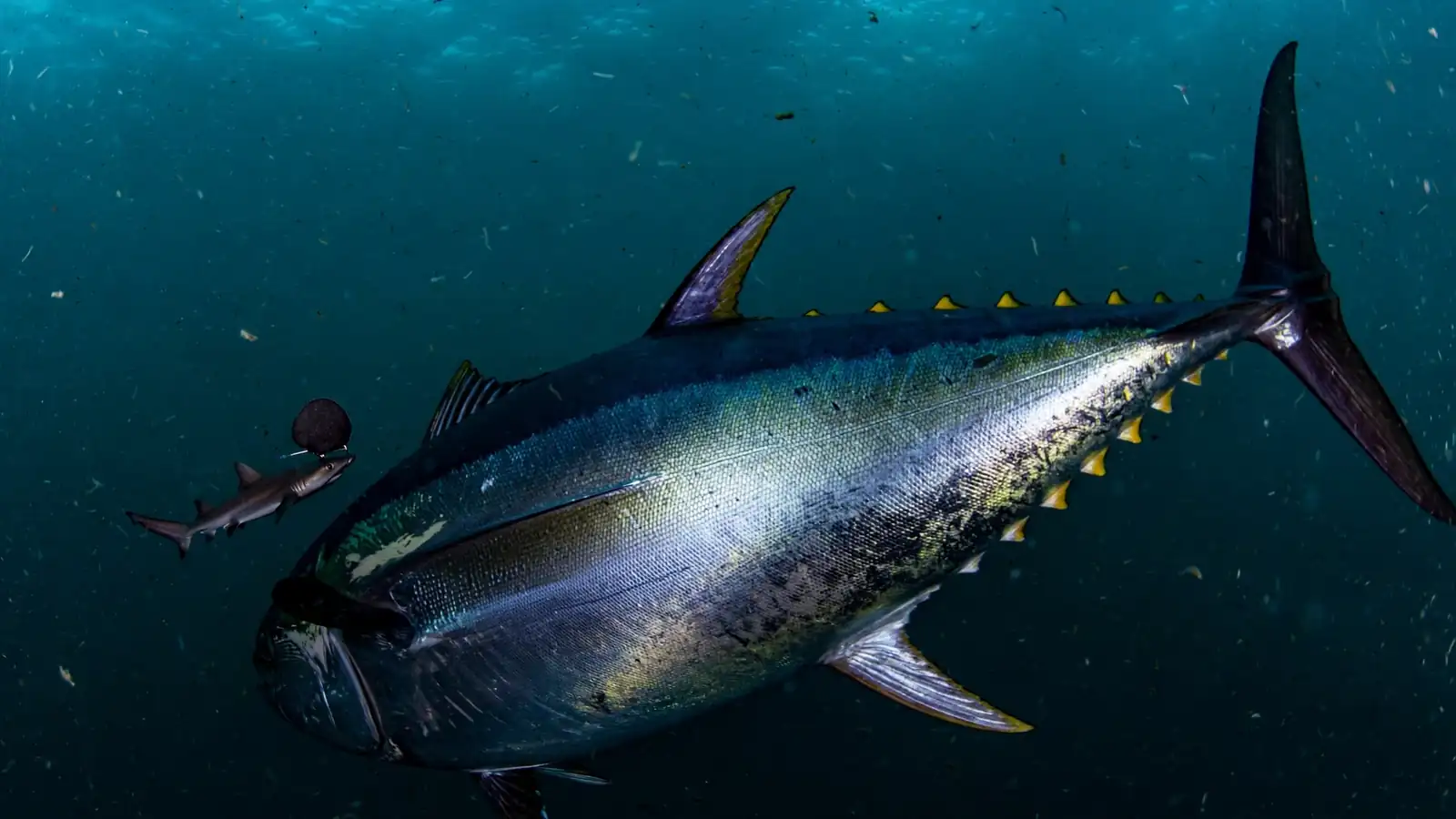
You can browse the full species record for Isistius brasiliensis for its measured data. The body is a stubby cigar, dark brown above and pale below, with small fins set far back, a blunt rounded snout and large green eyes tuned to the gloom. The feature that matters is at the front: thick, fleshy lips around a mouth that can seal onto smooth skin like a plunger.
Smallness is the strategy, not a limitation. A parasite-sized predator is hard to see, hard to shake off and cheap to feed, and this one has turned a single bite, taken on the move, into a complete way of life.
How the Bite Works
The bite is a small masterpiece of engineering. The shark approaches a much larger animal from below, seals its fleshy lips onto the skin and sucks, anchoring itself with negative pressure while specialised throat muscles hold the vacuum. Then it drives in its teeth: small needles above, and below them a single continuous band of large triangular teeth locked together like the blade of a saw.
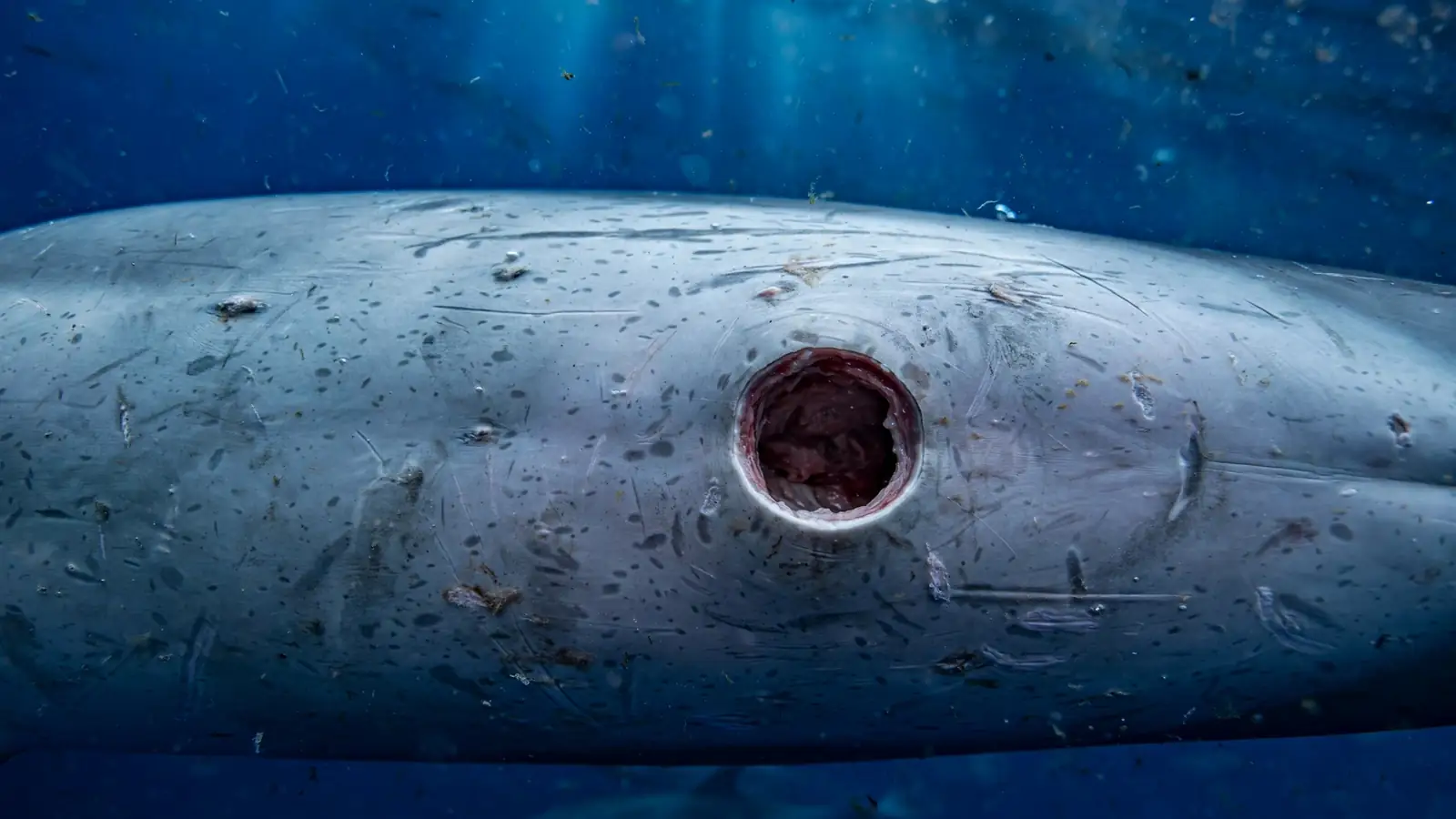
With the grip set, the shark twists its whole body. The band of lower teeth slices as it turns, and the animal comes away with a round plug of flesh and blubber about 5 centimetres across and up to 7 centimetres deep — a wound so neat and so round that the first scientists to find them on tuna and whales thought a tool must have made them. When the shark’s lower teeth wear out, it swallows the whole band and grows a fresh one, recycling the calcium.
The prey survives. That is the point of the design: a whale or tuna is a renewable resource, good for another bite next season, and the oceans’ giants carry the pale round scars for life. Researchers use the marks as a census — where the scars are, the little shark has been.
The Glow: A Living Lure
Turn out the lights and the cookiecutter shark switches on. Thousands of tiny organs called photophores cover its underside, glowing green-blue at exactly the brightness of the faint downwelling light, so that from below the shark’s silhouette simply disappears. It is counter-illumination, the deep sea’s standard invisibility cloak — with one deliberate flaw. A band around the throat carries no photophores at all and stays dark.
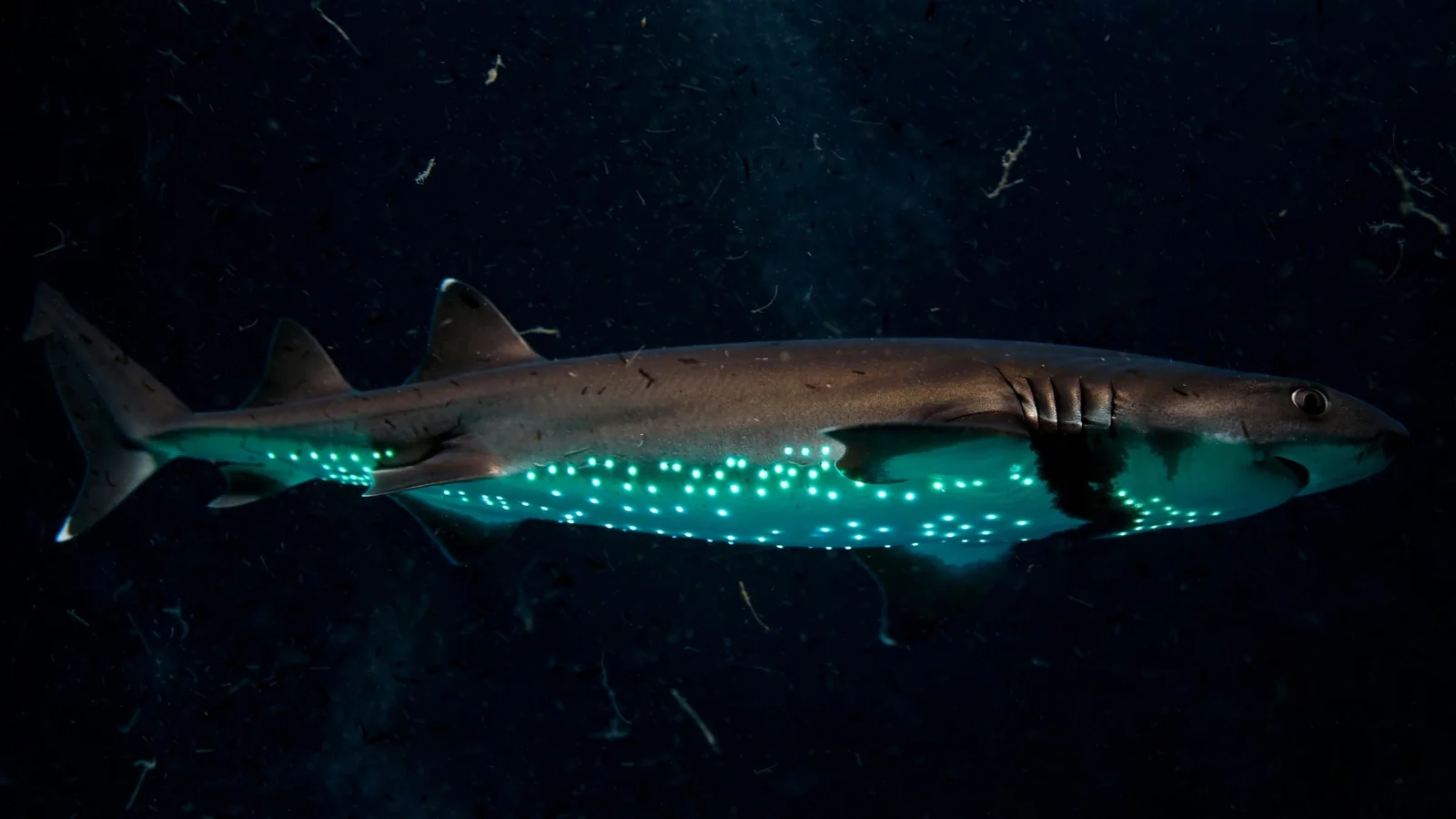
The leading explanation for that dark collar is as elegant as it is sinister. From below, a hunting tuna or marlin sees not a shark but a small dark fish-shaped shadow, apparently alone in the glow — and lunges at it. The little shark then turns the tables, attaching to its attacker and taking its plug. Aggressive mimicry, scientists call it: the prey animal wears a drawing of prey.
The glow is stubborn stuff. A captured cookiecutter can keep shining for up to three hours after death, a fact reported by the fishermen and researchers who have hauled them up at night and watched the green light fade only slowly in the bucket.
Where Cookiecutter Sharks Live: Habitat and Depth
Cookiecutter sharks live in every tropical and warm-temperate ocean on Earth, usually around oceanic islands and over deep water far from shore. They are creatures of the vertical world. By day they sink into the blackness, recorded as deep as 3,500 metres; by night they rise with the great migration of deep-sea life, sometimes reaching within a few metres of the surface to hunt in the dark.
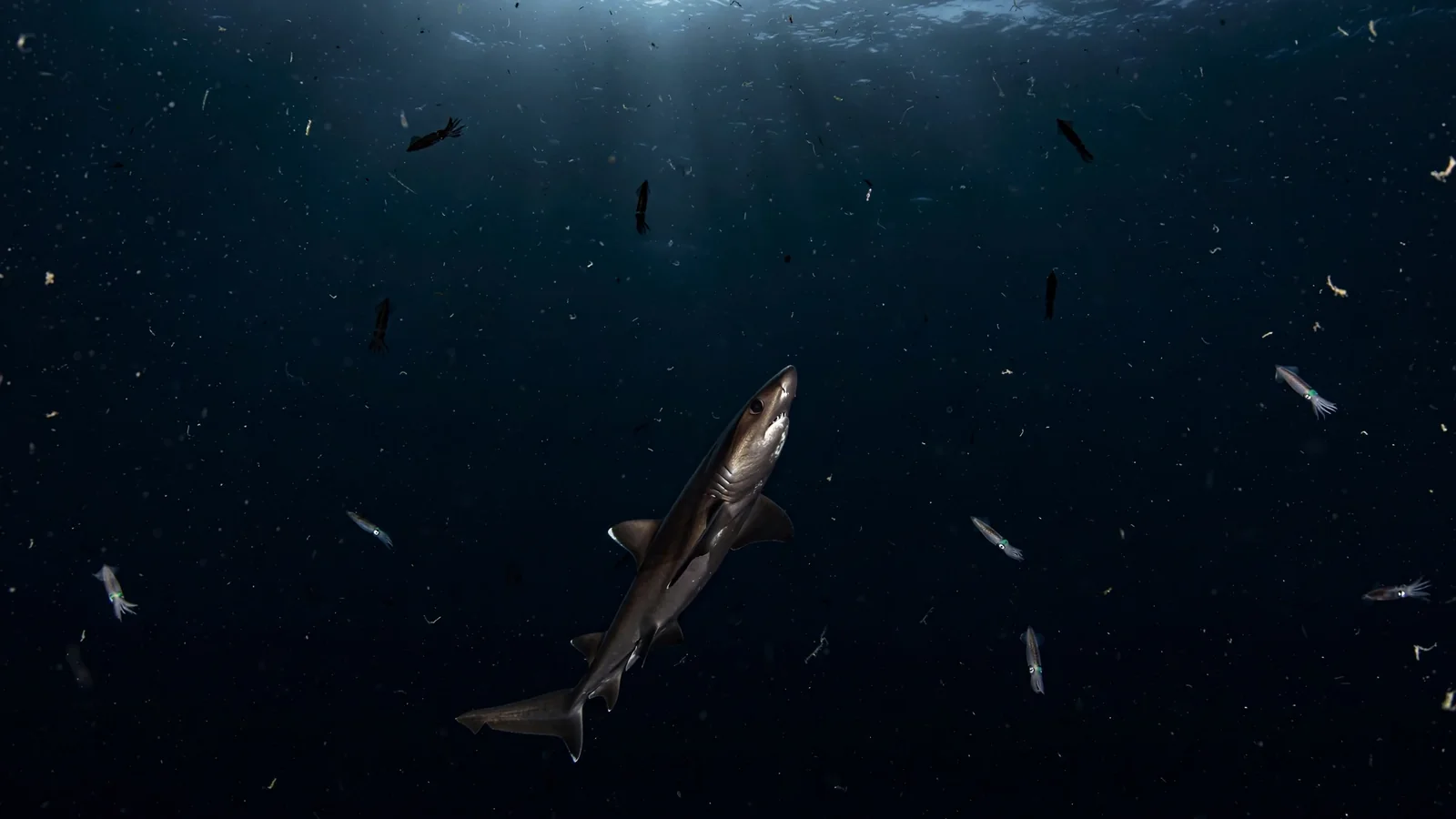
That commute explains both the glow and the guest list. The night-time surface layers are where the tuna, billfish, whales and seals travel, and the little shark rides up each evening to meet them. Island chains such as Hawaii are hotspots, their steep drop-offs packing deep daytime refuge and rich night hunting into a few square miles of sea.
Because it lives far offshore and mostly at night, the species is far commoner than its sightings suggest. Most of what we know arrives second-hand: in the stomachs of predators, in nets, and above all in those unmistakable round wounds, mapped on the bodies of animals that never saw their attacker.
Two Glowing Cousins: Kitefin and Lanternshark
The cookiecutter is not the family’s only lantern. Its larger relative the kitefin shark, Dalatias licha, was confirmed in 2021 to glow blue-green along its belly and flanks — at up to 1.8 metres long, it is the largest luminous vertebrate known. The kitefin haunts continental slopes between about 200 and 1,800 metres, a slow, solitary hunter of squid, fish and smaller sharks, recognised by its blunt snout and thick lips, distant echoes of its little cousin’s design.

The second cousin is smaller than the cookiecutter’s ambitions, if not its body. The velvet belly lanternshark, Etmopterus spinax, is a 45-centimetre deep-water shark of the north-east Atlantic and Mediterranean whose belly is paved with photophores. Its glow does double duty: counter-illumination from below, and a warning flare along its defensive fin spines that tells predators those spines are armed.
Together the three make a point the deep sea keeps making. Where there is no sunlight, animals manufacture their own — to hide, to hunt and to warn. The frilled shark shares their dark world but not their lights; the cookiecutter and its cousins are among the very few sharks that shine.
Bites on Submarines and Swimmers
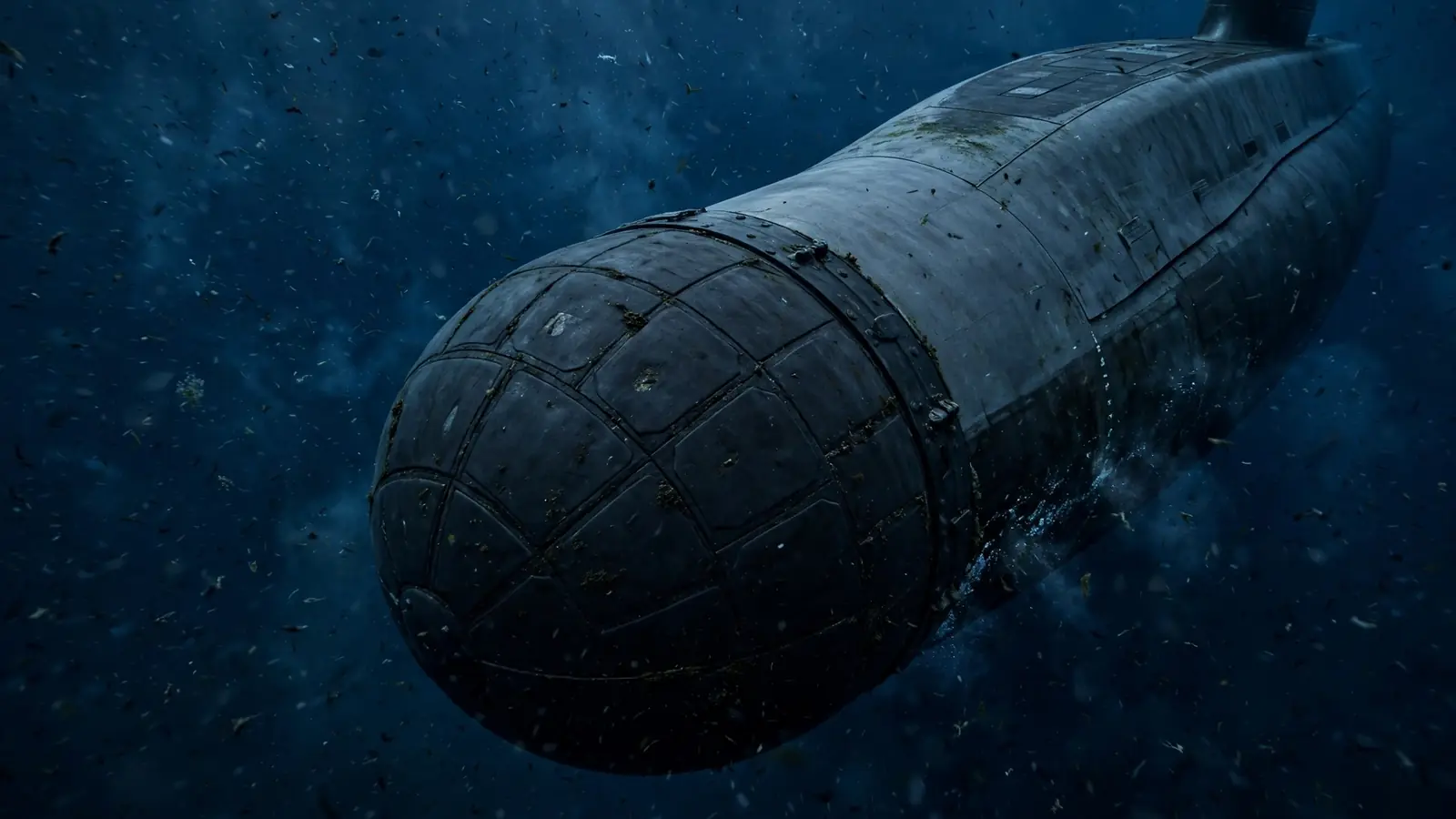
In the 1970s, United States Navy submarines began surfacing with a strange problem: chunks gouged out of the rubber domes covering their sonar gear, and in some cases the damage blinded the equipment. The culprit turned out to be a fish shorter than a forearm. Cookiecutters had mistaken the domes for something edible, and the Navy answered by fitting the domes with protective resin covers — a small shark had, briefly, held a fleet at bay.
Human swimmers figure in the story exactly once for decades of records. In 2009 a long-distance swimmer crossing a channel in Hawaii at night became the first documented case of a live human bite, taking a round wound from a cookiecutter in the dark water. A second Hawaiian case followed in 2019. Against the millions of night swimmers and the whole population of the species, two bites make this one of the least dangerous sharks alive — unless you are made of rubber, or of whale.
The surest sign of its reach is not attacks but archaeology: its bites have been identified on animals as different as leatherback turtles, monk seals and swordfish, and its teeth turn up in the stomachs of the very giants it feeds on. The deep sea’s smallest shark writes its name on its largest animals.
Fun Facts
- When its band of lower teeth wears out, the shark swallows the whole set and recycles the calcium into the next one.
- Its glow can persist for up to three hours after the shark dies.
- The dark collar around its throat may be a lure: from below it looks like a small fish, drawing predators within biting range.
- Its bites disabled the rubber sonar domes of US Navy submarines in the 1970s until protective covers were fitted.
- Its cousin the kitefin shark, at up to 1.8 metres, is the largest luminous vertebrate known to science.
- Only two bites on live humans have ever been documented, both night swimmers in Hawaii, in 2009 and 2019.
Frequently Asked Questions
Why Is It Called a Cookiecutter Shark?
Because of the wound it leaves. The shark suctions onto a much larger animal, twists, and cuts out a round plug of flesh about 5 centimetres across, leaving a crater as neat as if a cookie cutter had stamped it. The marks were found on whales and tuna long before the shark itself was understood.
How Do Cookiecutter Sharks Bite?
A cookiecutter shark seals its thick lips onto the prey and sucks to hold on, sinks in a continuous band of large triangular lower teeth, then spins its body. The teeth slice as it turns, removing a round plug of flesh and blubber up to about 7 centimetres deep. The prey almost always survives.
Do Cookiecutter Sharks Glow?
Yes. Thousands of light organs called photophores cover the cookiecutter shark’s underside, glowing green to match the faint light from above and erase its silhouette. One dark band at the throat does not glow, and may act as a lure that looks like a small fish to predators below.
How Big Do Cookiecutter Sharks Get?
They are tiny for sharks: 42 to 56 centimetres (17 to 22 inches) long, with females the larger sex. Despite that, they bite animals hundreds of times their size, including whales, orcas, tuna and great white sharks.
Where Do Cookiecutter Sharks Live?
Cookiecutter sharks live in tropical and warm-temperate oceans worldwide, mostly around oceanic islands. They spend the day as deep as 3,500 metres and rise towards the surface at night to hunt, which is when most encounters happen.
Has a Cookiecutter Shark Ever Bitten a Human?
Only twice on record. The first documented bite on a live human was a night channel swimmer in Hawaii in 2009, and a second Hawaiian case followed in 2019. Both survived with the species’ signature round wound. The shark is far more famous for biting submarines’ rubber sonar domes in the 1970s.
What Do Cookiecutter Sharks Eat?
Cookiecutter sharks eat plugs of flesh cut from whales, dolphins, seals, tuna, swordfish and other sharks, and they also take whole prey such as squid, crustaceans and small fish. The big-animal bites are a form of parasitism: the host survives and can be bitten again.
Similar Species Worth Exploring
Keep Exploring
Still curious about sharks? Meet the frilled shark, another living fossil of the deep, or browse every species in our guide to the types of sharks. None of them out-stranges the cookiecutter shark.