Tarpon
Tarpon: the silver king that breathes air and outlives empires
The tarpon is a fish from another age: two metres of mirror-bright silver that breathes air like a mammal, raises its young in stagnant mangrove swamps other fish cannot survive, and lives long enough to watch six decades of tides. Anglers call it the silver king. Here is its size, its strange lung, its leaping defence, and the long, slow life behind the legend.
By Emily Carter · Reviewed by our vet team · Updated 10 November 2026 · 9 min read
Gulps air at the surfaceLives 50–60+ yearsLineage some 100M years old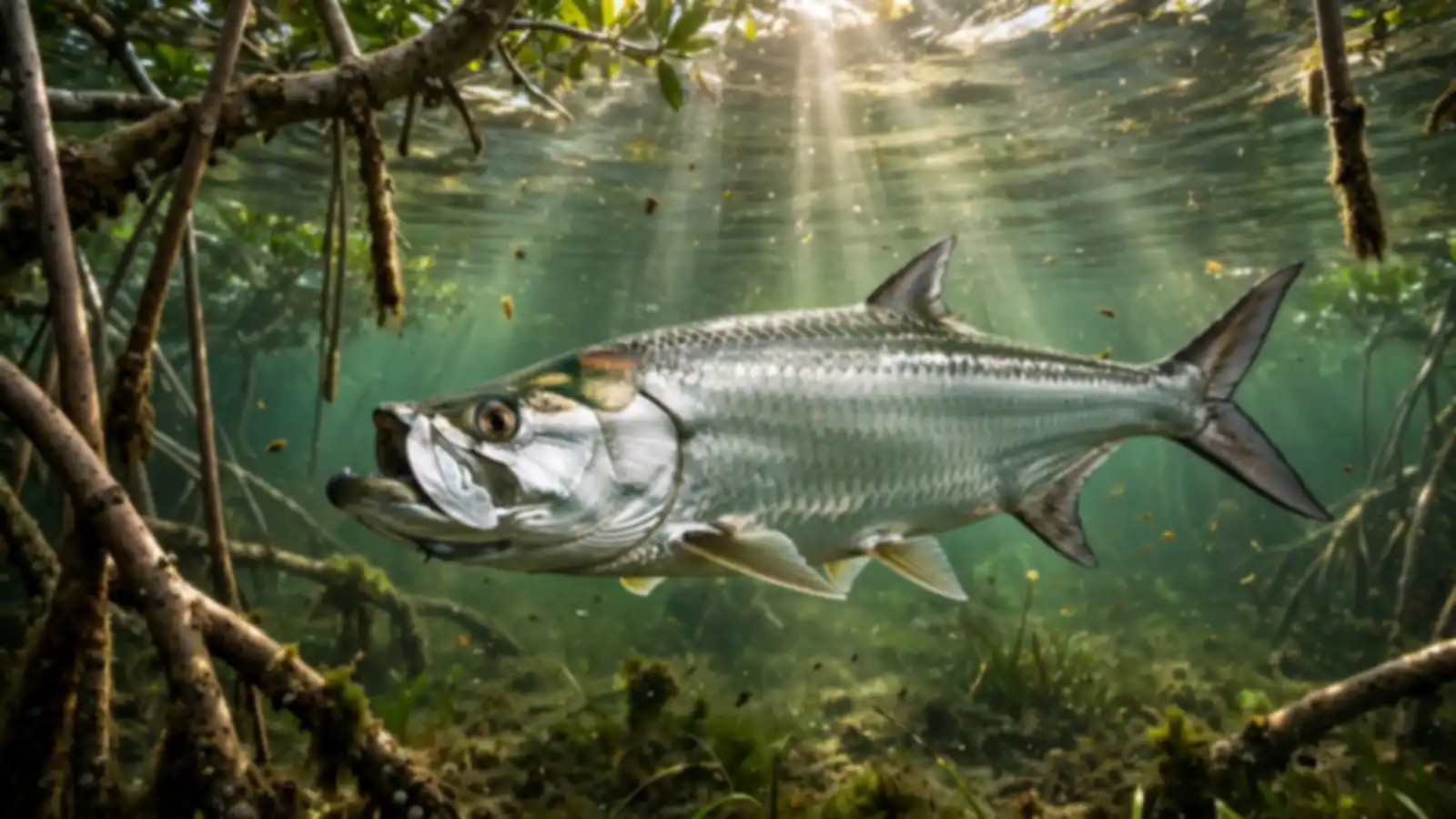
At a Glance
The tarpon is the Atlantic’s great silver fish of the shallows: a giant herring relative armoured in mirror scales, found from Virginia to Brazil and across to West Africa, with a smaller cousin in the Indo-Pacific. It is ancient, air-breathing and famously athletic. Everything about it — the longevity, the leaps, the swamp nurseries — rewards a closer look.
Tarpon Size and Weight
A fish starts life as a ribbon-like larva drifting inshore on the tide, and ends it — half a century later — as one of the biggest fish in the estuary. Atlantic fish grow to about 2.5 metres (over 8 feet) and a maximum recorded weight of 161 kilograms (355 pounds). The all-tackle angling record stands at 286 lb 9 oz, and fish over 200 pounds are the stuff of local legend wherever they are caught.
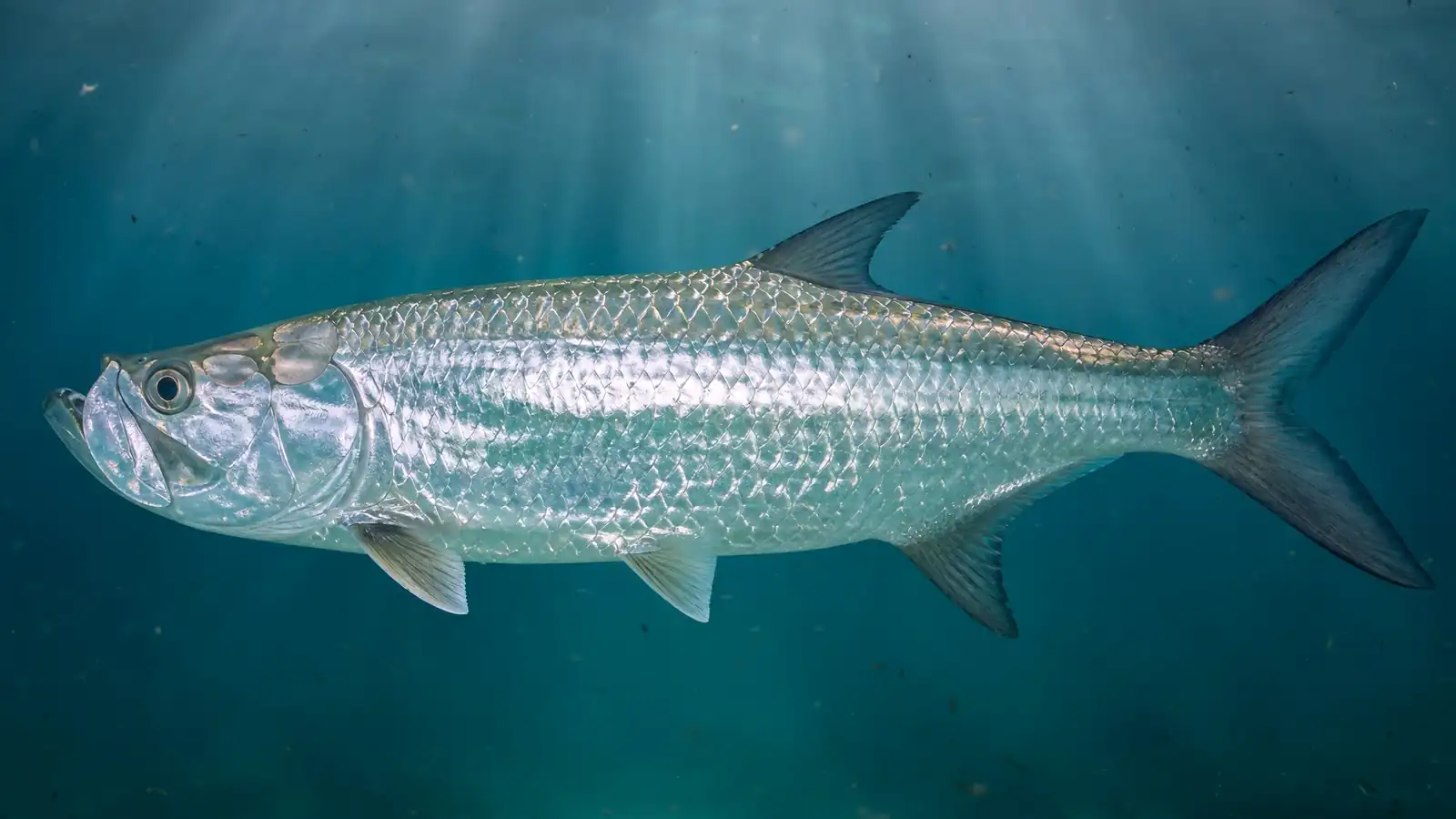
Size is a female achievement here, as in so many big fish. Females outgrow males and make up nearly all the true giants; a typical adult on the flats weighs 20 to 70 kilograms. Growth is fast in the warm nursery years, then slows into a long middle age — which is why the biggest fish are also the oldest, and why protecting them matters so much.
The Indo-Pacific species is the same blueprint at half scale, rarely passing 1.5 metres, and thrives from East Africa to the Pacific islands. Both species share the upturned mouth, the armour of scales and the air-breathing trick. You can browse the full species record for Megalops atlanticus for measurements across its Atlantic range.
The Silver King: Armour, Jaws and an Ancient Lineage
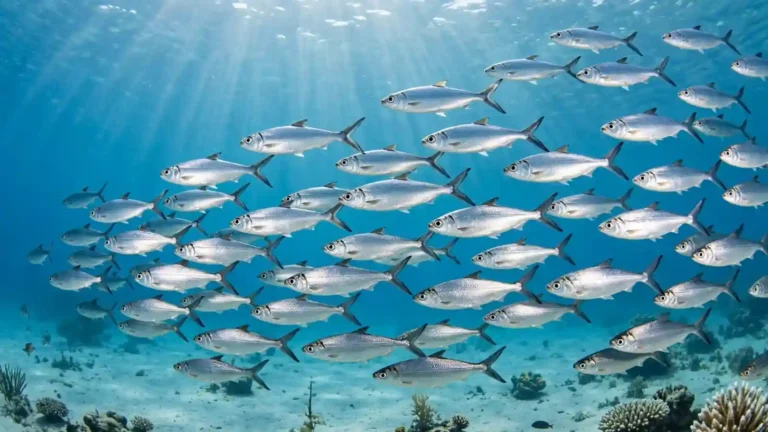
Stand close to a one and the nickname explains itself. Each scale is a silver disc the size of a dinner plate on a big fish, overlapping like roof tiles and flashing green, blue and violet as the fish turns. The armour is not for show: it turns aside the teeth of sharks and the beaks of birds, and a shed scale is so large and bright that it has been used in jewellery.

The head is all business — a bony, underslung lower jaw that juts upward, built for striking prey from below against the light, and a mouth lined with fine, gripping teeth and a famously hard, bony plate. They feed by engulfing: the whole head works like a bucket, inhaling small fish, shrimp and crabs in one surge. Prey is swallowed whole; the armour-plated throat does the rest.
The design is genuinely ancient. They belong to a lineage of ray-finned fish whose fossils stretch back well over 100 million years, to seas patrolled by marine reptiles. Modern fish are near-living fossils: the same silver blueprint, the same estuary habits, refined by an almost unbroken run of success.
Why Do They Roll? The Fish That Breathes Air
Dawn on a backcountry creek, and the water dimples in a long, slow line: fish rolling. A tarpon breathes air. Its swim bladder — the buoyancy organ most fish keep sealed — is connected by a duct to its throat and lined with blood vessels, so a gulp of air at the surface becomes a lungful of oxygen. The slow roll, back and dorsal fin breaking the surface, is the fish topping up that lung.
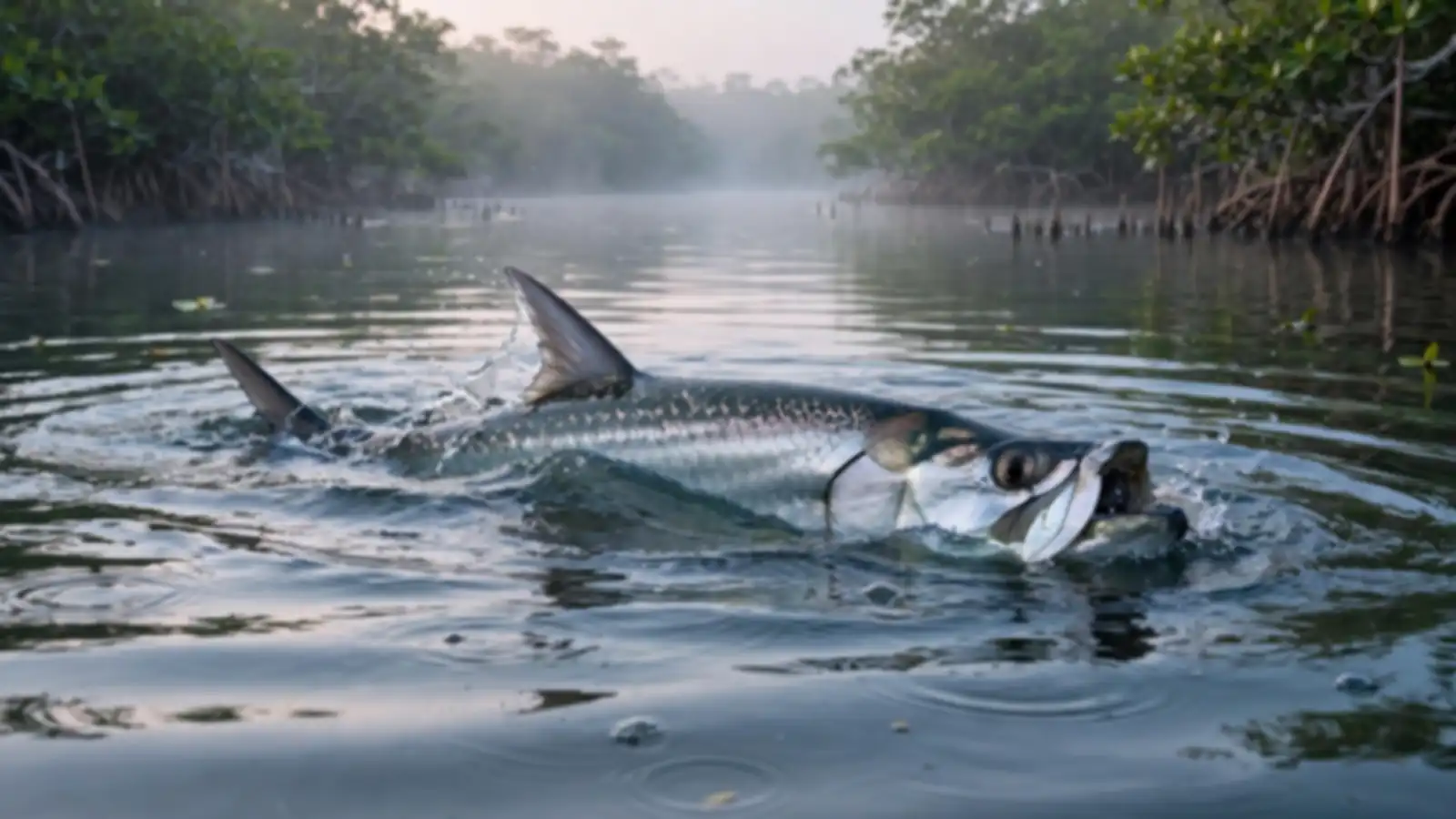
The trick is a survival superpower. In the hot, stagnant, oxygen-starved backwaters where young fish grow up — water that would suffocate most fish — a tarpon simply breathes the air above it. Adults keep the habit as insurance, rolling more in warm, still weather and relying on their gills in rich, moving water.
Rolling also betrays them. Anglers read the surface like newsprint: a single roll marks a loner, a chain of rolls a travelling school, a shower of baitfish spray a feeding frenzy. For scientists, rolling counts are a way to census fish that are otherwise nearly invisible in dark estuary water. The fish’s breathing is its signature — written on the surface for anyone who learns to read it.
Habitat: From Mangrove Nurseries to Open Coast
They live two lives. Adults are coastal travellers, ranging along warm Atlantic shores, gathering in passes, inlets and river mouths, and making seasonal migrations of hundreds of kilometres — satellite tags have followed them the length of Florida’s coasts and across the Gulf. The young live somewhere else entirely: in the stillest water they can find.
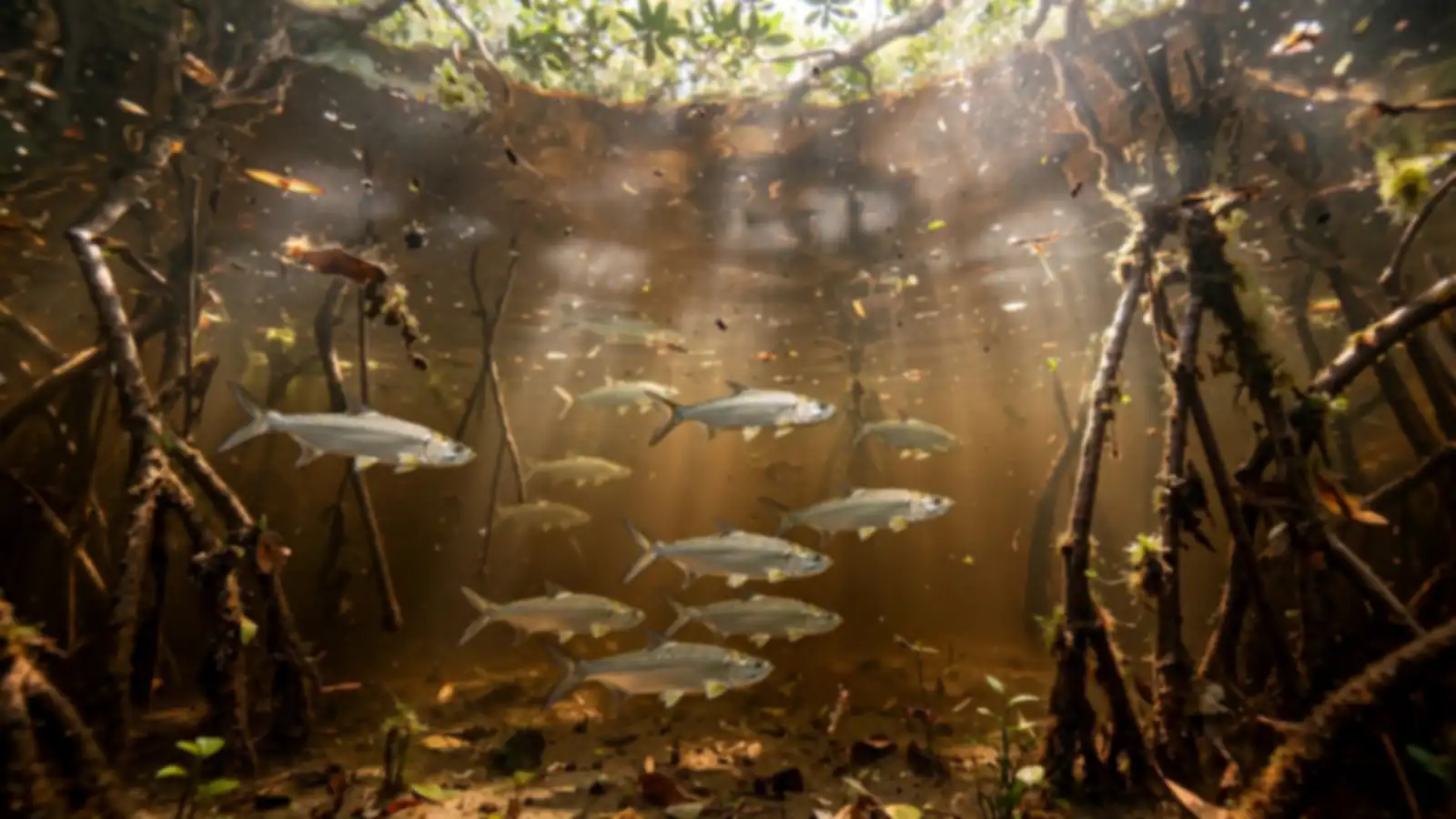
Spawning happens offshore in spring and summer, where a big female may release millions of eggs. The leaf-like larvae ride currents inshore and wriggle into mangrove creeks, marsh pools and backwater lagoons — warm, tea-coloured, predator-poor water where their air-breathing keeps them alive. Juveniles stay in these nurseries for their first years, growing fast on mosquito fish and shrimp.
That nursery dependence is the species’ weak point. A fish can survive a shark, a cold snap and a century of anglers, but it cannot survive a drained mangrove swamp. Estuary development, dredging and blocked tidal creeks erase the exact shallow water the next generation needs — a slow threat that no fishing rule can fix.
Why Do They Jump? The Leap and the Rattle
Hook a one and the water explodes. The fish launches clear of the surface — two metres of silver in the air — and crashes down shaking its head and rattling its gill covers, a sound anglers compare to a castanet volley. Repeat leaps follow, each one a calculated attempt to throw the hook against a mouth that is mostly bone and offers a hook very little to hold.
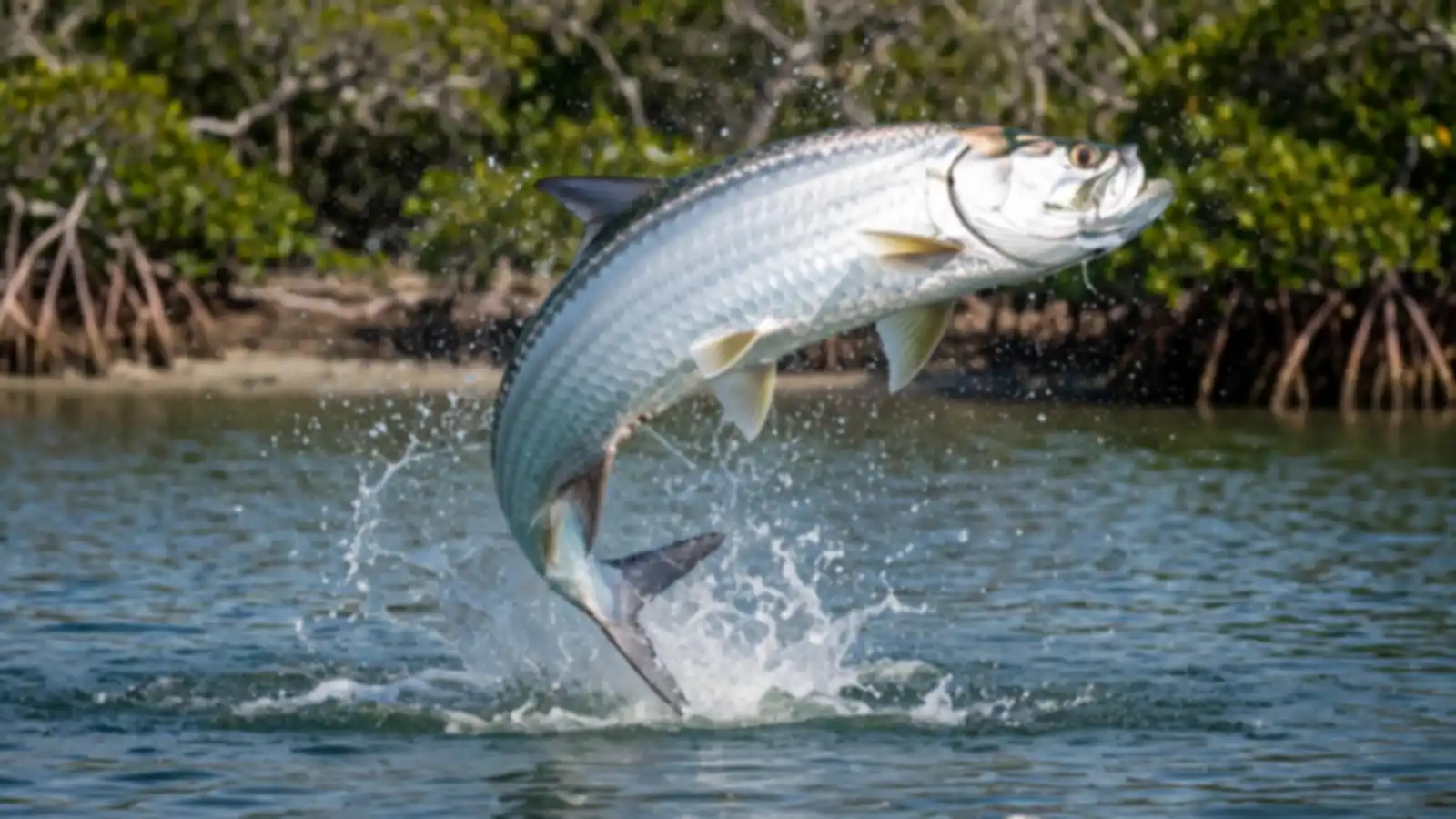
Why do they jump? In the fight, the leaps are escape mechanics: gravity, head-shakes and slack line are a hooked fish’s only tools, and they use them better than any other inshore fish. Wild fish also leap when startled or when shaking off parasites and remoras, and groups sometimes porpoise and roll together while travelling — though the rolling is chiefly about breathing, not display.
The athleticism is real physics: a fish this size leaving the water entirely is moving fast and hitting harder. It is also why the species, a mediocre food fish at best, became one of the world’s most prized game fish more than a century ago. The fight is the point — and increasingly, so is the release that follows it.
Tarpon Lifespan and the Release Ethic
Its lifespan stuns people used to short-lived fish. Ages read from scales and ear bones run routinely past 40 years, with 50 to 60 well documented; the record holder, an aquarium female, died in 1998 aged 63. Females mature late, at around ten years or more, and a big old female may spawn for three decades. Long life, late maturity and nursery dependence add up to a species that replaces itself slowly.
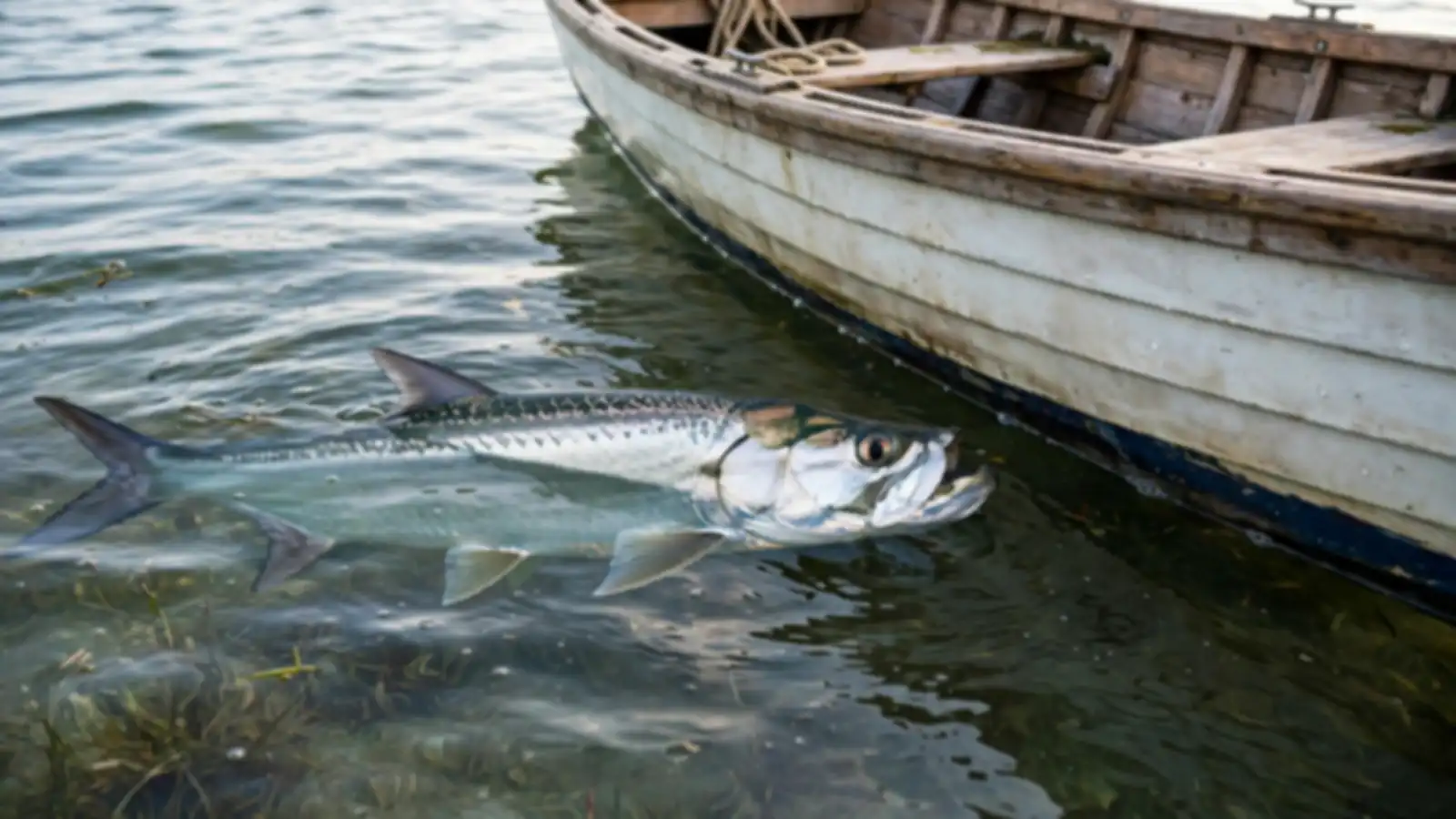
Fishing culture has adjusted. Because the flesh is bony and poor, they were among the first great game fish to be valued alive: Florida protects them almost completely, most other strongholds run release-only fisheries, and tournaments weigh photographs rather than fish. The logic is simple arithmetic — a 100-pound fish is a 30-year-old animal that took a mangrove swamp, three decades and luck to build.
The species is listed as Vulnerable overall, pressured less by anglers than by habitat loss and by net fisheries in parts of its range. Protect the nurseries and the old females, and the silver king keeps his ancient rounds — rolling at dawn in the creek mouths, as the king has done since long before there were people to name him.
Fun Facts
- The oldest known specimen, a female in an aquarium, died in 1998 at the age of 63 — older than most of the anglers who chase the species.
- Its scales can exceed 7 centimetres across on a big fish and are so bright they have been polished and used as jewellery.
- Young fish survive in swamp water with almost no dissolved oxygen by breathing air through a lung-like swim bladder.
- A large female fish can release millions of eggs in a single spawning season offshore.
- Its lineage reaches back more than 100 million years; its basic design predates the Atlantic coastline it now patrols.
- Satellite tags show adult fish migrating hundreds of kilometres along the coast, then returning to the same passes season after season.
Frequently Asked Questions
How Long Do Tarpon Live?
A fish is one of the longest-lived coastal fish: 50 to 60 years is well documented, and the oldest known individual, a female kept in an aquarium, died in 1998 at the age of 63. Wild fish are aged from their scales and ear stones. That longevity, with females not maturing until around ten years old, is why the species recovers slowly from heavy fishing.
How Big Do Tarpon Get?
An Atlantic fish can reach about 2.5 metres (over 8 feet) and 161 kilograms (355 pounds); the all-tackle record stands at 286 pounds 9 ounces. Most adults encountered on the flats weigh 20 to 70 kilograms. Females grow larger than males, and the true giants are all old females.
Why Do Tarpon Roll at the Surface?
They roll to breathe. A fish gulps air at the surface and stores it in a lung-like swim bladder rich in blood vessels, topping up its oxygen wherever it swims. Chains of rolling fish are also how anglers find them: a slow, porpoising roll at dawn usually means a school is feeding or travelling below.
Can Tarpon Really Breathe Air?
Yes. The fish’s swim bladder is connected to its throat by a duct, and the bladder’s lining works like a simple lung, absorbing oxygen from gulped air. Young fish in stagnant, oxygen-starved backwaters depend on air breathing to survive; adults use it as a supplement, especially in warm, still water where dissolved oxygen runs low.
Can You Eat Tarpon?
You can, but almost nobody does. Its flesh is bony, soft and widely considered poor eating, and the fish are worth far more alive — in Florida and many other places they are effectively a catch-and-release species protected by law. Their global status is Vulnerable, so the sporting world’s answer is clear: admire the fish, photograph it, and let it go.
Similar Species Worth Exploring
Keep Exploring
Stay on the flats with the bonefish, the tarpon’s ghostly neighbour, or browse every giant of the warm shallows in our guide to the types of fish. Empires rise and fall along its coasts, but at dawn the creek still dimples in a long silver line — the tarpon.