Acorn Worm
Acorn Worm: The Worm That Is Our Distant Cousin
The acorn worm is a hemichordate with gill slits like ours, burrowing in marine mud and sand — and about 70% of human genes have counterparts in its genome.
By Emily Carter · Reviewed by our vet team · Updated 10 November 2026 · 9 min read
~90 species100+ gill slitsSmells of iodine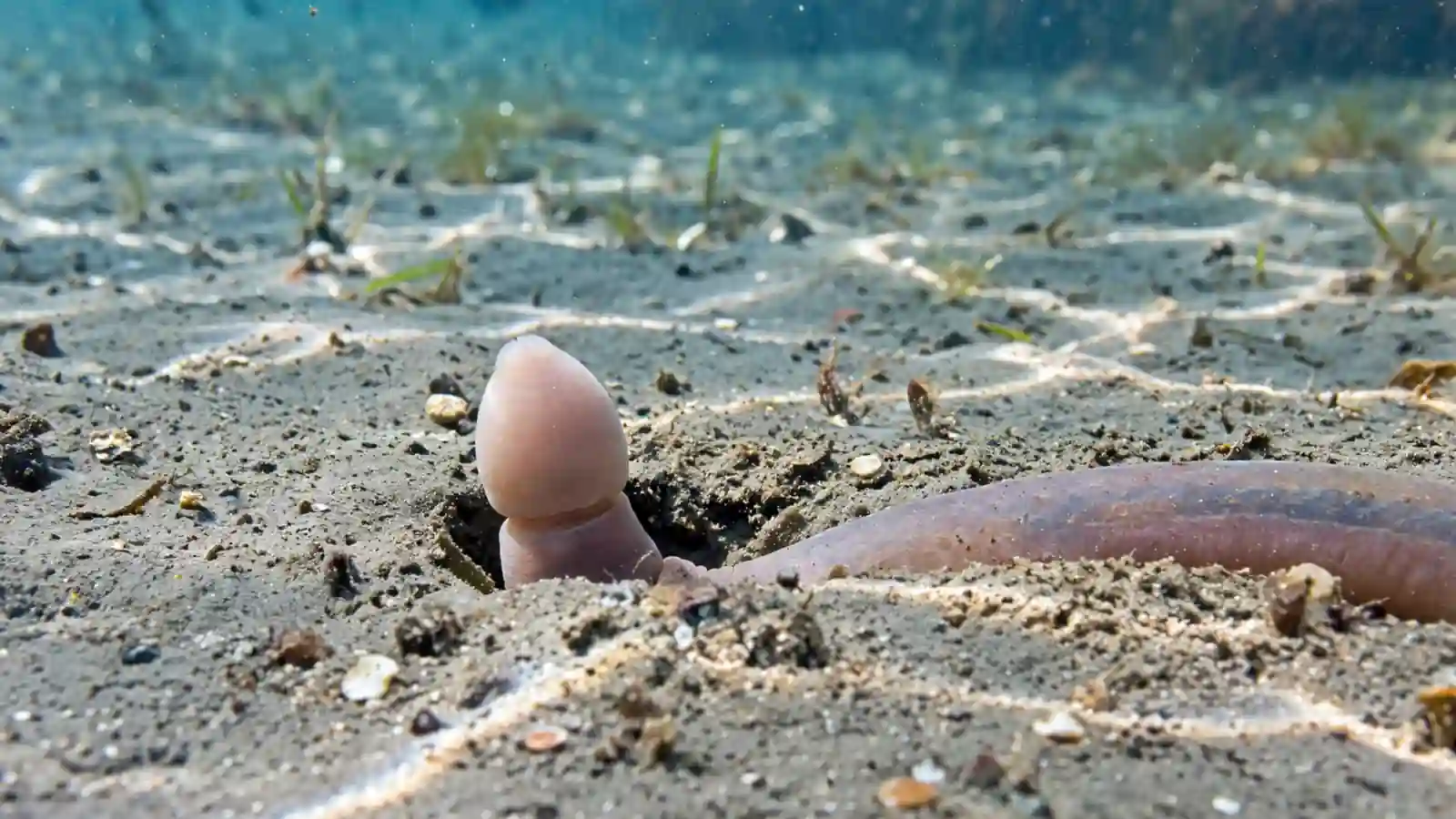
At a Glance
The acorn worm is a burrowing marine worm and a hemichordate — the sister group to echinoderms and chordates — with pharyngeal gill slits like the ones that became our own throat. It lives in U-shaped burrows in mud and sand, and it famously smells of iodine.
Acorn Worm Hemichordate: Our Distant Cousin
It is a hemichordate, and that one word is the reason it matters. Hemichordates are the sister group to echinoderms and chordates — the branch of the animal family tree that includes starfish on one side and every vertebrate, ourselves included, on the other. It sits on that branch, a worm that is our own distant cousin.
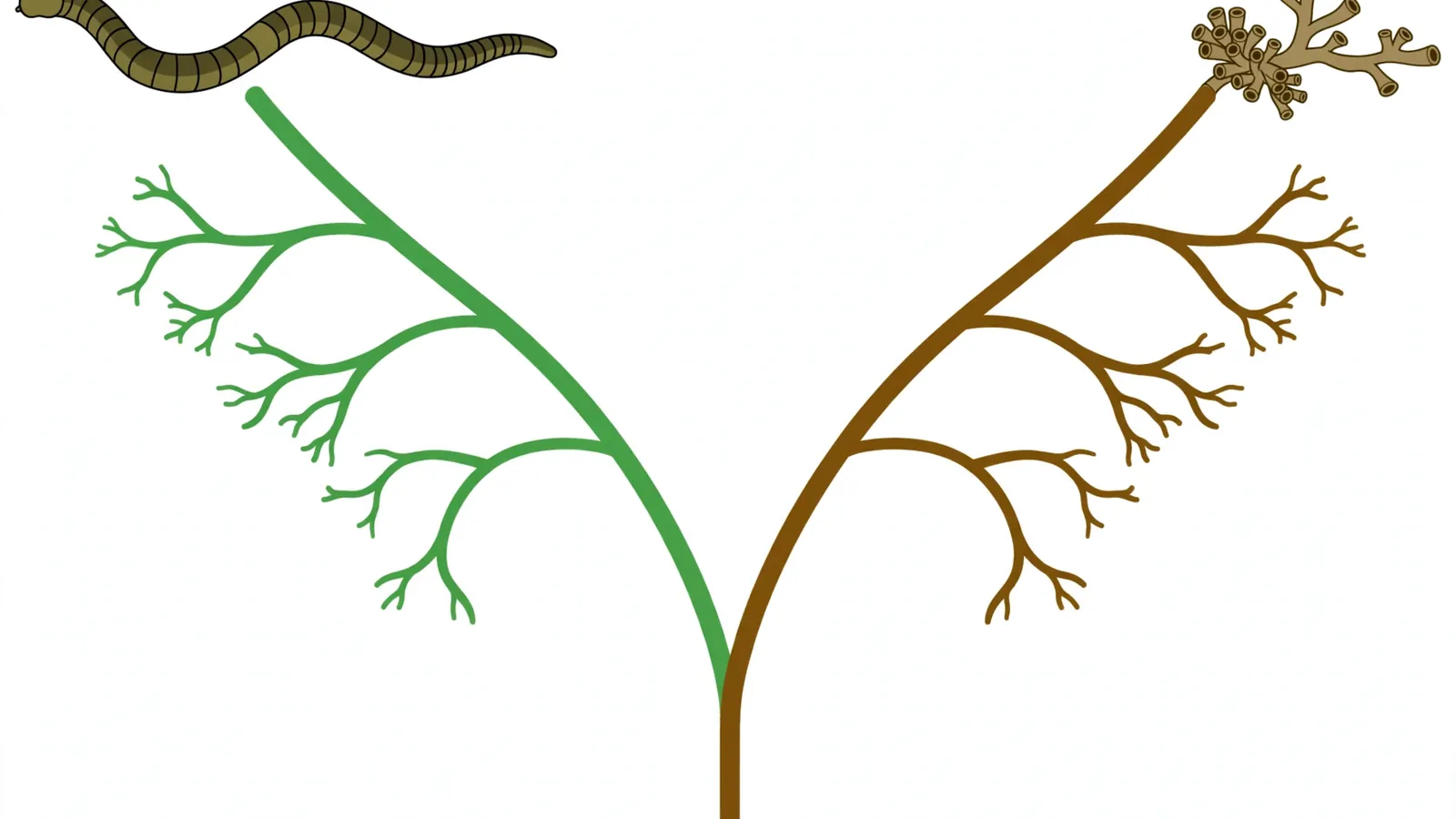
The relationship is not poetic licence; it is written in the worm’s body and its genome. About 70% of human genes have counterparts in acorn worms, and the worm’s gill slits are the same structures, in early form, that became the pharynx of fish and the throat of land animals. Studying it is, in a real sense, studying an early draft of ourselves.
Acorn Worm Gill Slits: The Chordate Connection
Its gill slits are the feature that ties it to us. The worm has pharyngeal gill slits — openings in the wall of its throat — and older individuals can carry more than 100 pairs of them. In a fish those slits became gills; in us they became the throat, the ears and the glands of the neck. It keeps them in their original form.
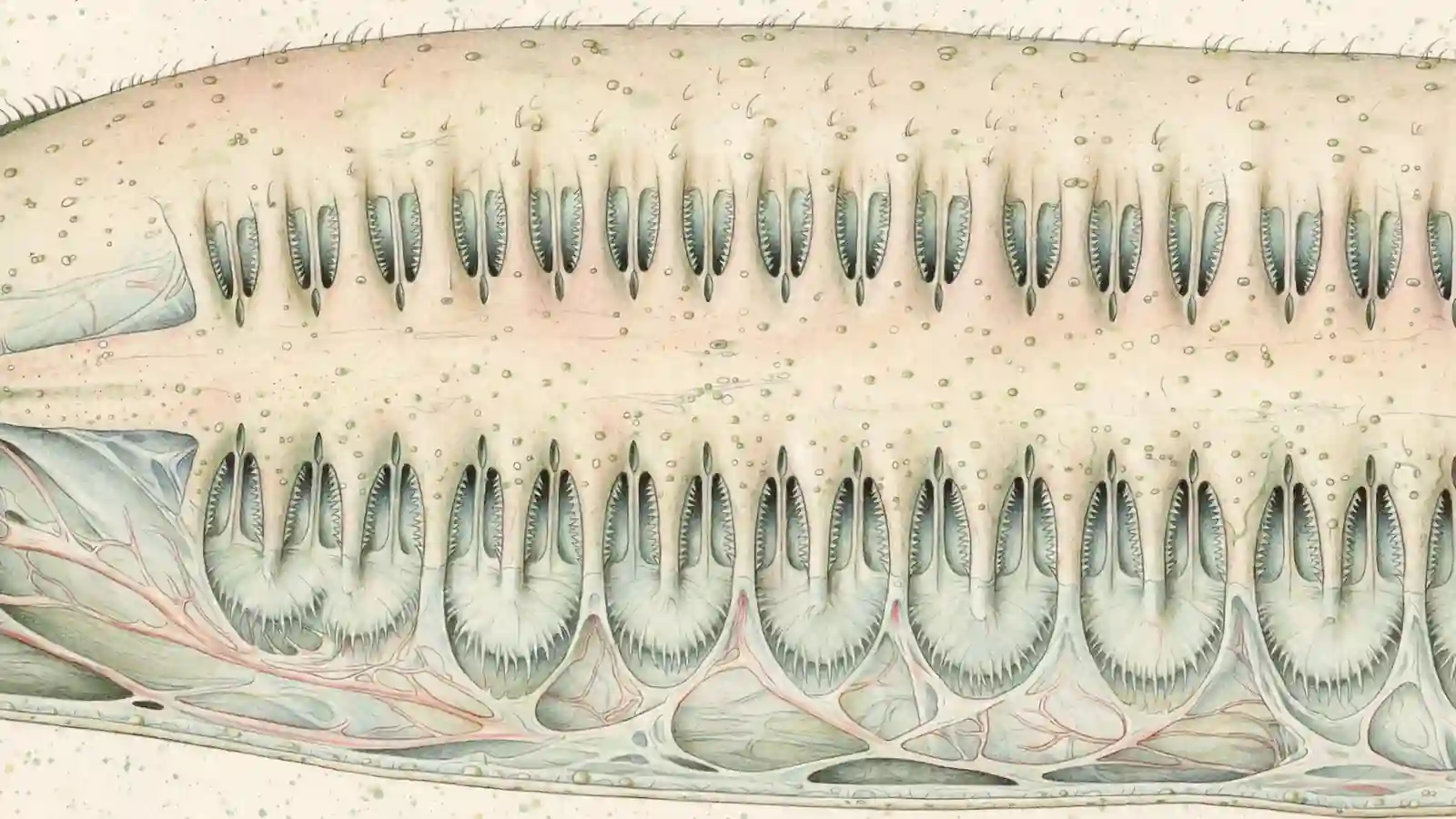
The genome work made the connection concrete. When researchers sequenced the worm genome in 2015, they found the genetic machinery for gill slits shared with vertebrates — the same developmental programme, running in a worm that never became a fish. For the full story of that discovery, see this worm genome report, which explains how a mud worm illuminated the origins of the human pharynx.
The Acorn Proboscis: A Burrowing Tool
It is named for its proboscis — a short, acorn-shaped organ at the front of the body that it uses to burrow. The worm pushes the proboscis into the mud, anchors it, and pulls the rest of the body forward, moving through the sediment like a slow, soft drill. The proboscis is the worm’s shovel and its anchor in one.
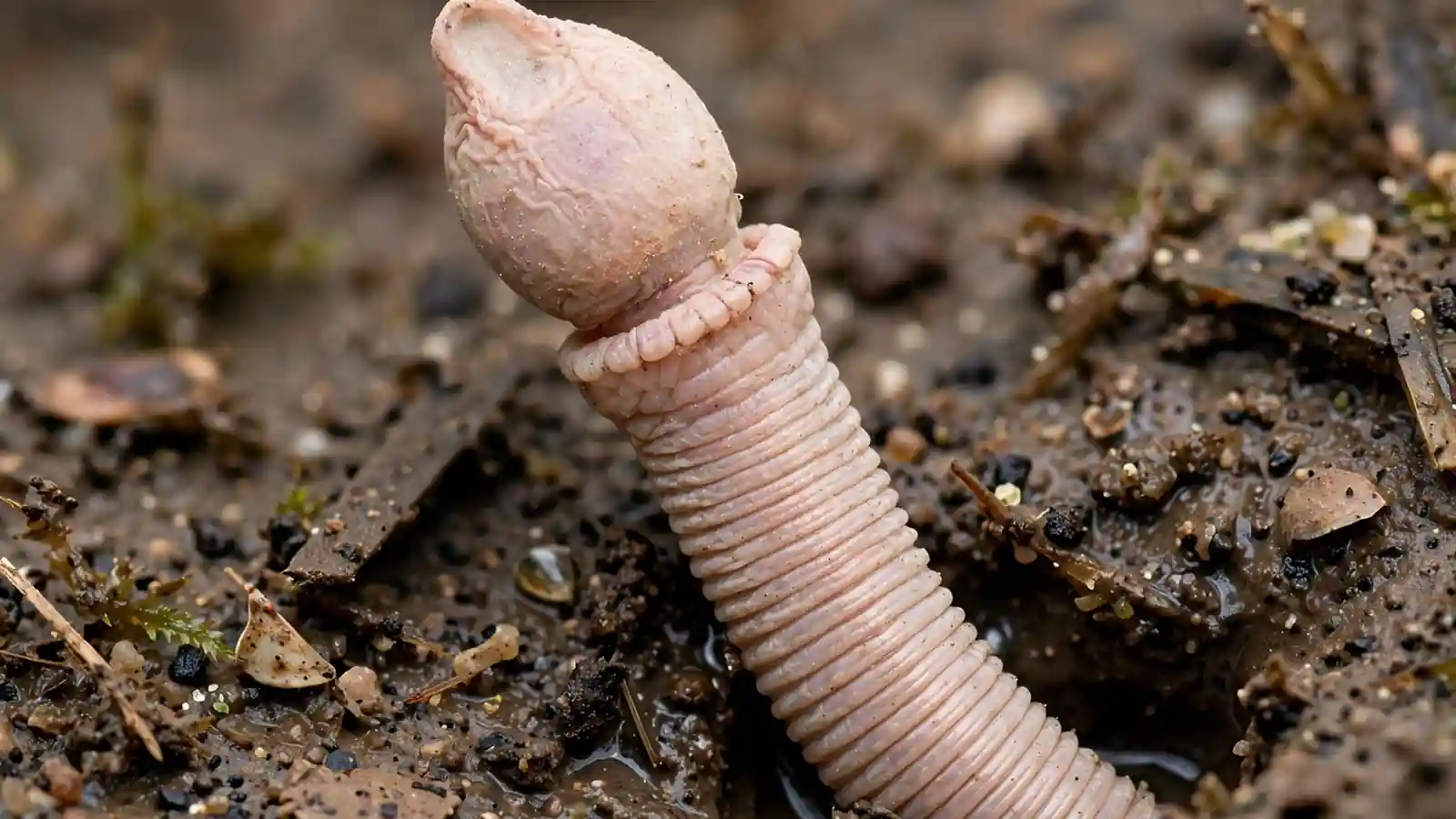
Behind the proboscis sits the collar, a ring of muscle that marks the boundary between the burrowing front end and the long, worm-like trunk. The trunk does the eating and the breathing; the proboscis does the digging. Together they make the worm a burrower first and everything else second — an animal built around a single job, done well.
Where They Live: Burrows in Mud and Sand
Acorn worms live in U-shaped burrows in shallow marine mud and sand, worldwide. The burrow is the worm’s whole world: it digs in, it feeds from the sediment around it, and it rarely leaves. The burrow casts — the small piles of processed sediment the worm leaves at the surface — are the signs of a population, and a mudflat full of casts is a mudflat full of acorn worms.
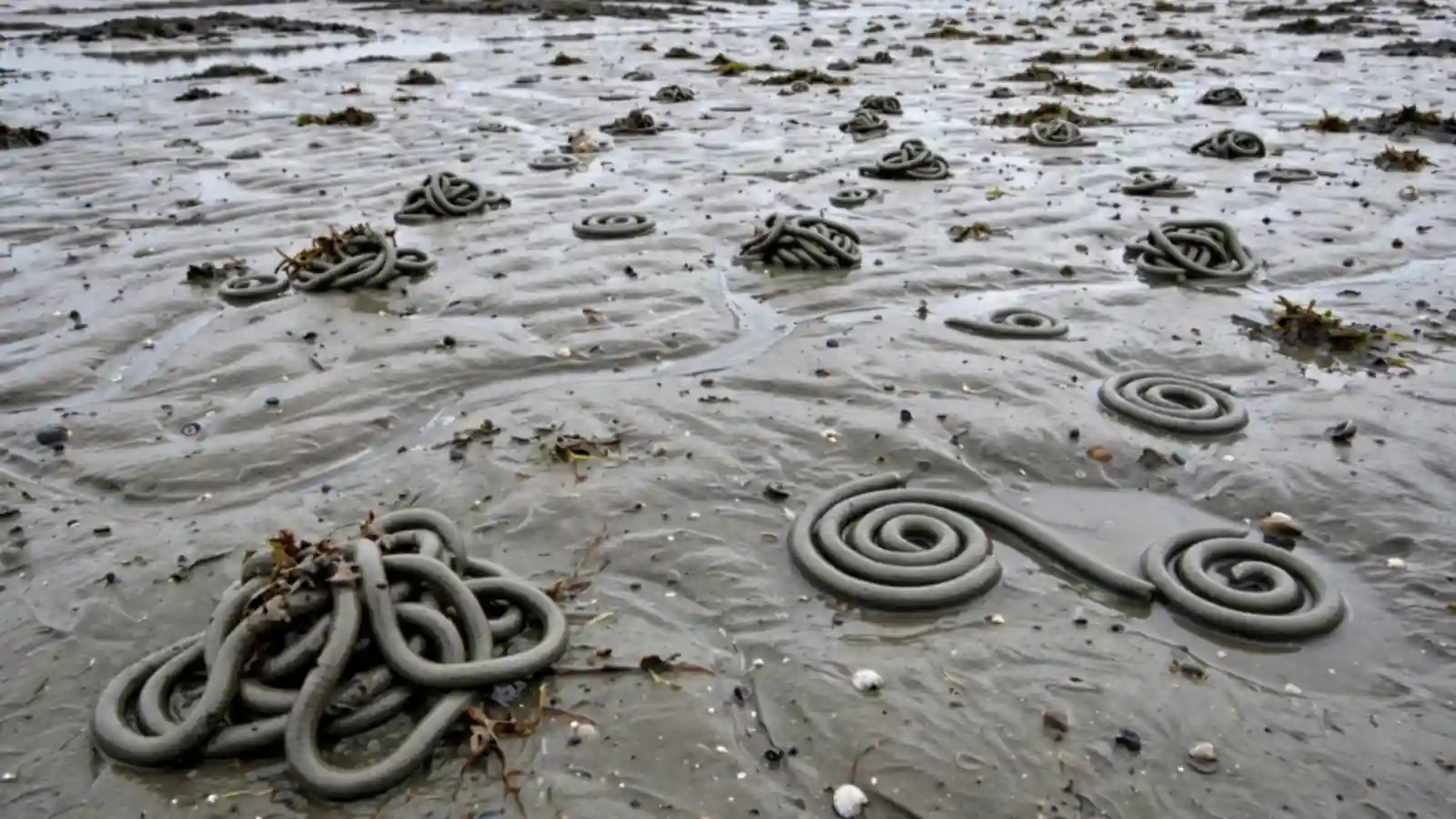
The burrows are shallow, usually in the top few centimetres of sediment, and the worm works them constantly, swallowing mud at one end and leaving casts at the other. The U-shape matters: water flows in one arm and out the other, bringing oxygen to the gill slits and carrying waste away. The burrow is a home, a feeding station and a breathing system, all dug by a proboscis.
What They Eat: Sediment, Sorted
Acorn worms are deposit feeders. They swallow sediment — mud and sand, grain by grain — and digest the organic matter in it: the dead plankton, the bacterial films, the fine detritus that settles on the seabed. What they cannot use passes through, and the processed sediment leaves as casts at the burrow mouth.
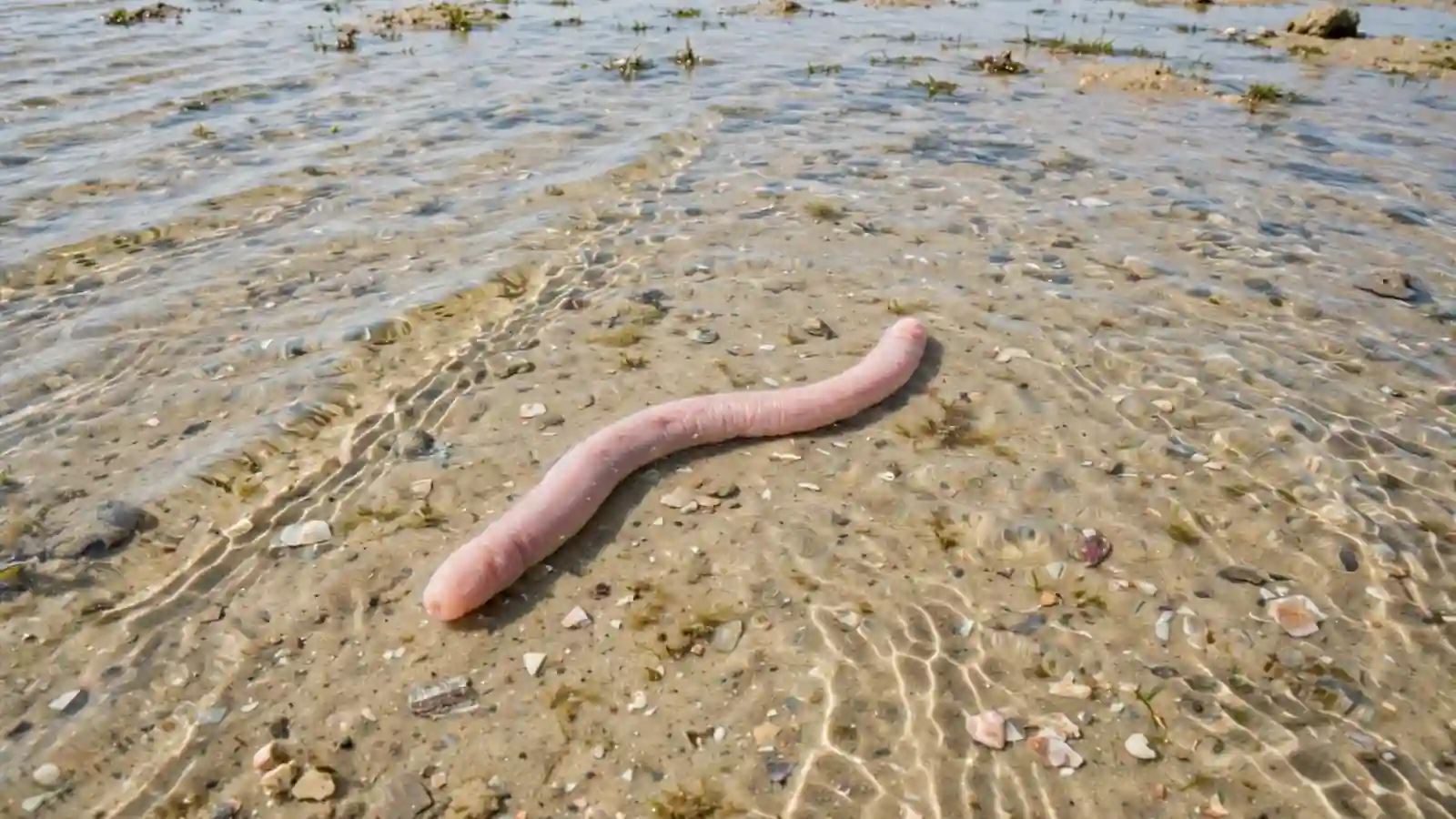
The diet is humble and the work is constant. It spends its life eating mud, and the mud it eats is poor food — mostly mineral grains with a thin coating of organics. The worm makes it pay by eating a lot of it, slowly, all day, every day. It is the seabed’s version of grazing: unglamorous, endless, and essential to the mudflat’s chemistry.
How Big Do They Get?
Acorn worms are commonly reported at 10–40 cm, though even that range is not well verified, and a 2.5 m maximum sometimes cited for the largest forms has no solid source behind it. The honest answer is that most acorn worms a person meets are a few tens of centimetres of soft, burrowing worm — and the giants of the group are claims, not measurements.
The size matters less than the shape. It is a long, soft tube with a proboscis at one end and a trunk that does the eating, and whether it is 15 cm or 40 cm it is built the same way. The largest forms, if they exist at anything near 2.5 m, would be among the longest worms in the sea — but until a verified specimen turns up, the guide prints the range with its caveat intact.
The Iodoform Smell: Why They Smell of Iodine
Acorn worms famously smell of iodoform — the sharp, medicinal smell of iodine — and the smell is strong enough that a mudflat full of them can be detected by nose before it is seen. The smell is a reported trait of the group, attributed to the worm’s bromophenol compounds, and it is one of the oldest field marks for the animal.

The chemistry is a defence, or at least it is thought to be. Bromophenols are bitter, and a worm that tastes of iodine is a worm most fish will leave alone. The smell is the worm’s advertisement: it is there, it is in the mud, and it does not taste good. Whether the compounds evolved for defence or are a by-product of the worm’s chemistry is not settled — but the smell itself is not in doubt.
Fun Facts
- It is a hemichordate — a distant cousin of all chordates, including us.
- About 70% of human genes have counterparts in acorn worms.
- Older acorn worms can carry more than 100 pairs of gill slits.
- They famously smell of iodoform — the sharp smell of iodine.
- They live in U-shaped burrows and leave casts of processed sediment at the surface.
- There are about 90 worm species, in the class Enteropneusta.
Frequently Asked Questions
What Is an Acorn Worm?
An acorn worm is a burrowing marine worm in the class Enteropneusta — a hemichordate, the sister group to echinoderms and chordates. There are about 90 species, found worldwide in shallow marine mud and sand, living in U-shaped burrows.
Why Is It Called an Acorn Worm?
Because of its proboscis — a short, acorn-shaped organ at the front of the body that it uses to burrow. The worm pushes the proboscis into the mud, anchors it, and pulls the rest of the body forward.
Are Acorn Worms Related to Humans?
Distantly, yes. Acorn worms are hemichordates, the sister group to chordates — the branch that includes every vertebrate. About 70% of human genes have counterparts in acorn worms, and their gill slits are the early form of the structures that became our throat.
How Big Do Acorn Worms Get?
Commonly reported at 10–40 cm, though even that range is not well verified, and a 2.5 m maximum sometimes cited for the largest forms has no solid source behind it. Most acorn worms a person meets are a few tens of centimetres long.
Where Do Acorn Worms Live?
In U-shaped burrows in shallow marine mud and sand, worldwide. The burrow is the worm’s whole world: it digs in, feeds from the sediment around it, and rarely leaves. Burrow casts at the surface are the signs of a population.
What Do Acorn Worms Eat?
Sediment. They are deposit feeders: they swallow mud and sand grain by grain and digest the organic matter in it — dead plankton, bacterial films and fine detritus. What they cannot use passes through and leaves as casts at the burrow mouth.
Do Acorn Worms Have Gills?
They have gill slits — pharyngeal openings in the wall of the throat — and older individuals can carry more than 100 pairs. In a fish those slits became gills; in us they became the throat and ears. The acorn worm keeps them in their original form.
Similar Species Worth Exploring
Keep Exploring
Meet the peanut worm, another unsegmented burrower, then the sea cucumber, the other deposit-feeding burrower, and browse the whole family in our types of marine worms hub — then come back to the worm that is our distant cousin, the acorn worm.