Grey Reef Shark Facts: Size, Diet and Reef Habitat
Grey Reef Shark: The Reef’s Most Common Shark
The grey reef shark is the shark you are most likely to meet on an Indo-Pacific reef — a grey, black-tailed hunter that patrols the drop-offs by day and hunts after dark.
By Emily Carter · Reviewed by our vet team · Updated 10 November 2026 · 7 min read
Most common reef sharkMax 2.6 mEndangered (2020)

At a Glance
The grey reef shark is the reef shark most divers already know, even if they do not know its name. It is the grey shark with the broad black edge on its tail, cruising the outer edge of the reef in loose daytime schools and slipping away to hunt once the light fades. This guide covers how to recognise it, where it lives, what it eats, and why a shark that was once the commonest sight on Indo-Pacific reefs is now listed as Endangered.
Grey Reef Shark Size: The Reef’s Most Common Shark

Most adult grey reef sharks measure 1.5 to 1.9 metres long, and the largest on record reached about 2.6 metres and 33.7 kg. That makes the reef shark a medium-sized reef shark — bigger than a whitetip shark, smaller than a tiger shark — and its size is part of why it dominates the reefs it lives on. Females grow slightly larger than males. For the full species record, see the reef shark profile.
The identification mark is the tail. This reef shark carries a broad black rear edge on its tail fin, dark-tipped dorsal fins and a plain grey back that fades to white underneath. The similar blacktip reef shark, by contrast, has black tips on all of its fins, not just the tail. Once you know the tail, the two are easy to tell apart.
Where Grey Reef Sharks Live: Drop-Offs and Reef Edges

Grey reef sharks live on coral reefs across the Indo-Pacific, from the Red Sea and the east coast of Africa to Hawaii and French Polynesia. They favour the outer edge of the reef — the drop-off where the shallow coral suddenly falls away into deep blue water — and they usually stay in water less than 60 metres deep.
The drop-off is where the food is. Currents push plankton and small fish up against the reef wall, and the reef shark patrols that edge in a slow, steady, patient cruise, often in the company of a dozen or more of its own kind at a time. They are strongly tied to particular reefs and tend to stay in the same area for years.
What Do Grey Reef Sharks Eat? Reef Fish After Dark

Reef fish make up most of the reef shark’s own diet, along with squid, octopus, crabs and lobsters. The shark hunts mainly after dark, when reef fish leave their daytime shelters and the reef becomes a hunting ground. It is a fast, agile swimmer for a reef shark, and it takes prey in open water rather than digging it out of the coral.
This reef shark is also a social hunter. Groups of them have been seen herding schools of small fish against the reef, taking turns to dart in and feed. The behaviour is one reason grey reef sharks are so often seen in the same places: they return to the same hunting grounds night after night.
Grey Reef Shark Behaviour: Daytime Schools on the Reef

By day the reef shark is a schooling shark. Groups gather near reef channels and passes, hanging in the current with barely a flick of the tail, sometimes in numbers that run into the dozens. The school is a resting formation as much as a social one — the sharks save energy in the current and keep watch together. Out in the open ocean beyond the reef, the bigeye thresher hunts alone instead, using its huge eyes and whip-like tail in the dark.
This reef shark is famous among divers for one piece of behaviour: when threatened, it performs an exaggerated display, arching its back, dropping its pectoral fins and swimming in tight, stiff loops. It is a warning, not an attack, and it tells other sharks — and divers — to back off.
Are They Dangerous? The Bite Record
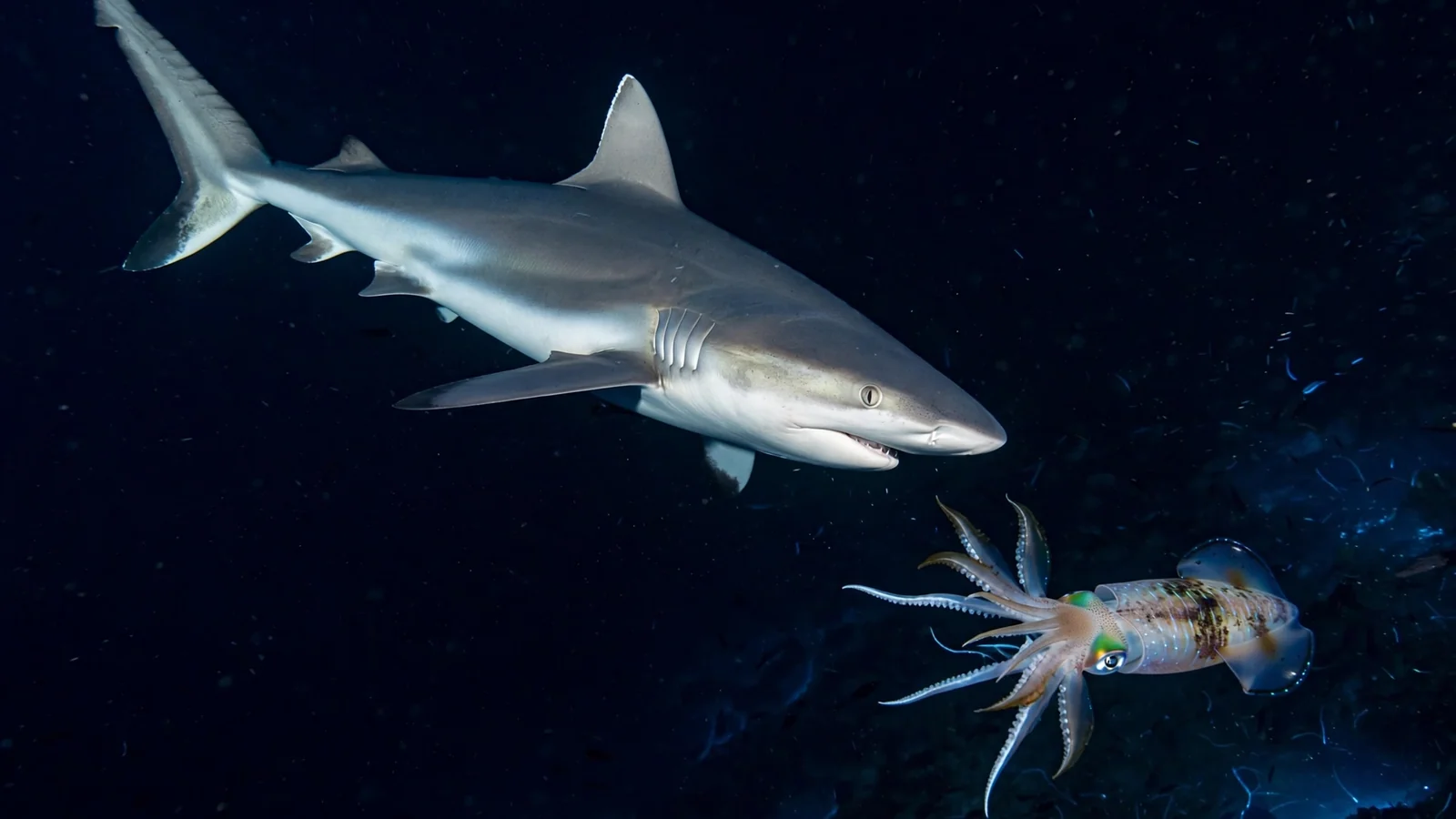
Reef shark bites are rare, almost always provoked, and none has been fatal. The shark is bold around divers and will approach closely, but it is a reef hunter, not a people hunter, and the usual trigger for a bite is a diver or angler who corners it or handles a hooked fish in front of it.
The display behaviour is the real safety lesson. A reef shark that arches its back and swims in stiff loops is telling you to leave, and divers who respect that signal never have a problem. Give the shark space, keep your hands to yourself, and the most common reef shark in the Indo-Pacific is a sight to enjoy, not a threat.
Reef Shark Reproduction: Small Litters, Slow Growth

Grey reef sharks give birth to live young after a gestation of about a year. Litters are small — usually one to six pups — and the pups are born at around half a metre long in shallow nursery areas on the reef, where the warm water and the maze of coral keep them fed and hidden from bigger sharks.
The slow pace of reef shark reproduction is the heart of its conservation problem. A female may not breed until she is several years old, and with so few pups per litter, a population that is fished hard takes a long time to recover. This reef shark grows slowly and breeds slowly, and pays for it when fishing pressure rises.
Conservation: An Endangered Reef Shark
This reef shark is listed as Endangered, a status set in a 2020 assessment after the population fell by more than half over three generations. Older guides still list it as Near Threatened, but that assessment no longer reflects what is happening on the reefs: reef fishing, the shark fin trade and the loss of coral habitat have all taken a toll.
What the reef shark needs most is exactly what every reef shark needs — healthy coral, limits on reef catch, and the drop-offs left intact. It is still the most common shark found on many Indo-Pacific reefs, which makes its decline easy to miss. A shark that is everywhere today can be gone tomorrow, and the reef shark is the living proof.
Fun Facts
- This reef shark is the most common shark on Indo-Pacific coral reefs.
- Its tail carries a broad black rear edge — the mark that separates it from the blacktip reef shark.
- When threatened, it arches its back and swims in stiff loops as a warning display.
- Grey reef sharks hunt mainly after dark, when reef fish leave their shelters.
- They gather in daytime schools near reef channels, sometimes in the dozens.
- The population has fallen by more than half over three generations.
Frequently Asked Questions
How Big Do Grey Reef Sharks Get?
Most adults measure 1.5 to 1.9 metres long, and the largest grey reef shark on record reached about 2.6 metres and 33.7 kg.
Where Do Grey Reef Sharks Live?
Grey reef sharks live on coral reefs across the Indo-Pacific, from the Red Sea to Hawaii, favouring the outer reef drop-off in water usually less than 60 metres deep.
What Do Grey Reef Sharks Eat?
The grey reef shark eats reef fish above all, plus squid, octopus, crabs and lobsters. It hunts mainly after dark and sometimes herds small fish against the reef in groups.
Are Grey Reef Sharks Dangerous to Humans?
Grey reef shark bites are rare, almost always provoked, and none has been fatal. The shark may approach divers closely, but it is a reef hunter, not a people hunter.
Why Are Grey Reef Sharks Endangered?
The grey reef shark is listed as Endangered after its population fell by more than half over three generations, driven by reef fishing, the fin trade and coral habitat loss.
How Do You Tell a Grey Reef Shark From a Blacktip Reef Shark?
Look at the tail: the grey reef shark has a broad black rear edge on its tail fin, while the blacktip reef shark has black tips on all of its fins.
How Deep Do Grey Reef Sharks Swim?
Grey reef sharks usually stay in water less than 60 metres deep, patrolling the reef drop-off where the shallow coral meets deep water.
Similar Species Worth Exploring
Keep Exploring
Still exploring reef-shark country? Meet the reef shark’s Atlantic cousin, the Caribbean Reef Shark, watch the Whitetip Reef Shark rest in its cave, size up the whole family in the Types of Sharks hub, and then come back to the drop-off to meet the grey reef shark.