Stonefish
Stonefish: the world’s most venomous fish, hiding in plain sight
The stonefish is the world’s most venomous fish and one of its best-hidden animals: a warty, rock-like hunter that sits motionless on Indo-Pacific reefs, waits for prey to wander close, and strikes in 0.015 seconds. This guide covers its venom, its size, its camouflage and the first aid that matters if you ever step on one.
By Emily Carter · Reviewed by our vet team · Updated 10 November 2026 · 12 min read
The world’s most venomous fishA strike in 0.015 secondsSurvives 24 hours out of water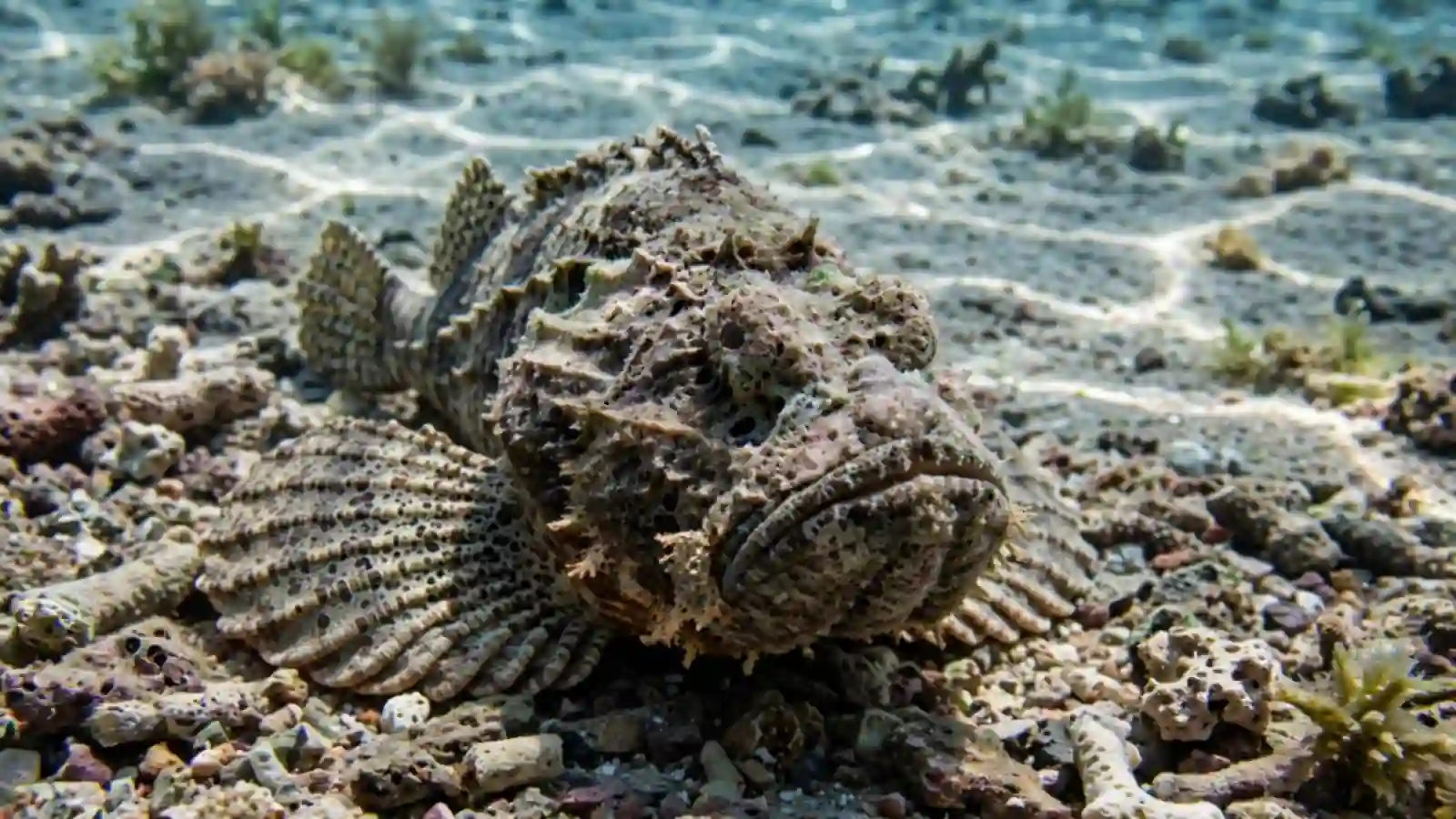
At a Glance
A stonefish announces itself with nothing at all, which is the whole point: a lump of warty, mottled skin on the reef that looks so exactly like a rock that fish swim over it, crabs walk across it and people step on it. Beneath the disguise sits the most venomous fish in the sea, an ambush hunter with thirteen venomous dorsal spines, a mouth that opens in a fraction of a blink, and a patience that can outlast the tide itself.
What Is a Stonefish?
It belongs to the genus Synanceia, a small group of five species in the family Synanceiidae, and the two best known are the reef, Synanceia verrucosa, and the estuarine, Synanceia horrida. Both are bottom-dwelling ambush hunters of the Indo-Pacific, fish that have traded swimming for stillness: they have no swim bladder, so they rest on the seabed, half-buried in sand or wedged among rocks, and let the reef come to them.
What defines it is the disguise. The skin is scaleless, warty and wart-covered, coloured in mottled browns, greys, greens and reds that match the reef, and the fish often wears a coat of algae and debris for good measure. The eyes sit high on the head and peer upward, the mouth points up too, and the pectoral fins spread wide like feet, so the whole animal reads as one more lump of rock on a reef full of lumps.
How Venomous Is a Stonefish?
It carries thirteen dorsal spines, each one grooved and tipped with venom glands, and it is the most venomous fish in the world. The venom is a complex mix that attacks nerves and muscle, and a sting brings immediate, severe pain that can spread through the whole limb, with swelling, nausea and, in the worst cases, breathing difficulty and heart trouble. Deaths are rare, but stings can be fatal without treatment, which is why every sting is treated as a medical emergency.

The venom is a defence, not a hunting tool. It never chases prey with its spines and never injects venom into the fish it eats; the spines are raised only when something presses down on the fish, which is exactly what a bare foot does. The claim that its venom is more potent than a cobra’s appears only in low-quality sources and is best left out of the story: the honest statement is strong enough on its own.
Size and Species
It grows to about 40 centimetres at most, and most of the fish you meet are nearer 27 centimetres, a hand-sized lump of reef. Weaker sources claim 50 to 60 centimetres, but the stronger sources settle around 40 centimetres as the maximum, and the reef is the smaller of the two famous species: the estuarine grows larger, heavier and wartier, and ranges into murky river mouths where its reef cousin rarely goes.
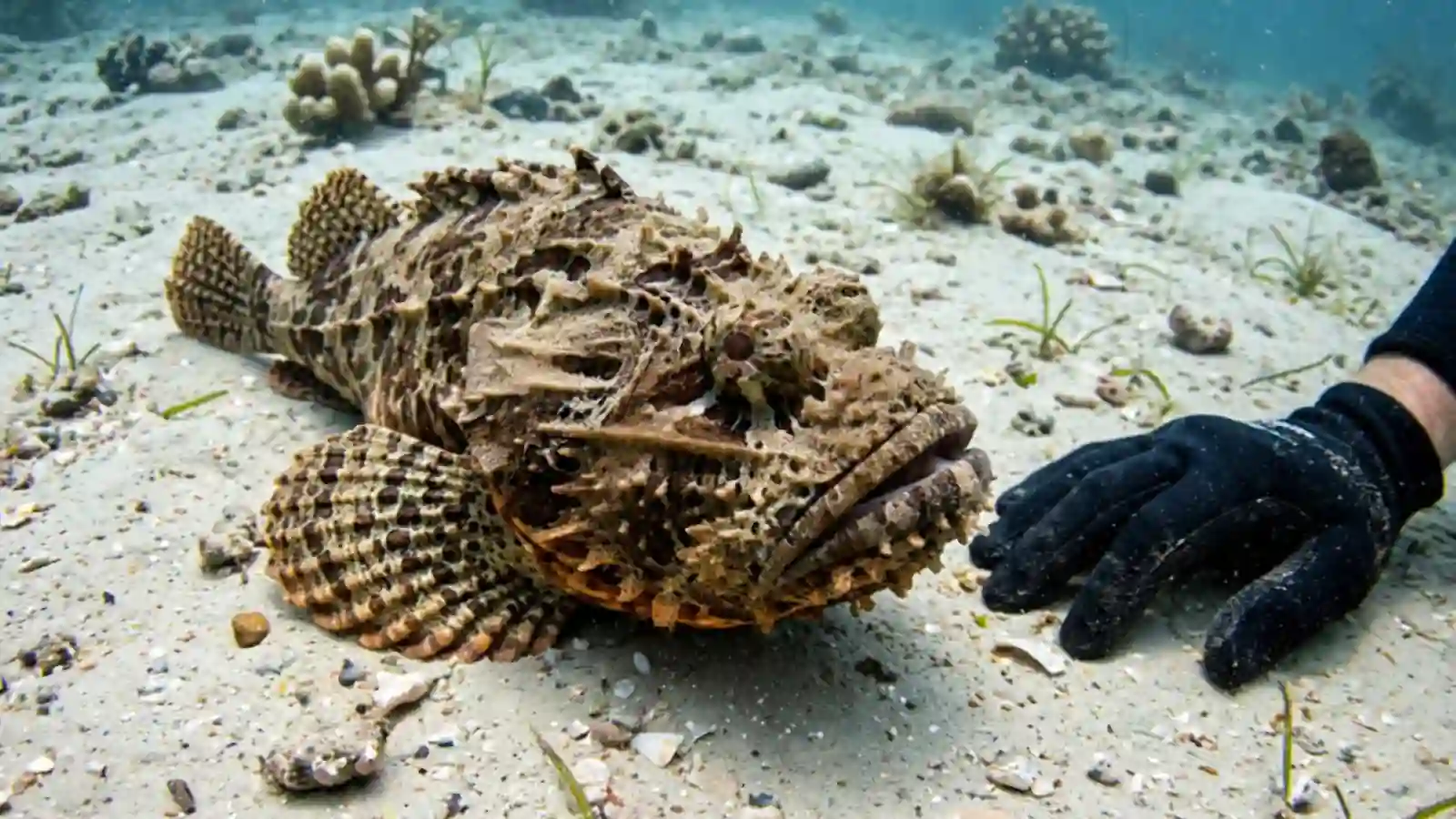
Five species share the genus, and all five follow the same plan: a warty body, thirteen spines, an upturned mouth and a life spent sitting still. The reef owns the clear-water reefs and rock pools, while the estuarine tolerates brackish water and mud, and the other three species fill the same niches across the Indo-Pacific. Telling them apart takes a specialist’s eye for wart patterns and fin shapes; for everyone else, the family resemblance is the warning.
Habitat: Reefs, Rock Pools and Estuaries
They live across the Indo-Pacific, from the Red Sea and the East African coast to the reefs of Australia and the Pacific islands, wherever warm shallow water meets rock, coral rubble or sand. They favour the places people wade: reef flats at low tide, rock pools, sandy patches between corals, and the muddy edges of estuaries, sitting half-buried with only the eyes and the spine tips showing. The species account maps the full distribution and the five species in detail.
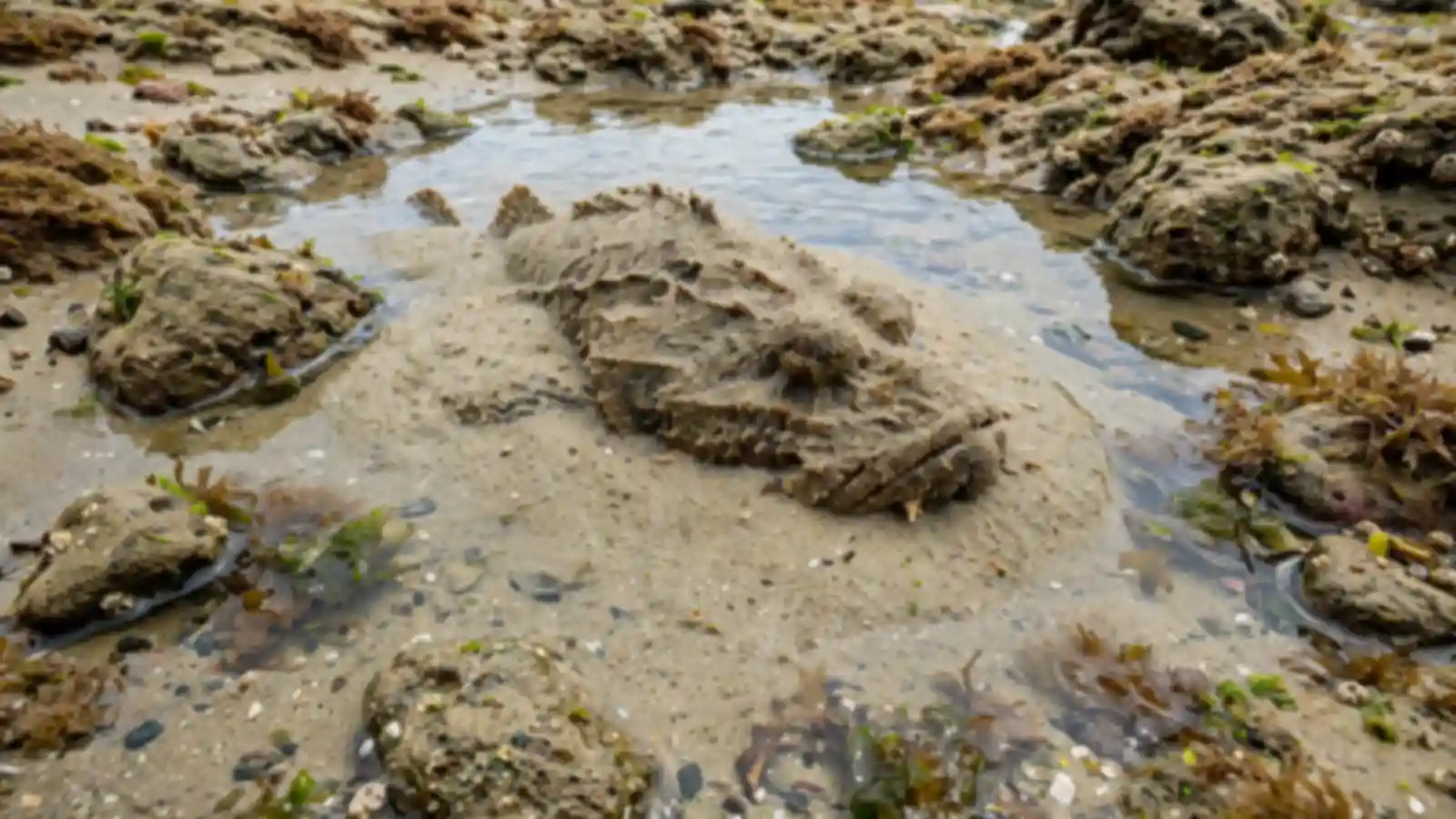
They are as comfortable out of the water as in it, for a while at least: one can survive up to 24 hours out of water, kept moist by its slimy skin, which is why a fish left on the sand at low tide is still dangerous to step on. The tide, not the fish, sets the schedule, and the animal simply waits where the water left it, spines up, for the sea to come back.
Hunting and Camouflage: The Lightning Strike
It hunts by not hunting at all. It settles on the bottom, matches the rock around it, and waits for a small fish or shrimp to drift within reach, and then the mouth opens in 0.015 seconds, one of the fastest strikes of any fish, sucking the prey in whole before the victim has time to react. The speed is the whole strategy: a fish that cannot swim well must be faster than the prey it cannot chase.
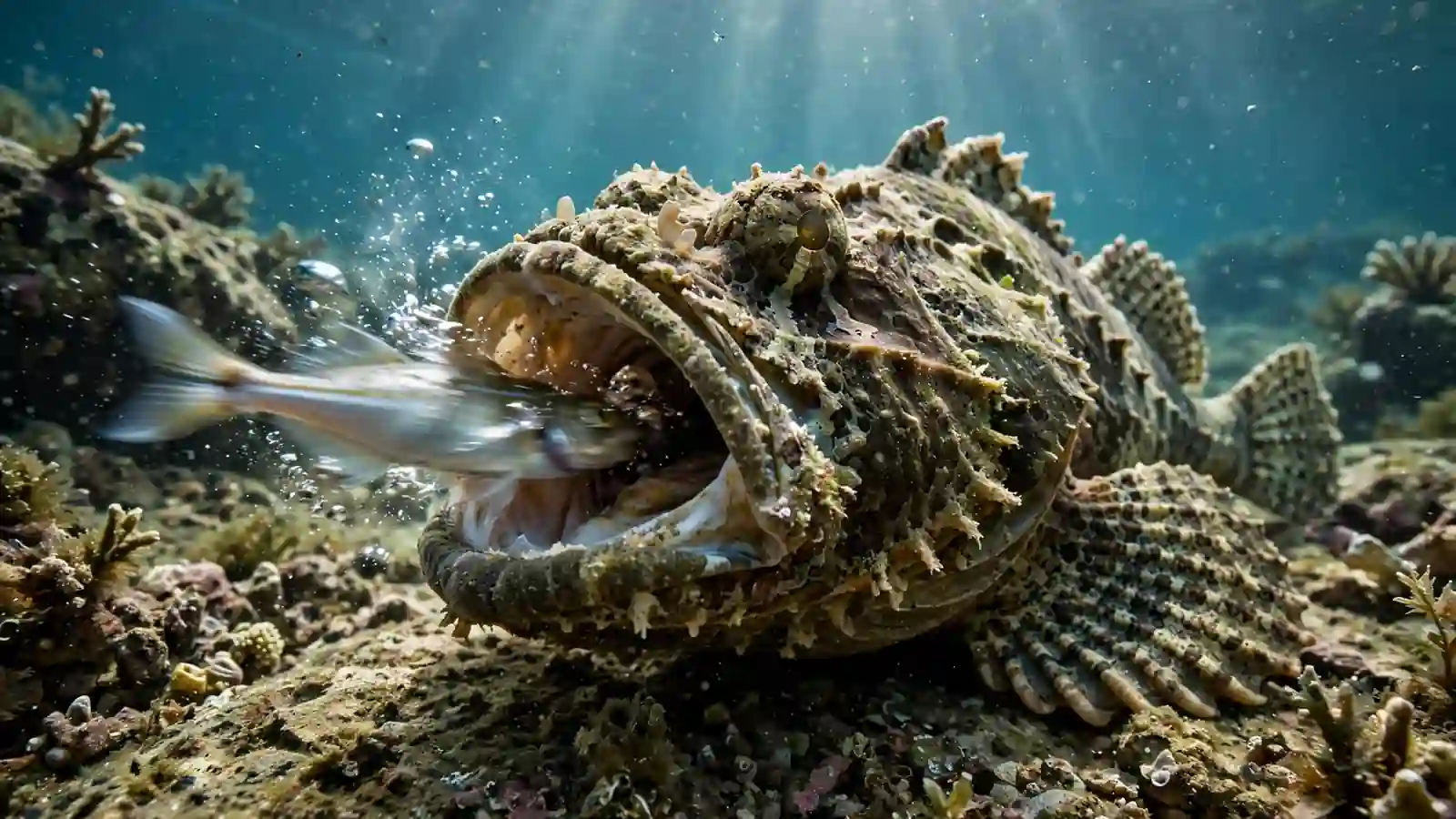
The camouflage does double duty, hiding the hunter from prey and from predators at the same time. Algae grows on the warty skin, sand settles into the crevices, and the fish will even flick sand over its own back with its pectoral fins, burying itself to the eyes. Only the upward-staring eyes betray it, and only if you are looking for them, which is why it is the fish most often stepped on and least often seen.
Stings, First Aid and Antivenom
Most stings happen the same way: a bare foot on a reef flat or a hand reaching into a rock pool presses down on the spines, and the venom goes in. The pain is immediate and severe, often described as the worst pain the victim has ever felt, and it can spread up the limb with swelling, numbness, nausea and muscle weakness. The first step is always the same: get out of the water, keep the limb still, and seek medical help at once.
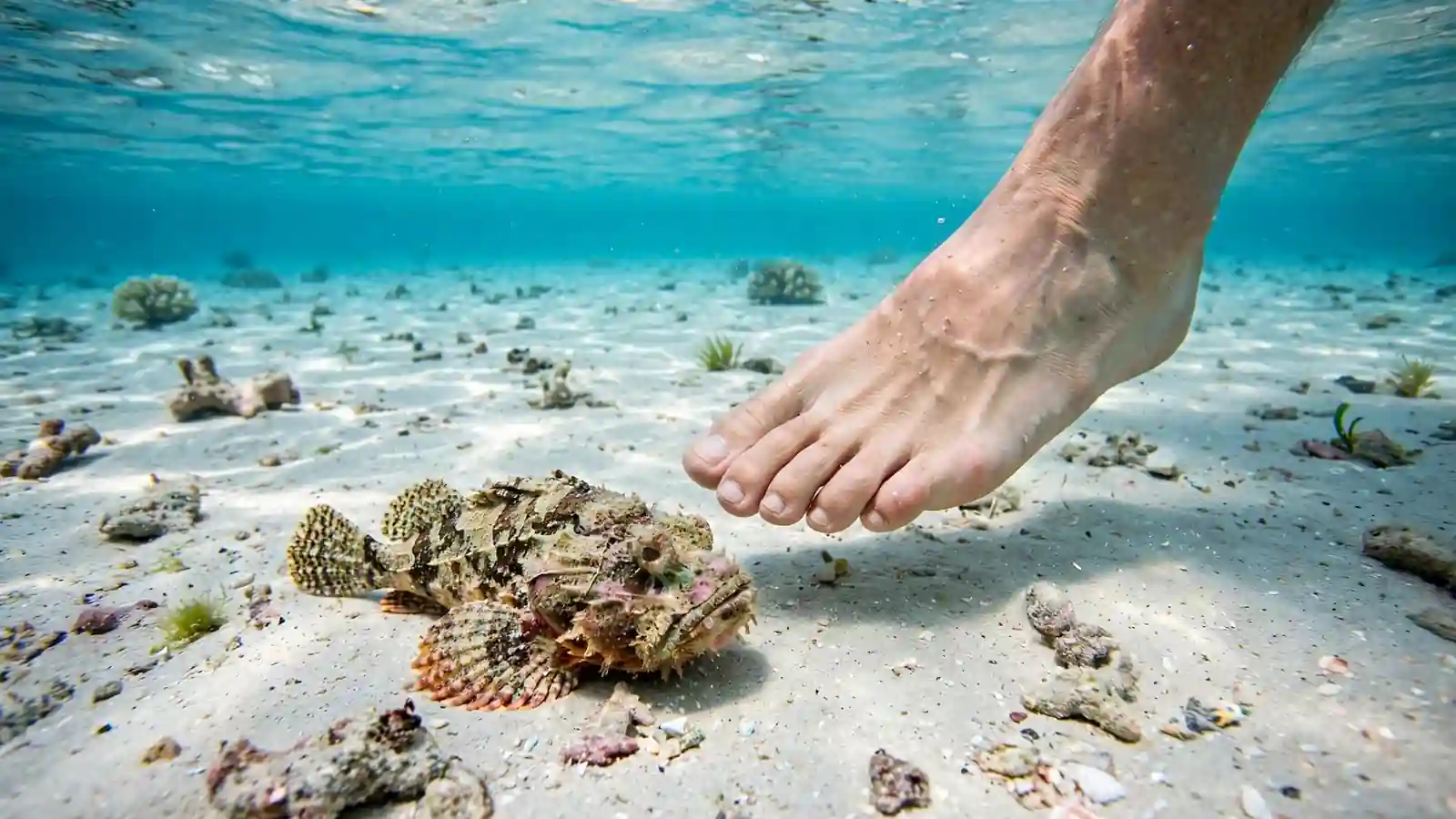
The standard first aid is hot water. Immersing the stung area in water as hot as the victim can tolerate, around 45 degrees Celsius, for 30 to 90 minutes breaks down much of the venom and eases the pain, and it is the advice given across the Indo-Pacific wherever they live. Australia developed an antivenom for the worst cases, and it is used in hospitals for severe stings, but hot water and fast medical care are what most victims need, and the shuffle-step — sliding the feet along the sand instead of stepping — is what keeps most people safe.
Venomous Look-Alikes: Scorpionfish and Lionfish
It has two famous venomous cousins, and the three are constantly confused. The scorpionfish shares the family tree and the ambush habit, but it is a more ordinary-looking fish with scales, a less warty body, and eleven to seventeen dorsal spines depending on the species, where it always has thirteen. The lionfish is the flamboyant one, all flowing striped fins and long spines, advertising its venom where it hides it.

The rule for all three is the same: look, do not touch, and shuffle your feet on reef flats. A lionfish you can see coming, a scorpionfish you might spot if you look hard, and one you will not see at all until it is too late, which is why it, not its showier cousins, causes the most trouble. Learn the thirteen spines and the rock-like lump, and the reef gets a little safer.
Fun Facts
- It strikes in 0.015 seconds, one of the fastest strikes of any fish in the sea.
- It can survive up to 24 hours out of water, kept moist by its slimy skin.
- It has exactly thirteen venomous dorsal spines, every one of them grooved and venom-tipped.
- It has no swim bladder, so it rests on the bottom instead of swimming in open water.
- Algae grows on its warty skin, and the fish flicks sand over its own back to finish the disguise.
- Australia developed an antivenom for its stings, used in hospitals for the worst cases.
Frequently Asked Questions
How venomous is a stonefish?
Very. It is the most venomous fish in the world, with thirteen venom-tipped dorsal spines. Its venom attacks nerves and muscle, and a sting causes immediate severe pain that can spread through the whole limb, with swelling, nausea and, in bad cases, breathing or heart trouble.
Can a stonefish sting kill you?
Rarely, but yes. Deaths are rare, yet stings can be fatal without treatment, which is why every sting is treated as a medical emergency. Fast medical care, hot-water first aid and, in severe cases, antivenom make a fatal outcome unlikely.
What should you do if you step on a stonefish?
Get out of the water, keep the limb still, and seek medical help at once. Immerse the stung area in water as hot as you can tolerate, around 45 degrees Celsius, for 30 to 90 minutes — hot water breaks down much of the venom. Do not apply a tourniquet or try to suck the venom out.
How big do stonefish get?
About 40 centimetres at most, and most are nearer 27 centimetres. The estuarine grows larger and heavier than the reef. Claims of 50 to 60 centimetres appear on weaker sources and are best ignored.
Where do stonefish live?
Across the Indo-Pacific, from the Red Sea and East Africa to Australia and the Pacific islands. They favour warm shallow water: reef flats, rock pools, sandy patches between corals and the muddy edges of estuaries, sitting half-buried with only the eyes showing.
What do stonefish eat?
Small fish, shrimp and other crustaceans. It is an ambush hunter: it sits motionless, camouflaged as a rock, and sucks prey in whole with a mouth that opens in 0.015 seconds. It never chases its food.
How is a stonefish different from a scorpionfish?
It is scaleless, wartier and rock-like, with exactly thirteen dorsal spines and no swim bladder. A scorpionfish has scales, a more ordinary fish shape, and eleven to seventeen dorsal spines depending on the species. Both are venomous ambush hunters of the same family tree.
Similar Species Worth Exploring
Keep Exploring
Keep exploring the venomous reef: meet the mottled ambush hunter in our scorpionfish guide, or browse the whole reef in the types of reef fish. Then come back to the rock that is not a rock at all: the stonefish.