Heart Urchin Facts: The Burrowing Sea Potato Guide
Heart Urchin Facts: The Burrowing Sea Potato Guide
The heart urchin hides twenty centimetres under the sand in a mucus-lined burrow, gathering food with long tube feet — and most people only ever see its white shell, washed up on a beach and mistaken for a stone.
By Emily Carter · Reviewed by our vet team · Updated 10 November 2026 · 9 min read
The burrowing sea potato20 cm under the sandNo lantern mouth
At a Glance
The heart urchin is the sea urchin you never see. Echinocardium cordatum, the common urchin — also called the sea potato, the same animal under a second name — lives buried in the sand, ten to twenty centimetres down, in a mucus-lined burrow it digs with its spines. It has no lantern mouth, no grazing teeth, and no spiny ball to show the world. It has a heart-shaped shell, a burrow, and a life spent underground.
Heart Urchin Size: A 6 to 9 cm Heart
It grows to six to nine centimetres long, and its shape is the giveaway: the test is heart-shaped, longer than it is wide, with a broad front and a pointed back, like a Valentine’s heart drawn in shell. The shape is not a decoration — it is the shape of a burrower, streamlined for pushing through sand, with the front end leading and the back end trailing.
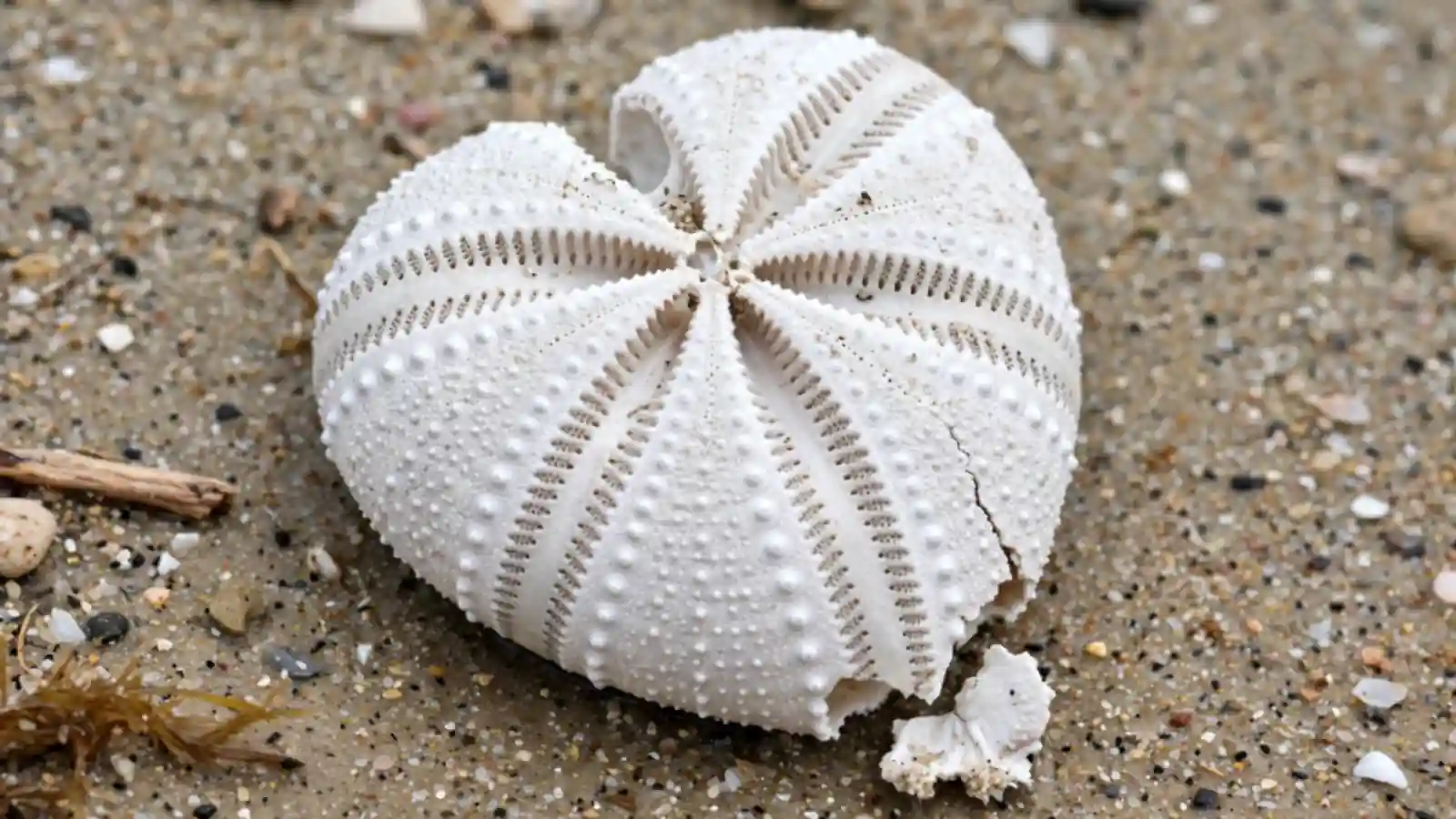
The test is thin and fragile compared with a purple sea urchin’s armoured ball, because a burrower does not need armour — it needs to be light enough to move through sand and thin enough to let water pass. The spines are short and fine, more like bristles than spikes, and they lie flat against the test, pointing backward, so the animal can slide through the sand without snagging.
The size is about the burrow. A six-to-nine-centimetre urchin digs a burrow ten to twenty centimetres deep, and the burrow is only a little wider than the animal itself. A larger animal would need a larger burrow, and a larger burrow would collapse more easily — so its size is set by the sand it lives in, and the sand sets the limit.
Heart Urchin vs Sea Potato: The Same Animal
It and the sea potato are the same animal. Echinocardium cordatum is called the common urchin for its heart-shaped test, and the sea potato for the white, potato-like shell that washes up on beaches — and both names describe the same species. The confusion is understandable: the living animal is a bristly, heart-shaped urchin buried in the sand, and the dead shell is a smooth, white, potato-shaped stone on the beach, and the two look nothing alike.

The shell is what most people meet. When an urchin dies, its spines fall off and its test washes up on the beach, bleached white by the sun, and beachcombers pick it up and call it a sea potato. The living animal is rarely seen, because it lives buried, and the shell is the only evidence most people ever have that the animal exists at all.
The ThoughtCo urchin profile explains the sea potato name and the animal’s buried life, and it is worth remembering the rule: if it is white, smooth and potato-shaped on a beach, it is its shell. If it is bristly, heart-shaped and buried in the sand, it is the living animal. Same species, two appearances.
How Heart Urchins Burrow: The Fasciole Band
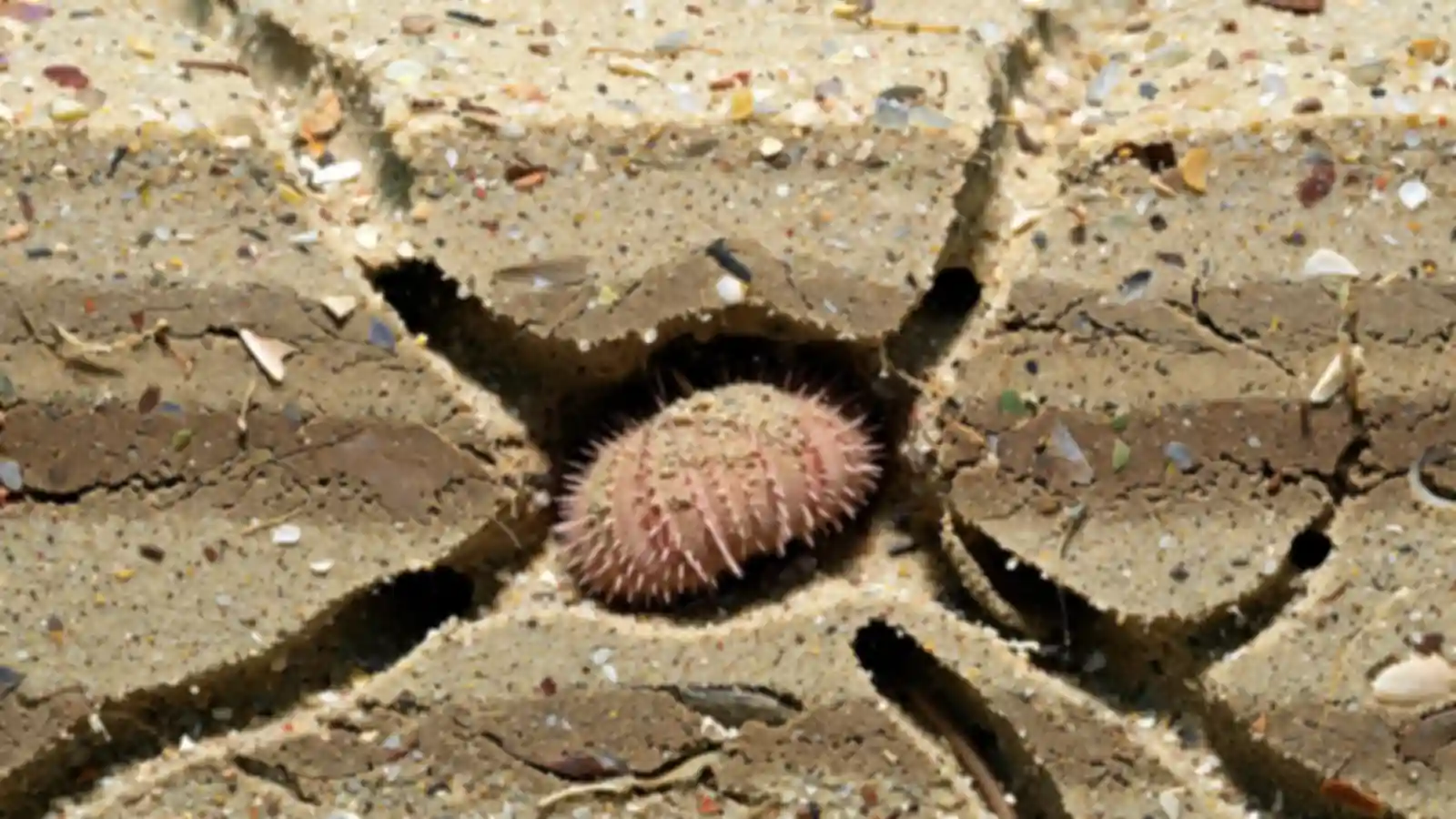
It digs with its spines. The short, bristle-like spines on the underside push the sand aside, and the animal sinks into the seabed, burrowing down ten to twenty centimetres until it is fully underground. The burrow is lined with mucus, which the urchin secretes to hold the sand in place, and the animal lives in its mucus-lined tunnel, safe from predators and from the surge.
The key to the burrow is the fasciole — a band of tiny, specialised spines that runs around the test like a belt, and whose job is to keep water flowing through the burrow. The fasciole spines beat in waves, drawing fresh, oxygenated water down into the burrow and flushing stale water out, so the buried animal can breathe. Without the fasciole, the burrow would be a tomb; with it, the burrow is a home.
The burrow is also its defence. Buried twenty centimetres down, the animal is safe from fish, crabs and birds, and the only evidence of its presence is a small depression in the sand above the burrow, and sometimes a faint trail where the fasciole’s water current disturbs the surface. A beach walker can stand on its burrow and never know it is there.
What Do Heart Urchins Eat?
It eats the sand itself — or rather, the organic particles in the sand. It gathers food with long, sticky tube feet that reach out from the burrow and pick up detritus, the tiny fragments of dead plants and animals that settle on the seabed, and it passes the particles to its mouth, which sits on the underside of the test. The diet is humble, but it is also abundant: the sand is full of organic matter, and the urchin never goes hungry.

The feeding is the reason it has no Aristotle’s lantern. The lantern is a grazing jaw, built for biting kelp and scraping rock, and a burrower that eats particles from the sand has no use for it. Its mouth is a simple opening, and its feeding is a matter of gathering, not biting. The absence of the lantern is the key difference between an urchin and a purple sea urchin, and it is written on the animal’s whole body.
The tube feet are its hands. They are longer than the spines, they are sticky, and they can reach out of the burrow to gather food from the surface, pulling particles down into the tunnel. An urchin in its burrow is a quiet, patient feeder, gathering what the sea brings and asking for nothing more.
Where They Live: Sandy Seabeds Worldwide
Heart urchins live on sandy seabeds around the world, in shallow water and in the deep sea, wherever the sand is fine enough to burrow in and the organic matter is rich enough to eat. Echinocardium cordatum is found in the north-east Atlantic and the Mediterranean, and its relatives live in every ocean, from the tropics to the poles, in water from a few metres down to hundreds of metres.
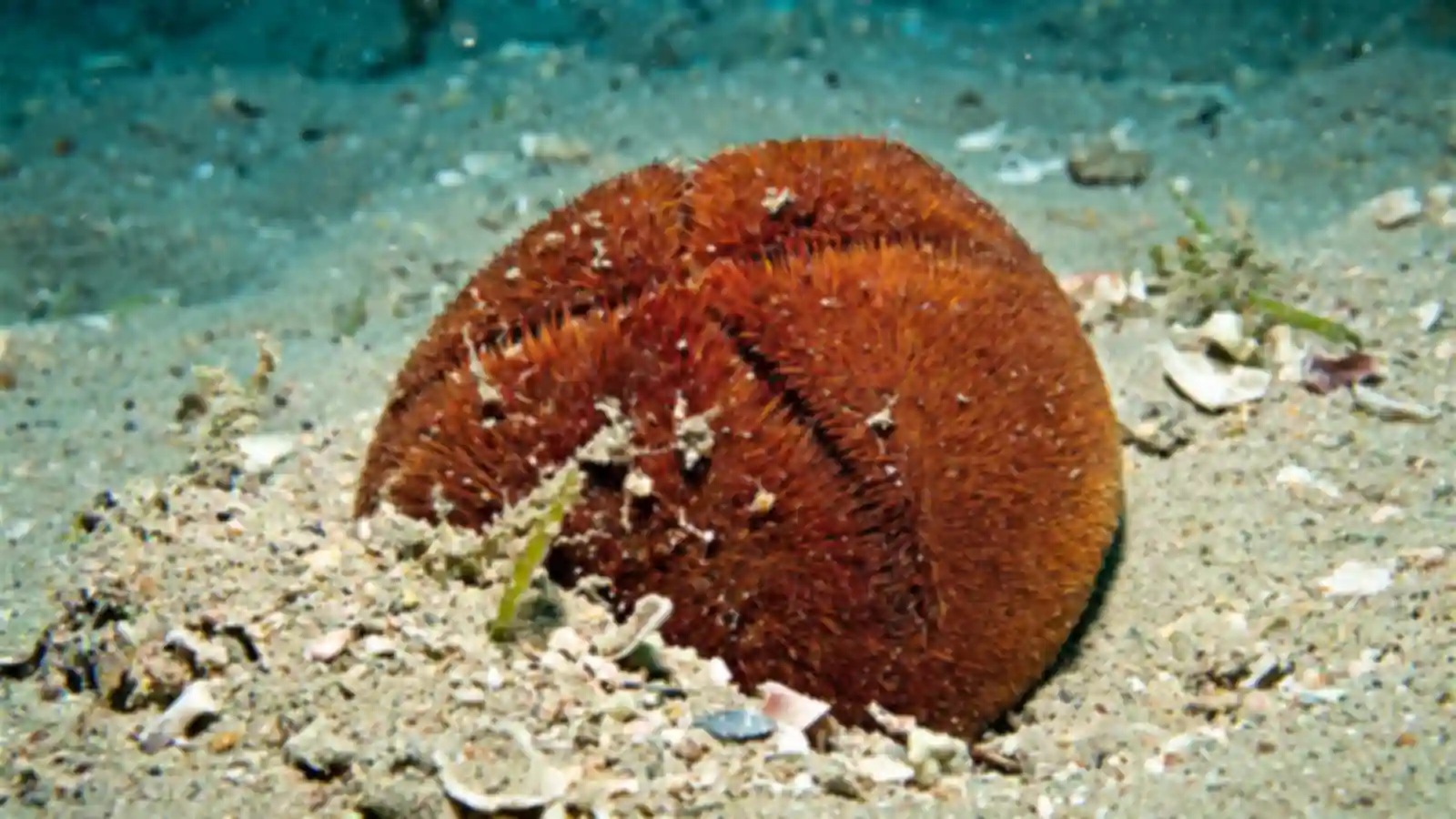
The habitat is defined by the sand, not the depth. It needs fine, soft sediment that it can burrow through, and it needs a steady supply of organic particles settling from the water above. A rocky seabed is useless to it, and a muddy seabed is too sticky — the animal needs sand, and it needs sand that is clean enough to breathe through and rich enough to eat from.
The red urchin, Meoma ventricosa, is a larger relative that lives in the western Atlantic and the Caribbean, and it burrows faster than its common cousin — three to six centimetres an hour, a pace that lets it move through the sand almost as fast as a person can walk. It is a secondary example, not the lead species, but it shows how far its burrowing life can go.
Lifespan and Predators
Its lifespan is not precisely known, but it is a slow-growing animal that lives for several years, and its buried life protects it from most of the dangers that kill other urchins. An urchin in its burrow is safe from fish, crabs and birds, and the only predators that can reach it are the ones that can dig — flatfish that root in the sand, and crabs that can excavate a burrow.

The main threat is not a predator but a disturbance. A storm that scours the seabed can expose the burrows, and a trawl that drags across the sand can crush the animals in their tunnels. Its defence is burial, and anything that disturbs the sand disturbs the animal. A beach that loses its heart urchins has usually lost them to something that moved the sand, not to something that ate them.
The shell is its legacy. When the animal dies, its test washes up on the beach as a sea potato, and beachcombers have been collecting them for centuries without ever seeing the living animal. The white shell on the beach is the only evidence most people have that the urchin exists — and it is a reminder that the most familiar beach finds are often the remains of animals that lived their whole lives out of sight.
Fun Facts
- It and the sea potato are the same animal — the shell is the dead urchin’s test.
- It burrows 10 to 20 cm down and lines its burrow with mucus.
- The fasciole band beats like a belt of tiny spines, pumping water through the burrow.
- It has no Aristotle’s lantern — the key difference from a purple sea urchin.
- The red urchin burrows 3 to 6 cm an hour, almost as fast as a person walks.
- Most people only ever see the white shell washed up on a beach.
Frequently Asked Questions
What is a heart urchin?
The heart urchin is Echinocardium cordatum, a burrowing sea urchin in the order Spatangoida, named for its heart-shaped test. It lives buried 10 to 20 cm under the sand in a mucus-lined burrow, gathering organic particles with long tube feet. It is also called the sea potato, the same animal under a second name.
Is a sea potato the same as a heart urchin?
Yes. The sea potato is the common heart urchin’s other name, taken from the white, potato-like shell that washes up on beaches. The living animal is a bristly, heart-shaped urchin buried in the sand; the dead shell is a smooth, white, potato-shaped stone on the beach. Same species, two appearances.
How do heart urchins burrow?
With their spines. The short, bristle-like spines push the sand aside, and the animal sinks 10 to 20 cm down, lining the burrow with mucus to hold the sand in place. A band of specialised spines called the fasciole beats in waves to pump fresh, oxygenated water through the burrow so the buried animal can breathe.
Do heart urchins have Aristotle’s lantern?
No — and that is the key difference from a purple sea urchin. The lantern is a grazing jaw for biting kelp, and a heart urchin that eats organic particles from the sand has no use for it. Its mouth is a simple opening, and it feeds by gathering particles with long, sticky tube feet.
Where do heart urchins live?
On sandy seabeds around the world, in shallow water and in the deep sea, wherever the sand is fine enough to burrow in and rich enough in organic matter to eat. Echinocardium cordatum is found in the north-east Atlantic and the Mediterranean; its relatives live in every ocean.
What do heart urchins eat?
Organic particles in the sand — the tiny fragments of dead plants and animals that settle on the seabed. Long, sticky tube feet reach out from the burrow to gather detritus and pass it to the mouth on the underside of the test. The diet is humble but abundant, and the heart urchin never goes hungry.
Are heart urchins endangered?
The heart urchin is not formally assessed by IUCN, so this guide does not print an IUCN status. The main threat is disturbance of the seabed: storms that scour the sand and trawls that drag across it can expose or crush the animals in their burrows. Buried 20 cm down, they are safe from most predators.
Similar Species Worth Exploring
Keep Exploring
Twenty centimetres down, in a mucus-lined burrow, the heart-shaped urchin gathers what the sea brings — keep exploring the heart urchin.