Blobfish
Blobfish: the deep-sea fish behind the world’s ugliest photo
The blobfish is not really a blob at all. In its deep-sea home, a kilometre below the waves, it looks like a perfectly ordinary fish, held in shape by crushing water pressure. The famous droopy face exists only in photographs of dead specimens hauled to the surface. Here is what this misunderstood fish really looks like, where it lives, what it eats and why its fame hides a serious conservation story.
By Emily Carter · Reviewed by our vet team · Updated 10 November 2026 · 9 min read
Length up to 30 cmLives 600–1,200 m deepVoted world’s ugliest animal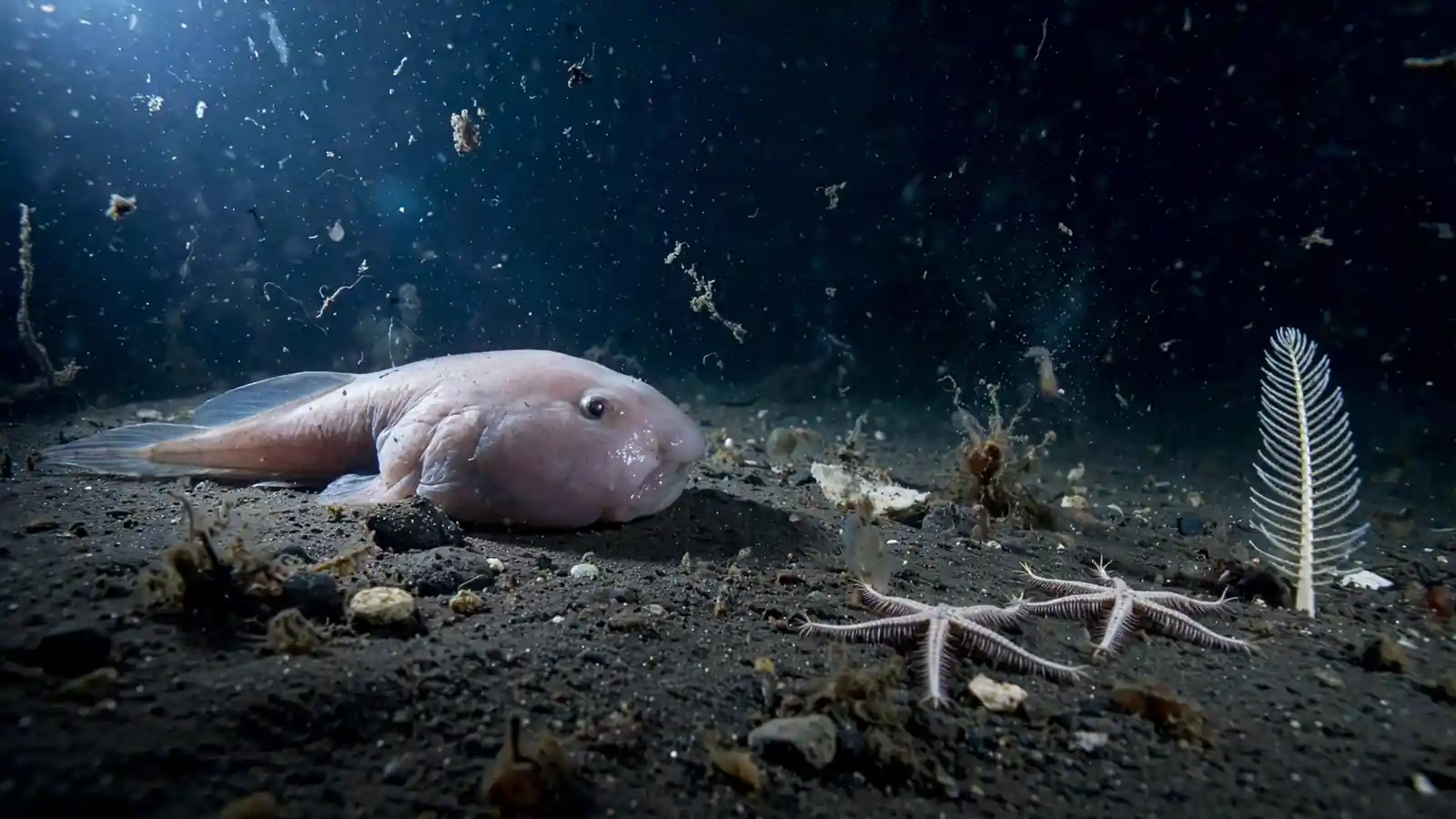
At a Glance
The blobfish is famous for one photograph above all others: a pale, melting face with a downturned mouth, like a grumpy old man made of jelly. That single image won it a global title no animal would want, yet almost everything about the picture is an accident of physics. To understand the real animal, you have to follow it back down into the dark water where it actually lives.
Blobfish Size and Weight
It is a much smaller animal than its fame suggests. Adults grow to about 30 centimetres (12 inches) long — roughly the length of a school ruler — and most are a little shorter. The head accounts for a large share of that length: this is a big-headed, tadpole-shaped fish whose body tapers steadily from its broad snout to a narrow tail, built for a life spent sitting still.
Weight is harder to pin down, because the body is mostly water. There is very little muscle and the bones are soft and light, so this fish weighs far less than a firmer fish of the same length. That lightness is deliberate design rather than weakness. On the seabed where it lives, heavy armour and powerful muscles would waste energy the deep sea never repays, and everything about this fish is pared down to the minimum needed to survive.

Its proportions place it firmly among the sculpins, a family of mostly bottom-dwelling fishes, and its relatives share the same big head and tapering tail. You can browse the full species record for Psychrolutes marcidus to see how scientists classify it among the other fatheads. Among its kin it is unremarkable to look at — which is exactly the point. The celebrity face is the oddity, not the fish.
What Does a Blobfish Really Look Like?
Down where it belongs, it looks like a fish. The body is pinkish-grey, the skin loose and scaleless, and the head broad, with a wide mouth and small eyes set high. Short, feathery pectoral fins stick out behind the gills like little fans, and the whole animal has the soft, tadpole outline of its sculpin relatives. Nothing about it sags, because the water itself does the holding up: hundreds of metres down, the pressure squeezing in from every side presses the gelatinous body into its natural shape.

The famous photograph shows something else entirely: a dead specimen, nicknamed Mr Blobby, that was trawled up from deep water near New Zealand in 2003. It has no swim bladder and almost no rigid structure, because at depth it does not need any. Hauled upward through hundreds of metres of falling pressure, the body loses its support. Tissues relax and spread, the skin is torn by the net, and the face collapses into the drooping, human-like expression the world fell in love with. Judging this fish by that photograph is like judging a person by a portrait taken in a vacuum. The animal in the picture is not ugly. It is injured, out of its element, and dead.
The joke became official in 2013, when a public vote chose it as the world’s ugliest animal and made it the mascot of a campaign for overlooked, unglamorous species. The scientists behind the vote were making a serious point about conservation bias, but the internet kept the crown and forgot the context. The fish in its habitat never got the memo: it simply looks like what it is, a soft-bodied sculpin doing quiet work on the seabed.
Where Do Blobfish Live? Habitat and Depth
They live on the continental slope off the southern and eastern coasts of Australia, including the waters around Tasmania, and their close relatives swim in deep water near New Zealand. They are bottom fish through and through, resting on or hovering just above the seabed at depths between about 600 and 1,200 metres (2,000 to 3,900 feet). Almost no sunlight reaches even the top of that range, and at the bottom of it the water is pitch black and only a few degrees above freezing.
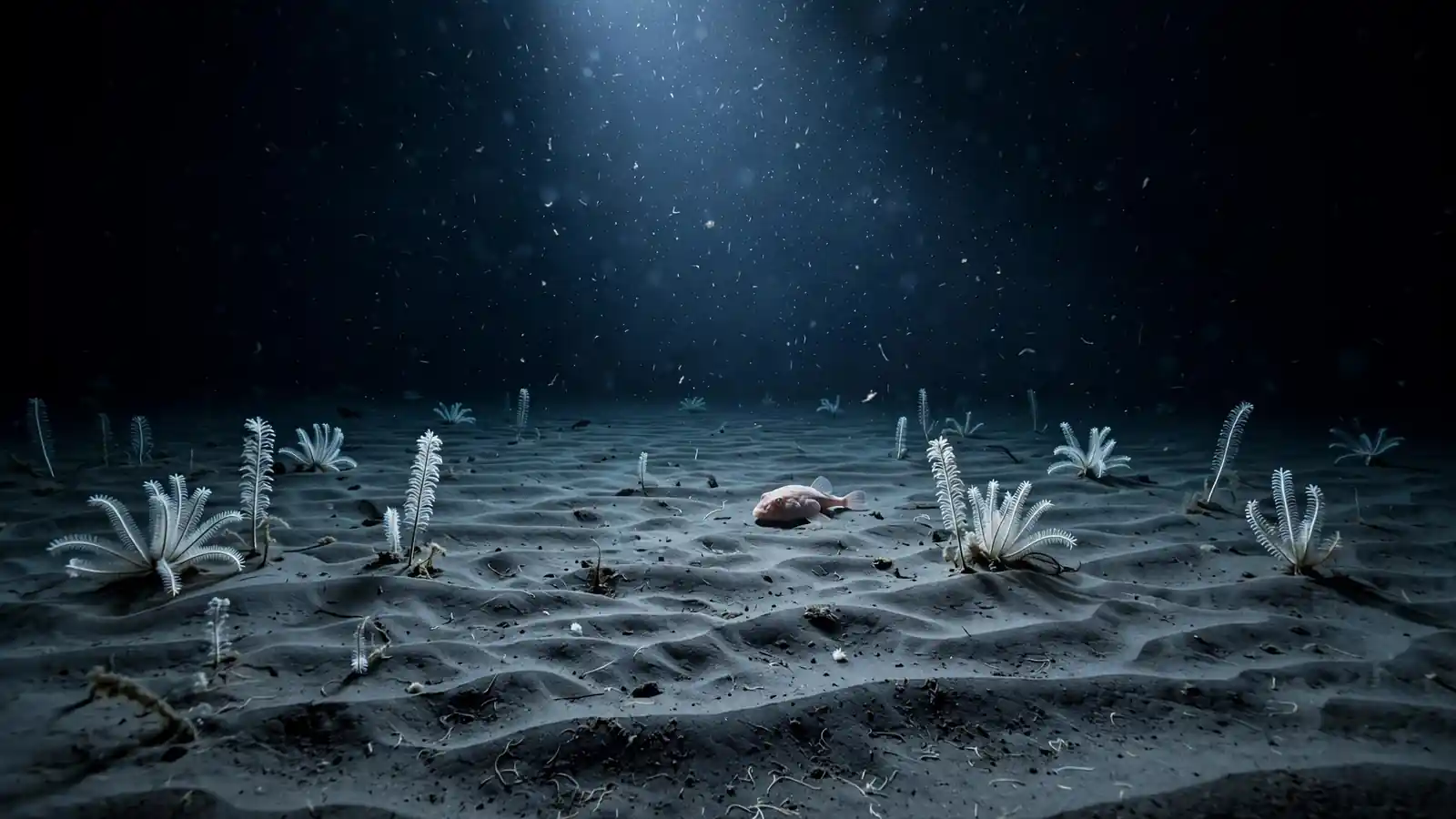
Pressure is the defining fact of this world. At these depths the water pushes in at roughly 60 to 120 times the pressure at the surface, enough to collapse the gas spaces of an ordinary fish. It answers with a body built out of jelly slightly less dense than seawater. It has no swim bladder to crush, needs almost no muscle, and can hold its place just off the bottom without swimming at all. Energy is precious in the deep sea, and this fish spends almost none of it.
Diet and Feeding
It feeds the way a trap feeds: by waiting. Resting on the sediment or hovering a whisker above it, the fish simply opens its wide mouth when food comes within reach. The menu is whatever the deep seabed provides — small crabs and shrimp, shellfish and other molluscs, sea urchins, brittle stars and anemones, plus carrion and the steady rain of organic scraps known as marine snow. Nothing is chased and nothing is wasted. In a habitat where a meal may not pass for hours, patience is the whole hunting strategy.
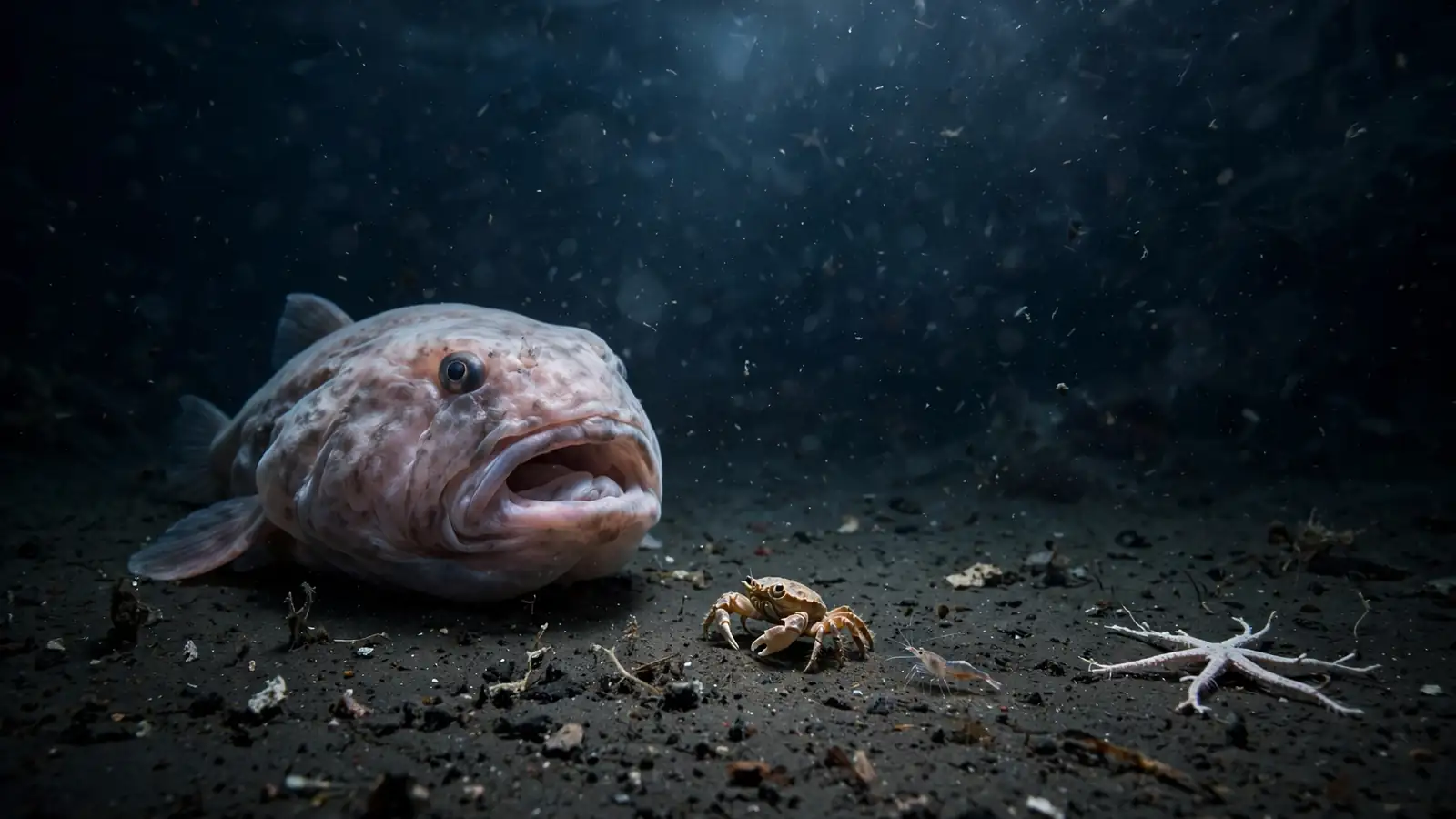
That stillness shapes the whole animal. With no need to sprint, there was never any reason to build muscle, and with few hunting predators to escape, the skin could stay thin and soft. Like the anglerfish, another master of doing nothing beautifully, this fish has turned energy saving into an art form. Both prove that in the deep sea the winners are rarely the fastest. They are the ones that can afford to wait.
Reproduction and Eggs
For such a famous fish, its family life stayed secret for a remarkably long time, and much of it is still guesswork. What scientists do know is striking: females lay their eggs in masses on the deep seabed, in clutches that can run from thousands of tiny pink eggs to, in the largest reports, around 100,000. The eggs spread across the sediment in a single layer, like a pink carpet unrolled across the black floor of the ocean.
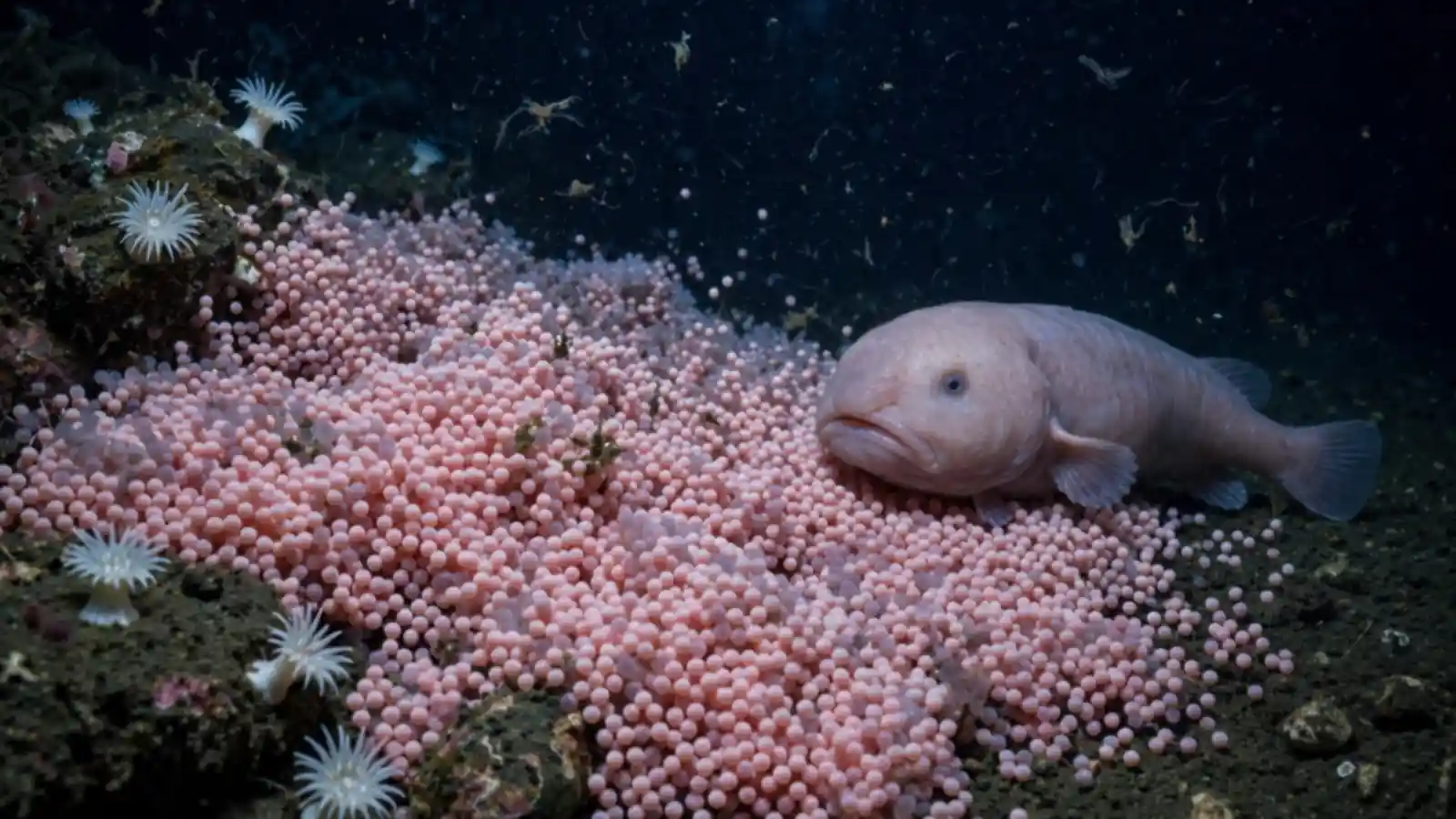
Even more surprising is what happens next. Adults have been found sitting on or beside the egg masses, apparently guarding them until they hatch — a level of parental care that is rare among deep-sea fishes, most of which abandon their eggs to the currents. Guarding makes sense in a world of hungry brittle stars and wandering crabs. It also slows everything down: a parent tied to one patch of seabed cannot feed widely, which is one more reason this species lives life at the slowest possible speed.
Threats and Conservation
It is not officially listed as endangered, for a simple reason: it has never been formally assessed, and scientists still know too little about its numbers to judge. That uncertainty is itself the worry. The fish shares its home with deep-sea trawling fleets working the continental slope for other species, and a soft animal that cannot swim fast and never leaves the bottom has no escape when a net passes overhead. They are known to science largely because they arrive dead in those nets, as Mr Blobby did.
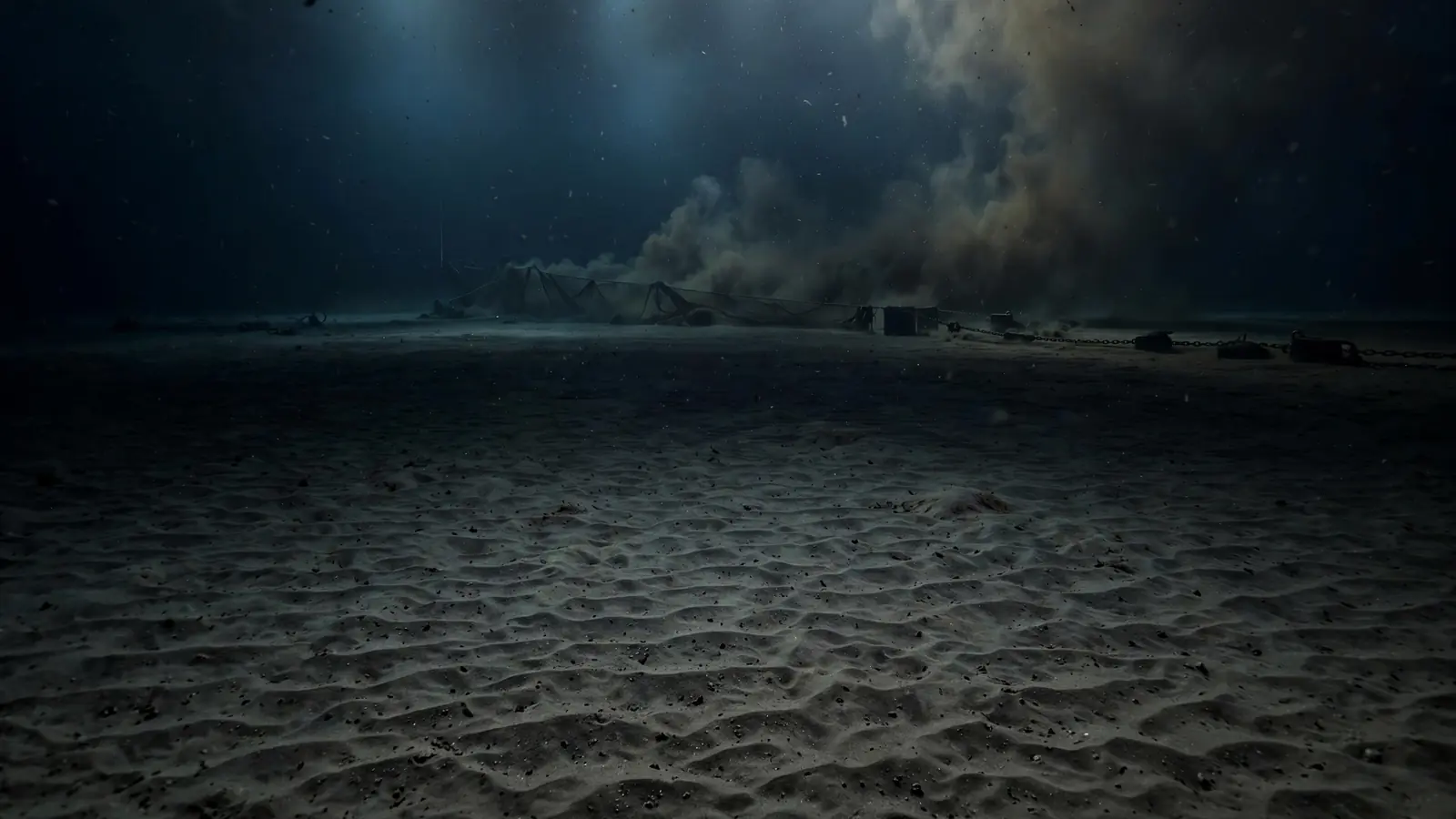
Deep-sea fish live slowly, grow slowly and breed slowly, so a population thinned by accidental catches can take decades to recover — if it recovers at all. The 2013 crown may yet turn out to be the species’ best protection: millions of people who would never have spared a thought for a small grey sculpin now know its name, its story, and the simple truth that it was never ugly at all. Its fame arrived by accident. It might just leave as conservation.
Fun Facts
- It has no swim bladder. Its jelly-like flesh is slightly less dense than seawater, so it can hover just above the seabed without swimming at all.
- Its scientific name, Psychrolutes marcidus, comes from a Greek word for taking a cold bath — a fair description of life in water a few degrees above freezing.
- The world’s most famous specimen was nicknamed Mr Blobby. It was collected during a research voyage near New Zealand in 2003.
- In 2013 a public vote made it the mascot of a society that campaigns for overlooked, unglamorous animals — beating far better-known creatures to the title.
- Almost nobody has seen a living one in the wild. Nearly everything known about the species comes from trawl catches and rare submersible sightings.
- A guarding parent is rare in the deep sea: most deep-sea fishes scatter their eggs into the current and never see them again.
Frequently Asked Questions
What Is a Blobfish?
It is a deep-sea fish that lives on the seabed 600 to 1,200 metres below the surface. Its scientific name is Psychrolutes marcidus, and it belongs to the fathead sculpin family. Instead of a swim bladder, it has soft gelatinous flesh that lets it hover just above the ocean floor.
Why Do Blobfish Look Like That?
The droopy face belongs to dead specimens pulled up from the deep. Without the pressure of deep water holding their soft bodies together, their tissues sag and spread, and nets damage the skin. The melting look is an injury, not the living animal.
What Does a Blobfish Look Like Underwater?
Underwater, it looks like a normal fish. It has a broad head, a wide mouth and a tapering, tadpole-shaped body covered in loose pinkish-grey skin. The pressure of the deep sea presses its gelatinous body into shape, so nothing droops or melts.
Where Do Blobfish Live?
They live in deep water off the coasts of mainland Australia and Tasmania, resting on the continental slope between about 600 and 1,200 metres down. Close relatives live in deep water near New Zealand. Their world is dark, cold and under crushing pressure.
How Big Do Blobfish Get?
Adults grow to about 30 centimetres (12 inches) long, and most are a little shorter. The head makes up a large share of that length. Because the body is mostly watery jelly with very little muscle, they weigh far less than firmer fish of the same size.
What Do Blobfish Eat?
They eat small animals of the deep seabed, including crabs, shrimp, shellfish, sea urchins, brittle stars and anemones, plus carrion and falling scraps of food called marine snow. They hunt by patience, resting still and opening their mouths when food drifts close.
Are Blobfish Endangered?
They are not officially listed as endangered, because the species has never been formally assessed and its numbers are unknown. Scientists are concerned about deep-sea trawling on the continental slope, which catches them accidentally and can damage the seabed they depend on.
Similar Species Worth Exploring
Keep Exploring
Still curious about the deep sea? Meet the anglerfish, the other great sit-and-wait hunter of the dark, or browse every species in our guide to the types of fish. The deep ocean is full of animals that look impossible until you meet them on their own terms — and none proves the point better than the blobfish.