Types of Fish
Types of Fish: The Biggest Family in the Sea
The types of fish in the world’s waters run from a goby smaller than a fingernail to a shark longer than a bus — 37,799 known species, more than every other kind of vertebrate combined. This hub organises our fish profiles the way the fish themselves live: by dark depths, bright reefs, open ocean and the teeming forage layer in between.
By Emily Carter · Reviewed by our vet team · Updated 10 November 2026 · 9 min read
37,799 known speciesThree great groups305 new species in 2026 alone
At a Glance
The types of fish begin with the loosest word in zoology. “Fish” covers animals with no jaws and animals with heated brains, fish that glide through the air and fish that farm gardens of algae, a species smaller than a shirt button and one that outweighs an elephant. What unites them is an ancient body plan — gills, fins and a backbone — that evolution has been remixing for more than 500 million years, longer than trees have existed. Start with the three great groups below, then wander the habitats: every profile in this series hangs off one of these branches.
The Three Main Types of Fish
First, the jawless fish — lampreys and hagfish, only around 120 living species, eel-like survivors from before jaws evolved. Hagfish bend every rule: they have a skull but no true backbone, and tie themselves in knots to tear food. Second, the cartilaginous fish — sharks, rays, skates and chimaeras, roughly 1,200 to 1,400 species whose skeletons are cartilage rather than bone, including the largest fish alive, the whale shark in the photograph above. The skates among them — the egg-laying flatfish of the group — get a structural guide of their own, covering their species, their egg cases and how to tell them from rays.
Third, and overwhelmingly, the bony fish: about 96 of every 100 fish species, from guppies to tuna. If it has a bony skeleton, a swim bladder and a gill cover, it belongs here — including every other profile in this hub. The cartilaginous clan keeps its own quarters in this series, and they are worth the detour. Between the three of them, the types of fish cover every body plan a backbone ever produced in water.

Meet the cartilage crew in our guides to the types of sharks and the types of rays and skates — the flat, flying cousins of the shark line.
The edges of the family are gloriously untidy. A seahorse is a fish. So is an eel, a flattened flounder and a fish with no jaws at all. Meanwhile the hagfish — skull but no true backbone — sits so close to the border that biologists still argue about which side of the vertebrate line it belongs on. The three-group map is a guide, not a fence. That untidiness is part of the charm of the types of fish.
How Many Species of Fish Are There in the World?
As of the world catalogue’s October 2026 update: 37,799 valid species, with 305 described in 2026 alone and 409 in 2025. The count is a moving target and an honest argument — other references quote figures closer to 32,000, using stricter or older tallies — but every method agrees on the headline: fish are the most diverse vertebrates on Earth, outnumbering mammals, birds, reptiles and amphibians put together. No other family of backboned animals comes close to the types of fish for sheer variety.
Where do the new species hide? In deep water hauled up by submersibles, in remote rainforest rivers, and inside museum jars, where DNA testing keeps splitting one “species” into three. The catalogue also tags more than 19,000 species with a freshwater habitat — a reminder that this hub’s ocean families have an equally vast inland diaspora. New types of fish turn up in those inland waters every year.
The living ledger behind those numbers is the constantly updated world catalogue of fish species, maintained by working ichthyologists and revised month by month.
Deep-Sea Types: Lanterns in the Dark
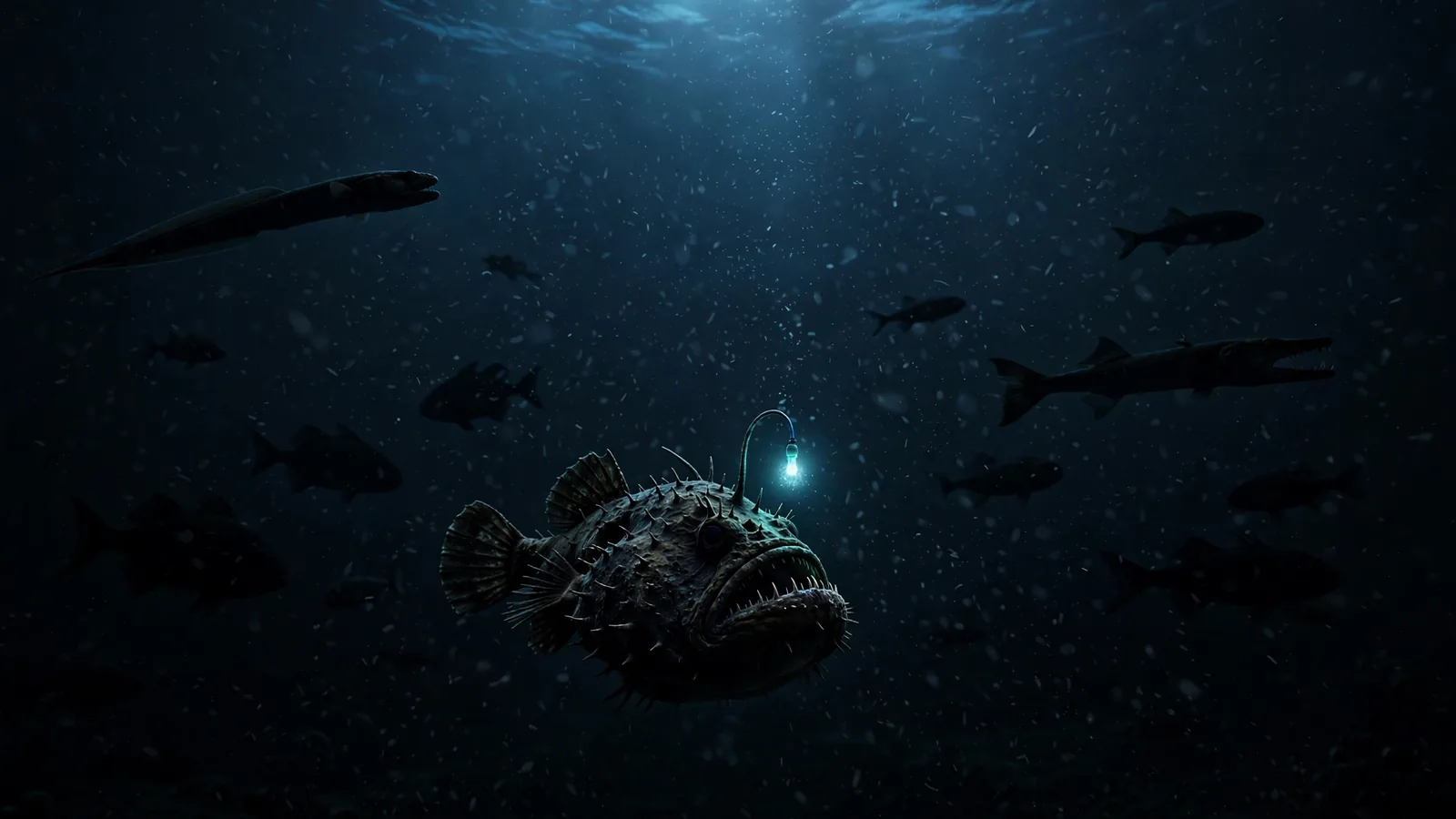
Below 200 metres, fish redesign themselves: light organs, elastic stomachs, bodies built for pressure rather than speed. The emblem of the zone is the anglerfish, whose glowing bacterial lure and extraordinary mating system make it the deep’s most famous resident.
Its unlikely neighbour is the blobfish — a soft, pressure-shaped fish of the deep slopes near Australia whose “melted” reputation comes entirely from being hauled out of the crushing depth it is built for. Together they bookend the deep-sea story: menace and pathos, both perfectly engineered. The deep holds some of the strangest types of fish of all.
Reef Types: Partnerships, Venom and Disguise
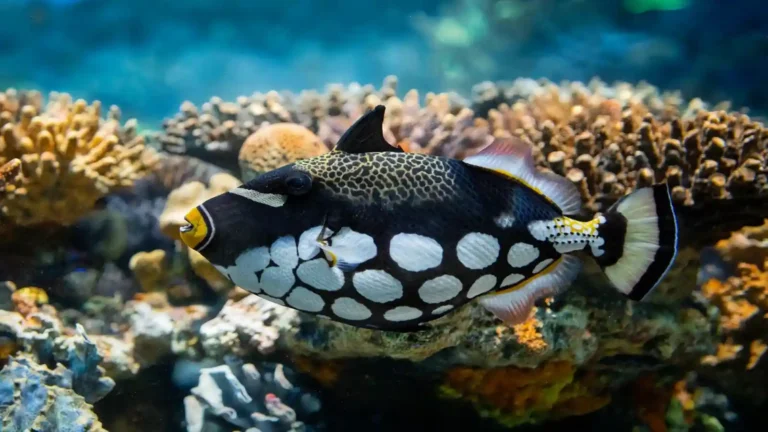
Reefs compress more fish designs per hectare than anywhere else. The clownfish runs a size-based monarchy inside a stinging anemone; the seahorse swims upright, armoured, with fathers carrying the young; and the shallows’ chemical weapons programme is run by the lionfish, all venomous spines and disastrous Atlantic ambitions, and the pufferfish, which inflates into a spiky ball laced with one of nature’s strongest poisons.
Four profiles, four survival strategies — fortress, partnership, armour and poison. The reef is where fish evolution shows off. It is where the types of fish show their wildest variety per square metre.

The concentration is hard to overstate: coral reefs cover well under one per cent of the ocean floor, yet they are home to roughly a quarter of all marine fish species. Warm, complex and sunlit, a reef is less a habitat than a city — and like a city, it supports specialists found nowhere else. For variety per hectare, no other types of fish habitat comes close.
Open-Ocean Types: Sprinters, Bills and Gliders
The open ocean belongs to speed. The mahi mahi is its rainbow sprinter, growing faster than almost any fish alive; the swordfish is its deep-diving gladiator, slashing a flat bill through schools by day and hunting deep by night with heated eyes; and the barracuda is its motionless ambush, a silver torpedo of teeth waiting over reef and wreck alike.
And when the hunters close in, the prey takes the emergency exit: the flying fish, which bursts through the surface and glides on fin-wings — with the mahi, as above, in devoted pursuit.

Forage Types: Small Fish That Feed the World
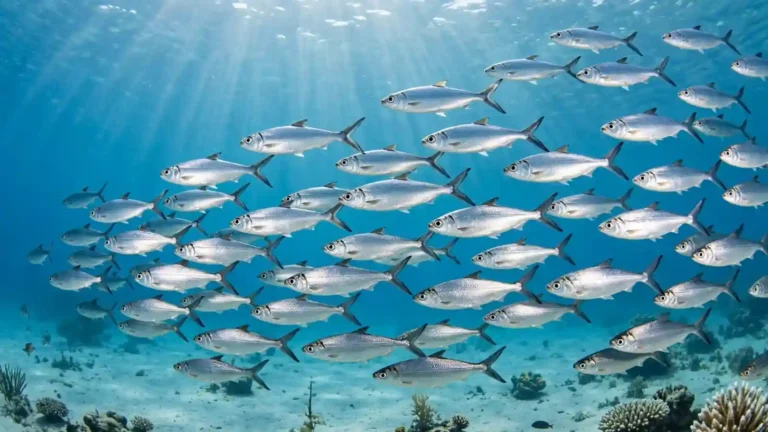
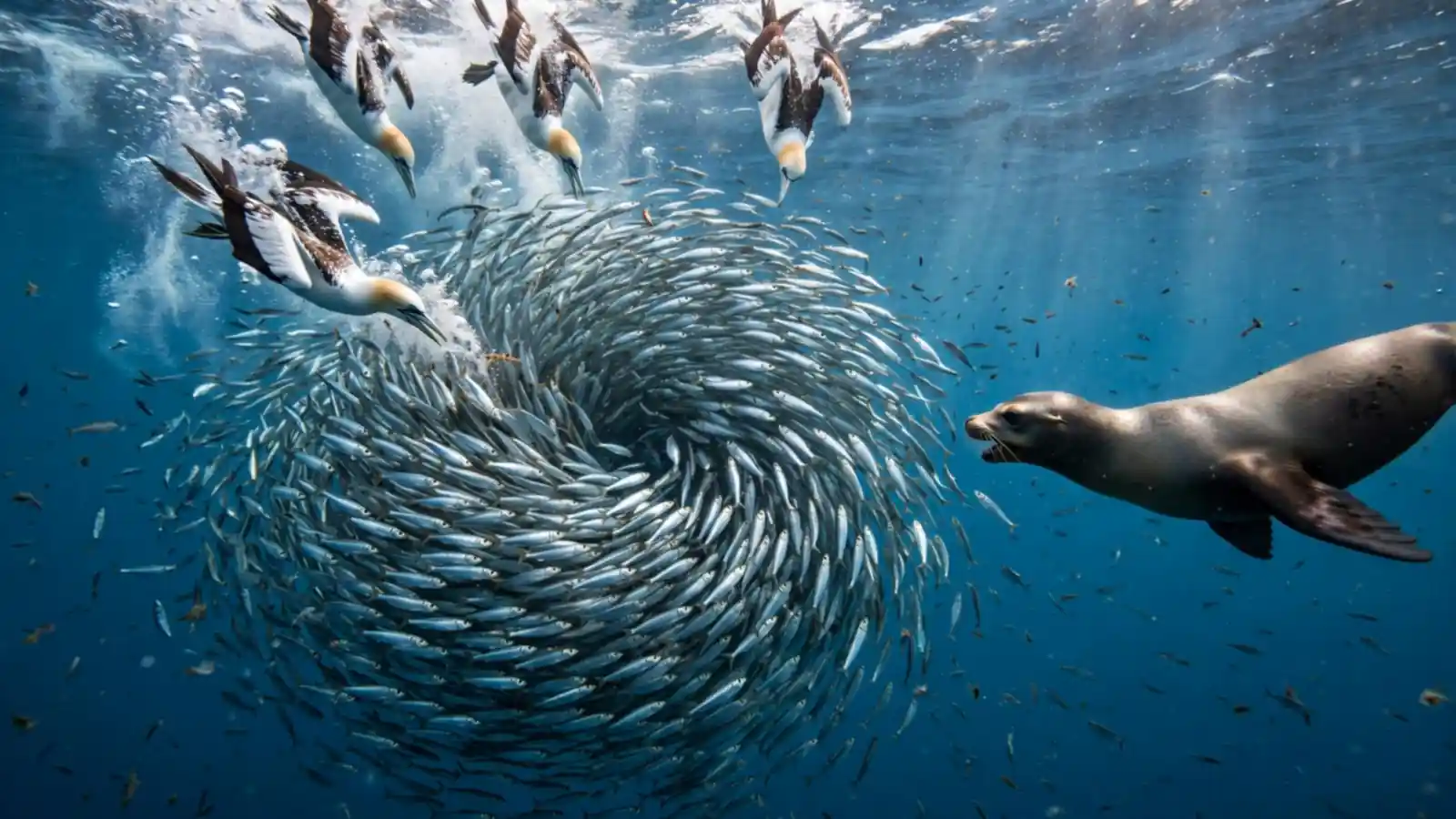
Underpinning everything are the small schooling fish of the sunlit layer. The sardine gathers in runs so vast they are visible from aircraft; the anchovy may be the most abundant fish on the planet, and its Peruvian fishery the largest single-species catch on Earth. Those same bait balls draw hunters from above the surface too, none more spectacular than the osprey, which folds its wings and plunges feet-first onto fish it spots from the air.
Oceanographers call species like these the wasp waist of the food web: nearly all the energy flowing from plankton to tuna, seabirds, seals and people passes through their narrow, silvery layer. Lose the little fish, and the giants in the other sections go hungry. They are the types of fish the whole ocean quietly depends on.
Fun Facts
- Scientists described 305 new fish species in 2026 alone — the catalogue grows every week.
- About 96 of every 100 fish species are bony fish; all the sharks and rays together are barely 3 in 100.
- The whale shark is the biggest fish, but the heaviest bony fish is the ocean sunfish.
- Fish have existed for over 500 million years — roughly 200 million years before the first trees.
- More than 19,000 fish species are tagged with a freshwater habitat, though the sea holds the giants.
- One group of fish glides through the air, one heats its own eyes, and one carries its babies in a father’s pouch.
Frequently Asked Questions
How Many Species of Fish Are There in the World?
The world catalogue of fishes currently records 37,799 valid species, and the total climbs weekly — 305 new species were described in 2026 alone. Other references quote lower totals around 32,000 using stricter counts, but all agree fish are the largest group of vertebrates.
What Are the Three Main Types of Fish?
Jawless fish (lampreys and hagfish, about 120 species), cartilaginous fish (sharks, rays and chimaeras, roughly 1,200–1,400 species with cartilage skeletons) and bony fish — about 96 per cent of all species, including everything from guppies to tuna.
What Is the Biggest Type of Fish in the World?
The whale shark. It is reliably measured beyond 12 metres, the largest recorded approached 19 metres, and it outweighs every other fish despite eating only plankton and small prey. The heaviest bony fish is the ocean sunfish.
What Is the Smallest Fish in the World?
A peat-swamp fish called Paedocypris progenetica, from Sumatra and nearby islands. Females are mature at under 8 millimetres long — small enough to sit on a fingernail — and it lives in acidic blackwater pools in the forest.
How Many Types of Fish Live in the Ocean?
Something over 18,000 species are marine, and thousands more move between sea and fresh water across their lives. The world catalogue tags more than 19,000 species with a freshwater habitat, so the split is close — but the ocean holds nearly all the giants.
Are Fish the Most Diverse Group of Vertebrates?
Yes, by a wide margin. With about 37,800 known species, fish outnumber all mammals, birds, reptiles and amphibians combined, and hundreds of new species are still described every year — more than for any other vertebrate group.
Similar Species Worth Exploring
Keep Exploring
From here the family tree branches outward: into cartilage with the types of sharks, down into the dark with the anglerfish, or up into the air with the flying fish — then settle back and browse all the types of fish.