Flying Fish
Flying Fish: The Fish That Takes to the Air
The flying fish is the only fish that regularly leaves its own element — bursting from the surface at highway speed and gliding on stiff, translucent wings to escape the hunters below. This is how that flight works, how far it can go, and why a fish would ever trade the sea for the sky.
By Emily Carter · Reviewed by our vet team · Updated 10 November 2026 · 10 min read
60+ species worldwideChains of glides to 400 mTake-off near 55 km/h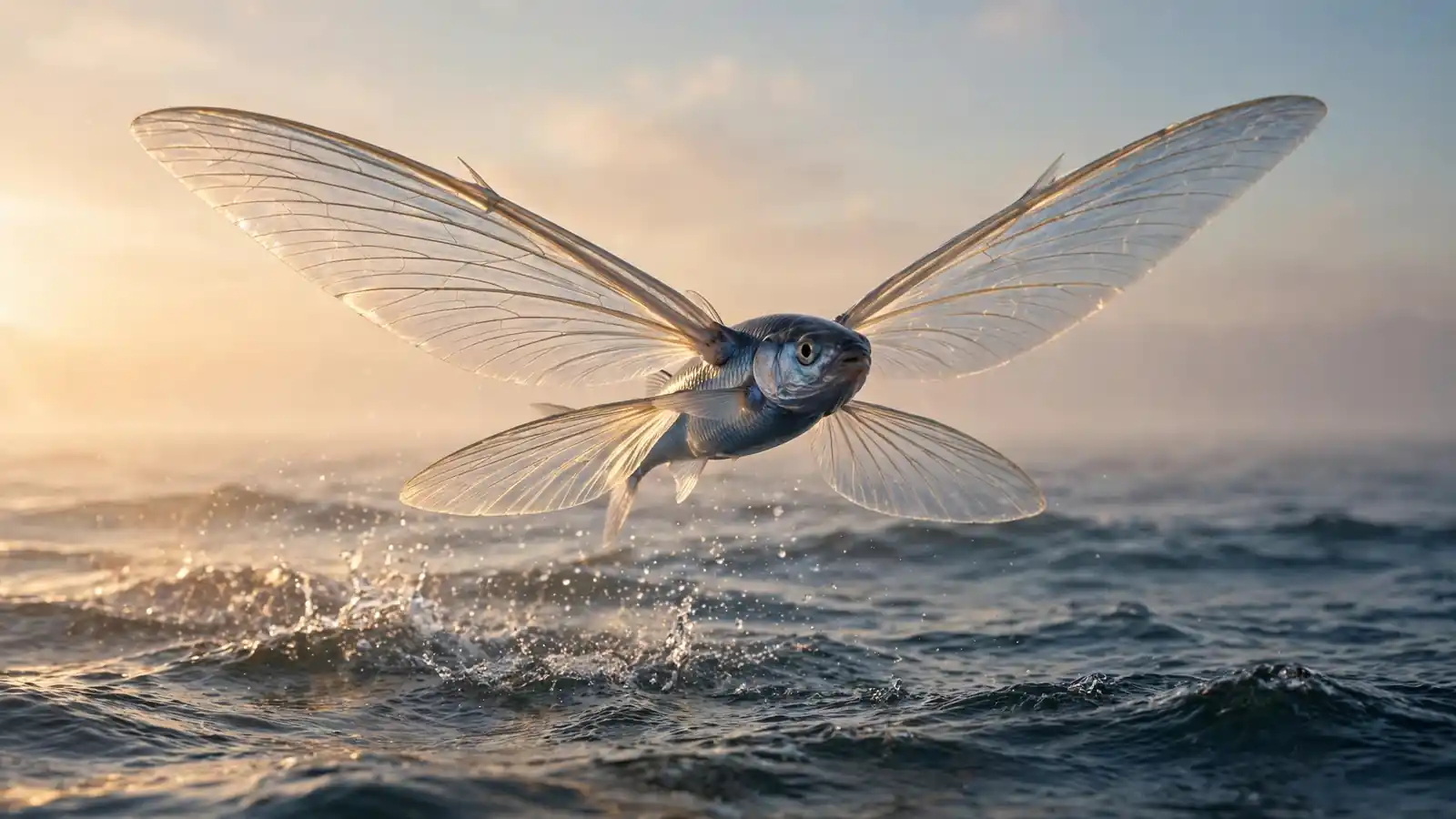
At a Glance
The flying fish does something no other fish does. When danger closes in from below, it does not dive — it accelerates, breaks the surface, and becomes an aircraft: a rigid, torpedo-stiff body carried on wings of fin, sailing over the waves at the speed of a city car. The trick has made the family Exocoetidae one of the great sights of warm oceans, the forage base for half the predators in the sea, a national symbol in Barbados, and a standing argument at quiz nights everywhere. Do they really fly? Not quite — and the real story, as usual, is better than the myth.
How Many Species of Flying Fish Are There?
More than 60 species in seven genera, all in the family Exocoetidae — close relatives of the needlefish, built on the same slim, beak-jawed plan. They divide into two designs: two-winged species such as Exocoetus, which glide on the pectoral fins alone, and four-winged genera like Cheilopogon and Hirundichthys, which add a big pair of pelvic wings and generally glide farther with more control.
Most species run 15 to 30 centimetres — the tropical two-wing, for example, is commonly 20 centimetres and maxes out at 30 — with the family giants reaching about 45. All share the uniform of the surface layer: iridescent blue above, silvery white below, and homes in the top 20 metres of every warm ocean on Earth.
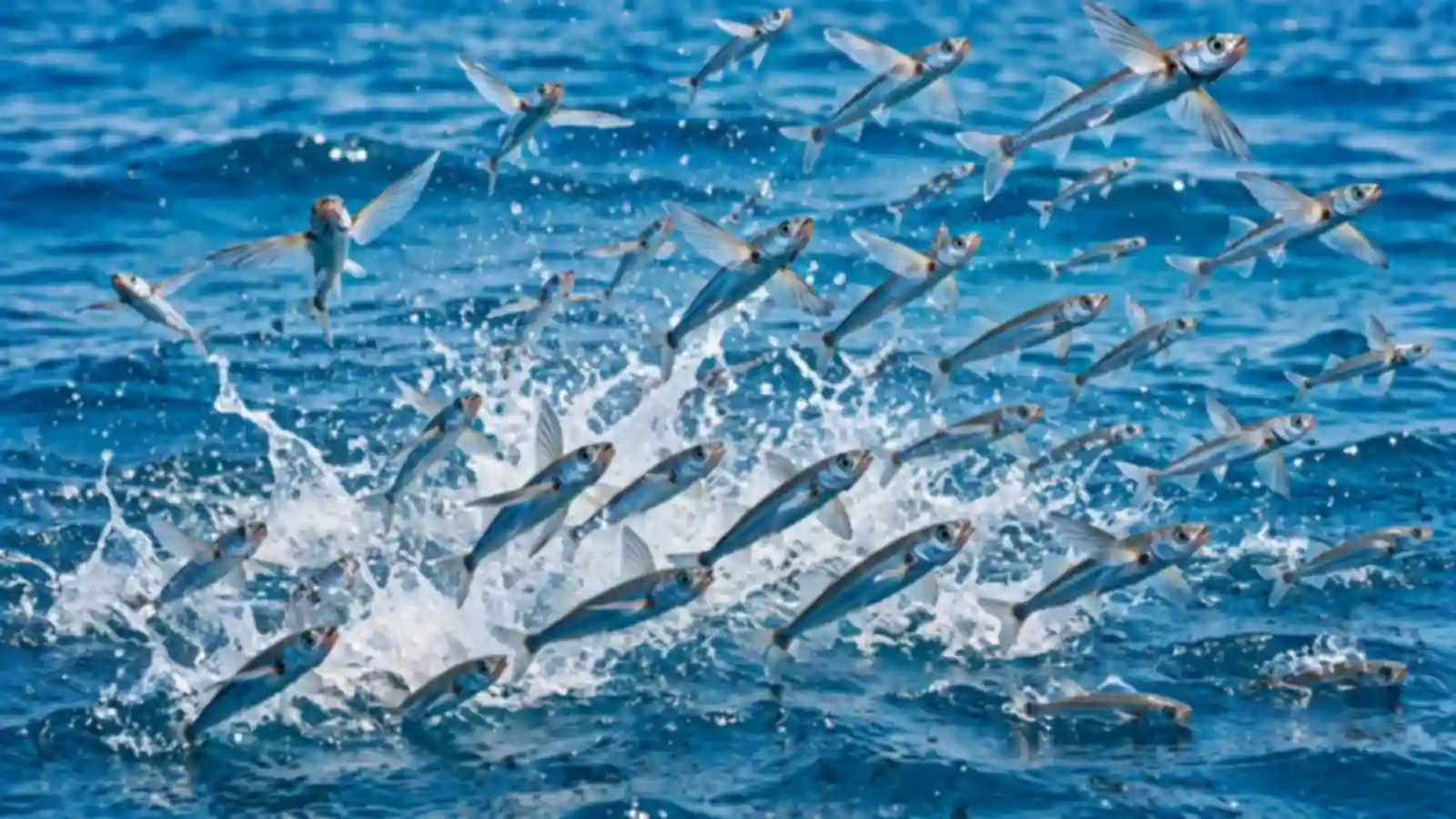
For one representative in full detail, see the species record for the tropical two-wing flyingfish — a fish so widespread it appears in nearly every tropical sea.
Even the name is a traveller’s tale: Exocoetus joins the Greek exo, “outside”, with koite, a bed or resting place — from the ancient belief that these fish came ashore to sleep. The young look nothing like the adults, either: juveniles of many species carry chin barbels and bold patterning, losing both as they grow into the family’s clean silver uniform.
How Do Flying Fish Glide? The Taxi Take-Off
It begins with a sprint. The fish accelerates underwater, angles up, and bursts through the surface — but it does not yet let go of the water. Instead it taxis: body held clear in the air on half-open wings while the tail’s extra-long lower lobe stays submerged, sculling furiously — up to 50 beats a second — and driving the fish from roughly 35 km/h to take-off speeds approaching 55–70 km/h. Then the wings lock fully open, the tail lifts free, and the glide begins.
A single glide typically covers about 50 metres, a metre or so above the surface, where the cushion of air trapped beneath the wings — ground effect — stretches every metre of speed. Wave faces add updrafts that can carry a fish six metres up. Landing offers a choice: fold the wings and dive, or dip the tail, taxi again, and chain another glide. The longest single flight ever filmed lasted 45 seconds, recorded by a Japanese television crew in 2008.
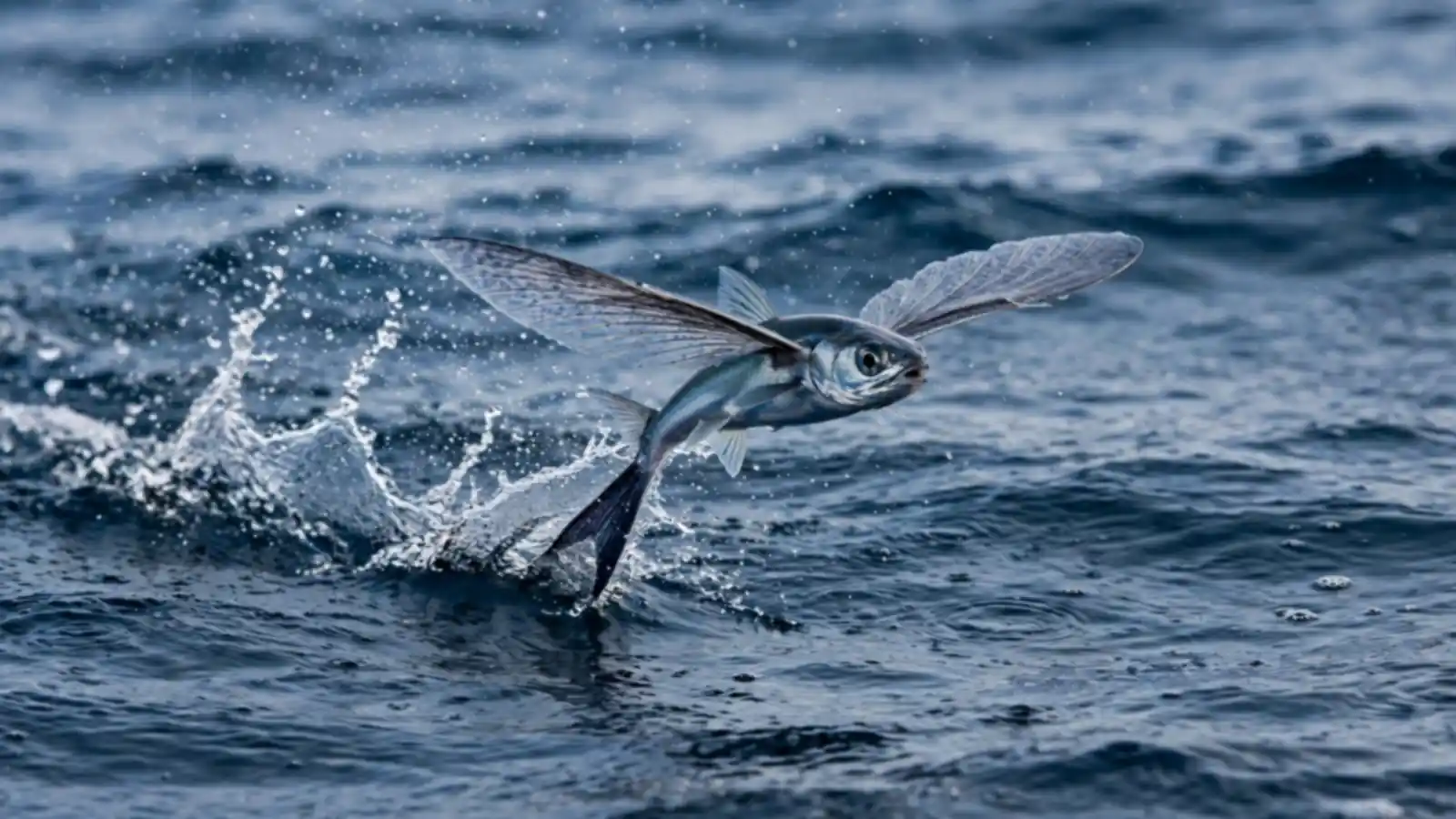
Pilots will recognise the physics. Riding in ground effect, it squeezes extra lift from the air cushion over the water, which is why most glides hug the surface; climbing higher costs speed quickly. The fish is not entirely a passenger, either — it can bank and adjust course slightly by tilting its wings, and during a taxi it can change direction for the next leg, which is how a pursued fish jinks sideways out of a hunter’s line.
Two Wings or Four: The Four-Winged Design and Its Cousins
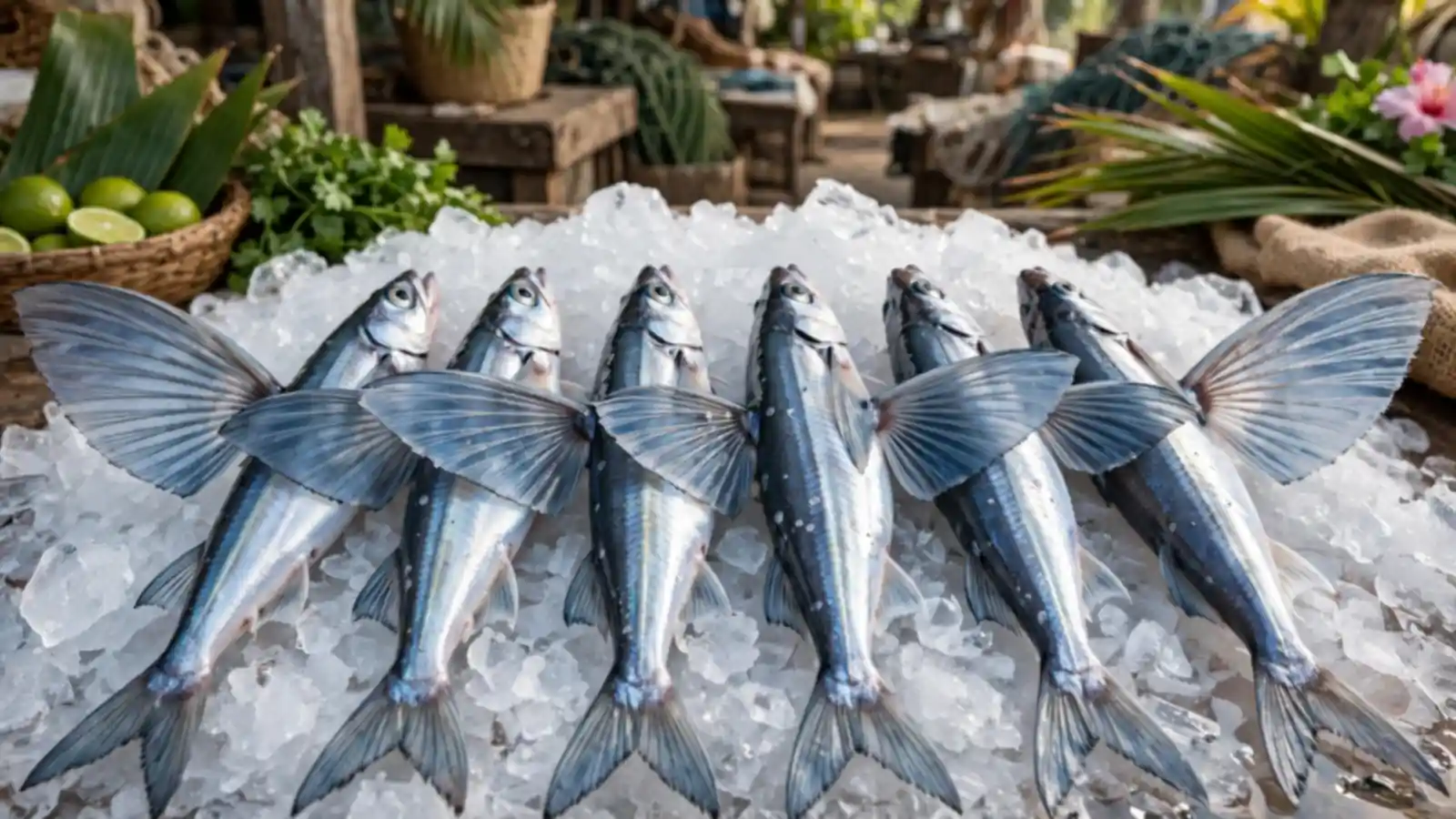
The wings are fins, re-engineered. The pectorals are enormous — in big-winged species spanning well over half the body length — stiffened by strong rays, gently cambered like an aircraft wing, and held rigid in flight; wind-tunnel tests give them lift-to-drag ratios comparable to the wings of birds. They never flap: all thrust comes from the tail before take-off, which is why this is gliding, not flight.
The supporting kit is just as specialised. The tail is unevenly forked, its lower lobe elongated into the taxiing propeller. The body is held ramrod-straight in the air. And the eyes have unusually flattened corneas, an optical compromise that keeps vision working in two media at once — the fish can watch for frigatebirds above while still reading the water it left.
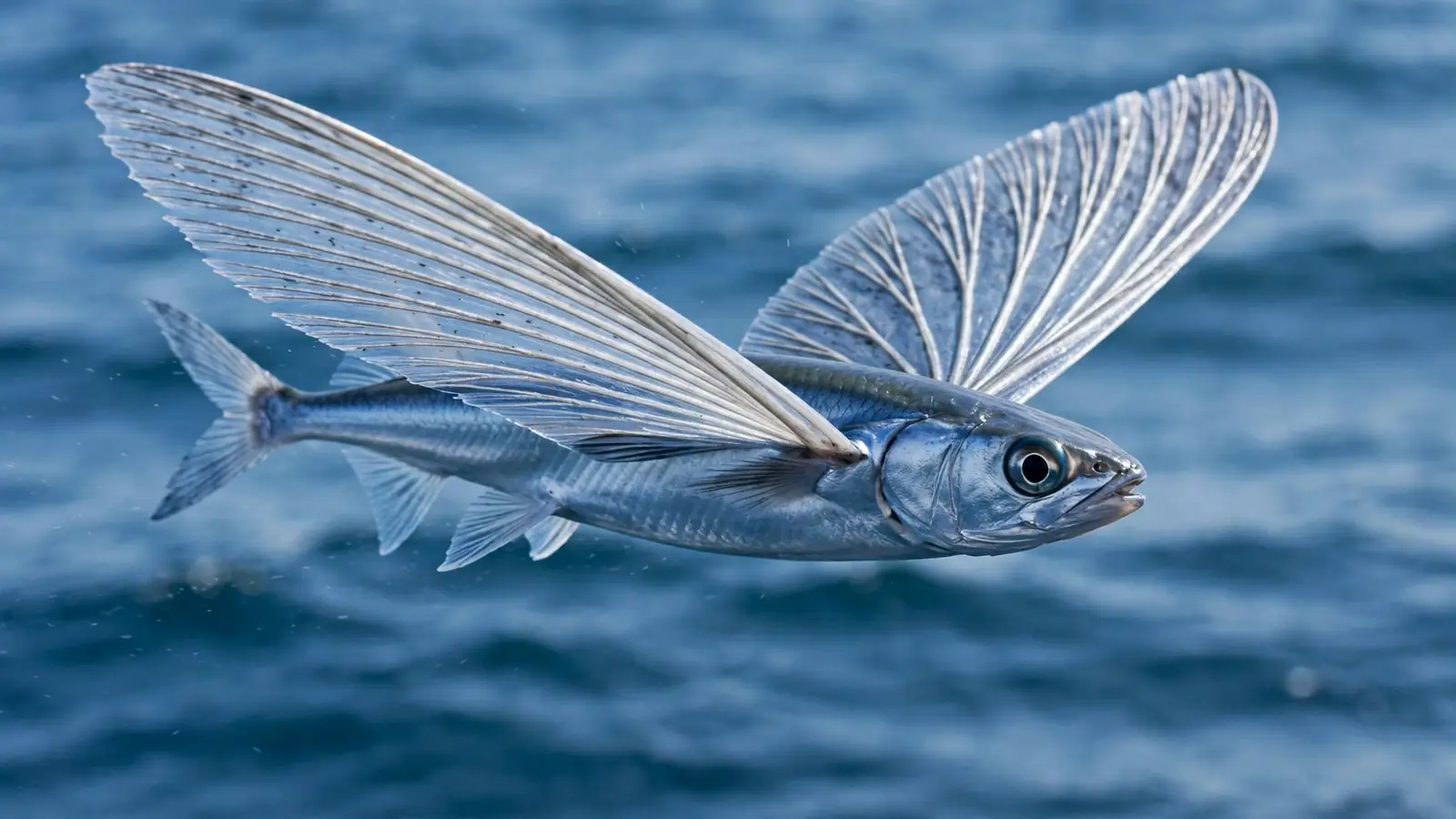
There is a cost ledger, too. Those wings are dead weight and drag underwater, so it is a compromised swimmer that has bet everything on the exit. The bet only makes sense because the surface layer it lives in offers no cover at all — when the whole neighbourhood is open water, the only hiding place is outside it.
Why Do They Leave the Water?
One word: predators. They are the mid-ocean’s staple prey — hunted by tuna, mahi mahi, marlin, swordfish, dolphins and more — and the glide is an emergency exit no underwater pursuer can follow. To a tuna at full charge, its dinner simply vanishes through the ceiling of its world.
The sky, however, has its own customs officers. Frigatebirds and boobies specialise in snatching gliders mid-flight, and mahi mahi have learned to shadow a gliding fish from below and strike in the instant it lands. The glide trades a near-certain death for a sporting chance — and across millions of years, the arithmetic has clearly paid: it remains the family’s defining strategy, with a possible side benefit of cheaper travel between feeding areas.

Life at the Surface: Food, Eggs and Sargassum
Between flights, they work the surface film, picking zooplankton, small crustaceans and tiny fish — modest feeders that convert plankton into the protein ration of the whole pelagic food web. Almost everything charismatic in the warm ocean eats them, which makes this small fish one of the load-bearing species of the tropics.
Spawning is tied to floating real estate. The eggs carry sticky filaments that wind around drifting debris and rafts of sargassum weed, and the young shelter in the weed’s shade — a floating nursery that also concentrates them for predators, birds included. The adults, meanwhile, are famously drawn to lights at night, which is why gliders so often end their flights on the decks of ships.
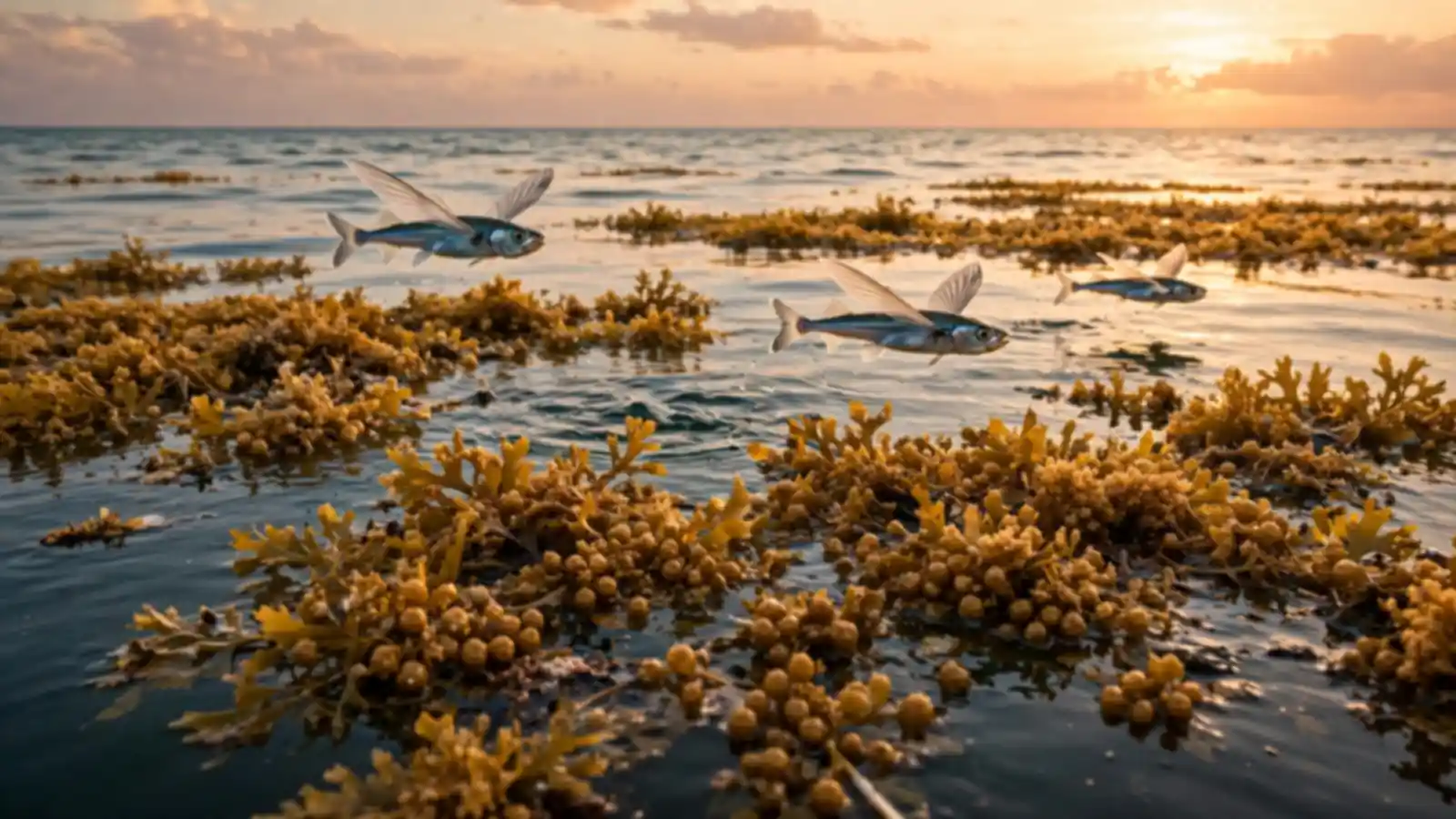
Their schooling is the first line of defence — a tight, flickering cloud that confuses aim — and the glide is the second. The arrangement supports an empire: tuna fisheries and tropical seabird colonies alike rise and fall with the abundance of surface forage, and in much of the warm ocean, that forage is, more than anything else, this fish.
A Fish and Its People: Barbados, Festivals and Roe
No fish flies further into human culture. Barbados calls itself the land of this fish: the fish is a national symbol and, served with cou-cou, the national dish. On the Taiwanese island of Lanyu, its season structures the year of the Tao people, with strict customs governing the catch. And in sushi restaurants worldwide, the crunchy orange roe called tobiko comes from this fish — this family’s most famous product after the glide itself.
The fisheries rest on a sturdy animal: fast-growing, quick to mature, and assessed as highly resilient, with some populations able to double in little over a year. It is a rare combination — a fish built for escape that also anchors dinner tables, festivals and an entire ocean food web.
Fun Facts
- It taxis like a seaplane: body in the air, tail still sculling in the water at up to 50 beats a second.
- The longest filmed flight lasted 45 seconds, shot by a Japanese TV crew in 2008.
- Four-winged species carry a second pair of wings on their pelvic fins, like a biplane.
- Frigatebirds catch them in mid-glide; mahi mahi wait below and catch them at the landing.
- Their corneas are unusually flat, so its eyes work in air as well as in water.
- The crunchy orange tobiko on sushi is its roe.
Frequently Asked Questions
Do Flying Fish Really Fly?
Not in the powered sense — they glide. It never flaps its fins; it builds speed underwater, taxis across the surface with its tail, then sails on stiff, locked wings. The result looks like flight and can last 45 seconds, but aeronautically it is a very accomplished glide.
How Do Flying Fish Glide?
They sprint at the surface, break through at a shallow angle, and taxi with the body airborne while the long lower tail lobe sculls in the water up to 50 beats a second, accelerating to around 55–70 km/h. Then the fin-wings lock open and the fish rides ground effect over the waves, dipping its tail to taxi again and chain further glides.
How Far Can a Flying Fish Glide?
A typical single glide is about 50 metres. Chained glides linked by taxiing can cover around 400 metres in total, fish can rise about six metres on wave updrafts, and the longest continuous flight ever filmed lasted 45 seconds.
Why Do Flying Fish Leave the Water?
To escape predators. Tuna, mahi mahi, marlin, swordfish and dolphins hunt them from below, and bursting into the air makes it vanish from its pursuer’s world. The trade-off is exposure to frigatebirds and boobies in the air — a risk worth taking against near-certain capture below.
What Eats Flying Fish?
Almost everything in the warm ocean: tunas, mahi mahi, marlin, swordfish, mackerel, dolphins, squid and porpoises from below, and frigatebirds, boobies and other seabirds from above. They are among the most important prey species in tropical seas.
How Many Species of Flying Fish Are There?
More than 60 species in seven genera, all in the family Exocoetidae. They split into two designs: two-winged species that glide on the pectoral fins alone, and four-winged species that add enlarged pelvic fins and generally glide farther.
Similar Species Worth Exploring
Keep Exploring
Chase the story upward with the mahi mahi that hunts them, dive with the swordfish, browse the full types of fish guide — then burst back into the sunlight with the flying fish.