Fur Seal
Fur Seal: nine species wearing the warmest coat in the sea
A fur seal carries two coats at once — sleek guard hairs over an underfur so dense that water barely reaches its skin. That coat nearly cost these seals everything in the age of sail, yet under protection most of the nine species have come roaring back. This is the whole group: where they live, how the species differ, and which ones still need help.
By Emily Carter · Reviewed by our vet team · Updated 10 November 2026 · 9 min read
9 species, 2 generaUnderfur: 46,500 fibres/cm²Bulls up to 300 kg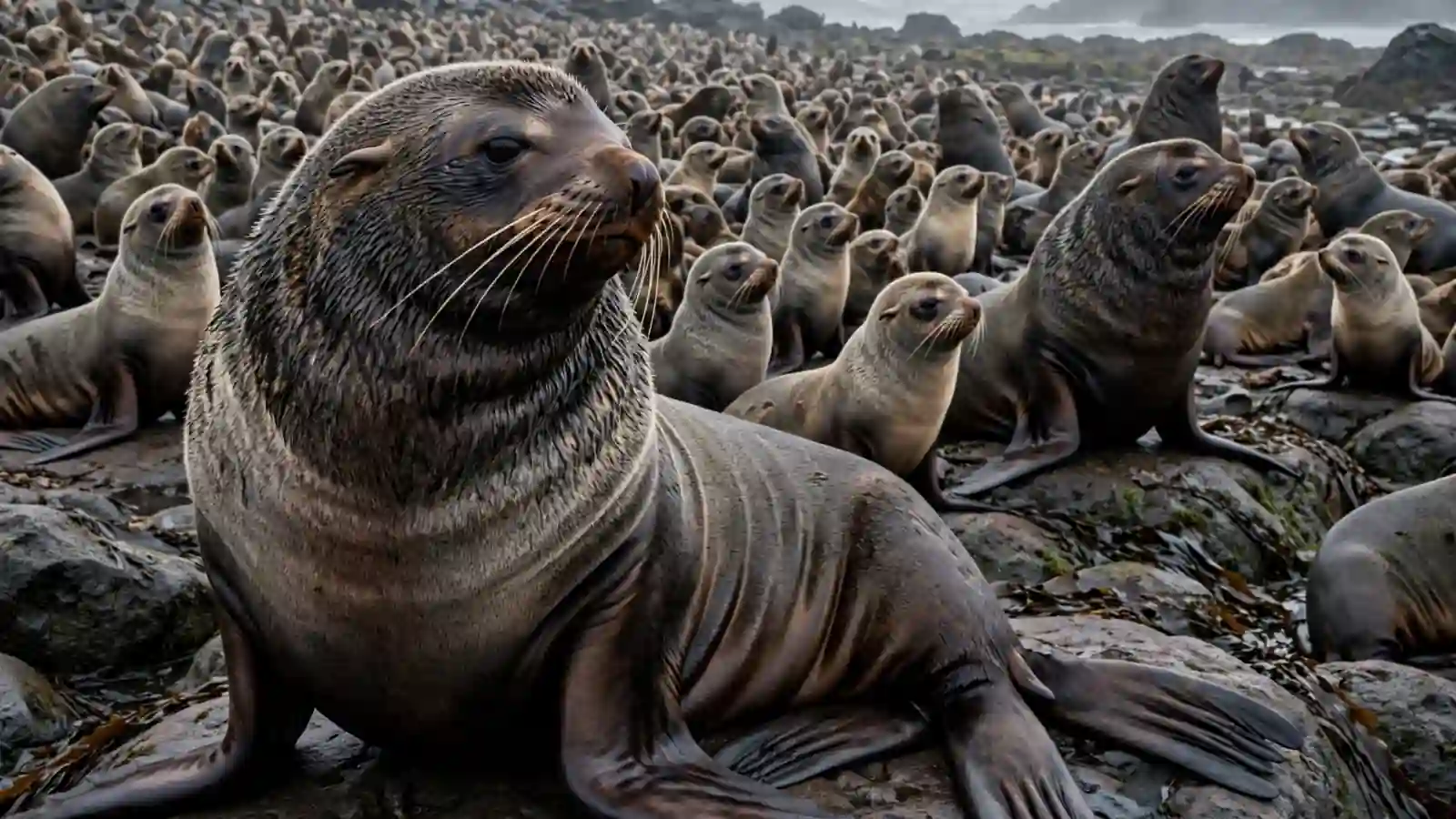
At a Glance
Ask what defines this group and the answer is the coat: a water-shedding layer of guard hairs over underfur packed tighter than on almost any other mammal. Add pointed faces, visible ear flaps and the longest flippers in the eared-seal family, and you have a seal built as much for sprinting across land as for life in the open ocean.
Fur Seal Size and Weight
Size in this group is a sliding scale. The smallest of them, the Galápagos species, stands about 1.4 metres long, while the biggest bulls — Cape fur seals off southern Africa and northern fur seals in the Bering Sea — pass 2 metres and can top 270 to 300 kilograms.
Females are a fraction of that. A northern female tops out near 55 kilograms against a bull of up to 270, a difference of roughly four to one that ranks among the most extreme of any mammal group. That gap drives everything about how these animals breed, fight and fast.
Pups start tiny — a newborn northern pup weighs just 2 to 3 kilograms — but grow quickly on some of the richest milk produced by any seal.
Appearance and Anatomy
The look starts with the double coat. Coarse guard hairs stand over an underfur of astonishing density — in the northern species, around 46,500 fibres in a single square centimetre of skin. The underfur traps air and warmth so well that a swimming seal’s skin stays almost dry.

Faces are pointed, with a short muzzle, forward-looking dark eyes and a small external ear flap on each side — the badge of the eared seals. Flippers are exceptionally long: in the northern species the hind flippers alone can reach a quarter of the body length, and the bare, dark foreflippers work like arms, letting these seals walk, run and even climb near-vertical rock.
Colours run from near-black bulls to silver-grey and cream-bellied females. Old northern adults grow strikingly long white whiskers; pups are born with black ones that pale with age.
Habitat and Range
Every fur seal is an island animal. The group is centred on the cold and temperate Southern Hemisphere — South Georgia, the subantarctic islands, southern Africa, Australia, New Zealand and South America — with a single outpost in the north: the northern species of the North Pacific.
Breeding happens on crowded island rookeries, the same beaches returning generation after generation. Outside the season, most species turn fully oceanic: northern adults spend more than 300 days a year at sea, riding currents and feeding along ocean fronts where prey gathers.
Diet and Feeding
A fur seal eats what its ocean offers. Northern animals hunt walleye pollock, herring, sand lance, squid and salmon over the Bering Sea shelf and slope; Antarctic fur seals lean heavily on krill around South Georgia; Cape fur seals take sardines, anchovies and hake in the rich Benguela current.
Most feeding is done at night, when squid and lanternfish rise toward the surface. Females with pups run a shuttle — days at sea filling up, a day or two ashore nursing — timed precisely to the growth of a pup waiting hungry on the beach.
Meet the Fur Seals
Nine species share the family name, split between two genera: one northern species in its own genus, and eight southern relatives. These are the five you are most likely to meet.
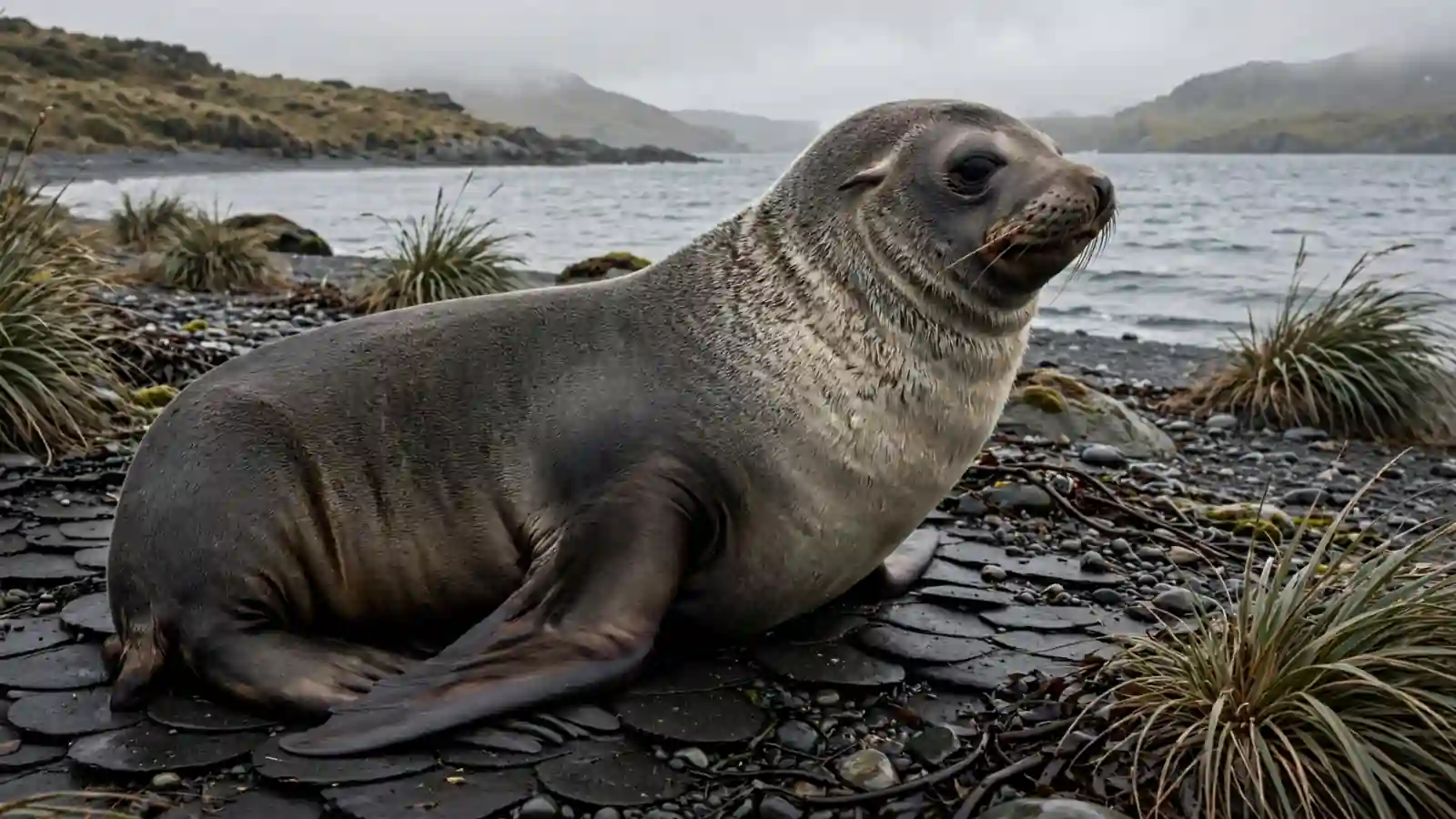
Northern Fur Seal
The lone northerner, and the only member of the genus Callorhinus. About half of the world’s northern fur seals crowd onto the Pribilof Islands in the Bering Sea each summer, where bulls of up to 270 kilograms defend harems on black volcanic beaches. It owns the densest underfur of any eared seal and spends most of its life far out in the North Pacific — which makes its recent decline around the Pribilofs one of the group’s open worries.
Antarctic Fur Seal
The great comeback story. Hunted to the edge of extinction by the early 1900s, this species rebuilt from a few survivors to several million, most of them breeding on South Georgia. Bulls are dark and heavy-chested; the whole population runs on Antarctic krill, which makes it a living barometer of the Southern Ocean.
Guadalupe Fur Seal
The seal that came back from the dead. Declared extinct after the sealing era, it was rediscovered in 1954, hiding in a sea cave on Guadalupe Island off Mexico. Protected since, it now numbers in the tens of thousands and is recolonising islands off Baja California and California — the only one of the group breeding along that coast.
Cape and Australian Fur Seals
One species on two coasts, and the biggest of the group: bulls can exceed 300 kilograms. Huge, noisy colonies line the shores of South Africa and Namibia, with their close Australian population around Tasmania and Victoria. They are bold, strong swimmers famous for surfing shorebreaks and shadowing fishing boats.
Subantarctic Fur Seal
The two-tone traveller of the southern Indian and Atlantic oceans, breeding on islands such as Amsterdam, Marion and Gough. Males wear a pale, almost blond chest and face against a dark back. Like its cousins it was hammered by sealers and has spent a century quietly rebuilding.
The remaining species — the Juan Fernández, Galápagos, South American and New Zealand (or long-nosed) fur seals — complete the set of nine, each tied to its own island world.
Behavior and Social Life
On land, few spectacles match a rookery in full season: thousands of animals packed shoulder to shoulder, bulls bellowing over territories, females weaving through the crush to find their pups. It looks like chaos and runs like clockwork.
At sea the personality flips. These crowd animals become solitary ocean wanderers, sleeping on the surface with a flipper draped in the air, travelling hundreds of kilometres between feeding grounds, and returning unerringly to their home beach when the season turns.
Communication and Sound
A rookery is loud. Bulls bark, cough and bellow; females answer pups with a drawn-out wail; pups bleat almost exactly like lambs. In a colony of thousands, a mother and pup find each other by voice first and scent second, a recognition system tested every time she returns from the sea.
Underwater they are far quieter animals, relying on sight, whiskers and hearing tuned to the sounds of prey rather than song.
Reproduction and Pups
Breeding is a test of endurance. Bulls haul out first, claim a patch of beach and then simply stop eating — a northern bull fasts for an average of about 46 days, burning a third of his body mass to hold his ground while females come and go around him.
Each female produces a single pup, mates again within days, and then delays implantation of the embryo for months — a pause button that lines the next birth up with the next summer. Nursing runs on the shuttle system: days of fasting ashore for the pup, days of feeding at sea for the mother, until weaning at around four months in the northern and Antarctic species and up to a year in some southern ones.
Predators and Threats
Killer whales and large sharks are the standing dangers, and leopard seals take pups and juveniles in the far south. The modern threats are mostly ours: entanglement in lost fishing gear and plastic debris, shifting prey as oceans warm, and disturbance on the few islands where whole populations breed.
History is the darkest chapter. Two centuries of commercial sealing for that famous underfur — turned into coats and trimmings — erased entire populations and pushed several species to the edge before protection arrived.
Conservation and Human Interaction
This group’s story is conservation’s early proof that protection works. An international treaty in 1911 ended sealing on the open sea — one of the first wildlife treaties ever signed — and guarded rookeries let survivor colonies rebuild. Most species are now classed as recovered and numerous, though the northern species’ slide around the Pribilof Islands, tracked in the federal profile of the northern species, shows the story is not finished.
If you visit a colony, the rules are simple: watch from a distance, never crowd a rookery, and let the animals choose how close to come. A curious animal at arm’s length is a privilege — and entirely its decision.
Fun Facts
- The northern species’ underfur packs about 46,500 fibres into a single square centimetre.
- Old northern fur seals grow white whiskers — pups are born with black ones.
- The Guadalupe species was declared extinct, then found alive in a sea cave in 1954.
- A breeding northern bull may not eat for over six weeks while he guards his territory.
- Fur seals can outrun a person over slippery rocks — they walk and gallop on all fours.
- Antarctic fur seals rebuilt from a handful of survivors to several million animals.
Frequently Asked Questions
What Is a Fur Seal?
It is an eared seal wearing a double coat — coarse guard hairs over an extremely dense underfur, the trait that gives the group its name. Nine species in two genera make up the group, all of them island breeders of cold and temperate seas. Compared with sea lions they are smaller, far more densely furred and more at home in the open ocean.
How Many Types of Fur Seals Are There?
Nine living species: the northern species in its own genus, and eight southern species — Antarctic, Guadalupe, Juan Fernández, Galápagos, South American, subantarctic, New Zealand and Cape (with its Australian population).
Where Do Fur Seals Live?
Mostly the Southern Hemisphere: South Georgia, subantarctic islands, southern Africa, Australia, New Zealand and South America. The one northern species breeds in the Bering Sea and North Pacific and winters far out at sea.
What Do Fur Seals Eat?
Fish, squid and krill, in proportions set by local seas — pollock and squid in the Bering Sea, krill around South Georgia, sardines and anchovies off southern Africa. Most feeding happens at night near the surface.
How Big Is a Fur Seal?
It depends on the species and sex. Lengths run from about 1.4 metres in the smallest females to 2.2 metres in big bulls, and the largest Cape and northern bulls can pass 300 kilograms — several times the weight of their females.
Are Fur Seals Endangered?
Most are not: protected since the early 1900s, the majority of species have recovered strongly from sealing. The watch-list cases are the northern species’ declining Pribilof stronghold and the once-extinct Guadalupe species, which is still rebuilding.
What Is a Baby Fur Seal Called?
A pup. Pups are born in a dark coat on crowded summer rookeries and are weaned at roughly four months old in the northern and Antarctic species, or up to a year in some southern species — after which they head to sea, sometimes for years.
Similar Species Worth Exploring
Keep Exploring
From the fur seal rookeries of the far north to the rebuilt colonies of the Southern Ocean, the eared seals reward a wander: start with the general sea lion guide, meet the giant Steller sea lion, or browse the whole clan in our guide to the types of seals and sea lions.