Red Snapper
Red snapper: the rose-red elder of the Gulf reefs
The red snapper is the rose-red patriarch of the Gulf of Mexico, a reef fish that can live past fifty, grow to a metre, and hold the same wreck for decades on end. This guide covers its size and long lifespan, where it lives, the identity fraud practised in its name and one of the hardest-fought recoveries in fisheries, all from the fish’s side of the story.
By Emily Carter · Reviewed by our vet team · Updated 10 November 2026 · 8 min read
Can live more than 50 yearsGulf of Mexico reef iconIts name is borrowed by impostors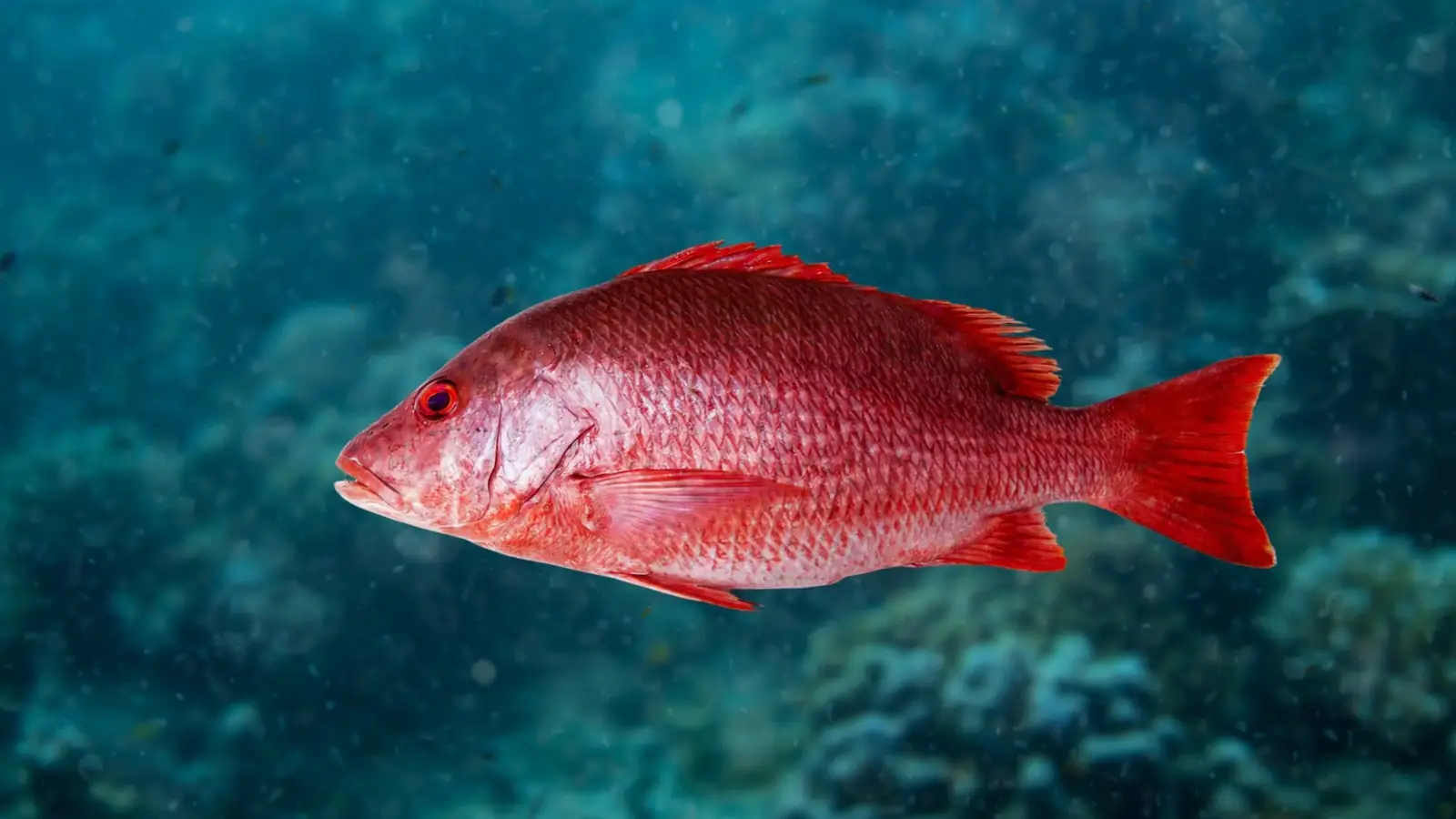
At a Glance
A red snapper holding over a Gulf wreck is in no hurry, and it has earned the right: the fish keeping station in the current may well be older than the diver watching it. Long-lived, slow-growing and faithful to one patch of structure, it is less a passing fish than a resident, and its modern story runs from nineteenth-century fishing fleets all the way to DNA laboratories.
Red Snapper Size: How Big Do They Grow?
The everyday adult is a fish of about 60 centimetres and a few kilograms, deep-bodied and rose-red, already an imposing presence over a reef. The species’ ceiling is much grander: adults can approach a metre in length, and the heaviest fish on record weighed 22.8 kilograms, about 50 pounds. Between the typical fish and the giants lies the central fact of the species, that size is bought with time: growth is quick for the first few years and then slows to a crawl, so every extra centimetre costs a decade.
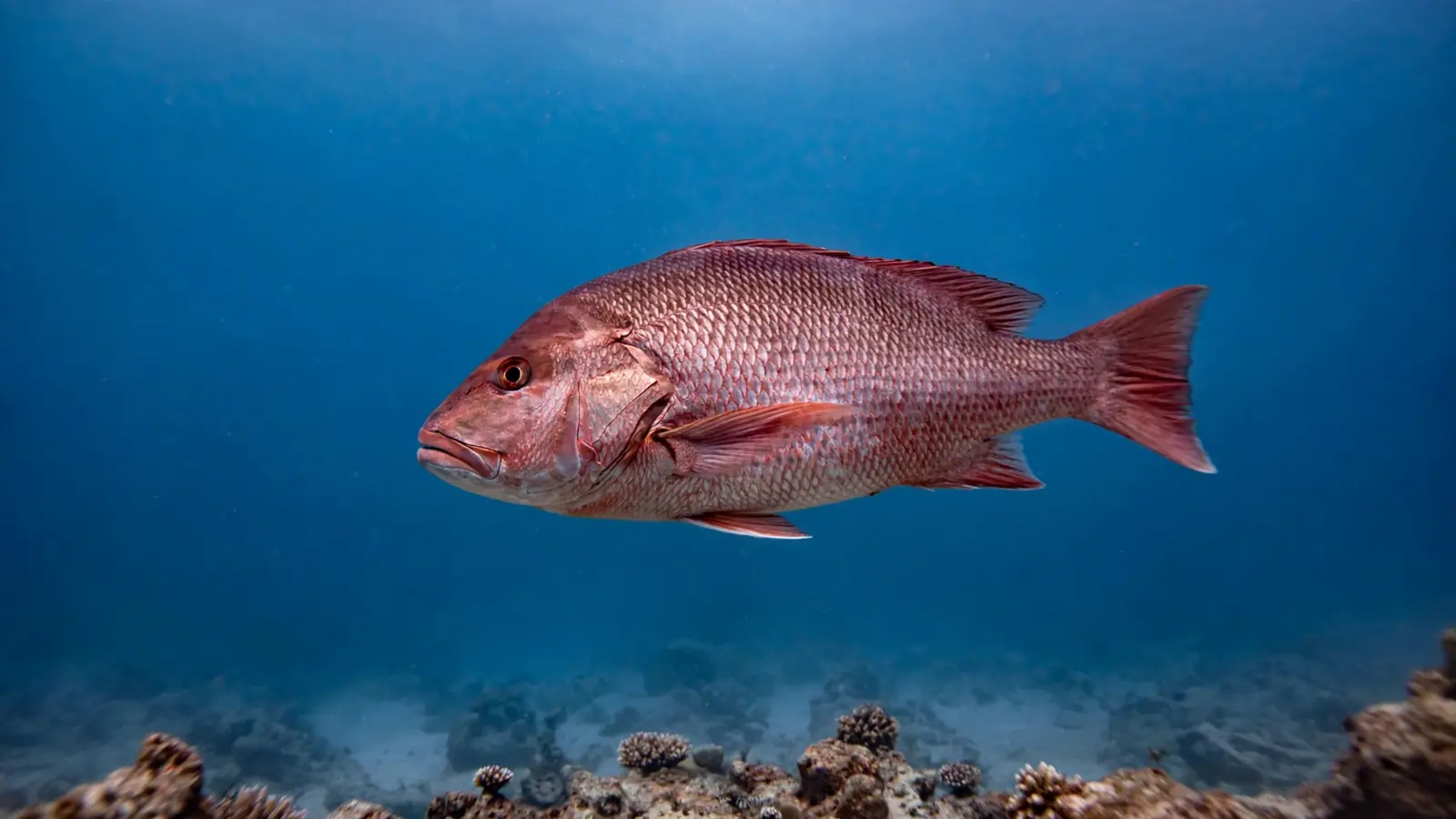
The build matches the colour: a deep body, a steeply sloping forehead, a mouth armed with short canine teeth, the snapping equipment that names the whole family. Nothing about the fish is built for speed; everything about it is built for holding a station over structure and lunging at what passes. And since growth slows but never stops, the dimensions above are really an age chart in disguise, which is where the lifespan story takes over.
Fifty Years on the Reef: Lifespan and Age
For most of the twentieth century, this fish was misunderstood in the most consequential way: it was assumed to live about a decade. Then scientists began ageing it properly, reading the annual rings in its otoliths, the stones in the inner ear, and the numbers came back at two, three, five times the assumption. They routinely pass 30 and 40; fish over 50 are documented, and the oldest individual ever aged was 57. A fishery managed for a 10-year fish had been harvesting a 50-year one, and the consequences run through the rest of this guide.

Long life changes the breeding maths completely. Egg production climbs steeply with size and age, so a single old female in her prime releases more eggs in a season than dozens of young females combined, and her larvae are often the hardiest too. A population stripped of its old fish has therefore lost far more than fish; it has lost its engine room. The animal’s species account gathers the growth and ageing data behind the story.
Reefs, Wrecks and Rigs: Where They Live
Adults are fish of structure in the northern Gulf of Mexico, with range spilling up the United States’ Atlantic coast. It holds over natural reefs and rocky outcrops, around wrecks and rubble, most often between about 10 and 60 metres down, always near the bottom it hunts over. From its station it works the surrounding sand for crabs, shrimp, squid and smaller fish, retreating into the structure’s shadow when predators pass.
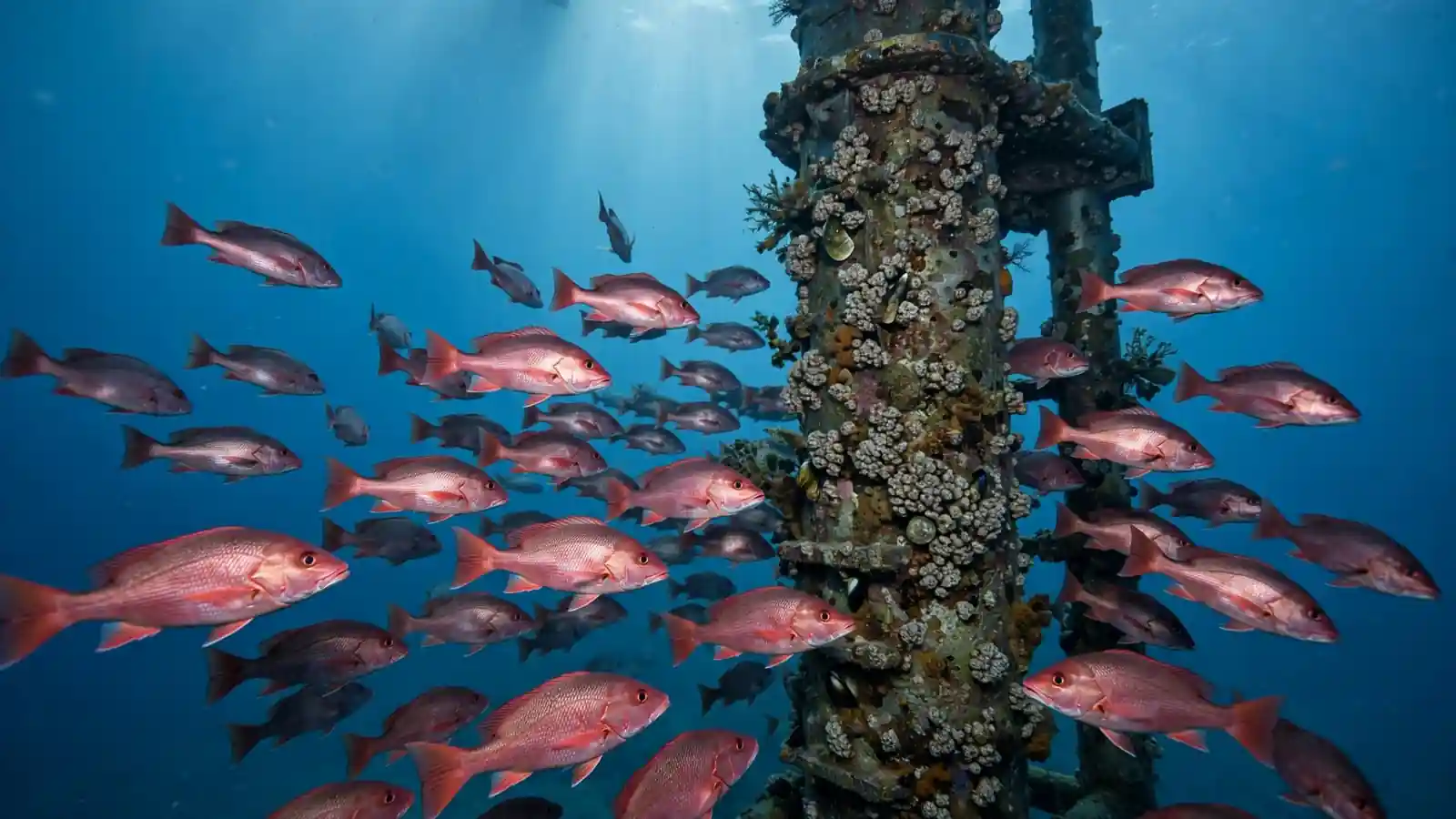
The most famous habitat of all is artificial. The legs of Gulf oil platforms rise from deep mud where no natural reef exists, and they colonised them in enormous numbers, stacking in the shade of the structure from near the surface down. Between the natural reefs, the wrecks and the rigs, the adult’s map of the Gulf is a map of hard structure in soft-bottom sea, and the fish are homebodies on it: tagged adults are routinely found on the same structure years later.
Young Fish, Different World
The young live somewhere else entirely. After a drifting larval stage, juvenile fish settle over open inshore bottoms, sand, mud and shell hash with low relief, where a dark spot below the dorsal fin still marks them as youngsters. It is a dangerous nursery: for decades, shrimp trawlers working those same bottoms caught young snapper in vast numbers as bycatch, a hidden harvest of the next generation that did as much damage as the directed fishery, until excluder devices in the nets began letting the juveniles escape.

The move offshore is the species’ great migration, one-way and age-graded: the older the fish, the deeper and more structured its address, until the biggest, reddest fish hold the prime wrecks far out in the Gulf. It also means the generations barely meet, the nursery on the sand and the elders on the reef living almost separate lives under one famous name.
The Red Snapper Identity Problem
Success made this fish a target for fraud. It commands a premium, so cheaper fish have been sold under its name at a scale few seafoods match: one widely reported DNA investigation of fish sold as the species in the United States found that 87 per cent of the samples were something else, other snappers, rockfish, even tilapia. The impostors are not random: the snapper family is full of red fish, vermilion, lane and silk snappers among them, similar enough to pass on a plate, different enough to matter in a guide.
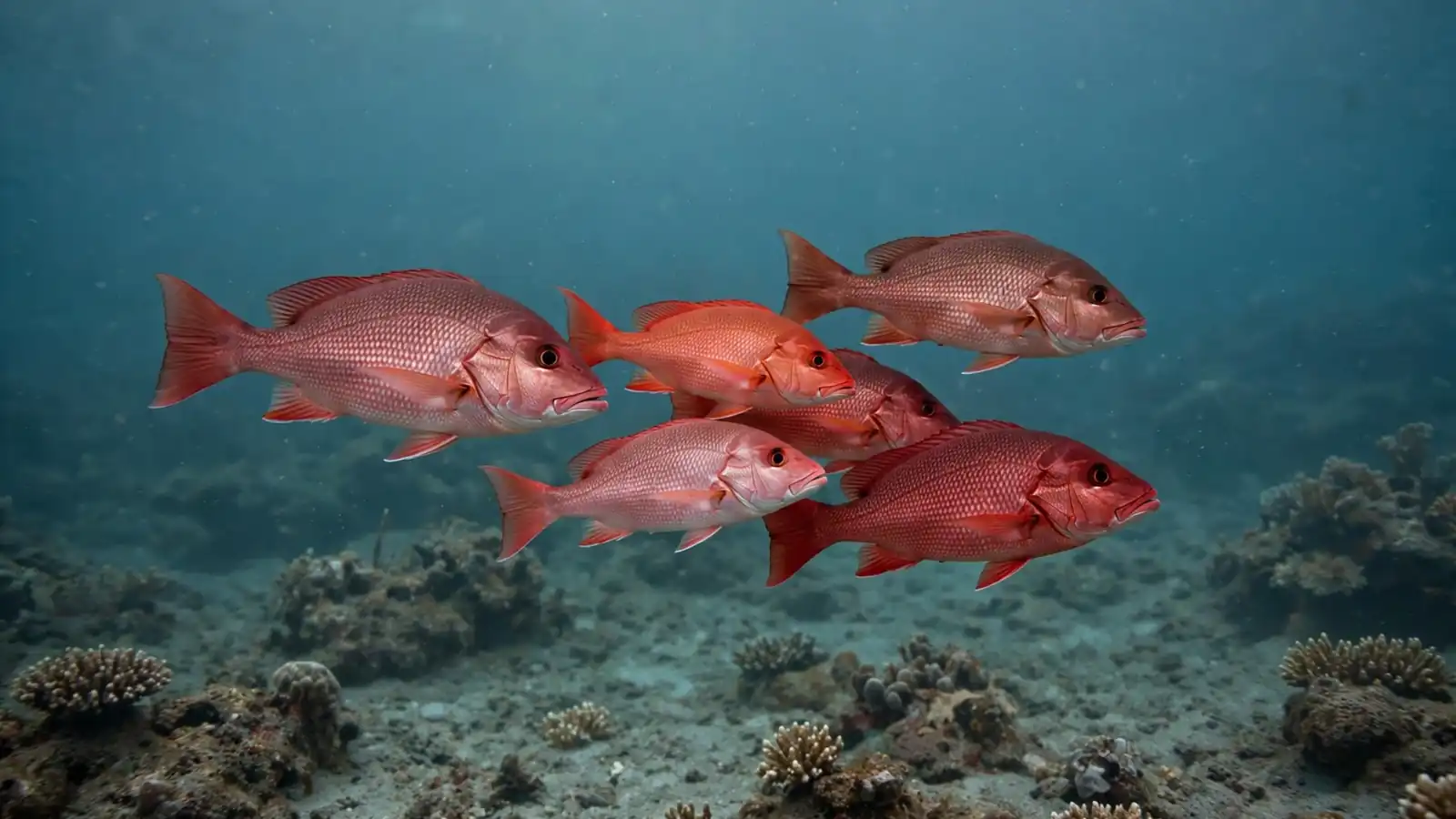
The genuine fish can be told by its deep red colour without stripes, its sloping forehead and pointed anal fin, and by the absence in adults of the juvenile’s dark spot. And one more trap deserves naming, because it is pure language: in the Gulf, redfish means the red drum, an estuary fish of a different family with a spot at its tail. A snapper and a redfish share nothing but a colour word and a coastline.
The Long Recovery
The reckoning arrived in the late twentieth century: after more than a hundred years of commercial and recreational harvest, the Gulf stock was badly overfished, its old fish largely gone. The species is now listed as Vulnerable, and its management became one of the most contested in American fisheries, quotas, short seasons and size limits all aimed at one biological fact: you cannot hurry a 50-year fish. Rebuilding plans for the species are written in decades because the animal’s own clock allows nothing faster.
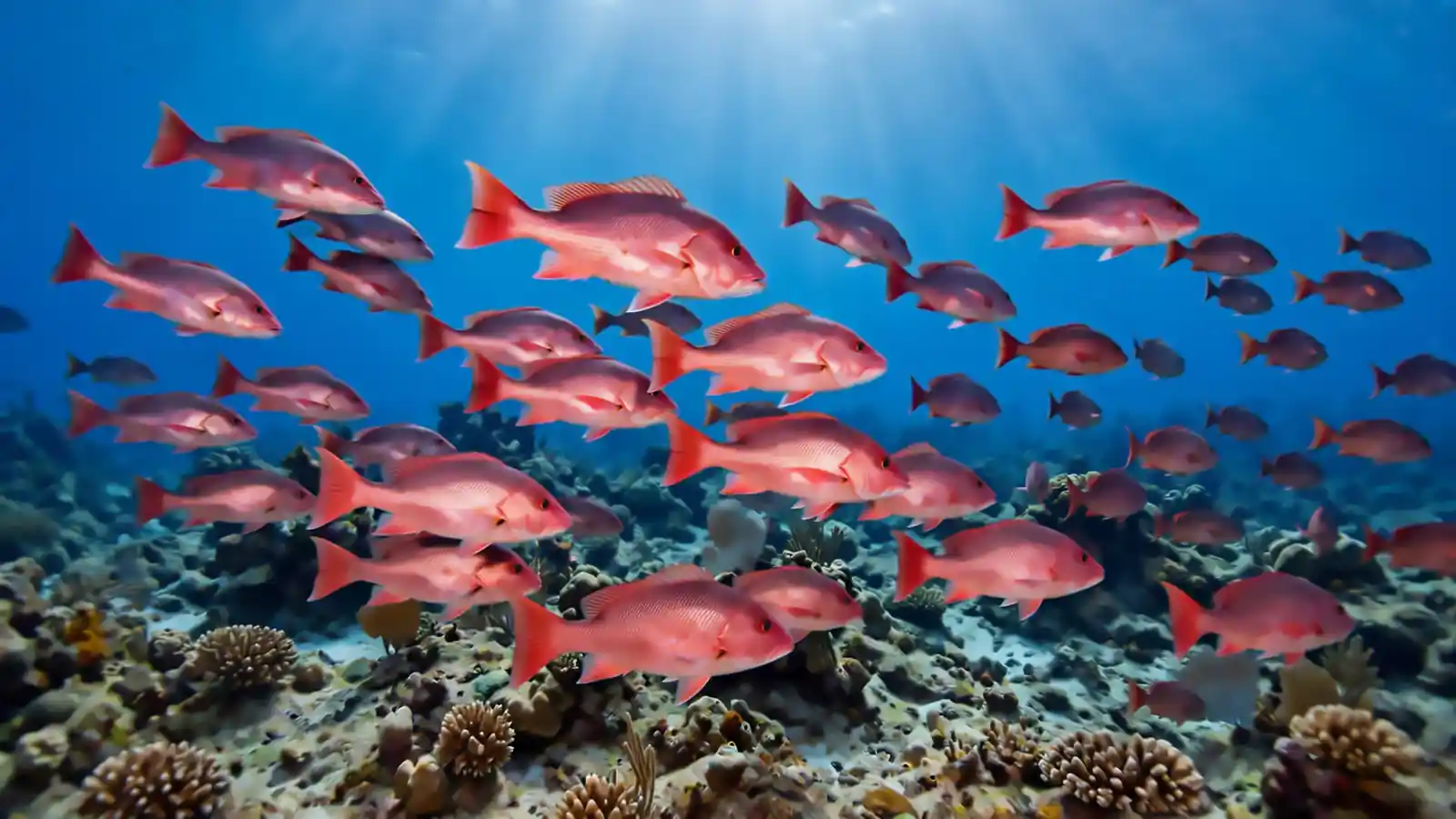
The encouraging news is that the curve has finally bent. Assessments in recent years show the stock rebuilding and, most tellingly for a fish like this, the old fish coming back, the age structure refilling from the top. Recovery in an animal that measures its life in half-centuries was never going to be quick, but the rose-red elders are returning to the wrecks, which is the only finish line this species recognises.
Fun Facts
- The oldest specimen ever aged, read from the rings in its ear stones, was 57 years old.
- In the Gulf, the name redfish belongs to the red drum, a different fish entirely; the snapper answers only to its full name.
- Young fish wear a dark spot below the dorsal fin that fades away as they grow into the plain red adult.
- Snappers earned their family name from their snapping jaws and sharp, dog-like canine teeth.
- A single big old female can release more eggs in one season than dozens of young females combined.
- Gulf oil platforms act as vertical reefs, and their legs can hold dense crowds of adults.
Frequently Asked Questions
How Long Do Red Snapper Live?
More than fifty years. They were once assumed to live a decade or so, but ageing from their otoliths, the ear stones that lay down annual rings, rewrote the story: fish past 50 are documented, and the oldest individual aged so far was 57. The species is slow-growing after maturity, which is why its big fish are always its old fish.
How Big Do Red Snapper Get?
A typical adult runs to about 60 centimetres and a few kilograms. The ceiling is far higher: It can approach a full metre in length, and the heaviest recorded fish weighed 22.8 kilograms (about 50 pounds). Size in this species is mostly a matter of survival, since growth continues, slowing but never quite stopping, across the whole long life.
Where Do Red Snapper Live?
The species is a fish of the Gulf of Mexico above all, with a range extending up the Atlantic coast of the United States. Adults live over reefs, rocky outcrops, wrecks and, famously, the legs of oil platforms, most often between about 10 and 60 metres down, and individuals show strong loyalty to a home structure. The young live apart, over open sand and shell bottom inshore.
Is Red Snapper Endangered?
It is listed as Vulnerable, the product of more than a century of heavy fishing on a fish that matures slowly and lives long, the worst profile for withstanding harvest. Strict quotas, seasons and size limits are now in force across its range, and stock assessments show the population rebuilding, with older fish becoming commoner again. Recovery in a 50-year fish is measured in decades, not seasons.
What Is the Difference Between Red Snapper and Redfish?
They are entirely different fish that share a colour word. The fish is Lutjanus campechanus, a true snapper of Gulf reefs. The fish called redfish in the Gulf is the red drum, Sciaenops ocellatus, a croaker of bays and estuaries with a downturned mouth and a black spot at the tail. Different families, different waters, different fish; only the nickname overlaps.
Why Is Red Snapper So Often Mislabelled?
It commands a premium, so cheaper fish are sold under its name at a scale few seafoods match: one widely reported DNA investigation of fish sold as the species in the United States found that 87 per cent of the samples were something else — other snappers, rockfish, even tilapia.
Similar Species Worth Exploring
Keep Exploring
Keep exploring the reef fish: meet the snapper’s heavyweight neighbour in our grouper guide, or browse the whole shoal in the types of fish. Then come back to the rose-red elder holding station over the wreck: the red snapper.