Skipjack Tuna
Skipjack Tuna: the striped sprinter behind most canned tuna
The skipjack tuna is the striped sprinter of the open ocean: the most-caught tuna in the world, a fish of 40-mile-per-hour bursts and vast schools, and the fish behind most cans of light tuna. This guide covers its size, its speed, its diet and how it compares with its yellowfin and bluefin cousins.
By Emily Carter · Reviewed by our vet team · Updated 10 November 2026 · 11 min read
The world’s most-caught tunaBursts near 40 mphMost canned light tuna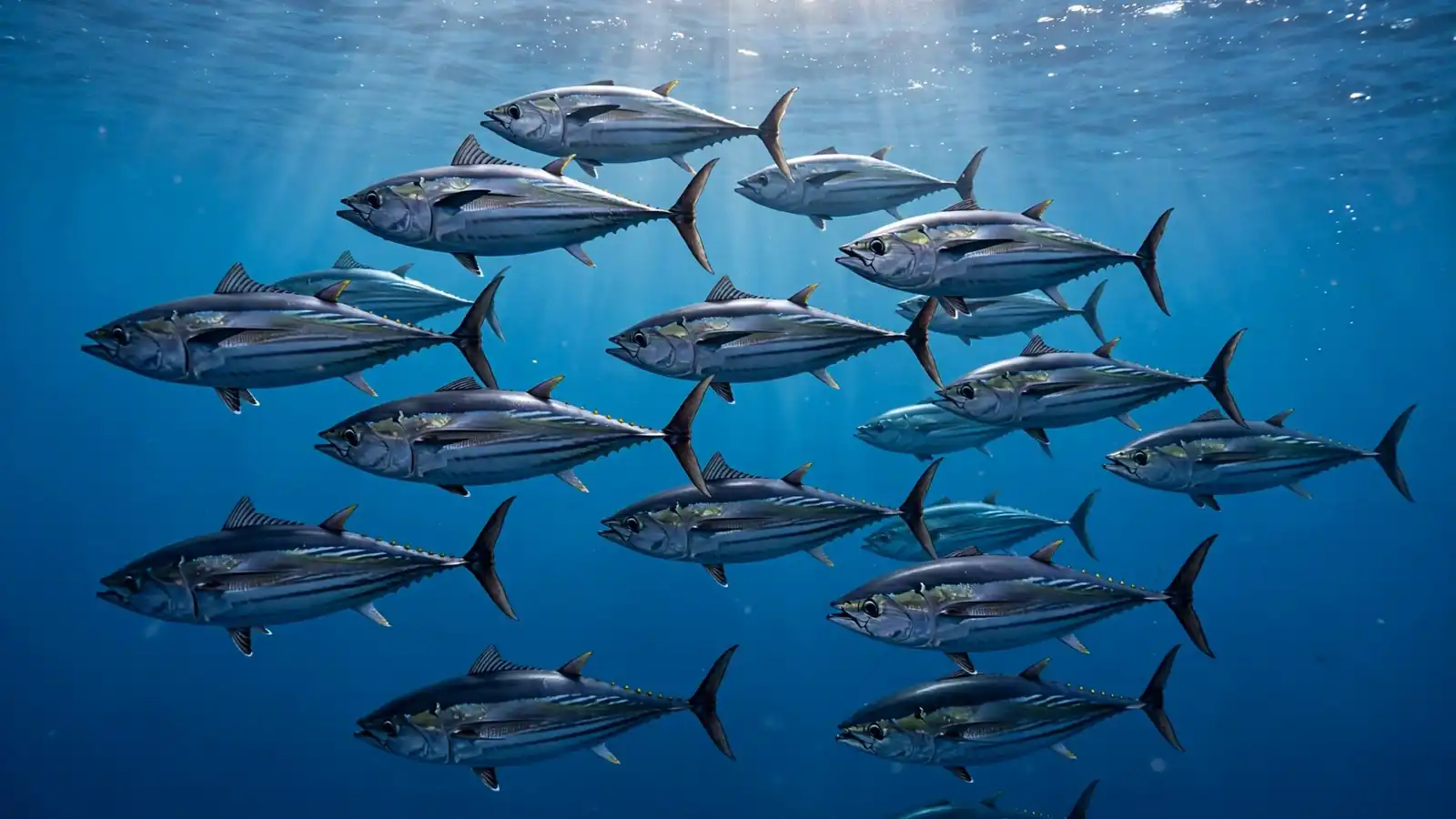
At a Glance
A skipjack tuna is a torpedo with stripes: a dark-backed, silver-bellied sprinter with four to six dark horizontal stripes along its belly, a body built for bursts of speed, and a life spent in vast schools that darken the open ocean. It is the most-caught tuna in the world, and the fish in most cans of light tuna, which makes it the tuna most people have already eaten.
What Is a Skipjack Tuna?
The skipjack, Katsuwonus pelamis, is a tuna of the family Scombridae, and the only member of its genus. It is smaller than its bluefin and yellowfin cousins, faster in a burst than either, and far more numerous: skipjack are the most-caught tuna species in the world, taken in millions of tonnes a year by purse-seine fleets across the tropical oceans.
The stripes are the giveaway. Four to six dark horizontal stripes run along the silver belly, and they are the mark no other tuna carries in quite the same form, which is why the skipjack is easy to name on a deck even in a crowd of tunas. The body is scaleless except for a band of large scales behind the head, the corselet, and the whole animal is built for one thing: speed in a school.
Skipjack Tuna Size and Speed
A skipjack grows to 108 centimetres and 34.5 kilograms at most, and the fish in a school are usually far smaller, nearer 40 to 80 centimetres and a few kilograms. It is a small tuna by family standards — a bluefin can outweigh it fifty times over — and the size is the point: a small, fast tuna can live in vast schools and turn over quickly, which is why there are so many of them.
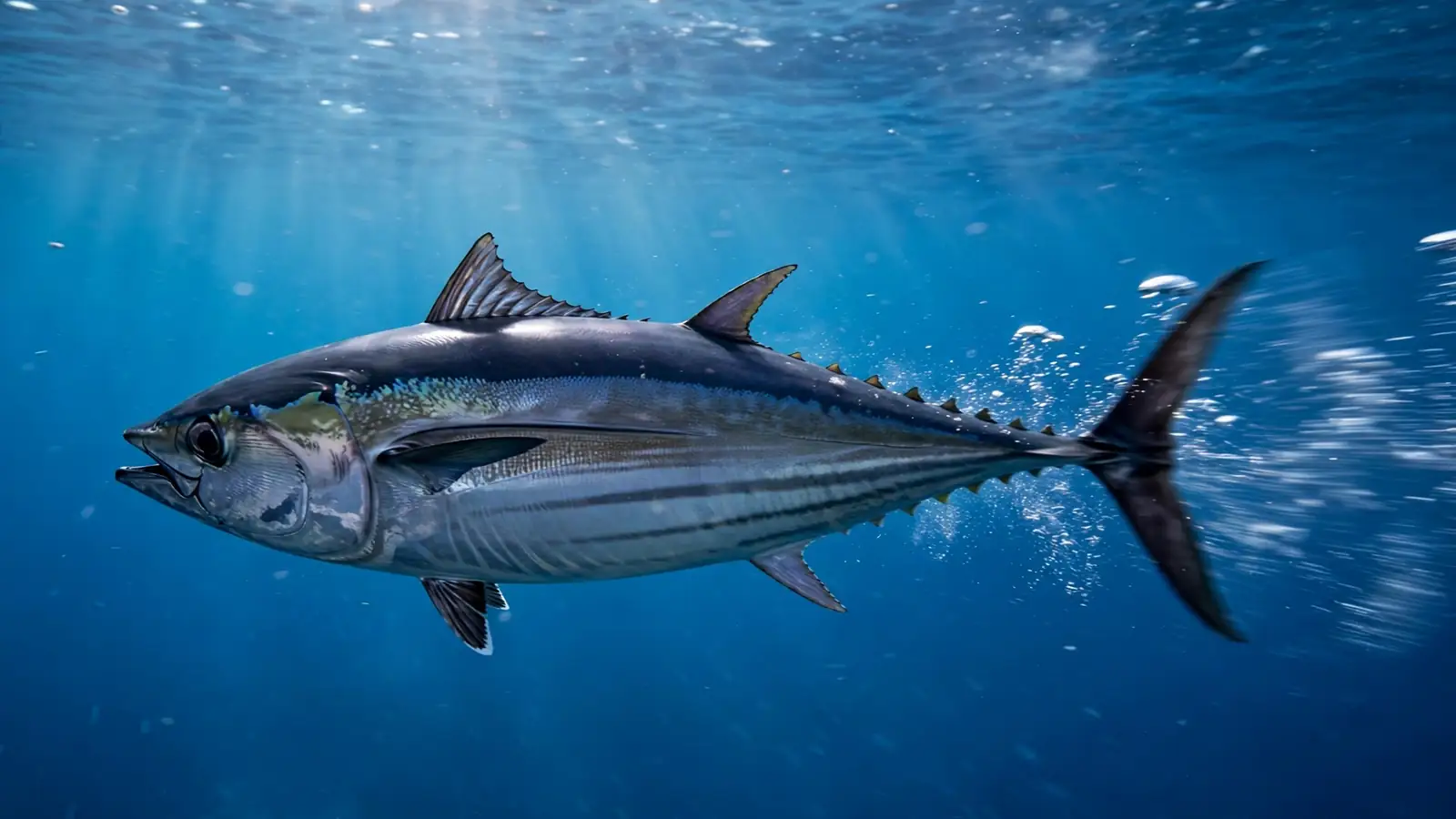
Speed is the skipjack’s other signature. Bursts of about 40 miles per hour, 64 kilometres per hour, are the figure most sources give, and the higher claims — 45 to 75 miles per hour on one unreliable source — are best left out. Forty miles per hour is fast enough: it is the speed of a fish that hunts in a pack, strikes in a rush, and outruns almost everything that hunts it.
The Striped Belly: Identification
The striped belly is the skipjack’s identity card. Four to six dark horizontal stripes run along the silver belly from the chest to the tail, and they are visible from below and from the side, which is how fishermen, scientists and other tuna tell a skipjack from its cousins. The stripes fade after death, which is why a skipjack on ice looks plainer than a skipjack in the water.
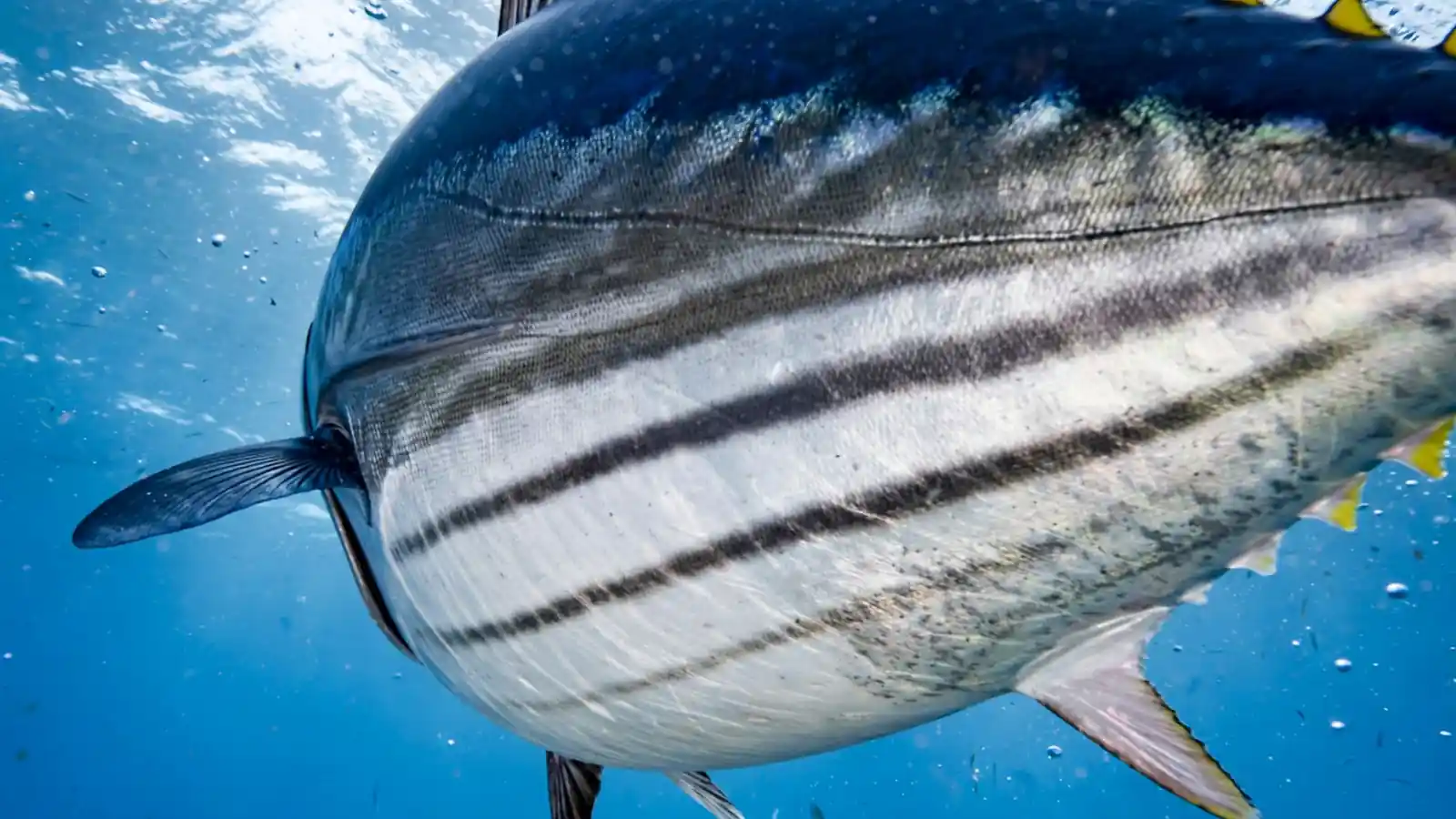
The rest of the identification is the body: dark blue-black on the back, silver below, a streamlined torpedo with a deeply forked tail and a row of finlets behind the dorsal and anal fins, and a scaleless body except for the corselet. Together the stripes and the shape make the skipjack the easiest tuna to name at a glance, and the hardest to mistake for anything else.
Diet and Feeding
A skipjack eats small fish, squid and crustaceans, and it hunts them the way its whole life is organised: in a school, at speed, in a rush. The school finds a bait ball, the fish slash through it in bursts, and the feeding frenzy that follows is one of the most visible hunts in the open ocean, with birds above and sharks below joining the same bait.
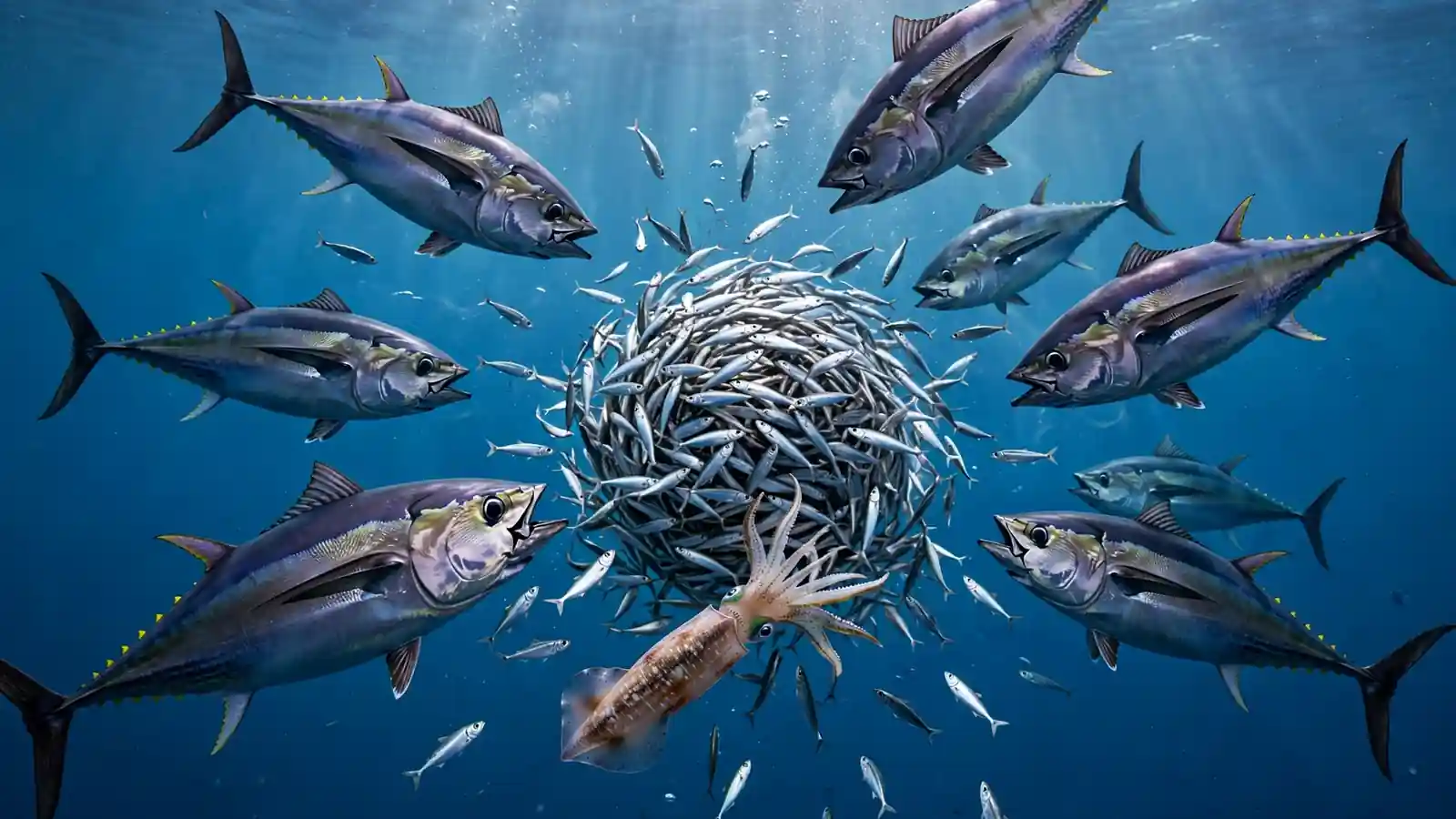
The feeding is opportunistic and constant. Skipjack eat what the school finds, from anchovies and sardines to squid and small crustaceans, and they feed mostly by day in the warm upper water. The diet is the reason the fish is so numerous: small, abundant prey, taken in vast quantities by vast schools, is a food supply that rarely runs out.
Schools, Migration and Habitat
Skipjack live in tropical open ocean worldwide, in the warm waters of the Atlantic, Pacific and Indian Oceans, and they travel in schools that can number in the thousands. The schools follow warm water and food, migrating with the seasons and the currents, and they gather around floating objects, logs and debris, where small fish shelter — a habit the fishing fleets know well. The skipjack species account maps the distribution and the biology in full.
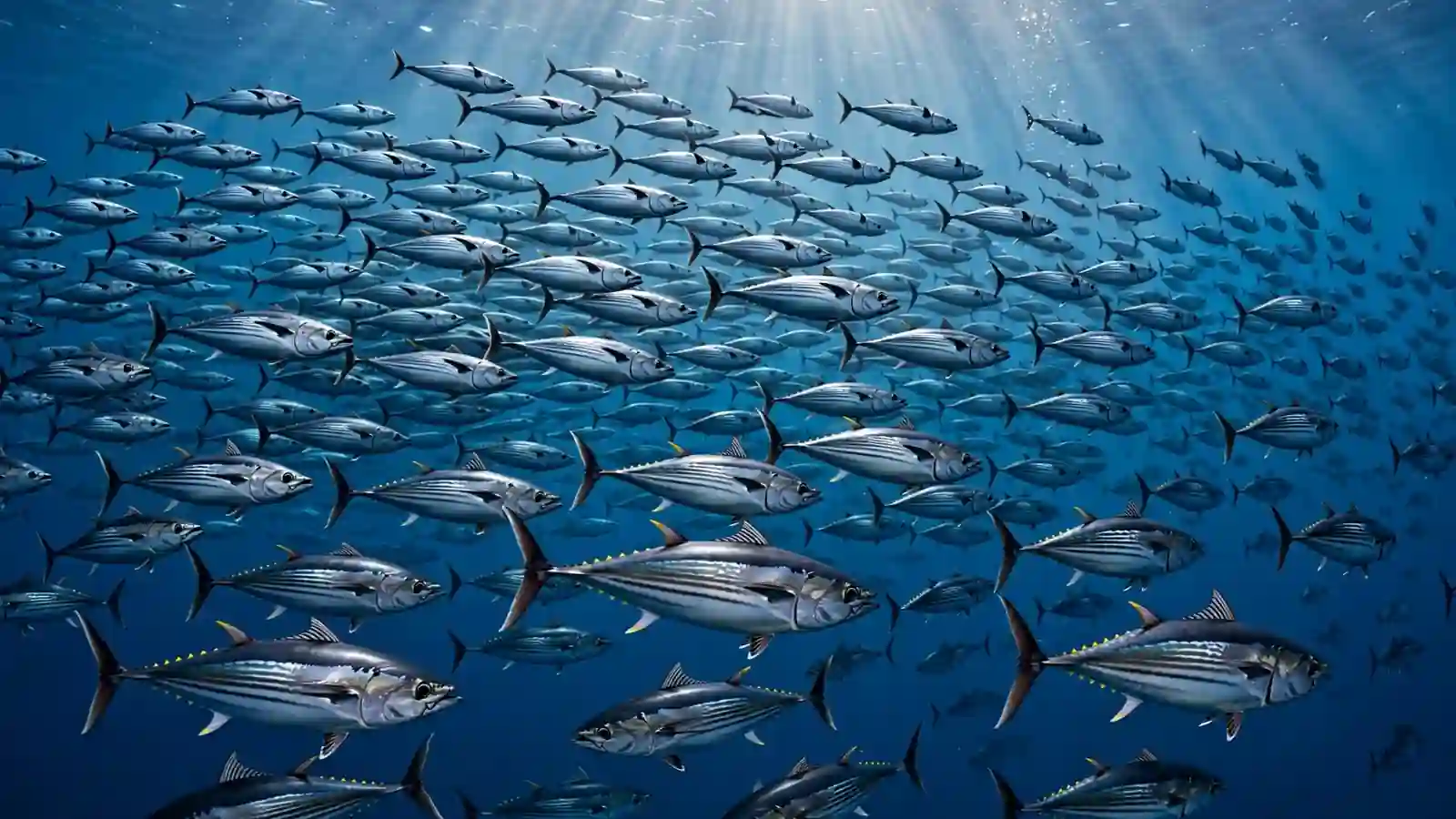
The habitat is the open sea, not the coast: skipjack are pelagic fish of blue water, living from the surface to a few hundred metres down, and they are rarely seen near shore except where deep water comes close to land. The schools are the animal’s whole social life — feeding, travelling and safety all happen in the school, and a lone skipjack is a rare and vulnerable thing.
The Canned Tuna Connection
Most canned light tuna is skipjack. The fish’s abundance, its size and its pale flesh make it the natural choice for the can, and the tuna in a can of light tuna is a skipjack far more often than it is any other species. One industry estimate puts skipjack at around 70 percent of the canned tuna market, a single-source figure that is best attributed rather than stated as settled fact, but the direction is not in doubt: the can is mostly skipjack.

The can is also the reason the skipjack matters to people who never see the sea. It is the most-caught tuna in the world, taken in millions of tonnes a year, and the catch is the backbone of the global tuna industry, which is why the fish is watched closely by scientists and regulators alike: a fish this numerous is a fish whose numbers matter.
Mercury: How Skipjack Compares
Skipjack carries less mercury than its larger tuna cousins, and the reason is size and diet: a smaller fish that eats smaller prey accumulates less mercury than a giant that eats other predators. The reported figure is about 0.144 parts per million, a single-source figure that should be attributed rather than stated as settled fact, and it is well below the levels found in bluefin and bigeye.
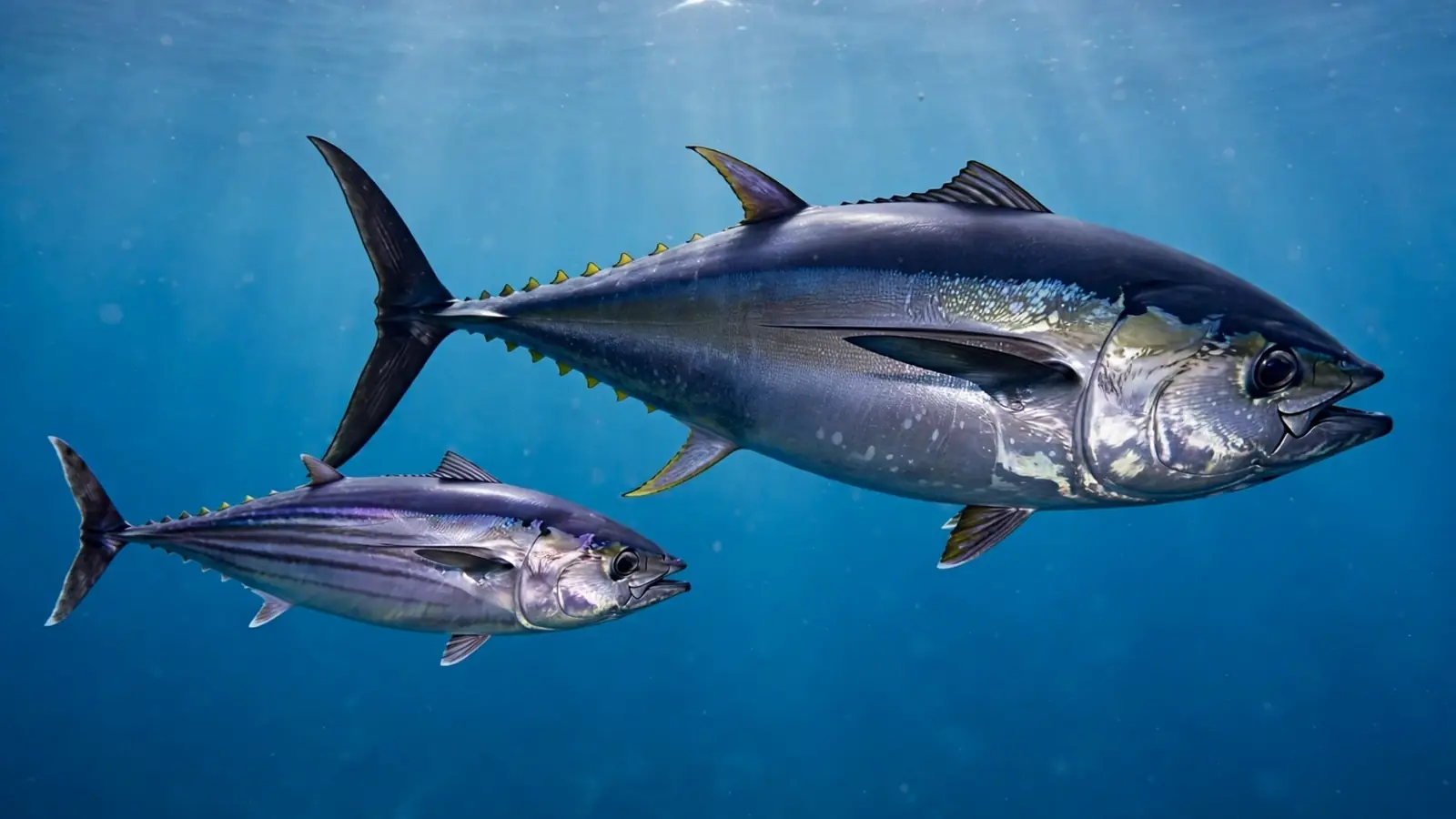
The practical result is that skipjack is the tuna most often recommended for regular eating, and the fish behind the light tuna label is the safer choice among tunas. It is still a tuna, and it still carries mercury, but the skipjack’s place at the smaller end of the tuna family is what keeps its numbers low, and what makes it the everyday tuna rather than the occasional one.
Fun Facts
- Skipjack are the most-caught tuna species in the world, taken in millions of tonnes a year.
- Most canned light tuna is skipjack, and one industry estimate puts it at around 70 percent of the canned market.
- It has four to six dark horizontal stripes along its silver belly, a mark no other tuna carries.
- It is scaleless except for a band of large scales behind the head, called the corselet.
- It swims in bursts of about 40 miles per hour, 64 kilometres per hour.
- It carries less mercury than its larger tuna cousins, because it is smaller and eats smaller prey.
Frequently Asked Questions
How big do skipjack tuna get?
To 108 centimetres and 34.5 kilograms at most. The fish in a school are usually far smaller, nearer 40 to 80 centimetres and a few kilograms. It is a small tuna by family standards — a bluefin can outweigh it fifty times over.
How fast can skipjack tuna swim?
In bursts of about 40 miles per hour, 64 kilometres per hour, on most sources. Higher claims of 45 to 75 miles per hour appear on one unreliable source and are best left out. Forty miles per hour is the honest figure.
Is skipjack tuna the same as canned light tuna?
Mostly, yes. Most canned light tuna is skipjack, and one industry estimate puts skipjack at around 70 percent of the canned tuna market. The estimate is single-source, so it is best attributed, but the direction is not in doubt: the can is mostly skipjack.
Is skipjack tuna safe to eat?
It is the tuna most often recommended for regular eating, because it carries less mercury than its larger cousins. The reported figure is about 0.144 parts per million, a single-source figure. It is still a tuna and still carries mercury, but less than bluefin or bigeye.
What is the difference between skipjack and yellowfin tuna?
Size, stripes and flesh. A skipjack is smaller, with four to six dark horizontal stripes along its belly, and it is the fish behind most canned light tuna. A yellowfin is larger, with yellow finlets and no belly stripes, and it is usually sold fresh or as steak rather than canned.
Where do skipjack tuna live?
In tropical open ocean worldwide: the warm waters of the Atlantic, Pacific and Indian Oceans. They are pelagic fish of blue water, travelling in vast schools and gathering around floating objects, logs and debris where small fish shelter.
What do skipjack tuna eat?
Small fish, squid and crustaceans, hunted in schools at speed. The school finds a bait ball, the fish slash through it in bursts, and the feeding frenzy that follows is one of the most visible hunts in the open ocean.
Similar Species Worth Exploring
Keep Exploring
Keep exploring the tunas: meet the white-meat cousin in our albacore tuna guide, or browse the whole shoal in the types of fish. Then come back to the striped sprinter behind the can: the skipjack tuna.