Tiger Shark
Tiger Shark: the striped hunter they call the garbage can of the sea
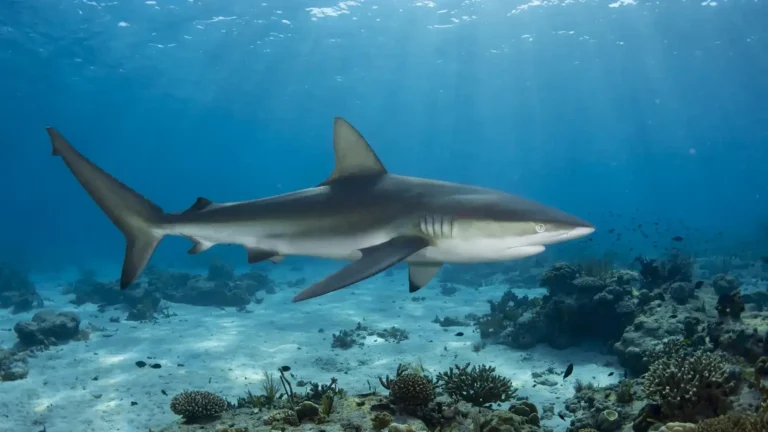
The tiger shark is the ocean’s great generalist, a blunt-nosed, stripe-backed hunter that eats almost anything it meets, from sea turtles and seabirds to tyres and number plates. It is one of the largest predatory sharks alive, one of the most adaptable, and one of the most misunderstood. Behind the fearsome reputation sits a patient, mostly nocturnal animal that quietly keeps whole food webs in balance.
By Emily Carter · Reviewed by our vet team · Updated 10 November 2026 · 11 min read
Stripes that fade with ageEats almost anythingTeeth that crack turtle shell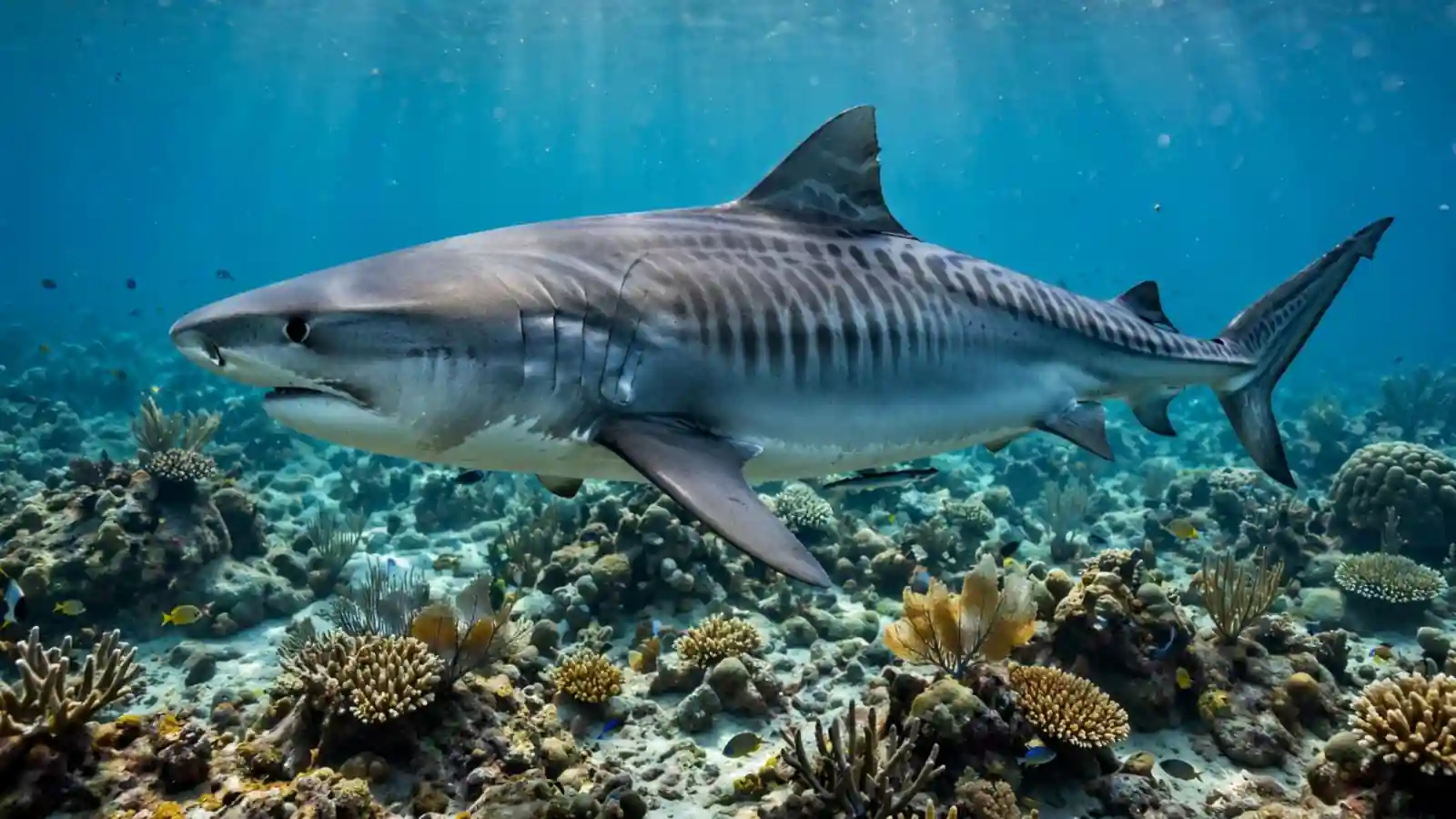
At a Glance
Every shark has a speciality, except the tiger shark. Where other big sharks are tuned to a narrow menu, this one is tuned to opportunity itself. It hunts at night along reef edges and harbour mouths, scavenges dead whales, crunches through turtle shell, and swallows seabirds resting on the surface. Its stomach contents read like a beachcomber’s notebook. That indifference is not sloppiness; it is a survival strategy that has carried this species into almost every warm sea on Earth.
Tiger Shark Size and Weight
Its size puts it firmly among the giants. Adults commonly measure 3.25 to 4.25 metres (10.5 to 14 feet) long, and exceptional individuals grow well beyond 5 metres, although the very largest historical reports are hard to verify. Typical adults weigh between 385 and 635 kilograms, with the heaviest reliably reported sharks reaching around 862 kilograms. It is one of the largest carnivores in the ocean, in the same weight class as the great white shark, though built lower and heavier through the body.
The build explains the hunting style. The body is hefty rather than streamlined, the head broad and wedge-shaped with a short, blunt snout, and the tail strongly uneven, its long upper lobe delivering slow, powerful thrust. This is not a shark built for long chases. It is built to cruise economically all night, cover huge distances between feeding grounds, and finish encounters quickly when they come. Tracked individuals have swum up to 16 kilometres in a day and ranged over territories of roughly 23 square kilometres.
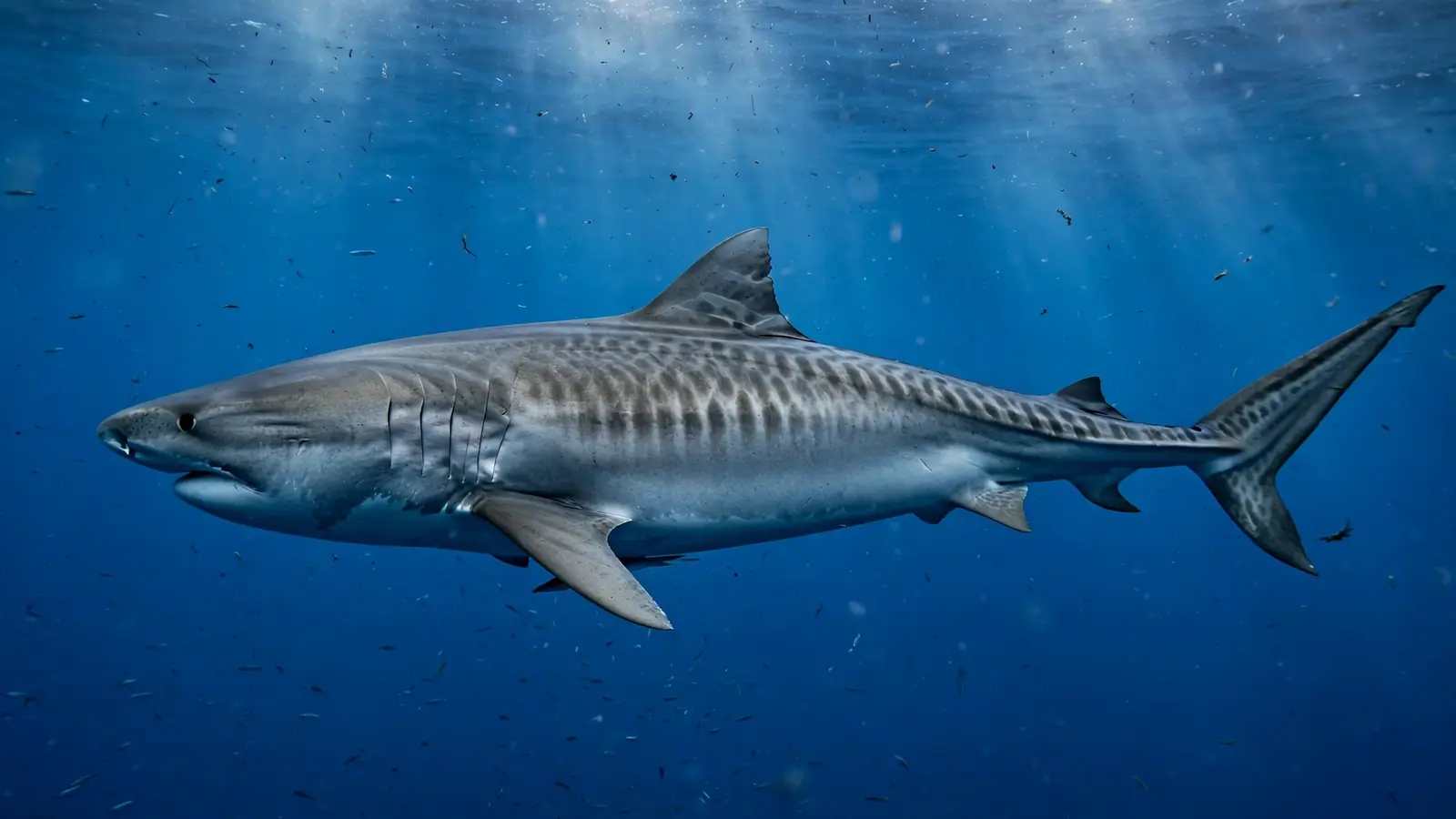
Males are slightly larger than females on average in this species, an unusual detail among sharks, and females mature later, at around 3.3 to 3.45 metres. You can browse the full species account for Galeocerdo cuvier for the underlying measurements and life-history data. However you measure it, a full-grown adult is a very large animal to meet in the water.
Tiger Shark Teeth and Stripes
Tiger shark stripes are the name made visible. Young sharks wear bold, dark vertical bars down their flanks, a pattern that breaks up their outline in the dappled light of shallow nurseries. As the shark grows, the stripes fade, soften and in old adults can almost vanish into the blue-grey of the back, leaving just a hint of barring along the tail. The belly stays pale yellow-white, classic countershading that hides the shark from prey looking up or down.
Its teeth are just as distinctive, and unlike any other shark’s. Each tooth is broad, heavily serrated and shaped like a cockscomb, with a deep notch on one side, so the jaw works like a saw. The teeth in the upper and lower jaws are similar, and the whole apparatus is built for cutting through things other sharks cannot: thick fish, mammal blubber, and, most famously, the bone and shell of sea turtles. Lost teeth are replaced continuously from rows waiting behind, as in all sharks.
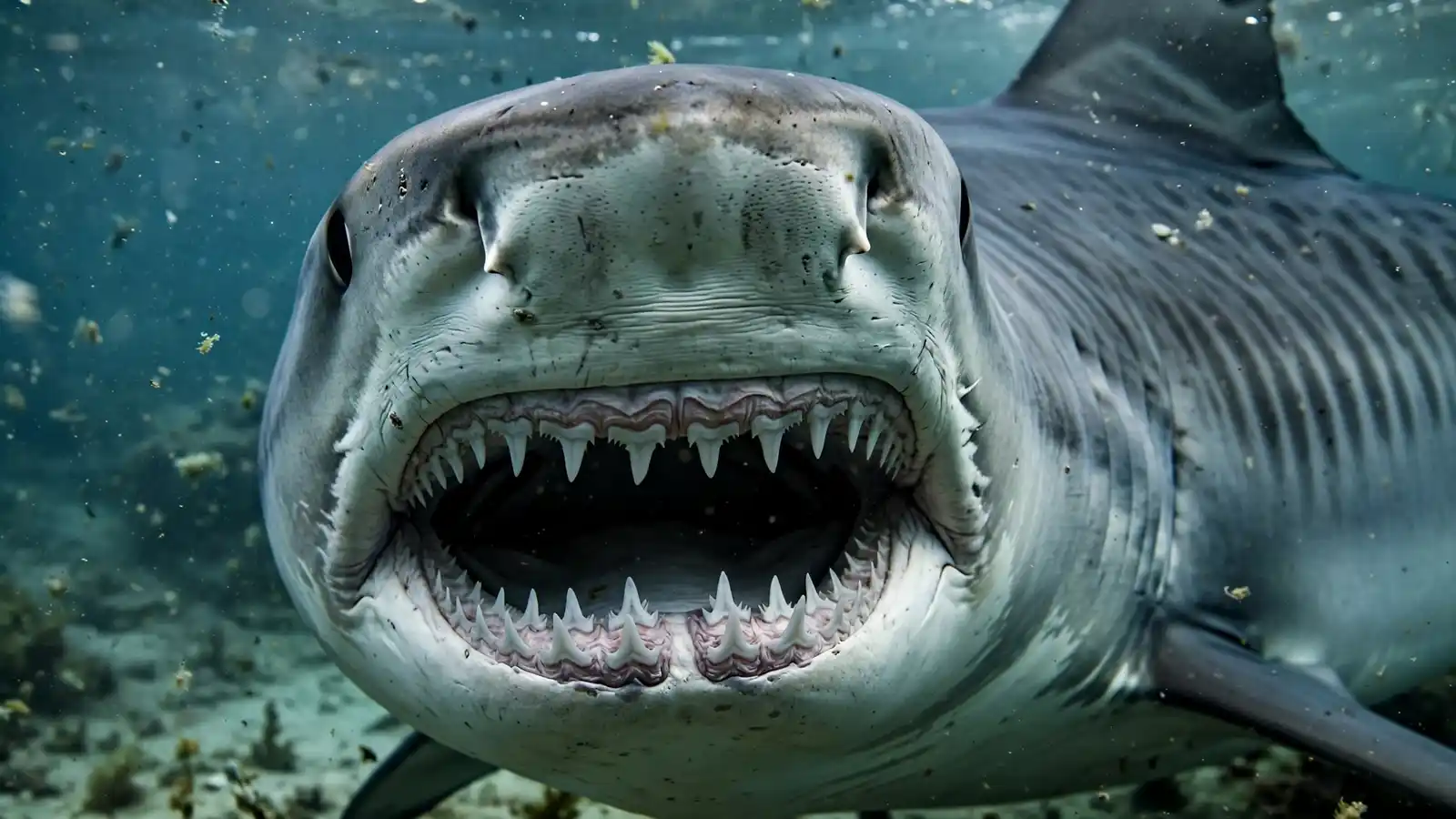
The senses behind those teeth are formidable. Like other sharks, this one detects the faint electrical fields of hidden prey through jelly-filled pores on its snout, the ampullae of Lorenzini, and reads vibrations through the lateral line running down each flank. A turtle buried in sand or a ray under sediment is not hidden from a hunter equipped like this.
Habitat and Range
Tiger sharks live in tropical and warm temperate seas almost worldwide, roughly between 45 degrees north and 32 degrees south. They are found along the eastern Americas from North America to Brazil, through the Gulf of Mexico and Caribbean, off Africa, China, India and Japan, and around countless Pacific islands, where they are especially common. Few big sharks are as truly cosmopolitan in warm water.
Within that range they favour coasts. Studies show they spend a large share of their time, around a third, in shallow coastal habitats such as seagrass meadows, lagoon edges, reef slopes, harbours and river estuaries, mostly between about 2.5 and 145 metres deep, though they have been recorded several kilometres offshore and down to around 350 metres. Females use the shallows more than males. The pattern is simple to read: this shark lives where the eating is, and the eating is best near shore.
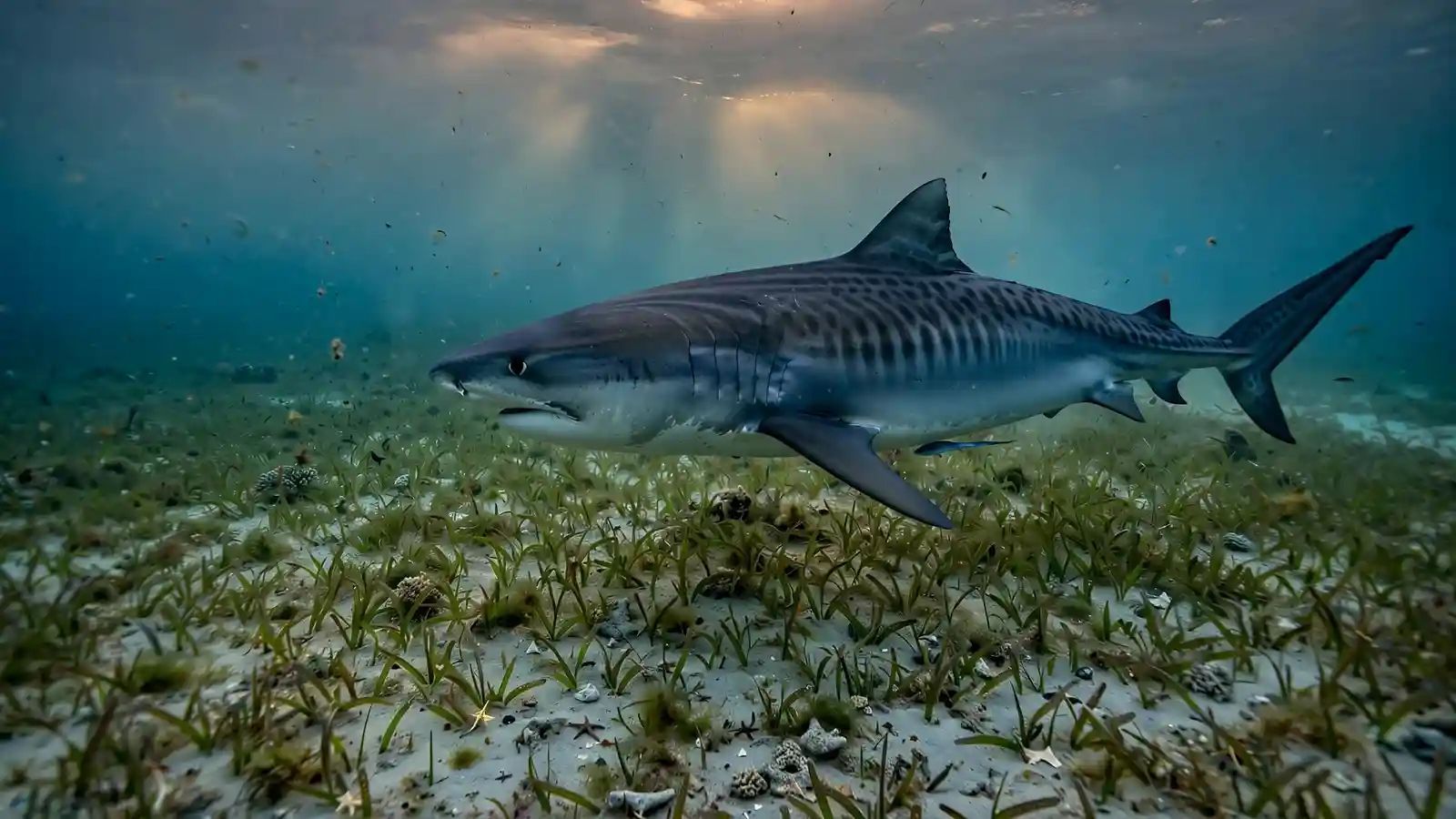
That coastal loyalty is also what brings the species into contact with people, a theme that runs through its whole story. The same warm shallows that hold turtles, rays and fish also hold swimmers, which is why understanding this shark’s habits matters more than fearing them.
Diet and Feeding
Its diet is the broadest of any shark’s. The natural menu covers bony fish, smaller sharks and rays, squid and other molluscs, crustaceans, sea snakes, seabirds, seals and sea lions, dolphins, dugongs and carrion, including dead whales, where groups of these sharks gather and feed in a loose order, the largest animals first. Above all, this species is the great specialist in sea turtles: its sawing teeth and powerful jaws bite through shell that defeats almost every other predator, and turtle remains are among the most common finds in its stomach.
Then there is the other menu. Stomachs have yielded tyres, cans, licence plates, pieces of clothing and other man-made rubbish, which is how the species earned its nickname, the garbage can of the sea. Biologists call this animal an opportunistic generalist: it investigates and often swallows whatever it encounters, and it can eject indigestible stomach contents when needed. Hunting itself is patient work. The shark relies on camouflage and stealth to drift within range, then a short burst of speed, rather than a long pursuit.

Young sharks start smaller, feeding on small fish, jellyfish and molluscs in sheltered nurseries before graduating to the adult menu. As top predators and scavengers, adults do quiet ecological work: removing the sick and the dead, and keeping turtle and ray populations in check, which in turn protects the seagrass meadows turtles graze.
Reproduction and Life Cycle
Tiger sharks do not pair up or guard territory for love. Mating is polygynandrous, with both sexes taking multiple partners, and females breed only once every three years. The species is ovoviviparous: eggs hatch inside the mother, and the embryos are nourished first by their yolk and then directly by the mother across a long gestation of about 13 to 16 months. Females give birth in sheltered nursery areas to litters of 10 to 80 pups, each weighing roughly 3 to 6 kilograms at birth.
Pups are born fully formed, boldly striped, and completely alone. There is no parental care of any kind; survival rests on camouflage, a working set of teeth and instinct. Maturity comes at around six to eight years, and stripes fade as adulthood arrives. Wild lifespan averages around 27 years, and some individuals may live to about 50. In aquariums the species fares poorly, rarely reaching two decades, one reason it is seldom kept on display.
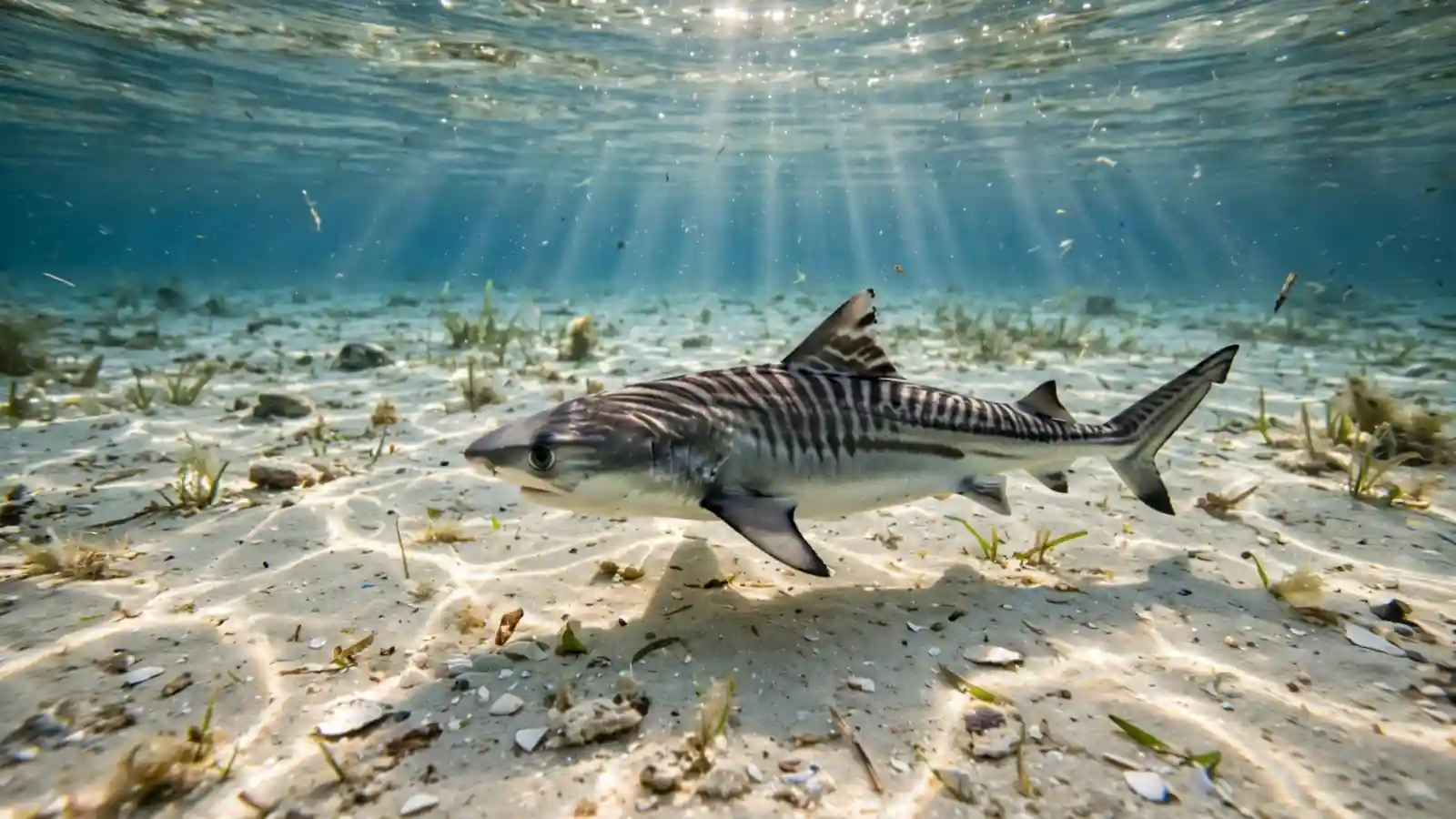
A three-year breeding cycle and late maturity mean populations grow slowly even in perfect conditions. That maths shapes everything about how this species must be managed: it can absorb some fishing pressure, but not unlimited pressure, and recovery from heavy losses is measured in decades.
Threats and Conservation
The species is listed as Near Threatened, and its total population is unknown. The pressures are the familiar ones for large coastal sharks: targeted fishing for fins, meat and sport, accidental capture in nets and lines set for other species, and in some regions deliberate culls near bathing beaches. Some fisheries limit the take to one shark per vessel under licence, but rules vary widely across its enormous range, and a shark that migrates between jurisdictions is only as safe as the weakest rules it swims through.
Its reputation adds a further burden. Its attacks on people are genuinely rare, but this species is consistently listed among the few sharks most often involved in unprovoked incidents, almost always in the murky, prey-rich shallows it shares with swimmers. The honest summary is that a large, curious, generalist predator deserves real respect in the water, while remaining, statistically, a far smaller danger to people than people are to it.
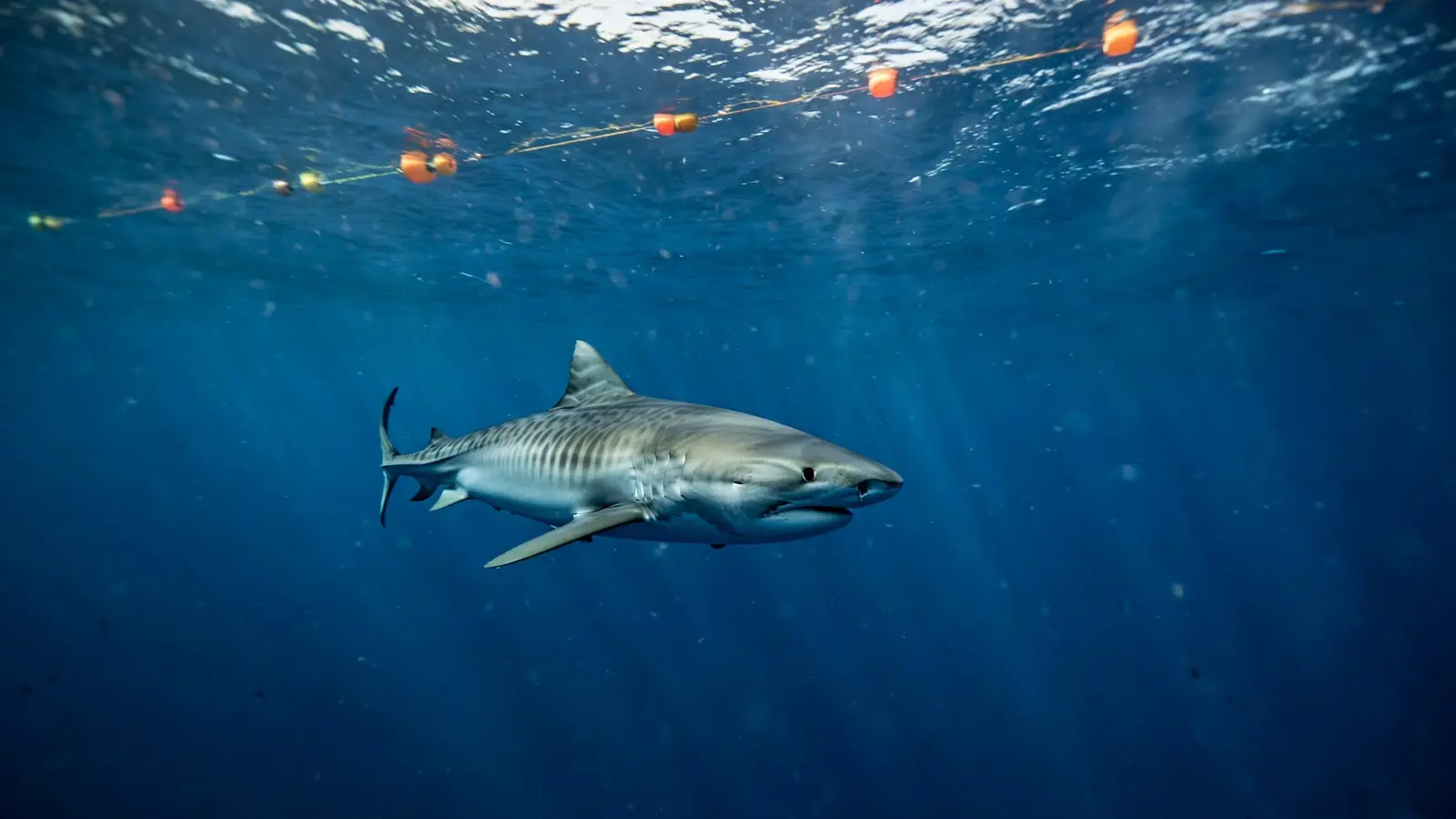
Conservation for this species is mostly unglamorous work: better catch data, fin-trade enforcement, nursery protection and honest public education. A top predator that cleans up carrion, prunes turtle numbers and patrols reef and seagrass alike is worth far more swimming than landed.
Fun Facts
- Its teeth are shaped like a cockscomb with a deep side notch, a design found in no other living shark.
- Stomachs of this species have contained tyres, oil cans, licence plates and even baseballs, earning it the nickname garbage can of the sea.
- It is one of the very few sharks that regularly eats sea turtles, biting through shell with its serrated, sawing teeth.
- Females give birth to litters of 10 to 80 pups, among the largest litters of any predatory shark.
- When several of these sharks feed on a dead whale, they queue by size, the largest animals feeding first with surprisingly little violence.
- It can survive for several weeks without feeding after a large meal.
Frequently Asked Questions
How Big Do Tiger Sharks Get?
Most adults are 3.25 to 4.25 metres (10.5 to 14 feet) long and weigh 385 to 635 kilograms. Exceptional tiger sharks pass 5 metres, and the heaviest reported approached 862 kilograms. That makes this one of the largest predatory sharks in the ocean, comparable in weight to a great white shark.
What Do Tiger Sharks Eat?
Almost everything. A tiger shark eats fish, smaller sharks, rays, squid, crustaceans, sea snakes, seabirds, seals, dolphins, dugongs and carrion, and it specialises in sea turtles, biting through their shells. It also swallows man-made objects such as cans and licence plates, which is how it earned its garbage-eater nickname.
Why Are Tiger Sharks Called Garbage Eaters?
Tiger sharks are called garbage eaters because their stomachs so often contain rubbish: tyres, cans, licence plates, clothing and other indigestible objects swallowed during their indiscriminate feeding. The nickname garbage can of the sea reflects a genuinely opportunistic strategy, not carelessness, since the same boldness lets them exploit almost any food source.
Are Tiger Sharks Dangerous to Humans?
A tiger shark should be treated with serious respect, as it is a large predator that is among the few species most often involved in rare unprovoked bites on people, usually in murky coastal water. Attacks are nonetheless very uncommon, and these sharks are not man-eaters by habit: most encounters end with the shark simply investigating and leaving.
How Did the Tiger Shark Get Its Name?
The tiger shark is named for the dark vertical stripes and bars along its flanks, which look like a tiger’s markings. The stripes are boldest in young sharks, where they provide camouflage in shallow, dappled nursery water, and they fade gradually as the shark matures, sometimes disappearing almost completely in old adults.
Can a Tiger Shark Bite Through a Sea Turtle’s Shell?
Yes. The tiger shark is one of the few predators that can. Its broad, heavily serrated teeth work like a saw, and combined with very powerful jaws they can cut through the bone and shell of even large sea turtles, including loggerhead and green turtles. Sea turtles are a staple food wherever the two species meet.
Similar Species Worth Exploring
Keep Exploring
Still curious about big coastal sharks? Compare this generalist with the specialist great white shark, meet the river-tolerant bull shark, or browse every species in our guide to the types of sharks. No shark is far more interesting than its reputation suggests, or rewards a second look more, than the tiger shark.