Manta Ray vs Stingray
Manta Ray vs Stingray: Stinger, Mouth, Size and Safety
Manta ray vs stingray — one has no stinger and a front-facing mouth, the other a venomous tail barb and an underside mouth. Mantas are themselves rays that lost the stinger, and telling them apart takes ten seconds once you know what to look for.
By Emily Carter · Reviewed by our vet team · Updated 10 November 2026 · 9 min read
Manta: no stingerStingray: venomous barbManta wingspan to 8.8 m
Manta ray vs stingray — one has no stinger and a front-facing mouth, the other a venomous tail barb and an underside mouth. Mantas are themselves rays that lost the stinger, and telling them apart takes ten seconds once you know what to look for.
Manta Ray: The Gentle Giant With No Stinger
The manta ray is the gentle giant with no stinger and no venom — a ray that lost its stinger over evolutionary time, and never got it back. Its mouth is at the front, not underneath, and it has two horn-like cephalic fins that funnel plankton into its mouth as it swims. The giant oceanic manta has a wingspan of up to 8.8 m and a weight of up to about 2 tonnes, and it lives for 40+ years — an estimate, from the Ocean Conservancy, not a firm fact.
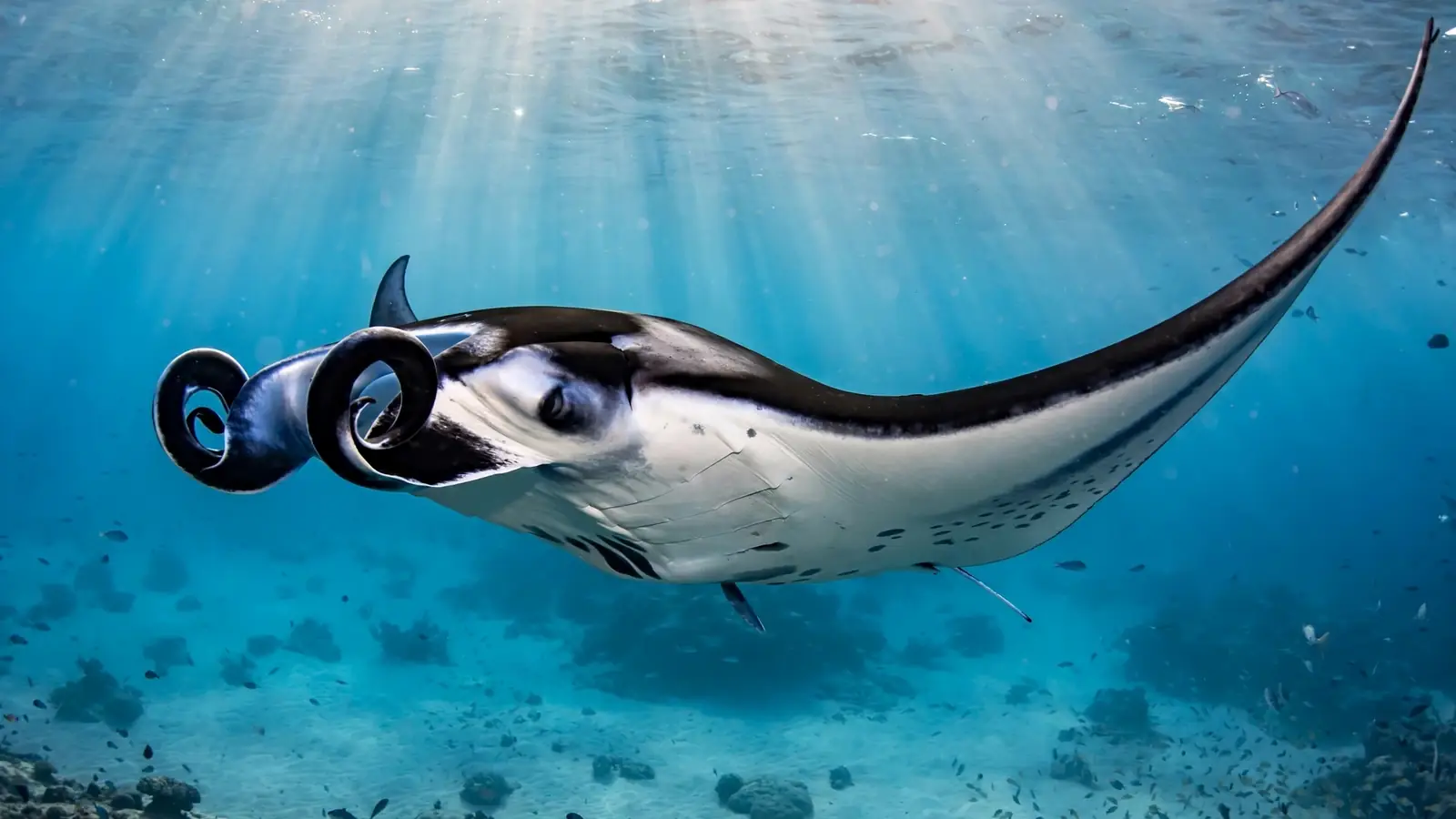
The manta is a filter feeder: it swims through the open ocean with its mouth open, taking in plankton, and it barrel-rolls while feeding, turning slow loops in the water to stay in the plankton cloud. It lives in tropical and subtropical open ocean, and it is harmless — no stinger, no venom, no teeth worth fearing, and no reason to be afraid of it.
Stingray: The Bottom-Dweller With a Venomous Barb
The stingray is the bottom-dweller with a venomous barb — a whip-like tail carrying a serrated, venomous barb, used only in defence. Its mouth is on the underside, built for crushing mollusks, shrimp and crabs on the seafloor, and it lives in shallow coastal waters, on the sand, where it buries itself and waits. The southern stingray, Hypanus americanus, is the species of the western Atlantic sand flats, and it is the stingray most divers meet.

The stingray is dangerous only when it is stepped on or threatened: the barb is defensive, not offensive, and the animal would rather swim away than sting. The sting is venomous and painful, and it can be serious, but the animal is docile — and the shuffle-your-feet advice exists for a reason. For the full comparison, see the difference between manta rays and stingrays from an ocean charity.
Manta Ray vs Stingray: Differences Table
| Feature | Manta Ray | Stingray |
|---|---|---|
| Size | Manta ray — giant oceanic manta wingspan up to 8.8 m | Stingray — 30 cm to 2.4 m across (giant freshwater stingray the largest) |
| Weight | Manta ray — up to ~2 tonnes | Stingray — far lighter; most species a few kilograms |
| Habitat | Manta ray — tropical and subtropical open ocean | Stingray — shallow coastal waters on the seafloor; some species in freshwater |
| Diet | Manta ray — plankton filter feeder | Stingray — mollusks, shrimp and crabs crushed on the seafloor |
| Lifespan | Manta ray — 40+ years (estimate, Ocean Conservancy — not a firm fact) | Stingray — 15–25 years (Ocean Conservancy) |
| Danger to humans | Manta ray — harmless, no stinger or venom | Stingray — venomous tail barb, defensive only, dangerous if stepped on or threatened |
| Distinctive feature | Manta ray — cephalic (horn-like) fins, front-facing mouth | Stingray — venomous barb on a whip-like tail, underside mouth, ampullae of Lorenzini |
| Scientific name | Manta ray — Mobula birostris (giant oceanic manta ray) | Stingray — group Myliobatiformes; southern stingray Hypanus americanus |


Verdict: Stinger, Mouth and Size — How to Tell Them Apart
The verdict is three checks, and they take ten seconds: the stinger, the mouth and the size. A ray with no stinger and a front-facing mouth is a manta; a ray with a venomous barb on a whip-like tail and an underside mouth is a stingray. And a ray with a wingspan wider than a car is a manta — the stingray is far smaller, at 30 cm to 2.4 m across.
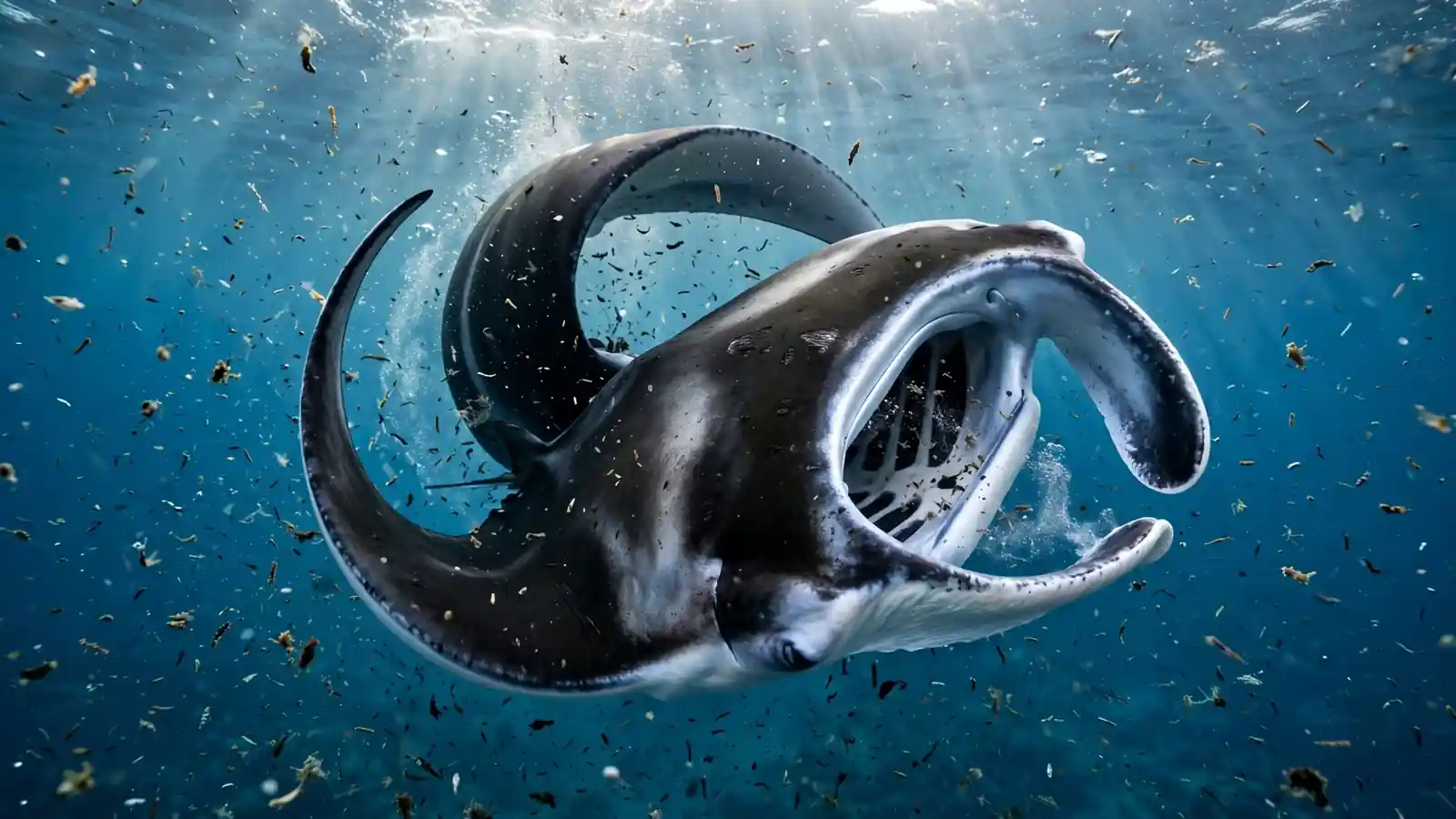
The manta is the gentle giant, harmless and huge, and the stingray is the bottom-dweller, docile and armed. Both are rays, both are cartilaginous fish, and the manta is a ray that lost its stinger — so the difference is not a family difference, but a single lost weapon. Check the tail, check the mouth, check the size, and you will never confuse them again.
Fun Facts
- Mantas are rays that lost the stinger over evolutionary time.
- A manta barrel-rolls while feeding, turning slow loops in the plankton cloud.
- The shuffle-your-feet advice exists because stingrays sting only when stepped on.
- The giant freshwater stingray is the largest stingray, at up to 2.4 m across.
- A manta’s cephalic fins funnel plankton into its front-facing mouth.
- A stingray’s ampullae of Lorenzini sense the electric fields of buried prey.

Frequently Asked Questions About Manta Ray vs Stingray
What Is the Difference Between a Manta Ray and a Stingray?
The one-line answer to manta ray vs stingray: the manta has no stinger and a front-facing mouth, and the stingray has a venomous tail barb and an underside mouth. Mantas are themselves rays that lost the stinger, and they are far bigger — a giant oceanic manta has a wingspan of up to 8.8 m, against a stingray’s 30 cm to 2.4 m.
Do Manta Rays Sting?
No. Manta rays have no stinger and no venom — they lost the stinger over evolutionary time. They are harmless, with no teeth worth fearing, and they pose no danger to swimmers. A manta ray cannot sting you.
Are Stingrays Dangerous?
They can be, but only in defence: the venomous barb on the tail is used when the animal is stepped on or threatened, and the sting is painful and can be serious. Stingrays are docile and would rather swim away — shuffle your feet in shallow water so you do not step on one.
Which Is Bigger, a Manta Ray or a Stingray?
The manta ray, by a wide margin: a giant oceanic manta has a wingspan of up to 8.8 m and weighs up to about 2 tonnes. A stingray is 30 cm to 2.4 m across, and most species weigh only a few kilograms.
Where Do Manta Rays Live vs Stingrays?
Manta rays live in tropical and subtropical open ocean, swimming in the water column and filter-feeding on plankton. Stingrays live in shallow coastal waters on the seafloor, buried in the sand — and some species live in freshwater.
Do Manta Rays Have Teeth?
Manta rays have small teeth, but they do not use them to bite — they are filter feeders, taking in plankton with their mouths open, and the teeth play no part in feeding. They are harmless to people.
Can You Swim With Manta Rays?
Yes — manta rays are harmless, with no stinger and no venom, and swimming with them is a popular and safe activity in tropical waters. Keep your distance, do not touch them, and let them come to you.
Similar Species Worth Exploring
Keep Exploring
Meet the giant manta ray in its own guide, then the southern stingray, and browse the whole family in our types of rays and skates hub — then come back to the comparison, manta ray vs stingray.