Types of Rays and Skates
Types of rays and skates: one family, two life stories
The types of rays and skates together form the batoids — more than 600 species of flattened, winged fishes that are the sharks’ closest relatives. Half the family gives birth to live young; the other half lays eggs in leathery purses. This hub profiles all 13 rays, sawfish, guitarfish and skate guides in the programme, and explains the simple tests that tell the whole family apart.
By Emily Carter · Reviewed by our vet team · Updated 10 November 2026 · 7 min read
600+ species worldwideLargest wingspan over 7 metresSkates lay eggs; rays bear live young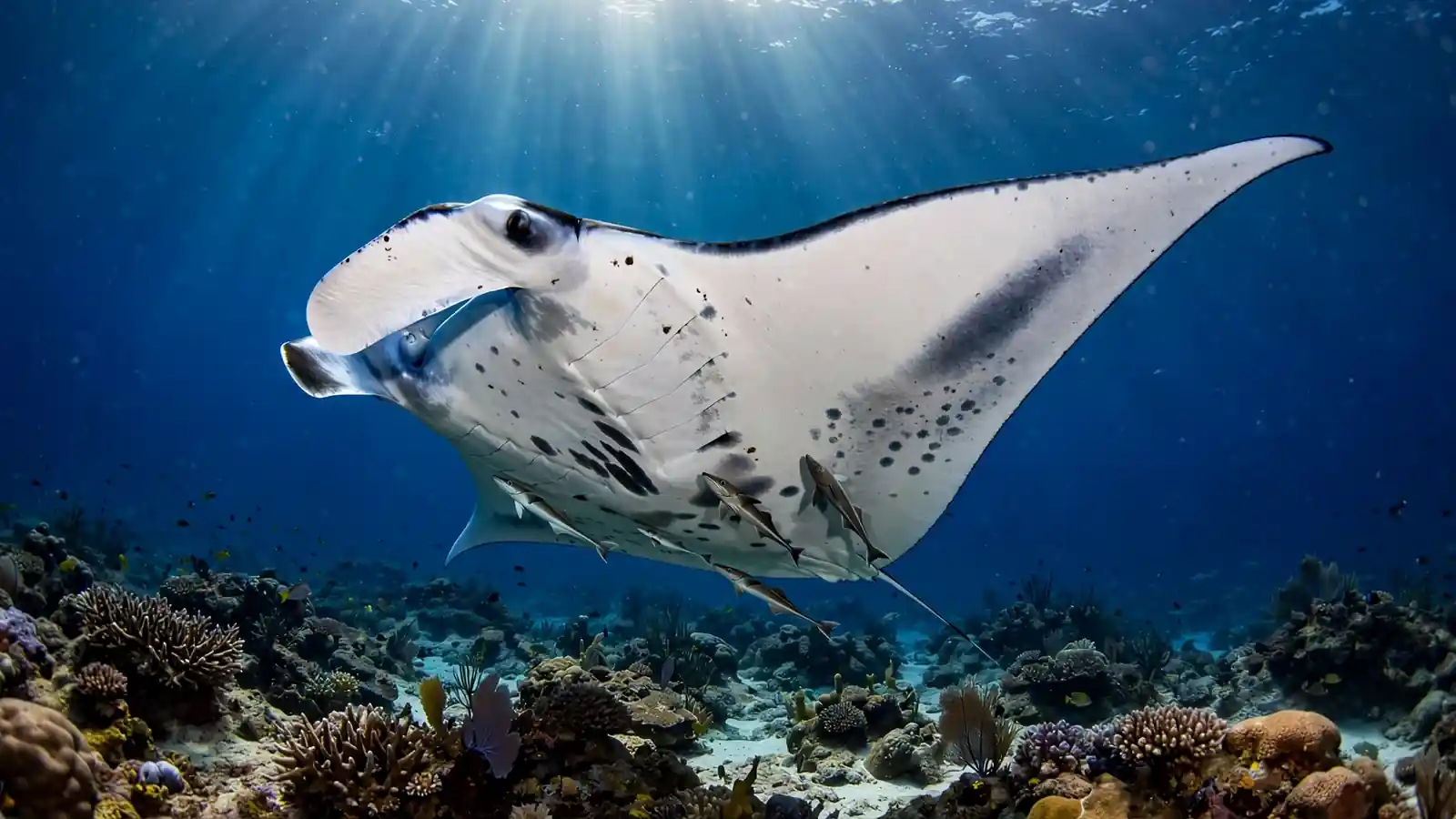
At a Glance
The types of rays and skates share one body plan — a flattened disc of fused pectoral fins, eyes on top, mouth and gills below — and one deep split: how they reproduce. Rays carry their young inside and give birth to live pups; skates lay tough egg cases that beachcombers know as mermaid’s purses. Everything else in this hub hangs off that divide.
Below are the programme’s thirteen profiles in their natural groupings: the true rays, the shark-shaped sawfish and guitarfish, and the skates themselves. If you only remember one test, make it the tail — fleshy with little fins for a skate, a bare whip for most rays.
The family’s story is an old one. Batoids split from the shark line deep in prehistory and flattened themselves against the seabed, moving the mouth and gills underneath and the eyes on top — a rearrangement so successful that more than 600 species now cruise, bury, flap and glide through every ocean. Some left the seafloor entirely: the mantas and devil rays reinvented themselves as open-ocean filter feeders, among the largest fish in the sea. Between them, the types of rays and skates span nearly every seabed habitat, from tropical shallows to polar deep water.
Types of Rays and Skates: How to Tell Them Apart
Four checks settle almost every identification. Reproduction is absolute: egg case means skate (or a shark), live birth means ray. The tail is nearly as good — thick and fleshy with two small dorsal fins on a skate, thin and whip-like, often stung, on a ray. Skates defend themselves with thorns, rays with the sting; and skate pelvic fins split into two lobes where a ray’s stay single. Beach finds help too: this beachcomber’s guide to hunting mermaid’s purses shows how the horned skate cases differ from sharks’ curly-tendrilled ones.
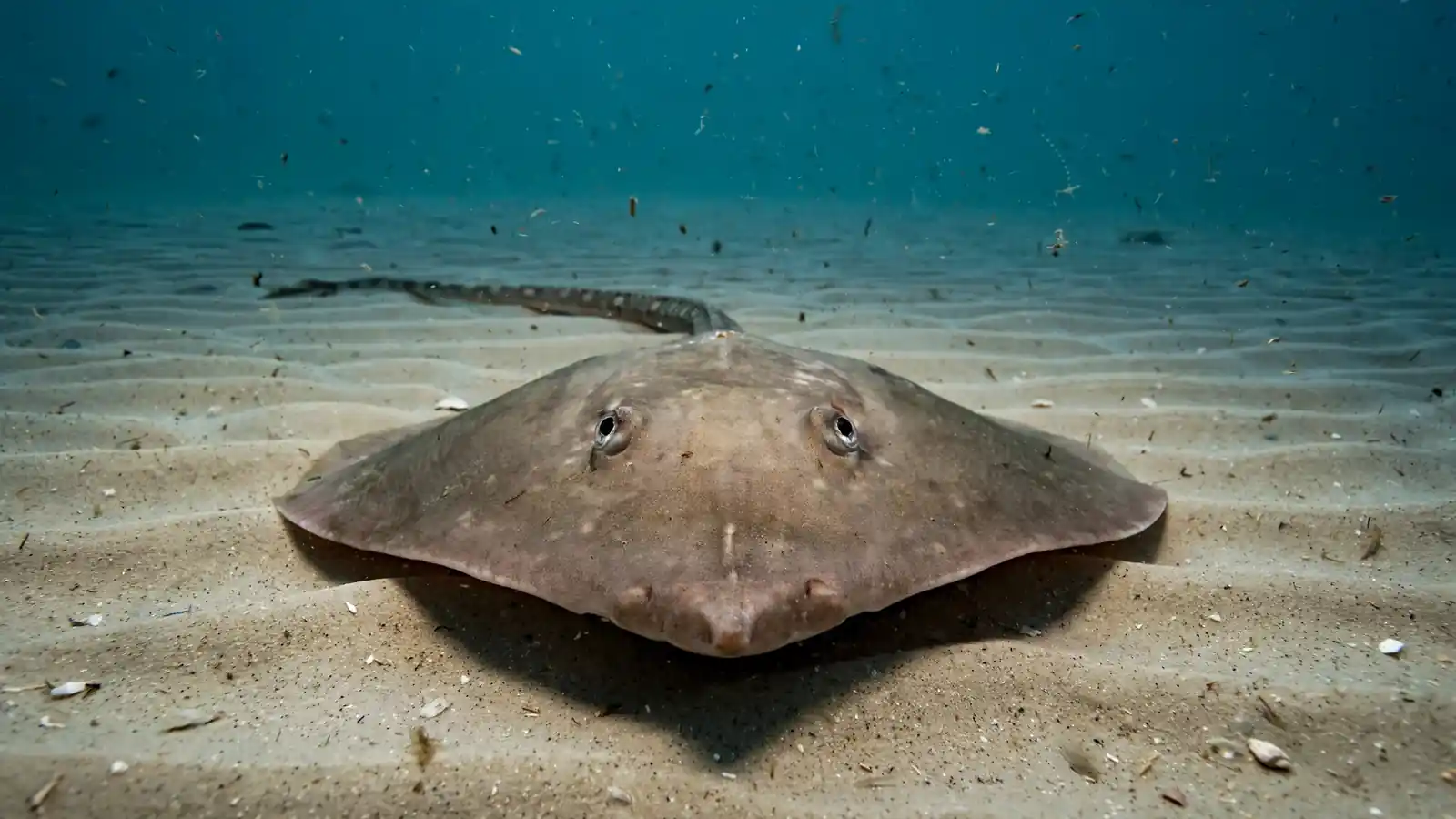
Names will not save you — the family delights in traps. The thornback ray is a skate. The sawfish is a ray. The electric ray’s cousins the skates also make electricity, weakly, in their tails. Trust the anatomy, not the label: check what comes out of the animal (eggs or pups), look at the tail, and the family’s two halves sort themselves out every time. Keep those tests in mind, and the types of rays and skates become readable at a glance.
The Rays: Mantas, Stingrays and Electric Rays
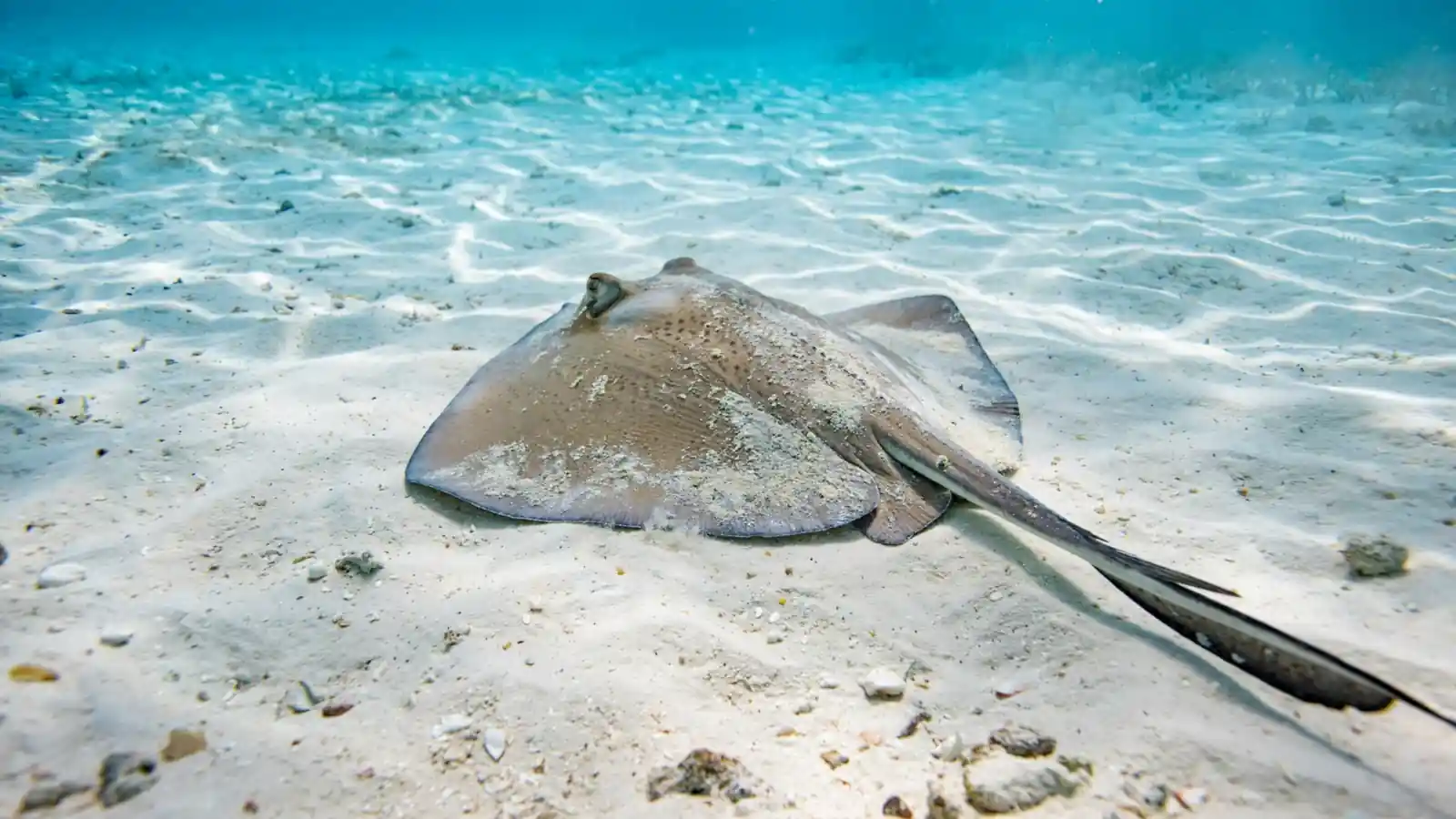
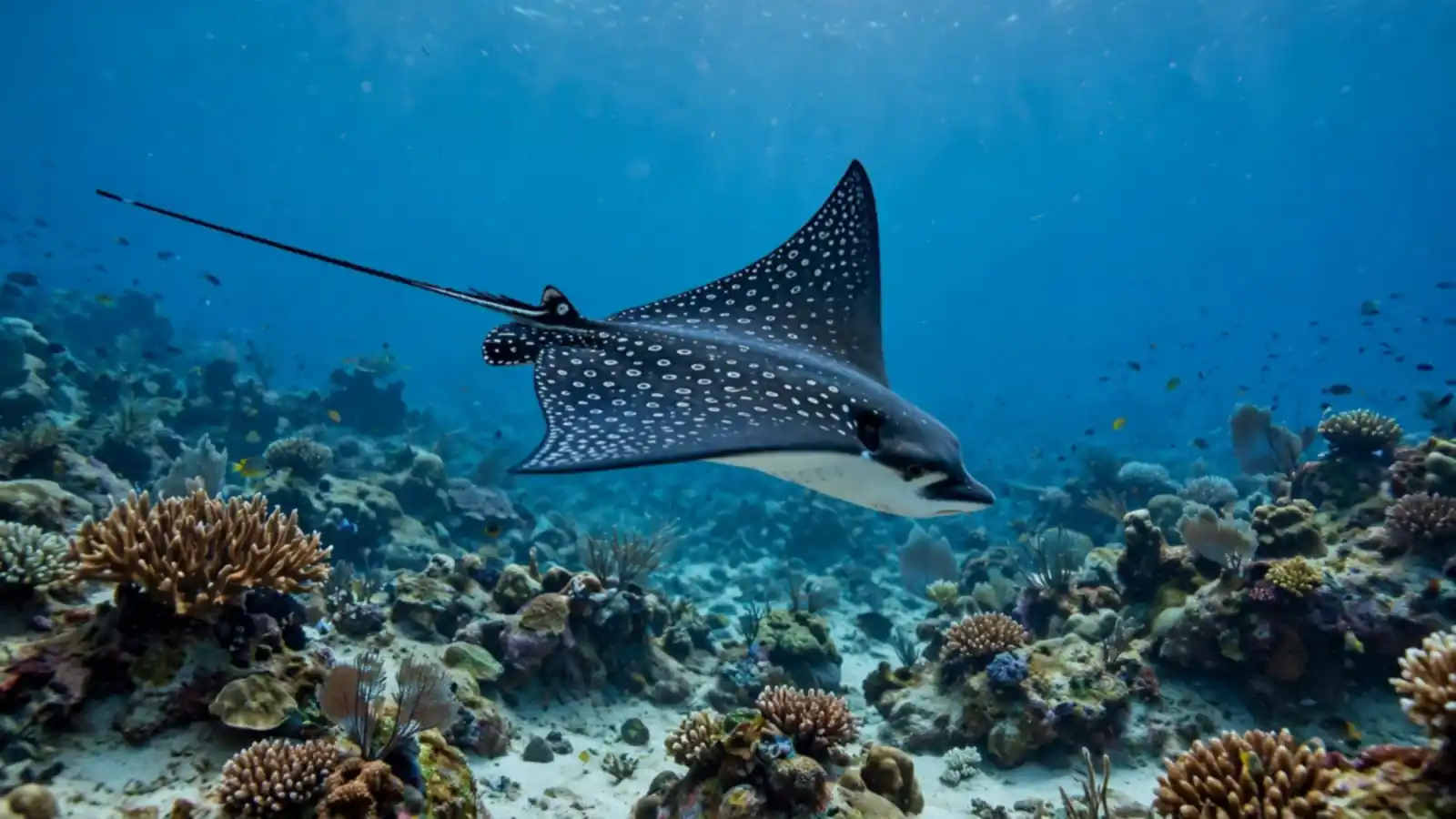
The rays are the live-bearing majority of the family, from plankton-sifting giants to rays that generate electricity. These eight profiles cover the famous names:
Sawfish and Guitarfish: The In-Betweeners
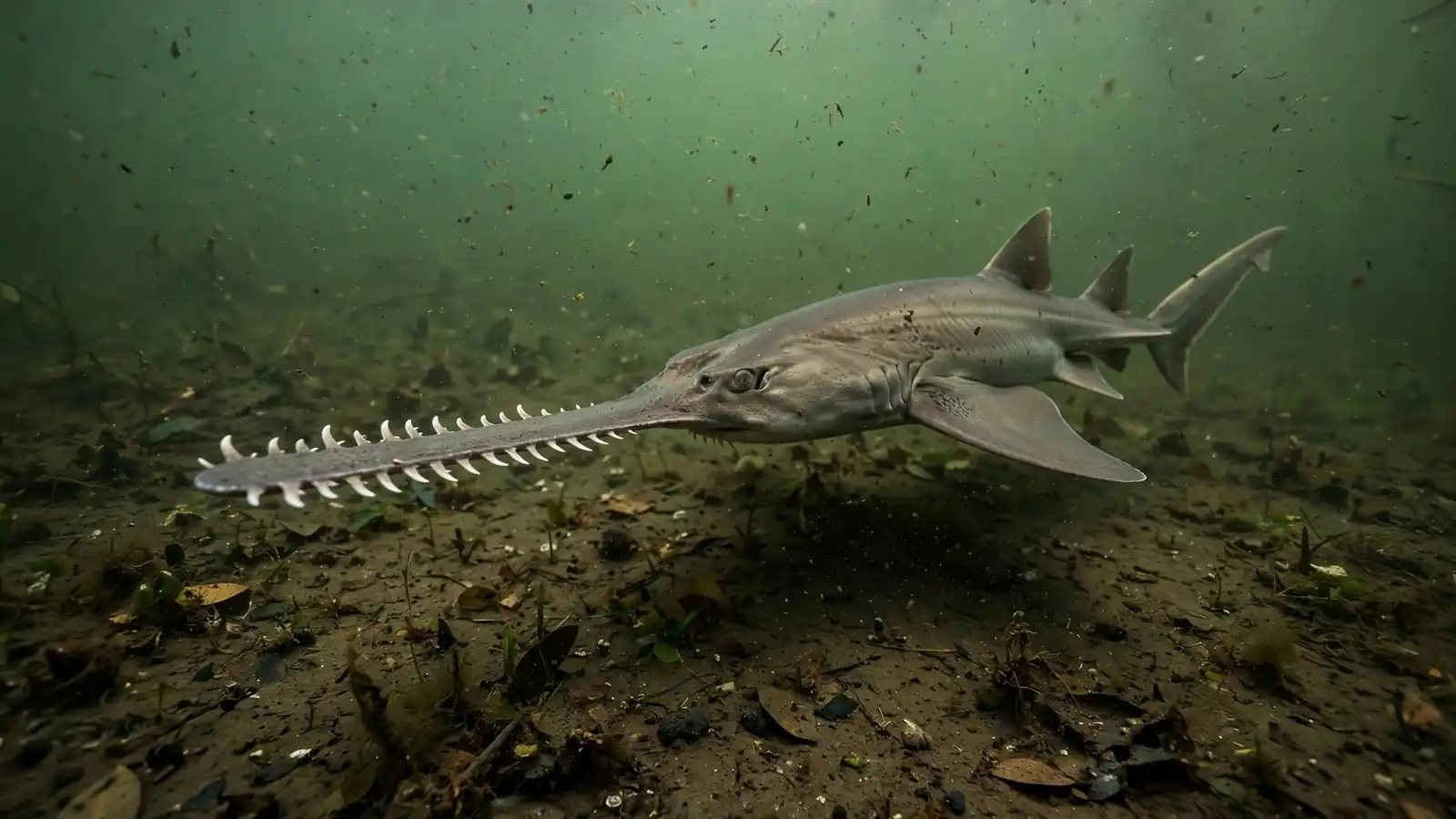
Some batoids kept the shark’s silhouette. Sawfish and guitarfish have shark-like bodies with the gills underneath that betray them as rays — and the sawfish carries the family’s most famous weapon. They are also the types of rays and skates most often mistaken for sharks at first sight.
The Skates: Egg-Layers of Cold Water
The thirteenth profile is the family’s other half. Skates swapped live birth for egg cases and the sting for thorns, and conquered the cold, deep water their cousins avoid. Of all the types of rays and skates, these are the ones built for the cold.
A closing word on their future. Slow growth, late maturity and a fondness for the same shallow grounds that fishing fleets work hardest make batoids some of the most threatened fish in the sea — sawfish are critically endangered, and several skates in this hub have collapsed within living memory. The mermaid’s purses still wash up on the strandline; whether they keep coming is now up to us.
Fun Facts
- Manta rays have the largest brain of any fish, and pass the mirror test challenges that stump most animals.
- Electric rays were used in ancient Greek medicine, prescribed as shock therapy for pain and headaches.
- A skate’s egg case can sit on the seabed for up to 15 months before its single pup hatches.
- The giant freshwater whipray, folded into the southern stingray guide, can weigh as much as a grand piano.
- Sawfish are rays, not sharks — their gill slits sit underneath, the giveaway that settles every argument.
- Some skates walk along the seabed on their pelvic fins, in a gait scientists study to understand how walking evolved.
Frequently Asked Questions
What Is the Difference Between a Skate and a Ray?
Across all the types of rays and skates, reproduction is the decisive difference: skates lay eggs in leathery cases called mermaid’s purses, while rays give birth to live young. Skates also have thick, fleshy tails with two small dorsal fins and defend themselves with thorns; rays have thin whip-like tails, often with a stinging spine, and single-lobed pelvic fins.
How Many Species of Skates and Rays Are There?
Together, skates and rays — the batoids — number more than 600 described species, and new ones are still being found, especially in deep water. Rays make up the majority, with stingrays, mantas, eagle rays, electric rays, sawfish and guitarfish; skates contribute more than 150 species in the family Rajidae alone.
Do Skates and Rays Sting?
Some rays sting — stingrays carry one or more serrated, venomous spines on the tail, used purely in defence. Skates never sting: no skate has a stinging spine, relying on thorny skin instead. Mantas, eagle rays and many other rays are also stingless or nearly so, so the family’s fearsome reputation rests on a minority.
Do Rays Lay Eggs or Give Birth to Live Young?
Rays give birth to live young — all of them. Their embryos develop inside the mother, nourished first by yolk and then, in many species, by a rich secretion sometimes called uterine milk. Egg-laying belongs to the skates, whose females deposit tough cases on the seabed, and to some sharks and chimaeras.
What Is the Largest Ray in the World?
The giant manta ray is the largest ray in the world, with a wingspan that can exceed seven metres and a weight above a tonne. Despite that size it eats only plankton, filtered through its gill plates as it swims. The largest skate, the flapper skate, is far smaller at a little over two metres.
Are Skates and Rays Related to Sharks?
Yes — very closely. Skates, rays and sharks are all elasmobranchs, cartilaginous fishes whose skeletons are made of cartilage rather than bone. Skates and rays evolved from shark-like ancestors and flattened out for life on the seabed; their five gill slits, rough placoid scales and internal fertilisation are all inherited shark traits.
What Is a Mermaid’s Purse?
A mermaid’s purse is the empty egg case of a skate (or of certain sharks), washed up on the beach. Each tough, leathery pouch once protected a single developing embryo on the seabed. Skate purses are squarish with a horn at each corner, and because every species’ case differs slightly, beachcombers can identify the species from the case alone.
Similar Species Worth Exploring
Keep Exploring
From here, the family’s stories branch in every direction — into the skates guide for the egg-layers, or up a level to the types of sharks for the cousins that never flattened out. To see the two flat giants compared, read manta ray vs stingray. Either way you are travelling with the types of rays and skates.