Blue Tang
Blue Tang: the royal-blue reef fish the world knows as Dory
The blue tang is the royal-blue reef fish the world knows as Dory: a 30-centimetre algae grazer with a black palette pattern, a yellow tail and a sharp scalpel spine at the base of its tail. This guide covers its size, its lifespan, its diet and how it differs from its Atlantic cousin.
By Emily Carter · Reviewed by our vet team · Updated 10 November 2026 · 11 min read
The real DoryA scalpel on its tailRoyal blue and yellow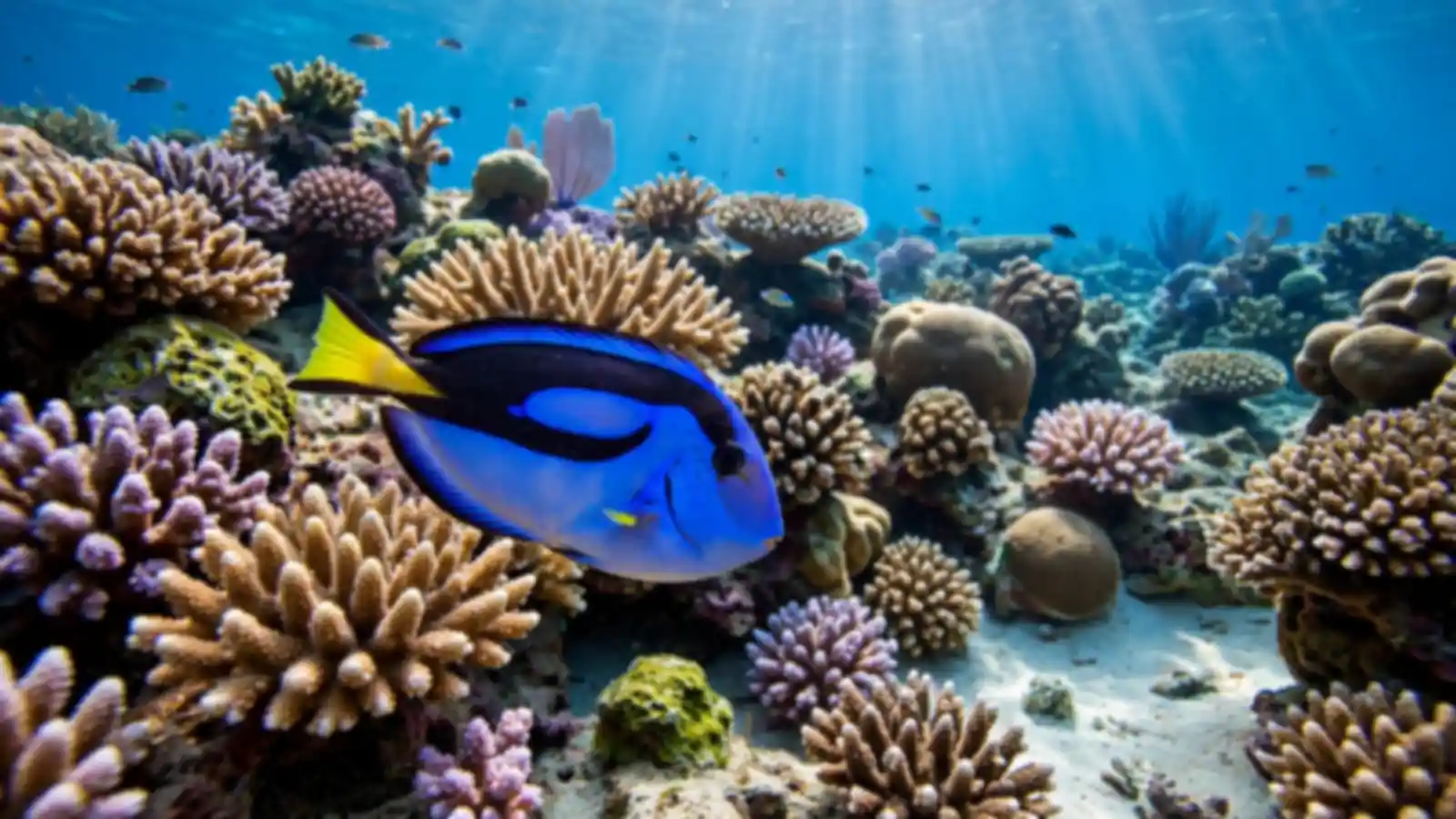
At a Glance
A blue tang is a flash of royal blue on the reef: a small, disc-shaped surgeonfish with a black palette pattern across its flank, a bright yellow tail, and a sharp scalpel spine at the base of its tail that gives its family its name. The world knows it as Dory, the forgetful fish of Finding Nemo, and the real fish is nearly as memorable.
What Is a Blue Tang?
This fish, Paracanthurus hepatus, is the regal tang, a surgeonfish of the family Acanthuridae found on Indo-Pacific coral reefs. It is a small, deep-bodied fish, royal blue with a black palette-shaped pattern and a yellow tail, and it is one of the most recognisable reef fish in the world, thanks in large part to a film.
It is a grazer by trade and a surgeon by family: the Acanthuridae are the surgeonfishes, named for the scalpel-like spines at the base of their tails, and it carries its scalpel folded flat until it is needed. It lives in schools on the reef, feeds on algae, and is a fish of the sunlit shallows rather than the deep.
Blue Tang Size and Lifespan
It grows to about 30 centimetres long, with one source giving a 38-centimetre maximum, and it is a small fish by reef standards — a hand-sized flash of blue among the corals. The size is the point for a grazer: small enough to slip between corals, big enough to hold a territory, and fast enough to dart away when a predator comes.
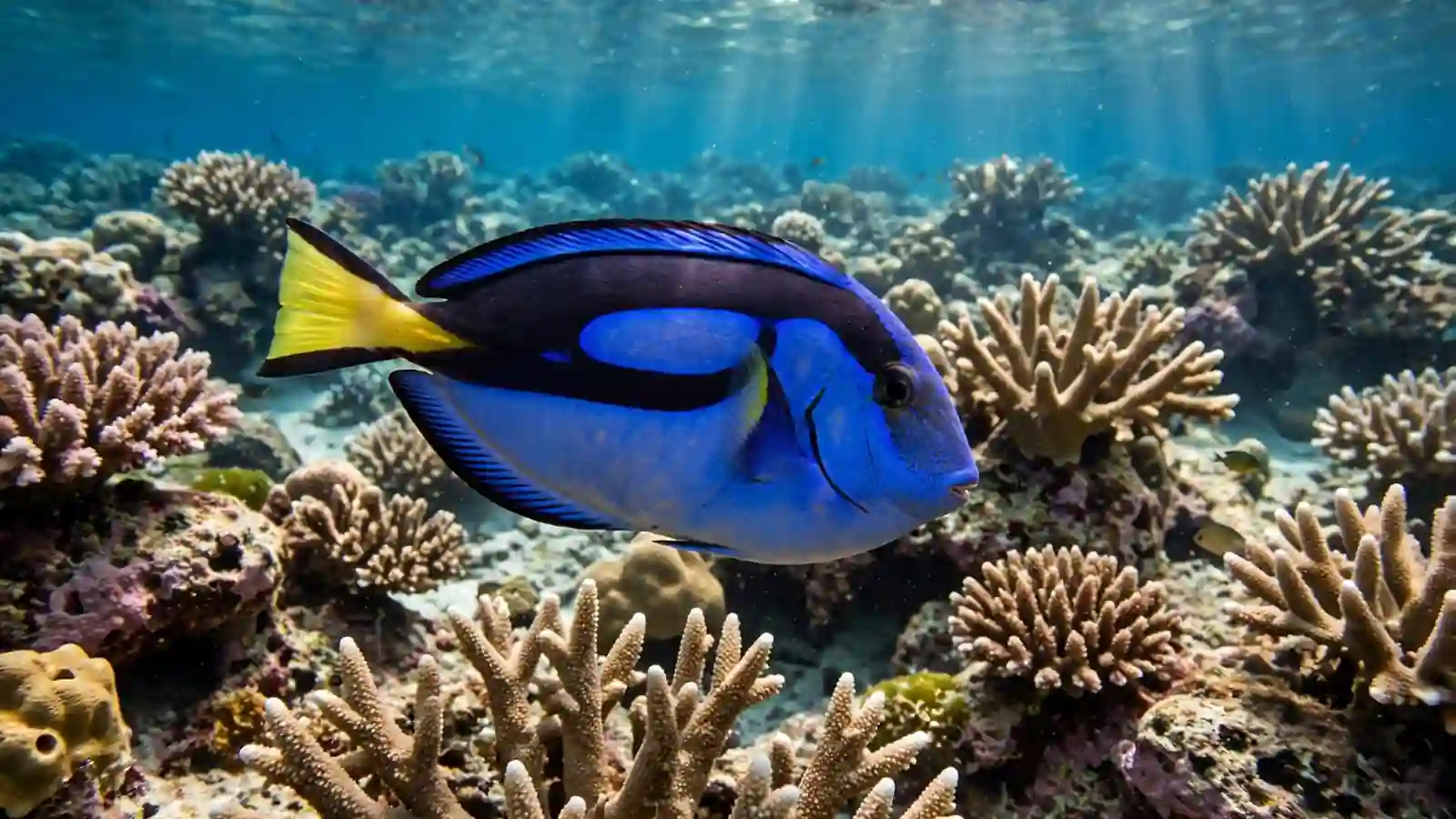
Lifespan is where the sources disagree. Several sources give 8 to 12 years, while one reports up to 30 years in the wild, and the honest statement is the attributed range: 8 to 12 years is commonly cited, and some sources report up to 30 years in the wild. The fish is long-lived for its size either way, and one on a reef may have been grazing the same coral for a decade.
The Tail Scalpel: A Surgeonfish Weapon
It carries a scalpel at the base of its tail: a sharp, retractable spine on each side, folded flat into a groove when the fish is calm and flicked out when it is threatened. The spine is the surgeon’s knife that gives the whole family its name, and it is sharp enough to cut skin, which is why the fish is handled with care and why predators think twice.
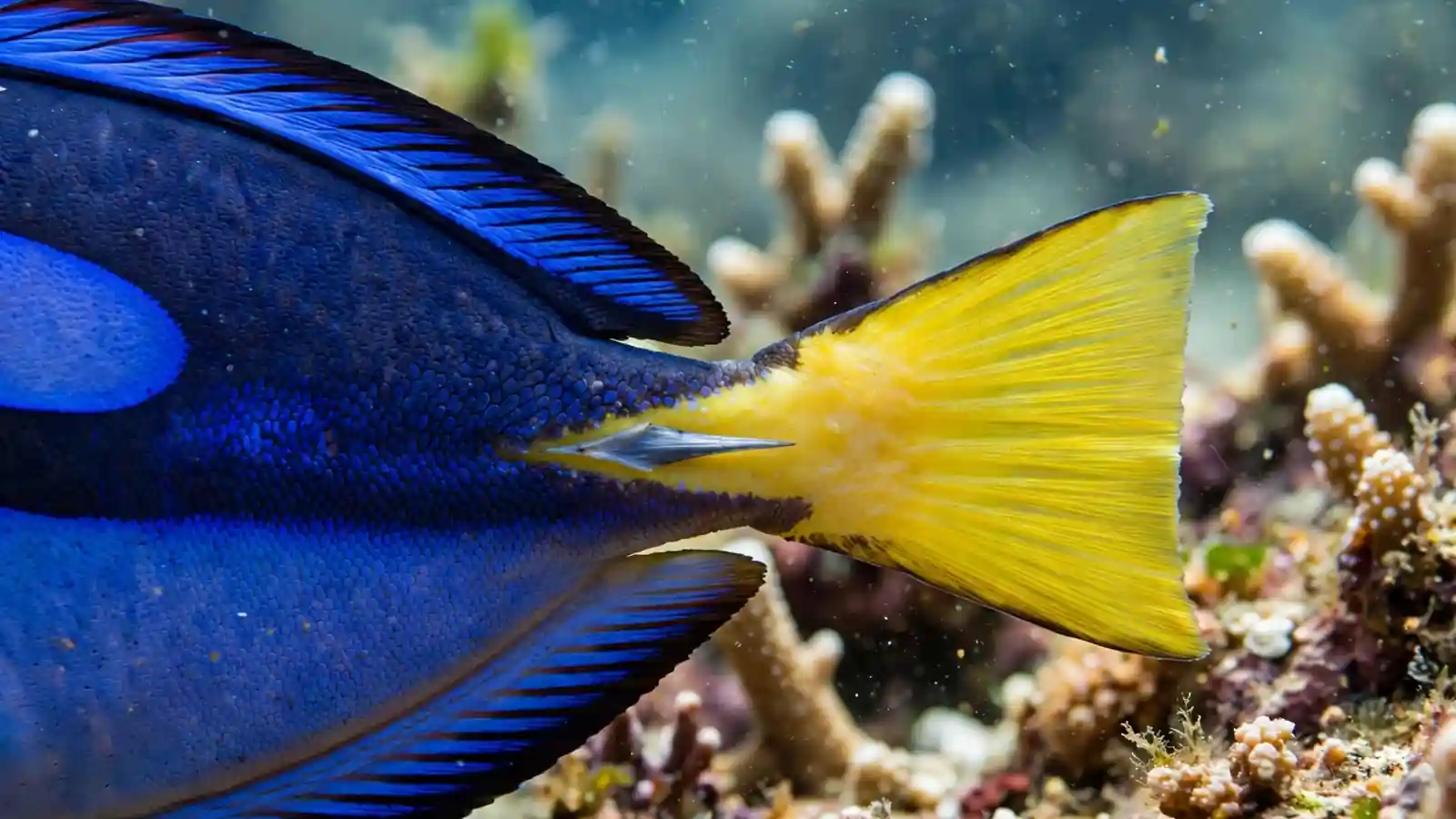
The scalpel is a defence, not a hunting tool. It never uses it to catch food — it eats algae, and the spine is for the moment a predator grabs it, when a flick of the tail can slash the attacker’s mouth and buy the tang its freedom. It is a small weapon on a small fish, and it is enough: most predators learn to take the tang by surprise or not at all.
Diet: Algae Grazing on the Reef
It eats algae, grazing it from reef rock with small, close-set teeth, and the grazing is the fish’s whole job on the reef. It feeds in schools, moving across the coral in a loose group, and the constant scraping keeps the algae down and the coral open, which is why the tang is a reef-keeper as well as a reef resident.
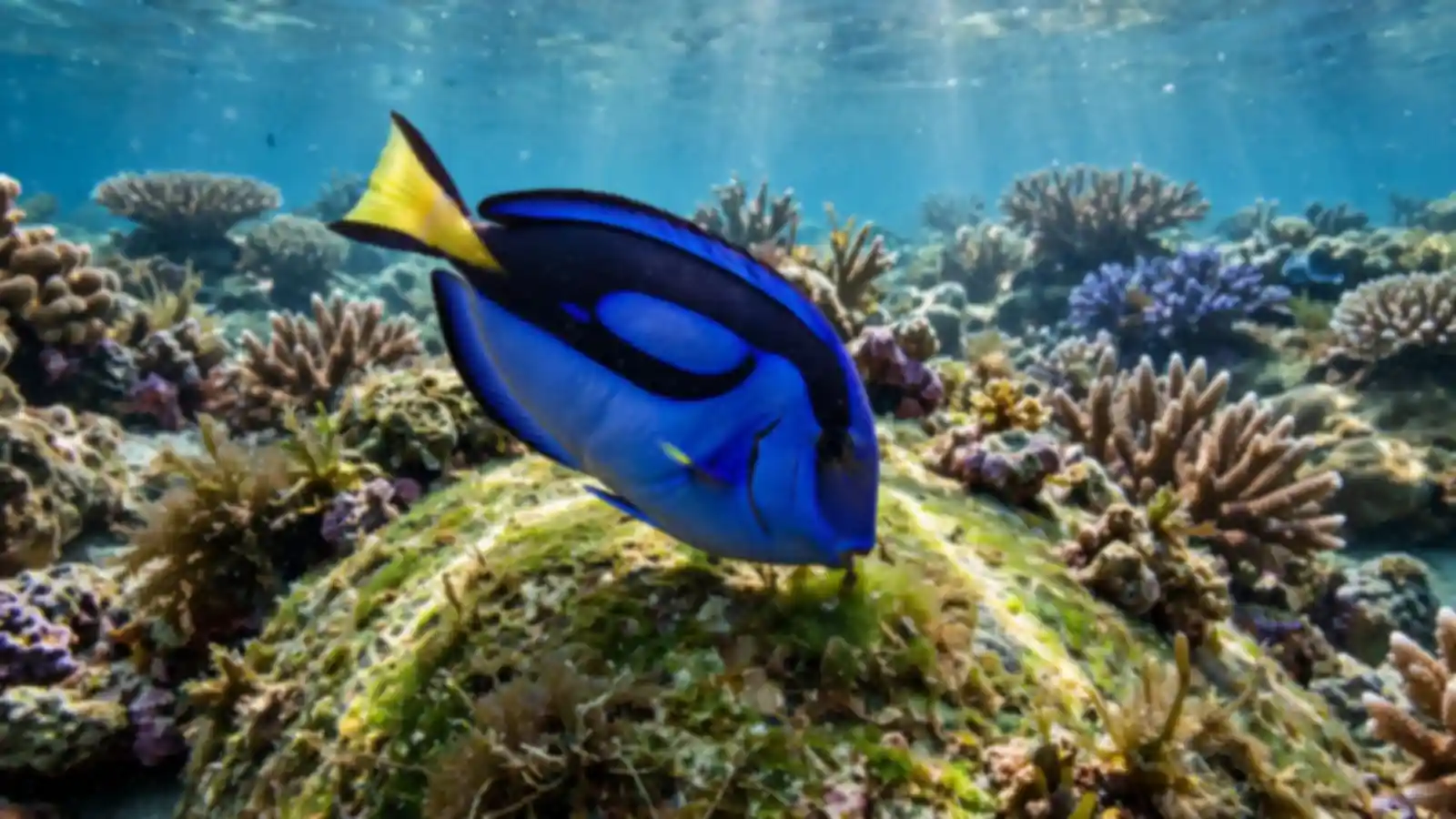
The diet is simple and the feeding is constant: algae, algae and more algae, taken in small bites all day long. The fish is not a hunter and not a scavenger, only a grazer, and its life is a slow circuit of the reef, eating what grows and keeping the garden tidy as it goes.
Habitat and Range
Blue tangs live on Indo-Pacific coral reefs, from East Africa to Japan, Australia and the Pacific islands, in clear, sunlit water from the shallows to about 40 metres down. They favour the reef slope and the coral garden, where algae grows thick and cover is close, and they are most often seen in small schools, drifting over the coral in a loose blue cloud. The species account maps the full range and the family in detail.
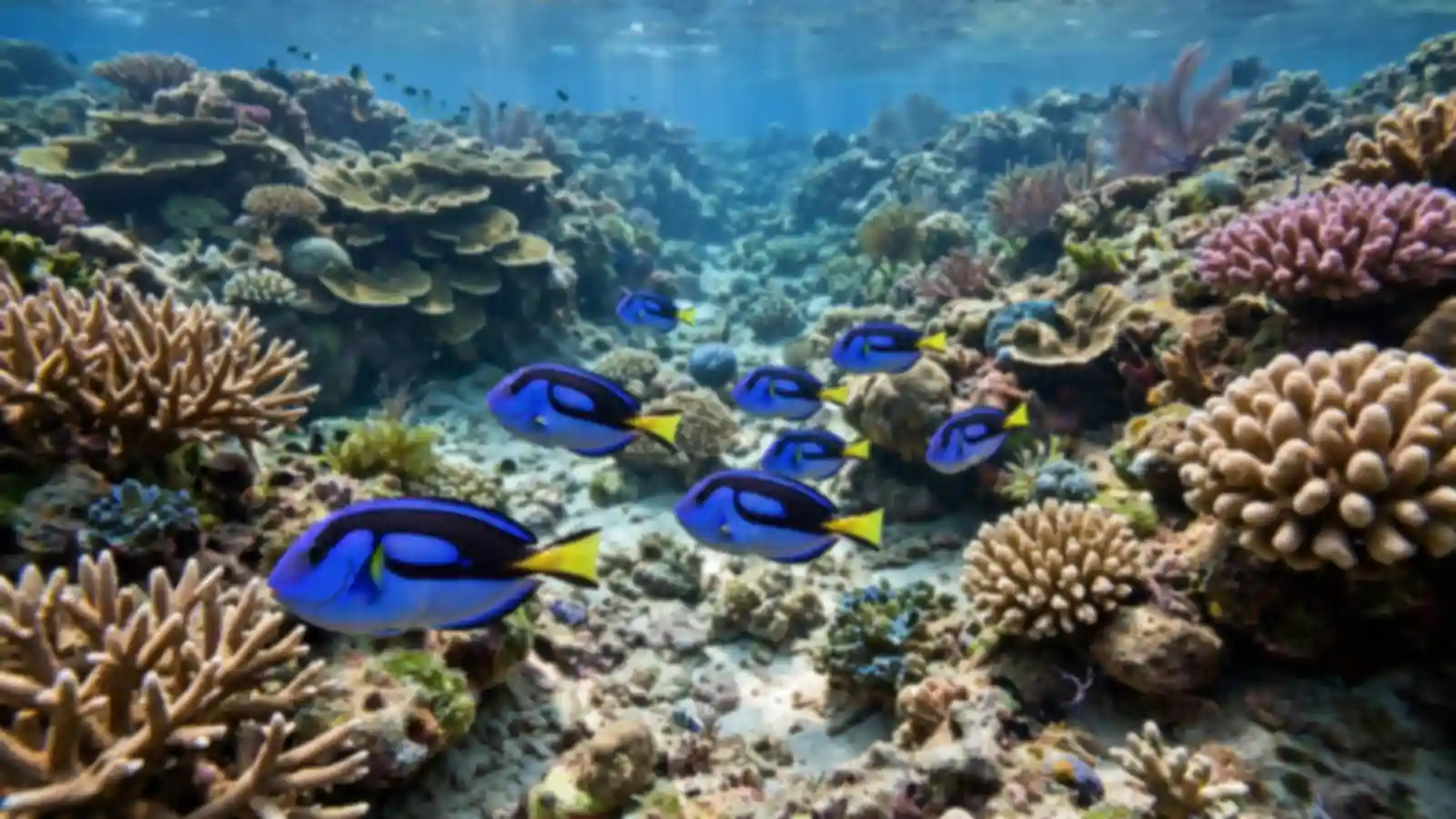
Juveniles live in small groups among branching corals, and adults range more widely across the reef, but the fish never leaves the reef far behind: it is a reef animal through and through, and the coral is its home, its food and its shelter all at once.
Regal vs Atlantic: Telling Them Apart
The Atlantic fish is a different species, Acanthurus coeruleus, and the confusion is understandable: both are blue surgeonfishes with yellow tails, and both go by the same name. But they are not the same fish, and the difference is the pattern: the Pacific regal, Paracanthurus hepatus, carries the black palette pattern across its flank, while the Atlantic fish is a more uniform pale blue with no palette.
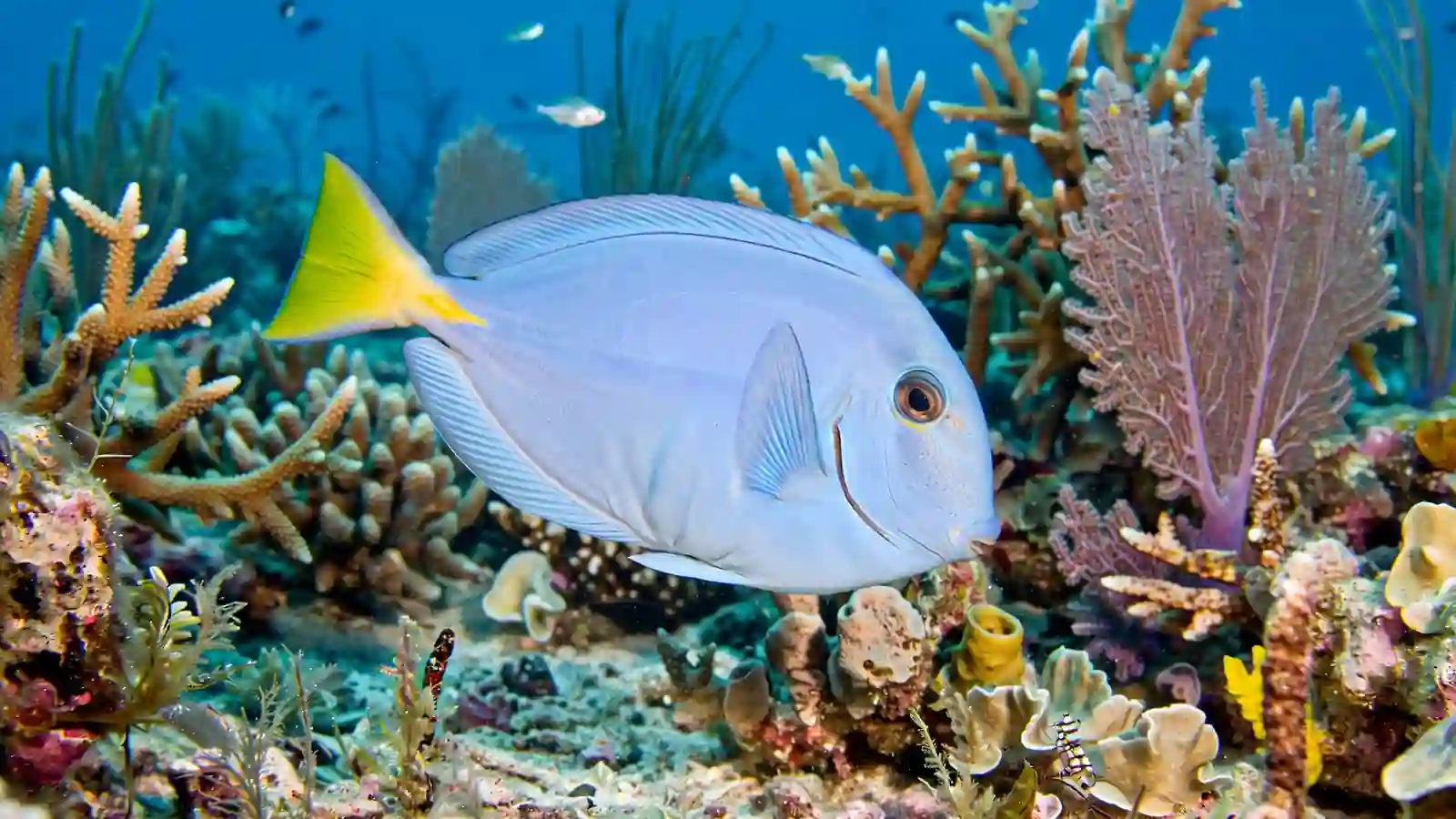
The ranges do not overlap either. The regal lives on Indo-Pacific reefs, its Atlantic cousin on Caribbean and western Atlantic reefs, and the two never meet in the wild. This guide is about the Pacific fish, the one the world knows as Dory, and the Atlantic cousin is a separate story on a separate reef.
The Dory Effect: Aquarium Trade
Finding Nemo made it famous, and the fame had a cost. After the film, demand for blue tangs in home aquariums surged, and the fish — known to every child as Dory — became one of the most wanted aquarium fish in the world. The problem is that all aquarium blue tangs are wild-caught: the fish has never been bred reliably in captivity, so every Dory in a tank was taken from a reef.
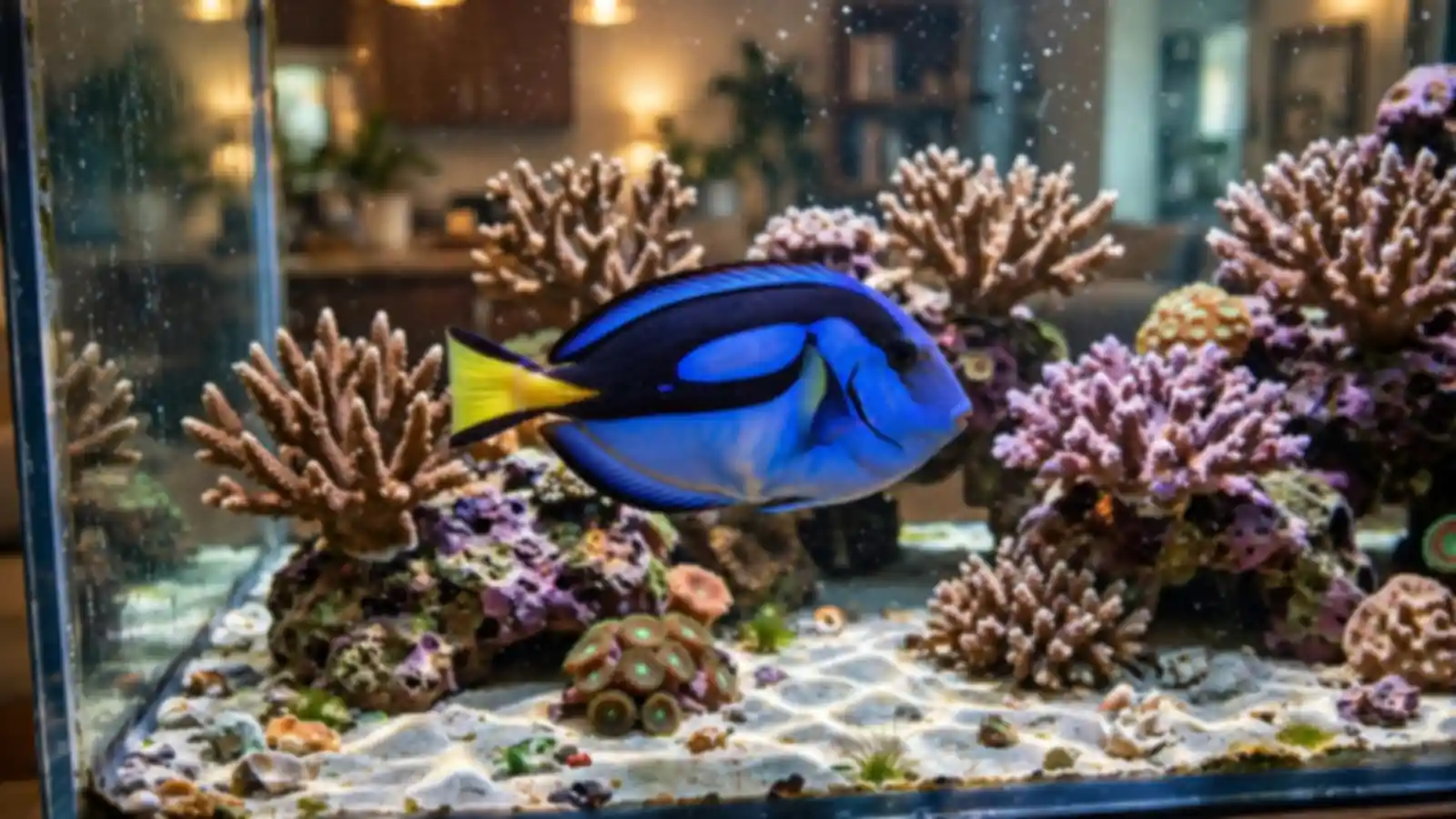
The trade is the fish’s main human pressure, and it is why this fish is a symbol of the aquarium trade’s cost as well as its charm. The fish is listed as Least Concern, and the wild populations are still healthy, but the lesson of the Dory effect is plain: a film can make a fish famous faster than a reef can replace it, and the famous fish deserves a little more care than the fame suggests.
Fun Facts
- It is the fish the world knows as Dory, from Finding Nemo.
- Its tail carries a sharp scalpel spine, folded flat until the fish is threatened.
- The Atlantic blue tang is a different species, Acanthurus coeruleus, with no black palette pattern.
- All aquarium blue tangs are wild-caught — the fish has never been bred reliably in captivity.
- It grazes algae all day, keeping the reef clean so young corals can settle.
- It is listed as Least Concern, and its wild populations are still healthy.
Frequently Asked Questions
How big do blue tangs get?
About 30 centimetres long, with one source giving a 38-centimetre maximum. It is a small fish by reef standards — a hand-sized flash of blue among the corals, small enough to slip between them and big enough to hold a territory.
How long do blue tangs live?
The commonly cited figure is 8 to 12 years, while one source reports up to 30 years in the wild. The honest statement is the attributed range: 8 to 12 years is commonly cited, and some sources report up to 30 years in the wild.
Are blue tangs the fish from Finding Nemo?
Yes. Dory, the forgetful fish of Finding Nemo, is a blue tang — the regal blue tang, Paracanthurus hepatus. The film made the fish famous worldwide, and demand for blue tangs in home aquariums surged after it.
What do blue tangs eat?
Algae, grazed from reef rock with small, close-set teeth. A blue tang feeds in schools, moving across the coral in a loose group, and the constant scraping keeps the algae down and the coral open.
Where do blue tangs live?
On Indo-Pacific coral reefs, from East Africa to Japan, Australia and the Pacific islands. They favour the reef slope and the coral garden, in clear sunlit water from the shallows to about 40 metres down.
Are blue tangs reef safe?
In an aquarium, yes — blue tangs are reef safe in the sense that they do not eat corals, only algae. In the wild they are reef fish through and through, and the coral is their home, food and shelter all at once.
What is the difference between a blue tang and an Atlantic blue tang?
They are different species. The fish of this guide is the Pacific regal, Paracanthurus hepatus, with a black palette pattern across its flank. The Atlantic species, Acanthurus coeruleus, is a more uniform pale blue with no palette, and lives on Caribbean and western Atlantic reefs.
Similar Species Worth Exploring
Keep Exploring
Keep exploring the reef grazers: meet the sand-making grazer in our parrotfish guide, or browse the whole reef in the types of reef fish. Then come back to the royal-blue fish the world knows as Dory: the blue tang.