African Penguin
African Penguin: The Only Penguin Breeding in Africa
The African penguin is the only penguin that breeds in Africa — a braying, black-and-white bird of the southern African coast that swims in the cold Benguela current and nests in the sand. It is also the most endangered penguin in the world, with fewer than 10,000 breeding pairs left.
By Emily Carter · Reviewed by our vet team · Updated 10 November 2026 · 9 min read
Only penguin in AfricaCritically EndangeredBrays like a donkey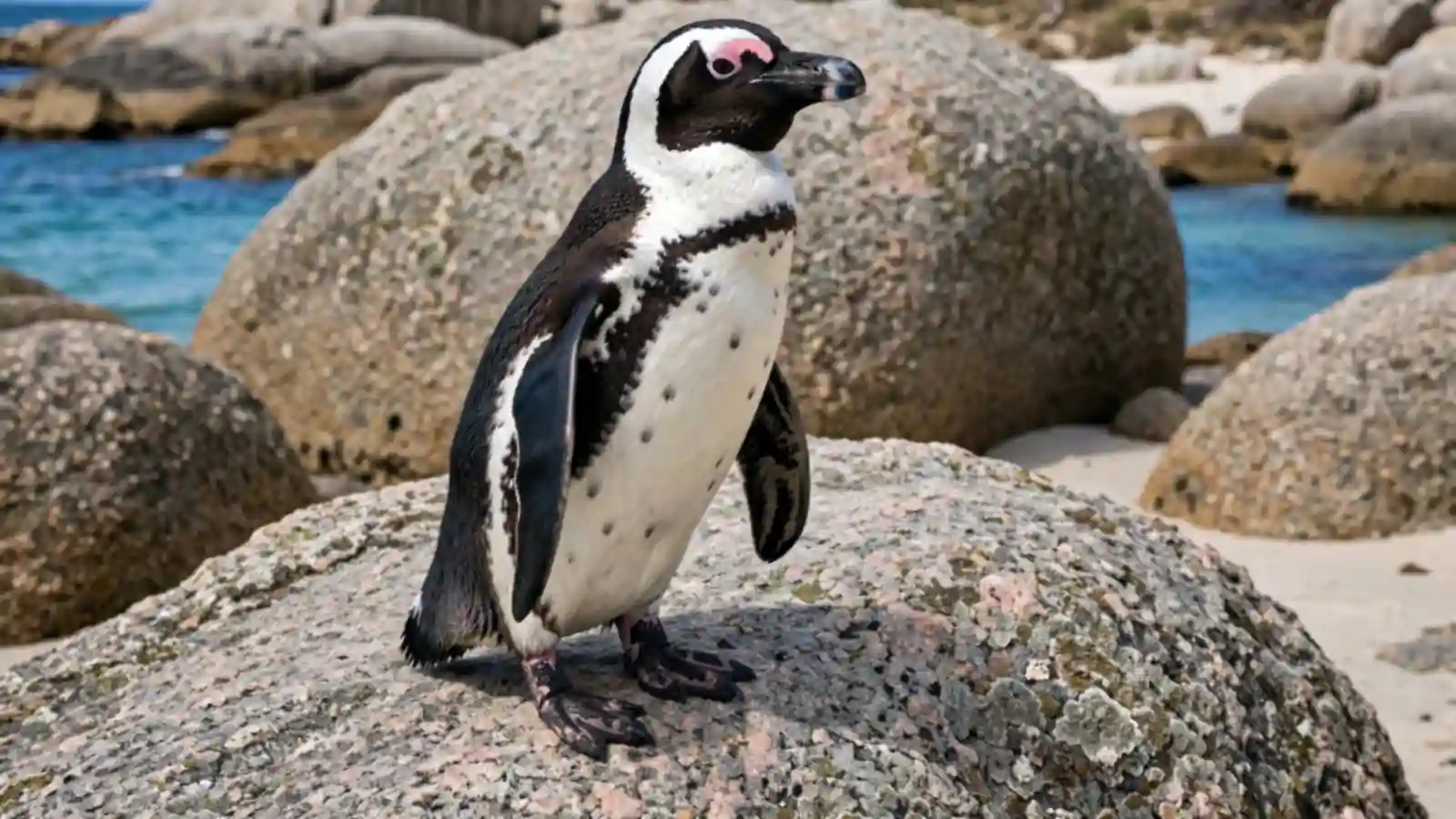
At a Glance
The African penguin is the warm-water penguin — the only one of the eighteen species that breeds in Africa, and the only one whose home is the coast of a continent most people associate with lions, not penguins. It lives where the cold Benguela current meets the southern tip of Africa, and it has been there for millions of years. In a single human lifetime, it has gone from millions of birds to fewer than ten thousand breeding pairs.
The Only Penguin in Africa
Africa has one penguin, and it is this one. It breeds on the coast of South Africa and Namibia, on offshore islands and a few mainland beaches, and nowhere else in Africa — and nowhere else on Earth. It is a temperate penguin, living in water that is cold by African standards but warm by penguin standards, and it is the northernmost of the southern penguins.

The species once numbered in the millions. Early visitors to the islands described penguins in numbers that covered the ground, and the guano they left behind was mined for fertiliser by the shipload. The collapse began with the guano mining, which stripped the nesting burrows, and continued with egg collecting, oil spills and the fishing of the sardines and anchovies the penguins depend on.
Today the species is a conservation icon in South Africa — the face of the country’s marine protection effort, and the subject of a court case that went to the highest level. Its story is the story of a species that was abundant within living memory and is now, in the words of the scientists who study it, on the edge of extinction.
African Penguin Size and Looks
An African penguin stands 60 to 70 centimetres tall and weighs 2 to 5 kilograms — a medium-sized penguin, bigger than the little penguin and smaller than the king. The back is black, the belly is white, and the face is marked with a pink patch above each eye and a black band across the chest. The pink patches are bare skin, and they flush brighter when the bird is hot — a radiator built into the face.
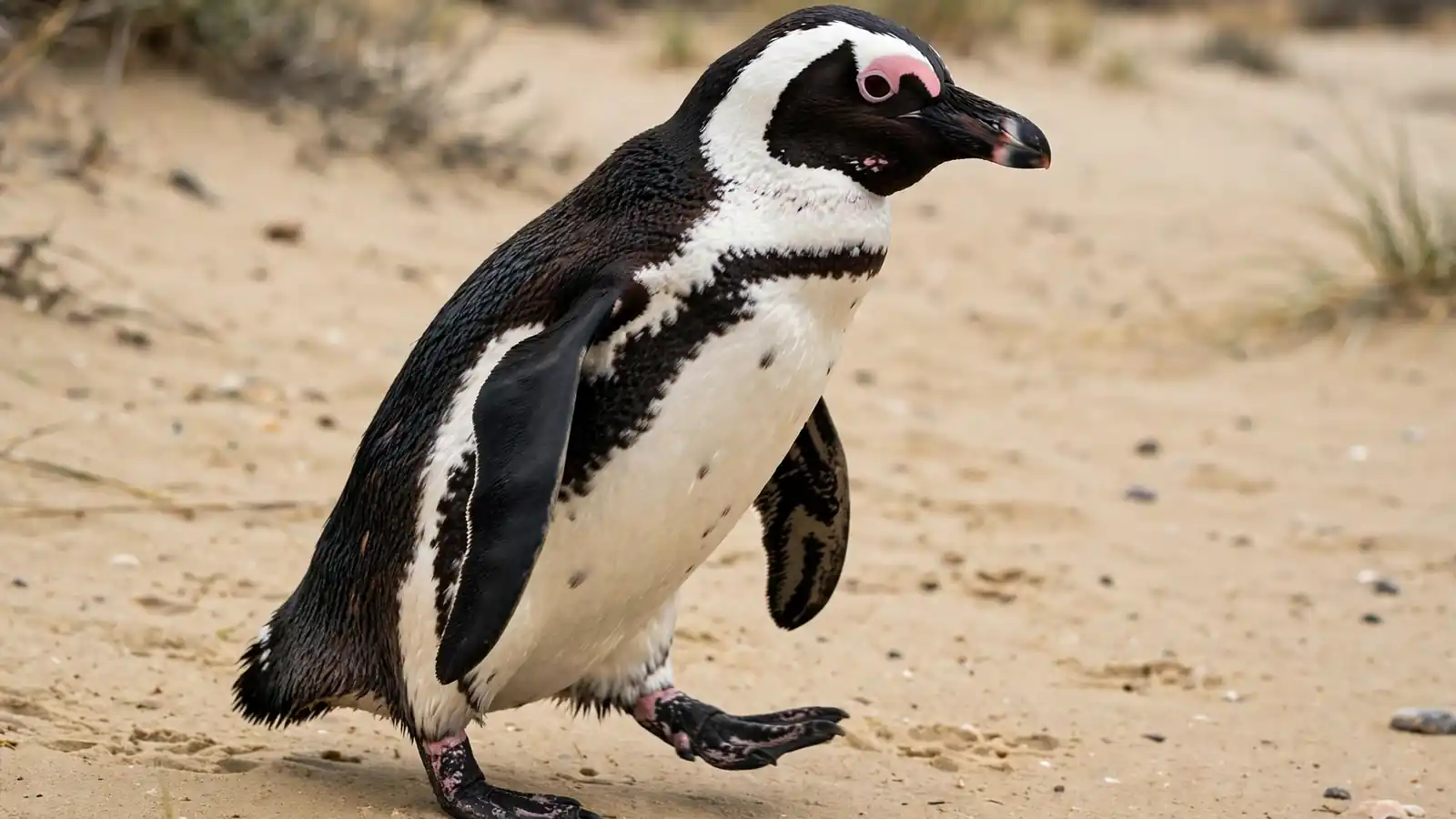
Every bird carries its own fingerprint. The black spots on the white belly are unique to each individual, like a human fingerprint, and researchers use them to identify birds from photographs. The chest band is usually a single stripe, but some birds have two, and the pattern of the spots is stable for life — a natural identity card that lets the colony be counted without catching a single bird.
Males and females look alike, though males are slightly larger with a bigger bill. Young birds are grey-blue rather than black and white, with no chest band and no pink eye patches, and they take three or four years to grow into the adult plumage. A grey penguin on a South African beach is a youngster, not a different species.
The Jackass Call
Its old name is the jackass penguin, and the reason is the call. The bird brays — a loud, donkey-like hee-haw that carries across the colony and out to sea, and that gave the species its common name for two centuries. The bray is the bird’s voice in every sense: it is how mates find each other, how parents call their chicks, and how the colony announces itself.
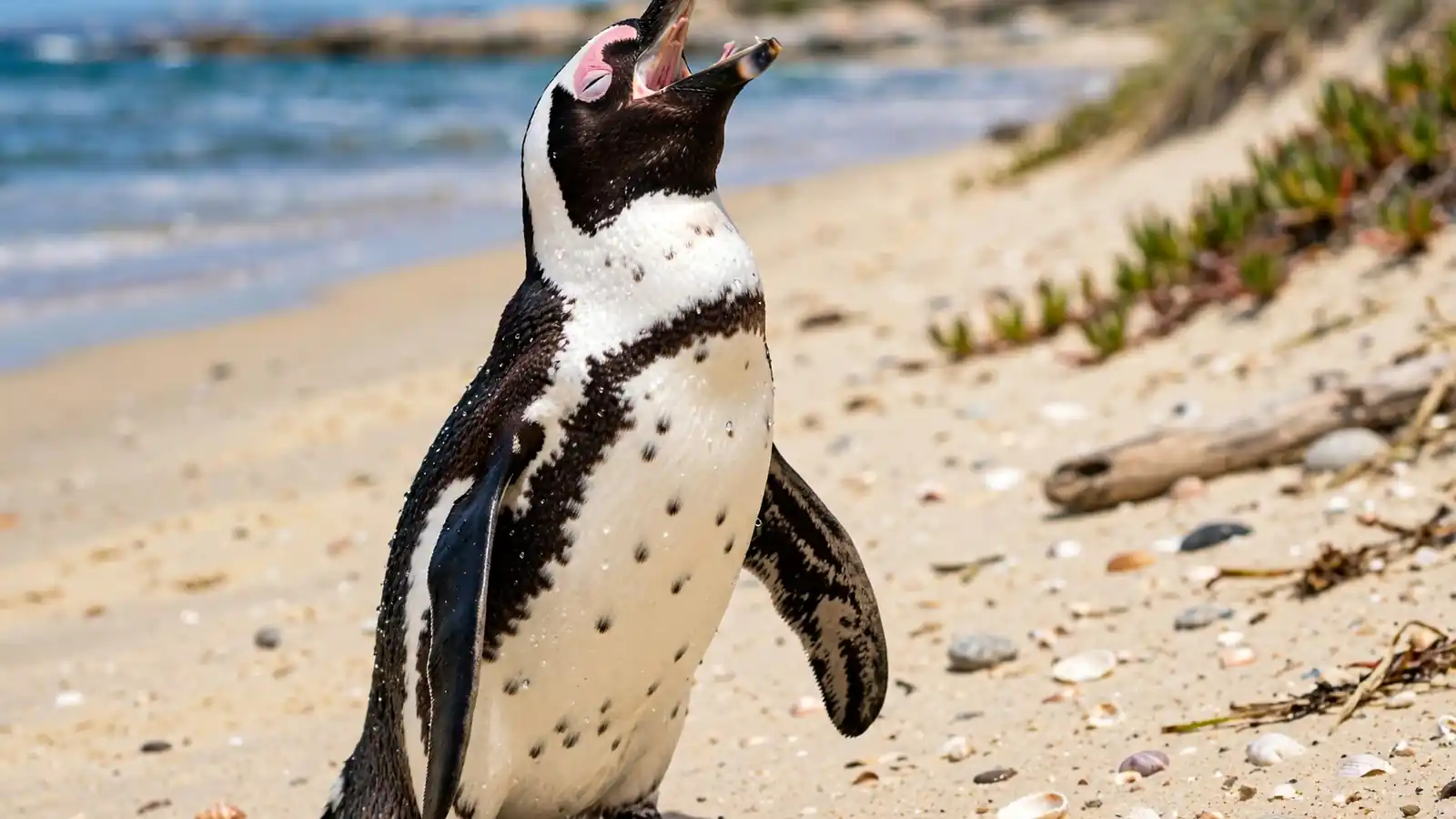
The call is not just noise. Each bird’s bray is individually recognisable, and the birds use it to find their own mate and their own chicks among thousands of identical-looking neighbours. The colony is a chorus of brays at dawn and dusk, when the birds are coming and going, and the sound is the first thing a visitor to Boulders Beach notices — before the sight of the birds themselves.
The name ‘jackass penguin’ is now falling out of use, replaced by ‘African penguin’, but the call has not changed. It is still the loudest sound on the beach, and it is still the best way to find a penguin in the scrub: follow the bray. The full account of the name and the call is in the jackass penguin article.
Boulders Beach: The Famous Colony
Boulders Beach, near Simon’s Town on the Cape Peninsula, is the most famous penguin colony in Africa — and one of the most visited wildlife sites in South Africa. A few penguins arrived there in 1982, when the species was already collapsing elsewhere, and the colony grew to several thousand birds. Today it is a protected reserve, with boardwalks that let visitors watch the penguins on the sand and in the water without disturbing them.
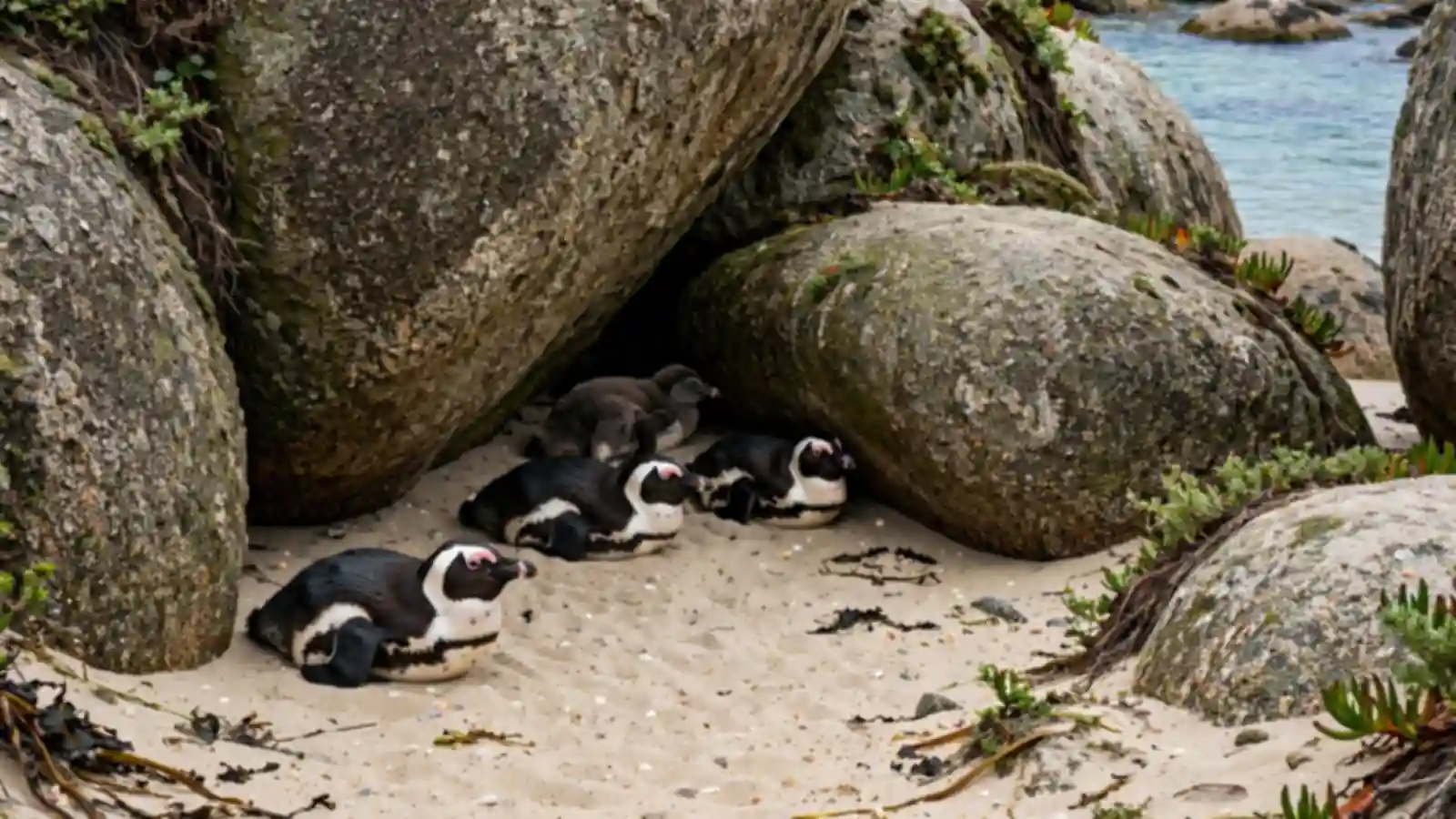
The beach is famous because it is close. Boulders is a short drive from Cape Town, and the penguins nest among the granite boulders and under the boardwalks, in full view of the public. It is the place most people meet an African penguin for the first time, and it has made the species a household name in South Africa — and a source of income for the town that protects it.
But Boulders is also a warning. The colony is small — a few thousand birds against the millions the species once held — and it is vulnerable to everything that happens on a busy coast: dogs, disturbance, and the fishing that takes the sardines the birds need. The reserve protects the beach; it cannot protect the sea. The colony’s numbers rise and fall with the fish, and in bad years the birds simply do not breed.
What Do African Penguins Eat?
African penguins eat sardines and anchovies, with squid as the second course. They hunt in the cold Benguela current, diving to 30 or 40 metres and chasing the schools with quick, darting turns, and they can travel 20 or 30 kilometres from the colony on a single foraging trip. A penguin swallows its fish underwater, whole, and returns with a belly full of food for the chicks.
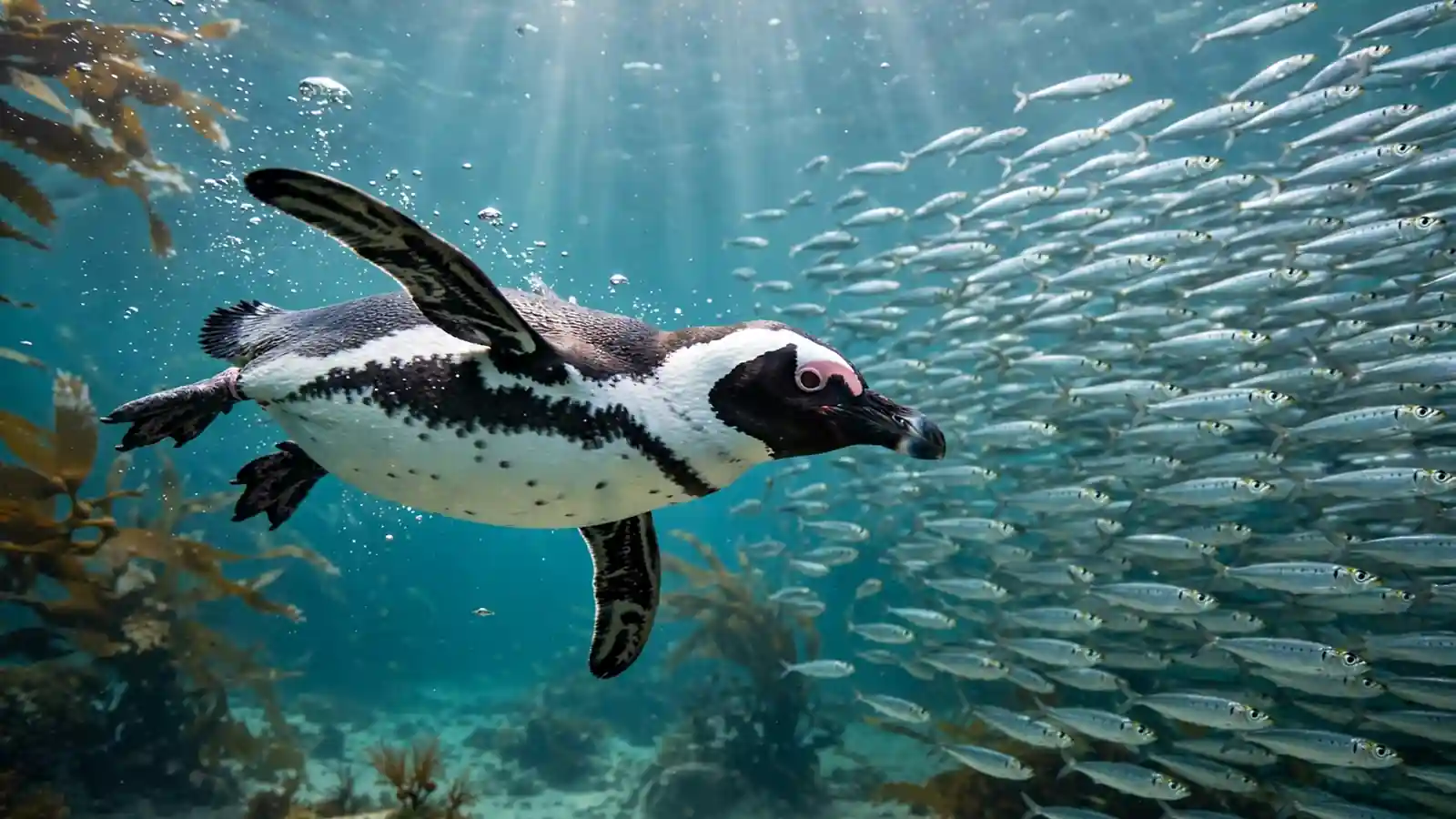
The diet is the species’ biggest problem. Sardines and anchovies are the target of a large commercial fishery, and the fish stocks have collapsed more than once — most recently in the 2010s, when the sardine stock fell to a fraction of its former size. When the fish go, the penguins go hungry, and a hungry penguin does not breed. The colony counts track the fish stocks almost exactly.
In March 2025, after years of campaigning, a court settlement created ten-year no-take zones around six breeding colonies — areas where fishing for sardines and anchovies is banned, so the penguins can feed close to home. It is the most important protection the species has ever won, and the test of it is simple: whether the penguin numbers start to rise again.
Is the African Penguin Endangered?
The species is listed as Critically Endangered — the highest threat level short of extinction in the wild. It was uplisted to that status in October 2024, after the population fell to about 9,900 breeding pairs in 2023, down from millions a century ago. The uplisting was not a surprise to anyone who works with the species; it was the formal recognition of a collapse that had been visible for decades.
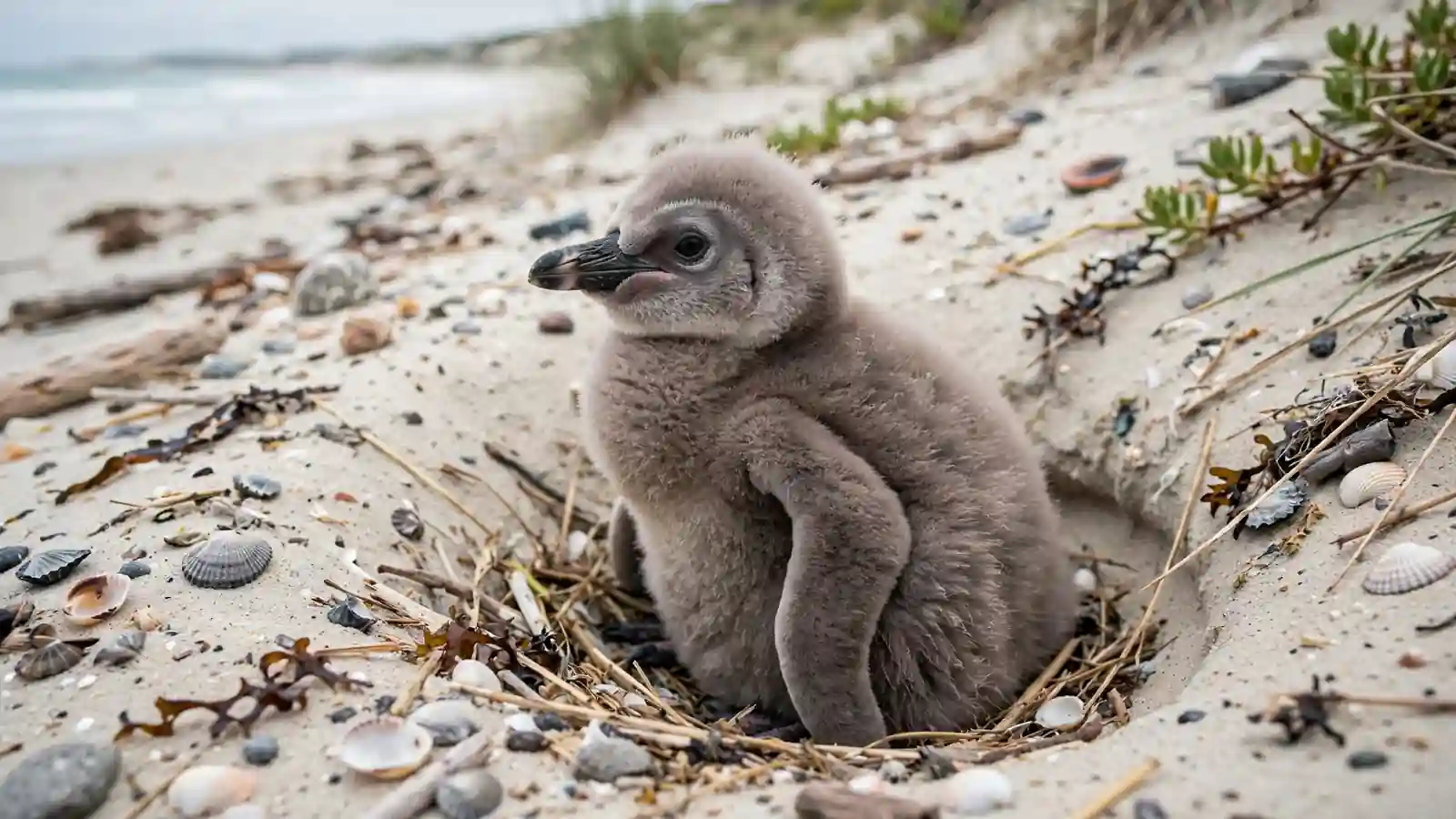
The warning that followed was stark. Conservationists have said the species could be functionally extinct — too few birds left to sustain a breeding population — by 2035 if the decline continues. That date is a warning, not a prediction, and it is meant to be read as a deadline: the fishing closures, the nest boxes, the rescue centres and the oil-spill response all have to work, and they have to work now.
The work is happening. Rescue centres hand-rear abandoned chicks and release them. Nest boxes replace the guano burrows that were mined away. The no-take zones protect the fishing grounds. And the species has one advantage the other critically endangered penguins do not: it lives next to a city, in front of millions of people, and its decline is visible. The African penguin is not dying unseen — and that may be what saves it.
Fun Facts
- The African penguin is the only penguin that breeds in Africa.
- Its old name, the jackass penguin, comes from its donkey-like bray.
- Every bird’s belly spots are unique, like a human fingerprint.
- The pink patches above its eyes are bare skin that flushes brighter when the bird is hot.
- In March 2025 a court settlement created ten-year no-fishing zones around six breeding colonies.
- The species has fallen from millions of birds to about 9,900 breeding pairs in a single century.
Frequently Asked Questions
Why Are African Penguins Called Jackass Penguins?
Because of the call. The African penguin brays — a loud, donkey-like hee-haw that carries across the colony — and the name ‘jackass penguin’ was its common name for two centuries. The name is now falling out of use in favour of ‘African penguin’, but the call has not changed.
Where Do African Penguins Live?
On the coast of South Africa and Namibia, on offshore islands and a few mainland beaches — and nowhere else on Earth. They are the only penguin species that breeds in Africa, living where the cold Benguela current meets the southern tip of the continent.
How Many African Penguins Are Left?
About 9,900 breeding pairs, according to a 2023 estimate — down from millions a century ago. The species was uplisted to Critically Endangered in October 2024, the highest threat level short of extinction in the wild.
Will African Penguins Go Extinct by 2035?
That date is a warning from conservationists, not a prediction. They have said the species could be functionally extinct — too few birds left to sustain a breeding population — by 2035 if the decline continues. The warning is meant as a deadline: the fishing closures, nest boxes and rescue work have to succeed, and soon.
What Do African Penguins Eat?
Mainly sardines and anchovies, with squid as the second course. They hunt in the cold Benguela current, diving to 30 or 40 metres and travelling 20 or 30 kilometres from the colony on a single trip. When the sardine and anchovy stocks collapse, the penguins go hungry and stop breeding.
Where Is Boulders Beach?
Near Simon’s Town on the Cape Peninsula, a short drive from Cape Town in South Africa. A few penguins arrived there in 1982 and the colony grew to several thousand birds. It is now a protected reserve with boardwalks, and one of the most visited wildlife sites in South Africa.
What Was the March 2025 Court Settlement?
A settlement that created ten-year no-take zones around six breeding colonies — areas where fishing for sardines and anchovies is banned, so the penguins can feed close to home. It is the most important protection the species has ever won, and its success will be measured by whether the penguin numbers start to rise again.
Why Are African Penguins Endangered?
The collapse began with guano mining, which stripped the nesting burrows, and continued with egg collecting, oil spills and the fishing of the sardines and anchovies the penguins depend on. About 9,900 breeding pairs remained in 2023, and the species was uplisted to Critically Endangered in October 2024.
Can You See African Penguins at Boulders Beach?
Yes. Boulders Beach is a protected reserve with boardwalks that let visitors watch the penguins on the sand and in the water without disturbing them, a short drive from Cape Town.
Similar Species Worth Exploring
Keep Exploring
Meet the little penguin, the smallest of the family, then the king penguin, the second-largest, and browse the whole family in our types of penguins hub — then come back to the braying bird of the southern African coast, the African penguin.