Sand Tiger Shark Facts: Size, Teeth, Habitat & Danger
Sand Tiger Shark: The Gentle Giant With the Scariest Smile
The sand tiger shark looks terrifying, its needle teeth poking out of a closed mouth — but it is one of the gentlest big sharks in the sea, a slow, docile animal that almost never bothers people.
By Emily Carter · Reviewed by our vet team · Updated 10 November 2026 · 9 min read
Needle teeth, closed mouthUp to 3.2 m longCritically Endangered (2020)

At a Glance
The sand tiger shark is the shark that looks like a monster and acts like a lamb. Its mouth is a tangle of needle teeth that poke out even when it is closed, yet it is a slow, docile animal that spends its days hovering in place and almost never attacks people. It is also one of the most endangered sharks in the sea. This guide covers its size, its teeth, the strange way it floats, and the cannibal pups that give it just two babies at a time.
Sand Tiger Shark Size: How Big Do They Get?

Most sand tiger sharks measure 2.5 to 3.2 metres (8 to 10.5 feet) long, with females growing larger than males. The biggest reliably measured sand tiger reached about 3.2 metres and 160 kg — a heavy, bulky shark with a thick body and a blunt, pointed snout. It is not the longest shark in the sea, but it is one of the heaviest for its length.
Size is part of its look. A sand tiger shark’s bulk, its two large dorsal fins and its ragged teeth make it seem bigger than it is, and that is half the reason people fear it. In the water, though, it moves slowly and deliberately, hovering more than swimming. For the full species record, see the full sand tiger shark species profile.
The Teeth: Why They Poke Out of a Closed Mouth

The sand tiger’s teeth are its trademark: long, thin, needle-shaped teeth that stick out of its mouth even when it is closed. There are three rows of them in each jaw, and they point in every direction, which gives the shark its ragged, frightening smile. The teeth are built for one job — gripping slippery fish — and they are replaced constantly, a new tooth sliding forward as an old one falls out.
The smile is misleading. A sand tiger’s teeth look like a monster’s, but the shark behind them is a gentle, slow-moving animal that eats fish the size of a dinner plate. The teeth never evolved to tear big prey, and they are the reason the sand tiger is so often photographed: it is the only big shark that looks dangerous while doing nothing at all.
Where Sand Tiger Sharks Live: Wrecks, Reefs and Coasts
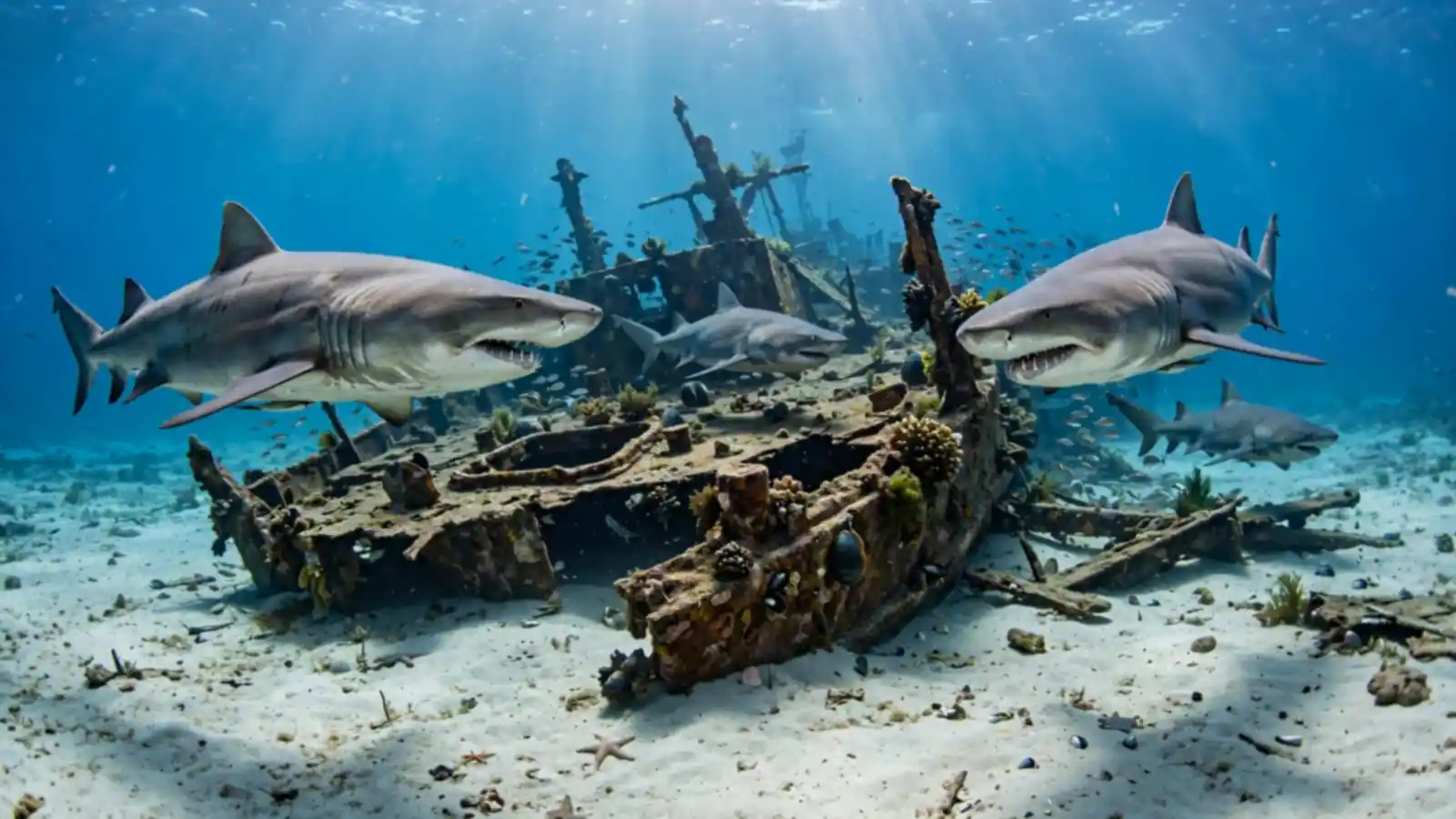
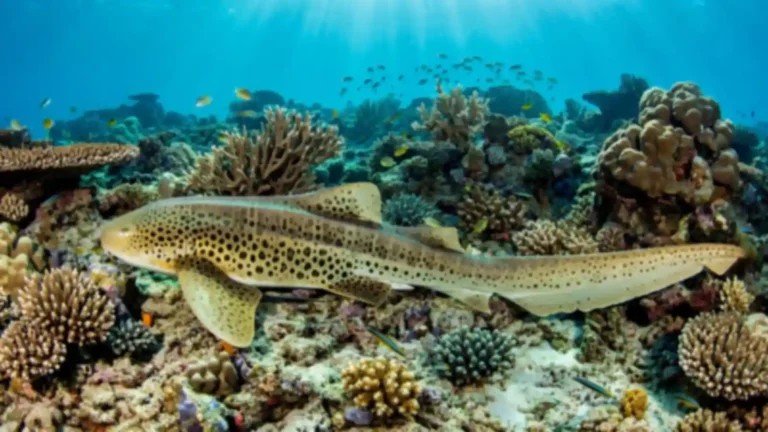
Sand tiger sharks live in warm coastal waters around the world, along reefs, rocky outcrops and shipwrecks. They are most common in the western Atlantic, from the Gulf of Maine to Argentina, and in the eastern Atlantic, the Mediterranean and the Indo-Pacific. They usually stay between the surface and about 200 metres deep, and they return to the same wrecks and reefs year after year.
Wrecks are their favourite home. A sunken ship offers shelter, shade and a steady supply of small fish, and sand tigers gather there in groups of dozens — sometimes hundreds — drifting in the current like slow grey ghosts. The bull shark patrols the same murky coastal waters, but the sand tiger prefers the clear water around wrecks and reefs, where divers can watch it for hours.
What Do They Eat? Fish, Squid and Crustaceans
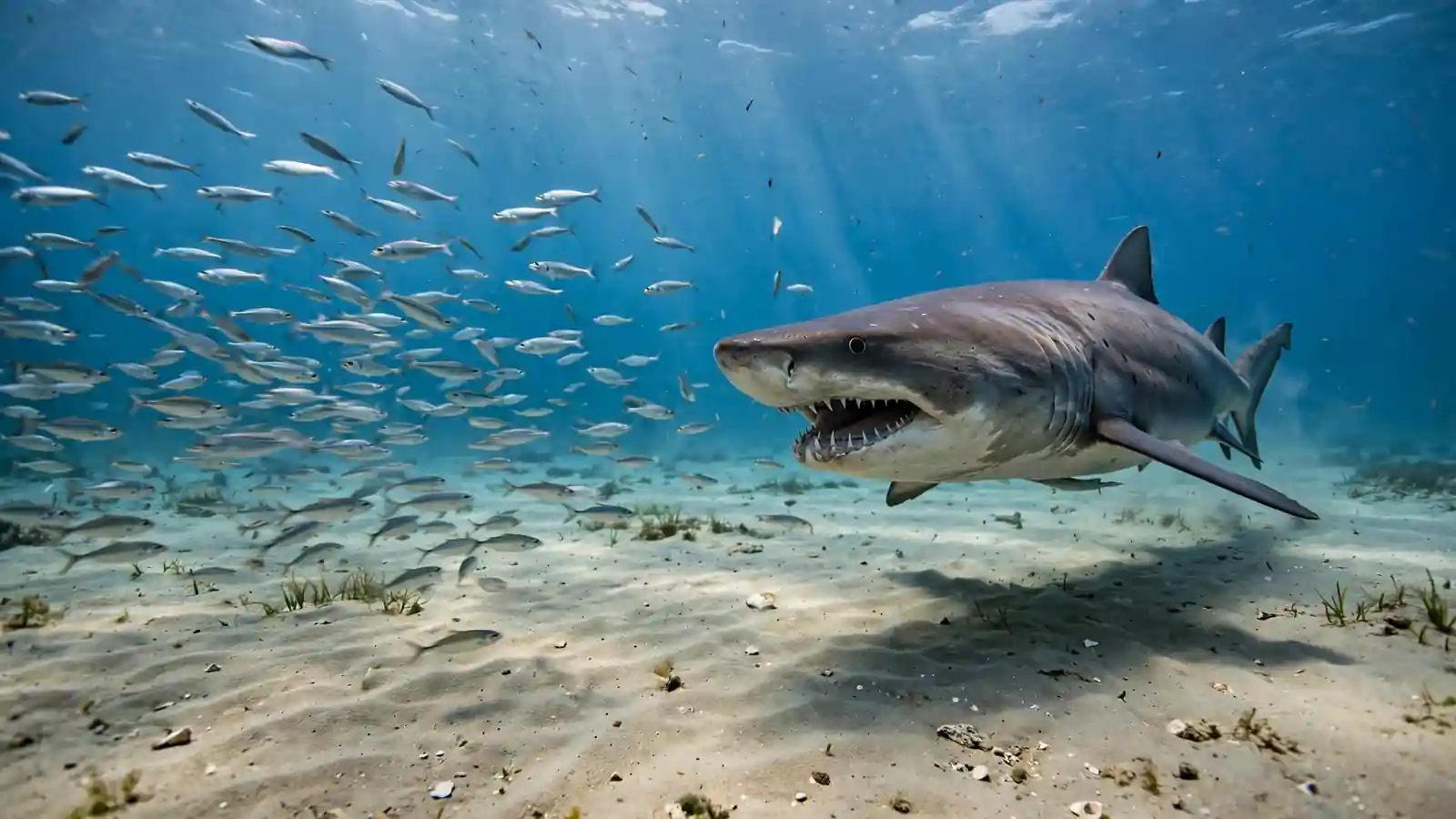
Sand tigers eat bony fish, squid and crustaceans, and they hunt mostly at night. They are not fast, and they do not need to be: they drift up to a school of fish and snap sideways, catching the fish in their needle teeth and swallowing it whole. They take what is easy — a slow fish, a squid, a crab on the sand — and they never chase prey over a distance.
They do not eat marine mammals, and they do not eat people. A sand tiger’s stomach holds fish, squid and the occasional crustacean, and nothing bigger. It is a patient, methodical hunter, and its diet is one more reason it is so gentle: a shark that eats fish the size of a sardine has no reason to test a diver.
Behaviour: The Shark That Gulps Air to Float
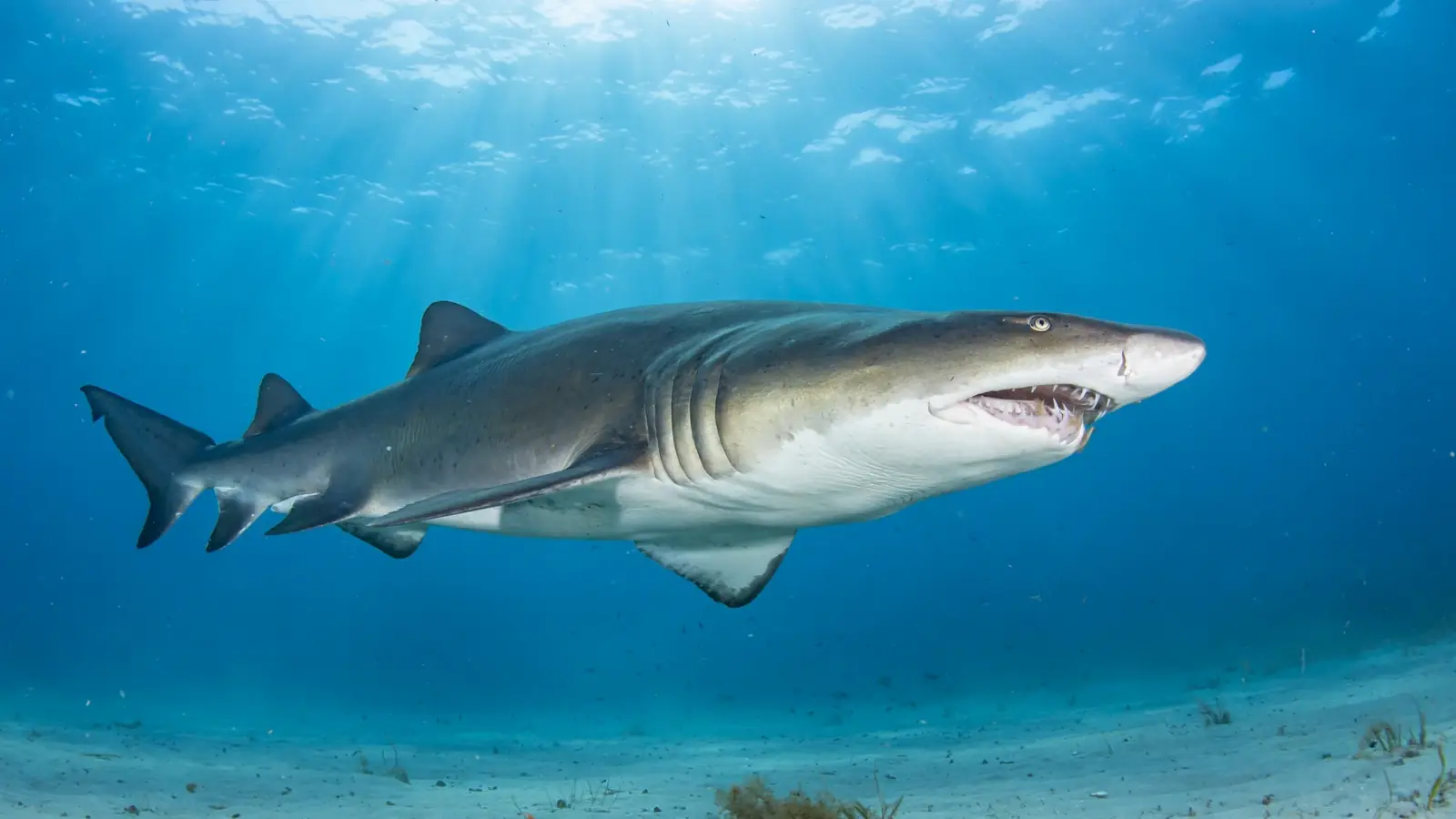
The sand tiger’s strangest trick is how it floats. It is the only shark that gulps air at the surface and holds it in its stomach, which makes it neutrally buoyant — neither sinking nor rising. With a belly full of air, a sand tiger can hover motionless in mid-water for hours, barely moving a fin, waiting for night. It is the laziest shark in the sea, and it works.
They are also social in a quiet way. Sand tigers gather in groups at wrecks and reefs, drifting together in the current, and they tolerate divers who approach slowly. They are curious but not bold: a sand tiger will watch a diver, then turn away and drift on. The only time they become aggressive is during mating, when males bite females — and even then, the aggression is aimed at other sand tigers, not at people.
Reproduction: Two Pups, and Only the Strongest Survives
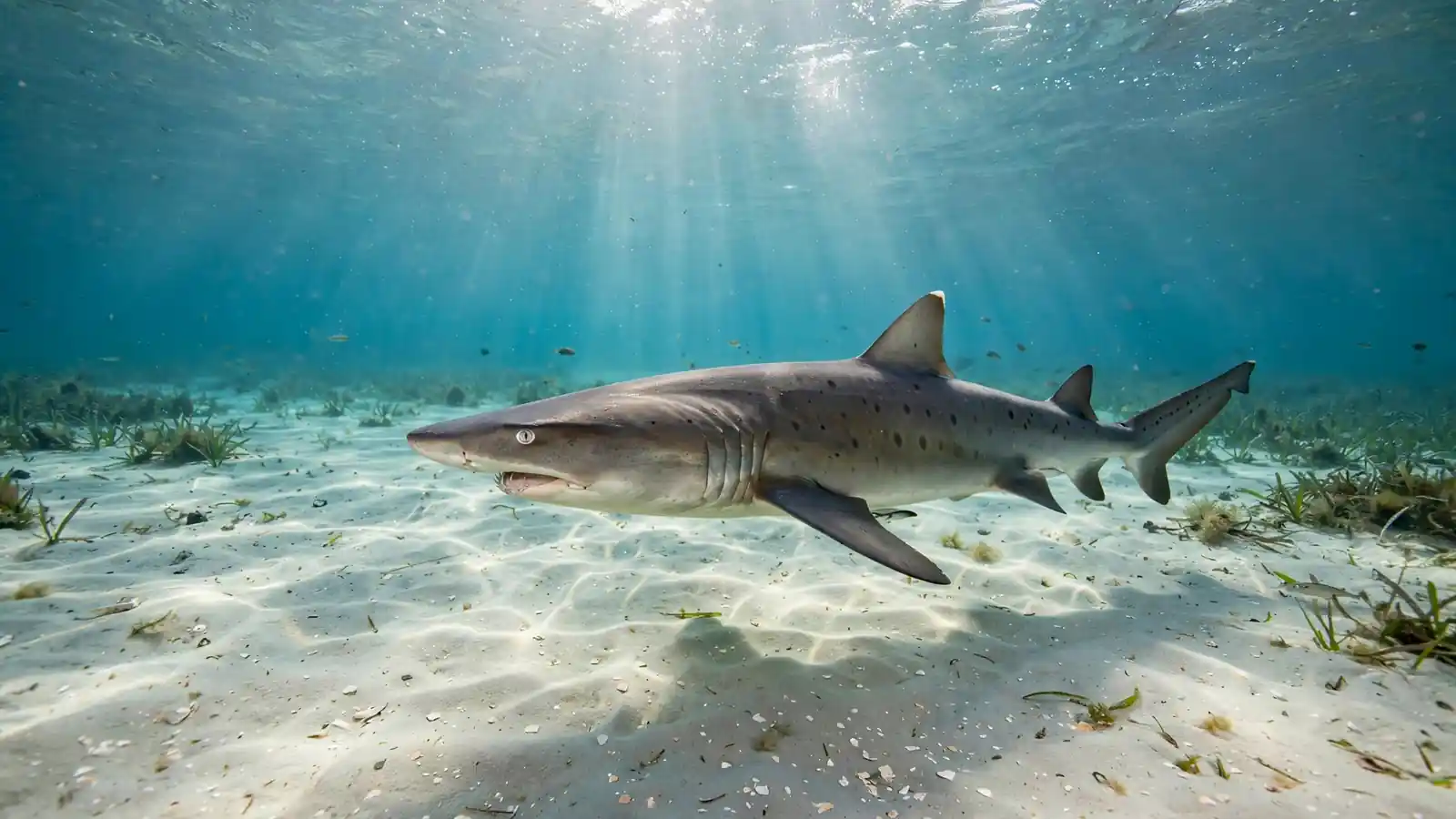
Sand tiger reproduction is the most brutal in the shark world. A female gives birth to just two pups — one from each uterus — and the reason is intrauterine cannibalism: the first pup to hatch in each uterus eats its unborn siblings, along with the unfertilised eggs the mother keeps producing. Only the strongest pup in each uterus survives to be born.
The survivors are born big — about 1 metre long — and already armed with needle teeth. They are ready to hunt from the day they are born, and they need to be: a sand tiger pup has no mother to protect it. Females give birth only every two years, which is why the species recovers so slowly when its numbers fall. Two pups every two years is the slowest birth rate of any shark.
Critically Endangered: A Shark That Needs Help
The sand tiger shark is listed as Critically Endangered, a status set in 2020 that reflects a steep decline across its range. In the Atlantic and the Mediterranean its numbers have fallen sharply, driven by fishing — for meat, for fins and as bycatch — and by the slow birth rate that cannot replace the adults that are lost. A shark that produces two pups every two years cannot survive heavy fishing.
Protection is growing. Sand tigers are protected in many countries, including Australia, where they are known as grey nurse sharks, and in the United States, where they were the first shark to be protected. Aquariums breed them, and the pups are released into the wild. But the species needs more: fewer nets, more protected wrecks and reefs, and time — the one thing a slow-breeding shark needs most.
Fun Facts
- The sand tiger shark is the only shark that gulps air at the surface to stay afloat.
- A sand tiger mother gives birth to just two pups — one from each uterus.
- The pups eat their unborn siblings in the womb, so only the strongest is born.
- Sand tigers look terrifying but have never killed a person.
- They gather in the same shipwrecks year after year, like regulars at a favourite bar.
- Sand tiger pups are born about 1 metre long, already armed with needle teeth.
- The species is called the grey nurse shark in Australia, where it is protected.
Frequently Asked Questions
Are Sand Tiger Sharks Dangerous?
Almost never. The international file records 36 unprovoked bites and no confirmed fatalities, and most bites were on spearfishers or divers who provoked the shark. Sand tigers are slow and docile, and they usually swim away from people.
Why Do Sand Tiger Shark Teeth Stick Out?
Because the teeth are long, thin and needle-shaped, and there are too many of them to fit inside the mouth. The teeth poke out even when the mouth is closed, which is why the sand tiger looks so frightening — but the teeth are built for gripping small fish, not for tearing big prey.
How Big Do Sand Tiger Sharks Get?
Most adults measure 2.5 to 3.2 metres (8 to 10.5 feet), with the largest reaching about 3.2 metres and 160 kg. Females grow larger than males.
Where Do Sand Tiger Sharks Live?
In warm coastal waters worldwide: along reefs, rocky outcrops and shipwrecks, usually between the surface and about 200 metres deep. They gather in the same wrecks year after year, and they are a favourite of wreck divers.
What Do Sand Tiger Sharks Eat?
Bony fish, squid and crustaceans. They hunt at night, snapping up fish with a quick sideways strike, and they swallow their prey whole. They do not hunt marine mammals or people.
Why Are Sand Tiger Sharks Critically Endangered?
Because they grow slowly, mature late and produce only two pups every two years, so they cannot replace the adults that are caught. They are listed as Critically Endangered (2020), and their numbers have fallen sharply in the Atlantic and the Mediterranean.
How Do Sand Tiger Sharks Float Without Swimming?
They gulp air at the surface and hold it in their stomachs, which makes them neutrally buoyant — the only shark that does this. With a belly full of air, a sand tiger can hover motionless in mid-water without swimming, saving energy while it waits for night.
Why Are Sand Tiger Sharks Called Grey Nurse Sharks?
Grey nurse shark is simply the name Australians use for the same animal. In Australia the sand tiger shark is called the grey nurse shark, and it is a protected species there — the name is a local common name, not a different shark.
Similar Species Worth Exploring
Keep Exploring
Still swimming with the sand tiger? Meet the gentle lemon shark in our Lemon Shark guide, compare the coastal Bull Shark that shares its waters, and size up the whole family in the Types of Sharks hub — then drift back to the wreck with the sand tiger shark.