Lemon Shark
Lemon Shark: the yellow hunter of the mangrove shallows
The lemon shark is the yellow-tinted hunter of the tropical shallows, a stocky, broad-headed shark that spends its days resting in loose groups on sandy lagoon floors and its nights hunting among the mangrove roots. Two dorsal fins of almost equal size give it away at a glance. Here is how to identify one, how big it grows, where its pups are raised and how dangerous it really is to people.
By Emily Carter · Reviewed by our vet team · Updated 10 November 2026 · 9 min read
Up to 3.4 m longPups raised in mangrove nurseriesAlmost never attacks people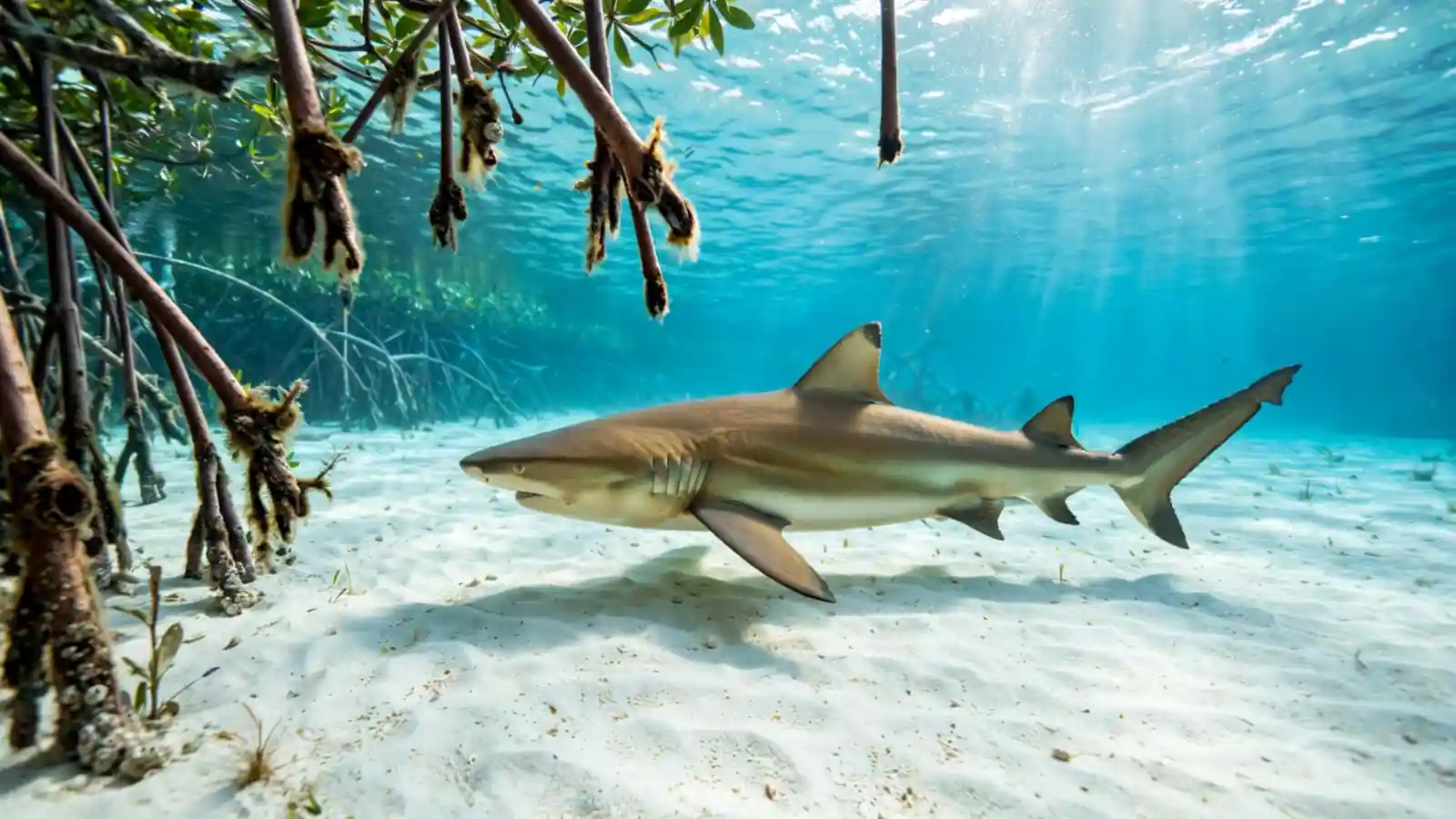
At a Glance
A lemon shark spends its whole life in water warm enough to swim in. Born in the shelter of mangrove roots, it grows into one of the best-studied sharks on Earth — a social, curious bottom hunter whose yellow skin is camouflage, whose babies return to the exact bay where they were born, and whose fearsome family name hides one of the calmest temperaments of any large shark.
Lemon Shark Size and Weight
The lemon shark is a heavily built shark that commonly reaches 2.4 to 3 metres (8 to 10 feet) as an adult. The largest reliably measured individuals run to about 3.4 metres (11 feet) and can weigh up to 184 kilograms (405 pounds). Females grow slightly larger than males, and the body is thick through the middle, with a broad, flattened head and a short, blunt snout that gives the face an almost rounded profile.

You can browse the full species record for Negaprion brevirostris to see how its measurements compare with its requiem shark relatives. Growth is slow by fish standards: a young shark in a good nursery may add around 10 centimetres a year, males mature at roughly 11 to 13 years old and females at 12 to 15. That slow pace shapes everything about the species, from its long childhood in the mangroves to a lifespan that can reach 25 to 30 years.
Its bulk is honest working weight rather than speed equipment. This is a shark built to cruise slowly over sand and reef, to rest on the bottom in the current, and to make short, powerful rushes at prey rather than long chases — a heavyweight patrolling a small home range it knows in detail.
Identification: Two Dorsal Fins Give It Away
One feature identifies this shark faster than any other: the two dorsal fins are almost the same size. On nearly every other requiem shark the second dorsal fin is a small afterthought, a fraction of the first, but here it stands nearly as tall, set far back over the pelvic fins. Seen from a boat or a dock, that matched pair of triangles is the signature of the species.
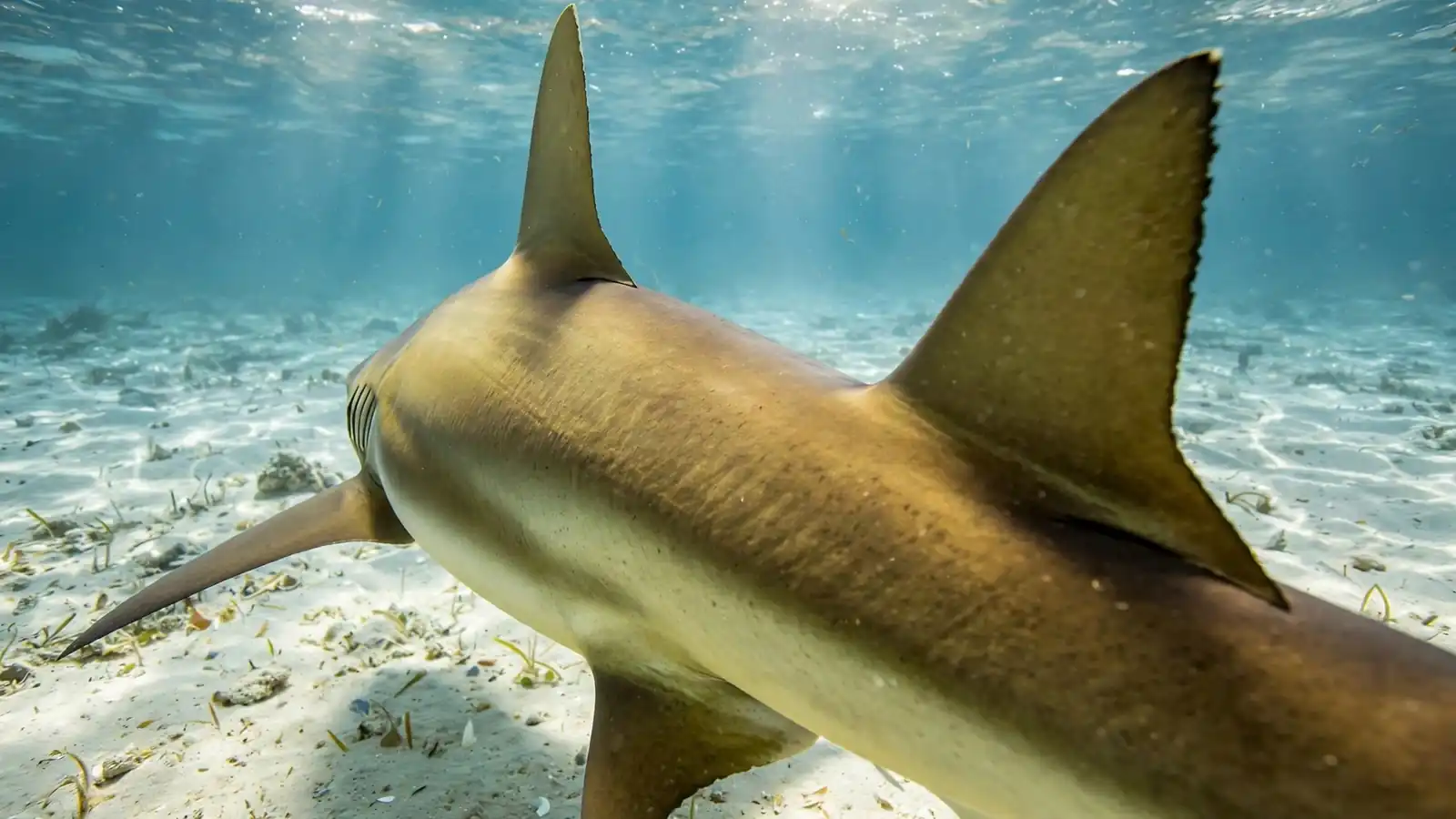
The colour does the rest. The back is a yellowish brown to olive-grey and the belly a paler yellow-white, a combination that vanishes against sunlit sand and patches of seagrass. The skin tint is exactly the shade of a lemon rind held under shallow water, which is how the shark earned its name. Up close, look for the broad blunt snout, the large eyes, and the wide pectoral fins it uses like wings to lift itself off the bottom.
Young sharks look like small editions of their parents and share the same shallows. The species most often confused with it is the nurse shark, the other big bottom-resting shark of the same coasts, but a nurse shark has a much smaller second dorsal fin, whisker-like barbels beside its mouth, and no yellow tint — once you know the twin-fin trick, the two are hard to mix up.
Where Lemon Sharks Live: Habitat and Range
Lemon sharks live in warm, shallow coastal water, mostly in depths of less than 90 metres and often in water you could stand in. The heart of the range is the western Atlantic: from New Jersey down through Florida, the Bahamas and the Caribbean to Brazil, including the Gulf of Mexico. They also occur in the eastern Atlantic off West Africa, from Senegal towards Angola, and on the Pacific side of the Americas from Baja California to Ecuador.
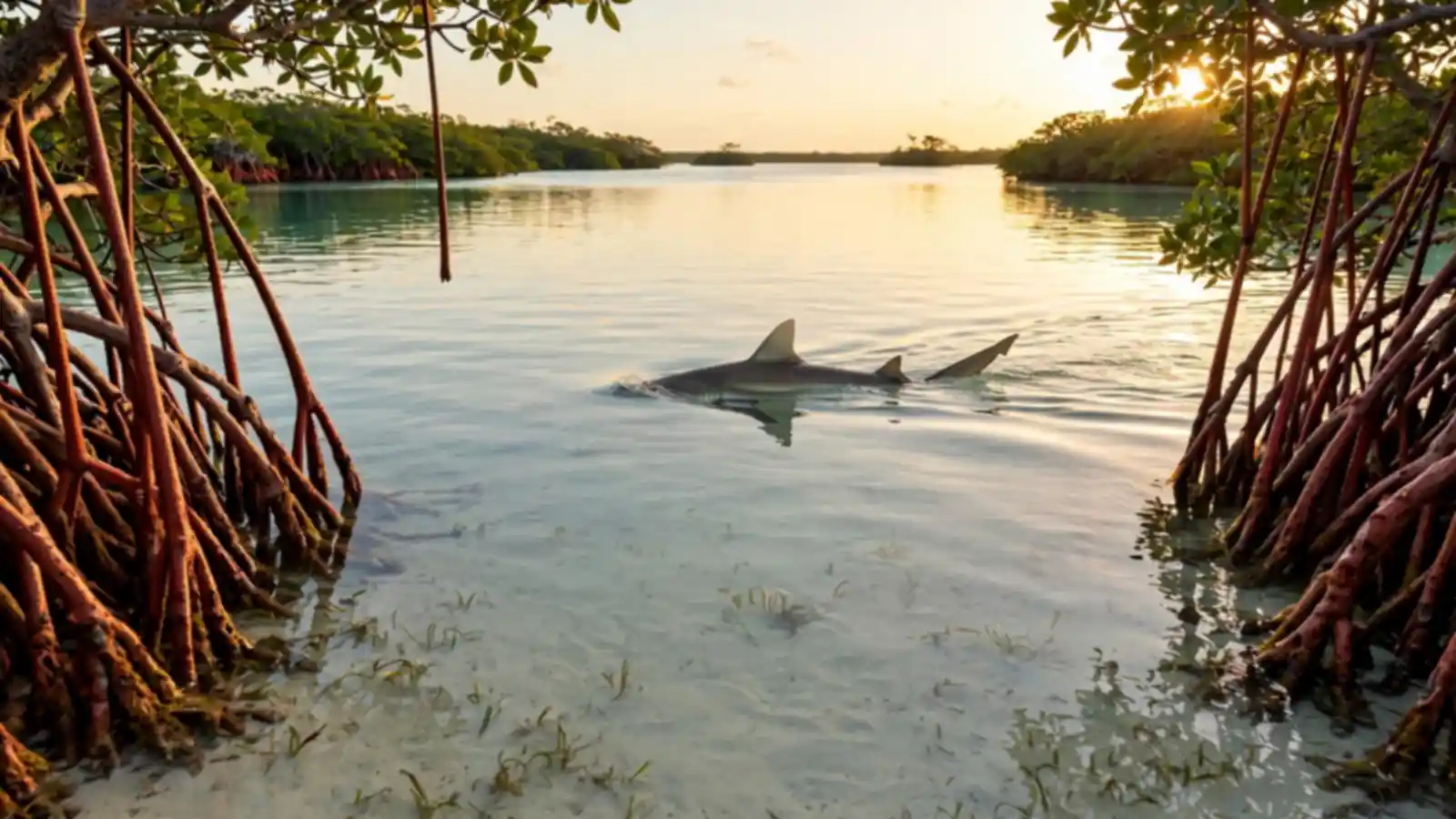
Within that range, the habitat recipe is consistent: sandy flats, mangrove-fringed lagoons, bays, river mouths and the edges of coral reefs, always close to shore. Adults patrol reef edges and channels, rest in groups on open sand during the day, and push into the shallows at dusk to hunt. It is a homebody shark — tracking studies show individuals holding the same stretch of coast for years, returning to favourite resting spots day after day.
That loyalty cuts both ways. A shark that never leaves its home waters is easy to protect when those waters are protected, and easy to lose when they are fished hard or the mangroves along the shore are cleared. The map of this species is drawn in mangrove roots as much as in open sea.
Nurseries in the Mangrove Roots
The most famous chapter of this shark’s life happens in water barely knee deep. Pregnant females slip into sheltered mangrove lagoons to give birth, and research in the Bahamas has shown that many return to the very bay where they themselves were born — a homing instinct called natal philopatry. After a gestation of 10 to 12 months, each female delivers a litter of 4 to 17 pups, each about 60 to 70 centimetres long and ready to hunt from its first hour.
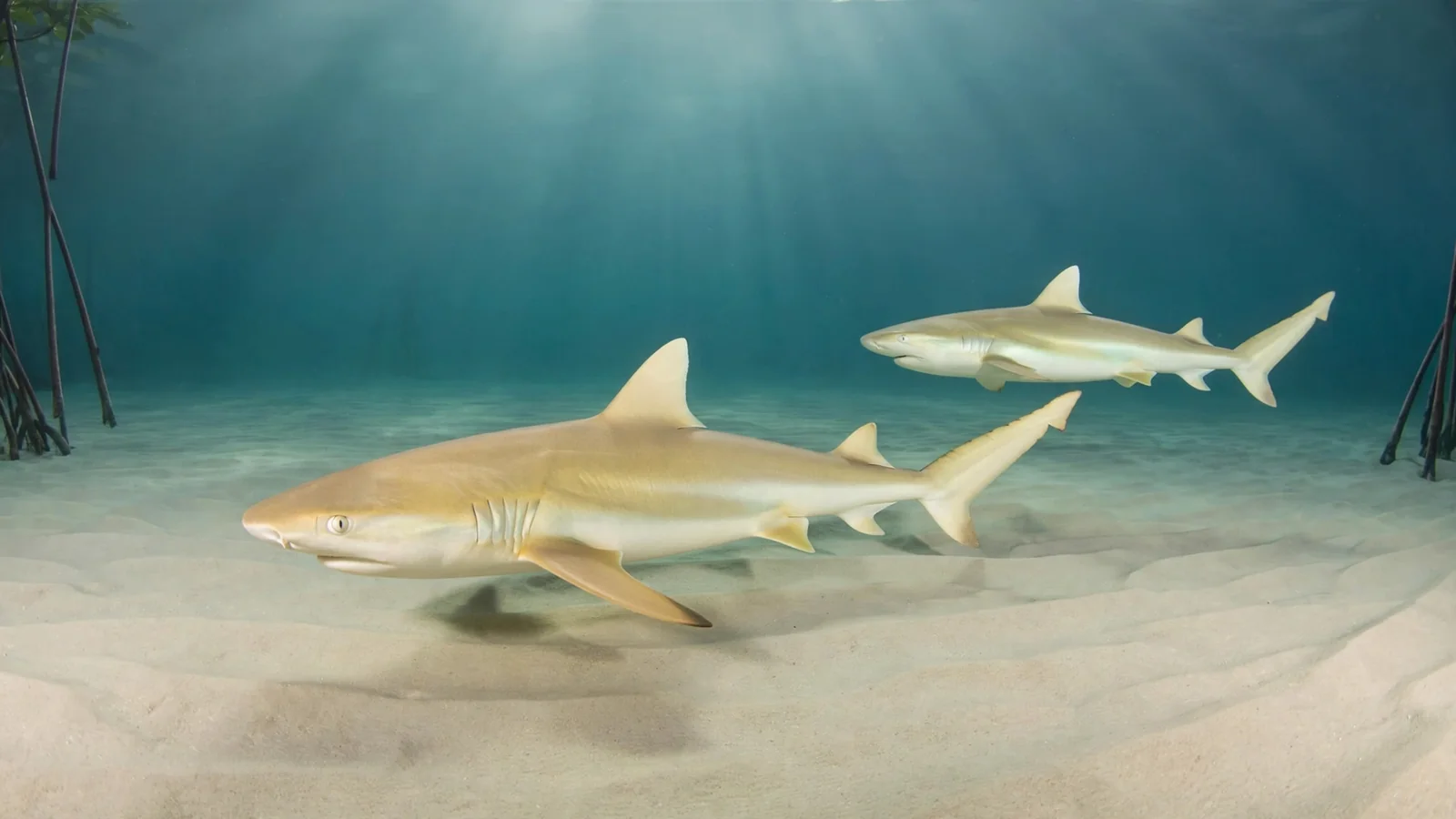
The mangrove roots are a fortress for the young. Big sharks cannot cruise easily between the tangled prop roots, so the pups spend their first years in the shallows, feeding on small fish and crabs and growing steadily. Only as they approach a metre and a half do they begin to range wider, and many stay near their birthplace for a decade or more, which is why scientists at Bimini in the Bahamas have been able to follow known individuals from birth to adulthood.
Few sharks on Earth have been studied as closely across a whole lifetime, and the nursery is the reason. Protect the mangroves and you protect the cradle of the species; clear them for development and the next generation has nowhere safe to grow up.
Diet and Feeding
By day this shark rests; by night it works. As the light fades, groups break up and each shark begins a slow, methodical patrol over sand and reef, head swinging gently as it tastes the water for the scent of prey. The menu is whatever the bottom provides: bony fish such as snapper, grunt, mullet and sea catfish make up most of it, along with stingrays, crabs, shrimp, molluscs and the occasional seabird taken at the surface.
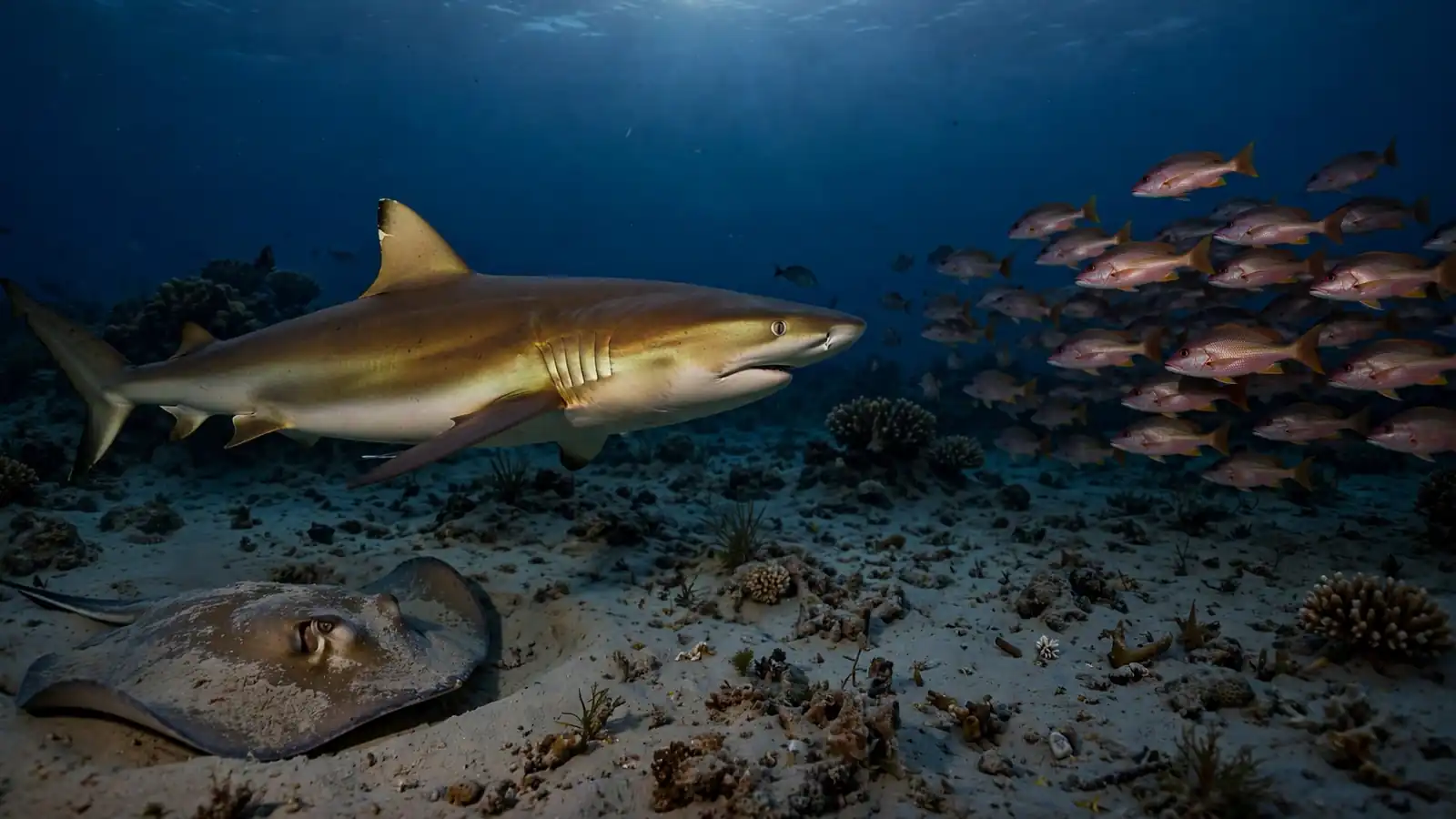
The hunting style is a stalk and a rush. A lemon shark will cruise over a flat with its belly nearly brushing the sand, then surge forward in a short burst to seize a fish that wandered too far from shelter. Like other requiem sharks it can pump water over its gills while still, which frees it to wait motionless in ambush-friendly spots — a resting shark in a channel at dusk is often a hunting shark.
It is a mid-level predator with its own enemies to respect. Young sharks are hunted by larger sharks, including adults of their own species, which is one more reason the mangrove nursery matters, and adults in turn keep reef fish and ray populations in balance along the coasts they patrol.
How Dangerous Are Lemon Sharks?
For a shark of its size, the record is remarkably clean. The international attack file credits this species with just 10 unprovoked attacks on people and not a single fatality. Divers and snorkellers routinely share the water with resting groups, and the sharks usually hold their ground calmly or cruise away at an easy pace. They are curious animals — a lemon shark may approach to look at a diver — but curiosity is not aggression.
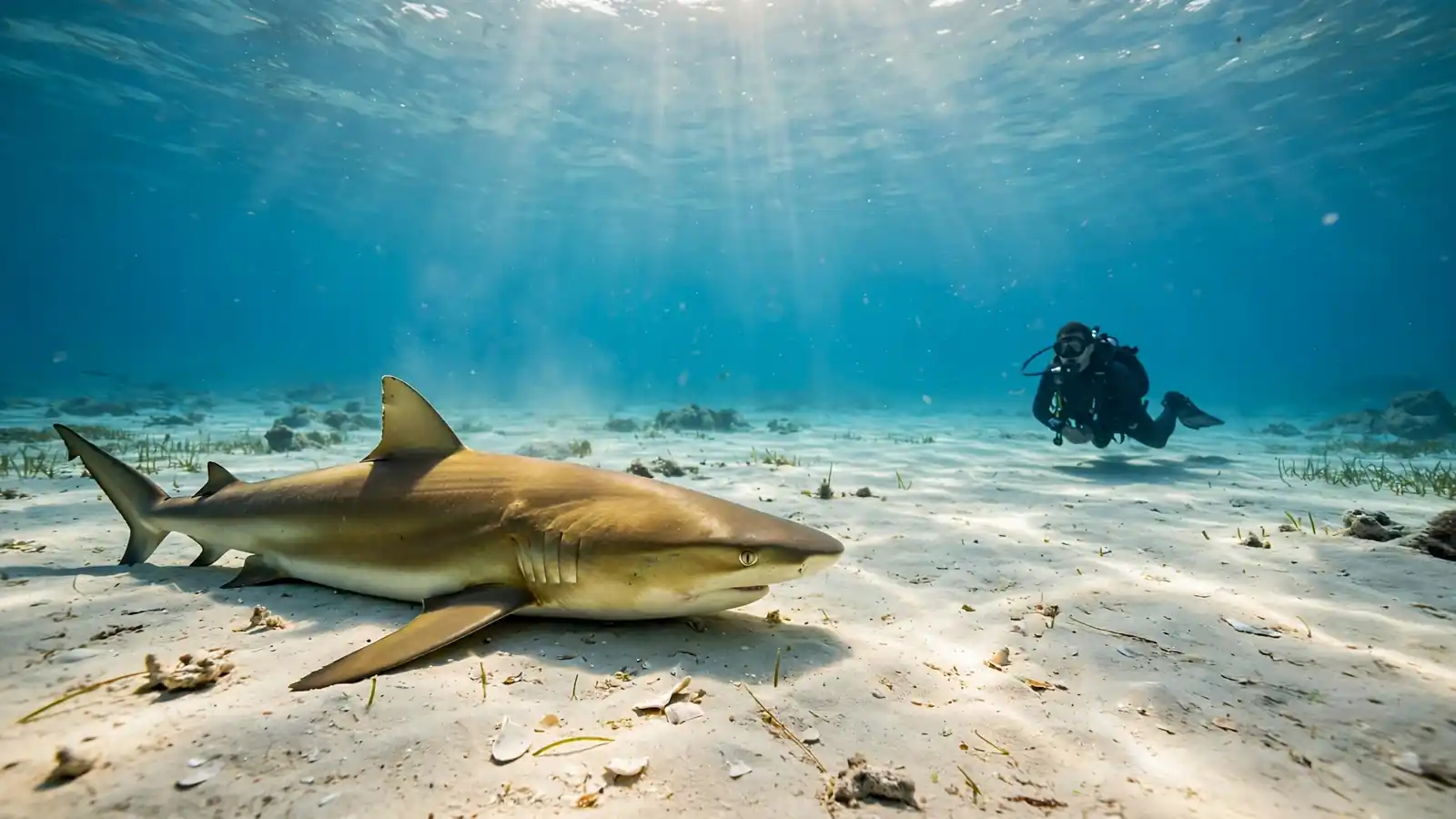
Almost every recorded bite follows the same script: a shark that was grabbed, cornered, spearfished around or provoked. Their teeth are narrow and blade-like, built for gripping fish, and a defensive snap from a shark that can weigh as much as a grown man deserves respect. The sensible rules are the ones that apply to any big wild animal: watch, enjoy, keep your hands to yourself, and never back one into the shallows.
The honest danger runs the other way. This species is listed as Vulnerable, pressed by commercial and recreational fisheries, by the fin trade, and above all by the clearing of the mangrove nurseries its pups cannot do without. Compared with the gentle whale shark it shares these warm coasts with, it asks for the same simple bargain: leave its home waters intact, and it will leave you entirely alone.
Fun Facts
- Its two dorsal fins are almost equal in size — the quickest way to tell it from every other requiem shark in its range.
- Females return to the same mangrove bay where they were born to deliver their own pups, a homing feat called natal philopatry.
- The yellow tint that gives the shark its name is camouflage, blending it into sunlit sand and seagrass from above and below.
- Young sharks at Bimini in the Bahamas have been followed by researchers from birth to adulthood — one of the longest studies of any shark.
- Despite its size, the species has only 10 recorded unprovoked attacks on people, and none of them fatal.
- It can pump water over its gills while resting, so groups can lie still together on the sand all day without swimming.
Frequently Asked Questions
How Big Do Lemon Sharks Get?
Most adults measure 2.4 to 3 metres (8 to 10 feet) long. The largest reliably recorded lemon sharks reach about 3.4 metres (11 feet) and weigh up to 184 kilograms (405 pounds), with females growing slightly larger than males.
How Dangerous Are Lemon Sharks to People?
Lemon sharks are among the calmest large sharks around people. The international attack record lists just 10 unprovoked attacks by this species and no fatalities. Bites are almost always defensive, after a shark has been grabbed, cornered or provoked.
Will Lemon Sharks Attack Humans?
Unprovoked attacks are extremely rare. A lemon shark may cruise past divers or even approach out of curiosity, but it almost never bites unless it is handled, threatened or competing for speared fish. Give it space and it will simply move on.
Can You Pet a Lemon Shark?
No. A lemon shark is a large wild predator, not a pet or a photo prop. Handling stresses the shark, and a startled animal of this size can bite hard in self-defence. Watch them from a respectful distance instead — they are calm enough to observe at close range without being touched.
Where Do Lemon Sharks Live?
Lemon sharks live in warm, shallow coastal waters of the Americas and West Africa, from Florida, the Bahamas and the Caribbean to Brazil, and from Baja California to Ecuador in the Pacific. They favour mangrove lagoons, bays, sandy flats and reef edges, usually in less than 90 metres of water.
What Do Lemon Sharks Eat?
Lemon sharks eat mainly bony fish such as snapper, mullet and sea catfish, plus stingrays, crabs, shrimp and molluscs. They hunt mostly at night, cruising slowly over sand and reef and rushing forward in a short burst to seize prey.
Why Are They Called Lemon Sharks?
They are named for their colour. A lemon shark’s back is a yellowish brown and its belly a pale yellow-white, like a lemon rind seen under shallow water. The tint works as camouflage over sunlit sand.
Similar Species Worth Exploring
Keep Exploring
Still curious about sharks? Meet the nurse shark, the lemon shark’s bottom-resting neighbour on the same reefs, or browse every species in our guide to the types of sharks. Few of them reward a close look as calmly as the lemon shark.