Sevengill Shark Facts: Seven Gills, Size and Habitat
Sevengill Shark: Seven Gills and a Hundred Pups
The sevengill shark is the shark with seven gill slits instead of five — a broad-nosed cow shark that hunts in kelp forests and bays and bears some of the largest litters of any shark.
By Emily Carter · Reviewed by our vet team · Updated 10 November 2026 · 7 min read
Seven gill slitsUp to 104 pupsVulnerable (2019)
At a Glance
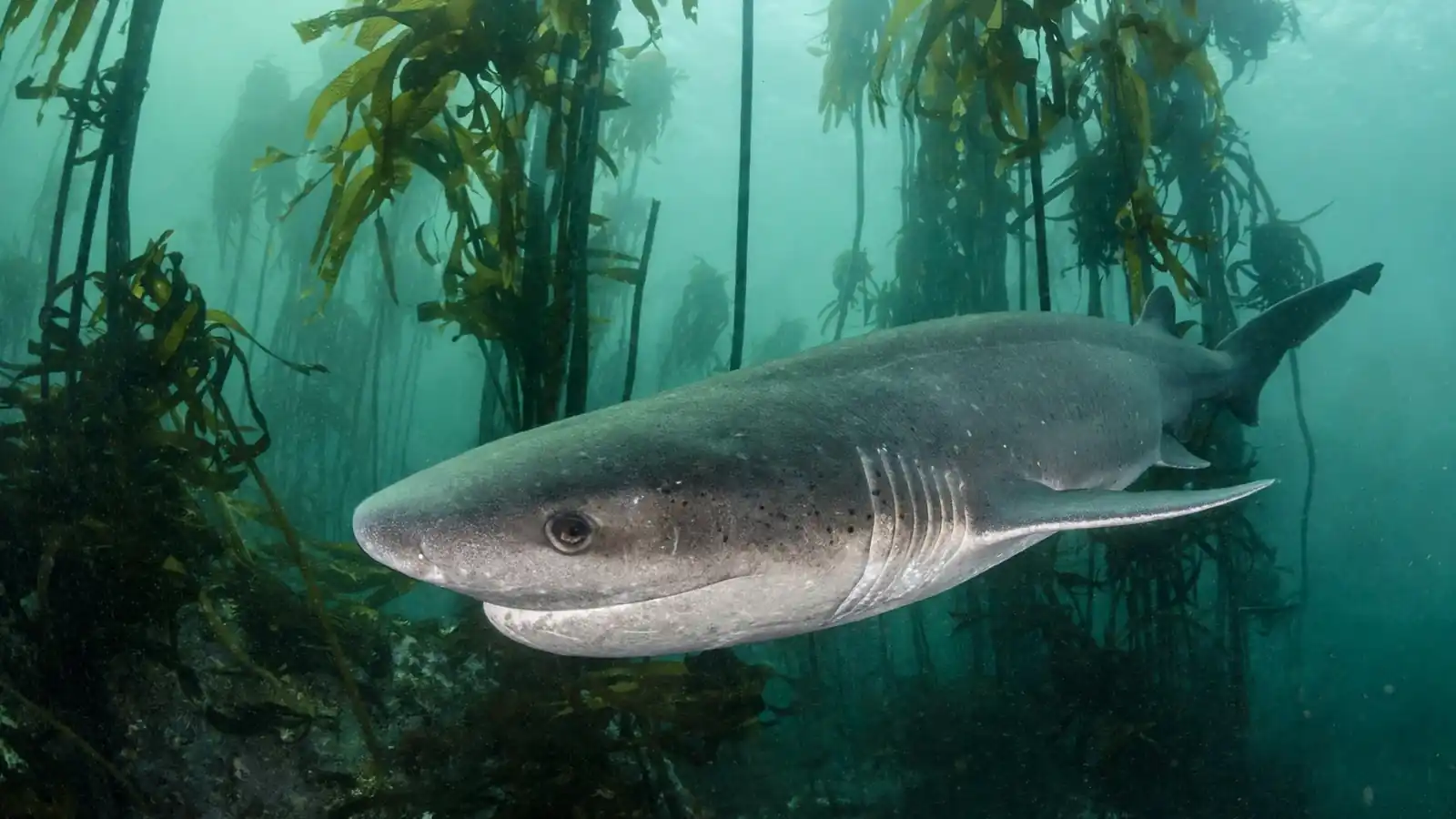
The sevengill shark is the shark that counts to seven. Almost every shark has five gill slits on each side; it — the broadnose sevengill, also called the cow shark — has seven, and a single dorsal fin set far back on its body to match. It is an ancient design, a living leftover from a time when sharks looked very different, and it still works: the sevengill hunts in cool coastal waters around the world and gives birth to some of the largest litters of any shark.
Sevengill Shark Size: A Three-Metre Cow Shark
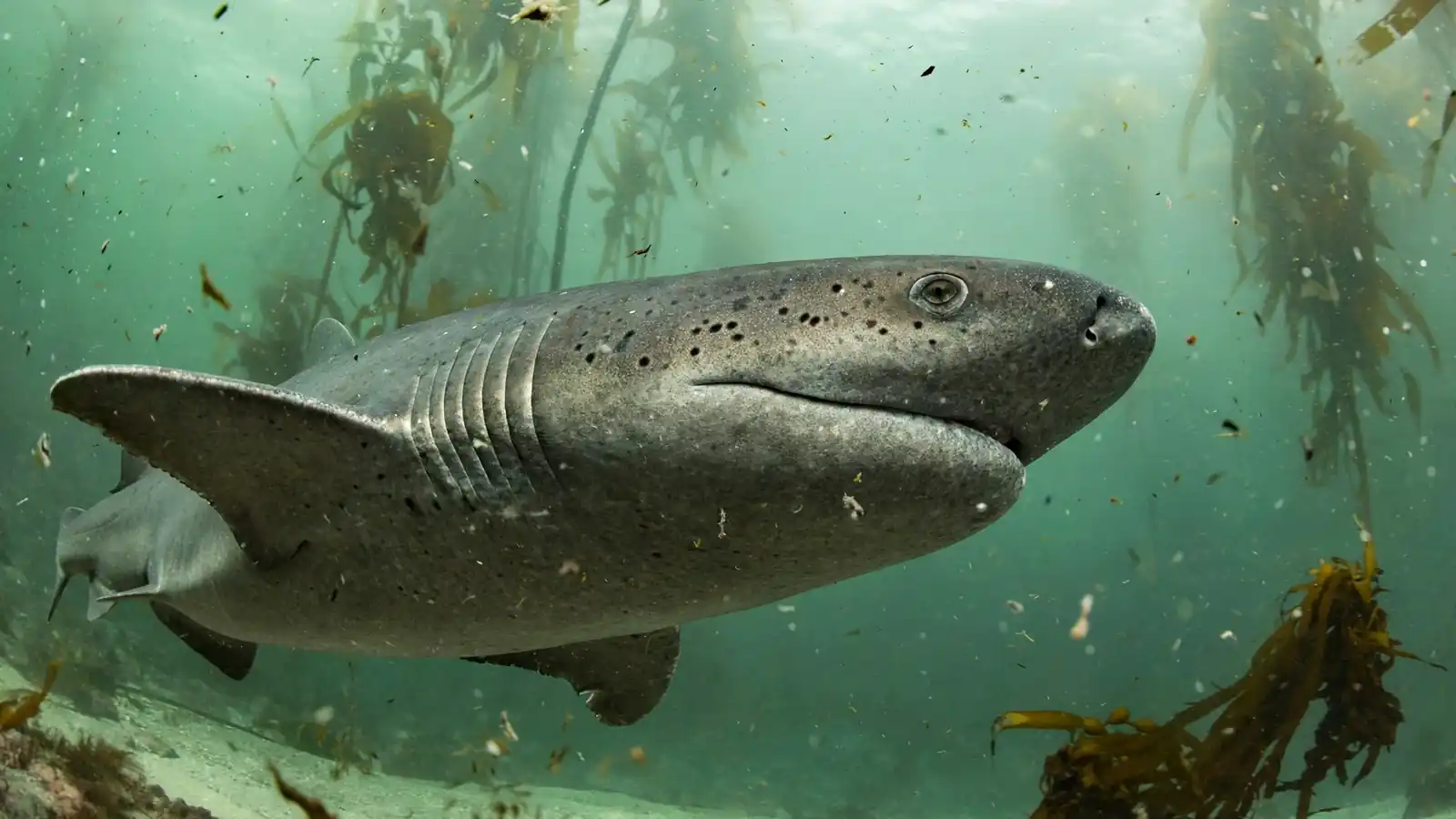
Most adult sevengill sharks measure 2 to 2.5 metres long, and the largest on record reached about 3 metres and 107 kg. Females grow larger than males, and a big female is a heavy, powerful animal — broad across the head and shoulders, with a body built for wrestling large prey rather than for speed. For the full species record, see the shark profile.
It is often called the cow shark, and the name fits its looks as well as its size. It has a blunt, rounded snout, small eyes, and a body speckled with black spots that fade with age. It looks less like a classic torpedo-shaped shark and more like a heavy, slow-moving bottom hunter — which is exactly what it is.
Seven Gills Instead of Five: The Naming Feature
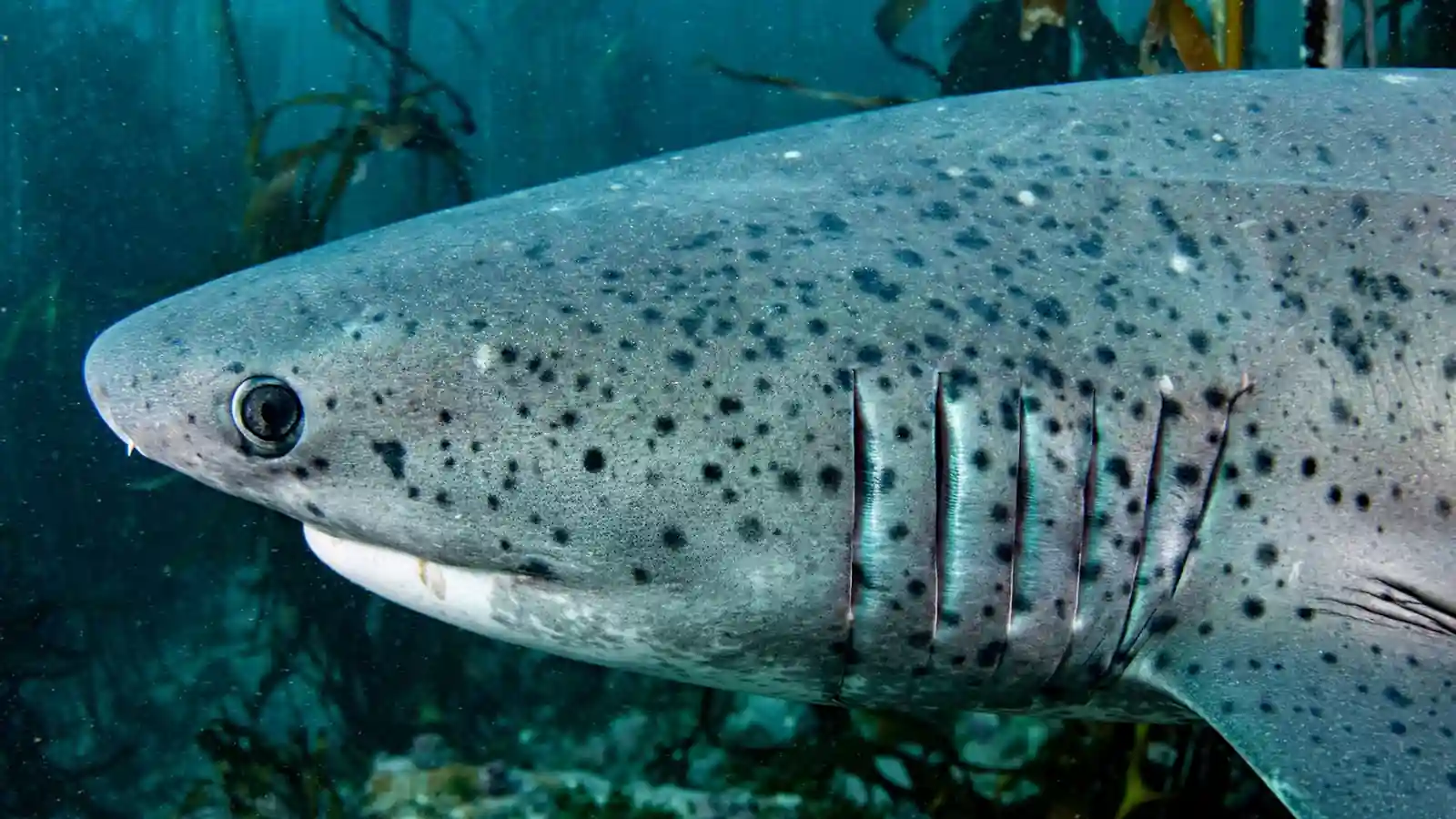
Count the gill slits and the shark gives itself away: seven on each side, where almost every other shark has five. The extra gills are the naming feature, and they mark the sevengill as one of the most primitive living sharks — a member of the cow shark family, whose design has changed little in tens of millions of years.
The shark pairs its seven gills with a single dorsal fin set far back on the body, close to the tail. Most sharks carry two dorsal fins; the sevengill carries one, and the combination of seven gills and one dorsal fin is unique enough to identify the animal at a glance. The smaller sharpnose sevengill is a different, deepwater species — do not mix its facts in here.
Where Sevengill Sharks Live: Cool Temperate Coasts
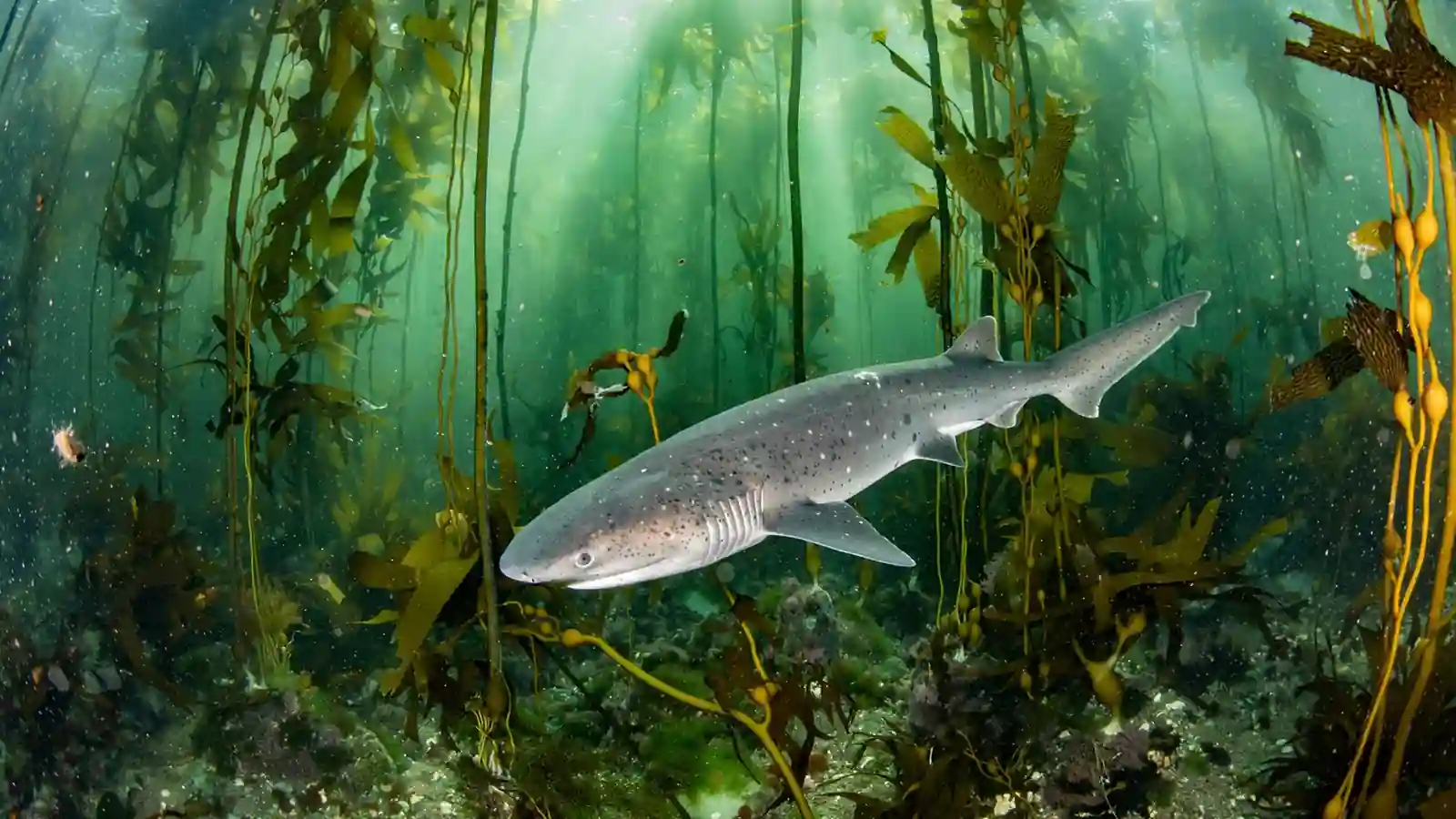
Sevengill sharks live in cool temperate coastal waters around the world — bays, estuaries, harbours and kelp forests, usually in water less than 100 metres deep. They are common along the coasts of California, South Africa, Australia, New Zealand, Argentina and Japan, but they are absent from the North Atlantic and the Mediterranean.
They are inshore sharks with a taste for structure. Kelp forests, rocky reefs and murky bay channels are their hunting grounds, and they move with the tides and the seasons, coming into shallow bays in summer and dropping into deeper water in winter. San Francisco Bay is one of the best-known sevengill nurseries in the world.
What Do Sevengill Sharks Eat? Fish, Seals and Carrion

It eats almost anything it can catch or find: bony fish, rays, other sharks, seals and carrion. It is a powerful, opportunistic hunter that will take a seal at the surface, tear into a dead whale, or hunt smaller sharks on the bottom — and it sometimes hunts in small groups, which is unusual for a shark of its size.
Its teeth tell the story of that diet. The upper teeth are sharp and pointed for gripping, while the lower teeth are broad and comb-shaped for sawing through flesh and blubber. A sevengill can take prey far too big to swallow whole, cutting it into pieces the way a saw cuts wood.
Sevengill Shark Reproduction: Up to 104 Pups
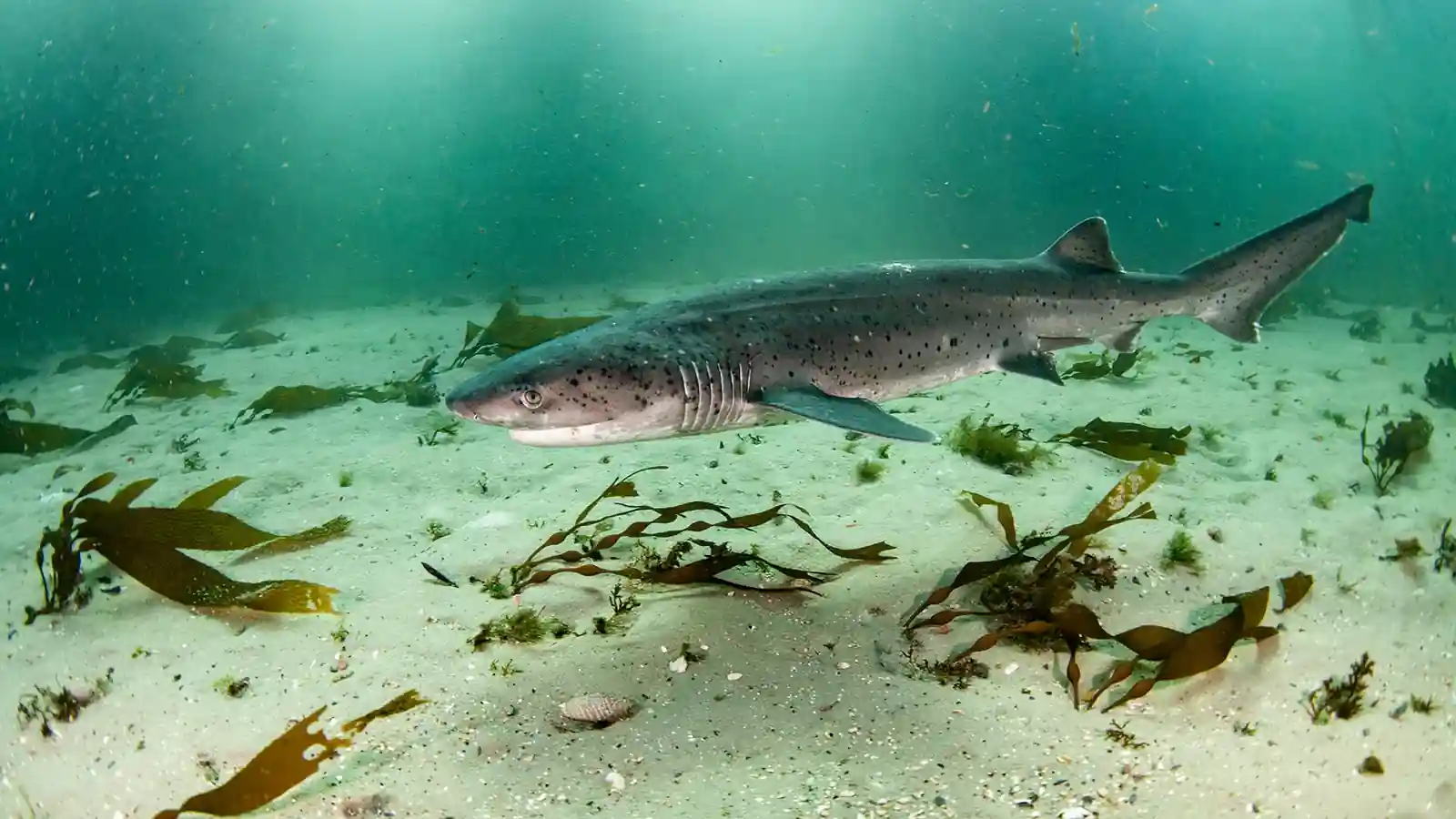
It gives birth to live young after a pregnancy of about a year, and its litters are among the largest of any shark: 67 to 104 pups in a single birth. The pups are born at around 40 to 45 cm long in shallow bays and estuaries, where the warm, food-rich water gives them a fast start.
Huge litters are its answer to a hard life. Most pups will not survive their first year — bigger sharks, seals and the open sea all take a share — so the species bets on numbers. A female that produces a hundred pups only needs a few of them to reach adulthood to replace herself.
Are Sevengill Sharks Dangerous? The Human Record
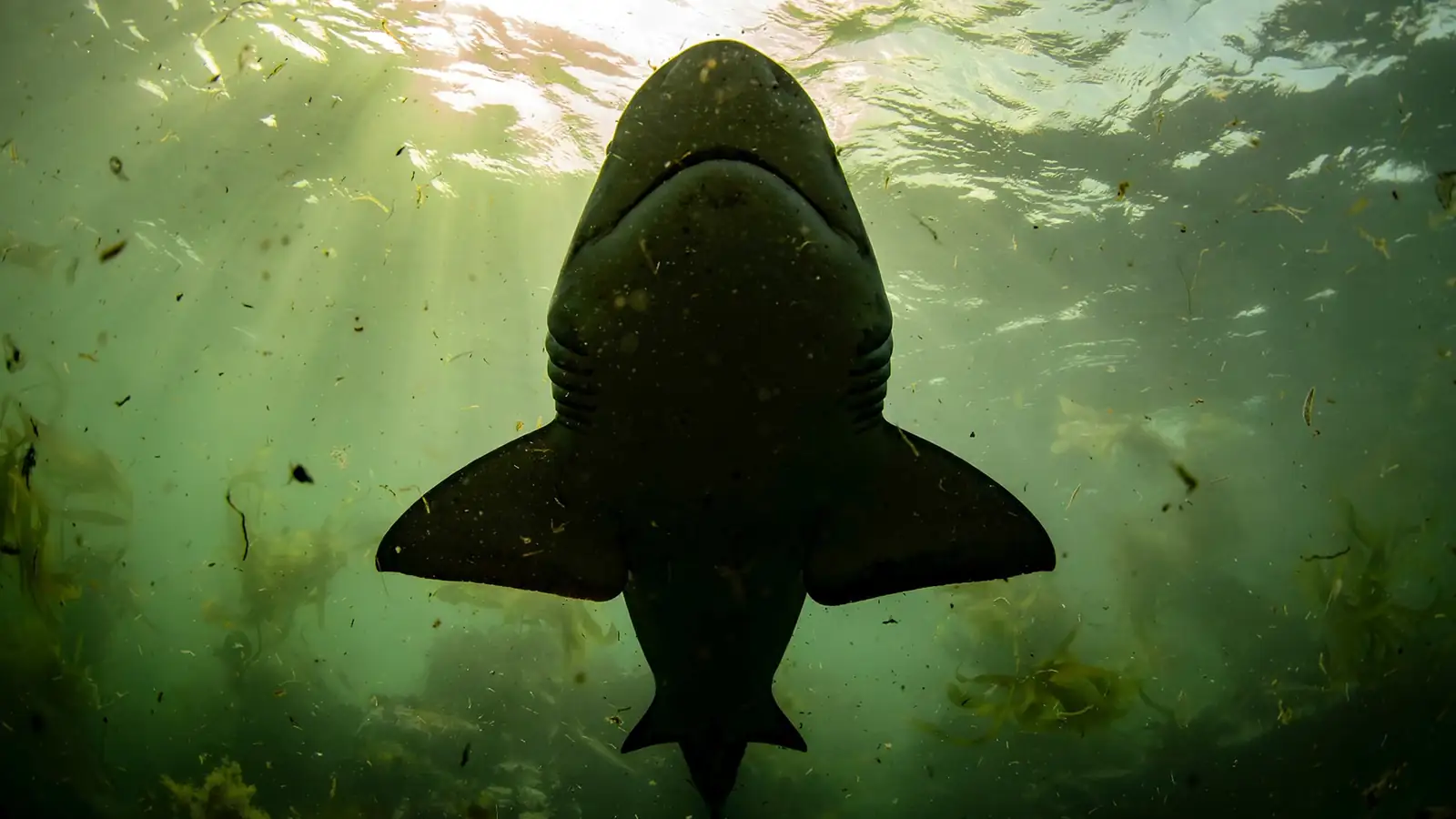
Sevengill sharks have been involved in a small number of bites on people, almost all of them on divers and spearfishers in murky water. The shark is large, powerful and bold around food, and a diver carrying a speared fish in a kelp forest is exactly the kind of situation that can go wrong.
Even so, it is not a shark that hunts people. It is a coastal hunter that eats fish and seals, and bites happen when it mistakes a swimmer for prey in poor visibility or when it is provoked. Divers who keep their catch away from their bodies and stay out of murky water at dawn and dusk rarely have any trouble.
Conservation: A Vulnerable Ancient Shark
It is listed as Vulnerable, a status set in a 2019 assessment. Older guides still list it as Data Deficient, but that assessment no longer reflects what is happening in the water: coastal fishing, bycatch in nets and the loss of bay habitat have all taken a toll on a shark that lives its whole life close to shore.
What it needs most is what every coastal shark needs — clean bays, limits on inshore catch, and nursery estuaries left intact. Its huge litters should help it recover, but only if the young survive their first years. The seven-gilled shark has outlasted ice ages; whether it outlasts the next century of coastal fishing is up to us.
Fun Facts
- It has seven gill slits on each side instead of five.
- A single litter can hold 67 to 104 pups — among the largest of any shark.
- It has only one dorsal fin, set far back near the tail.
- Sevengill sharks sometimes hunt in small groups, which is rare for large sharks.
- Its lower teeth are broad and comb-shaped for sawing through flesh and blubber.
- San Francisco Bay is one of the best-known shark nurseries in the world.
Frequently Asked Questions
Why Does the Sevengill Shark Have Seven Gills?
It is a cow shark, one of the most primitive living shark families. Seven gill slits on each side is the ancient design — almost every other shark has five.
How Big Do Sevengill Sharks Get?
Most adult sevengill sharks measure 2 to 2.5 metres, and the largest on record reached about 3 metres and 107 kg. Females grow larger than males.
Where Do Sevengill Sharks Live?
Sevengill sharks live in cool temperate coastal waters — bays, estuaries and kelp forests — around the world, but they are absent from the North Atlantic and the Mediterranean.
What Do Sevengill Sharks Eat?
It eats bony fish, rays, other sharks, seals and carrion. It is an opportunistic hunter that sometimes hunts in small groups.
How Many Pups Do Sevengill Sharks Have?
A female shark gives birth to 67 to 104 live pups after a pregnancy of about a year — among the largest litters of any shark.
Are Sevengill Sharks Dangerous to Humans?
Sevengill sharks have been involved in a small number of bites, almost all on divers and spearfishers in murky water. They do not hunt people, but they are large and bold around food.
What Is the Difference Between a Sevengill Shark and a Sixgill Shark?
The sevengill shark has seven gill slits and lives in shallow coastal waters; the sixgill shark has six gill slits and lives in deep water. The sixgill is also larger, reaching over 4 metres.
Similar Species Worth Exploring
Keep Exploring
Still exploring ancient-shark country? Compare the sevengill with its deepwater cousin, the Sixgill Shark, meet the centuries-old Greenland Shark, size up the whole family in the Types of Sharks hub, and then come back to the kelp forest to meet the sevengill shark.