Filefish
Filefish: The Sandpaper-Skinned Fish With One Spine
The filefish has sandpaper skin, a single erectile spine and a habit of drifting head-down like a leaf. It is the reef fish that feels like a carpenter’s file and changes colour faster than almost any fish its size.
By Emily Carter · Reviewed by our vet team · Updated 10 November 2026 · 9 min read
Skin like sandpaperOne dorsal spineDrifts head-down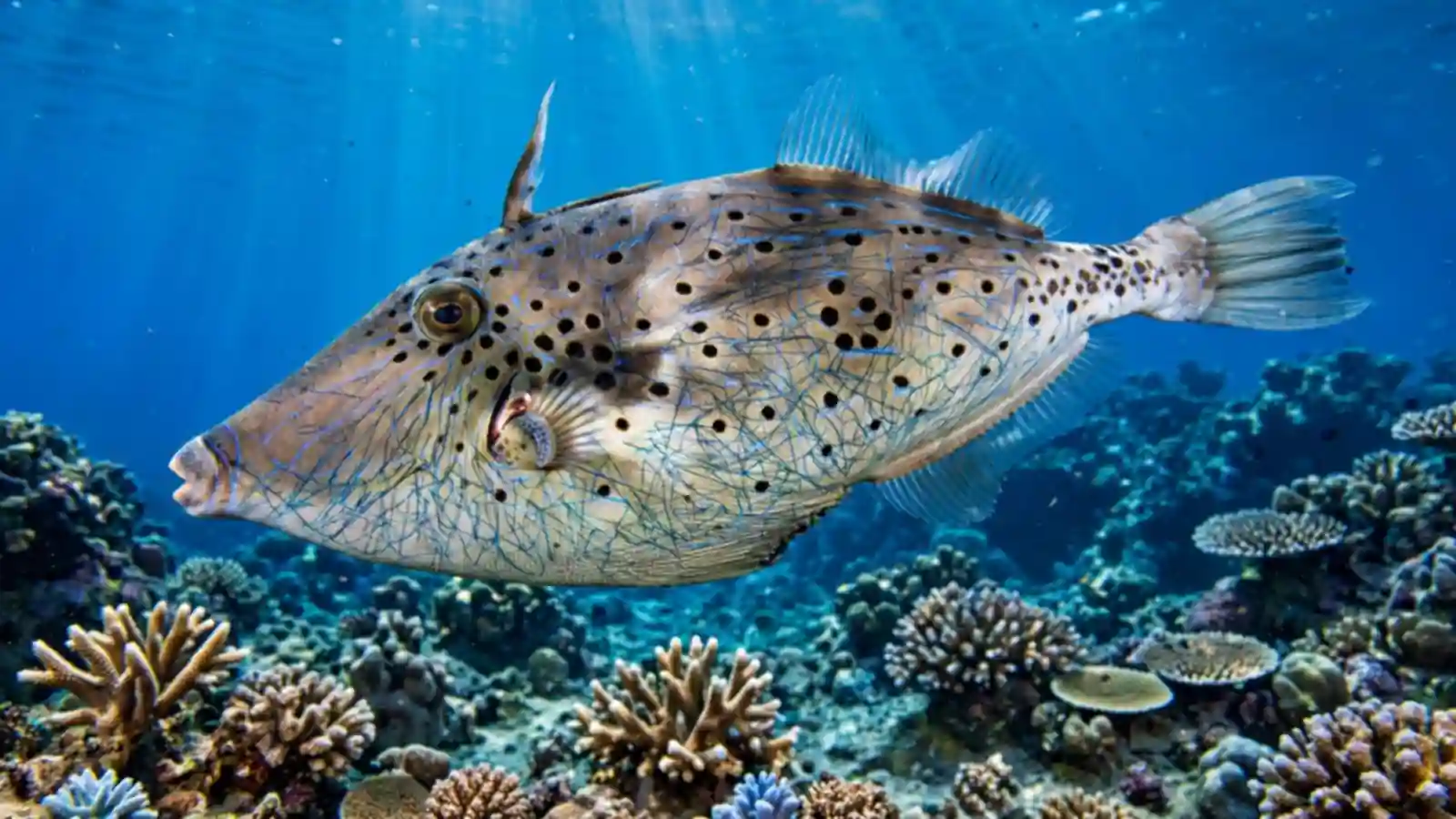
At a Glance
The filefish is a group of about 102 species in the family Monacanthidae, named for skin so rough it feels like a woodworker’s file. Most are small reef fish under 60 cm, and all of them carry a single erectile spine on their back.
Filefish Size: From 10 Centimetres to a Metre
The family ranges from tiny species of about 10 cm to Aluterus scriptus, which reaches 110 cm — the largest of the family and one of the biggest reef fish of its kind. Most, though, are modest animals under 60 cm, built for slipping through coral branches and seagrass rather than for open-water speed.
The range tells the family’s story. At one end, species small enough to vanish into a seagrass blade; at the other, a metre-long drifter of the open reef. Everything between shares the same kit — the rough skin, the locking spine, the flattened body — scaled up or down to fit a different corner of the same warm seas, from a harbour piling to the outer reef slope.
Size matters less than shape for one of these fish. The body is deep, flattened from side to side and covered in tiny scales that stand up like sandpaper, so even a small one looks and feels bigger than it is. The metre-long scrawled body is the exception; the typical one you meet on a reef is the length of a hand.
The Sandpaper Skin: How It Got Its Name
The name comes from the skin. It is covered in tiny, rough scales that feel like sandpaper — or like a carpenter’s file — when you run a finger across them. The Latin family name Monacanthidae means “one spine”, but the common name comes from the skin, and anyone who has handled one remembers the texture first.
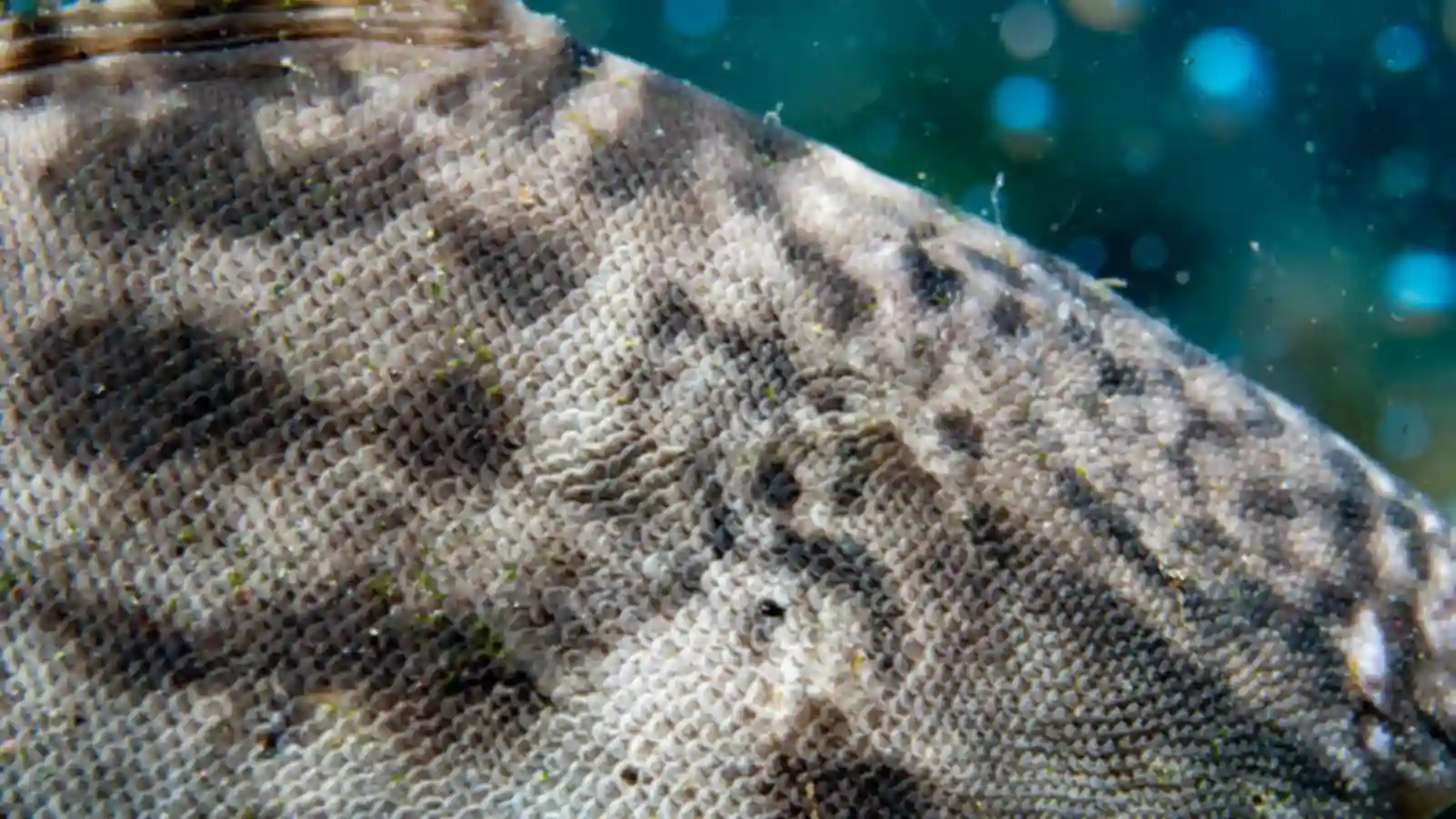
The rough skin is more than a curiosity. It helps the fish grip coral and rock, and it makes the animal hard for predators to swallow — a mouthful of sandpaper is not a pleasant meal. The scales also break up the fish’s outline, so the rough surface works with the colour change to hide the animal in plain sight.
One Spine: A Defence That Locks Upright
It carries a single erectile dorsal spine on its back, and it is the family’s signature weapon. At rest the spine lies flat in a groove; when the fish is threatened it snaps upright and locks into place, and the fish can wedge itself into a coral crevice with the spine braced against the rock so firmly that a predator cannot pull it out.
The wedge is the end of most attacks. A hunter that grabs and pulls meets a fish braced like a piton in rock, spine locked, sandpaper skin giving no grip to teeth. Letting go is the usual outcome, and the reef’s hunters learn quickly which mouthfuls are not worth the effort of a second try.
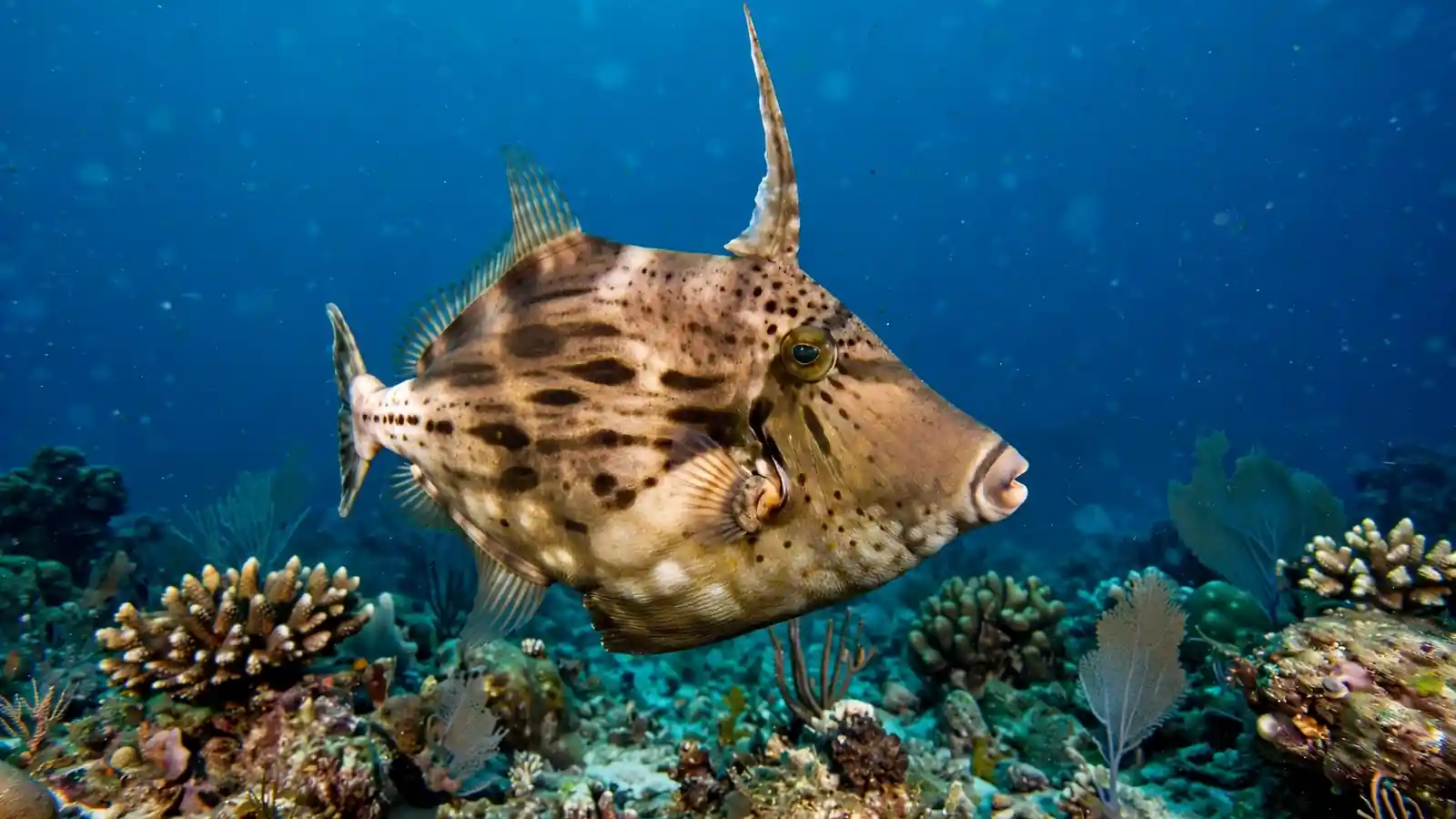
The spine is not venomous, but it is sharp, and the locking mechanism makes it a serious deterrent. Some also have a second, smaller spine, but the first is the one that counts — one spine, raised in a fraction of a second, and it becomes a wedged, spiny, sandpaper-coated problem that most hunters leave alone.
Where They Live: Reefs, Seagrass and Seaweed
They live on tropical and temperate reefs, in seagrass beds and among floating seaweed, worldwide. They are shallow-water fish, at home in the same coral gardens and rocky reefs as the butterflyfish and angelfish, and they are just as happy drifting through a seagrass meadow as they are picking at a reef wall.
Shallow water is the family’s whole world. Seagrass meadows, reef flats, rafts of floating weed — each habitat has its specialists, and the juveniles start life in the floating nursery of the sargassum before settling down. Warmth is the common thread: this is a family built for sunlit water over tropical and temperate coasts.
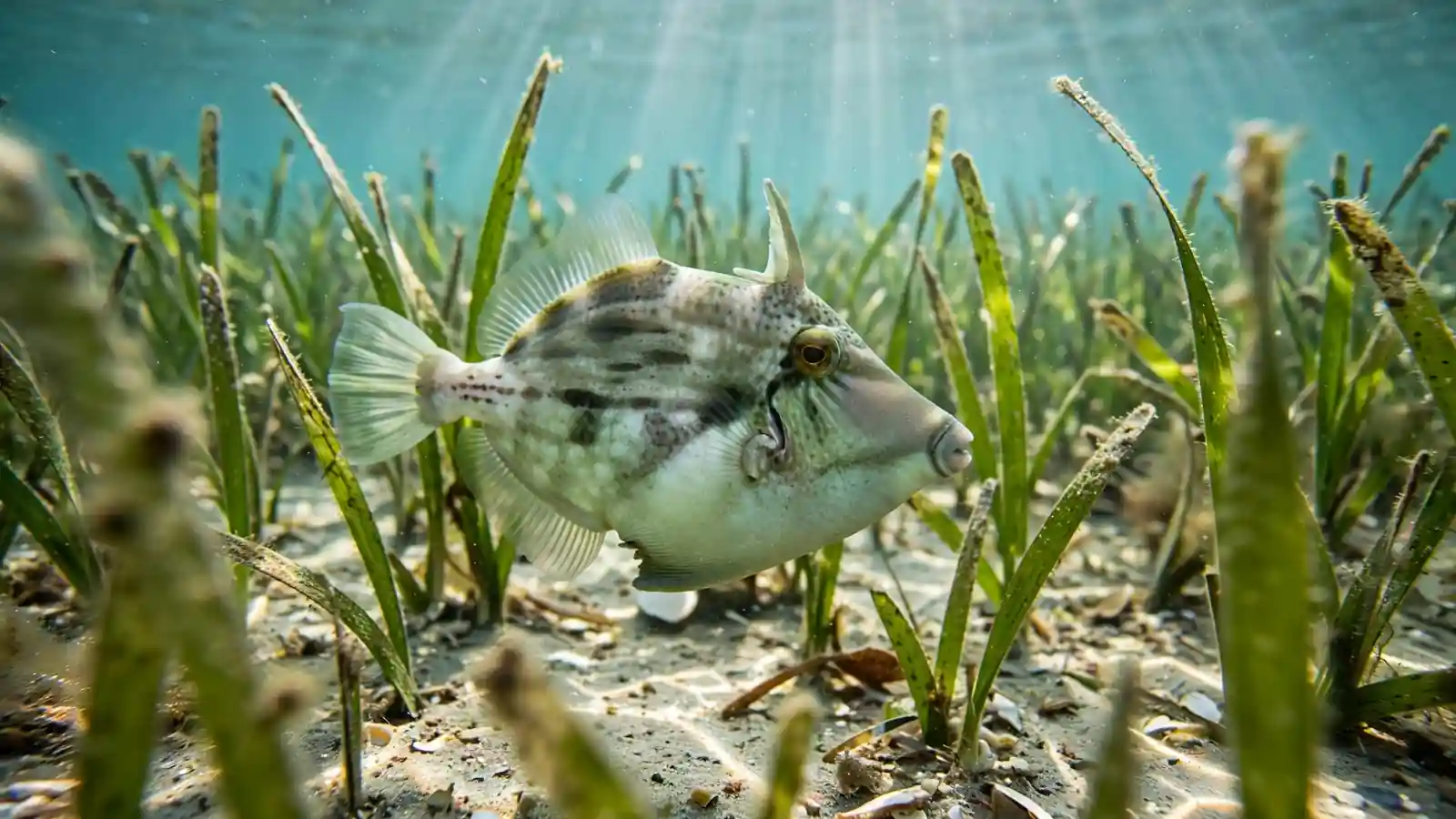
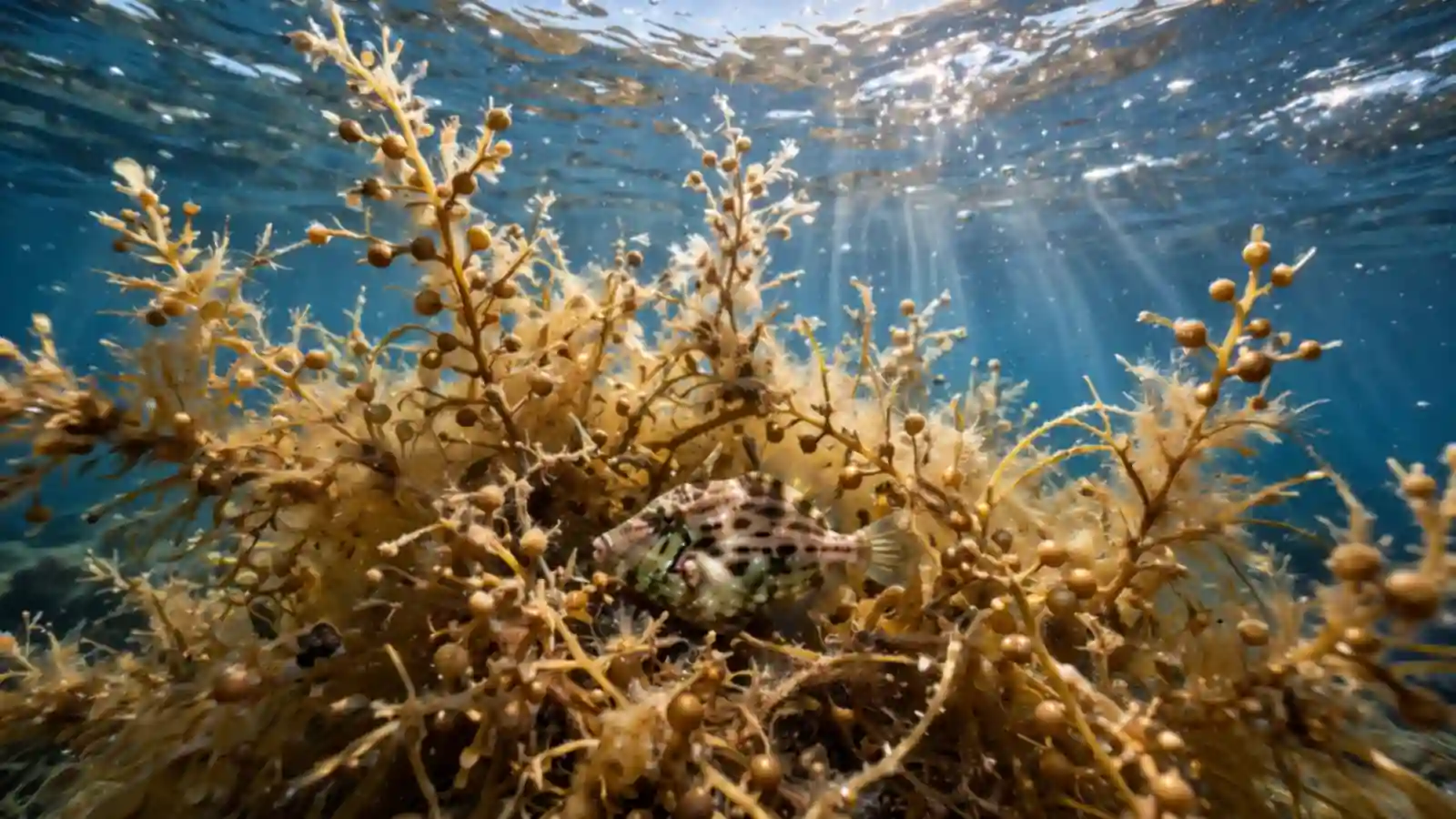
The planehead species is the seagrass specialist of the family, spending its life among the blades where its green-brown colouring hides it. Others prefer the reef itself, and juveniles of several species hide in floating sargassum, riding the currents until they are big enough to settle on a reef.
Filefish Camouflage: Drifting Head-Down Like a Leaf
It is a master of disguise. It can change colour and pattern in seconds, shifting from reef brown to seagrass green to sandy pale, and it often drifts head-down beside a piece of seaweed or a dead leaf, swaying with the current as if it were part of the debris.

The head-down drift is its most famous trick. Held vertically with its snout pointing at the sea floor, the fish looks like a floating leaf — and predators looking for a fish swim straight past. Combined with the rough, light-breaking skin, the camouflage is so good that divers often notice one only when it moves.
Stillness is the whole strategy. The drift works because nothing about it hurries: the fish hangs, sways with the surge like the weed it mimics, and lets the reef’s noise cover it. Movement is saved for the short moves between feeding spots, made slowly, in the open only when the coast is clear and the light is kind.
What Do They Eat? Algae, Sponges and Hydroids
They eat algae, seagrass, sponges, hydroids and small invertebrates, scraping and nibbling at whatever the reef offers. The small, pointed mouth is built for picking: it takes bites of sponge from a coral head, nips hydroids from a rock, and grazes algae from seagrass blades.

The diet makes some of them useful in reef aquariums — the orange-spotted species, for example, is known for eating the pest anemone Aiptasia — but it also makes them delicate feeders that need a varied menu. In the wild, it spends most of its day grazing, moving slowly from one food patch to the next.
Grazing is a full day’s work. Food this scattered has to be gathered bite by bite, which is why the wild fish is always on the move between patches and why the tank-kept ones fail on a thin menu. A varied diet is not a luxury for this family; it is the whole way of life.
Species: Scrawled, Orange-Spotted and Planehead
The scrawled one, Aluterus scriptus, is the largest of the family at 110 cm, and the easiest to recognise: its olive body is covered in thin blue scribbles, like handwriting across its flanks. It is a reef fish of the tropical Atlantic and Indo-Pacific, and it is the species most divers meet first.
The scribbles are the signature. No other member of the family carries handwriting across its flanks, and at a metre long the pattern turns the fish into a drifting manuscript that divers remember. It is also the family’s traveller, at home on reefs across the tropical Atlantic and the Indo-Pacific alike.
The orange-spotted one is the reef-aquarium favourite, a small, pale fish dotted with orange spots, while the planehead is the seagrass dweller, a green-brown fish with a blunt, sloping head. Together the three show the family’s range: one big and scribbled, one small and spotted, one built for the meadow — all of them sandpaper-skinned. The Florida Museum’s profile of the fringed species, Monacanthus ciliatus, covers the family’s reef life in detail — see this fringed species profile for the full account. It is a good starting point for anyone who wants to tell the three apart on a reef, since the scribbles, the spots and the sloping head are all field marks that show up clearly in the photographs.
Fun Facts
- That skin feels like sandpaper — the name comes from the texture, not the shape.
- It has a single erectile spine that locks upright and wedges the fish into coral.
- The scrawled species reaches 110 cm, the largest of about 102 species.
- It drifts head-down like a leaf to fool predators.
- The orange-spotted one eats the pest anemone Aiptasia in reef tanks.
- The juveniles hide in floating sargassum, riding the currents until they settle.
Frequently Asked Questions
What Is a Filefish?
It is a reef fish in the family Monacanthidae, named for its rough, sandpaper-like skin. About 102 species exist, most of them small reef and seagrass fish under 60 cm, and all of them carry a single erectile dorsal spine.
Why Are They Called Filefish?
Because of their skin. It is covered in tiny, rough scales that feel like sandpaper — or like a carpenter’s file — when touched. The family name Monacanthidae means “one spine”, but the common name comes from the texture.
How Big Do Filefish Get?
Most are under 60 cm, but the scrawled species reaches 110 cm, the largest of the family. The smallest species are about 10 cm long, so the family spans from hand-sized to a metre long.
Where Do Filefish Live?
On tropical and temperate reefs, in seagrass beds and among floating seaweed, worldwide. They are shallow-water fish, at home in coral gardens, rocky reefs and seagrass meadows, and juveniles often drift in floating sargassum.
What Do Filefish Eat?
Algae, seagrass, sponges, hydroids and small invertebrates. The small, pointed mouth is built for picking and scraping at reef surfaces, and the fish spends most of its day grazing from one food patch to the next.
Are Filefish Reef Safe?
Mostly yes, with care. They are peaceful grazers, but some species nip at corals and sponges, and the orange-spotted species is actually kept in reef tanks because it eats the pest anemone Aiptasia. Check the species before adding one to a reef tank.
Are Filefish Dangerous?
No. It is not venomous and not aggressive. Its single dorsal spine is sharp and can prick a careless hand, and the rough skin is unpleasant to handle, but the fish itself is harmless and shy.
Similar Species Worth Exploring
Keep Exploring
Meet the boxfish, the armoured reef fish that lives inside a box, then the porcupinefish, the spiniest fish on the reef, and browse the whole family in our types of reef fish hub — then come back to the sandpaper-skinned drifter, the filefish.