
Rhodesian Ridgeback Dog Breed Guide
Rhodesian Ridgeback: the dignified lion hunter of Africa
The dignified African lion hunter: independent, loyal, and athletic. Care and health in one complete guide.
Lifespan 10 to 12 yrs Weight 70 to 85 lbs Athletic and independent
Rhodesian Ridgeback dog is the dignified African lion hunter: independent, loyal, and athletic.
This guide covers the Rhodesian Ridgeback in full, from size and coat to personality, care, and health, so you can decide whether this breed fits your home.
At a Glance
Size and Weight
Males stand 25 to 27 inches and weigh 80 to 85 pounds; females are 24 to 26 inches and 70 to 75 pounds. The build is sleek, muscular, and built for endurance. For a large athlete, the Rhodesian Ridgeback dog needs room to run and a secure yard.
Coat and Colors
The short wheaten coat with the ridge.
A short, sleek coat in wheaten shades, with the famous ridge of backward-growing hair along the back. Shedding is moderate. Grooming is minimal: weekly brushing. The ridge is the hallmark of the Rhodesian Ridgeback dog, and it needs little grooming.



History and Origins
Ridgebacks were developed in southern Africa from European hunting dogs crossed with the native ridged dogs, used to track and hold lions for hunters.
Their courage, endurance, and independence were essential.
The hunting heritage shows in the independence and athleticism.
Physical Characteristics
Balanced, muscular body with a deep chest and the signature ridge. The expression is dignified and intelligent. In build, the Rhodesian Ridgeback dog is balanced and muscular, never heavy.
Rhodesian Ridgeback Personality and Behavior
Ridgebacks are famously dignified, independent, and loyal. They bond deeply with their families but are not effusive; they are calm, quiet house dogs. With strangers they are naturally reserved. With its family, the Rhodesian Ridgeback dog is calm and devoted, if reserved with strangers.
They are intelligent but independent, which makes training a negotiation. They have a strong prey drive and need secure containment. They are sensitive and do poorly with harsh methods.
Owners consistently describe the Ridgeback as dignified, independent, and loyal. In practice, owners report that the breed’s calm devotion is the main reason they recommend it to experienced owners.
The dignified independence defines this breed. The Rhodesian Ridgeback dog bonds deeply with its family without being effusive, stays calm and quiet in the house, and remains naturally reserved with strangers. The loyalty runs deep but undemonstrative: a Ridgeback shows devotion by staying near and steady, not by demanding attention.
Training is a negotiation, as the guide says. The intelligent but independent mind responds to calm leadership and consistency, not force, and harsh methods backfire quickly with a sensitive dog this size. The strong prey drive adds its own rule: secure containment is essential, and recall around small animals should never be assumed, however well trained the dog seems at home.
Ridgebacks are famously dignified, independent, and loyal. They bond deeply with their families but are not effusive; they are calm, quiet house dogs. With strangers they are naturally reserved.
They are intelligent but independent, which makes training a negotiation. They have a strong prey drive and need secure containment. They are sensitive and do poorly with harsh methods.
Owners consistently describe the Ridgeback as dignified, independent, and loyal. In practice, owners report that the breed’s calm devotion is the main reason they recommend it to experienced owners.
- Loyal and dignified family guardian
- Low grooming needs
- Athletic partner for active owners
- Independent and strong-willed
- Needs 60 or more minutes of vigorous exercise
- Strong prey drive outdoors
Care Essentials
Ridgebacks need 60 minutes or more of vigorous daily exercise. They excel at running, hiking, and lure coursing. They are indoor family dogs who want to be with their people. Vigorous daily exercise keeps the Rhodesian Ridgeback dog fit and settled indoors.
Training requires patience and consistency; they respond to calm leadership, not force.
A typical day pairs vigorous exercise with calm leadership. Sixty minutes or more of running, hiking, and lure coursing cover the body, while patient, consistent training covers the mind, and the indoor family dog that results wants to be with its people. The calm house dog of the evening is earned by the active dog of the morning.
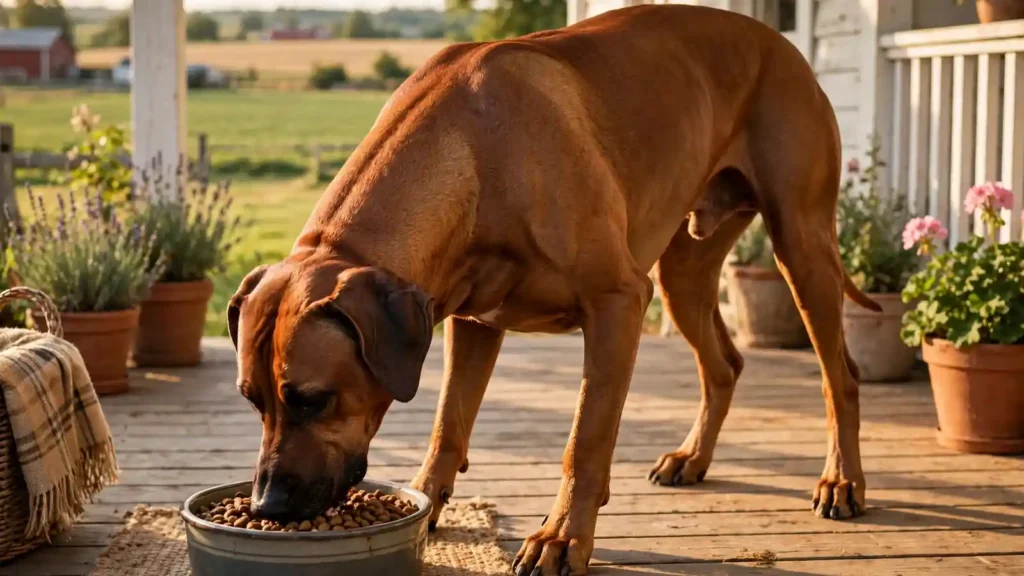
Feed a measured, high-quality diet in two meals a day. Keep them lean and conditioned. As a deep-chested breed, avoid exercise right after meals to reduce bloat risk.
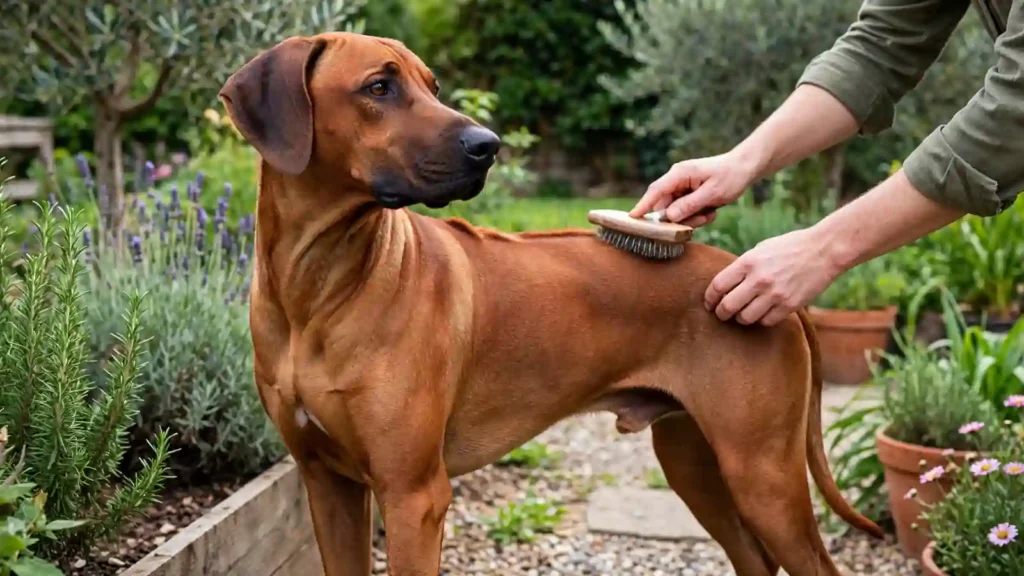
Weekly brushing, occasional baths, regular nail trims, ear checks, teeth brushing. The short coat is genuinely easy.
Aim for 60 minutes or more of vigorous activity daily: running, hiking, play. They are built for endurance. Mental work through training helps.
Ridgebacks live indoors with their families and are calm house dogs. They exercise outdoors vigorously. They are heat-tolerant but cold-sensitive with the short coat.
Nutrition and Diet
Feed a measured, high-quality diet in two meals a day. Keep them lean and conditioned. As a deep-chested breed, avoid exercise right after meals to reduce bloat risk.
Feeding suits a large, deep-chested athlete. A measured, high-quality diet in two meals keeps the sleek build lean and conditioned, and the bloat precaution matters: avoiding exercise right after meals is a simple habit that reduces risk. Portions should follow activity level, since a dog running hard needs more than one resting through a quiet week.
Grooming
Weekly brushing, occasional baths, regular nail trims, ear checks, teeth brushing. The short coat is genuinely easy.
Grooming is genuinely easy. Weekly brushing covers the short, sleek wheaten coat, occasional baths come as needed, and the real routine is nails, ear checks, and teeth brushing. The ridge needs no special care beyond the usual check: it is the hallmark of the breed, not a grooming problem, and owners should simply know it is there.
Exercise and Enrichment
Aim for 60 minutes or more of vigorous activity daily: running, hiking, play. They are built for endurance. Mental work through training helps.
Exercise is built for endurance. Running, hiking, and play cover the sixty minutes or more the guide names, and lure coursing suits the prey drive and athleticism in a way plain walking never quite does. Mental work through training helps channel the independent mind, and a Ridgeback with outlets for body and brain is calmer and easier to live with than one with energy and nothing to spend it on.

Health
Joint problems occur; choose breeders who screen.
A breed-specific skin condition linked to the ridge; ask breeders about it.
Bloat is an emergency risk, and thyroid issues appear in some lines.
Schedule annual wellness exams, or twice-yearly exams for adults, and ask your vet about screening for conditions the breed can be prone to, such as hip dysplasia. Consult your veterinarian promptly if you notice skin lumps along the spine, restlessness with a swollen belly, or changes in appetite, weight, or energy. Ask about dermoid sinus screening for the Rhodesian Ridgeback dog at every check. For general background, see the Rhodesian Ridgeback dog reference on Wikipedia.
Health care follows the familiar rhythm with hip screening in focus. Annual exams, twice-yearly exams for adults, and screening for hip dysplasia cover the ground the guide names, and breeders who check puppies for dermoid sinus and screen hips and elbows are worth seeking out. Day to day, skin lumps and changes in appetite, weight, or energy deserve a prompt vet call.
Indoor and Outdoor Living
Ridgebacks live indoors with their families and are calm house dogs. They exercise outdoors vigorously. They are heat-tolerant but cold-sensitive with the short coat.
A securely fenced yard is essential; the prey drive is strong.
Indoor living with a secure yard defines the arrangement. The breed lives indoors with its family as a calm house dog and exercises outdoors vigorously, tolerating heat well but feeling the cold with its short coat, so warm resting spots matter in cool weather. A securely fenced yard is essential, since the prey drive is strong and a running Ridgeback covers ground fast.

Family Suitability
Devoted to their families and typically good with children they know. They can be aloof with strangers and need socialization. They are often fine with other dogs; cats need careful introduction. With children it knows, the Rhodesian Ridgeback dog is typically loyal and gentle.
With families, devotion leads and reserve sets the pace. The breed is devoted to its family and typically good with children it knows, but aloof with strangers and in need of socialization, and often fine with other dogs while cats need careful introduction. The Rhodesian Ridgeback dog’s calm, dignified companionship shows best in experienced homes that respect an independent dog.
Finding a Breeder or Rescue
Good breeders check puppies for dermoid sinus, screen hips and elbows, and breed for sound temperaments. Ridgeback rescues have wonderful dogs.
- Ask about health screening for hip and elbow dysplasia and dermoid sinus
- Meet the puppy’s mother and see where the puppies are raised
- Ask how the puppies are socialized in their first weeks
- Consider rescue too: breed rescues place wonderful dogs
Quick Quiz: Is a Rhodesian Ridgeback Right for You?
Answer four questions. Tap yes or no.
Frequently Asked Questions
Are Rhodesian Ridgebacks good family dogs?
They suit experienced families. They are loyal and calm with their people.
How much exercise does a Ridgeback need?
Sixty minutes or more of vigorous activity daily.
What is the ridge on a Rhodesian Ridgeback?
A strip of hair growing backward along the back, the breed’s signature trait.
Did Ridgebacks really hunt lions?
They tracked and held lions for hunters; they did not fight lions alone.
How long do Rhodesian Ridgebacks live?
Typically 10 to 12 years.
Are Ridgebacks easy to train?
They are intelligent but independent. Patient, consistent training is essential.
What do Ridgeback owners say about living with the breed?
Owners consistently describe the Ridgeback as dignified, independent, and loyal. In practice, owners report that the breed’s calm devotion is the main reason they recommend it to experienced owners.
When should I ask my vet about my Ridgeback’s health?
Schedule annual wellness exams, or twice-yearly exams for adults, and ask your vet about screening for conditions the breed can be prone to, such as hip dysplasia. Consult your veterinarian promptly if you notice skin lumps along the spine, restlessness with a swollen belly, or changes in appetite, weight, or energy.
The Rhodesian Ridgeback is a dignified, athletic companion for experienced, active owners. It is independent by nature and loyal to its core.
Similar Breeds Worth Exploring
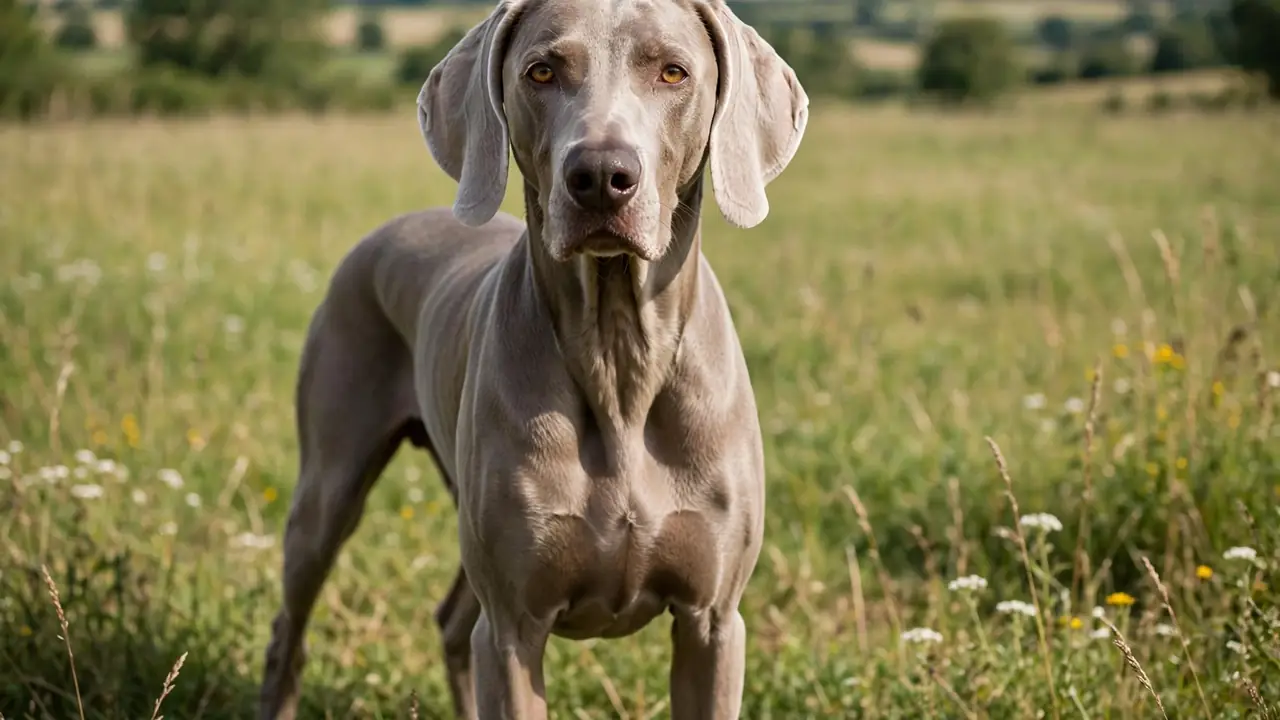
If the Ridgeback appeals to you, consider the Vizsla (similar athlete, more affectionate), the Weimaraner (similar energy, more demanding), the Pharaoh Hound (elegant sighthound), or the Black Mouth Cur (similar hunting versatility).

Related Breed Guides
Keep Exploring
Browse all our Dog Breed Guides, try the Dog Age Calculator, or explore our Cat Breed Guides.