
Bloodhound Dog Breed Guide
Bloodhound: the most powerful nose in the dog world
The Bloodhound has the most powerful nose in the dog world. Gentle, patient, and noble: care, training, and health in one complete guide.
By Emily Carter · Reviewed by our vet team · Updated 22 October 2026 · 9 min read
Lifespan 10–12 yrsWeight 80–110 lbGentle & noble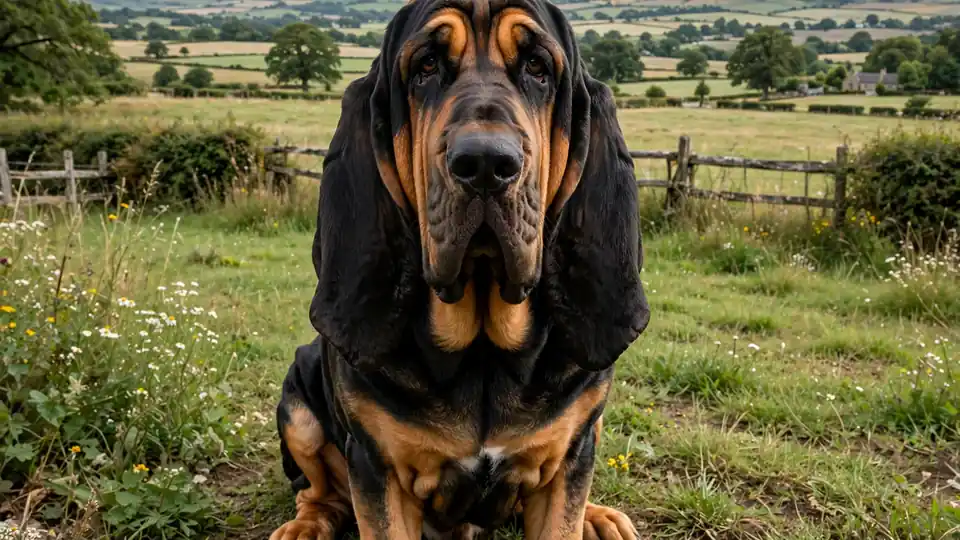
Bloodhound dog has the most powerful nose in the dog world, able to follow a scent trail days old. Here is what matters before you bring one home.
At a Glance
Size and Weight
Large, heavy, and droopy in the most lovable way. Here are the numbers. The Bloodhound dog is large, heavy, and droopy in the most lovable way.
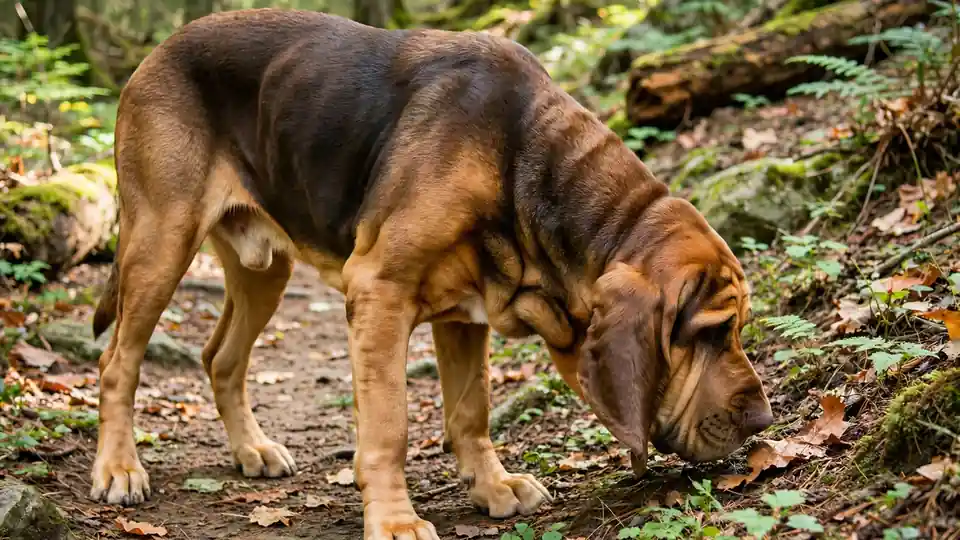
Males stand 25 to 27 inches and weigh 90 to 110 pounds; females are 23 to 25 inches and 80 to 100 pounds. The loose skin, long ears, and deep wrinkles add visual bulk to real bulk.
This is a big dog that does not know it. It will try to sit on your lap at 100 pounds. The Bloodhound dog is a big dog that does not know it, and will try to sit on your lap at 100 pounds.
Coat and Colors
Short, weather-resistant, and built for the trail. Here is what to expect.
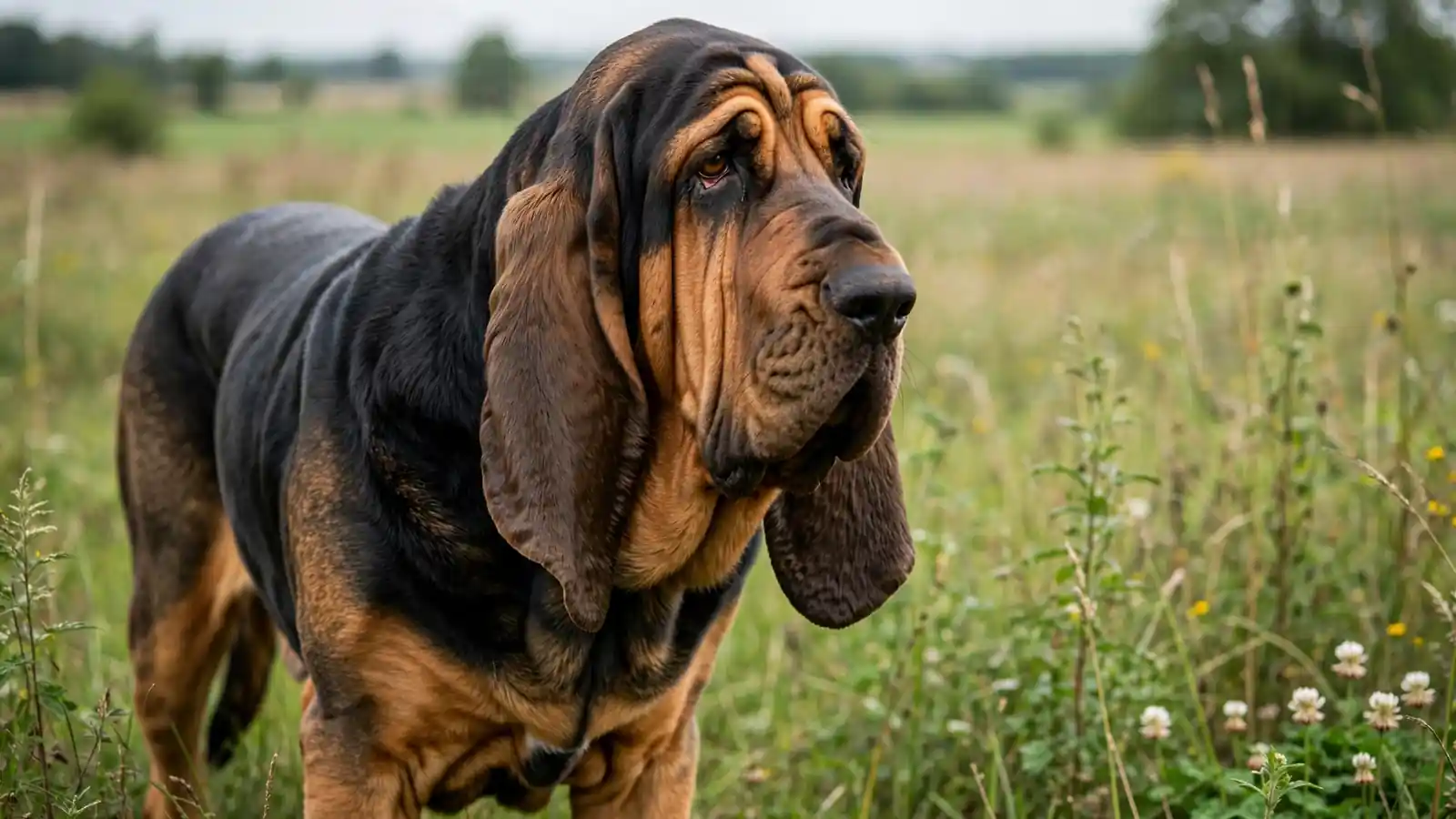
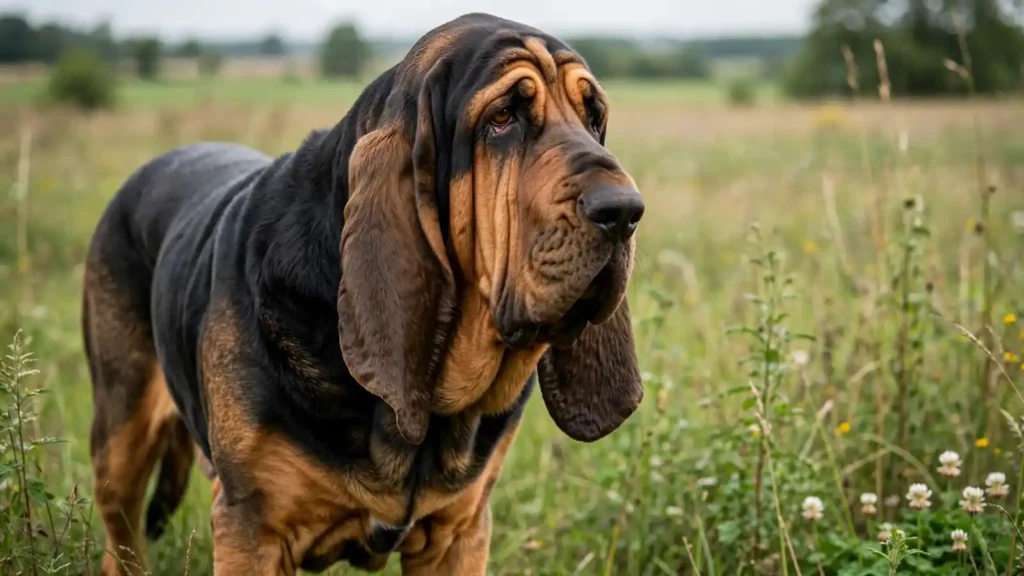
A short, dense coat in black and tan, liver and tan, or red. Shedding is moderate year-round. The famous wrinkles need regular wiping to prevent skin infections. The Bloodhound dog wears a short, dense coat in black and tan, liver and tan, or red.
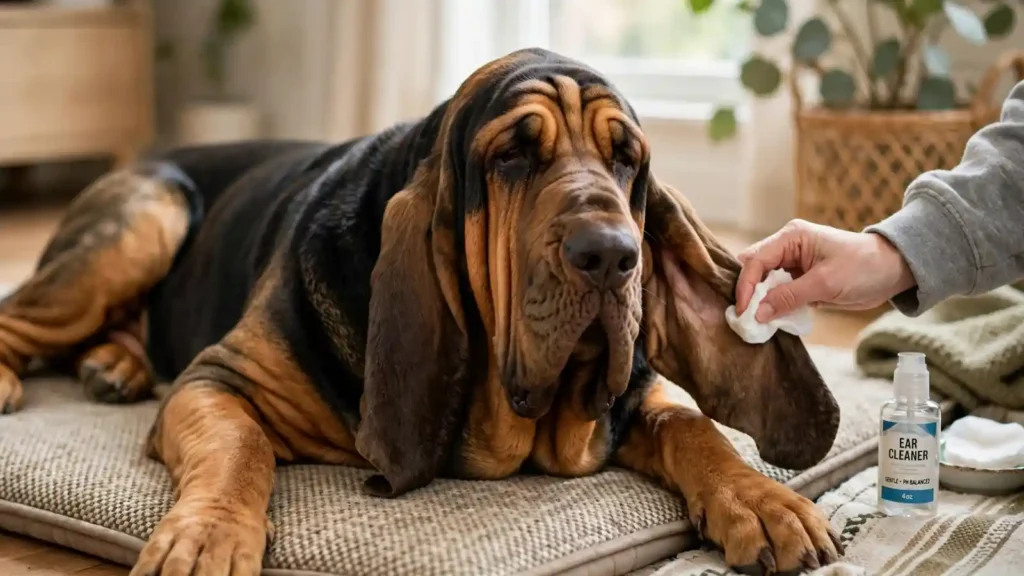
The ears are the maintenance focus: long, heavy, and prone to trapping moisture.

History and Origins
The ancestors were developed by monks in Belgium over a thousand years ago; French breeders refined the modern type.
These hounds trailed game, then people: their scenting ability is so reliable that trailing evidence is accepted in courts.
They came to England with the Normans and to America early in its history. The breed has changed little because the nose needed no improvement.
Bred by monks, perfected for the trail. Its history explains the nose. The Bloodhound dog was bred by monks and perfected for the trail.
The ancestors were developed by monks in Belgium over a thousand years ago; French breeders refined the modern type. These hounds trailed game, then people: their scenting ability is so reliable that trailing evidence is accepted in courts.
They came to England with the Normans and to America early in its history. The breed has changed little because the nose needed no improvement.
Physical Characteristics
Built entirely around the nose. Here is the structure.
Massive head with deep wrinkles, the longest ears of any breed, and loose skin that traps scent particles. The body is powerful with a deep chest; the tail is long and carried high. The expression is solemn even when the dog is happy.
Every feature serves scenting. This is a specialist, not an all-rounder.
Bloodhound Personality and Behavior
A gentle giant with a one-track mind. Here is the honest picture.
They are famously gentle, patient, and good-natured with their families, including children. They are also famously stubborn: once the nose engages, the ears switch off completely. This is not disobedience; it is three hundred million scent receptors taking over. The Bloodhound dog is famously gentle, patient, and good-natured with its family.
They are sensitive souls who respond badly to harsh corrections. Patience, humor, and excellent treats are the training toolkit. They bay deeply when excited or lonely, a sound neighbors will learn.
Owners consistently describe the breed as gentle, noble, and determined. In practice, owners report that the breed’s sweet nature is the main reason they recommend it to patient families.
A gentle giant with a one-track mind is exactly right. The breed is famously gentle, patient, and good-natured with its family, including children, with the most powerful nose in the dog world, able to follow a scent trail days old. The stubbornness is not disobedience: once the nose engages, the ears switch off completely, which is three hundred million scent receptors doing their job.
The sensitivity and voice need patience. Sensitive souls respond badly to harsh corrections, so patience, humor, and excellent treats are the training toolkit, and the deep bay when excited or lonely is a sound neighbors will learn. A dog that bays, drools, and follows its nose needs owners who embrace all three.
Famously gentle, patient, and good-natured with their families, including children.
Once the nose engages, the ears switch off completely. This is not disobedience; it is three hundred million scent receptors taking over.
They respond badly to harsh corrections. Patience, humor, and excellent treats are the training toolkit.
- Gentle and tolerant with children
- The finest scenting nose of any breed
- Good-natured and generally loves other dogs
- Drools, sometimes spectacularly
- Stubborn and never trustworthy off-leash
- Deep baying that neighbors will learn
Care Essentials
Two measured meals a day of a high-quality large-breed diet. Keep weight controlled; extra pounds strain the joints of a heavy breed.
Brush weekly, wipe facial wrinkles regularly to prevent infection, and clean ears weekly. Keep drool towels stocked.
45 to 60 minutes of walking daily, plus tracking games. Mental scent work tires this breed more than running does.
An indoor family dog that wants closeness, not a kennel dog, with a tall, dig-proof fenced yard for safe sniffing.
Space, patience, and a serious fence. Here is the daily reality.
They need daily walks and scent work to stay content. They cannot be trusted off-leash outside fenced areas; a trail overrides all training. Fences must be tall and dig-proof. The Bloodhound dog needs daily walks and scent work to stay content.
They drool, sometimes spectacularly. Keep towels handy and embrace it. They are indoor family dogs who want closeness, not kennel dogs.
A typical day runs on space, patience, and a serious fence. Daily walks and scent work keep the dog content, and fences must be tall and dig-proof, since a trail overrides all training and the dog cannot be trusted off-leash outside fenced areas. The indoor family dog that results wants closeness, not kennel living, with towels handy for the sometimes spectacular drool.
Nutrition and Diet
Big dog, big appetite, careful management. Here is the plan.
Feed a high-quality large-breed diet in two measured meals a day. As a deep-chested breed, avoid exercise right after meals to reduce bloat risk. Slow-feeder bowls help with the enthusiastic eating style. The Bloodhound dog needs a high-quality large-breed diet in two measured meals a day.
Keep weight controlled. Extra pounds strain the joints of a heavy breed.
Feeding suits a big dog with a big appetite. A high-quality large-breed diet in two measured meals keeps weight controlled, since extra pounds strain the joints of a heavy breed, and slow-feeder bowls help with the enthusiastic eating style. As a deep-chested breed, exercise right after meals is avoided to reduce bloat risk.

Grooming
Easy coat, demanding wrinkles and ears. Here is the routine.
Brush weekly to manage shedding. Wipe facial wrinkles regularly to prevent infection. Clean ears weekly; infections are common. Trim nails, brush teeth, and keep drool towels stocked. The Bloodhound dog needs weekly brushing, regular wrinkle wiping, and weekly ear cleaning.
Grooming is an easy coat with demanding wrinkles and ears. Weekly brushing manages the moderate shedding, facial wrinkles need regular wiping to prevent infection, and ears need weekly cleaning, since infections are common. The same session covers nails and teeth, with drool towels stocked as standard equipment.

Exercise and Enrichment
Moderate exercise with maximum nose work. Here is the formula.
Aim for 45 to 60 minutes of walking daily. Tracking games are the perfect enrichment: lay scent trails and let the dog work. This mental exercise tires this dog more than running does. The Bloodhound dog needs 45 to 60 minutes of walking daily plus tracking games.
Puppies should avoid excessive impact exercise while joints develop.
Exercise is moderate with maximum nose work. Forty-five to sixty minutes of walking daily cover the need, and tracking games are the perfect enrichment: laying scent trails and letting the dog work tires the mind more than running does. Puppies should avoid excessive impact exercise while joints develop, and the nose work is the real tiredness-maker.
Health
They live 10 to 12 years. Here are the health issues to know.
Bloat (gastric dilatation-volvulus) is a serious risk in this deep-chested breed; know the symptoms and act fast. Hip and elbow dysplasia occur, so choose screened breeders. Ear infections are common. Eyelid issues (entropion, ectropion) appear in some lines. The Bloodhound dog faces bloat as a serious risk, as a deep-chested breed.
Schedule annual wellness exams, or twice-yearly exams for seniors, and ask your vet about screening for conditions the breed can be prone to, such as hip dysplasia. Consult your veterinarian promptly if you notice restlessness with a swollen belly, or changes in appetite, weight, or energy. For general background, see the Bloodhound article on Wikipedia.
Health care follows the familiar rhythm with bloat vigilance in focus. Annual exams, twice-yearly exams for seniors, and screening for hip dysplasia cover the ground the guide names, and breeders who health-test hips, elbows, eyes, and heart and work their dogs in tracking are worth seeking out. Day to day, restlessness, pacing, and changes in appetite, weight, or energy deserve a prompt vet call, and bloat symptoms demand fast action.
A serious risk in this deep-chested breed; know the symptoms and act fast. Avoid exercise right after meals.
Both occur, so choose breeders who screen hips and elbows.
Ear infections are common in those long, heavy ears, and eyelid issues such as entropion and ectropion appear in some lines.
Indoor and Outdoor Living
Indoor companion with outdoor tracking needs. Here is the balance. The Bloodhound dog is an indoor companion with outdoor tracking needs.
They live indoors with their people and need that secure yard for safe sniffing. They handle moderate climates well; heat requires shade and water, and cold is tolerated with the dense coat.
Never leave one unsupervised in an unfenced area. The nose always wins.
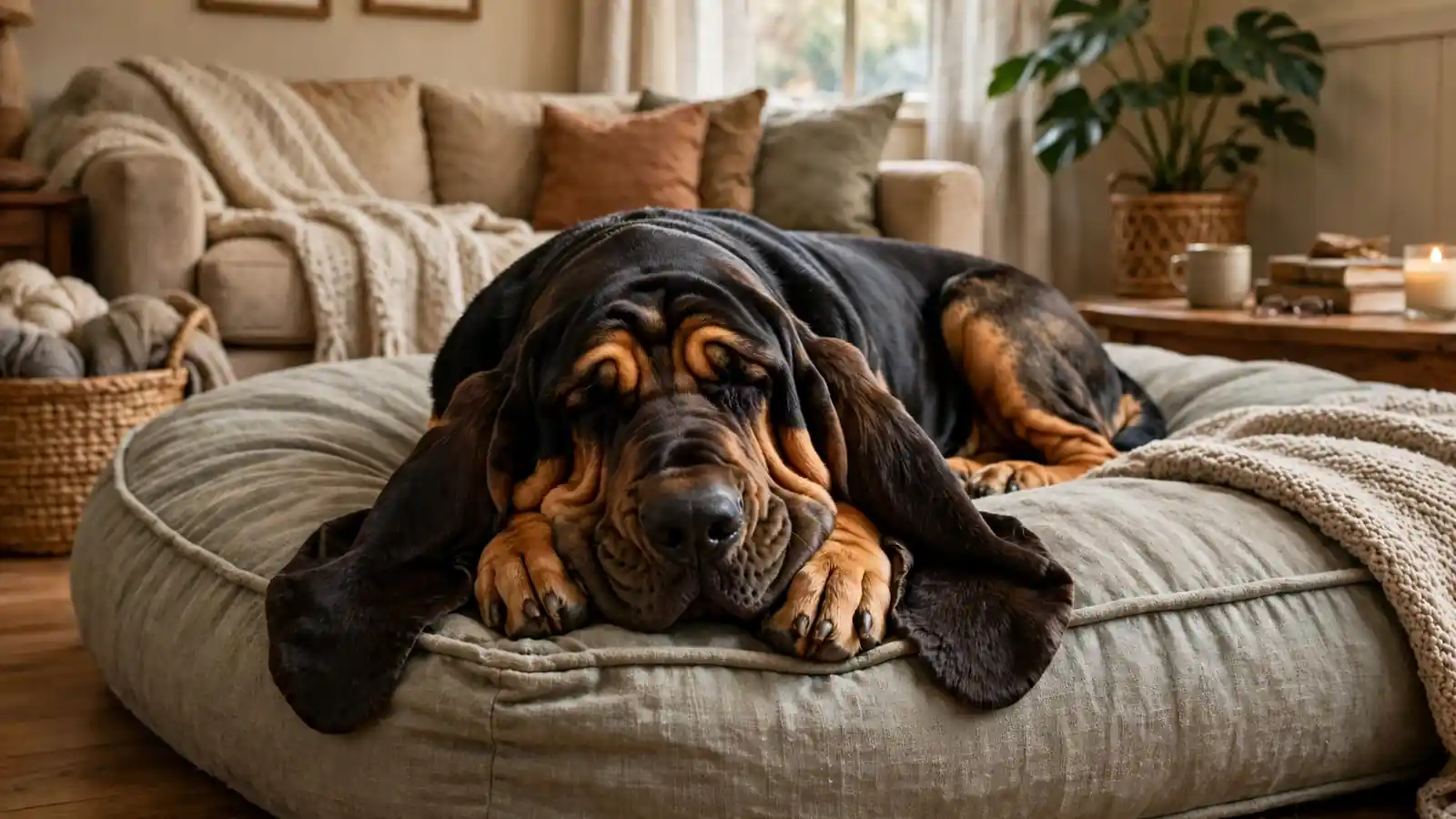
Indoor living as a companion defines the arrangement. The breed lives indoors with its people and needs a secure yard for safe sniffing, handling moderate climates well, with shade and water in heat and cold tolerated with the dense coat. Never leave one unsupervised in an unfenced area: the nose always wins.
Family Suitability
Wonderful with kids, comical with everyone. Here is the picture. The Bloodhound dog is wonderful with kids and comical with everyone.
They are famously tolerant of children and gentle despite their size. They generally love other dogs. With cats and small pets, introduce carefully; the chase instinct exists but many live peacefully with cats.
The family cautions are drool, size, stubbornness, and the baying.
With families, tolerance leads and the nose sets the limit. The breed is famously tolerant of children and gentle despite its size, generally loving other dogs, while cats and small pets need careful introduction, since the chase instinct exists but many live peacefully with cats. The family cautions are drool, size, stubbornness, and the baying, and patient families usually love the comical giant most.
Finding a Breeder or Rescue
A specialist breed needs a specialist breeder. Here is how. The Bloodhound dog is a specialist breed that needs a specialist breeder.
Good breeders health-test (hips, elbows, eyes, heart), work their dogs in tracking, and breed for temperament. Rescues exist and often have lovely adults; the breed’s needs mean owner surrenders happen.
- Ask what health testing the breeder does on their dogs
- Ask to see the parents and the living conditions
- Puppies should be raised in a home environment
- A good breeder answers questions openly and asks you some too
Quick Quiz: Is a Bloodhound Right for You?
Answer four questions. Tap yes or no.
Frequently Asked Questions
Are Bloodhounds good family dogs?
Yes. They are gentle, patient, and tolerant with children. The challenges are size, drool, and stubbornness.
Do Bloodhounds bark a lot?
They bay deeply when excited, on a trail, or lonely. It is a loud, carrying sound.
How much exercise does a Bloodhound need?
About 45 to 60 minutes of walking daily, plus scent work for mental exercise.
Do Bloodhounds drool a lot?
Yes, famously. Towels are essential equipment.
How long do Bloodhounds live?
Typically 10 to 12 years.
Are Bloodhounds hard to train?
They are intelligent but nose-driven and stubborn. Patience and high-value rewards are essential.
What do Bloodhound owners say about living with the breed?
Owners consistently describe the breed as gentle, noble, and determined. In practice, owners report that the breed’s sweet nature is the main reason they recommend it to patient families.
When should I ask my vet about my Bloodhound’s health?
Schedule annual wellness exams, or twice-yearly exams for seniors, and ask your vet about screening for conditions the breed can be prone to, such as hip dysplasia. Consult your veterinarian promptly if you notice restlessness with a swollen belly, or changes in appetite, weight, or energy.
Gentle, noble and built entirely around the finest nose in the dog world, this is a specialist among breeds. For patient families who can offer secure fencing, scent work and towels for the drool, it is a sweet and comical companion.
Similar Breeds Worth Exploring
Related Breed Guides
Keep Exploring
Browse all our Dog Breed Guides, try the Dog Age Calculator, or explore our Cat Breed Guides.