European Burmese Cat Breed Guide
European Burmese: satin coat, golden heart
The European Burmese cat combines a glossy satin coat with a warm, people oriented nature. Affectionate and chatty, it is a devoted family companion.
By Emily Carter · Reviewed by our vet team · Updated 21 October 2026 · 11 min read
Lifespan 16–18 yrs Weight 8–12 lb Devoted & chatty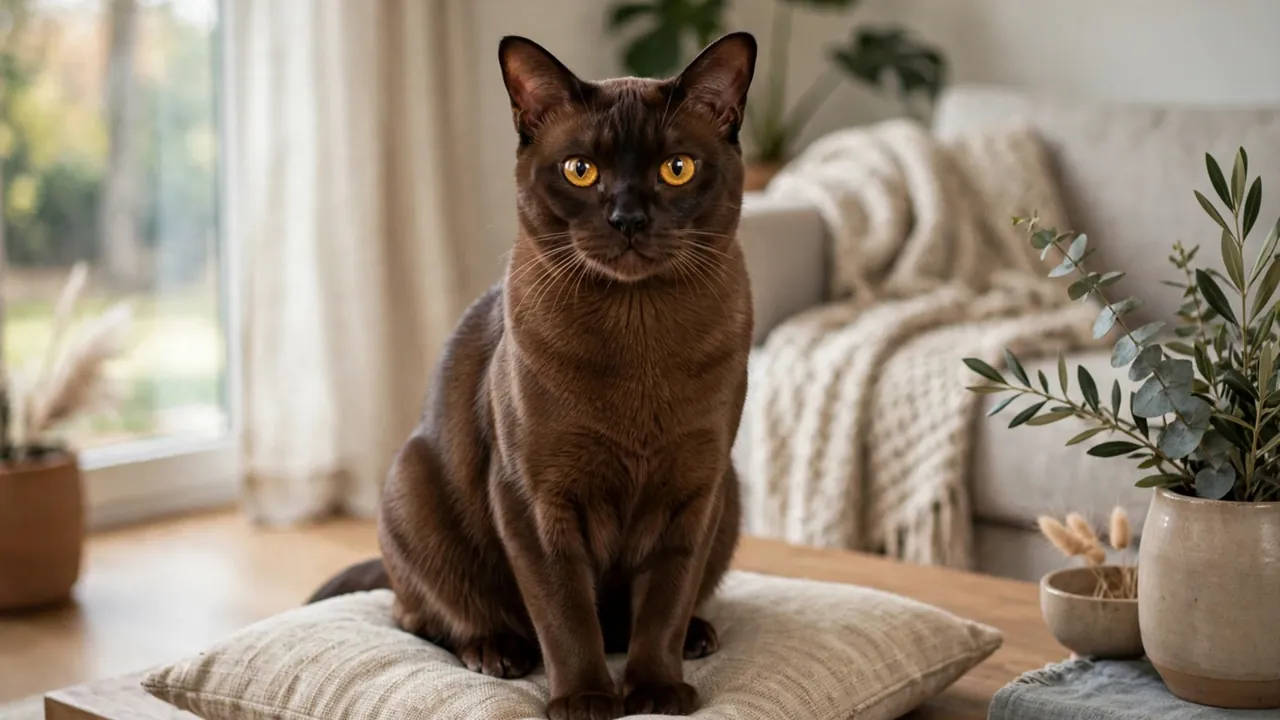
Short on time? Here is the European Burmese cat in a nutshell.
At a Glance
Size and Weight
The European Burmese cat carries surprising weight for its size, and owners notice it the first time they pick one up.
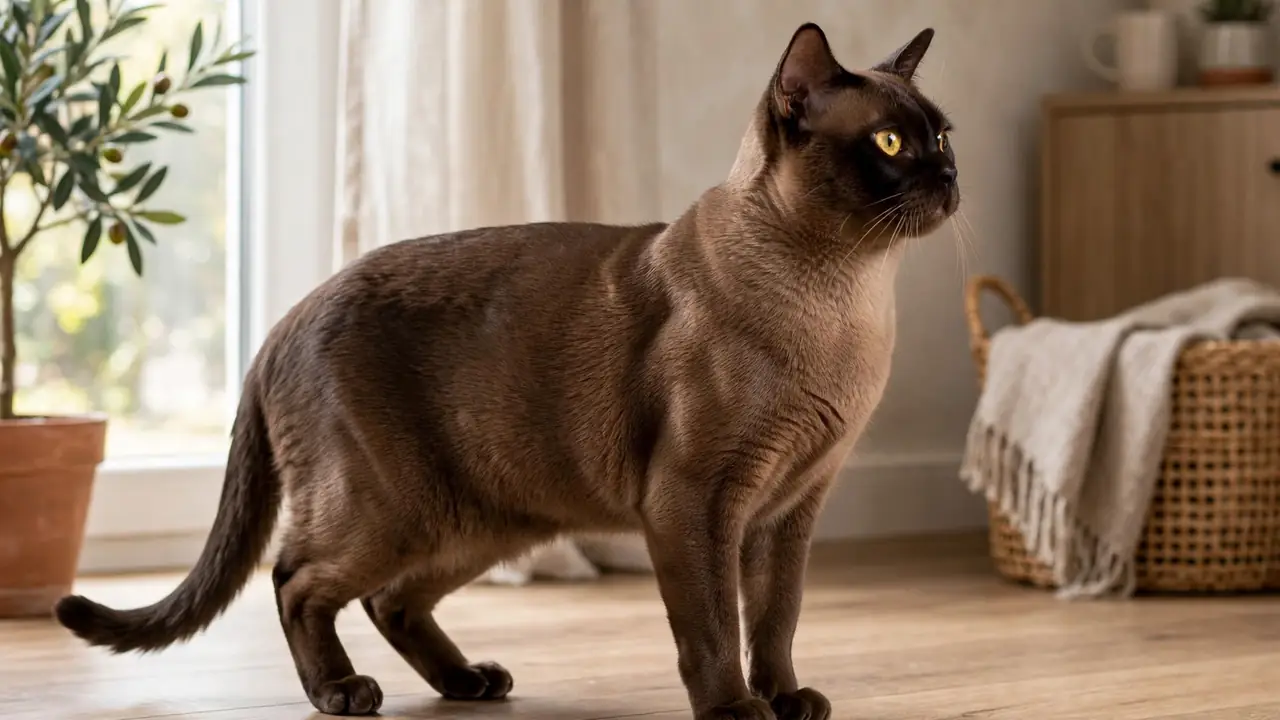
Most adults weigh between 8 and 12 pounds. The body is medium in length, rounded, and muscular, with a solid feel that breeders sometimes describe as a brick wrapped in silk. Males tend to be larger and heavier than females, though both sexes share the same compact, well rounded frame.
This is not a delicate cat. The bone structure is sturdy, the chest is broad, and the legs are strong. Yet the overall outline stays graceful rather than bulky, which gives the breed its classic balance of substance and elegance.
Coat and Colors
The coat is the crowning glory of this breed, and it deserves a slow look in good light.
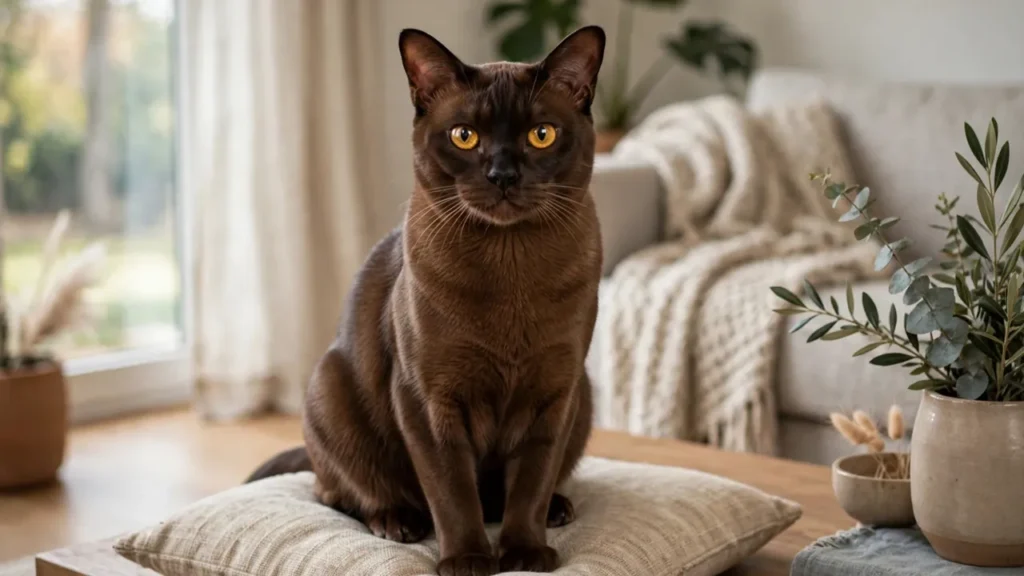
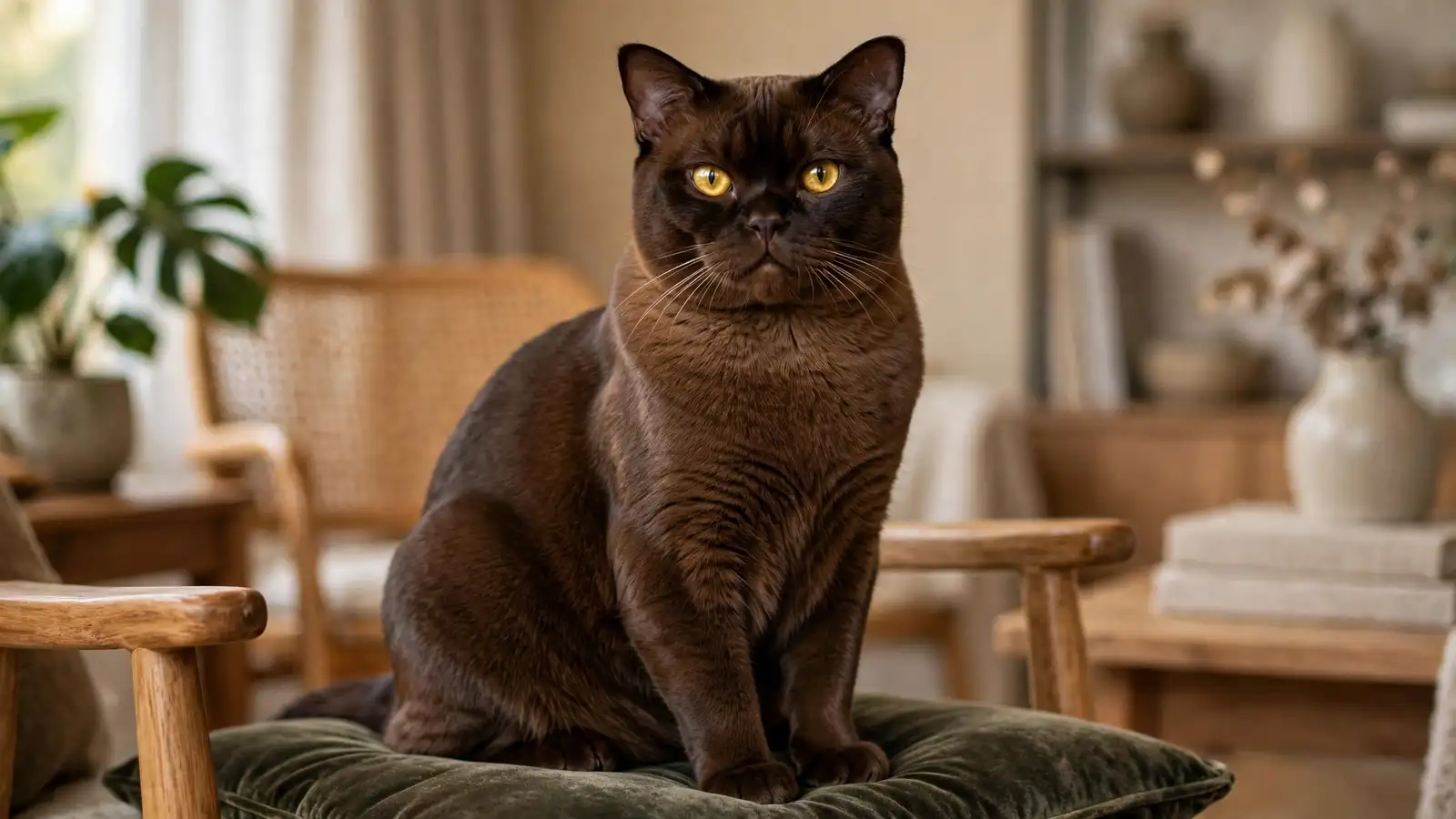
Each hair is short, fine, and lies flat against the body. The texture feels like polished silk under the hand, and the surface catches light in a way that makes the whole cat seem to glow. This satin like sheen is the hallmark of the breed. In sunlight the coat shimmers, and even in a dim room it holds a soft, lustrous finish that looks freshly groomed.
Brown, often called sable, is the classic and best known color. It is a rich, warm seal brown with golden undertones, darker along the back and shading to a slightly lighter tone on the belly. Blue is a soft, cool gray with a silvery cast, elegant and understated. Chocolate is a warm milk chocolate brown, lighter and sweeter in tone than sable. Lilac is a pale, pinkish gray, delicate and dove like, one of the most refined shades in the breed.
Red brings a warm tangerine glow, bright and cheerful, while cream is its softer sibling, a pale buff with a gentle warmth. Tortoiseshell patterns blend two or more of these colors in a marbled or patched mix, and no two tortoiseshell coats look exactly alike. Kittens are born with slightly paler, softer coats that deepen and gain their full gloss as they mature.

History and Origins
The story begins with the Burmese lines that traveled to the United Kingdom and Europe.
Breeders in the United Kingdom and across Europe gradually shaped a type of their own — a more moderate look, slightly longer muzzle, less cobby body.
The result was recognized as a distinct breed, the European Burmese.
It keeps the warm temperament and golden eyed charm of its Burmese ancestors with the refined, moderate silhouette European breeders preferred.
The story of this breed begins with the Burmese lines that traveled to the United Kingdom and Europe.
Breeders in the United Kingdom and across Europe worked with Burmese cats and gradually shaped a type of their own. Over the generations their cats developed a more moderate look, with a slightly longer muzzle and a less cobby, more elegant body than the rounder American type. The result was recognized as a distinct breed, the European Burmese.
Today the European Burmese cat stands as its own breed with its own devoted following. It keeps the warm temperament and golden eyed charm of its Burmese ancestors while carrying the refined, moderate silhouette that European breeders preferred.
Physical Characteristics
Look closely and you will see a cat built on curves rather than angles.
The head is rounded with a short, well defined muzzle and a firm chin. The eyes are large and expressive, set wide apart, and glow in shades of gold to amber. Ears are medium in size, set well apart, and tilt slightly forward, giving an alert and friendly expression.
The body is medium in length with a rounded chest and a level back. Legs are proportionate and end in neat, oval paws. The tail is medium in length, tapering to a rounded tip. Everything about the European Burmese feels balanced, with no single feature overdone.
European Burmese Personality and Behavior
If you want a cat that acts like a devoted companion, this breed rarely disappoints.
The European Burmese cat is affectionate to its core. It follows its people from room to room, settles into laps without being invited, and greets family members at the door. Many owners say their cat behaves more like a small dog than a typical feline, always nearby and always involved.
Conversation is a big part of the charm. These cats are talkative in a soft, pleasant voice, and they seem to enjoy answering back when you speak to them. Playfulness lasts well into adulthood. A European Burmese will chase toys, invent games, and climb into the middle of whatever you are doing, simply to be part of it.
It follows its people from room to room, settles into laps without being invited, and greets family members at the door.
Talkative in a soft, pleasant voice — these cats seem to enjoy answering back when you speak to them.
Playfulness lasts well into adulthood; it will chase toys, invent games, and climb into the middle of whatever you are doing.
- Affectionate to its core — more like a small dog
- Gentle and patient with children
- Long lived — commonly 16 to 18 years
- Does best with someone around much of the day
- A bored one finds its own entertainment
- Loves meals — portions need watching
Care Essentials
Complete, balanced food by life stage with a named animal protein first; measure portions and watch the waistline.
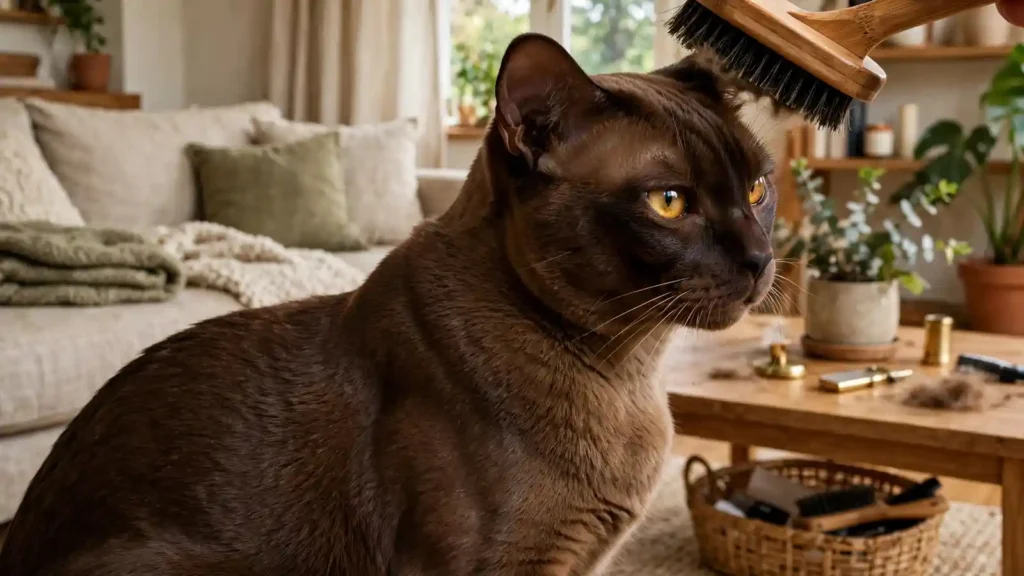
A gentle weekly brushing keeps the sheen glowing; finish with a polish from a soft cloth.
Daily interactive play — wand toys, feather teasers, crinkle balls, and fetch.
At its best indoors; a secure catio, screened balcony, or leash walks for fresh air.
Nutrition and Diet
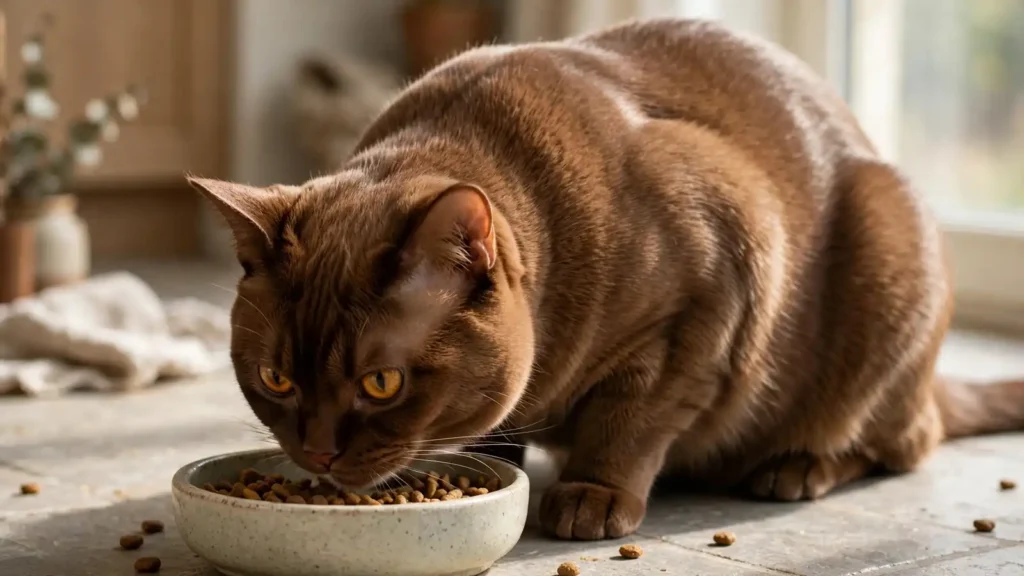
A muscular, active cat needs quality fuel, and this breed is no exception.
Feed a complete and balanced diet made for the cat’s life stage, whether kitten, adult, or senior. Look for foods where a named animal protein leads the ingredient list. Because these cats love their meals, measure portions and watch the waistline, as extra weight can creep on quietly.
Fresh water should always be available. Some cats drink more from a fountain, and that can be a nice addition. Treats are fine in small amounts, but keep them to a small share of daily calories so the main diet does the real work.
Grooming
Grooming this breed is one of the easiest jobs in the cat world.
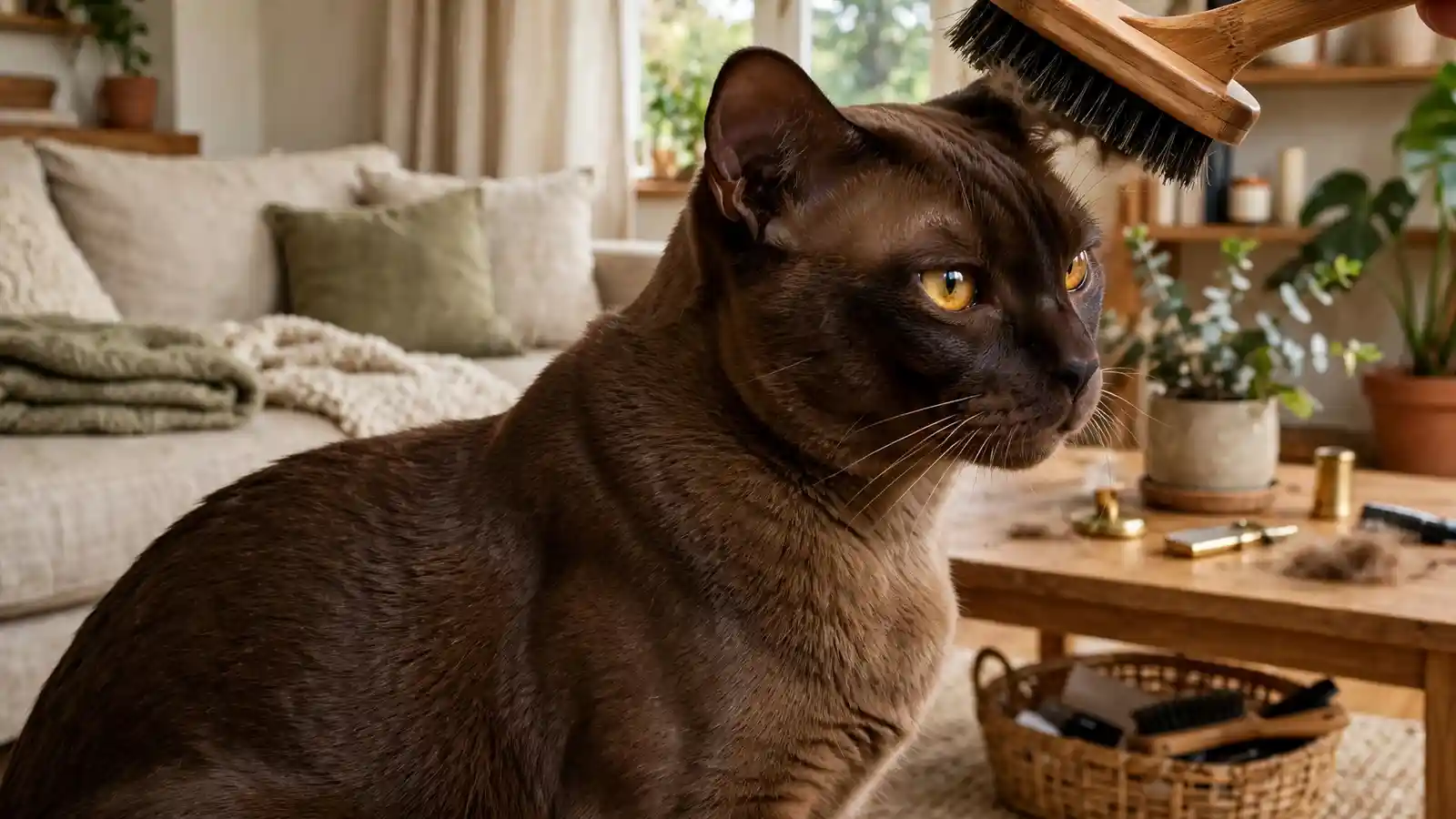
The short, fine coat needs only a gentle brushing once a week to remove loose hair and keep the famous sheen glowing. A soft brush or a grooming mitt works well. Many European Burmese cats enjoy the attention so much that grooming becomes a bonding ritual.
Check the ears for buildup and trim the nails every few weeks. Dental care matters too, so ask your vet about tooth brushing or dental treats. A quick polish with a soft cloth after brushing can make the coat shine even more.
Exercise and Enrichment
This is an athletic, curious cat that stays young at heart for years.
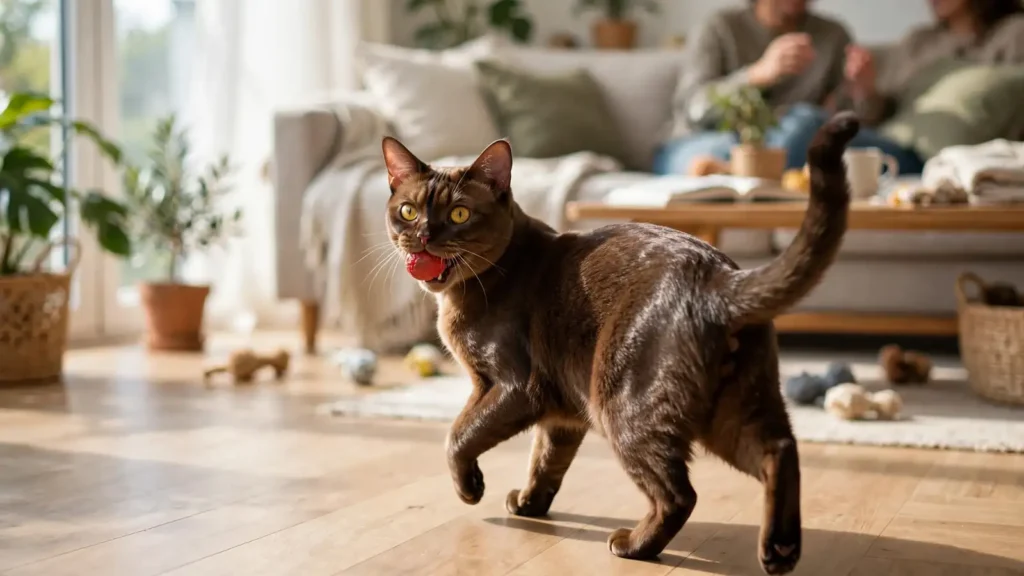
Daily interactive play is a must. Wand toys, feather teasers, and crinkle balls all get a strong response. Many European Burmese cats learn to fetch, and they will happily return a small toy again and again if you keep throwing it.
Vertical space adds a lot to their quality of life. A sturdy cat tree near a window gives climbing exercise and a lookout post in one. Rotate toys every week or two to keep things fresh, and consider food puzzles that make mealtime a small adventure.
Health
This is generally a healthy, long lived breed, and routine vet care goes a long way.
Responsible breeders watch for a few known concerns. Hypertrophic cardiomyopathy, a heart condition, can occur, so cardiac screening matters in breeding programs. Hypokalemia, a condition linked to low potassium levels, is also known in the breed. Regular checkups help catch any issue early, when it is easiest to manage.
Keep vaccinations current, maintain parasite prevention, and schedule annual exams. With attentive care and a healthy lifestyle, the European Burmese cat often enjoys a long life well into its late teens.
A heart condition that can occur in the breed — cardiac screening matters in breeding programs.
A condition linked to low potassium levels, also known in the breed. Regular checkups catch issues early.
Indoor and Outdoor Living
This breed is at its best as an indoor cat with safe ways to enjoy the outside world.
The trusting, social nature of the European Burmese makes unsupervised roaming risky. These cats will walk up to strangers and wander into trouble without a second thought. Indoor life keeps them safe from traffic, predators, and disease.
You can still offer outdoor enrichment. A secure catio, a screened balcony, or leash walks in a quiet garden let the cat enjoy fresh air and new smells. Window perches also satisfy the urge to watch birds and passersby.

Family Suitability
Few breeds fit family life as naturally as this one.
The European Burmese cat is gentle and patient with children, and it usually joins in their games rather than hiding from the noise. It also tends to get along well with other cats and with friendly dogs, especially when introductions are gradual.
For singles and seniors, the breed offers steady companionship without demanding constant high energy play. Whoever you are, expect a cat that wants to be near you, sleeps close by, and treats your lap as its favorite place in the house.
Finding a Breeder or Rescue
Taking time to find the right source pays off for years to come.
Look for a breeder who raises kittens in the home, welcomes questions, and provides health records for both parents. Ask about cardiac screening and the general health of their lines. A good breeder will also ask you plenty of questions, because they care where their kittens go.
Breed specific rescues and general shelters sometimes have Burmese type cats waiting for homes too. An adult rescue can be a wonderful choice, since the personality is already clear. Whether you choose a kitten or an adult, meet the cat first if you can.
- Ask about cardiac screening and the health of their lines
- Kittens raised in the home — health records for both parents
- A good breeder asks you plenty of questions too
- Consider breed specific rescues and shelters
Quick Quiz: Is a European Burmese Right for You?
Answer four questions. Tap yes or no.
Frequently Asked Questions
What is the difference between a European Burmese and an American Burmese?
The European type is more moderate, with a slightly longer muzzle and a less cobby, more elegant body. The American type is rounder and more compact. Both share the affectionate Burmese temperament and the glossy coat.
Do European Burmese cats shed a lot?
Shedding is light. The short, fine coat releases little hair, and a weekly brushing keeps it under control. Most owners find housekeeping easy with this breed.
Are European Burmese cats good with children?
Yes, they are excellent with children. They are patient, playful, and sturdy enough for family life. As with any pet, teach kids to handle the cat gently.
How long do European Burmese cats live?
With good care, they commonly live 16 to 18 years, and some reach their late teens. Regular vet visits, a balanced diet, and indoor living all support a long life.
Are European Burmese cats vocal?
They are conversational rather than loud. Expect soft chirps, trills, and gentle meows, especially when they want attention or are greeting you. Many owners find the voice charming.
What colors do European Burmese cats come in?
Accepted colors include brown, blue, chocolate, lilac, red, cream, and tortoiseshell patterns. Brown is the classic shade, but each color has its own admirers.
The European Burmese cat combines a glossy satin coat with a warm, people oriented nature. Affectionate and chatty, gentle and patient, it treats your lap as its favorite place in the house — a devoted family companion.
Similar Breeds Worth Exploring
Related Breed Guides
Keep Exploring
Browse the full A to Z cat breed collection to compare personalities, or find out your cat’s age in human years with the cat age calculator.