Sea Lion
Sea Lion: the seal that walks, barks and wears its ears outside
A sea lion is the loud, sociable pinniped you are most likely to meet on a Pacific pier: an eared seal built as much for land as for the sea. This guide explains how it differs from a true seal, and how the six living species compare, from the giant Steller’s to the rare New Zealand sea lion.
By Emily Carter · Reviewed by our vet team · Updated 4 November 2026 · 8 min read
Length up to 3.3 mWeight up to 1,100 kgLifespan 20–30 years
At a Glance
The sea lion is one branch of the pinnipeds, the fin-footed marine mammals that also include true seals and the walrus. They belong to the eared seal family, and six species survive today: the California, Steller’s, South American, Australian, New Zealand and Galápagos sea lions. A seventh, from Japan, died out during the last century. All six share the same basic design described below, so this guide uses the familiar California species and the giant Steller’s as its main examples.
Sea Lion Size and Weight
Size depends heavily on the species and the sex. The California sea lion is mid-sized: males reach about 2.4 metres and 300 kilograms, while females are nearer 1.8 metres and 100 kilograms. At the other extreme, a male Steller’s can measure 3.3 metres and weigh 1,000 kilograms or more, making it the largest of all the eared seals.
The scale is easier to picture with comparisons. A big Steller’s bull weighs about as much as a small car, yet the smallest adult females weigh less than a grown man. In almost every species the males are two to three times heavier than the females, a gap that shows up clearly when a bull hauls out among his harem on a crowded beach.
Appearance and Anatomy
The fastest way to recognise one is to look at its ears. Sea lions carry small external ear flaps on the sides of the head, something true seals simply do not have: a seal’s ear is just a hole. They also have long, smooth, largely hairless fore-flippers and, crucially, they can rotate their hind flippers forwards underneath the body. For every difference side by side, see our sea lion vs seal comparison.

The coat is short and coarse, in shades from pale tan and golden brown to dark chocolate, and it looks almost black when wet. Unlike their close relatives the fur seals, they have no dense soft underfur. Males of most species grow a thick mane around the neck and chest, which, together with their roaring, is exactly how they earned their name.
Habitat and Range
Every living species is found around the Pacific Rim. California sea lions range from Alaska down to Mexico, Steller’s spans the North Pacific from California to Japan, the Galápagos species lives on its namesake islands, and the South American, Australian and New Zealand species cover the southern coasts.
On shore they favour rocky headlands, sandy beaches and sheltered coves close to rich fishing grounds, and they happily haul out on piers, buoys and marina pontoons. They are coastal animals rather than deep-ocean wanderers, usually feeding over the continental shelf and returning regularly to favourite haul-out sites, sometimes to the very same rock year after year.
Diet and Feeding
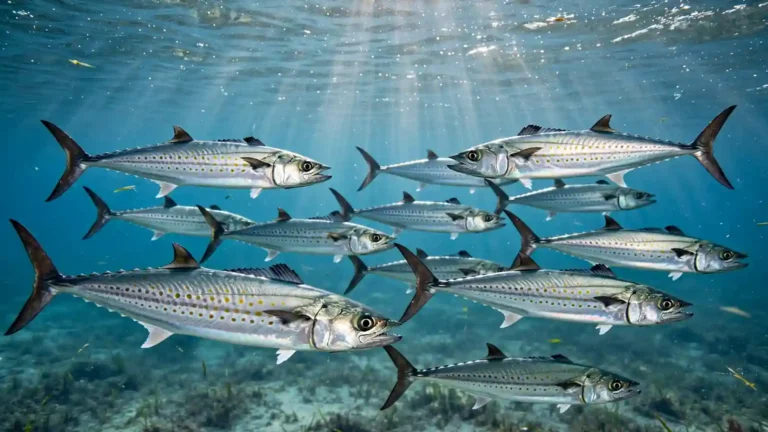
They are opportunistic hunters of schooling fish and squid. Sardines, anchovies, hake, mackerel and rockfish all feature heavily, along with squid and the occasional octopus. Small prey is swallowed whole underwater, while a large fish is carried to the surface and shaken or torn into pieces it can manage.
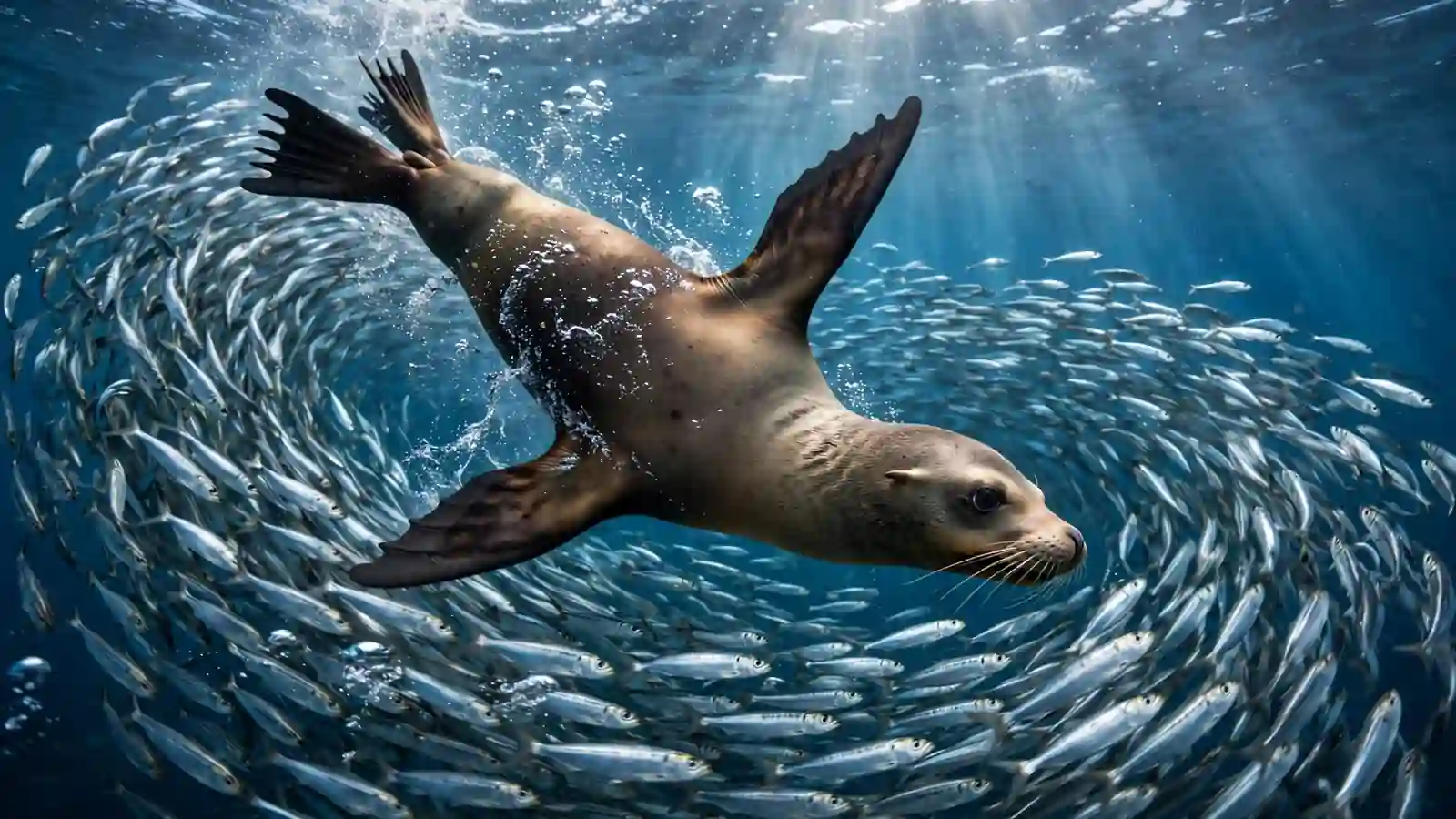
Underwater it does not swim like a seal. It flies, rowing powerfully with those long fore-flippers while the hind flippers steer, which makes it fast and extraordinarily agile in pursuit. Most dives last only a few minutes and stay fairly shallow, but California sea lions have been recorded approaching 300 metres deep and staying down for close to ten minutes.
Behavior and Social Life
Sea lions are among the most social of all pinnipeds. Colonies can number in the hundreds or thousands, packed flipper to flipper on beaches and rocks, and the noise is constant. During the breeding season males come ashore first, fasting while they defend territories or harems through roaring, posturing and, when rivals push too far, short violent fights.
Away from the colony they are playful animals that surf in breaking waves, chase each other and porpoise clear of the water when travelling. Groups resting at sea are called rafts, and a rafting animal often holds a flipper in the air, soaking up sun or cooling down to help control its body temperature.
Communication and Sound
Sound is central to their life. Adult males bark and roar almost without pause in the breeding season, and each female and pup recognise one another’s voices in a crowd of thousands, which is how a mother finds her own pup after a fishing trip. Pups bleat, females answer with a distinctive call, and underwater the animals use clicks and barks as well.
Those external ears give them good hearing in air, roughly comparable to our own, and their hearing underwater is sharper still. Long whiskers add another sense: they are sensitive enough to feel the faint wake left behind by a swimming fish, helping the hunter track prey it cannot see.
Reproduction and Babies
A pup is born on land after a pregnancy of about a year. A newborn of the California species weighs only around seven kilograms, is covered in dark brown fur and can neither swim nor walk far, so it stays in the busy nursery areas of the colony while its mother makes fishing trips of a day or more.
Pups are nursed for roughly six months to a year, depending on the species, and mothers are remarkably devoted, recognising their pup by voice and smell among hundreds of others. Females usually mate again just a few weeks after giving birth, so a colony’s breeding season is a noisy overlap of newborn pups and battling bulls.
Predators and Threats
At sea they are hunted by killer whales and large sharks, especially great white sharks. Pups and juveniles are the most vulnerable. On land they have few natural enemies, though in the south, pups can be taken by land predators where colonies sit near wild coastlines.
The modern threats are mostly human. Animals drown in fishing gear and swallow hooks and plastic, they compete with fisheries for the same fish, and warming seas can shift their prey away from the colonies, leaving pups to starve. Disturbance at haul-outs also costs mothers and pups dearly, which is why these sites are best watched from a distance.
Conservation and Human Interaction
The picture is mixed. California sea lions have recovered strongly under legal protection and now number in the hundreds of thousands. Detailed profiles of the California species and the Steller species track their populations and threats. But the Australian, Galápagos and New Zealand sea lions are all listed as Endangered, with small populations squeezed by fisheries, disease and a changing ocean, and the extinction of that Japanese species shows how fast a hunted species can vanish.
For people they are the friendly face of the pinniped world: the barking crowds on famous piers, the star swimmers of aquariums. They are curious and can seem tame, but they are powerful wild animals that bite hard when cornered or fed. Enjoy them, photograph them, and always give them room to be wild.
Fun Facts
- It can rotate its hind flippers forwards and genuinely walk on land, something no true seal can do.
- One species was hunted to extinction in the last century; the six surviving species are now protected to different degrees.
- A group resting at sea is called a raft, while the same animals on shore form a colony.
- Steller’s sea lion is the largest eared seal on Earth, with big males weighing as much as a small car.
- A mother can pick out her own pup’s voice from thousands of calling animals in a colony.
- Their whiskers can feel the fading wake of a fish that swam past several seconds earlier.
Frequently Asked Questions
How Big Is a Sea Lion?
Size depends on the species and the sex. The largest, a male Steller’s sea lion, can reach 3.3 metres (11 feet) and weigh over 1,000 kilograms, while a female California animal is about 1.8 metres (6 feet) long and weighs around 100 kilograms. Males are usually two to three times heavier than females.
What Do Sea Lions Eat?
They eat mostly fish and squid, including sardines, anchovies, hake, mackerel and rockfish, plus the occasional octopus. They chase prey underwater, flying through the water with their long front flippers, swallow small fish whole, and shake larger catches apart at the surface.
Where Do Sea Lions Live?
They live around the Pacific Rim: the California and Steller’s species in the North Pacific, the Galápagos species on its namesake islands, and the South American, Australian and New Zealand species along southern coasts. They haul out on rocky shores, beaches and even piers close to good fishing grounds.
How Long Do Sea Lions Live?
They usually live for 20 to 30 years in the wild. Females generally outlive males, whose breeding-season battles and long fasts take a toll. The familiar California species typically reaches its mid-twenties, and animals in human care have passed 30.
Are Sea Lions Dangerous to Humans?
Sea lions are curious and often playful, but they are large wild predators with sharp teeth, and they can bite if cornered, fed or approached too closely, especially during the breeding season. The safe rule is simple: watch from a respectful distance and never offer food.
What Is a Baby Sea Lion Called?
It is called a pup. A newborn of that species weighs only about seven kilograms and is born on land in the colony. It is nursed by its mother for roughly six months to a year while it learns to swim and, eventually, to fish for itself.
Similar Species Worth Exploring
Keep Exploring
Still sorting out your seals? Start with our hub of types of seals and sea lions, then meet the tusked walrus and the enormous elephant seal. Every marine guide here, this sea lion guide included, follows the same layout, so the facts are always in the same place.