Snow Crab
Snow Crab: the long-legged crab of the icy plains
The snow crab is a cold-water specialist that walks the mud plains of the northern seas on legs like stilts, in water barely above freezing. It grows slowly, lives long, and feeds some of the most valuable crab fisheries on Earth, which makes its recent story, boom, sudden collapse, and careful rebuilding, one of the most closely watched in the ocean. Underneath the headlines is a quietly remarkable animal.
By Emily Carter · Reviewed by our vet team · Updated 10 November 2026 · 9 min read
Lives in near-freezing waterLeg span up to about 90 cmCan live for 20 years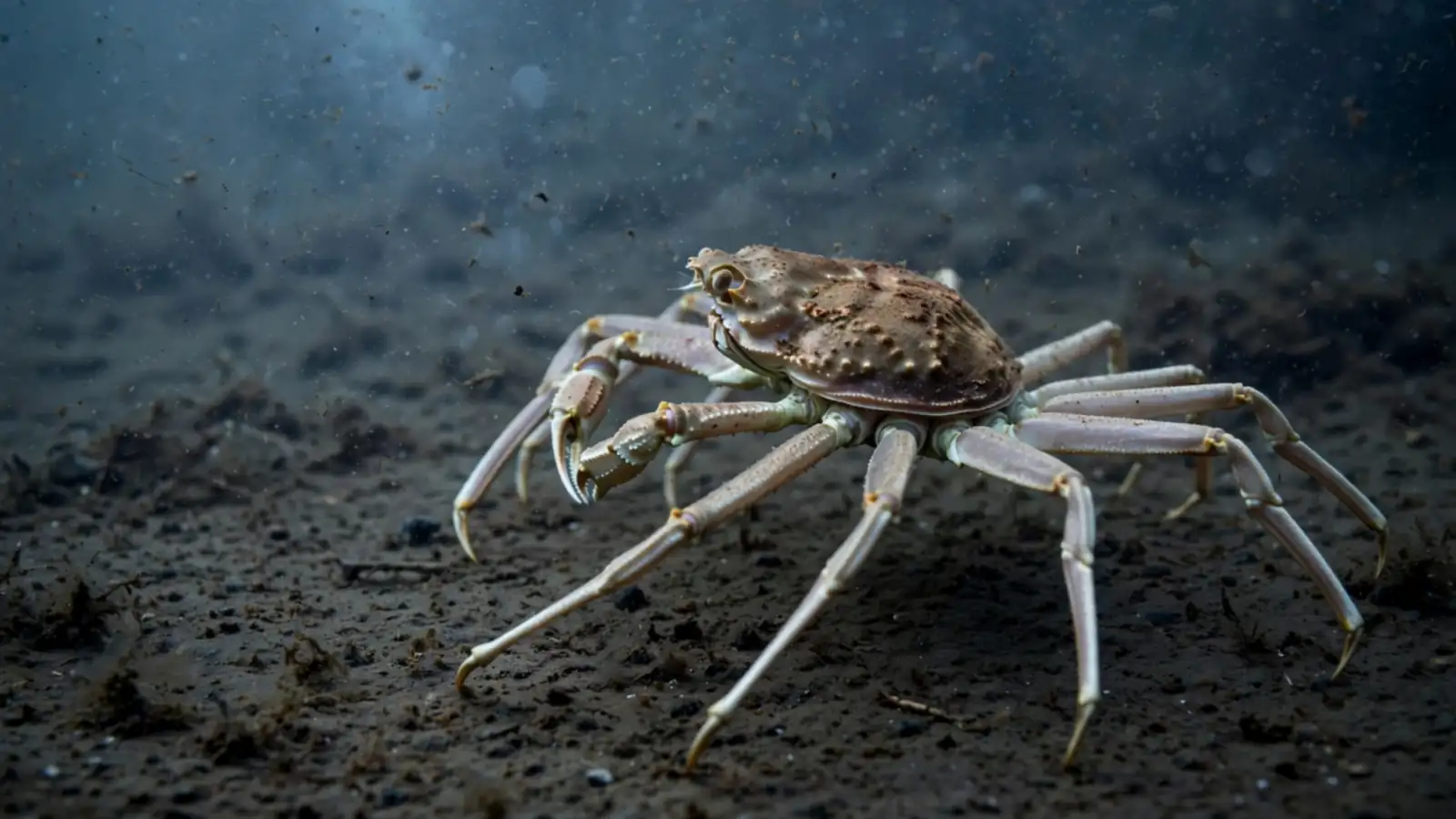
At a Glance
The snow crab, Chionoecetes opilio, is built for a world most crabs cannot enter: mud plains hundreds of metres down, where the water sits at the edge of freezing all year. Its long legs spread its weight over soft sediment like snowshoes, the trait that gives the genus its Greek name, the snow walker. This guide covers the animal itself, its cold kingdom, its two-year pregnancies, and how it differs from its famous rival, the king crab.
Snow Crab Size and Shape
A specimen is mostly legs. A large male’s rounded, rough-textured shell reaches about 15 centimetres across, yet the legs stretch the span to roughly 90 centimetres, and the front pair of claw arms is only slightly shorter than the walking legs. Females are much smaller, maturing at under 10 centimetres across the shell. Fresh from a molt the crab is reddish-brown above and cream below; with age the shell darkens and gathers algae and barnacles, a walking reef of experience.
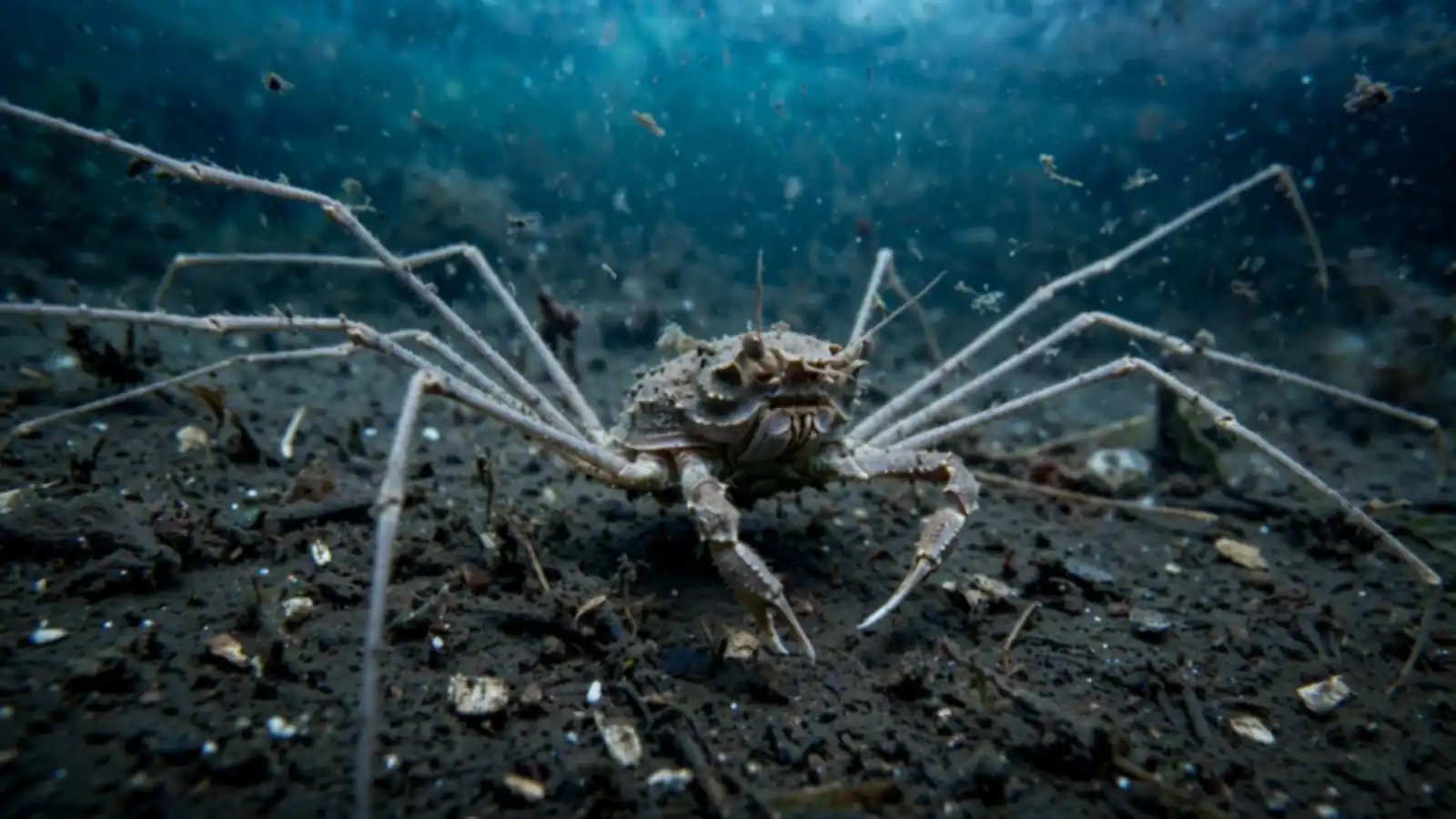
Taxonomy hides a surprise here: the species is a spider crab. Its family, Oregoniidae, sits inside the spider crab superfamily Majoidea, making it a cold-water cousin of the spider crabs of warmer reefs, with the same small body and extravagant legs. Full details of its classification and range are set out in the animal’s species record and fishery history.
Where Do Snow Crabs Live? The Cold Mud Plains
Snow crabs live where the sea stays cold: water between about −1 °C and 5 °C, over flat mud and sand bottoms. In the North Pacific they carpet the Bering Sea shelf and range through the Chukchi and Okhotsk seas to northern Japan. In the Atlantic they live from the Gulf of St. Lawrence and Newfoundland northward, and an introduced population has spread through the Barents Sea since the 1990s. Most adults are found between about 70 and 280 metres down.
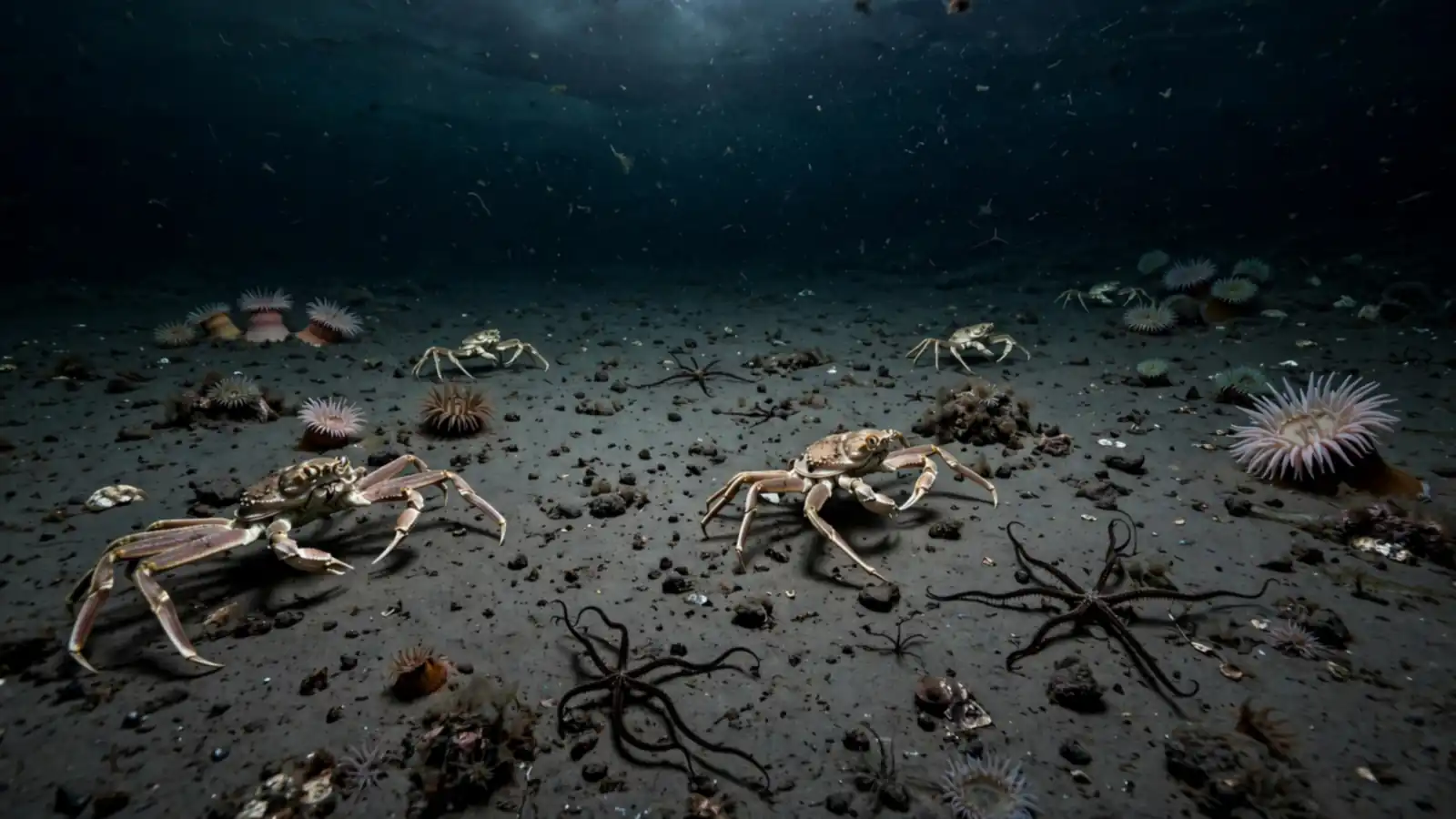
The whole life is organised around the cold pool, the layer of near-freezing bottom water that lingers after winter. Young crabs settle in the coldest water, and as they grow they shift position across the shelf, females gathering in shallower nursery grounds, big males ranging deeper. When the cold pool shrinks in warm years, the crabs are squeezed into a fraction of their habitat, a fact that matters greatly in the story told below.
What Do Snow Crabs Eat? Diet and Feeding
Snow crabs are seabed generalists. They pick over the mud for brittle stars and other small starfish, clams and snails, sea worms, small crustaceans including young snow crabs, and whatever carrion the water delivers. The claws crush and tear; food is passed to a set of mouthparts that shred it finely. In an ecosystem with few large predators of the bottom, the animal is both grazer and garbage collector at once.
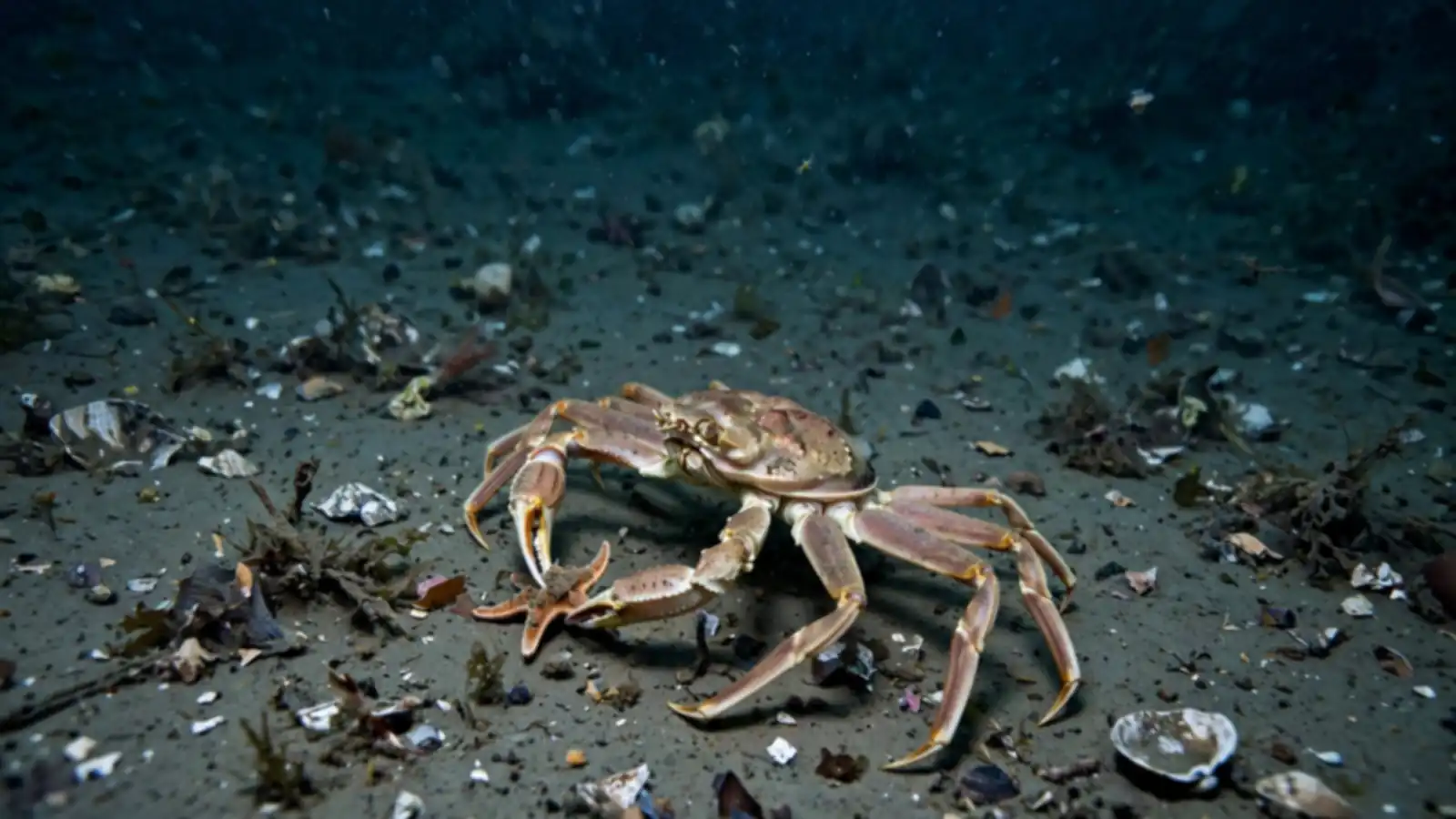
The relationship runs both ways. Pacific cod, seals, skates and other bottom fish eat snow crabs, and in cold years the crabs are a cornerstone of the Bering Sea food web, converting the rain of dead plankton into crab meat that everything else can use. That converting role is why scientists watch this species as a thermometer for the whole northern ecosystem.
Snow Crab Life Cycle and the Final Molt
Everything about its reproduction runs on polar time. A female carries her clutch of tens of thousands of eggs under her abdomen not for weeks but for one to two full years, because embryos develop at a crawl in near-freezing water. She can store sperm and produce several clutches in her life, aerating the eggs constantly as they ripen from orange to dark brown. When they finally hatch, the larvae rise into the plankton for a few months before settling to the mud.
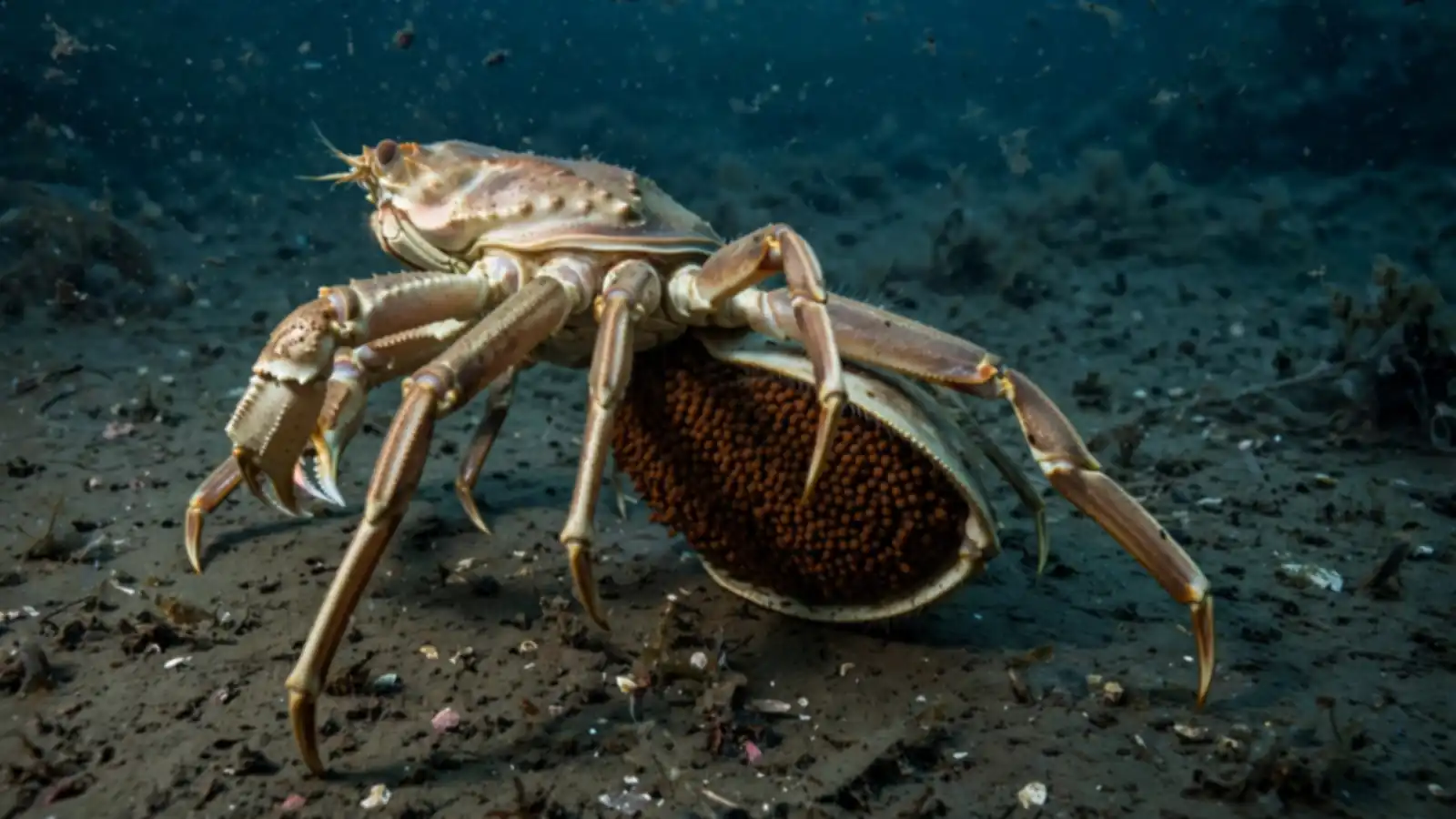
Growth is equally patient: a dozen or more molts spread over many years, ending, unusually, in a final molt after which the adult never grows again. A big-clawed male in the fishery may be a decade or more old; the species’ lifespan is estimated at up to about 20 years. Slow growth and late maturity are exactly what make snow crabs productive in stable cold seas, and vulnerable when the cold fails.
Opilio vs King Crab: The Animal Differences
The comparison everyone asks about is easy to settle at a glance, once you know the anatomy. The species is a true crab: four pairs of walking legs, a round flat shell, modest claws. The red king crab is not a true crab at all but a hermit-crab descendant: it walks on three pairs of legs, carries one claw much bigger than the other, and folds a lopsided abdomen under a heavily spiked shell that can reach 28 centimetres, with a span of 1.8 metres and several times the species’ weight.
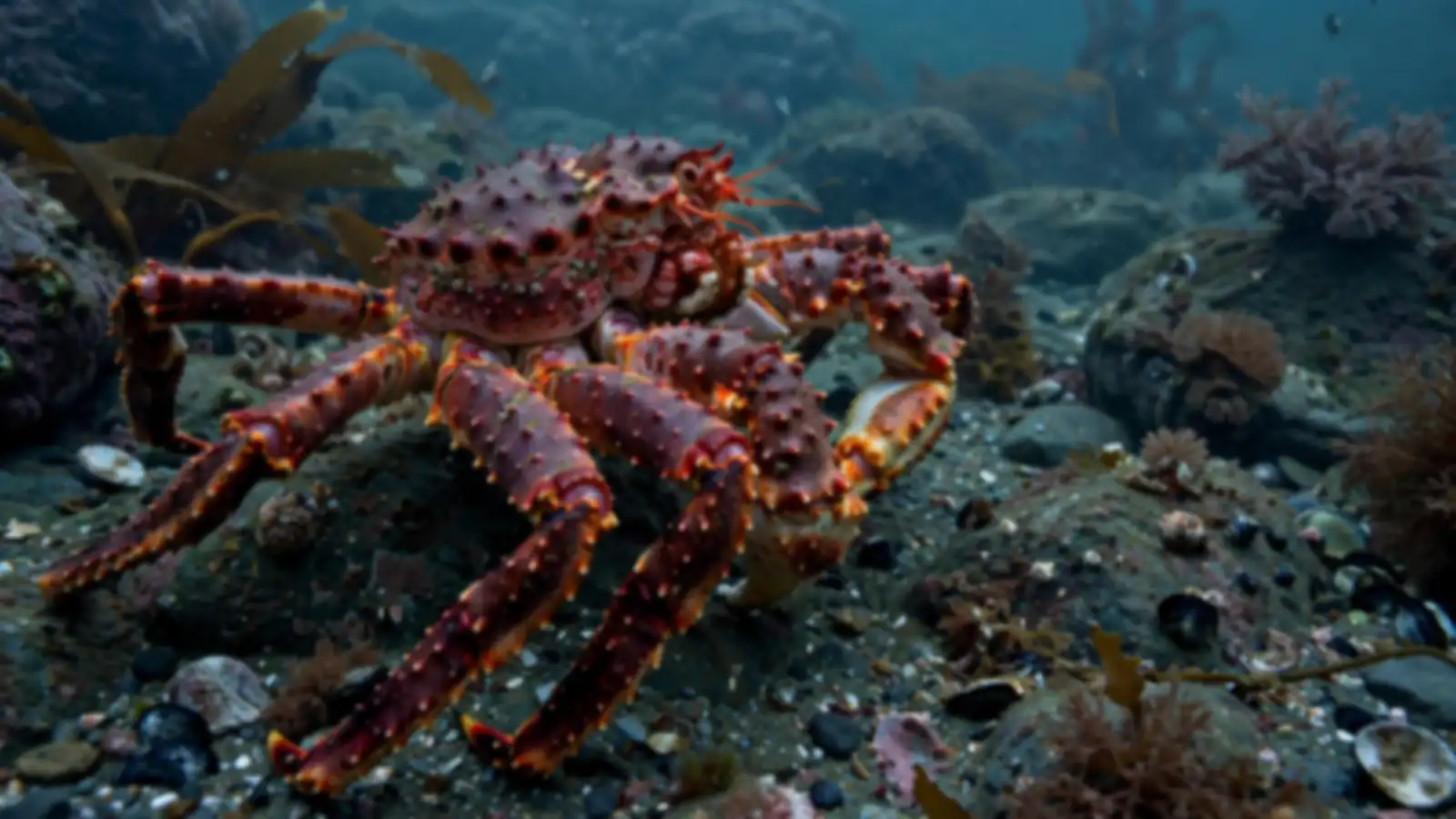
They also partition the north between them. King crabs favour rockier, slightly shallower ground and warmer edges, snow crabs the deep cold mud. At the table the difference is texture and scale (king crab legs are huge individual pieces, it comes in clusters of slimmer legs), but as animals they are not close relatives at all: the resemblance is the northern sea’s habit of building everything long-legged. Both belong to the broader clan in our guide to the types of crustaceans.
People and the Fishery: Boom, Collapse and Rebuilding
The species supports major pot fisheries in Alaska, Canada and Russia, worked in brutal winter weather and long prized for sweet leg meat. This guide keeps the food story to this one section, because the important recent chapter is ecological. Between 2018 and 2021, surveys in the eastern Bering Sea recorded a collapse of roughly 90 percent, billions of crabs gone, in the wake of a marine heatwave that shrank the cold pool and, researchers concluded, starved and stressed the population beyond what it could bear.
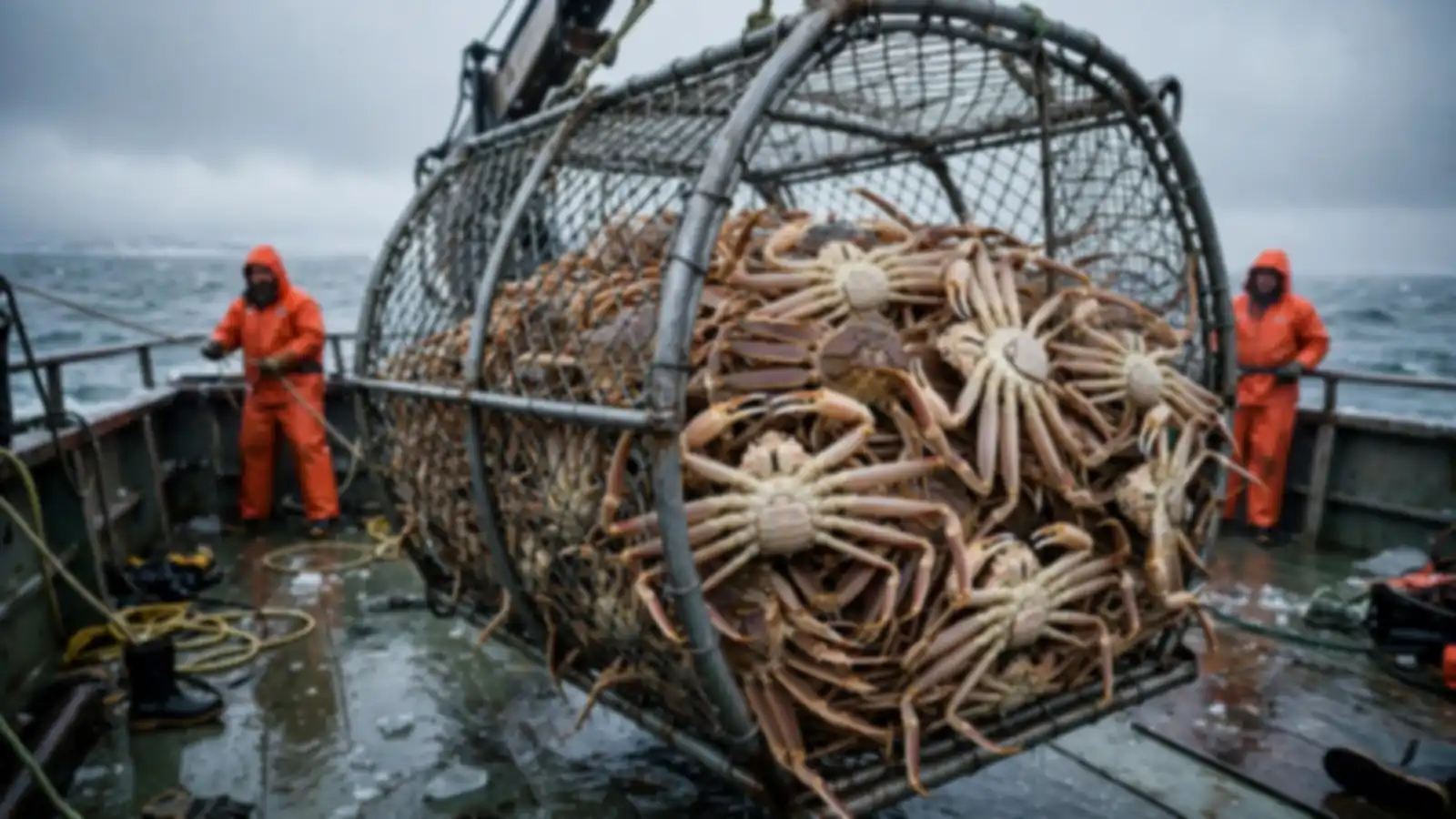
Alaska closed its Bering Sea opilio fishery for the 2022–23 and 2023–24 seasons, the first closures in its history, and has since reopened it at far smaller quotas as young crabs recruit. The episode has made the species the emblem of how fast a cold-water ecosystem can flip, and of why a species built for stability needs management that can move as fast as the climate now does.
Fun Facts
- The genus name Chionoecetes means “snow inhabitant”, and the animal earns it: it thrives in water that would kill most crabs, down to about −1 °C.
- In Atlantic Canada the same species is marketed as queen crab, while Alaska and the Pacific call it snow crab or opilio.
- A female specimen may brood a single clutch of eggs for up to two years, among the longest pregnancies in the crab world.
- Snow crabs stop growing at a final, terminal molt; after that, a crab’s size is fixed for the rest of its life.
- The 2018–2021 Bering Sea decline, roughly ten billion crabs by some estimates, is one of the largest marine mortality events ever recorded for a single species.
- Snow crabs are technically spider crabs: their family sits inside the spider crab superfamily, alongside the decorator crabs of warm reefs.
Frequently Asked Questions
What Is a Snow Crab?
A It is a long-legged spider crab, Chionoecetes opilio, that lives on cold mud bottoms in the northern Pacific and Atlantic. It has a round, rough shell up to about 15 centimetres wide and a leg span approaching 90 centimetres. Also called opilio, or queen crab in Canada, it is a true crab adapted to water between about −1 °C and 5 °C.
How Big Do Snow Crabs Get?
Male snow crabs reach about 15 centimetres (6 inches) across the shell, with a leg span of up to roughly 90 centimetres (3 feet). Females are much smaller, maturing at under 10 centimetres across. The legs provide most of the size: like other spider crabs, the species’ body is small compared with its span.
Snow Crab vs King Crab: What Is the Difference?
A It is a true crab with four pairs of walking legs and a light, round shell; a king crab is a hermit-crab relative with only three pairs of walking legs, one claw much larger than the other, and a much heavier, spikier build. Red king crabs also grow far bigger, to a 1.8-metre span. The two are not close relatives despite both living in cold northern seas.
Where Do Snow Crabs Live?
Snow crabs live on mud and sand bottoms in cold northern seas: the Bering Sea and North Pacific, and the northwest Atlantic from the Gulf of St. Lawrence to the Barents Sea. They need water roughly between −1 °C and 5 °C and are most common between about 70 and 280 metres deep, following the layer of near-freezing bottom water called the cold pool.
What Do Snow Crabs Eat?
Snow crabs eat seabed invertebrates: brittle stars, clams, snails, worms, small crustaceans and young snow crabs, plus carrion and detritus. They are generalist scavengers and predators of the mud plains. In turn they are eaten by cod, seals, skates and other bottom fish, making them a key link in northern food webs.
How Long Do Snow Crabs Live?
Snow crabs are thought to live up to about 20 years. They grow slowly through a dozen or more molts and stop growing entirely after a final, terminal molt. Females can brood one clutch of eggs for as long as two years in the near-freezing water, so the whole life cycle runs far slower than that of warm-water crabs.
Why Did the Bering Sea Snow Crab Population Collapse?
Between 2018 and 2021 the eastern Bering Sea opilio population fell by roughly 90 percent. Research linked the collapse to a marine heatwave: warmer water shrank the cold pool the crabs depend on, raised their food needs and crowded them into a small area, causing mass starvation. The fishery was closed for two seasons and has reopened only at much reduced levels.
Why Is It Also Called the Queen Crab?
The queen crab is the Canadian name for the snow crab, Chionoecetes opilio — the same animal, under the name used by the Canadian fishery. The species is also known as opilio, the name that comes from its scientific name.
Similar Species Worth Exploring
Keep Exploring
Keep exploring the cold-water clan through the parent spider crab guide, the rival red king crab, and the full roll of the types of crabs. No crab tells the story of a warming north more honestly than the snow crab.