Goose Barnacle
Goose Barnacle: the stalked barnacle of myth
The goose barnacle grows on a fleshy stalk, feeds with feathery legs — and medieval scholars believed it hatched into a goose. This guide follows Pollicipes pollicipes, the prized percebes of Spain and Portugal, through its stalked body, its driftwood home, and the strangest myth in the history of natural history.
By Emily Carter · Reviewed by our vet team · Updated 10 November 2026 · 10 min read
Grows on a fleshy stalkFeeds with feathery legsMedieval myth: it hatched into a goose
At a Glance
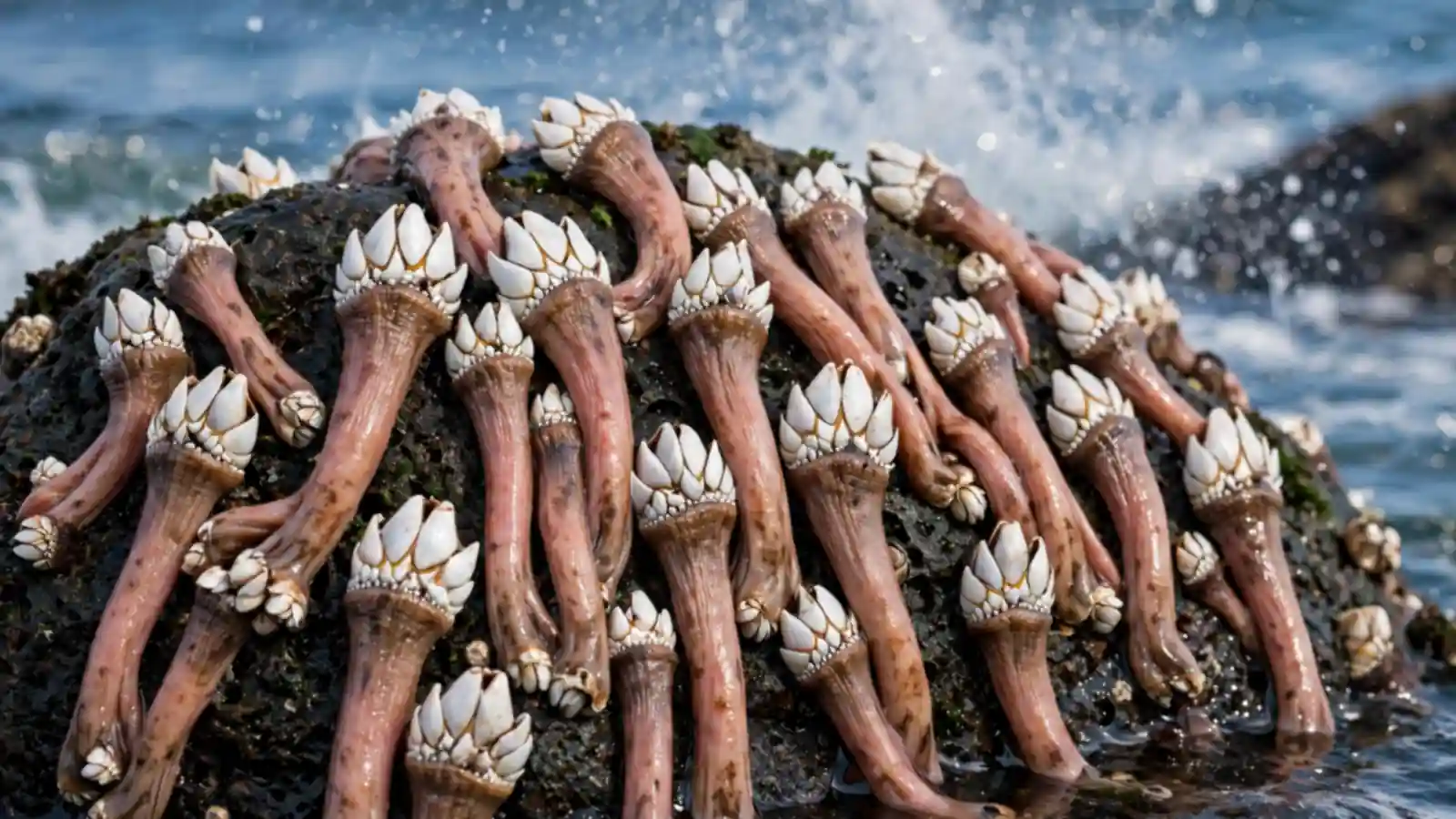
A goose barnacle is a barnacle on a stalk, and it looks like nothing else on the shore: a fleshy stem, a small armoured shell, and feathery legs that comb the water for food. It is also the animal behind one of the strangest myths in natural history. This is the whole animal, at a glance, before the detail begins.
Goose Barnacle Anatomy: A Stalk, a Shell and Feathery Legs
It has three parts: a fleshy stalk, a small armoured shell, and feathery legs. The stalk is muscular and flexible, and it holds the shell up into the water, while the shell protects the body inside. The legs are the cirri, feathery fans that reach out of the shell and comb the water for food.
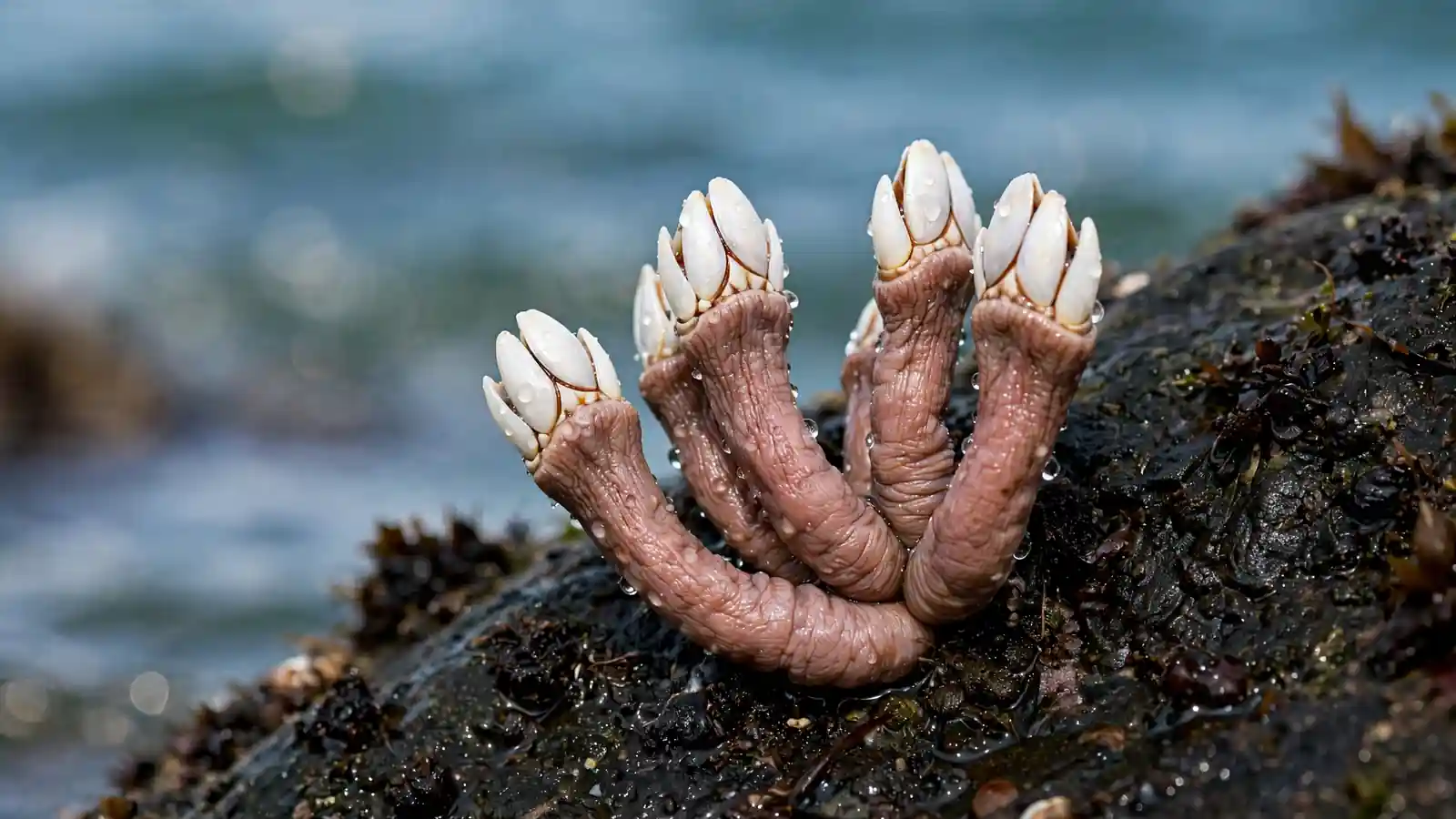
The stalk is the difference from the acorn barnacle, which has no stalk at all and sits flat on the rock like a tiny volcano. Its stalk lets it grow on driftwood, on ship hulls, and on the underside of floating debris, anywhere the water moves and the food flows past.
The Goose Myth: Barnacles That Hatched Into Birds
Medieval scholars believed that barnacle geese hatched from goose barnacles. Gerald of Wales wrote it down in his Topographia Hiberniae in 1188: the goose, he said, grew from driftwood barnacles, and the belief was so strong that the barnacle goose was counted as a fish on fast days, because it came from the sea and not from an egg.

The myth survived because nobody had seen a barnacle goose nest. The geese bred in the far north, beyond the reach of medieval travellers, and the barnacles on the driftwood looked — to a medieval eye — like tiny geese, with their stalks as necks and their shells as bodies. The belief was wrong, but it was reasonable, and it lasted for centuries.
Percebes: The Prized Barnacle of Spain and Portugal
In Spain and Portugal, the species is percebes, and it is a prized food. The stalk is the part that is eaten — muscular, briny, and tasting of the sea — and the best percebes grow on wave-battered rocks, where the harvesters climb down the cliffs at low tide to cut them from the stone.
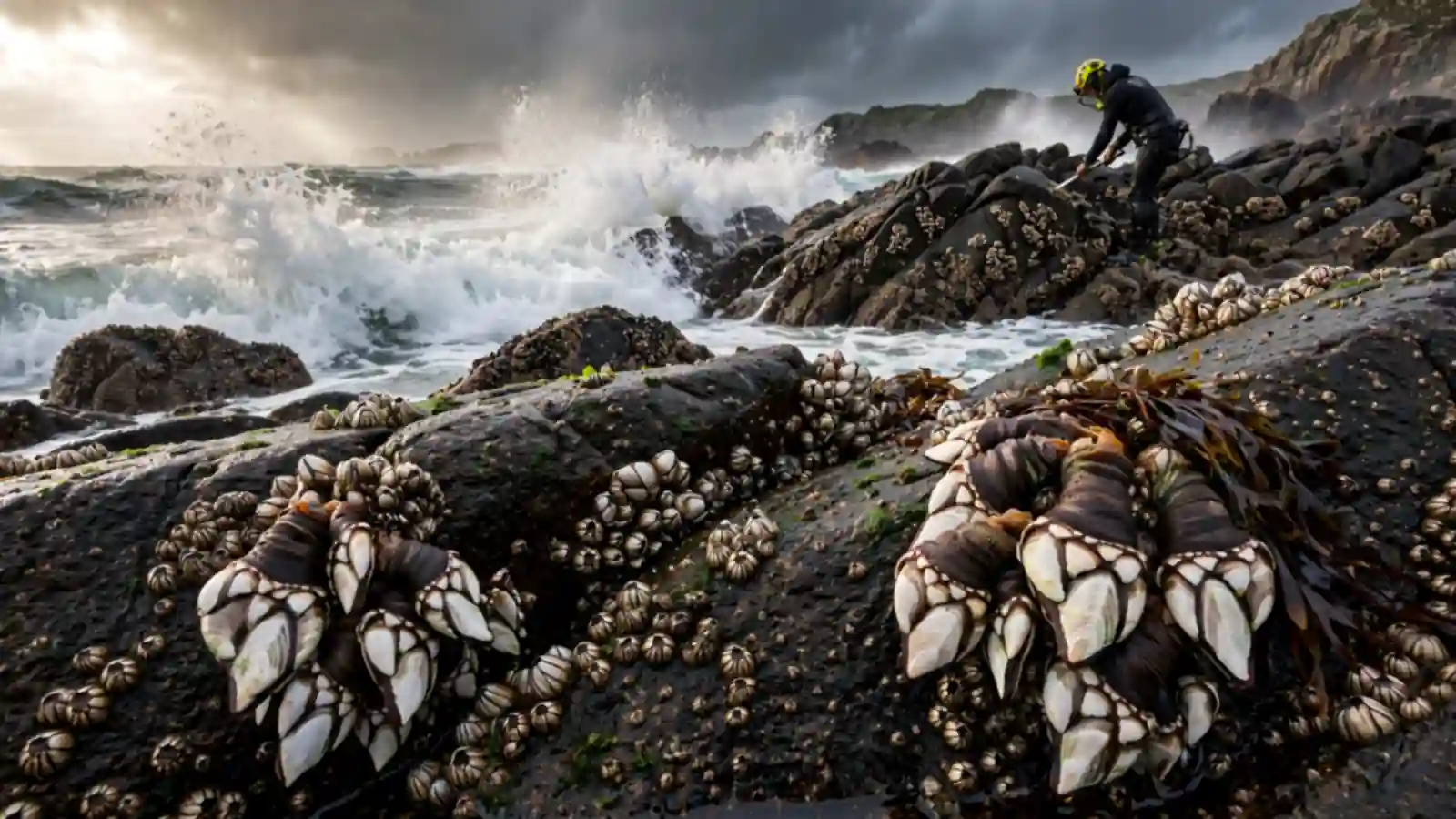
The harvest is dangerous, and the price reflects it. Percebes are gathered by hand, from rocks that the sea covers at high tide, and the harvesters work with ropes and timing, taking only the largest barnacles and leaving the small ones to grow. The percebes on the plate is the species at its most valued.
Where They Live: Driftwood, Rocks and Ship Hulls
Goose barnacles live on rocks, on driftwood, and on ship hulls, anywhere the water moves and there is something solid to cling to. The stalked species grow in clusters, dozens of barnacles sharing a single rock or a single piece of driftwood, and the cluster sways in the current like a small forest.
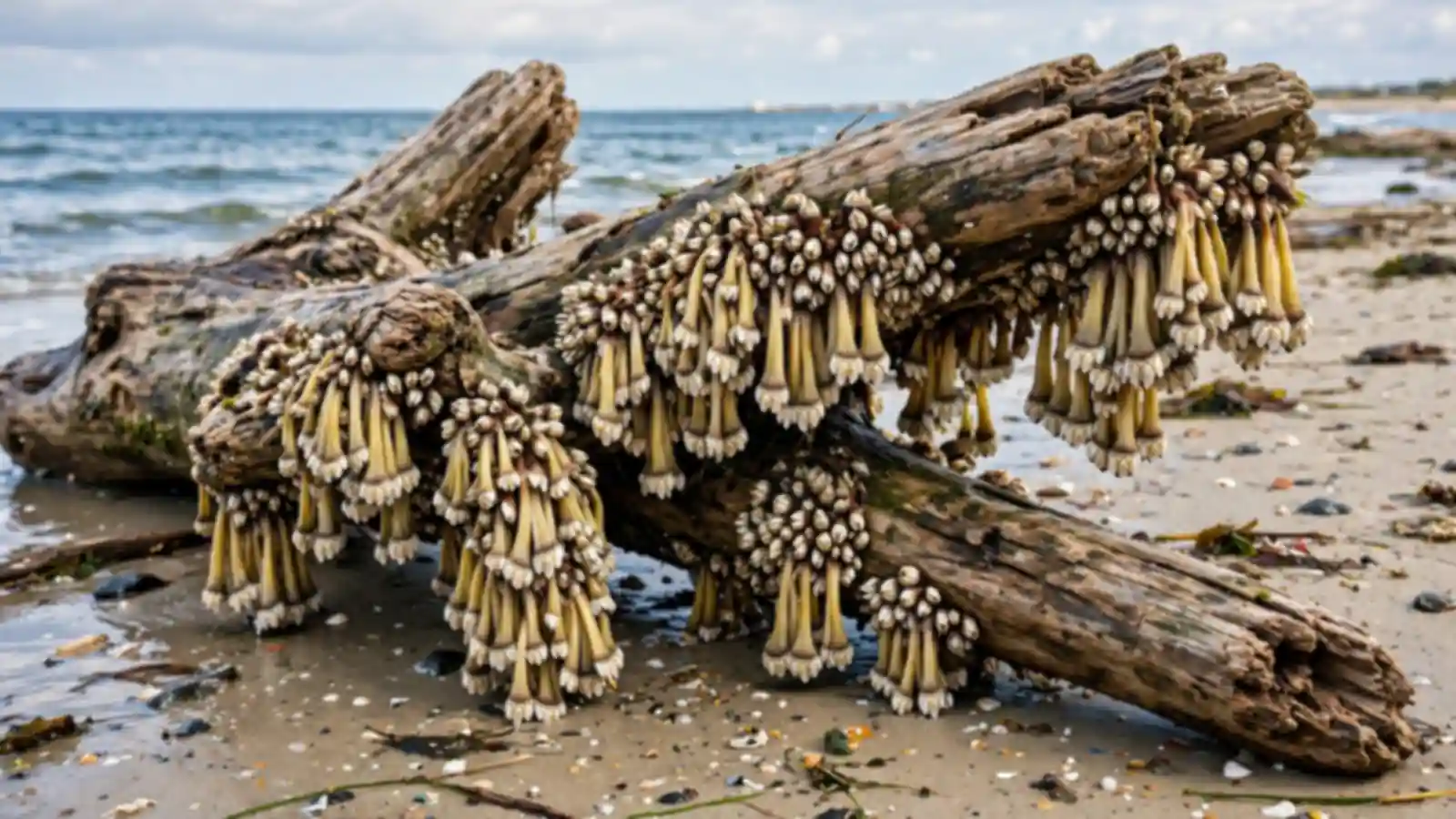
The driftwood habit is the reason for the myth. A piece of driftwood covered in goose barnacles, washed up on a beach, looks like a branch with tiny geese growing from it — and a medieval traveller who had never seen a barnacle goose nest could be forgiven for thinking that was what he was looking at.
How They Feed: Filtering With Cirri
It feeds by filtering the water with its cirri, the feathery legs that reach out of the shell and comb the current for plankton and particles. The cirri open and close in a rhythm, trapping food and passing it to the mouth, and the barnacle feeds whenever the water moves.
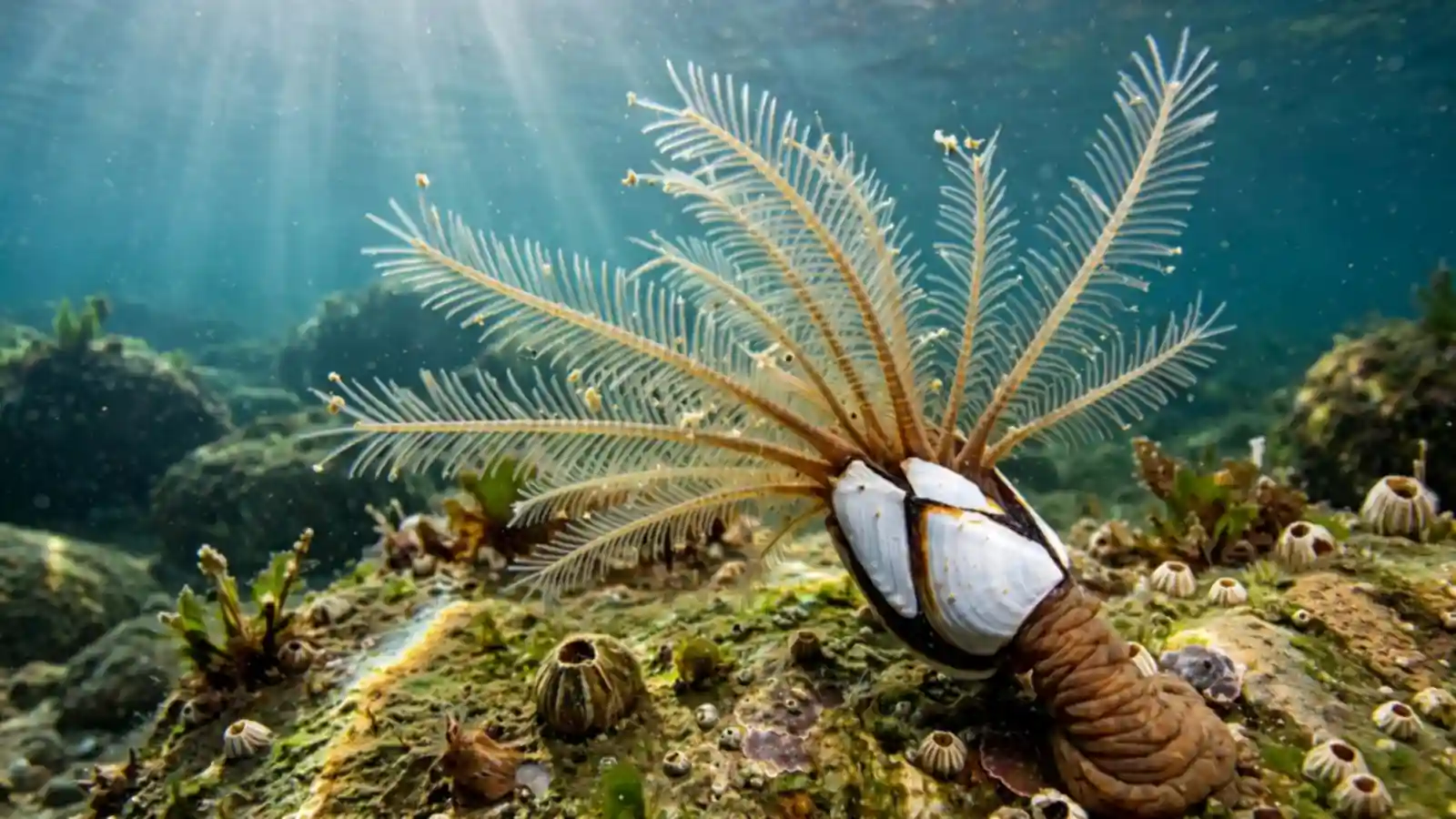
For a wider survey of the animal, see this gooseneck barnacle guide. The feeding is the reason the stalk matters: a barnacle on a stalk can reach into the current, where the food is, while a barnacle flat on the rock must wait for the food to come to it.
Goose Barnacle Life Cycle: From Larva to Stalk
It begins life as a larva in the plankton, swimming in open water before it finds a surface to settle on. The larva is tiny and translucent, and it swims for days or weeks, looking for a rock, a piece of driftwood, or a ship’s hull — anywhere it can cement itself and grow.
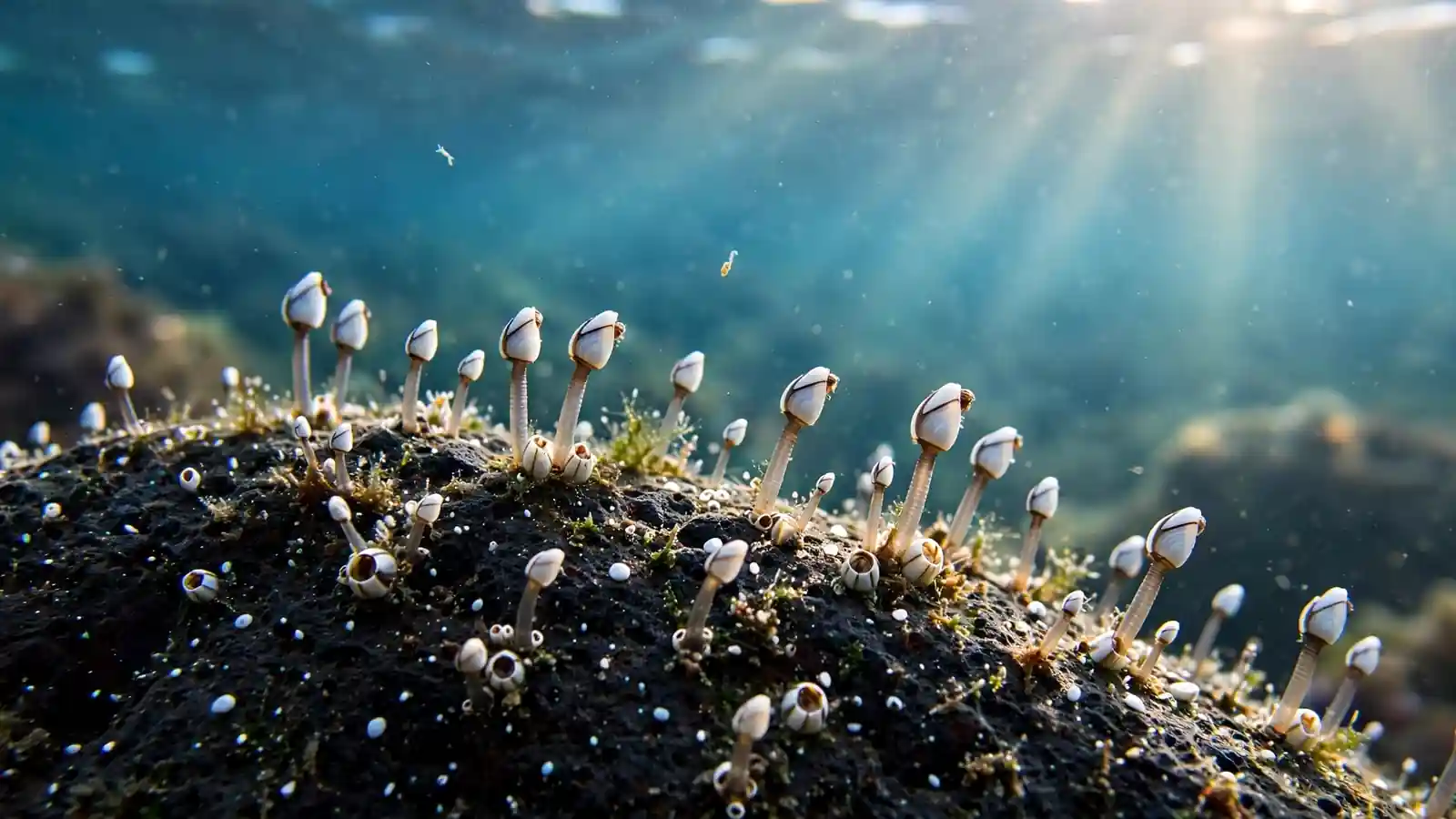
Once it settles, the larva cements its head to the surface and grows its stalk and shell. The cement is one of the strongest natural glues known, and it holds the barnacle fast against the waves for the rest of its life. The animal that began as a swimmer ends as a stalked filter-feeder, fixed to the spot where it landed.
Vs Acorn Barnacle: Stalked or Not
The difference between it and an acorn barnacle is the stalk. It grows on a fleshy stalk that holds its shell up into the water, while an acorn barnacle has no stalk and sits flat on the rock, like a tiny volcano with its opening at the top. Both are barnacles, and both feed with cirri, but the stalk changes everything about where they can live.

The acorn barnacle is the shore’s barnacle, coating the rocks at the tide line, while this one is the driftwood’s barnacle, growing on floating wood and wave-battered cliffs. The stalk lets it reach the current, and the flat shell lets the acorn barnacle survive the pounding of the waves — two solutions to the same problem, side by side on the same shore.
Fun Facts
- Medieval scholars believed barnacle geese hatched from goose barnacles.
- Gerald of Wales wrote the myth down in 1188.
- The barnacle goose was counted as a fish on fast days, because it came from the sea.
- Percebes, the species of Spain and Portugal, is a prized food.
- It cements its head to the rock with one of nature’s strongest glues.
- The stalk is the difference from the acorn barnacle, which has no stalk at all.
Frequently Asked Questions
What Is a Goose Barnacle?
It is a stalked barnacle, a crustacean that grows on a fleshy stalk with a small armoured shell and feathery feeding legs. The best-known species is Pollicipes pollicipes, the percebes of Spain and Portugal.
Why Is It Called a Goose Barnacle?
It is named for the medieval belief that barnacle geese hatched from it. Gerald of Wales wrote in 1188 that the goose grew from driftwood barnacles, and the name has stuck ever since.
Did People Really Believe Barnacles Turned Into Geese?
Yes. Medieval scholars believed that barnacle geese hatched from goose barnacles on driftwood, because nobody had seen a barnacle goose nest. The belief was so strong that the barnacle goose was counted as a fish on fast days.
What Are Percebes?
Percebes are goose barnacles, Pollicipes pollicipes, eaten in Spain and Portugal. The fleshy stalk is the part that is eaten, and the best percebes are harvested by hand from wave-battered rocks at low tide.
Where Do Goose Barnacles Live?
Goose barnacles live on rocks, driftwood and ship hulls, anywhere the water moves and there is something solid to cling to. They grow in clusters, dozens of barnacles sharing a single rock or a single piece of driftwood.
What Do Goose Barnacles Eat?
It eats plankton and particles filtered from the water with its feathery cirri. The cirri reach out of the shell and comb the current, trapping food and passing it to the mouth.
Are Goose Barnacles the Same as Acorn Barnacles?
No. A goose barnacle grows on a fleshy stalk, while an acorn barnacle has no stalk and sits flat on the rock like a tiny volcano. Both are barnacles and both feed with cirri, but the stalk changes where they can live.
Similar Species Worth Exploring
Keep Exploring
Keep exploring the crustaceans: meet the barnacle, the parent guide to the whole family, or browse the full set in our guide to the types of crustaceans. Then come back to the driftwood, home of the goose barnacle.