Harbor Seal
Harbor Seal: the spotted homebody of the northern coasts
The harbor seal is the seal you are most likely to meet: a small, spotted, dog-faced true seal that hauls out on rocks, reefs and sandbanks all around the northern hemisphere. A homebody by seal standards, it may spend its whole life within a few dozen kilometres of the shore where it was born.
By Emily Carter · Reviewed by our vet team · Updated 10 November 2026 · 8 min read
Length up to 1.9 mWeight up to 130 kgLifespan 25 to 35 years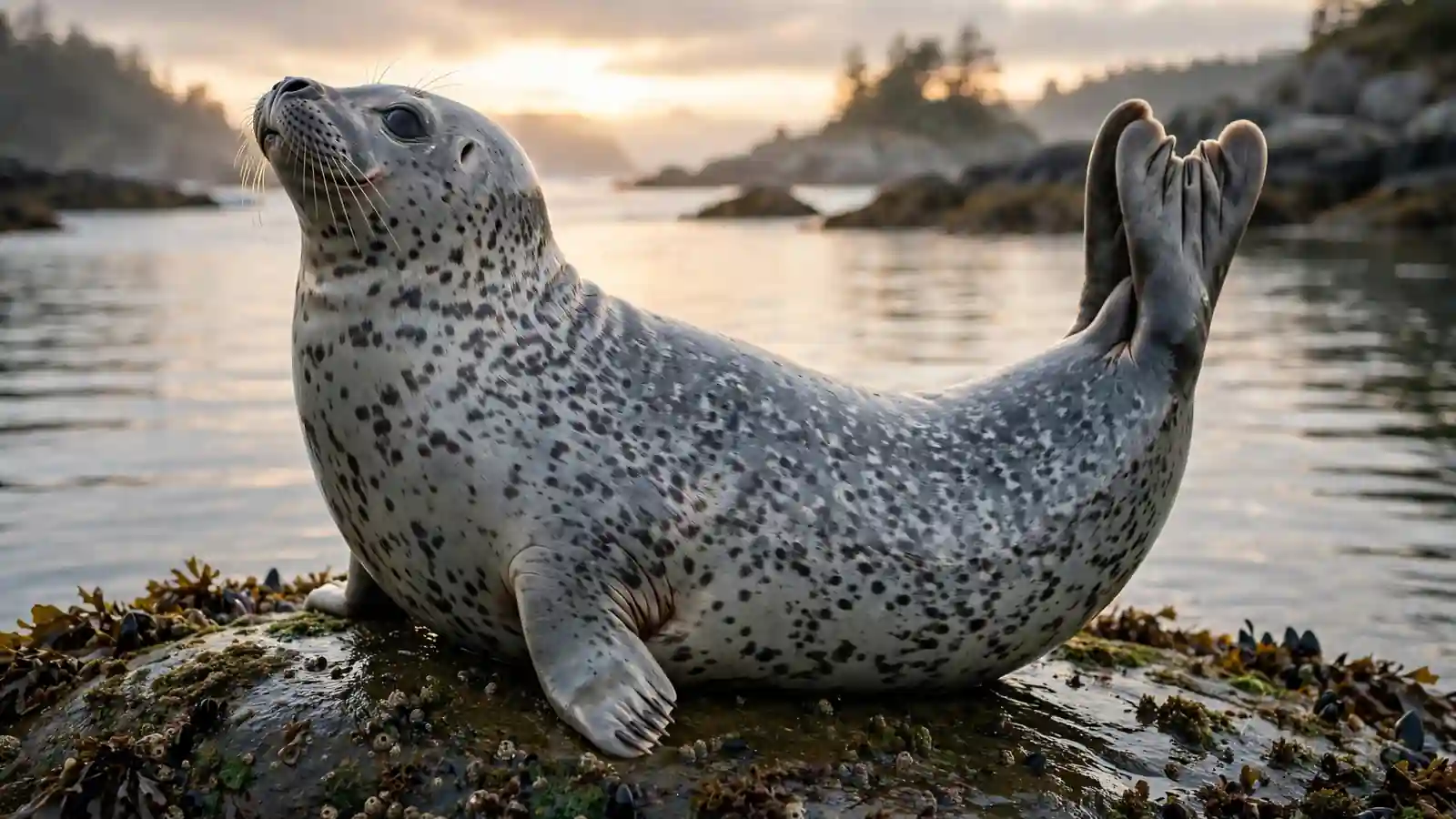
At a Glance
The harbor seal earns its name honestly: it lives where people do, along working coasts and harbour mouths, yet it remains a shy wild animal that slips into the water at the first hint of trouble. Its spotted coat, round head and curious stare make it the classic seal of temperate shores.
Harbor Seal Size and Weight
An adult harbor seal grows to about 1.5 to 1.9 metres (5 to 6 feet) long and weighs between roughly 70 and 130 kilograms (up to 285 pounds). Males are slightly larger than females, and Pacific animals tend to outsize their Atlantic cousins. It is a modest size for a seal, a little longer than a tall adult human and about as heavy.
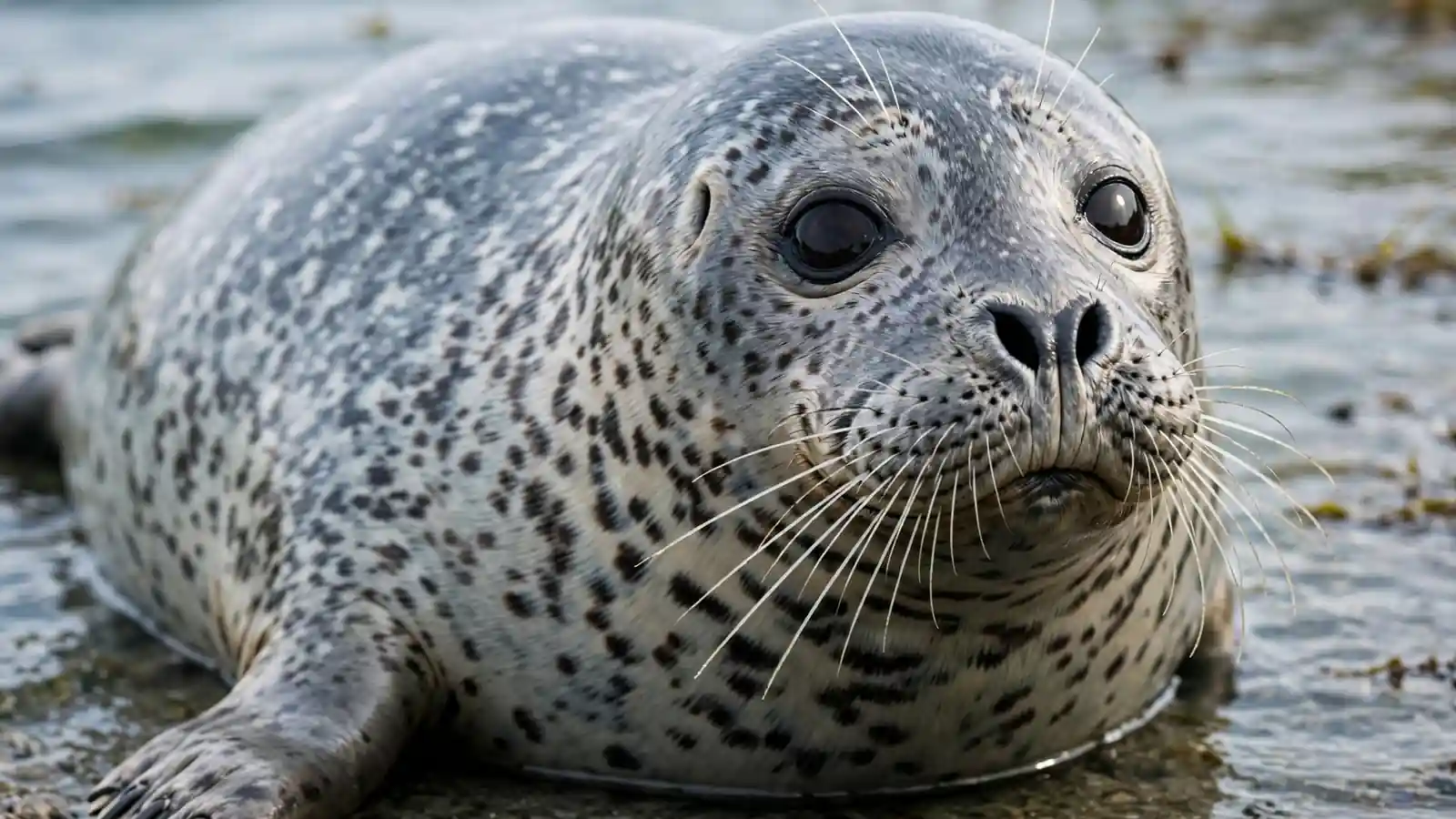
The build is torpedo-smooth, with a round head, a short blunt snout and large eyes set close together. There are no external ear flaps at all: just a small round opening on each side of the head, one of the quickest ways to tell a true seal from a sea lion at a glance.
Appearance and Anatomy
No two coats are alike. The basic pattern comes in two forms: a light tan, silver or blue-grey coat freckled with dark spots and speckles, or a dark coat patterned with pale rings. The pattern is unique to each animal, so distinctive that researchers can recognise individual seals from photographs of their spots alone.
Look at the nose and you will see the family signature: the nostrils form a clear V shape on the short, dog-like muzzle. The pelvis is fused, so the hind flippers cannot swing underneath to walk; on land the seal moves by hunching and undulating like a caterpillar, while in the water those same hind flippers become its propeller.
Habitat and Range
This is the most widely spread seal on Earth. It lines the temperate and Arctic coasts of the North Pacific and North Atlantic: from Baja California to the Bering Sea, from the mid-Atlantic United States to the Canadian Arctic, and from Portugal and France north to Iceland, Svalbard and the Baltic. Five subspecies divide that enormous range between them.
Home is shallow coastal water: bays, estuaries, rocky islets, sandbanks and glacial fjords, with haul-out sites on rocks, reefs, beaches and drifting ice. Most individuals stay within 25 to 50 kilometres of their home shore all their lives, though tracked youngsters have wandered hundreds of kilometres. A few bold populations even live full-time in freshwater lakes, and one Alaskan population has gone further still, spending its whole life in the fresh water of a large inland lake.
Diet and Feeding
The diet is whatever the local water provides: mostly fish such as flatfish, cod, herring and sand lance, along with squid, shellfish and crustaceans. It is an opportunist rather than a specialist, hunting by sight and by whisker, its sensitive whiskers able to follow the faint wake a fish leaves behind long after the fish has gone. A hunting seal may make dozens of shorter dives in a single trip, working a reef or a sandbank methodically before moving on.
Most hunting dives are shallow, but the capability runs deep: a harbor seal can reach about 427 metres and stay below for close to half an hour when prey demands it. Strangest of all, it can sleep underwater, rising to breathe roughly every 30 minutes without truly waking. The full natural-history account of the species runs to many pages of this adaptability.

Behavior and Social Life
Life runs on the tide. At low water the seals haul out to rest, warm up, moult, give birth and nurse, crowding onto favourite rocks and banks in loose, peaceable groups where many eyes watch for danger. At sea, by contrast, each animal hunts alone, and meetings are brief. In the breeding season males add a subtle social layer, holding small underwater display areas near the haul-outs and patrolling them, while females move more freely between groups.
The signature pose is the banana: head and rear flippers lifted, body curved like a crescent, keeping the extremities clear of cold wet rock. In mid to late summer the haul-outs grow crowded for one to two months of moulting, when staying out of the water helps the new coat grow in.
Communication and Sound
On land this is a quiet seal, with little of the barking chorus of a sea lion colony. The real conversation happens underwater in the breeding season, when males produce low roars, growls and clicks beneath the haul-outs, advertising themselves in the dark to rivals and to females listening nearby.
Pups and mothers keep in touch with soft bleating calls before the pup is weaned, and a mother learns to recognise her own pup’s call within the chorus of the haul-out, just as the pup learns hers. Much of a seal’s world also arrives through touch: those long facial whiskers are packed with nerves, reading the water the way fingertips read a page.
Reproduction and Babies
Pups are born in spring and early summer, the season sliding later as you move north. A newborn weighs about 11 kilograms (24 pounds), arrives already dressed in the spotted adult coat, and can swim within minutes of birth. By two or three days old it is diving for up to two minutes at a time.
Nursing lasts four to six weeks on milk that is about 50 percent fat, and mothers are unusual among true seals in leaving to feed during lactation, returning to the haul-out to suckle. Groups of mothers and pups sometimes form floating nurseries, sharing the watch against predators while the pups grow. Unlike an ice-born pup, a shore pup may have to swim on its very first tide, when the rising water floods the bank it was born on.
Predators and Threats
Killer whales and large sharks are the hunters a seal in the water has to fear, and Steller sea lions take them in some northern waters. Pups on shore are vulnerable to eagles, coyotes and other coastal predators, one reason mothers choose haul-outs with a quick drop into deep water.
The human threats are the familiar coastal ones: entanglement in gillnets and other fishing gear, disturbance that drives seals off pupping and moulting shores, shoreline development, vessel strikes and the contaminants that concentrate in an animal living at the top of its local food web.
Conservation and Human Interaction
The history has a hopeful shape. A century ago these seals were bountied in several states as competitors of fisheries; those programmes ended by 1960, protection followed, and most populations have been growing or holding steady since the 1970s. The species as a whole is of least concern, though a few isolated subspecies remain in trouble. See the population and conservation status for the regional detail.
Sharing the shore is the practical rule. A pup alone on a beach is usually not abandoned: its mother is fishing and will return only once people are well away. Watch from a distance, keep dogs back, and never feed or touch a seal; a wild animal that learns to beg from boats is an animal in danger.
Fun Facts
- Its resting pose, head and tail raised like a banana, is so typical it is used to identify the species.
- It can sleep underwater and surface to breathe about every 30 minutes without fully waking.
- A pup can swim within minutes of being born and dive for two minutes within its first three days.
- Every seal’s spot pattern is unique, and researchers identify individuals from photographs of their coats.
- One population has abandoned the sea entirely and lives year-round in a freshwater Canadian lake.
- Its whiskers can track the fading wake of a fish that passed half a minute earlier.
Frequently Asked Questions
How Big Is a Harbor Seal?
An adult is about 1.5 to 1.9 metres (5 to 6 feet) long and weighs roughly 70 to 130 kilograms (up to 285 pounds). Males grow slightly larger than females, and seals in the Pacific are generally bigger than those in the Atlantic.
What Do Harbor Seals Eat?
They eat mostly fish, including flatfish, cod, herring and sand lance, together with squid, shellfish and crustaceans. They are opportunists that hunt close to home, using their eyes and their exquisitely sensitive whiskers to find prey in murky coastal water.
Where Do Harbor Seals Live?
They live along the temperate and Arctic coasts of the Northern Hemisphere, in both the North Pacific and the North Atlantic, the widest range of any seal. Favourite habitat is shallow coastal water with haul-out sites on rocks, reefs, sandbanks or ice, usually within about 50 kilometres of home.
How Long Do Harbor Seals Live?
A wild seal commonly lives 25 to 35 years, and the oldest recorded individuals passed 40. Females start breeding between three and seven years old and can raise a single pup in most years of their adult lives.
Are Harbor Seals Dangerous to Humans?
No. They are shy, curious at a distance and quick to slip into the water when approached. They can bite if handled, and a frightened seal on a beach should always be left alone, but an unprovoked attack is almost unheard of.
What Is a Baby Harbor Seal Called?
A baby is called a pup. It weighs about 11 kilograms (24 pounds) at birth, wears the spotted adult coat from day one, and can swim within minutes. It nurses for four to six weeks on milk that is about 50 percent fat before striking out on its own.
Similar Species Worth Exploring

Keep Exploring
Browse the whole family in our guide to the types of seals and sea lions, head north to the harp seal on its Arctic ice, or fly to Hawaii for the rare monk seal. The harbor seal, meanwhile, is probably watching you from just off your local beach.