Clownfish
Clownfish: The Fish That Lives in a Stinging Home
The clownfish is the little orange reef fish that made living inside a stinging anemone look cosy. Behind the famous stripes lies a stranger story: a strict size-based monarchy, males that become females, and one of the fairest partnerships in nature. Here is how it really lives — on the reef, and in our tanks.
By Emily Carter · Reviewed by our vet team · Updated 10 November 2026 · 10 min read
Around 30 speciesLives only with anemonesAll born male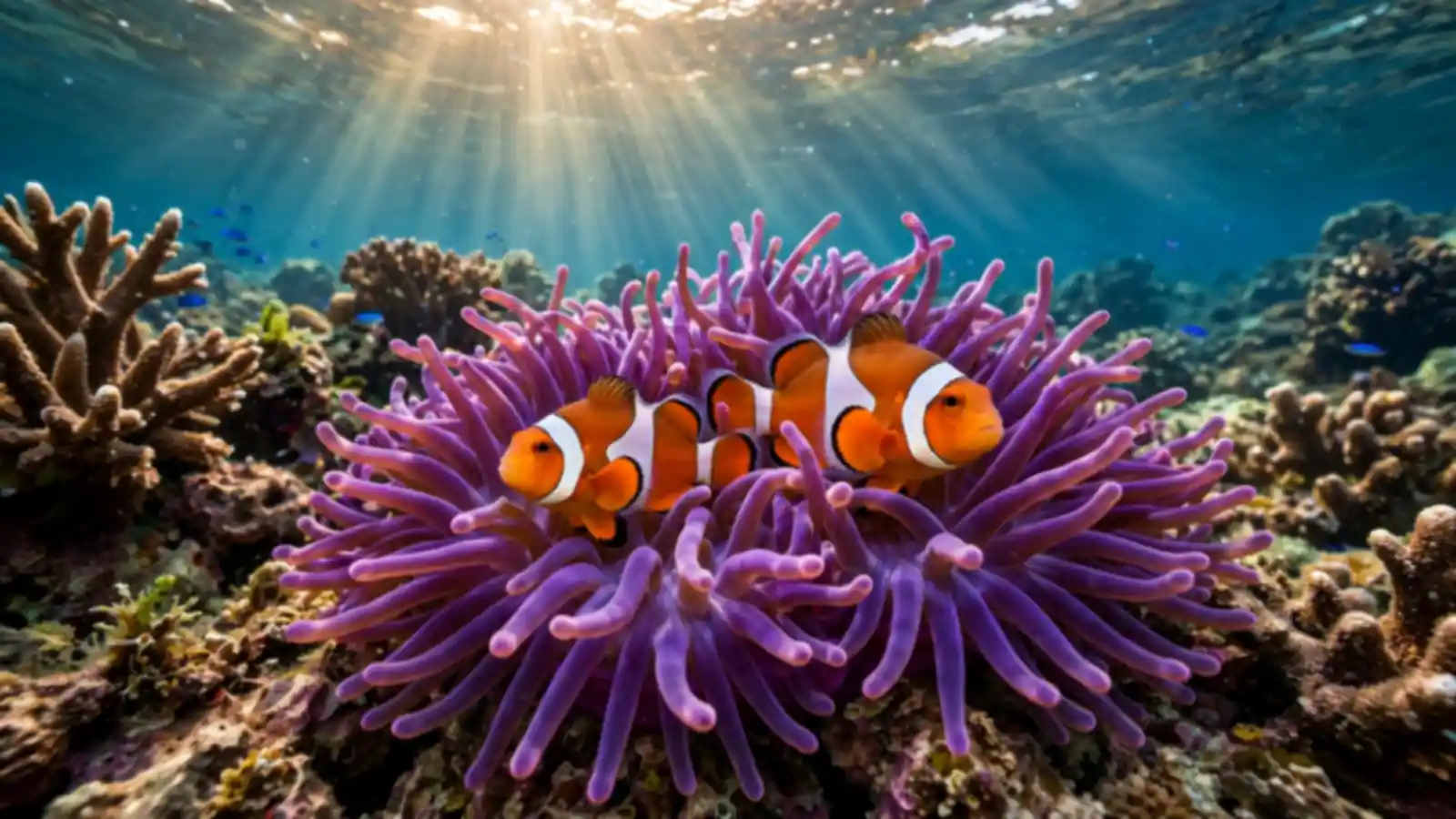
At a Glance
Clownfish — also called anemonefish — are small damselfish of the warm Indo-Pacific that have made the most dangerous real-estate choice on the reef: home is a sea anemone, an animal whose tentacles can sting fish to death. About 30 species share the lifestyle, the bold barred colours and a social system as rigid as any monarchy. They never stray far from their host, they talk to each other in pops and chirps, and their family life runs on a rule no other vertebrate follows quite so strictly: rank is measured in centimetres, and the biggest fish is always the mother.
Anemonefish Species and Sizes: The Clownfish Family
Around 30 species are recognised, nearly all in the genus Amphiprion. The superstar is the ocellaris — bright orange, three white bars, up to 11 centimetres — so similar to its cousin the true percula that only the thickness of the black bar outlines reliably separates them. At the other end of the scale sits the maroon, the family’s heavyweight at up to 17 centimetres, the only member of its own genus Premnas and the only one with a spine on its cheek.
Between those poles lies a gallery of variations: tomato-red saddlebacks, pink skunks with a single stripe, chocolate-brown Clark’s (the generalist that accepts almost any host anemone), and species so local that a single island group is their whole world. One newcomer, the Polynesian anemonefish, was only recognised as its own species in 2025 — the family is still being catalogued.
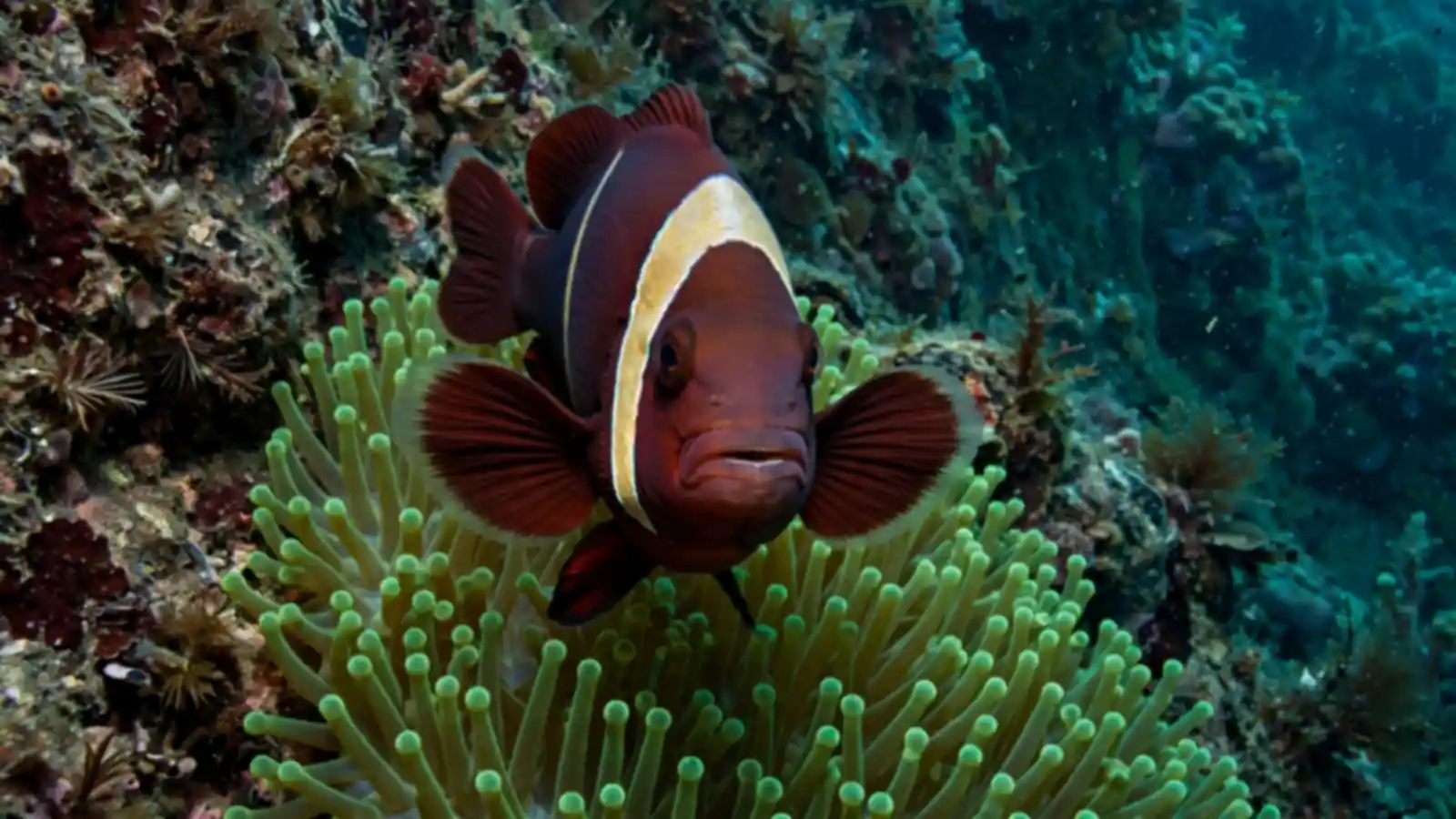
The ocellaris repays a closer look on paper as well as on the reef: the full species record for the ocellaris documents its three host anemones, its 11 centimetre maximum and a captive lifespan that has reached 12 years.
Living With the Sting: The Anemone Partnership
The partnership with the anemone is a textbook mutualism — both sides profit. The fish gains a fortress no predator dares enter, scraps of the anemone’s meals, and a safe neighbourhood for its eggs. The anemone gains a bodyguard that ferociously chases away polyp-nipping butterflyfish, a cleaning and fanning service, and a supply of nitrogen-rich waste that fertilises the algae living inside its own tissues. Anemones with a resident grow faster and survive better than those without.
The astonishing part is selectivity: of the thousand-plus sea anemone species, only about ten ever host them, and each fish species accepts only some of them. The ocellaris, for example, uses just three — the magnificent sea anemone and two great carpet anemones. Finding the right host is the single most important event in a young fish’s life.
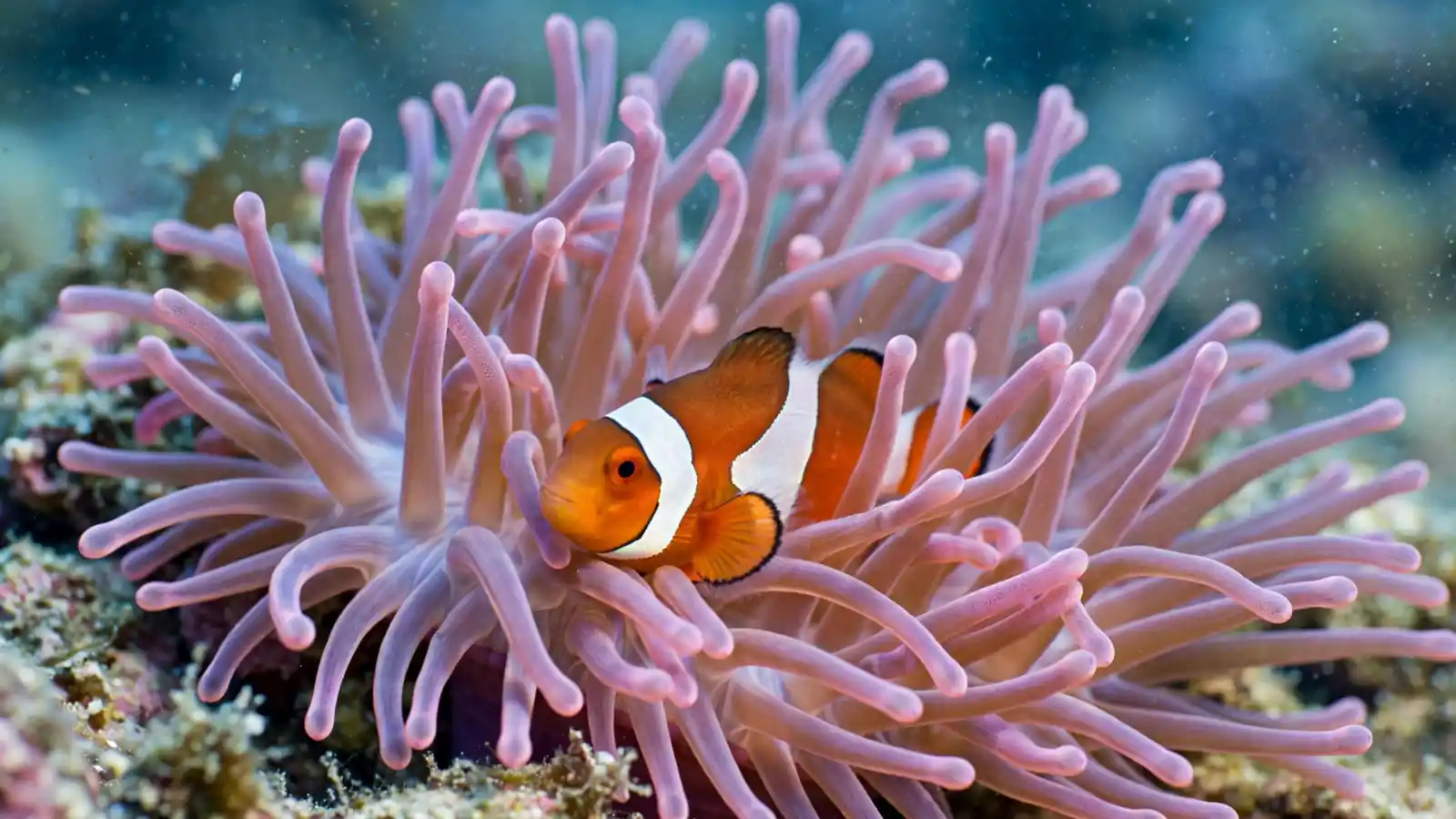
So how does the fish survive the welcome? Its mucus coat appears to lack the chemical triggers that fire the anemone’s stinging cells — the tentacles simply do not register it as prey. A new arrival still takes no chances, performing a slow acclimation dance of gentle touches over hours or days, which may top up its coat with the anemone’s own mucus. Scientists still debate how much is born and how much is borrowed; the dance, at least, is real, and every one performs it.
A Monarchy of Size: Hierarchy on the Reef
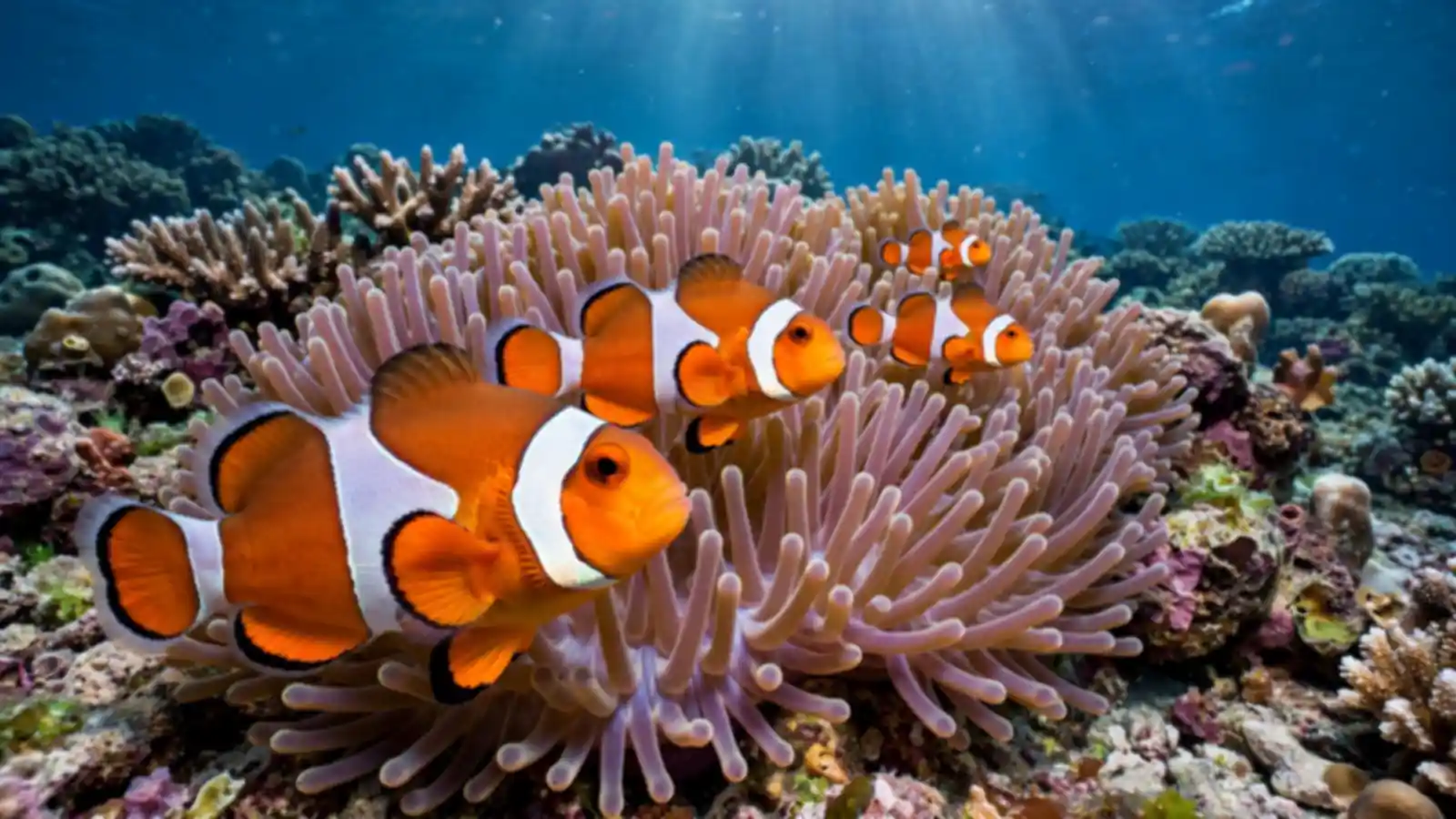
One anemone holds one family, and the family is a ladder. At the top sits the breeding female — the largest fish. Below her, the breeding male. Below him, a short queue of non-breeding males, each smaller than the one above; in the orange species each rung is roughly a quarter bigger than the rung beneath it. The spacing is enforced socially: a subordinate that grows too boldly for its station is harassed, and one that will not stay small can be expelled from the anemone altogether — a death sentence on the open reef.
It sounds harsh, but the queue is a promise: every fish in line is waiting for promotion, and promotion, when it comes, is total. The system even has a soundtrack. They are among the few fish that deliberately make sounds — pops and chirps produced with the jaw — and they use them in exactly these negotiations of rank, submission and courtship.
Do Clownfish Change Sex? Yes — and Here Is Why
Every one is born male, and every breeding female began life as one. They are protandrous hermaphrodites: when the female of a group dies or vanishes, her mate — the largest male — transforms into the new female, a change that begins in the brain and behaviour and completes in the body over weeks to months. Simultaneously the largest non-breeder matures into the new breeding male. Nobody immigrates; the family promotes from within.
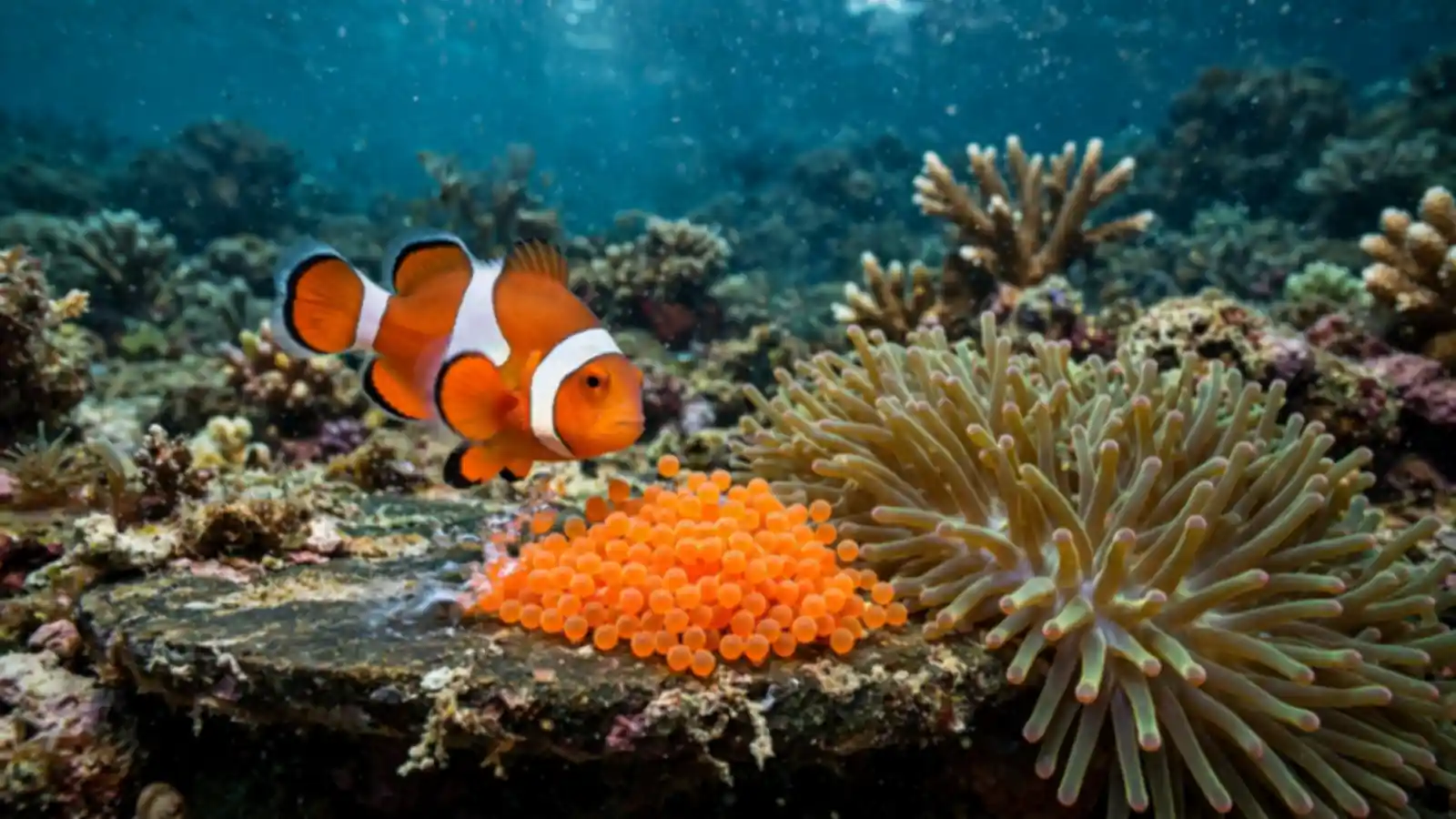
Breeding itself is devoted work. The pair clean a patch of bare rock beside the anemone, where the female lays a sheet of eggs — a few hundred to more than a thousand, depending on her size. For about a week the male does nearly all the parenting: fanning the eggs with his fins, mouthing away dead ones, and charging at anything that comes close. The larvae hatch at night and drift away on the currents for eight to twelve days, after which a surviving juvenile must find a host anemone, perform the dance, and join the bottom of a queue.
Diet: Plankton Pickers of the Reef
The diet is gathered within a fin’s reach of home. They are omnivorous plankton-pickers, hovering above the anemone to select individual morsels from the drift — copepods and other zooplankton, tunicate larvae, plus algae they graze from the surrounding rock. The anemone subsidises the menu with its own leftovers and the occasional dead tentacle, one more dividend of the partnership.
That caution about distance shapes everything: it is a homebody because the reef beyond the tentacles is genuinely dangerous for a slow, bright, bite-sized fish. Almost every fact of its life — the fortress, the monarchy, the queue — flows from the decision to live in one stinging place and never really leave.
Where Do They Live? Wild Reefs and Home Tanks
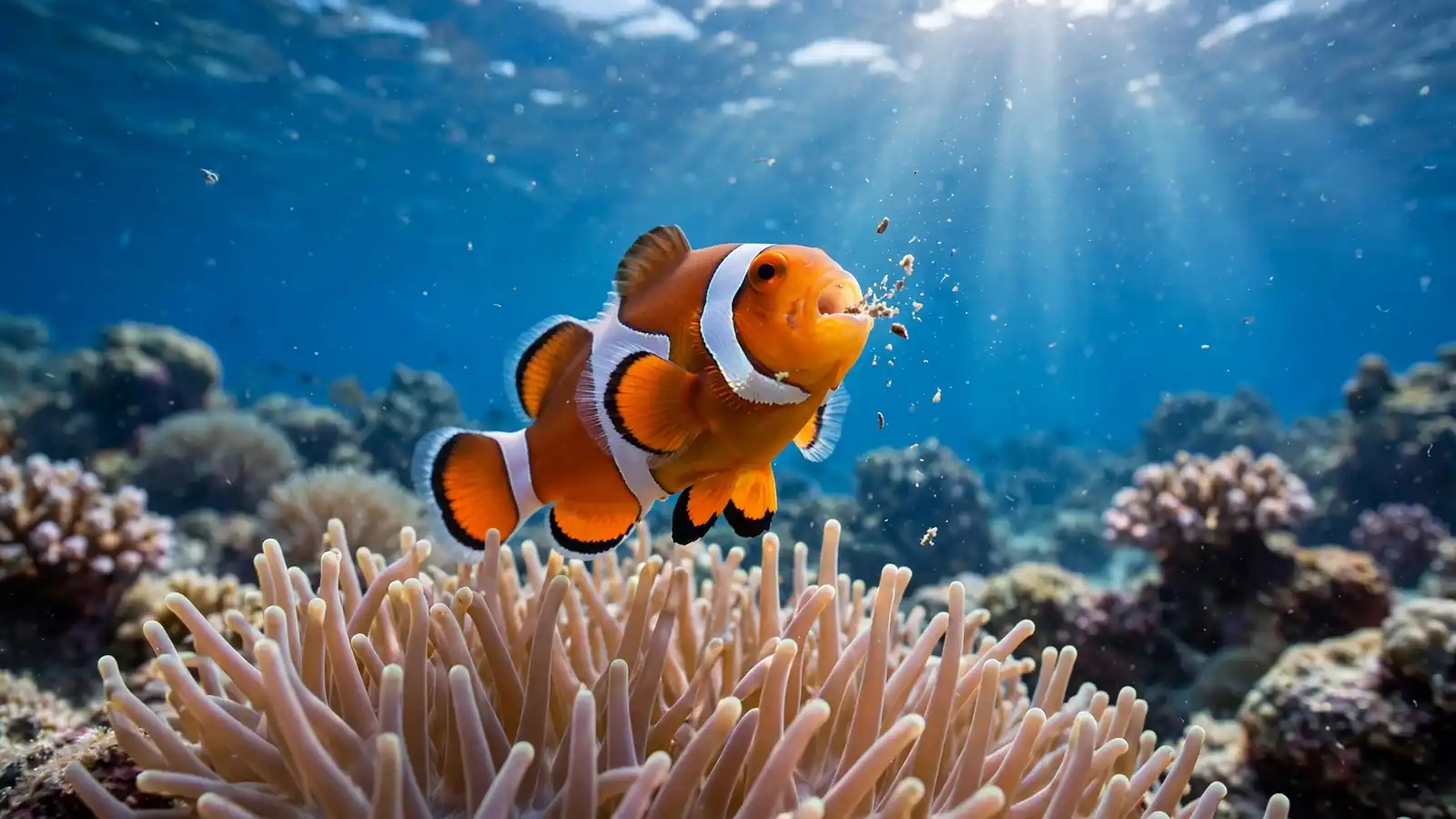
In the wild, they live only in the warm Indo-Pacific — from the Red Sea and East Africa across to the western Pacific — in sheltered lagoons and reef slopes, usually between 3 and 15 metres down, wherever their host anemones grow. There are no wild ones in the Atlantic or the Caribbean; the famous orange fish of Florida shops is an import, and often a local product, since ocellaris have been bred in Florida for the aquarium trade for decades.
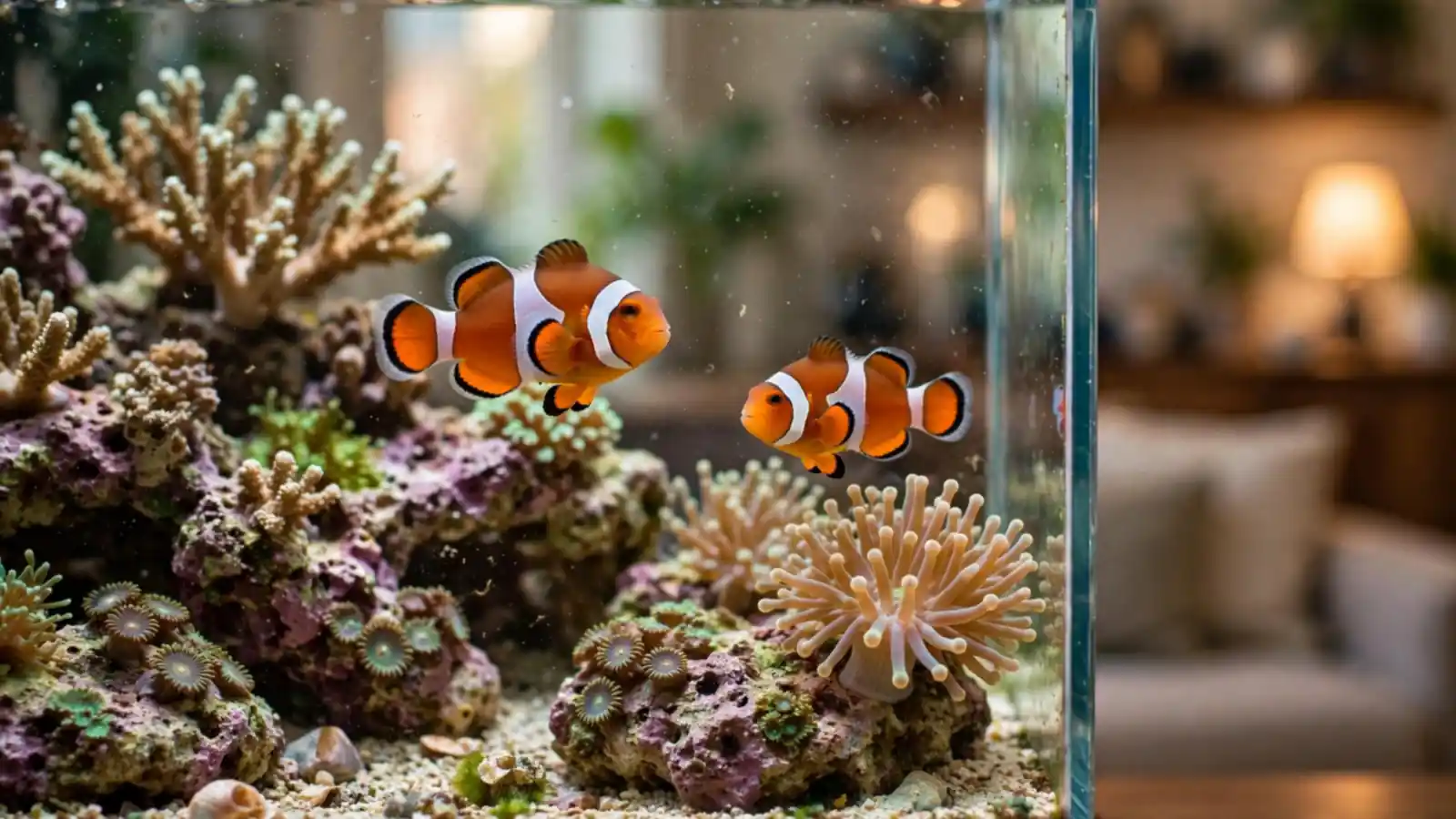
That trade is the species’ modern story. A beloved animated film made the ocellaris the most wanted marine fish on Earth, and wild collection surged. The lasting answer has been captive breeding: today most in shops were raised in tanks, not taken from anemones, and an aquarium-bred fish is hardier, tamer and reef-friendly. Wild anemones, slow-growing and long-lived, are the partners best left on the reef — a fish in a tank does not need one to thrive.
The partnership has one shared vulnerability: heat. In marine heatwaves, host anemones can bleach — expelling the algae that feed them — and shrink or die, and a fish that loses its anemone is a bright snack waiting for a predator. Field studies after major bleaching events have recorded local numbers falling with their hosts. Protecting the fish, in the end, means protecting the whole reef system that keeps its stinging home alive.
Fun Facts
- They talk: pops and chirps made with the jaw are used in disputes over rank and in courtship.
- Of more than a thousand sea anemone species, only about ten will ever host one.
- Each step up an orange hierarchy is about 26 per cent larger than the step below it.
- A fish that refuses to stay small for its rank can be evicted from the anemone by the group.
- The father does almost all the egg care, fanning the clutch and removing dead eggs by mouth.
- A new species, the Polynesian anemonefish, was recognised as recently as 2025.
Frequently Asked Questions
Why Do Clownfish Live in Anemones?
For protection they can find nowhere else. The anemone’s stinging tentacles keep predators away from the fish and its eggs, while the fish repays the host by chasing off polyp-eating fish, cleaning and fanning it, and fertilising it with waste. It is a true partnership: both animals live longer together than apart.
How Do Clownfish Avoid Being Stung by Anemones?
Their mucus coat lacks the chemical triggers that set off the anemone’s stinging cells, so the tentacles do not fire. New arrivals still acclimate carefully, touching the tentacles gently over hours or days in a kind of dance — which may also coat them in the anemone’s own mucus for extra safety.
Do Clownfish Change Sex?
Yes. All are born male. Each group has one breeding female — the largest fish — and if she dies, the breeding male changes sex to replace her while the largest non-breeder matures into the new male. The change starts with behaviour and completes over weeks to months.
How Many Species of Clownfish Are There?
Around 30 species, almost all in the genus Amphiprion, with the maroon alone in the genus Premnas. The best known are the orange ocellaris and its near-twin the true percula; a new species, the Polynesian anemonefish, was recognised in 2025.
What Do Clownfish Eat?
They are omnivores that pick individual items from the plankton drifting over their anemone — copepods, other zooplankton and tunicate larvae — and graze algae from nearby rock. They also eat their host anemone’s leftovers and dead tentacles, and rarely venture far from home to feed.
How Long Do Clownfish Live?
In the wild, they commonly live six to ten years — a long life for a small reef fish, thanks to the anemone’s protection. In aquariums they have reached 12 years, and well-kept captive-bred fish regularly pass a decade.
Similar Species Worth Exploring
Keep Exploring
Stay on the reef a little longer with the upright seahorse, meet the inflatable pufferfish, or browse the full types of fish guide — then dart back into the tentacles with the clownfish.