Chinook Salmon
Chinook Salmon: the largest Pacific salmon, on the longest run of any salmon
The Chinook salmon is the heavyweight of the Pacific salmon: a fish that can outweigh a child, climb a river for more than 2,000 miles, and then give its whole life to a single spawning. It is the king salmon, and it earns the name twice over — once for size, once for the journey.
By Emily Carter · Reviewed by our vet team · Updated 10 November 2026 · 9 min read
Largest of all Pacific salmonYukon run: over 2,000 miles upstreamDies after a single spawning
At a Glance
The Chinook salmon, Oncorhynchus tshawytscha, is the largest of the Pacific salmon and the least abundant of the five species — a combination that has made it a legend among anglers and a worry among conservationists. It is also called the king salmon, and the name fits: no other salmon grows so big, swims so far upstream, or puts so much into a single spawning run that it dies when the run is done.
What Is a Chinook Salmon?
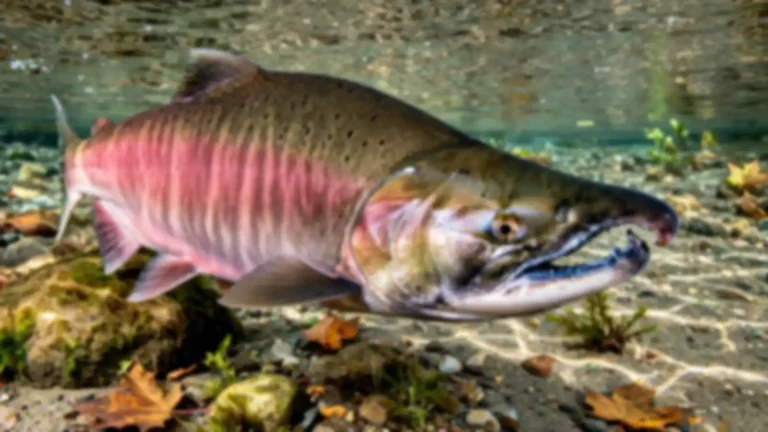
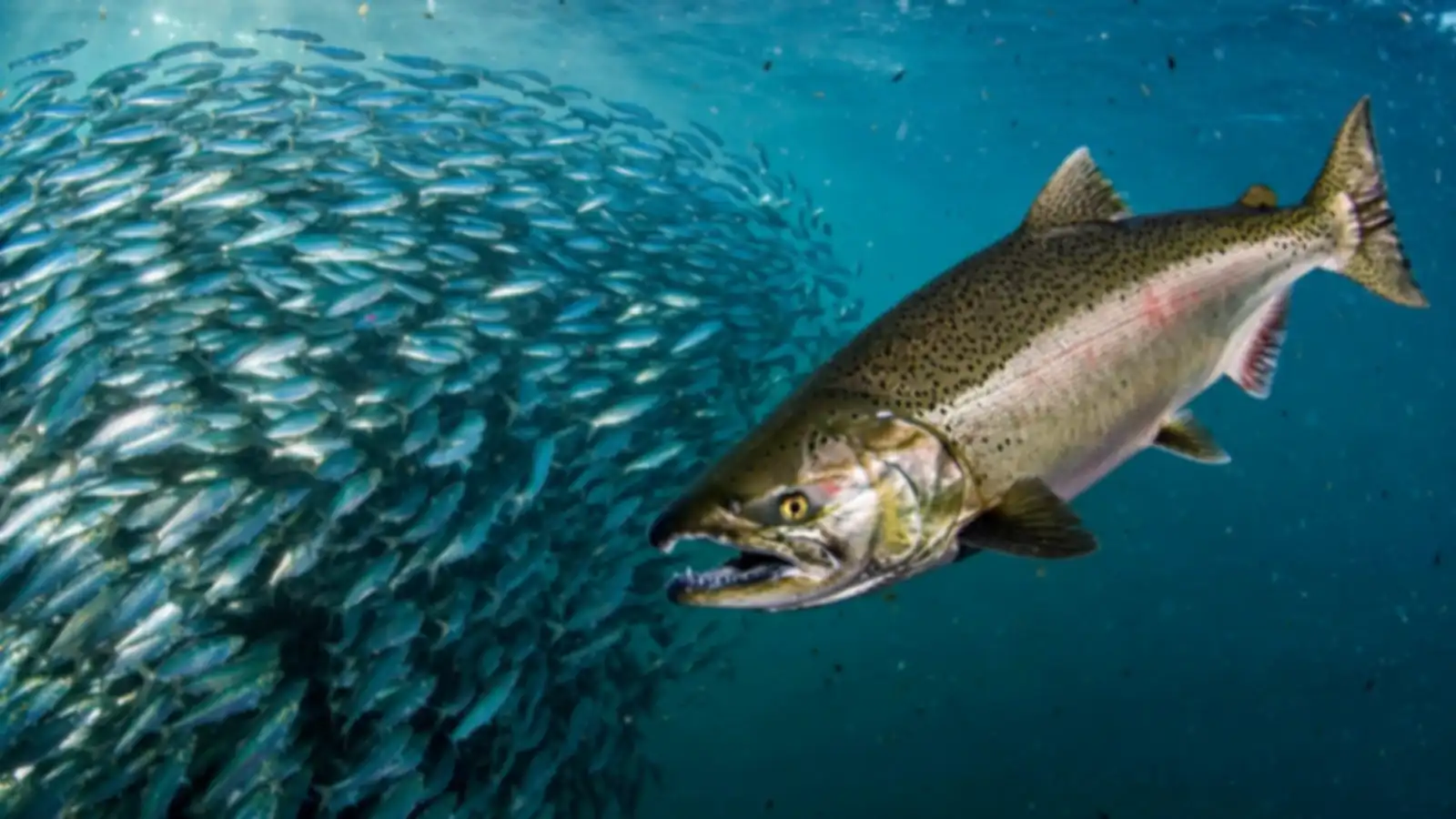
It is a big, deep-bodied Pacific salmon with a dark, spotted back, a silvery belly, and a mouth lined with black gums — the dark mouth is the quickest way to tell it from other salmon. In the sea it is silver and blue-green above; in the river, as spawning nears, it turns olive-brown to red, and the males grow a hooked jaw and a humped back. The species ranges around the North Pacific, from California and Alaska across to Russia and northern Japan.

Chinook live two lives at once, and the split starts young. Some juveniles, the ocean-type fish, head for the sea in their first year; others, the stream-type fish, stay in fresh water for a full year or more before migrating. The stream-type fish, common in the big northern rivers, grow slower but live longer, and they are the ones that make the longest journeys upstream as adults.
Chinook Salmon Size and Records
A typical adult measures around 3 feet long and weighs about 30 pounds, but the species’ records are in another league. The heaviest Chinook on record weighed 126 pounds, taken in a trap near Petersburg, Alaska, in 1946; the rod-and-reel record is 97 pounds 4 ounces, caught in Alaska’s Kenai River in 1985; and the published maximum size is about 4.9 feet and 129 pounds. A claim of 135 pounds circulates on weaker sources and is not used here — the verified figures are big enough.

The big fish are usually females, and they are usually the oldest: a Chinook that spends four or five winters at sea comes home far heavier than one that returns after two. Size also follows the river — the Yukon and the Kenai produce the giants, while small coastal streams produce smaller, earlier-maturing fish. Whatever the river, a Chinook is the biggest salmon in the Pacific, and it is not close.
The Yukon Run: The Longest Salmon Migration
The longest salmon migration on Earth belongs to the Yukon River Chinook. These fish leave the Bering Sea and swim upstream for over 2,000 river miles — about 3,845 kilometres — to spawn in the Yukon’s headwaters in Canada, a journey that takes months and climbs through some of the most remote country on the continent. No other salmon travels so far from the sea to spawn.

The run is a feat of endurance built on fat. A Yukon Chinook stops feeding when it enters the river and burns its own body to climb, losing a large share of its weight by the time it reaches the spawning grounds. The fish that arrive are thin, scarred and spent — but they arrive, and that is the point: the river’s headwaters are cold, clean and safe for eggs, and the long road is the price of reaching them.
Spawning and Death: Semelparous Life
It spawns once and dies. The female digs a redd in clean gravel and lays her eggs while the male guards her, and within days of spawning both fish are dead, their bodies feeding the river that raised them. Biologists call this semelparity: one reproductive act, then death. It is the direct opposite of the Atlantic salmon, which survives spawning and may return again — the contrast our Atlantic salmon guide explains in full.

The death is not waste. A spawning run delivers tons of marine nutrients — nitrogen, phosphorus, carbon — into the river and the forest around it, feeding insects, young fish, bears, birds and trees. A Chinook that dies on its redd is still working for its river, and the young that hatch in that gravel grow up in water enriched by the bodies of their parents.
Diet and Growth
At sea, it hunts like the predator it is, feeding on small fish such as herring and sand lance, on squid, and on shrimps and other small crustaceans. The rich diet is what builds a Chinook’s bulk: a fish that eats well at sea for four winters comes home a giant, while one that returns early comes home small. In the river, juveniles eat insects and small invertebrates before they head for the sea.
Growth is fast but the price is high. A Chinook puts almost everything into size and the spawning run, and it pays for that investment with its life. The trade works because a big female carries many thousands of eggs, and a big male can fight off rivals for the best redds — size, in a Chinook’s world, is the currency that buys the next generation.
Conservation: Listed Runs, Not a Listed Species
The species as a whole is not endangered, but several of its runs are. In the United States, some populations — called evolutionarily significant units — are listed as threatened or endangered, because dams, warm rivers, habitat loss and fishing have cut their numbers hard. The species is the least abundant of the Pacific salmon, and its big, late-maturing fish are the most vulnerable to a river that changes faster than they can adapt.

Recovery work follows the fish upstream: fish ladders and dam removals reopen blocked rivers, hatcheries support the weakest runs, and harvest rules protect the big, old spawners that carry the most eggs. The species account records the size figures, run timings and conservation listings behind this guide, and the pattern it shows is clear — where the river is kept open and cold, the king salmon still comes home.
Fun Facts
- The heaviest on record weighed 126 pounds, taken in a trap in Alaska in 1946.
- The rod-and-reel record is 97 pounds 4 ounces, caught in the Kenai River in 1985.
- Yukon River Chinook swim more than 2,000 miles upstream to spawn, the longest salmon migration on Earth.
- A Chinook can be told from other salmon by its black gums and the black spots on its back and tail.
- Chinook are the least abundant of the five Pacific salmon species — and also the largest.
- A spawning Chinook dies after a single run, but its body feeds the river, the forest and the next generation.
Frequently Asked Questions
How Big Do Chinook Salmon Get?
A typical adult is about 3 feet long and weighs around 30 pounds. The verified record is much bigger: a 126-pound fish taken in a trap near Petersburg, Alaska, in 1946, and a rod-and-reel record of 97 pounds 4 ounces from the Kenai River in 1985. The published maximum size is about 4.9 feet and 129 pounds.
What Is the World Record Chinook Salmon?
The heaviest on record weighed 126 pounds, taken in a commercial trap near Petersburg, Alaska, in 1946. The rod-and-reel world record is 97 pounds 4 ounces, caught by Les Anderson in the Kenai River, Alaska, in 1985. A claim of 135 pounds appears on weaker sources and is not accepted as a record.
How Far Do Chinook Salmon Migrate?
Yukon River Chinook migrate over 2,000 river miles — about 3,845 kilometres — upstream to spawn, the longest known salmon migration. The journey takes months, and the fish stop feeding when they enter the river, burning their own body fat to climb.
Do Chinook Salmon Die After Spawning?
Yes. They are semelparous: they spawn once and die. The female lays her eggs in a gravel redd and the male guards her, and both fish die within days. Their bodies deliver marine nutrients into the river and the surrounding forest, feeding the next generation. Atlantic salmon, by contrast, survive spawning and may spawn again.
What Is the Difference Between Chinook and Atlantic Salmon?
They are Pacific salmon of the genus Oncorhynchus, while Atlantic salmon are the genus Salmo and live only in the Atlantic. Chinook grow larger, migrate further in the biggest rivers, and die after a single spawning, while Atlantic salmon survive spawning and can return again. Chinook also have black gums and black spots on both lobes of the tail.
What Do Chinook Salmon Eat?
At sea, they eat small fish such as herring and sand lance, squid, and shrimps and other small crustaceans. In the river, juveniles eat insects and small invertebrates. Adults stop feeding once they enter fresh water and run upstream on stored fat.
Are Chinook Salmon Endangered?
The species as a whole is not endangered, but several of its runs are. In the United States, some populations are listed as threatened or endangered because of dams, warm rivers, habitat loss and fishing. Chinook are the least abundant of the Pacific salmon species, and their big, late-maturing fish are the most vulnerable.
Similar Species Worth Exploring
Keep Exploring
Keep exploring the salmon story through the Atlantic salmon, the fish that survives spawning, the pink salmon on its fixed two-year clock, and the wider world of the types of fish. No salmon works harder for its river, or pays more for the journey, than the Chinook salmon.