Portuguese Man o’ War
Portuguese Man o’ War: A Colony That Is Not a Jellyfish
The Portuguese man o’ war is not a jellyfish but a colony of animals sailing the open ocean — beautiful, venomous, and washed ashore by the wind, with a sting that needs hot water and an honest answer about vinegar.
By Emily Carter · Reviewed by our vet team · Updated 10 November 2026 · 9 min read
Not a jellyfishColony of zooidsTentacles to 30 m
At a Glance
The Portuguese man o’ war is a colonial siphonophore — not a single animal and not a jellyfish at all, but a colony of specialised animals called zooids, sailing the open ocean on a gas-filled float with tentacles that can reach 30 metres.
Not a Jellyfish: A Colony of Zooids
It is not a jellyfish. It is a colonial siphonophore — a colony of specialised animals called zooids, each doing one job: one floats, one feeds, one reproduces, one defends. The colony is not a single animal, and it is not a jellyfish at all.
A colony that sails is a strange kind of individual. No single zooid can live alone — the float cannot feed, the feeders cannot float, the defenders cannot reproduce — yet together they cross oceans. Biologists argue about whether to call it one animal or many; the ocean treats it as a single ship with a crew that can never leave.
The confusion is understandable: it looks like a jellyfish, it stings like a jellyfish, and it drifts like a jellyfish. But a jellyfish is one animal with a bell and tentacles; the man o’ war is many animals joined into one colony, and the float is not a bell but a gas-filled sail. The difference matters — and this guide never calls it a jellyfish.
The Sail: How the Man o’ War Travels
The man o’ war travels by sail: a gas-filled float that catches the wind, with no means of propulsion of its own. The float is a bladder of gas, blue-purple and translucent, and it rides on the surface while the tentacles trail below — the colony goes where the wind takes it.
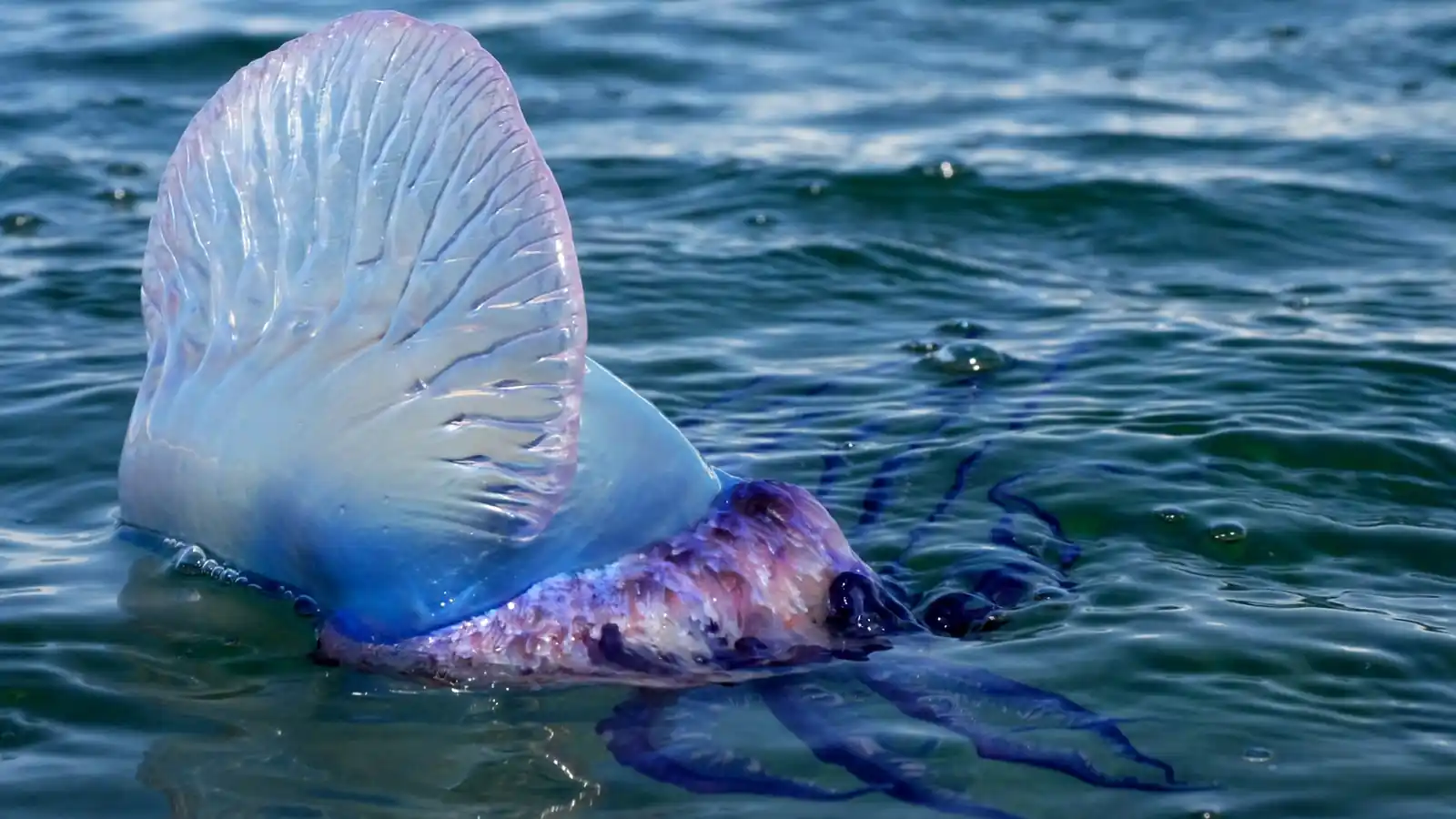
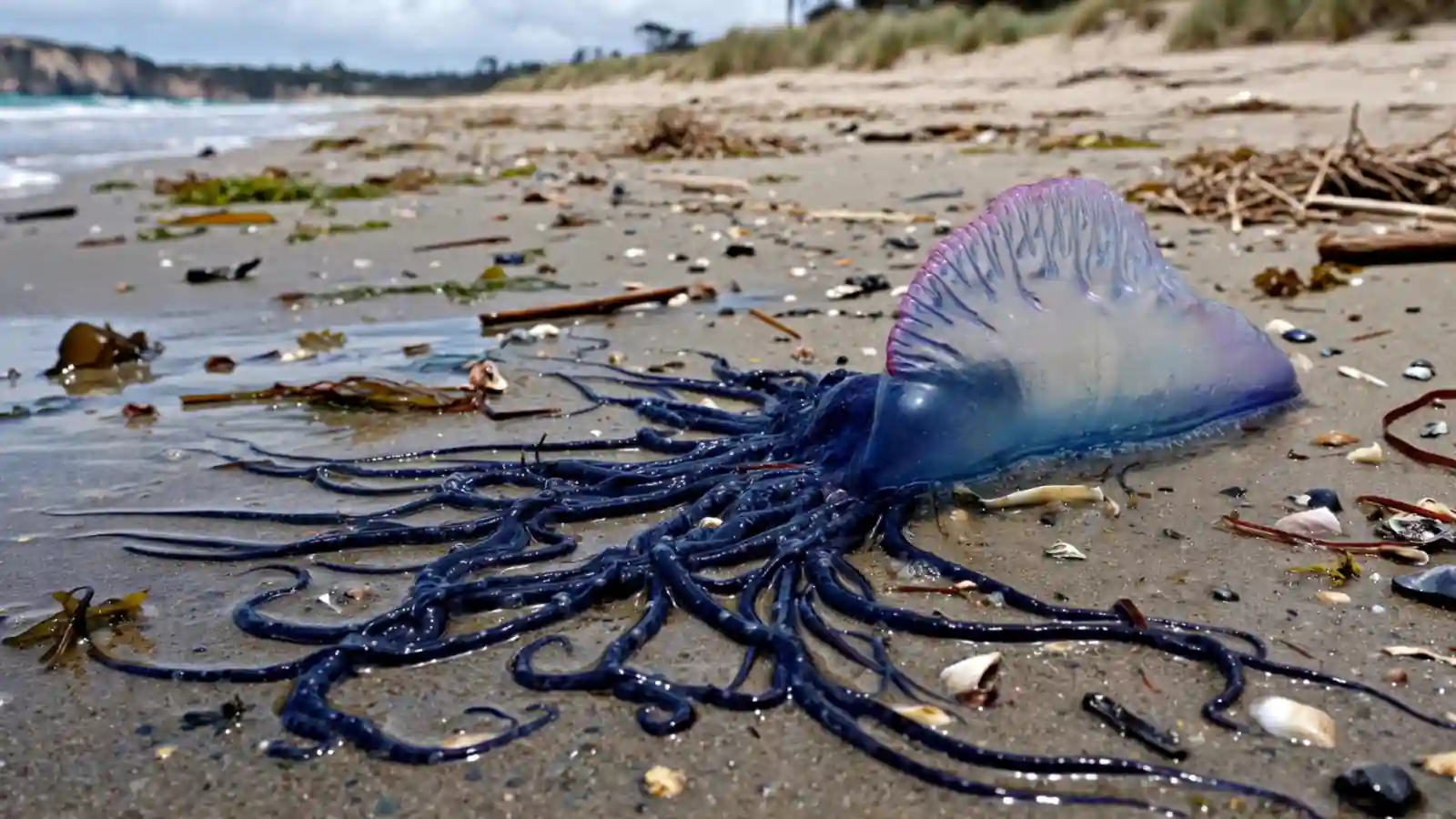
The sail is also the colony’s weakness: it cannot steer, it cannot swim against the wind, and when the wind blows onshore, the colony is washed onto the beach. The float can deflate to sink below the surface in a storm, but mostly the man o’ war is a passenger of the wind, drifting across the tropical oceans.
Portuguese Man o’ War Sting: Nematocysts on 30 m Tentacles
The sting comes from nematocysts — microscopic stinging cells — on tentacles commonly cited to 30 m long, though the average is closer to 10 m. The tentacles trail beneath the float, and anything that brushes them is stung: fish, swimmers, and anything else that drifts into them.
Thirty metres is the cited maximum; ten is the working average, and even ten metres of trailing nematocysts is a wide net for a drifting colony. The tentacles fish passively, hour after hour, in water the float merely sails across — a hunting ground the size of a small building, hung beneath a balloon.

The sting is extremely painful and can cause welts, nausea and, rarely, more serious symptoms — but it is rarely fatal. The venom is made for small fish, not for people, and most stings, while agonising, are not dangerous. The tentacles can sting even when the animal is dead and washed ashore, so a beached man o’ war is still a hazard.
First Aid for a Man o’ War Sting: Hot Water, and the Vinegar Question
First aid for its sting starts with hot water: immersion in hot water at 45°C is the agreed step, and it is the one every source supports. Get out of the water, remove any visible tentacles with a stick or gloved hand — never with bare hands — and immerse the sting in hot water.
The vinegar question is honestly split, and this guide prints the split. A 2017 University of Hawai’i study supports full-strength vinegar followed by hot water at 45°C for 45 minutes for Physalia specifically, and found seawater and urine worse. UK and European guidance advises against vinegar for Physalia and recommends a seawater rinse plus hot water instead. Urine is never a treatment — do not use it. The agreed step is hot water; vinegar has the strongest laboratory support for this animal specifically, but regional guidance differs, and you should follow the guidance where you are.
Where Portuguese Man o’ War Live: Open Ocean Drifters
They live in the tropical and subtropical open ocean, drifting on the surface where the wind takes them. They are creatures of the open sea, not of the shore — but the wind drives them ashore, and a beach covered in blue floats is a familiar sight after a storm.
Ashore, the sailing ends but the danger does not. A beached float can still sting for days, its nematocysts armed long after the colony dies, which is why the beautiful blue balloons on the sand after a storm are a look-but-never-touch exhibit. The wind that fed its voyage is the same wind that ends it.
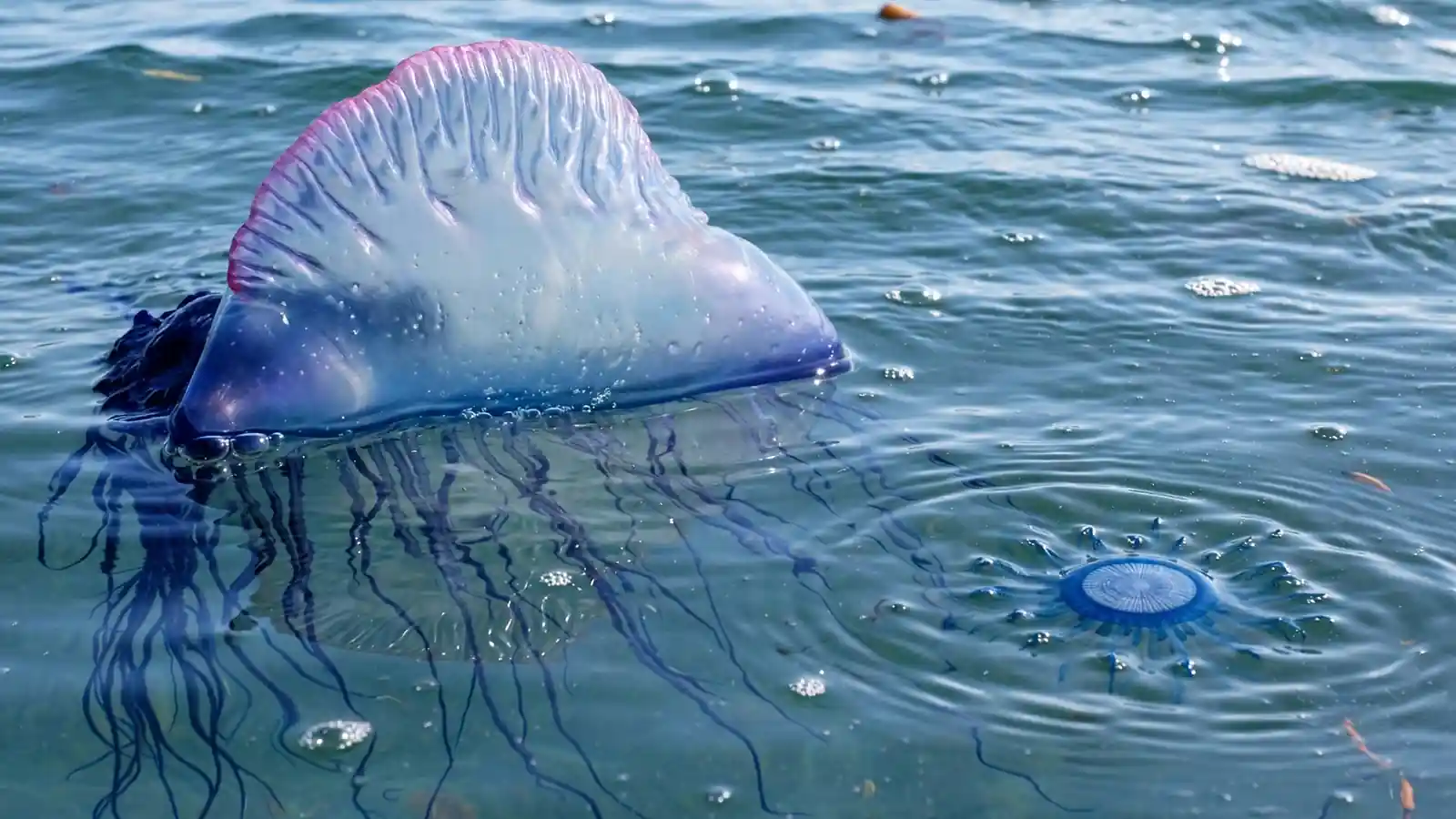
The drift is the life: the colony has no home, no territory and no destination. It follows the wind and the currents, and it washes up where the sea puts it. The Australian bluebottle, Physalia utriculus, is a separate species — smaller, with a single float — and the two should not be confused.
What Does It Eat? Fish Caught on the Drift
They eat fish and small crustaceans, caught on the drift. The tentacles hang below the float, stinging whatever brushes them, and the feeding zooids draw the paralysed prey up to the colony. The man o’ war does not hunt — it fishes with a net it cannot move.

The prey is small: young fish, shrimp, and the planktonic animals that share the surface waters. The colony is a passive hunter, and its catch depends on what the current brings — which is why a man o’ war in rich water is a well-fed colony, and one in poor water is a hungry one. For the full account, see the Portuguese man-of-war facts page from a nature publisher.
Man o’ War vs Blue Button vs By The Wind Sailor
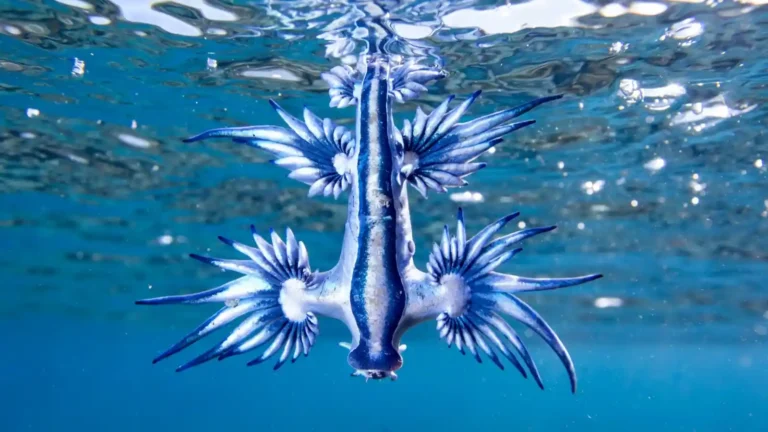
The man o’ war, the blue button and the by the wind sailor are three drifters of the open ocean, and they are often confused — but they are three different animals. The man o’ war is a colonial siphonophore with a sail and 30 m tentacles; the blue button is a small, flat, button-shaped colony; the by the wind sailor is a small sail-driven animal with a stiff, upright sail.

The differences are in the size and the sting: the man o’ war is the big one, and the only one with a dangerous sting. The blue button and the by the wind sailor are small, harmless drifters, and they wash ashore in their thousands without hurting anyone. All three ride the wind — but only one of them bites back.
Fun Facts
- It is not a jellyfish — it is a colony of specialised animals.
- Its tentacles can reach 30 m, though the average is closer to 10 m.
- It has no means of propulsion — it goes where the wind takes it.
- A dead man o’ war washed ashore can still sting.
- The Australian bluebottle is a separate species, Physalia utriculus.
- Hot water at 45°C is the agreed first-aid step; vinegar is genuinely debated.
Frequently Asked Questions
Is a Portuguese Man o’ War a Jellyfish?
No. It is a colonial siphonophore — a colony of specialised animals called zooids, each doing one job: one floats, one feeds, one reproduces, one defends. A jellyfish is a single animal; the man o’ war is many animals joined into one colony, and this guide never calls it a jellyfish.
What Happens If You Are Stung by a Portuguese Man o’ War?
The sting is extremely painful, with welts, nausea and sometimes more serious symptoms — but it is rarely fatal. The venom is made for small fish, not people. Get out of the water, remove visible tentacles with a stick or gloved hand, and immerse the sting in hot water at 45°C.
What Is the First Aid for a Portuguese Man o’ War Sting?
Hot water immersion at 45°C is the agreed step. The vinegar question is split: a 2017 University of Hawai’i study supports full-strength vinegar followed by hot water for Physalia specifically, while UK and European guidance advises against vinegar and recommends a seawater rinse plus hot water instead. Urine is never a treatment.
How Long Are Portuguese Man o’ War Tentacles?
Commonly cited to 30 m, though the average is closer to 10 m. The tentacles trail beneath the float and carry the nematocysts that sting. Even a dead animal washed ashore can still sting, so never handle a beached man o’ war with bare hands.
Where Do Portuguese Man o’ War Live?
In the tropical and subtropical open ocean, drifting on the surface where the wind takes them. They have no home or territory — the wind and currents decide where they go, and storms wash them ashore in numbers.
Can a Dead Portuguese Man o’ War Still Sting?
Yes. The nematocysts on the tentacles can fire even after the animal is dead and washed ashore. A beached man o’ war is still a hazard — do not touch it with bare hands, and keep children and dogs away from it.
What Is the Difference Between a Portuguese Man o’ War and a Bluebottle?
The Australian bluebottle is Physalia utriculus, a separate species — smaller, with a single float. It is Physalia physalis, larger, with a bigger sail and longer tentacles. They are related but distinct, and they should not be confused.
Similar Species Worth Exploring
Keep Exploring
Meet the blue button, a fellow drifter that rides the same wind, then the by the wind sailor, another small sailor of the open ocean, and see the contrast in our box jellyfish guide — then come back to the colony that is not a jellyfish, the Portuguese man o’ war.