Atlantic Mackerel
Atlantic Mackerel: The Striped Sprinter That Travels in Thousands
The Atlantic mackerel is a fast schooling fish with wavy black bars, filter-feeding in tight shoals across the temperate North Atlantic.
By Emily Carter · Reviewed by our vet team · Updated 10 November 2026 · 9 min read
Up to 60 cmHuge shoalsLeast Concern
At a Glance
The Atlantic mackerel is the ocean’s striped sprinter, a fast, torpedo-shaped fish that travels in shoals so large they show up on sonar as solid walls. It is one of the most numerous fish in the North Atlantic, a filter-feeder that strains plankton from the water as it swims — and a fish that must keep swimming, or die.
Size: How Big Do They Get?
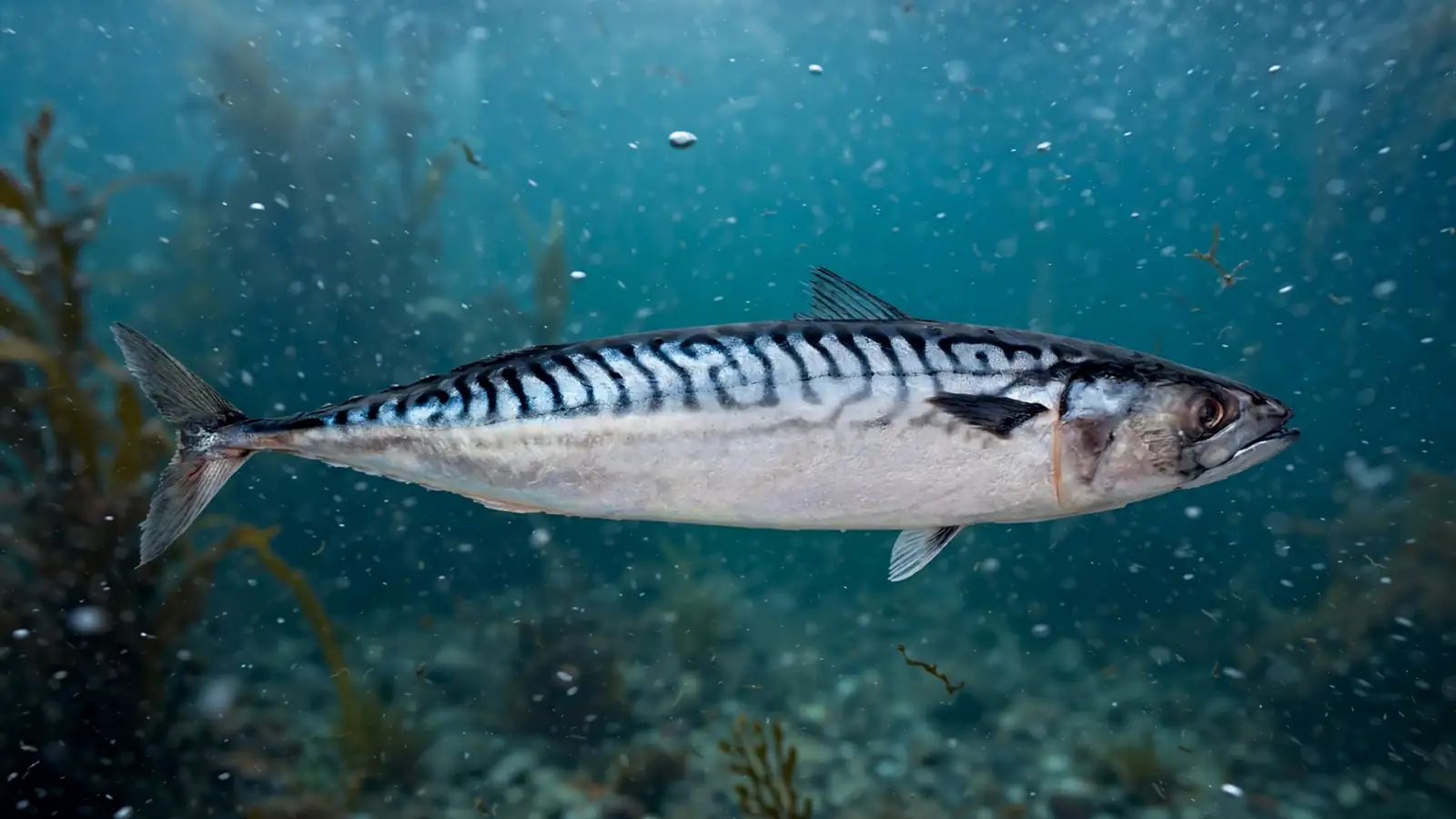
Most measure about 30 cm long, a sleek, hand-sized fish built for speed. The biggest reliably measured individuals reach 60 cm, and the maximum recorded weight is 3.4 kg — a large mackerel is a solid, heavy fish, though most of the ones in a shoal are half that size. Growth is fast in the warm months and slow in winter, and a mackerel can live for up to about 17 years.
Fast growth has a price: a fish burning this much energy has to keep eating, and keep moving. The warm months are the growing season, when plankton blooms fatten the shoals; winter slows everything down, and the fish that reach seventeen years are the ones that paced themselves through all of it, season after season, bloom after bloom.
Size is a trade-off for a mackerel: big enough to outswim most predators, small enough to live on plankton. The torpedo shape, the deeply forked tail and the smooth, scale-less-feeling skin all serve the same purpose — speed. A mackerel is not built to hide or to fight; it is built to move, and to move in company.
Stripes and Steel Blue
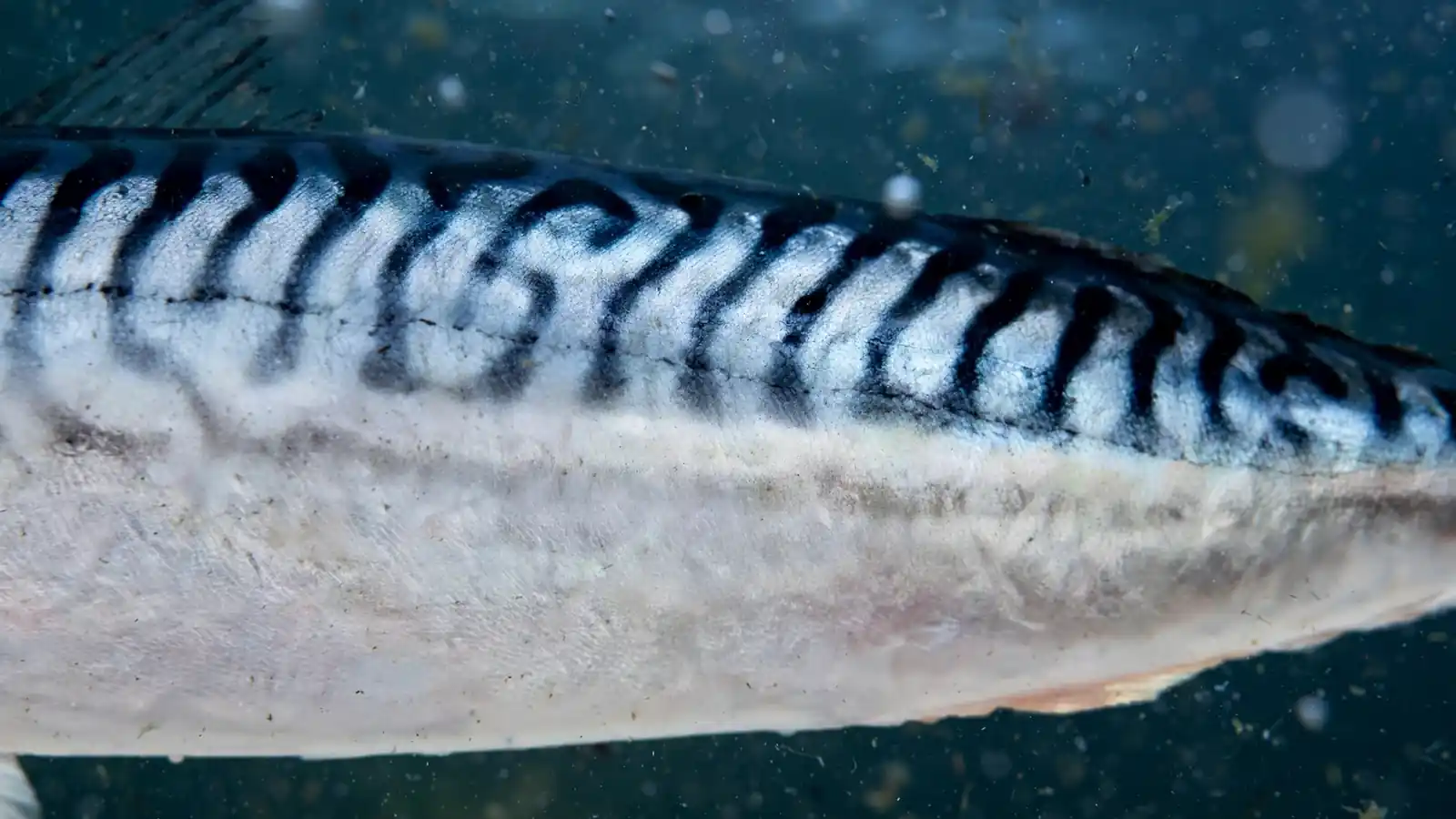
It is unmistakable: a steel-blue back crossed by 20 to 30 wavy black bars, fading to silver on the belly. The pattern is unique to the species — no other mackerel has the same wavy bars — and it is the fish’s most reliable identification mark. The bars break up the outline in dappled surface water, and from below, the silver belly blends with the bright sky above.
The bars do double duty. From above, the wavy pattern breaks the steel-blue back into the dappling of sunlit surface water; from below, there is no pattern at all, just silver against the light. A predator sees fragments and glare where a whole fish should be, and hesitates a second too long.
The colour is not decoration but camouflage, and it works in two directions at once. From above, the dark back blends with the deep water; from below, the silver belly blends with the light. It is the classic countershading of an open-water fish, and the wavy bars add a layer of disruption that makes a single fish hard to pick out of a moving shoal.
Where Atlantic Mackerel Live

They live in the temperate waters of the North Atlantic, from the Arctic to the Mediterranean and the western Atlantic. They favour open water over the continental shelf, from the surface down to around 200 metres, and they move with the seasons: inshore in spring and summer, offshore in winter. For the full species page, see Ocean Info’s species page.
Young mackerel live inshore, in estuaries and shallow coastal water, where the plankton is thick and the predators are fewer. As they grow they move offshore, joining the adult shoals that roam the open Atlantic. A mackerel’s life is a constant movement between coast and open sea, following the plankton blooms that feed it.
The Tow-Net School
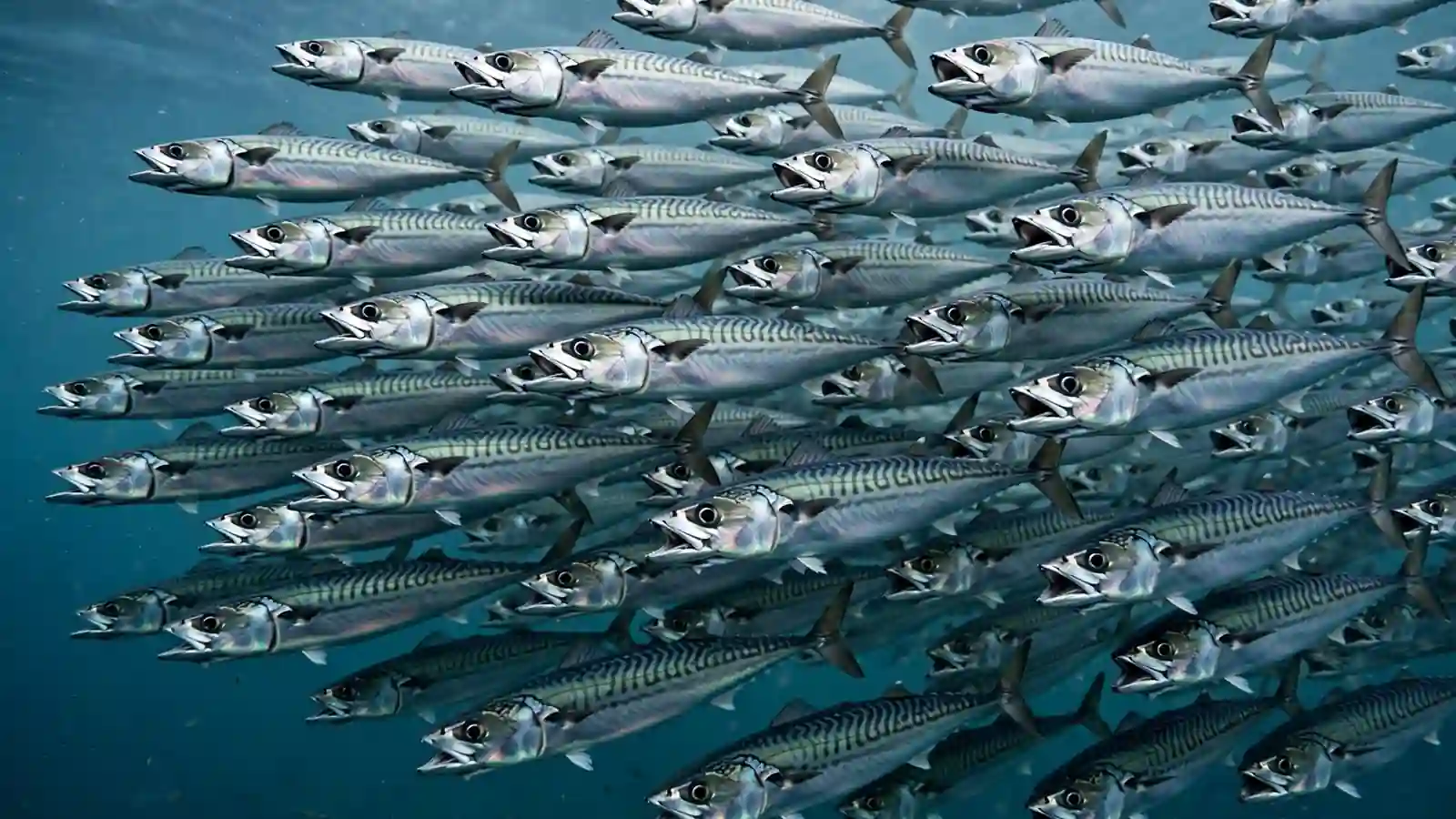
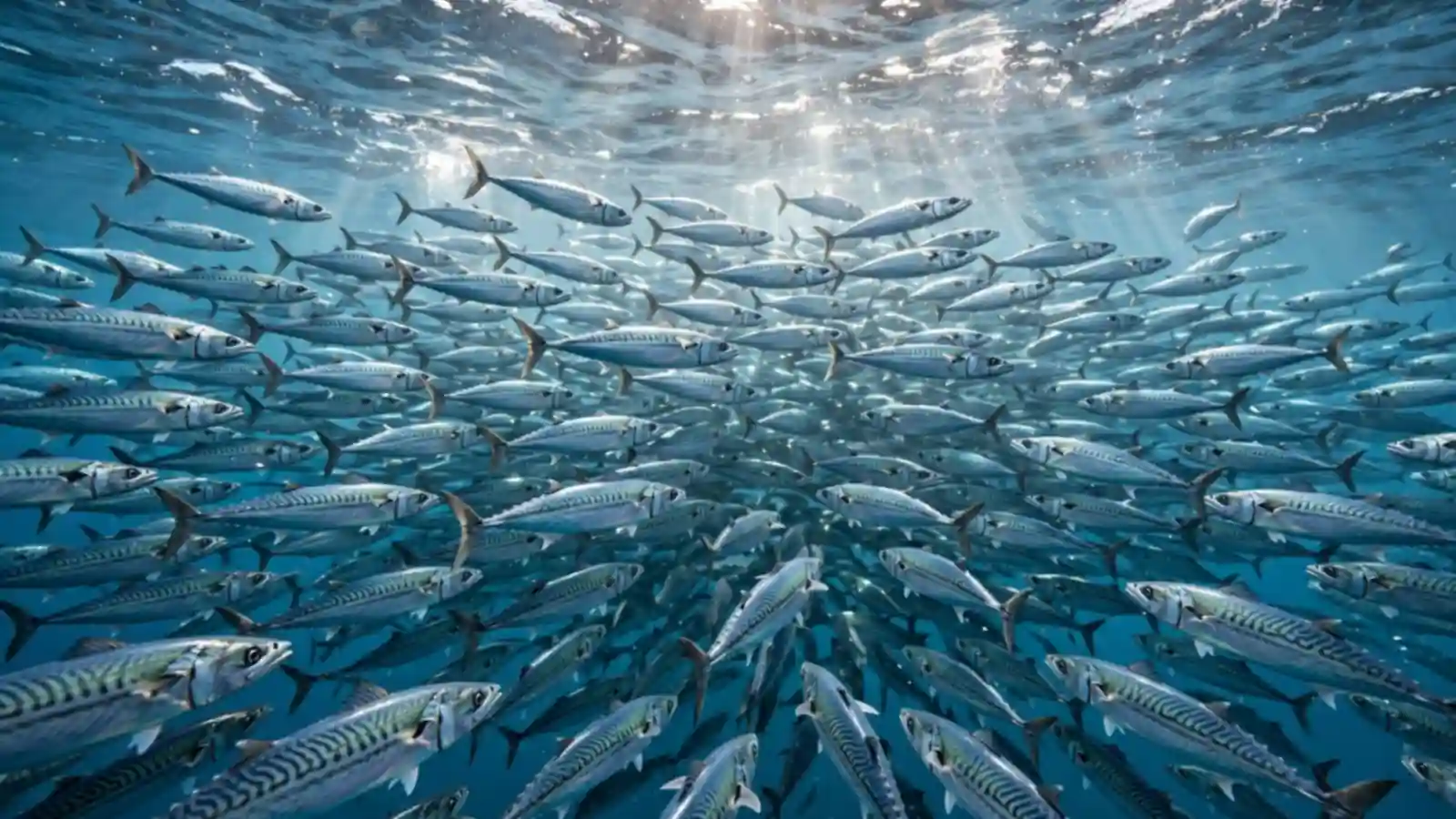
A big shoal is one of the ocean’s great sights: thousands of fish swimming in tight formation, all facing the same way, all moving as one. The shoal works like a tow-net, straining plankton from the water as it swims — each fish filters the water through its gills, and the shoal as a whole sweeps the sea clean. A large shoal can be kilometres long and show up on sonar as a solid wall.
The shoal is also a defence. A single mackerel is easy prey for a tuna, a shark or a seabird; a thousand mackerel moving as one are a confusing, flashing mass that is hard to attack. The fish at the edge of the shoal are the most vulnerable, so the shoal constantly turns and reforms, sharing the risk. It is safety in numbers, taken to an extreme.
A wall of fish is also a wall of mouths. Moving together, thousands of filters sweep the same water in formation, and the plankton in the shoal’s path has nowhere to go. It is feeding, defence and travel in a single formation — the reason one species can be at once so exposed and so numerous, a solid wall on the sonar that is really thousands of hand-sized fish holding station together.
What Do Atlantic Mackerel Eat?
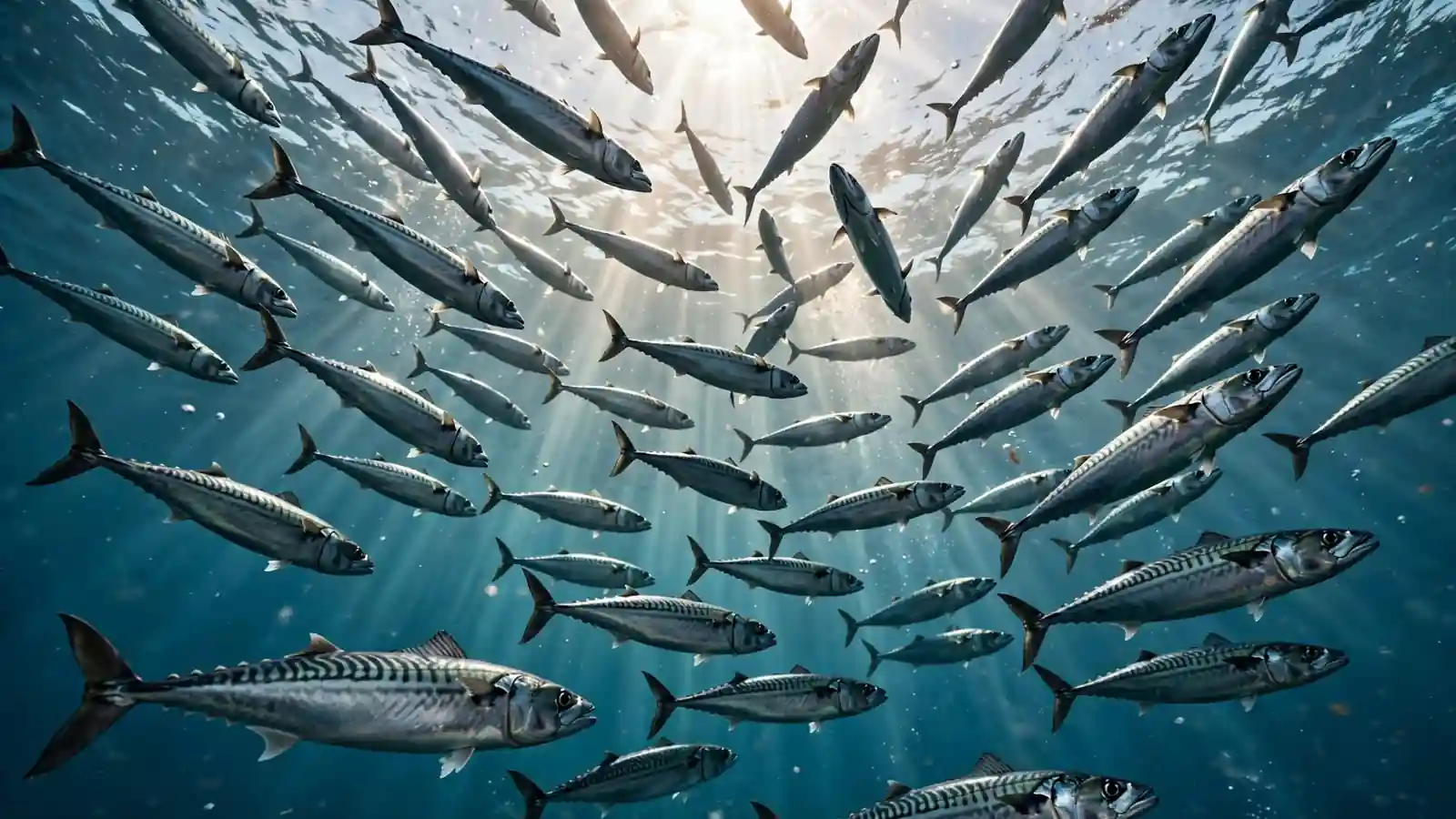
They eat plankton above all — copepods, krill and the larvae of other animals — strained from the water as they swim with their mouths open. They also take small fish and crustaceans when the chance comes, and large mackerel will hunt sand eels and sprats in the open water. The diet changes with the season and the place, following the plankton blooms that drive the whole North Atlantic food web.
The menu tracks the bloom. Where the plankton thickens, the shoals gather; where it thins, they move on, and everything that hunts them — tuna, dolphins, seabirds, fishing boats — follows the same map. To find this fish, you do not look for the fish at all: you look for the food it is straining out of the water.
Feeding is a matter of swimming. A mackerel filters water through its gills as it moves, and it must keep moving to feed — and to breathe. It has no swim bladder and it cannot pump water over its gills while still, so a mackerel that stops swimming suffocates. It is a fish that lives its whole life in motion, and the shoal is the reason it can afford to.
Migration
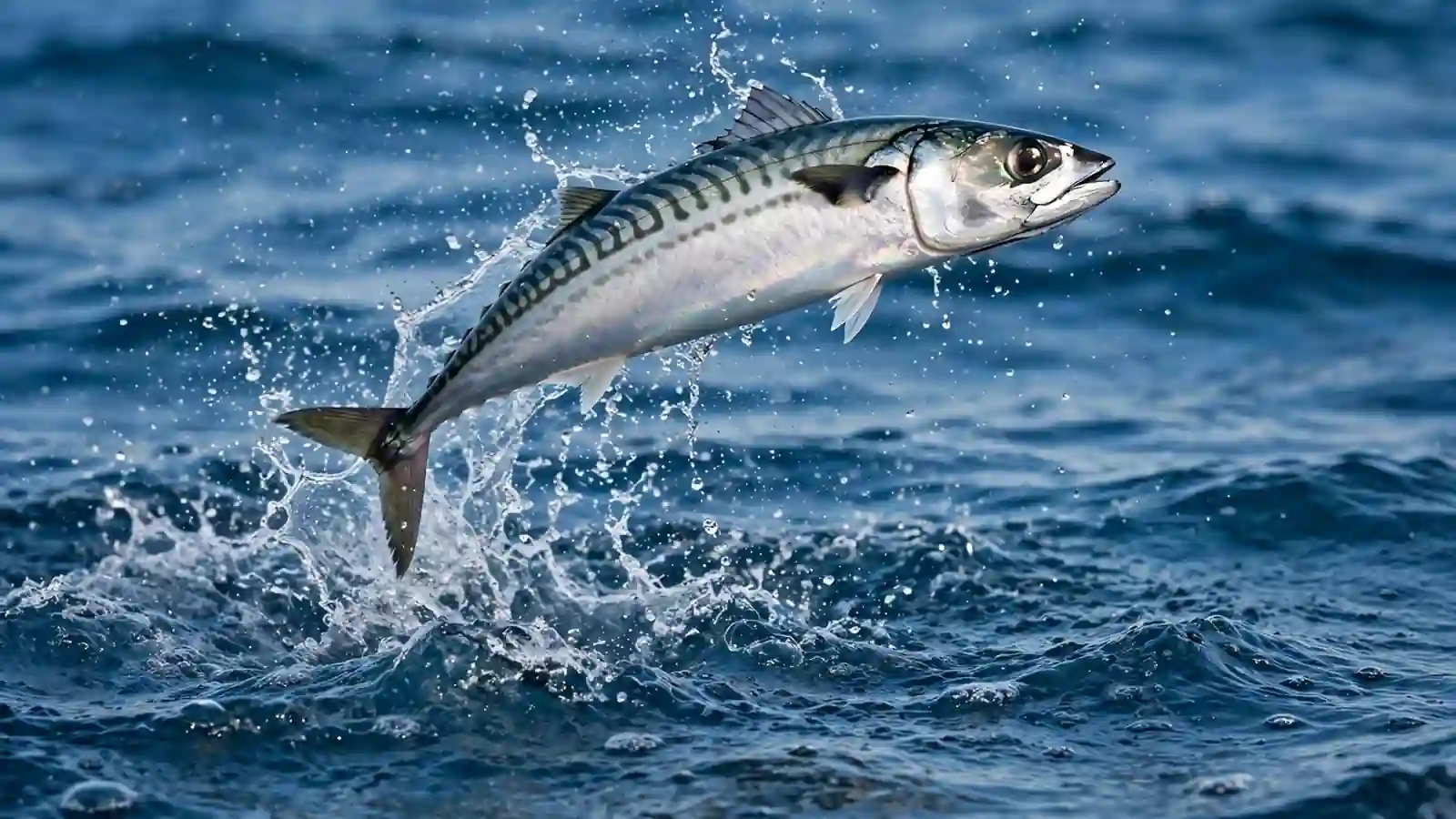
They migrate with the seasons, inshore in spring and offshore in winter, following the plankton and the warming water. In spring they move into coastal waters to spawn, releasing their eggs into the open water where the larvae drift with the currents. A single female can release up to 450,000 eggs in a season, and most of them will be eaten before they hatch.
The migration is not a single journey but a constant movement, driven by temperature, food and the need to spawn. Mackerel from different stocks mix in the open Atlantic, and the shoals that fishermen find are often made up of fish from several spawning grounds. It is a life lived on the move, and the mackerel’s whole body — the torpedo shape, the forked tail, the smooth skin — is built for it.
The spawning gamble is pure numbers. Up to 450,000 eggs from one female sounds like excess until the ocean takes its cut — eggs, larvae and juveniles are food for everything, including other mackerel. A handful surviving from each release is enough, and across millions of females releasing at once, a handful apiece is a multitude.
Conservation Status
It is listed as Least Concern, a status set in the 2022 assessment. That is good news, and it is verified: the 2022 assessment is current, and the species is not considered at risk. But Least Concern does not mean unfished — mackerel is one of the most heavily caught fish in the North Atlantic, and the catch is managed by quotas that are argued over every year.
The quota argument is really an argument about plenty. A species can be numerous and still be fished harder than it should be, especially one that feeds half the ocean. Least Concern is a status, not a guarantee, and the yearly fight over catch limits is how the guarantee gets kept — argued over precisely because the fish matters that much.
The risk for the mackerel is not extinction but overfishing, and the history of the North Atlantic is full of fish that were once abundant and are now gone. The quotas, the closed seasons and the monitoring exist because the cod collapse taught the region what happens when a fishery takes too much. The mackerel’s future depends on those lessons holding.
Fun Facts
- A single shoal can be kilometres long and shows up on sonar as a solid wall.
- A single female can release up to 450,000 eggs in a season.
- A mackerel must keep swimming to breathe — it has no swim bladder and cannot pump water over its gills while still.
- The 20 to 30 wavy black bars on its back are unique to the species and its best identification mark.
- It is listed as Least Concern in the 2022 assessment — a verified, current status.
- Mackerel have no swim bladder, so they sink if they stop swimming.
Frequently Asked Questions
How Big Do Atlantic Mackerel Get?
Typically about 30 cm, with the biggest reliably measured individuals reaching 60 cm and the maximum recorded weight 3.4 kg. They grow fast in the warm months and can live for up to about 17 years.
Where Do Atlantic Mackerel Live?
In the temperate waters of the North Atlantic, from the Arctic to the Mediterranean and the western Atlantic, over the continental shelf from the surface down to around 200 metres. They move inshore in spring and offshore in winter.
What Do Atlantic Mackerel Eat?
Plankton above all — copepods, krill and the larvae of other animals — strained from the water as they swim with their mouths open. They also take small fish and crustaceans, and large mackerel hunt sand eels and sprats.
Why Do Atlantic Mackerel Form Such Huge Schools?
For feeding and for safety. The shoal works like a tow-net, straining plankton from the water as it swims, and a thousand fish moving as one are a confusing mass that is hard for a predator to attack. The fish at the edge share the risk by constantly turning and reforming.
Do Atlantic Mackerel Migrate?
Yes, with the seasons: inshore in spring to spawn, offshore in winter, following the plankton blooms and the warming water. A single female can release up to 450,000 eggs in a season.
How Fast Are Atlantic Mackerel?
They are fast, sustained swimmers rather than sprinters — built for constant motion, not for bursts. Their torpedo shape, deeply forked tail and smooth skin are all built for efficient, long-distance swimming in a shoal.
Are Atlantic Mackerel Endangered?
No. They are listed as Least Concern in the 2022 assessment, which is current and verified. They are heavily fished, and the catch is managed by quotas — the risk is overfishing, not extinction.
Similar Species Worth Exploring
Keep Exploring
Still exploring North Atlantic country? Meet the slow giant in the Atlantic Cod guide, watch the ocean’s fastest hunter in the Bluefin Tuna guide, follow another great schooler in the Atlantic Herring guide, and then come back to the open water to watch the atlantic mackerel.