Atlantic Cod
Atlantic Cod: The Cold-Water Giant That Fed Nations — Then Vanished
The Atlantic cod is a cold-water giant up to 140 cm, famous for the 1992 collapse that wiped out over 95% of its stocks, still unrecovered.
By Emily Carter · Reviewed by our vet team · Updated 10 November 2026 · 9 min read
Up to 140 cmChin barbelVulnerable
At a Glance
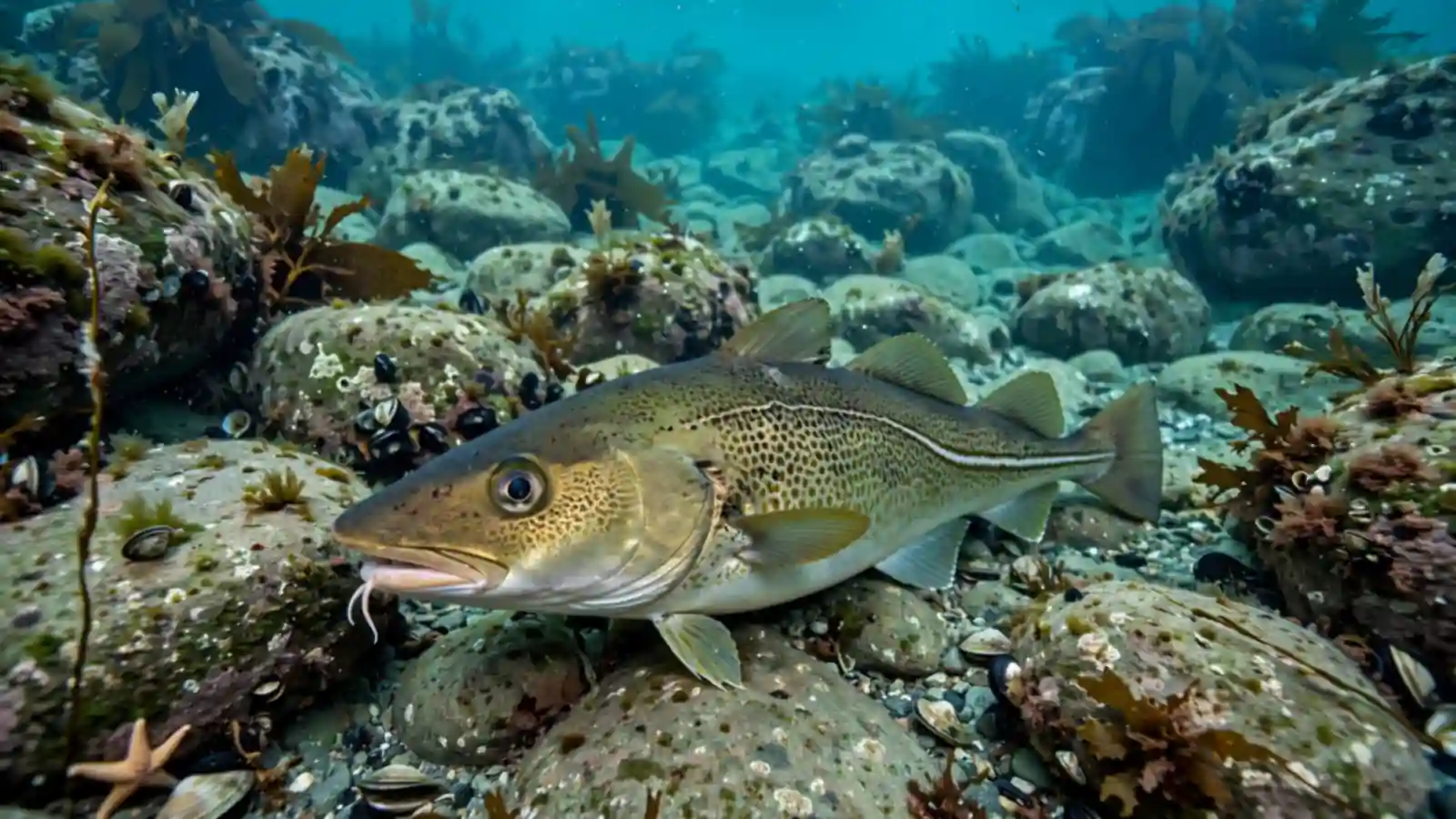
The Atlantic cod is the fish that built nations and then broke them, a cold-water giant that fed Europe and North America for five centuries before its stocks collapsed in 1992. It is a slow, deliberate hunter of the northern seas, recognisable by the single barbel on its chin — and a warning about what happens when a fishery takes too much for too long.
Atlantic Cod Size: How Big Do They Get?
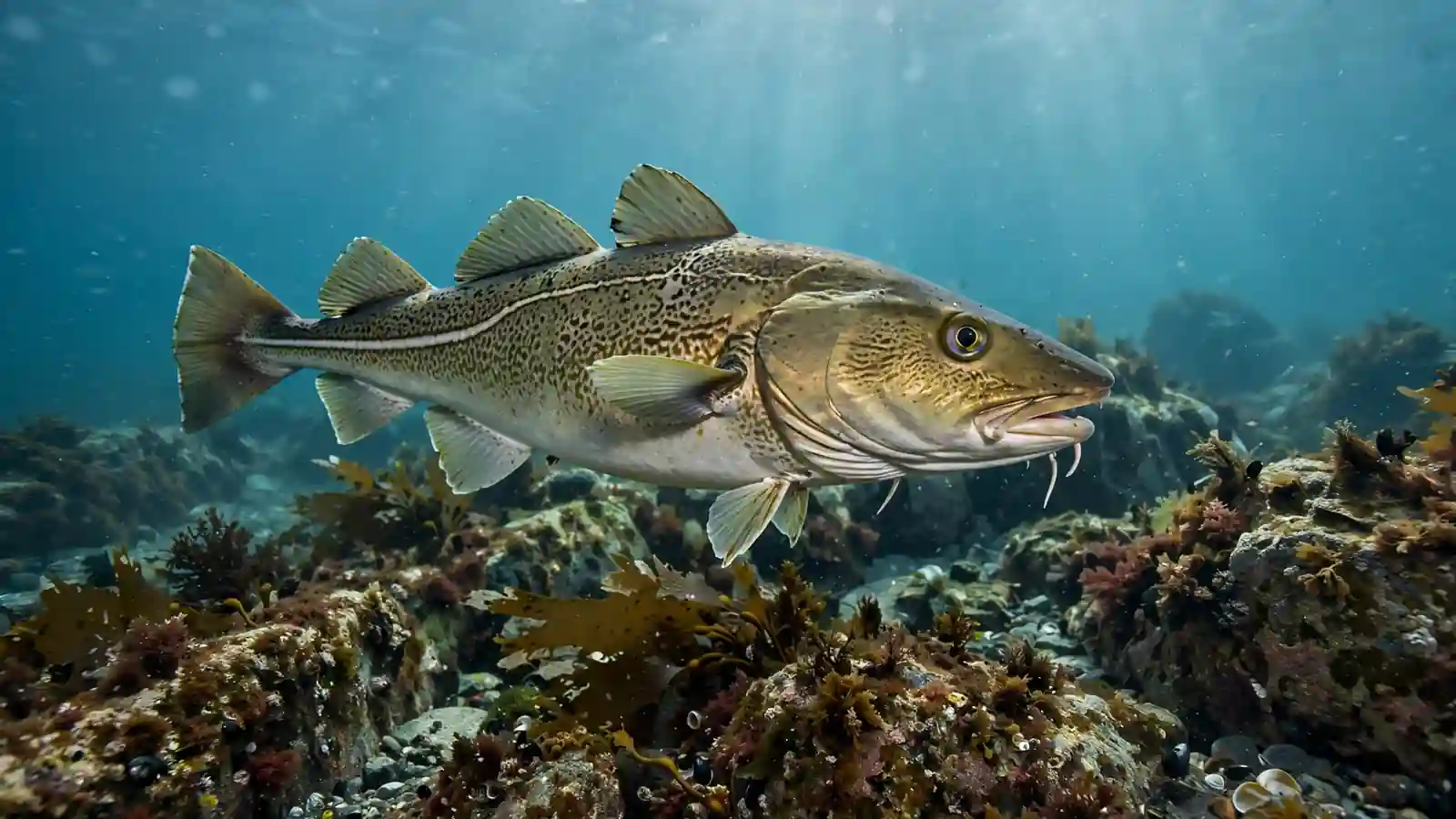
Most measure up to 130 cm long and weigh up to 35 kg, a substantial fish by any standard. Exceptional individuals grow larger still — over 180 cm and more than 50 kg — and the largest cod ever recorded were true giants. A figure of 96 kg sometimes appears as a maximum weight, but it is not settled: the honest range is 35 kg typical, over 50 kg exceptional, and anything above that is a record rather than a rule. For the full species page, see Bruning’s species page.
Cod grow slowly in cold water, adding a few centimetres a year, and the biggest fish are the oldest — a 25-year-old cod is a veteran of the northern seas. In the centuries before industrial fishing, cod of a metre or more were common; today, most of the cod caught are far smaller, because the big, old fish have been fished out. Size, for this fish, is a measure of what the stock has lost.
The Chin Barbel
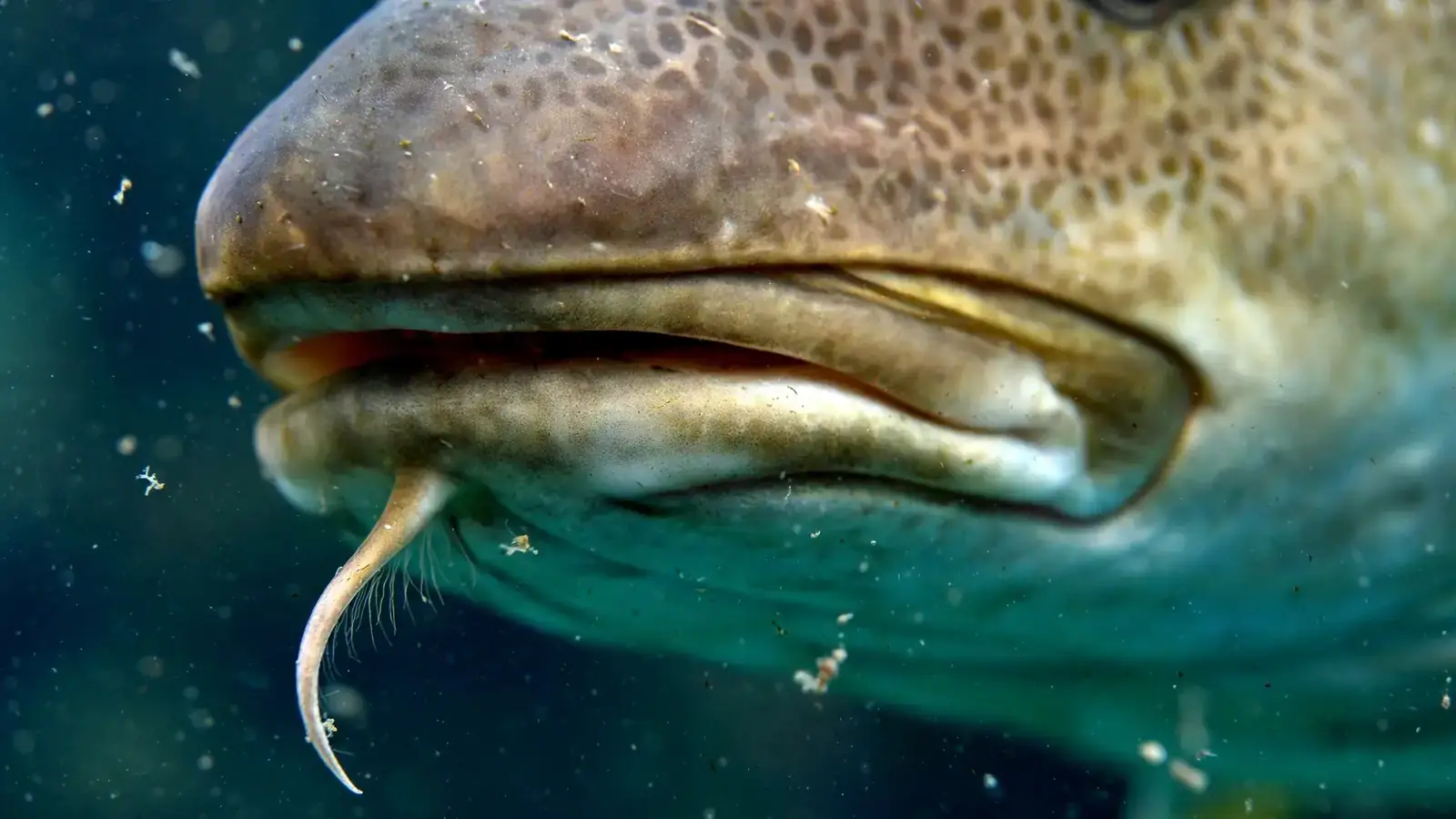
It carries a single barbel on its chin, a short fleshy whisker that is the fish’s most reliable identification mark. The barbel is a sensory organ, packed with taste buds, and the cod uses it to feel and taste the seabed as it hunts — sweeping it over sand, gravel and rock to find crabs, molluscs and worms hiding in the sediment.
It is the barbel that separates it from its lookalikes. The haddock has a smaller barbel and a dark blotch on its side; the pollack has no barbel at all. A cod’s barbel is long, obvious, and always there — a small feature that tells a big story about how the fish lives: head down, nose to the seabed, tasting its way through the dark water.
Where Atlantic Cod Live

They live in the cold waters of the North Atlantic, from the Arctic to the temperate coasts of Europe and North America. They favour water between 0 and 10 degrees Celsius, living over the continental shelf from the shallows down to around 600 metres. The great stocks — the Grand Banks, the North Sea, the Barents Sea — are among the most productive fishing grounds on Earth, and they were built by the cold, nutrient-rich water of the northern seas.
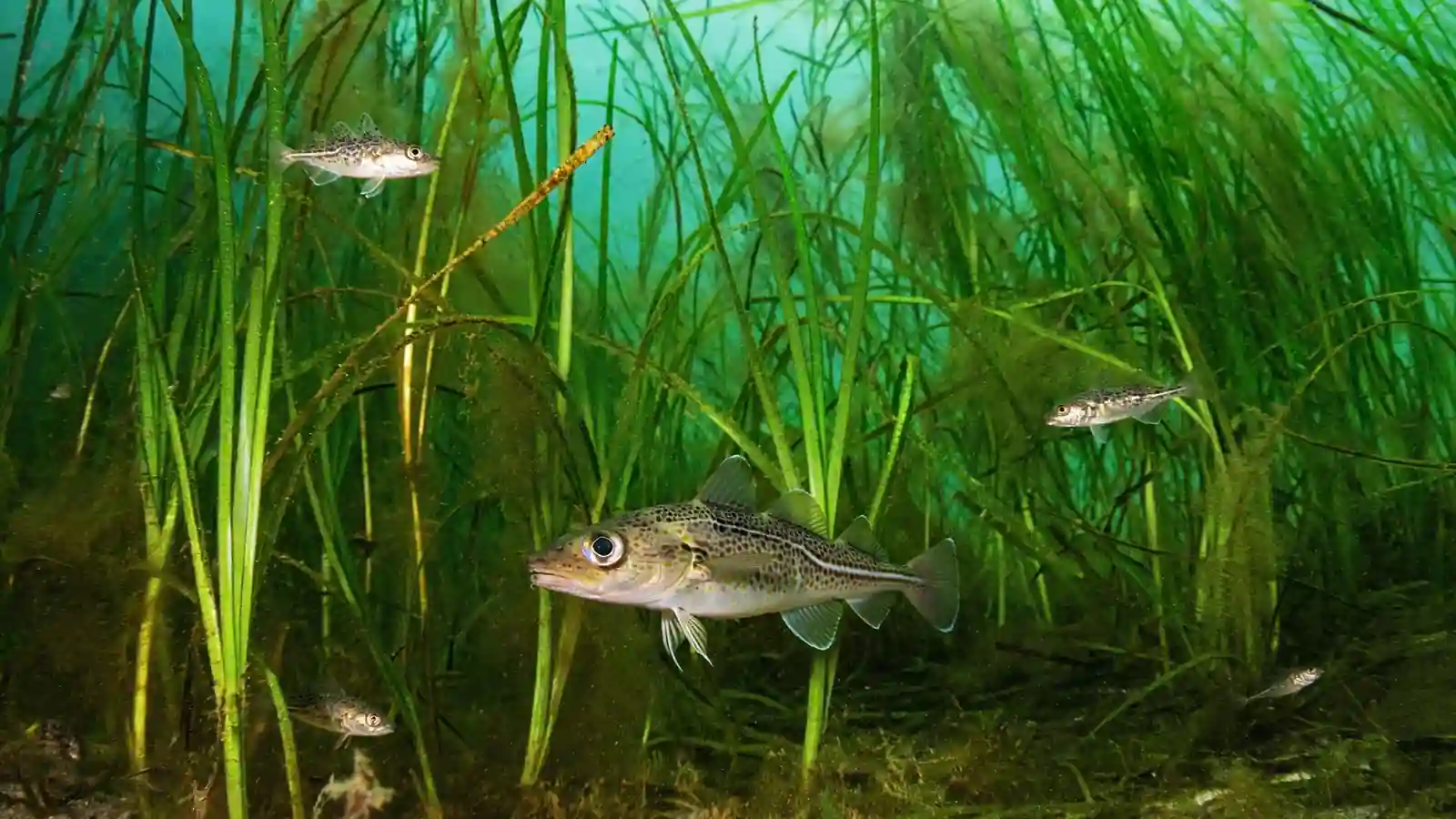
Cod move with the seasons and with their food. In winter they gather in deep water to spawn; in summer they spread out over the shelf to feed. Young cod shelter inshore, among kelp and eelgrass, where the cover is dense and the food is plentiful, moving offshore as they grow. A cod’s life is a slow migration between deep spawning grounds and shallow feeding grounds, repeated year after year.
What Do They Eat?

They eat almost anything they can catch on or near the seabed: fish, crabs, molluscs, worms and shrimp. Young cod eat plankton and small crustaceans; adults graduate to capelin, herring, sand eels and other cod — cannibalism is common, and a large cod will eat a smaller one without hesitation. The diet changes with the season and the place, and a cod is an opportunist rather than a specialist.
Hunting is slow and deliberate. A cod cruises just above the seabed, sweeping its barbel over the sand, and when it finds something edible it sucks it in with a sudden opening of its huge mouth. It is not a fast fish, and it does not need to be — its prey is mostly slow, buried, or unaware, and the cod’s patience does the work that speed does for other hunters.
The Great Collapse
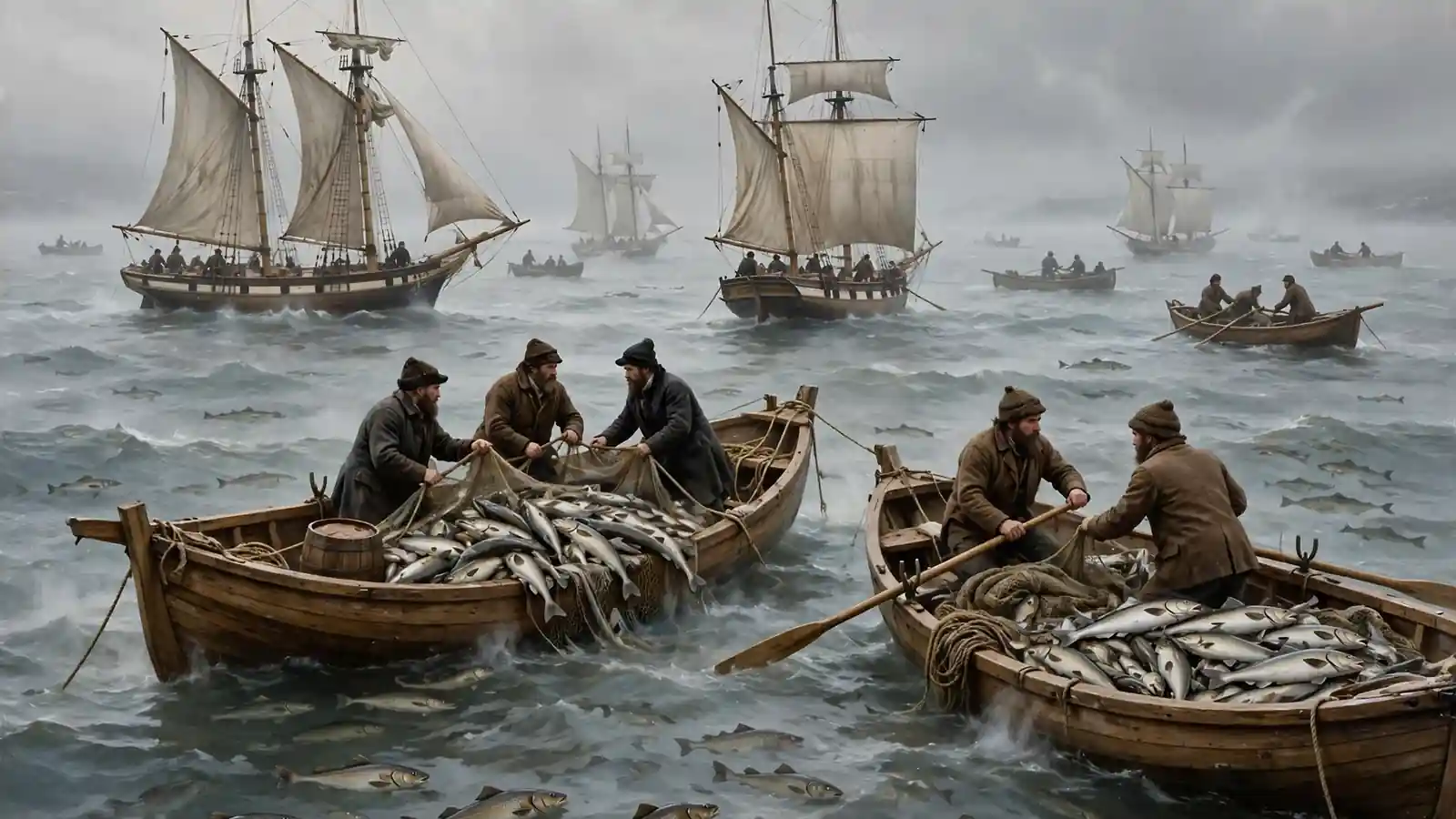
In 1992, the Canadian government closed the Grand Banks cod fishery — the largest cod fishery in the world — because the fish were gone. Stocks had fallen by more than 95%, and the closure put 30,000 people out of work overnight. It was the largest mass layoff in Canadian history, and it was the end of a fishery that had fed people for five hundred years.
The collapse was not a mystery. For decades, fishing had taken more cod than the stock could replace, and the biggest, oldest fish — the ones that produce the most eggs — were taken first. Technology made it worse: sonar found the schools, factory trawlers processed them at sea, and the catch kept rising even as the stock fell. By the time the moratorium came, there was almost nothing left to protect.
Why the Cod Has Not Recovered
More than thirty years after the moratorium, the Grand Banks cod has still not recovered. The reasons are still debated, but the picture is clear enough: the stock was reduced to a fraction of its former size, and the ecosystem changed around it. With the cod gone, other species — seals, shrimp, small fish — filled the space, and some of them eat young cod or compete with them for food.
There is also the question of age. A cod stock needs old, large fish to produce enough eggs, and it takes decades to rebuild a population of 25-year-old fish from a stock of juveniles. Fishing has resumed in some areas, but the catch is a fraction of what it was, and the cod that is caught today is smaller and younger than the cod of the past. Recovery, if it comes, will take a generation.
Conservation Status
It is listed as Vulnerable, but the assessment behind that listing dates to 1996, and it notes itself that it needs updating. That caveat matters: the listing is old, the science has moved on, and the true status of the species today is worse than the label suggests. Some stocks are recovering slowly; others are still in trouble.
Management is the only tool that works, and it is being applied unevenly. Catch limits, closed areas and gear restrictions have helped some stocks, but the pressure to fish remains, and the cod’s slow growth means mistakes take decades to correct. It is a test case for the whole idea of sustainable fishing — and so far, the test is not going well.
Fun Facts
- In 1992 the Grand Banks cod fishery closed after stocks fell by more than 95%, putting 30,000 people out of work overnight.
- The chin barbel is a sensory organ packed with taste buds — the cod tastes the seabed as it hunts.
- A cod can live for up to 25 years, and the biggest fish are the oldest on their reef.
- Cod are cannibals: a large cod will eat a smaller one without hesitation.
- The Vulnerable listing dates to a 1996 assessment that notes itself it needs updating.
- Before industrial fishing, cod of a metre or more were common — today most caught cod are far smaller.
Frequently Asked Questions
How Big Do Atlantic Cod Get?
Typically up to 130 cm and 35 kg, with exceptional individuals over 180 cm and 50 kg. A figure of 96 kg sometimes appears as a maximum, but it is not settled — the honest range is 35 kg typical and over 50 kg exceptional.
Why Did Atlantic Cod Stocks Collapse?
Decades of taking more cod than the stock could replace, with the biggest, oldest fish taken first. Sonar and factory trawlers kept the catch rising even as the stock fell, until the 1992 moratorium closed the Grand Banks fishery after stocks had fallen by more than 95%.
Where Do Atlantic Cod Live?
In the cold waters of the North Atlantic, from the Arctic to the temperate coasts of Europe and North America, over the continental shelf from the shallows down to around 600 metres. The great stocks are the Grand Banks, the North Sea and the Barents Sea.
What Do Atlantic Cod Eat?
Fish, crabs, molluscs, worms and shrimp — almost anything they can catch on or near the seabed. Young cod eat plankton and small crustaceans; adults eat capelin, herring, sand eels and other cod.
How Long Do Atlantic Cod Live?
Up to 25 years. They grow slowly in cold water, adding a few centimetres a year, and the biggest fish are the oldest — which is why taking the big fish removes the most fertile breeders.
Are Atlantic Cod Endangered?
They are listed as Vulnerable, but the assessment dates to 1996 and notes itself that it needs updating. Some stocks are recovering slowly; others are still in trouble, and the Grand Banks stock has not recovered more than thirty years after the moratorium.
What Is the Barbel For?
The chin barbel is a sensory organ packed with taste buds. The cod sweeps it over sand, gravel and rock to feel and taste for crabs, molluscs and worms hiding in the sediment — and it is the fish’s most reliable identification mark.
Similar Species Worth Exploring
Keep Exploring
Still exploring North Atlantic country? Meet the fast schooler in the Atlantic Mackerel guide, watch the ocean’s fastest giant in the Bluefin Tuna guide, follow the cod’s prey in the Atlantic Herring guide, and then come back to the cold water to meet the atlantic cod.